Key takeaways
- LLMs show a strong bias toward brand-owned domains and high-authority third-party sources like Reddit and YouTube -- affiliate and review sites are getting squeezed out of AI citations.
- About 85% of brand mentions in AI responses originate from third-party pages, but those pages tend to be community platforms, not traditional review sites.
- Structured content (sequential headings, schema markup, clear Q&A formatting) gets cited at 2.8x higher rates than unstructured pages.
- Pages not updated quarterly are 3x more likely to lose citations -- freshness is now a core ranking signal for AI models.
- Affiliate and review publishers who adapt their content structure, build off-site credibility, and track their AI visibility can still compete -- but the playbook has changed.
There's an uncomfortable truth sitting in most affiliate publishers' analytics right now. Traffic from AI referrals is either flat or declining, even as overall AI search usage climbs. The reason isn't hard to find: when someone asks ChatGPT "what's the best VPN for streaming?" or "which credit card has the best cashback?", the model increasingly pulls from brand websites, Reddit threads, and YouTube reviews -- not from the review site that spent three months building a comparison table.
This isn't a conspiracy against affiliate publishers. It's a structural shift in how LLMs decide what to cite. Understanding that structure is the first step to working within it.
Why LLMs are biased toward brand domains
LLMs don't rank pages the way Google does. They synthesize. When a model generates a response, it draws on patterns from its training data and, for retrieval-augmented models like Perplexity, from live web results. In both cases, the signals that drive citation are different from traditional SEO signals.
Brand domains carry inherent authority in training data. A product page from a software company's own website contains precise, first-party information about features, pricing, and use cases. That specificity is exactly what LLMs reward. A review site saying "Tool X costs $49/month and has these five features" is essentially paraphrasing the brand's own page -- and the model knows it.
According to AirOps' 2026 State of AI Search report, only 30% of brands stay visible from one AI answer to the next, and just 20% remain present across five consecutive runs. That volatility is brutal for everyone, but it hits affiliate sites harder because they're competing against sources the model considers more authoritative by default.
The same report found that roughly 48% of citations in AI responses come from community platforms like Reddit and YouTube. That's a significant number. It means the "third-party" sources LLMs trust aren't traditional review sites -- they're community-generated content where real users share unfiltered opinions.
The content formats LLMs actually cite
This is where affiliate publishers have more control than they might think. The bias toward brand domains is real, but it's not absolute. LLMs cite third-party content regularly -- they just need a reason to.
Structured Q&A content
LLMs are trained on question-answer pairs. Content formatted as explicit questions with direct, clear answers gets picked up more reliably than prose-heavy reviews. A section titled "Is Tool X worth it for small businesses?" followed by a two-paragraph direct answer is more citable than a 2,000-word narrative review.
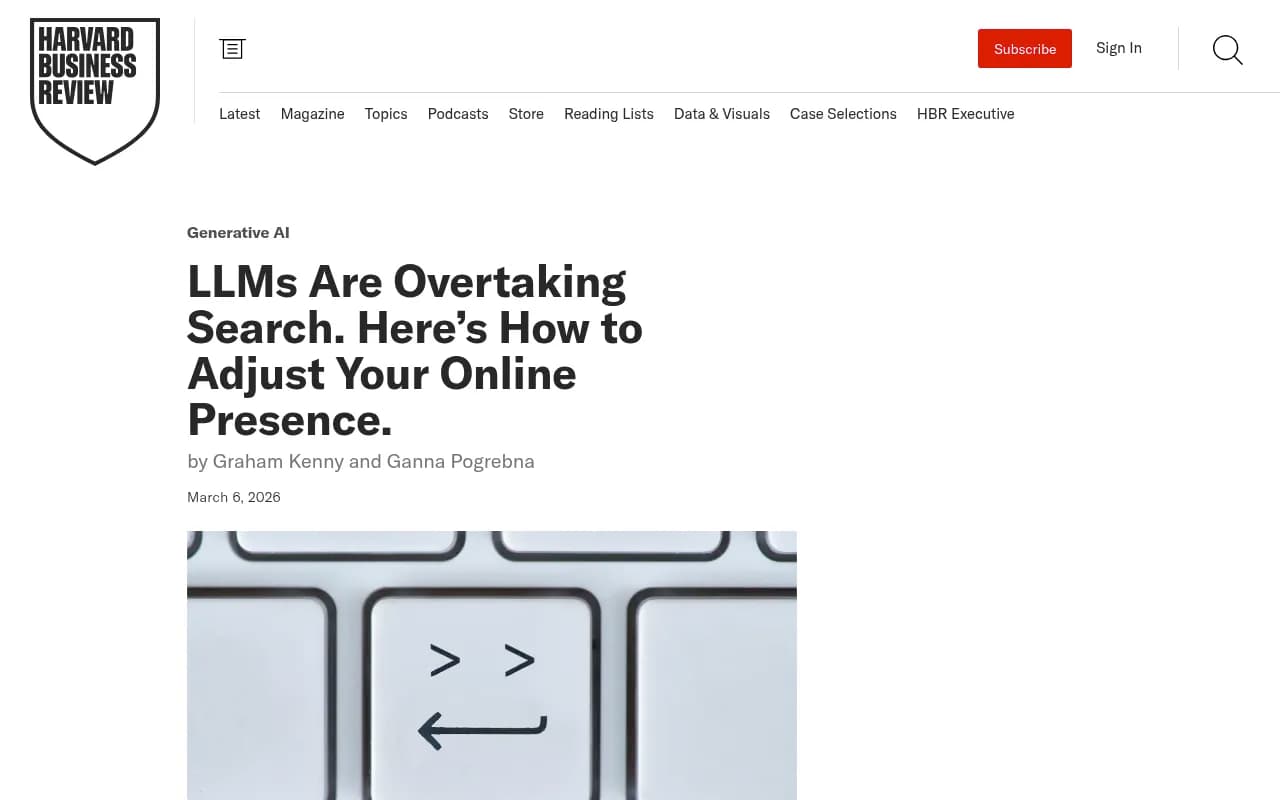
The Harvard Business Review piece from March 2026 makes this point plainly: state conclusions clearly, make your positioning easy to extract, and give the model something it can quote verbatim. That advice applies to affiliate content just as much as brand content.
Comparison tables with clear verdicts
Comparison content is one area where affiliate sites genuinely have an advantage over brand domains. A brand can't objectively compare itself to competitors. A well-structured comparison table with clear winner declarations ("Best for X use case: Tool A. Best for Y use case: Tool B.") gives LLMs exactly the kind of synthesized, opinionated content they need to answer comparative queries.
The key word is "clear." Hedged conclusions like "both tools have their merits depending on your needs" give the model nothing to work with. Pick a winner. Explain why. Be specific.
Lists with concrete criteria
Listicles work in AI search -- but only if each item includes specific, factual details. "Tool X is great for beginners" is not citable. "Tool X has a free plan limited to 5 projects and a drag-and-drop interface that requires no coding knowledge" is citable. The specificity is what makes the difference.
The freshness problem
Pages not updated quarterly are 3x more likely to lose citations, according to the AirOps data. For affiliate sites running hundreds of review pages, this is a real operational challenge.
The practical implication: you can't treat your review content as evergreen. Pricing changes, feature sets evolve, tools get acquired or shut down. An AI model citing a review that says a tool costs $29/month when it now costs $79/month will eventually learn to distrust that source.
Build a quarterly review cadence into your content operations. At minimum, update pricing, key features, and any "verdict" sections. Tools like Promptwatch can help you track which of your pages are currently being cited by AI models -- so you know which ones to prioritize for updates rather than refreshing everything blindly.

Off-site credibility: the signal you can't fake
The AirOps report found that 85% of brand mentions in AI responses originate from third-party pages rather than owned domains. That sounds encouraging for affiliate publishers until you look at which third-party pages those are: Reddit, YouTube, industry forums, and established media outlets.
This means your review site's authority in AI search is partly determined by whether your content gets discussed, linked to, or referenced in the places LLMs trust. A few practical approaches:
- Publish data, studies, or original research that other sites want to cite. A survey of 500 users about their experience with a tool category is more linkable than another "best of" list.
- Engage genuinely in Reddit communities relevant to your niche. Not promotional posts -- actual participation that builds recognition for your site as a credible source.
- Build relationships with YouTubers in your space. If a popular YouTube reviewer mentions your comparison guide, that creates an off-site signal that LLMs pick up.
- Get your content featured in newsletters and industry roundups. These create the kind of distributed mentions that build model-level authority over time.
The LLM seeding strategy
Semrush has written about "LLM seeding" -- the practice of deliberately placing your brand or content in the sources LLMs are most likely to draw from. For affiliate publishers, this translates to a specific set of tactics.
The core idea is that LLMs don't just crawl your site; they synthesize from the entire web of content that references your niche. If your review site is consistently mentioned in discussions about a topic, the model starts to associate your domain with that topic.
Practically, this means:
- Contributing to Wikipedia articles in your niche (with appropriate citations)
- Getting quoted as an expert source in press coverage
- Publishing guest content on high-authority domains in your vertical
- Ensuring your content appears in the sources that AI crawlers prioritize
The Acceleration Partners affiliate playbook makes a related point: collaborating with affiliate partners to optimize content formats (Q&A, lists, comparisons) for AI visibility is more effective than trying to optimize in isolation. If your affiliate program includes content guidelines, push for formats that work in AI search.
Tracking your AI visibility as a publisher
You can't improve what you can't measure. The challenge for affiliate publishers is that traditional analytics tools don't show you AI citation data. Google Analytics shows referral traffic from Perplexity when users click through, but it doesn't show you how often your content is cited in responses where users don't click.
This is a genuine blind spot. A Reddit thread from the r/b2bmarketing community in 2026 noted that the biggest mistake teams make is tracking raw AI traffic instead of tracking mention rate, citation rate, and assisted conversions from AI referrals separately. Those are different signals and they require different tools to measure.
Several platforms now track AI citations specifically. Here's a comparison of some options relevant to affiliate and review publishers:
| Tool | AI models tracked | Content gap analysis | Crawler logs | Best for |
|---|---|---|---|---|
| Promptwatch | 10+ (ChatGPT, Claude, Perplexity, Gemini, etc.) | Yes | Yes | Full optimization loop |
| Otterly.AI | ChatGPT, Perplexity, Gemini | No | No | Basic monitoring |
| Peec AI | Multiple, multi-language | No | No | International publishers |
| Ranksmith | Multiple | Yes (limited) | No | Actionable insights |
| LLM Clicks | Multiple | No | No | Citation tracking |
| GetCito | Multiple | Yes | No | Optimization focus |
| Profound | Multiple | No | No | Brand tracking |



For publishers who want to go beyond monitoring and actually fix their visibility gaps, Promptwatch's Answer Gap Analysis is worth looking at specifically. It shows which prompts competitors are appearing in that you're not -- which for an affiliate site translates directly to "these are the comparison queries where your content isn't getting cited."
Technical foundations that affect AI citation
Schema markup
Sequential headings and rich schema correlate with 2.8x higher citation rates in the AirOps data. For review sites, this means implementing Review schema, Product schema, and FAQ schema where appropriate. These aren't just SEO signals -- they help AI crawlers extract structured information from your pages more reliably.
Page speed and crawlability
AI crawlers behave differently from Googlebot. Tools like DarkVisitors can show you which AI crawlers are hitting your site and whether they're encountering errors.
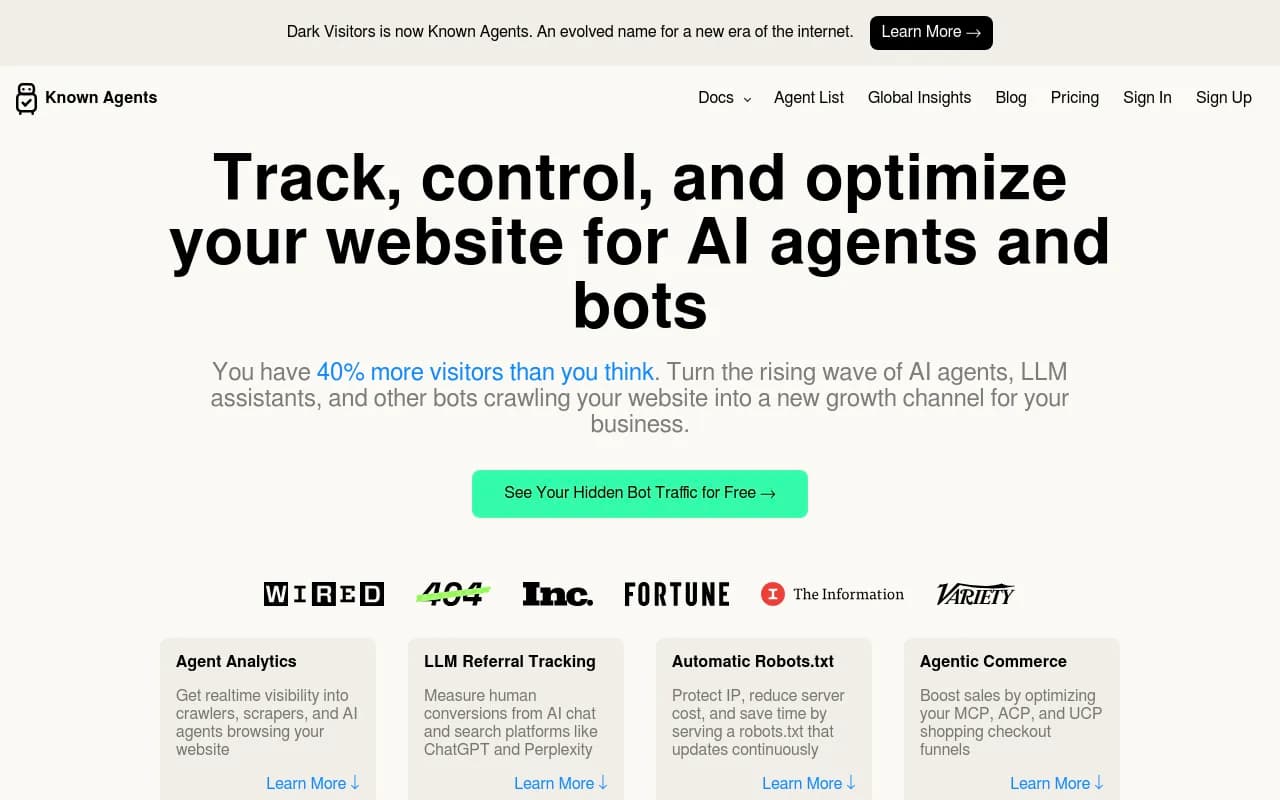
If your pages are slow to load or have crawl errors, AI crawlers may skip them entirely. This is a different problem from traditional SEO -- a page can rank fine in Google while being effectively invisible to AI crawlers.
robots.txt and AI crawler permissions
Some publishers have blocked AI crawlers to protect their content from being used in training data. This is a legitimate choice, but it comes with a visibility tradeoff: if you block GPTBot or ClaudeBot, you're also blocking those models from citing your content in responses. Review your robots.txt settings with this tradeoff in mind.
The affiliate-specific challenge: thin content at scale
Many affiliate sites have hundreds or thousands of pages generated at scale -- often with similar structures, templated language, and minimal differentiation between pages. This is exactly the kind of content LLMs learn to deprioritize.
The fix isn't to delete your content library. It's to identify which pages cover topics where AI citation is actually valuable (high-volume comparison queries, "best X for Y" searches) and invest in making those pages genuinely differentiated.
A few signals that a page is worth upgrading for AI visibility:
- It covers a query that appears in AI search results (you can check this manually or with a tracking tool)
- The topic has real search volume and commercial intent
- Your current page doesn't have a clear, quotable verdict
- Competitors are being cited for this query but you're not
That last point is the most actionable. If you can identify the specific queries where a competitor review site is getting cited and you're not, you have a clear content brief: write something better, more specific, and more structured on that exact topic.
What actually works: a practical checklist
Based on the research and the structural realities of how LLMs cite content, here's what affiliate and review publishers should focus on in 2026:
Content structure
- Use explicit Q&A sections with direct, quotable answers
- Include comparison tables with clear winner declarations
- State your verdict early, not at the end of a long review
- Use sequential headings (H2, H3) that map to the questions users actually ask
Freshness
- Set a quarterly review cadence for high-priority pages
- Update pricing, features, and verdicts whenever a tool changes significantly
- Add a "last updated" date to review pages -- models and users both trust it
Off-site signals
- Build original data or research that earns citations from other sources
- Participate genuinely in Reddit and forum communities in your niche
- Pursue coverage in industry media and newsletters
Technical
- Implement Review, Product, and FAQ schema on relevant pages
- Check which AI crawlers are visiting your site and fix any errors they encounter
- Review your robots.txt settings to ensure you're not accidentally blocking AI crawlers
Measurement
- Track citation rate and mention rate separately from click-through traffic
- Identify which queries competitors are cited for that you're not
- Prioritize content updates based on citation data, not just traffic data
The honest assessment
Affiliate and review publishers are operating in a harder environment than they were two years ago. The LLM preference for brand domains and community platforms is real, and it's not going away. Some traffic that used to flow through review sites is now being answered directly by AI models without a click.
But "harder" isn't the same as "over." The publishers who adapt -- who build genuinely differentiated content, maintain freshness, earn off-site credibility, and track their AI visibility systematically -- will still get cited. The ones who don't will find their content increasingly invisible to the models that now handle a significant share of product research queries.
The content quality bar has gone up. That's actually good news for publishers willing to meet it.