Key Takeaways
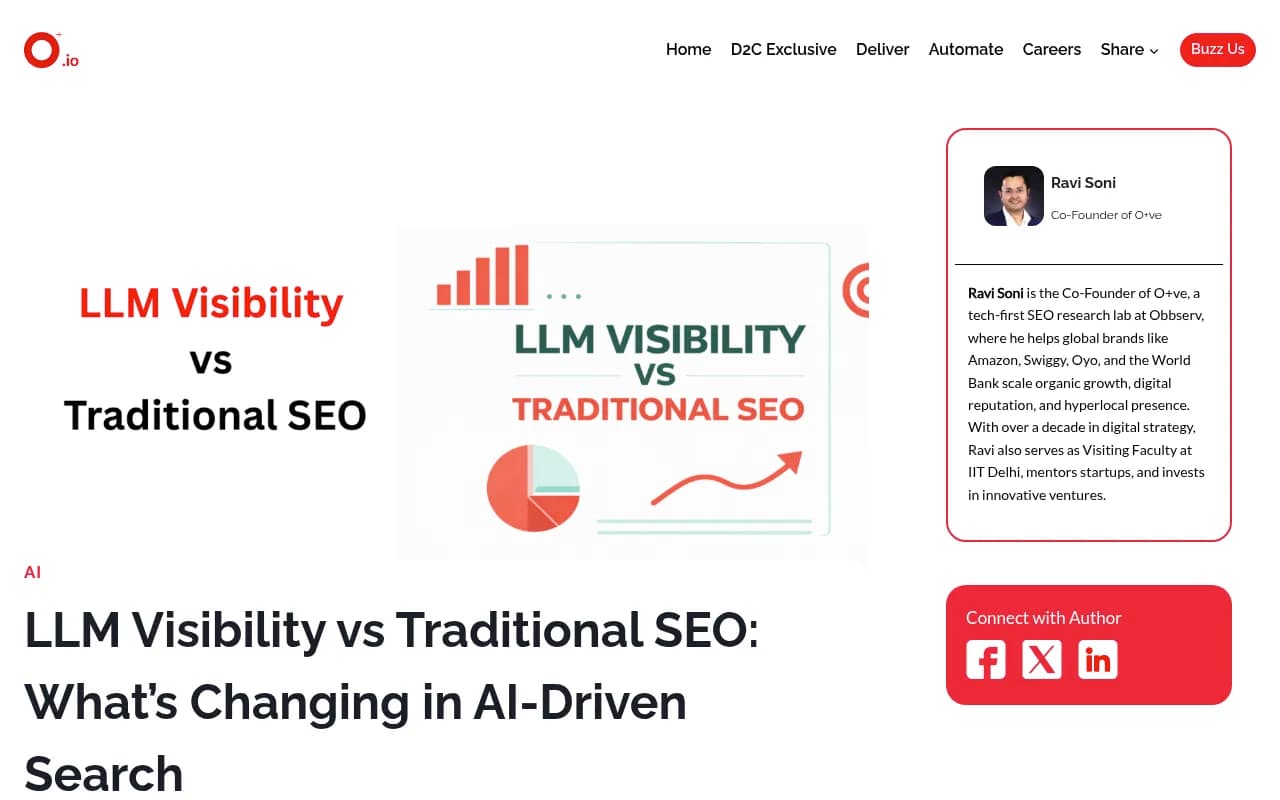
- Traditional SEO optimizes for retrieval and clicks; AI visibility optimizes for selection, citations, and recall inside AI-generated answers
- Technical SEO fundamentals (site speed, mobile optimization, structured data) remain the baseline for both traditional and AI-driven discovery
- AI systems prioritize clarity, depth, and reusability -- content that can be compressed into an answer without losing meaning
- You need both strategies: traditional SEO drives traffic, AI visibility builds brand presence in zero-click environments
- New metrics matter: citation frequency, source selection rate, and answer accuracy replace impressions and CTR in AI contexts
What actually changed in 2026
Search used to be a predictable path: type a keyword, scan ten blue links, click a result, decide what to do next. That model still exists, but it's no longer the only front door to discovery.
Today, many users start with AI-driven interfaces that generate a synthesized answer first and show sources second. A buyer can learn your definition, see your brand name, and form an opinion without visiting your website at that moment. The conversion journey shifts: brand learning happens earlier, clicks happen later, and the first impression is often made inside an AI response.
This is where AI visibility becomes a business KPI, not just an SEO curiosity. It captures whether your ideas and brand are present in AI-generated responses as mentions or citations across prompts and platforms, and whether the information is represented correctly.

Because AI selection is contextual and can change with wording and intent, teams must plan for coverage and consistency, not only for single-keyword wins. Classic dashboards built around impressions, positions, and CTR don't fully reflect what happens when the user consumes the answer in-place and only clicks to validate.
Traditional SEO vs AI visibility: The core differences
What traditional SEO optimizes for
Traditional SEO optimizes for retrieval and clicks. You want Google to:
- Crawl your page
- Index it correctly
- Rank it for target keywords
- Show it in search results
- Drive clicks to your site
Success metrics: impressions, average position, CTR, organic traffic, conversions from organic sessions.
What AI visibility optimizes for
AI visibility optimizes for selection, citations, and recall. You want ChatGPT, Claude, Perplexity, Gemini, and other AI models to:
- Retrieve your content during answer generation
- Select it as a source worth citing
- Represent your information accurately
- Mention your brand or product when relevant
- Link back to your page as a source
Success metrics: citation frequency, source selection rate, answer accuracy, brand mention volume, visibility score across prompts.
The zero-click problem
In traditional search, a zero-click result (featured snippet, knowledge panel) was a mixed outcome -- you got visibility but lost the click. In AI search, zero-click is the default. Users consume the answer in-place and only click to validate or go deeper.
This means:
- Traffic becomes a lagging indicator of visibility, not the primary one
- Brand presence in answers drives awareness even without clicks
- You need to track citation frequency separately from referral traffic
Tools like Promptwatch help you monitor whether your brand is being cited across AI models, which prompts trigger mentions, and how accurately your information is represented.

What still matters from traditional SEO
AI models don't crawl the web themselves -- they rely on search engines, APIs, and indexed content to retrieve sources. That means the traditional SEO fundamentals are still the baseline.
Technical SEO is non-negotiable
In 2026, technical SEO is not a "nice to have" -- it's the baseline for performance across both traditional search and AI-driven discovery. If AI models can't access your content, they can't cite it.
What still matters:
- Site speed and Core Web Vitals: Slow pages get crawled less frequently and rank lower
- Mobile optimization: Most queries happen on mobile; responsive design is mandatory
- Structured data: Schema markup helps AI models understand entities, relationships, and context
- XML sitemaps and robots.txt: Guide crawlers to your most important pages
- HTTPS and security: Trust signals matter for both users and algorithms
- Crawl budget optimization: Large sites need to prioritize which pages get crawled
AI models rely on the same indexed content that powers traditional search. If Google can't crawl it, ChatGPT won't cite it.
Content fundamentals haven't changed
The same principles that made content rank well in 2015 still apply in 2026:
- Depth over breadth: Comprehensive answers beat shallow listicles
- Clarity over cleverness: Simple, direct language wins
- Structure over walls of text: Headings, lists, and tables make content scannable
- Evidence over opinion: Citations, data, and examples build trust
- Freshness over static content: Updated pages signal relevance
What changed is how these principles are measured. AI models evaluate clarity and depth differently than keyword density algorithms did.
Backlinks still signal authority
Backlinks remain a core ranking factor in traditional SEO, and they indirectly influence AI visibility. When authoritative sites link to your content, it signals to search engines (and by extension, AI models) that your information is trustworthy and worth citing.
What matters:
- Link quality over quantity: One link from a .edu or industry publication beats 100 directory links
- Contextual relevance: Links from related topics carry more weight
- Anchor text diversity: Natural link profiles use varied anchor text
- Editorial links over paid placements: Earned links signal genuine authority
AI models don't directly see your backlink profile, but they retrieve content from sources that rank well -- and backlinks are a major ranking factor.
Market-scoped URLs with real differences still win
For international SEO, one of the clearest dividing lines in 2026 is between true market-scoped content and translated replicas. Country-specific URLs continue to perform when they reflect real market differences:
- Legal disclosures
- Pricing or currency
- Availability and eligibility
- Shipping, returns, or compliance requirements
Content that reflects local intent, rather than language alone, is more likely to be retrieved and retained. By contrast, identical page structures across markets -- shared offers, CTAs, and entity relationships, or simple language swaps without intent differentiation -- are increasingly treated as redundant.
When two pages answer the same intent, AI systems detect semantic equivalence and select a single representative version, regardless of language.
What is genuinely new with AI visibility
AI models prioritize reusability
Beyond rankings, the goal is to be "reusable." If your explanation is clear, well-structured, and corroborated, an AI system can compress it into an answer without changing the meaning.
Add reusable elements to your pages:
- One-paragraph definitions that stand alone: AI models often extract the first clear definition they find
- Step-by-step processes with constraints: Numbered lists and decision trees are easy to compress
- Simple comparisons: Tables work well because they present structured data
Example of a reusable definition:
"AI search visibility measures whether your brand, products, or expertise are surfaced inside AI-generated answers as mentions or citations -- consistently and accurately across prompts and platforms."
This definition can be extracted, compressed, and cited without losing meaning. Compare that to a vague intro paragraph that takes 200 words to say the same thing.
Citation frequency matters more than impressions
In traditional SEO, impressions measure how often your page appears in search results. In AI visibility, citation frequency measures how often AI models reference your content when generating answers.
Why this matters:
- A page can have high impressions but low citations if the content isn't reusable
- A page can have low traffic but high citations if users consume the answer in-place
- Citation frequency predicts brand awareness even without clicks
Tools that track AI visibility (like Promptwatch, Otterly.AI, or Peec.ai) measure citation frequency across prompts and models.


Answer accuracy is a new quality metric
AI models sometimes misrepresent information -- they compress, paraphrase, or combine sources in ways that introduce errors. This creates a new quality metric: answer accuracy.
You need to track:
- Is your brand mentioned correctly? (spelling, capitalization, context)
- Are your product features described accurately? (no hallucinations or outdated info)
- Are your claims attributed correctly? (no misquotes or false associations)
This requires manual review or automated monitoring. Platforms like Promptwatch let you track how AI models represent your brand across prompts and flag inaccuracies.
Prompt intelligence replaces keyword research
Keyword research optimizes for search queries. Prompt intelligence optimizes for conversational queries and multi-turn interactions.
What's different:
- Prompts are longer and more specific: "Best CRM for small teams under $50/month" vs "CRM software"
- Prompts branch into sub-queries: One prompt can trigger follow-up questions that expand the context
- Volume estimates are less precise: AI search doesn't have a public query volume API like Google does
- Difficulty scoring is contextual: A prompt might be easy to rank for in Google but hard to get cited in ChatGPT
Prompt intelligence tools (built into platforms like Promptwatch, Profound, or AthenaHQ) show:
- Which prompts trigger mentions of your brand or competitors
- Volume estimates and difficulty scores for each prompt
- Query fan-outs that show how one prompt branches into sub-queries
- Persona targeting (how different user types phrase the same question)


Reddit and YouTube influence AI recommendations
AI models increasingly cite Reddit threads, YouTube videos, and other user-generated content. This is a channel most traditional SEO strategies ignore entirely.
Why this matters:
- Reddit discussions directly influence product recommendations in ChatGPT and Perplexity
- YouTube transcripts are indexed and cited in AI answers
- User-generated content signals real-world usage and sentiment
If your brand has active Reddit discussions or YouTube reviews, AI models are more likely to cite them. Platforms like Promptwatch surface Reddit and YouTube insights that directly influence AI recommendations.
AI crawler logs show what models actually read
Most AI models use crawlers (like ChatGPT's GPTBot or Perplexity's PerplexityBot) to discover and index content. AI crawler logs show:
- Which pages AI crawlers hit
- How often they return
- Errors they encounter (404s, timeouts, access blocks)
- Which pages they prioritize
This is a new diagnostic layer that traditional SEO tools don't cover. If ChatGPT's crawler hits your homepage but never reaches your product pages, you have a discoverability problem.
Platforms like Promptwatch provide real-time AI crawler logs so you can see exactly how AI engines discover your content and fix indexing issues.
How to optimize for both traditional SEO and AI visibility
Start with technical SEO as the baseline
Before you optimize for AI visibility, make sure your technical SEO is solid:
- Run a site audit with Screaming Frog, Sitebulb, or Semrush
- Fix crawl errors, broken links, and redirect chains
- Optimize Core Web Vitals (LCP, CLS, INP)
- Add structured data (schema.org markup) for key entities
- Ensure mobile responsiveness and HTTPS
If AI models can't access your content, they can't cite it.
Create reusable content blocks
Audit your existing content and add reusable elements:
- Standalone definitions: One-paragraph explanations that can be extracted without context
- Step-by-step processes: Numbered lists with clear actions
- Comparison tables: Feature-by-feature breakdowns
- FAQ sections: Direct answers to common questions
Example comparison table:
| Feature | Traditional SEO | AI Visibility |
|---|---|---|
| Primary goal | Rank in search results | Get cited in AI answers |
| Success metric | Organic traffic | Citation frequency |
| Content format | Keyword-optimized pages | Reusable content blocks |
| Click behavior | User clicks to visit site | User consumes answer in-place |
| Measurement | Impressions, CTR, position | Citations, mentions, accuracy |
Tables like this are easy for AI models to extract and cite.
Track AI visibility separately from traditional SEO
You need different dashboards for traditional SEO and AI visibility:
Traditional SEO dashboard (Google Search Console, Semrush, Ahrefs):
- Impressions, clicks, CTR, average position
- Organic traffic by page and keyword
- Backlink growth and referring domains
- Technical issues and crawl errors
AI visibility dashboard (Promptwatch, Otterly.AI, Profound):
- Citation frequency across AI models
- Source selection rate (how often you're cited vs competitors)
- Brand mention volume and sentiment
- Answer accuracy and misrepresentation flags
- Prompt coverage (which queries trigger mentions)
Don't try to measure AI visibility with traditional SEO tools -- the metrics don't translate.
Run content gap analysis for AI prompts
Traditional keyword gap analysis shows which keywords competitors rank for but you don't. AI prompt gap analysis shows which prompts trigger competitor citations but not yours.
How to do this:
- Identify high-value prompts in your niche (use prompt intelligence tools)
- Check which brands AI models cite for each prompt
- Find gaps where competitors are cited but you're not
- Create content that directly answers those prompts
Platforms like Promptwatch show exactly which prompts competitors are visible for but you're not, then help you create content to close the gap.
Generate AI-optimized content
AI-optimized content is:
- Clear and direct: No fluff, no keyword stuffing
- Well-structured: Headings, lists, tables, and short paragraphs
- Evidence-backed: Citations, data, and examples
- Reusable: Definitions and explanations that stand alone
- Up-to-date: Fresh content signals relevance
Some platforms (like Promptwatch) include AI writing agents that generate articles, listicles, and comparisons grounded in real citation data, prompt volumes, persona targeting, and competitor analysis. This isn't generic SEO filler -- it's content engineered to get cited by ChatGPT, Claude, Perplexity, and other AI models.
Monitor AI crawler activity
Set up AI crawler log monitoring to see:
- Which pages AI crawlers hit most often
- Errors they encounter (404s, timeouts, access blocks)
- How often they return to check for updates
- Which pages they prioritize
If you see patterns (e.g., ChatGPT's crawler hits your homepage but never reaches your product pages), you have a discoverability problem. Fix internal linking, add pages to your XML sitemap, or adjust robots.txt.
Platforms like Promptwatch provide real-time AI crawler logs so you can diagnose and fix indexing issues.
Track Reddit and YouTube mentions
AI models increasingly cite Reddit threads and YouTube videos. Monitor:
- Reddit discussions about your brand, products, or category
- YouTube reviews, tutorials, and comparisons
- User-generated content that mentions your brand
If your brand has active Reddit discussions or YouTube reviews, AI models are more likely to cite them. Platforms like Promptwatch surface Reddit and YouTube insights that directly influence AI recommendations.
Close the loop with traffic attribution
AI visibility drives brand awareness, but you still need to connect it to revenue. Track:
- Referral traffic from AI models: ChatGPT, Perplexity, Claude, etc.
- Branded search volume: Increases in branded searches signal awareness lift
- Direct traffic: Users who remember your brand and type your URL directly
- Conversions from AI referrals: Revenue attributed to AI-driven traffic
Use UTM parameters, server log analysis, or Google Search Console integration to track AI referral traffic. Platforms like Promptwatch offer traffic attribution (code snippet, GSC integration, or server log analysis) to connect visibility to actual revenue.
Comparison: Traditional SEO tools vs AI visibility platforms
| Feature | Traditional SEO tools | AI visibility platforms |
|---|---|---|
| Primary focus | Rank tracking, keyword research | Citation tracking, prompt intelligence |
| Data sources | Google Search Console, SERPs | ChatGPT, Claude, Perplexity, Gemini, etc. |
| Success metrics | Impressions, CTR, organic traffic | Citation frequency, mention volume |
| Content optimization | Keyword density, on-page SEO | Reusability, clarity, structured data |
| Competitor analysis | Keyword gaps, backlink gaps | Prompt gaps, citation gaps |
| Crawler monitoring | Googlebot, Bingbot | GPTBot, PerplexityBot, ClaudeBot |
| Traffic attribution | Google Analytics, GSC | AI referral tracking, branded search lift |
| Example tools | Semrush, Ahrefs, Moz | Promptwatch, Otterly.AI, Profound |
You need both. Traditional SEO tools track rankings and traffic. AI visibility platforms track citations and mentions.
What to do next
If you're starting from scratch
- Fix technical SEO first: Run a site audit and fix crawl errors, broken links, and Core Web Vitals issues
- Add structured data: Implement schema.org markup for key entities (products, articles, FAQs)
- Create reusable content blocks: Add standalone definitions, step-by-step processes, and comparison tables
- Set up AI visibility tracking: Use a platform like Promptwatch to monitor citations and mentions
- Run a content gap analysis: Identify prompts where competitors are cited but you're not
If you already have strong traditional SEO
- Audit existing content for reusability: Can AI models extract clear answers from your pages?
- Add AI-optimized content formats: Tables, FAQs, and standalone definitions
- Track AI crawler activity: Are AI models discovering and indexing your content?
- Monitor citation frequency: Which pages are being cited, and how often?
- Close the loop with traffic attribution: Connect AI visibility to revenue
If you're an agency or consultant
- Educate clients on the difference: Traditional SEO drives traffic, AI visibility builds brand presence
- Add AI visibility to your service offering: Use platforms like Promptwatch to track and report on citations
- Run competitive benchmarking: Show clients where competitors are cited but they're not
- Generate AI-optimized content: Use AI writing agents to create content engineered for citations
- Report on both metrics: Combine traditional SEO dashboards with AI visibility dashboards
The bottom line
Traditional SEO and AI visibility are not competing strategies -- they're complementary. Traditional SEO gets you ranked. AI visibility gets you cited. Both matter, but they measure different things.
In 2026, the baseline is technical SEO: fast, mobile-friendly, well-structured sites with clear content and strong backlinks. That foundation supports both traditional rankings and AI citations.
What's new is the need to optimize for reusability, track citation frequency, monitor AI crawler activity, and measure answer accuracy. These are not traditional SEO metrics, and they require different tools and workflows.
The brands that win in 2026 are the ones that do both: rank well in traditional search and get cited consistently in AI-generated answers. That's the new definition of search visibility.