Key takeaways
- Traditional media monitoring tools (Meltwater, Cision, Brandwatch, Brand24, Mention) were built for news, broadcast, print, and social. Almost none of them tracked AI-generated answers with any real depth until very recently.
- AI brand monitoring tools track a different surface entirely: what ChatGPT, Gemini, Claude, Perplexity, and Google AI Overviews say when someone asks about your brand or category. That surface behaves nothing like a news feed.
- Citation sources in AI answers can collapse overnight. Reddit went from roughly 3.8% of ChatGPT Search citations to under 1% in a single day on August 14, 2026, per Promptwatch data. No traditional media monitor would ever catch that.
- A 2026 Presenc AI benchmark found no single tool scores well on both fronts: the best all-in-one tool hit 71/100 combined, while pairing a dedicated AI tracker with a traditional monitor hit 93/100.
- The legal stakes are real. In the Air Canada chatbot case, a tribunal held the company liable for what its own AI told a customer, treating the bot's output as the company's voice, not a separate entity.
Two monitoring jobs that used to be one
For about two decades, "media monitoring" meant one thing: find every place your brand got mentioned in news, broadcast, print, and eventually social, and tell someone before it became a problem. Meltwater and Cision built entire businesses on this. Brandwatch and Pulsar did the same for social conversation. It worked because the sources were finite and human-readable. A journalist wrote a story, it got indexed, a monitoring tool crawled it, an alert went out.
That model is now missing a whole layer of how people actually learn about brands. When someone asks ChatGPT "what's the best project management tool for a 10-person agency," the answer that gets generated isn't a page that gets indexed and crawled later. It's assembled in real time from a mix of citations, training data, and retrieval, and it can be wrong, outdated, or unfairly skewed toward whichever brand happens to dominate the sources the model trusts. A traditional monitor has no way to see that answer, let alone flag it.
This is the actual difference in 2026: traditional media monitoring answers "what did the press and social media say about us," while AI brand monitoring answers "what does the AI say about us, right now, to the person asking." Those are related questions but they require completely different infrastructure to answer.
Why the old tools struggle with the new surface
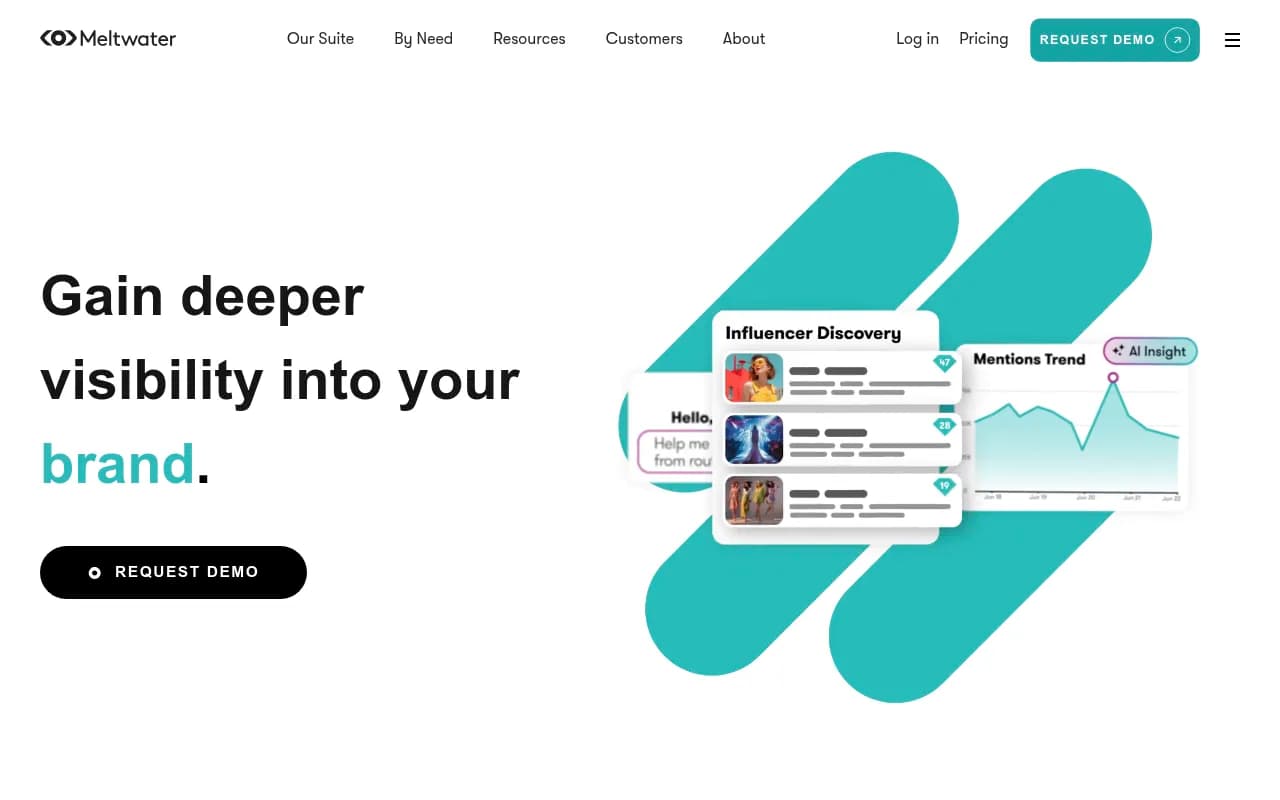
I went back and forth on how charitable to be here, because vendors love to claim they've "added AI monitoring" the moment they ship a feature. Meltwater is the clearest example. It launched GenAI Lens in mid-2025, tracking brand mentions across ChatGPT, Claude, Gemini, Perplexity, Grok, and DeepSeek with a 48-hour refresh cycle. That's a real feature. But a 2026 Presenc AI benchmark testing 25 brands over 60 days found Meltwater's AI add-on detected only about 42% of actual AI mentions, with 48-72 hour latency, compared to 95%+ same-day detection from tools built for this from scratch. Brandwatch, Brand24, and Mention had no AI-answer tracking at all as of early-to-mid 2026 according to the same evaluations.
The gap isn't laziness. It's architecture. Traditional monitoring crawls and indexes static content once it's published. AI monitoring has to repeatedly query live models with varied prompts, because the same question can produce different answers depending on phrasing, region, and even the day you ask, then classify what comes back. That's a fundamentally different (and more expensive) infrastructure problem, which is why bolt-on features tend to lag.
What actually changes when you monitor AI answers
A few things about AI-answer monitoring make it behave nothing like tracking news coverage:
Sources move in a way news coverage never does. Promptwatch's citation data shows ChatGPT's Reddit citation share sat around 3.8% for weeks in July and early August 2026, then dropped to under 1% in a single day on August 14, an 86% relative collapse that never recovered during the tracked window. Google AI Overviews and AI Mode saw only gradual declines over the same period, no cliff. If your brand's visibility was riding on a Reddit thread, that channel could vanish between Monday and Tuesday, and a traditional monitor watching news and social would show absolutely nothing wrong.
Each AI engine has its own citation diet. ChatGPT leans heavily on Reddit for social citations; Google AI Overviews and Grok lean on YouTube; X barely registers anywhere. Treating "AI visibility" as one undifferentiated thing misses that a brand can be strong in Gemini's answers and invisible in ChatGPT's, for structural reasons that have nothing to do with product quality.
The number of citation slots is smaller and more contested. ChatGPT typically surfaces around 5 sources per web-search response, while Google AI Overviews shows closer to 10 and Perplexity is remarkably stable at almost exactly 10. Microsoft Copilot has swung from under 2 to nearly 17 sources within weeks, evidence its retrieval system is still being rebuilt. Fewer slots on ChatGPT means each citation matters more, closer to fighting for one of five ad spots than one of ten organic listings.
Crawler access is a monitoring blind spot of its own. OpenAI's crawlers made up 79.8% of verified AI-crawler requests in the week of August 31-September 6, 2026, down from 94.8% just a few months earlier in June, a fast redistribution toward Anthropic, Google, Perplexity, and Mistral. A robots.txt rule or CDN setting that looked harmless a year ago can quietly cut a brand out of a crawler's index today, and you won't see it unless you're watching server logs, not just citation dashboards.
Sentiment reads differently. The same Presenc AI study found AI-mention sentiment classification lags traditional sentiment accuracy by about 18 points, because AI answers tend to give mixed, nuanced verdicts, praising one attribute while criticizing another, rather than the clearly positive or negative tone a news article usually carries. Keyword-based sentiment tools built for headlines struggle with that kind of hedge.
Head-to-head: what each category actually covers
| Capability | Traditional media monitoring (Meltwater, Cision, Brandwatch, Brand24, Mention) | AI brand monitoring (Promptwatch, Profound, Scrunch, Otterly.AI, etc.) |
|---|---|---|
| News, print, broadcast | Strong, mature, licensed feeds | Not covered |
| Social listening | Strong on X, Facebook, Instagram, some TikTok | Only as a citation source inside AI answers |
| ChatGPT / Gemini / Claude / Perplexity tracking | Missing or shallow add-on | Core function |
| AI crawler / bot activity logs | Not tracked | Available on platforms like Promptwatch |
| Detection latency for AI mentions | 48-72 hours where available at all | Hours, often same-day |
| Narrative and share-of-voice across channels | Yes, for earned and social media | Emerging, some platforms now blend both |
| Content fixes based on findings | Rarely, mostly reporting | Some platforms auto-generate and publish content |
No row in this table should surprise anyone who's used both kinds of tools, but seeing them side by side makes the point: these aren't competing products, they're covering two different halves of the same reputation.
The metric that's replacing (or joining) share of voice
Communications teams have measured "share of voice" for years: what percentage of coverage or conversation mentions your brand versus competitors. The AI-search equivalent is starting to get called "share of model," the percentage of AI assistant answers in a category that mention or recommend your brand. The framing I find useful, borrowed from a glossary entry I read while researching this: share of voice is rented, since it responds to spend within a quarter, while share of model is earned, because it moves on the slower timescale of model training cycles and which sources a model trusts. You can't buy your way into a ChatGPT answer the way you can buy a sponsored placement in a news cycle.
Measuring it properly means running the same buyer questions repeatedly against multiple models to average out run-to-run variation, since one query on one day isn't a reliable signal. Yotpo's 2026 GEO guide notes brands should expect 40-60% monthly variance in AI citation counts, which is a wild number if you're used to news coverage staying roughly stable week to week.
Why this isn't just a marketing problem
The case that keeps coming up in every conversation about AI and brand risk is Moffatt v. Air Canada. In February 2024, a British Columbia tribunal found Air Canada liable for negligent misrepresentation after its website chatbot gave a customer wrong information about a bereavement fare. Air Canada actually argued the chatbot was "a separate legal entity responsible for its own actions." The tribunal called that a remarkable submission and rejected it outright, ruling that a company is responsible for everything on its site, static page or AI-generated answer, the same way.
That ruling is small in dollar terms, about $812 CAD, but it settles a principle that matters here: what an AI system says about you or on your behalf is treated as your voice. Traditional media monitoring was never built to catch that kind of exposure, because it was designed to watch what third parties say about you, not what an AI intermediary says while representing you or answering questions about you.
So which tools actually cover this well
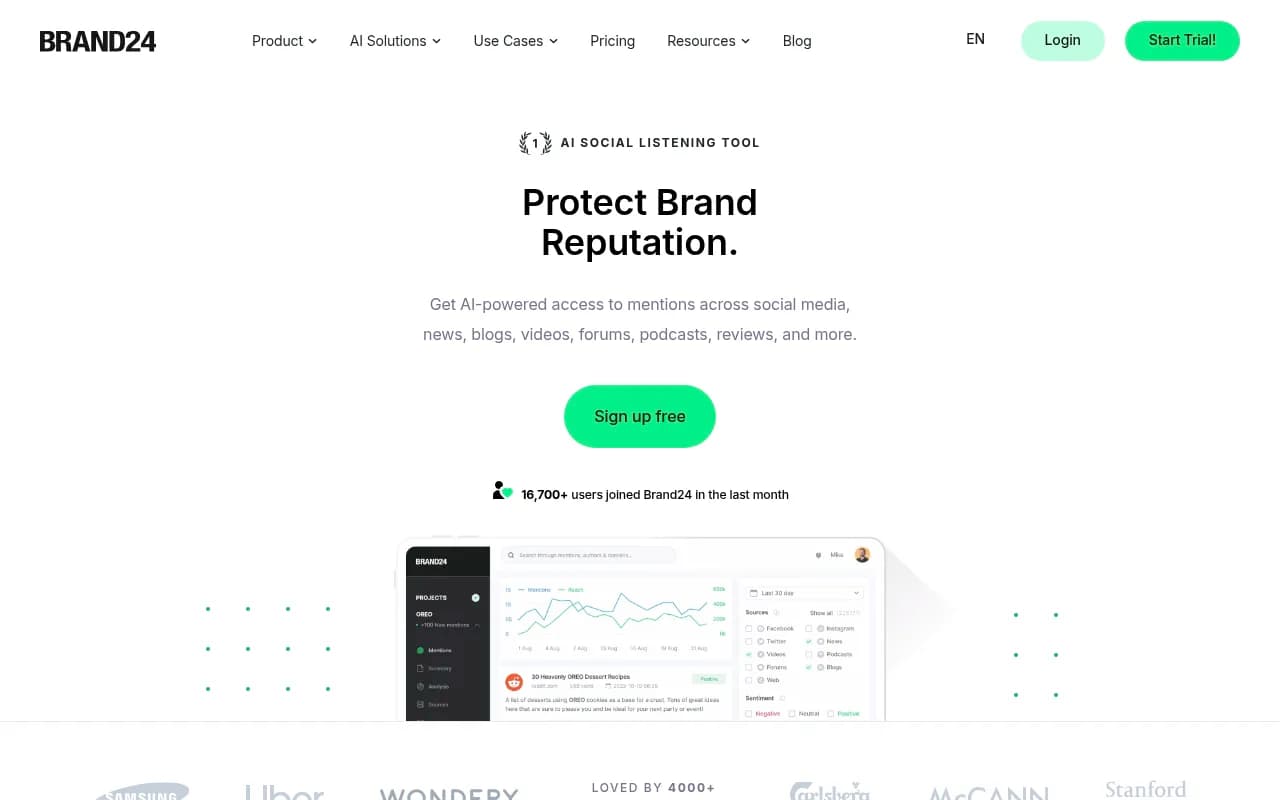
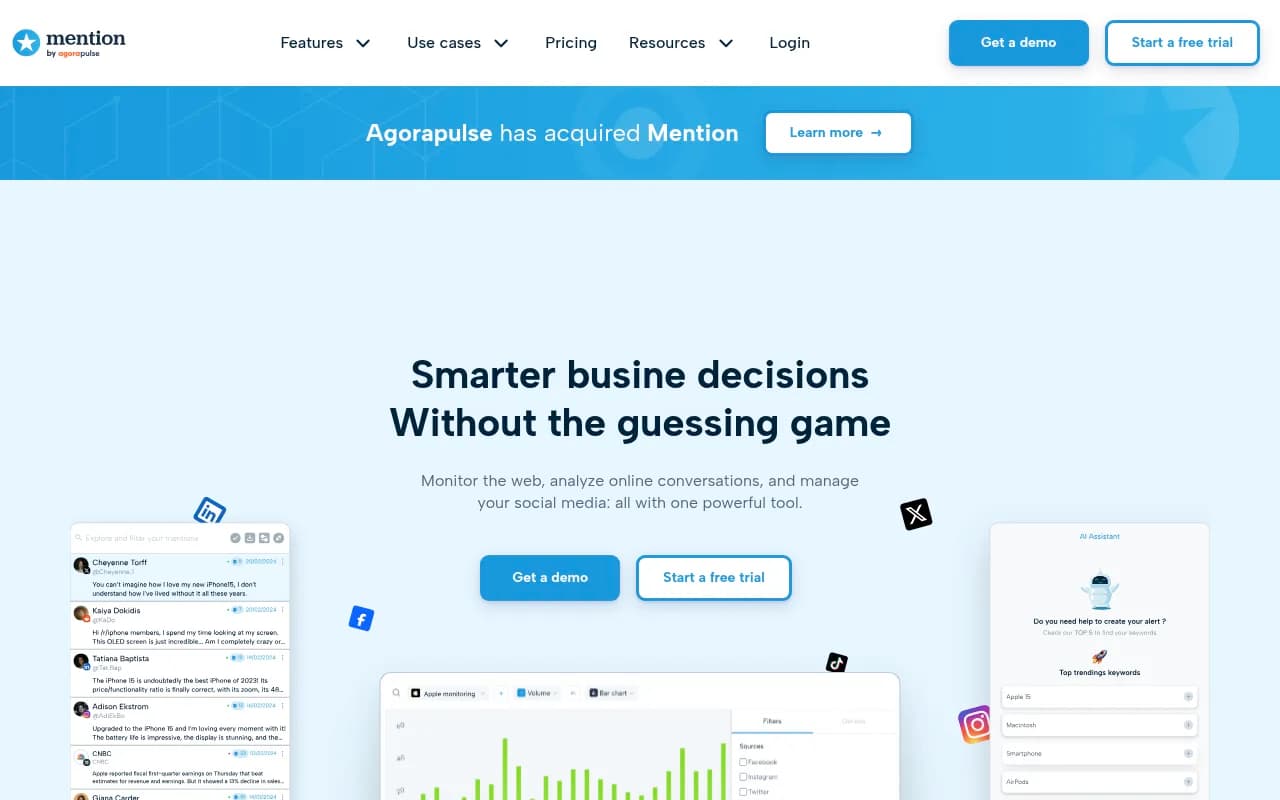
For the traditional side, Meltwater, Brand24, and Mention remain solid choices if news, broadcast, and social listening are your priority.
For the AI-answer side specifically, Promptwatch is worth a look because it goes further than most competitors in this category. It monitors the real user-facing interfaces of ChatGPT, Gemini, Claude, Perplexity, Grok, and Google AI Overviews and AI Mode rather than relying only on APIs, which matters because what a model shows a user in the UI can differ from raw API output. It also pulls in AI crawler logs (which crawlers hit your site, what they read, whether they error out), Reddit and YouTube citation tracking specifically, and a content gap analysis feature that turns findings into actual briefs and published pages rather than just a dashboard full of numbers.

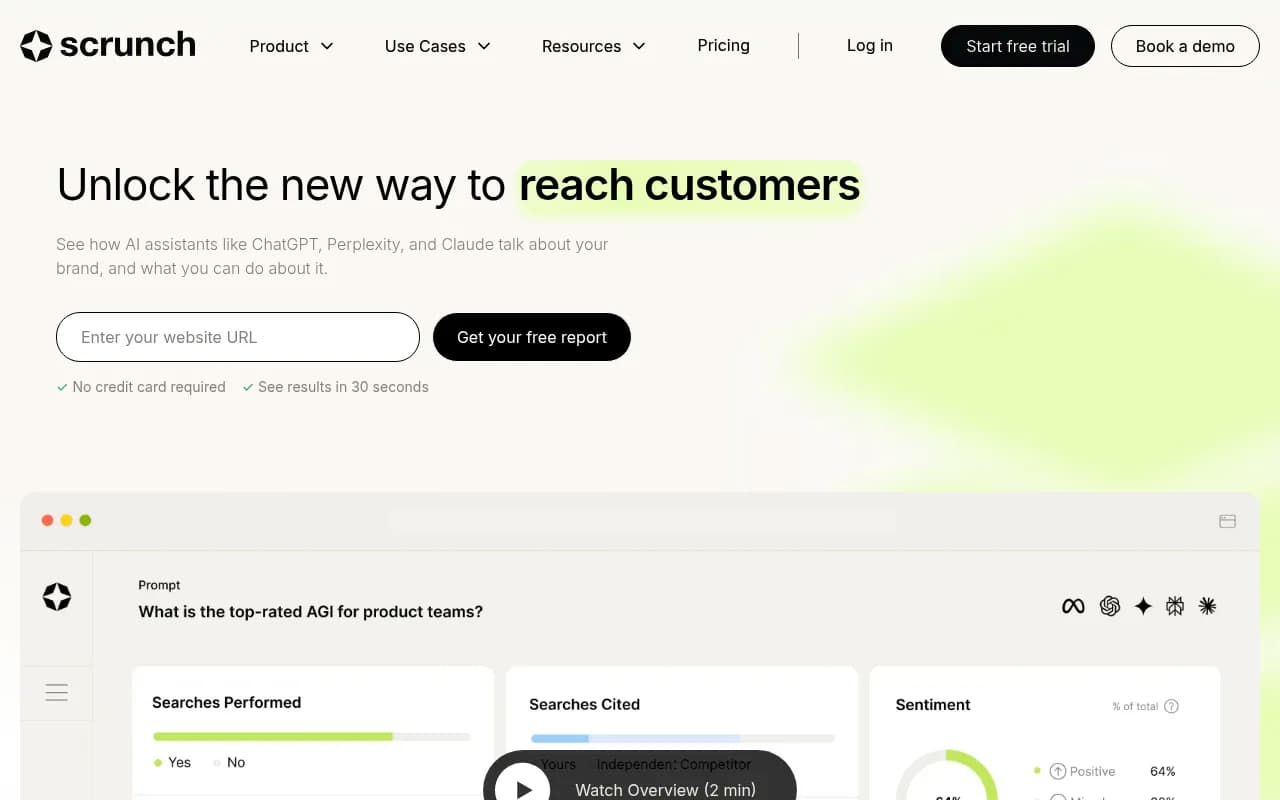
Other dedicated AI visibility platforms worth comparing include Profound, Scrunch, and Otterly.AI, though most of these stop at monitoring and don't help you close the loop with content production.


The realistic setup for most teams
The Presenc AI benchmark I mentioned earlier found something practical: pairing a dedicated AI monitoring tool with a traditional monitor scored 93/100 combined, versus 71/100 for the best single tool trying to do everything. That tracks with what I've seen elsewhere in this space. Nobody has fully merged these two disciplines yet, and until someone does, running two tools side by side, one for news and social, one for AI answers, is the honest answer for 2026.
A few starting points depending on budget and team size:
- Small team, tight budget: Brand24 or Mention for traditional coverage, paired with a lower-cost AI tracker like Otterly.AI.
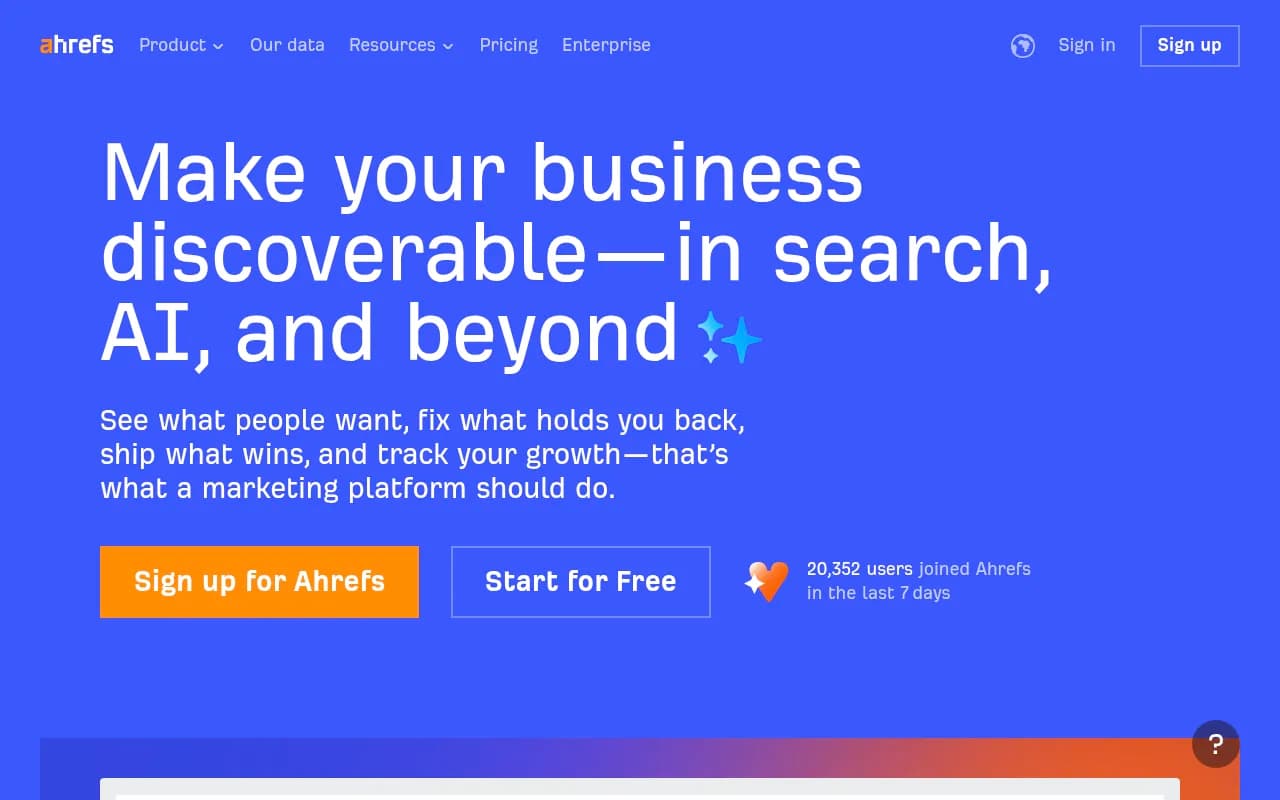
- Mid-market marketing team already doing SEO: Semrush's AI Visibility Toolkit or Ahrefs Brand Radar if you want AI tracking bundled into a tool you already pay for.
- Teams that need the fuller stack, crawler logs, citation trend classification, content generation tied to what's actually cited: Promptwatch's Professional or Business tiers cover multiple sites, prompt volumes, and automated content publishing in one place.
- Enterprise PR teams with existing Meltwater or Cision contracts: keep them for broadcast and print, but don't rely on their AI add-ons as your primary AI-visibility signal, the latency and detection gaps in the Presenc AI study are large enough to matter.
If you want to browse more options in either category, the GEO software directory at bestgeosoftware.com and the AI rank tracking tools listed at ai-rank-tools.com are both good places to compare feature sets before committing to a subscription.
One last thing worth saying plainly: the two disciplines will probably keep converging. Meltwater's own August 2026 AI Search Visibility Report noted earned media's overall citation share dropped below 30% while LinkedIn climbed into the top three cited sources, a sign that the line between "traditional coverage" and "AI-cited source" is already blurring at the data level, even if the tooling hasn't caught up yet.