Key Takeaways
- Writesonic is a full-stack GEO platform with content generation built in -- LLM Pulse is monitoring-focused with lighter optimization features
- Pricing: LLM Pulse starts cheaper (€49/mo vs $39/mo) but Writesonic includes content creation credits in every plan
- Both track 10+ AI models including ChatGPT, Perplexity, Gemini, and Google AI Mode
- Writesonic offers Reddit/UGC forum tracking and citation gap analysis -- LLM Pulse focuses on prompt tracking and sentiment analysis
- LLM Pulse has a 14-day free trial vs Writesonic's standard trial period
- Choose Writesonic if you need to create and optimize content; choose LLM Pulse if you mainly want to monitor and analyze
Overview
Writesonic
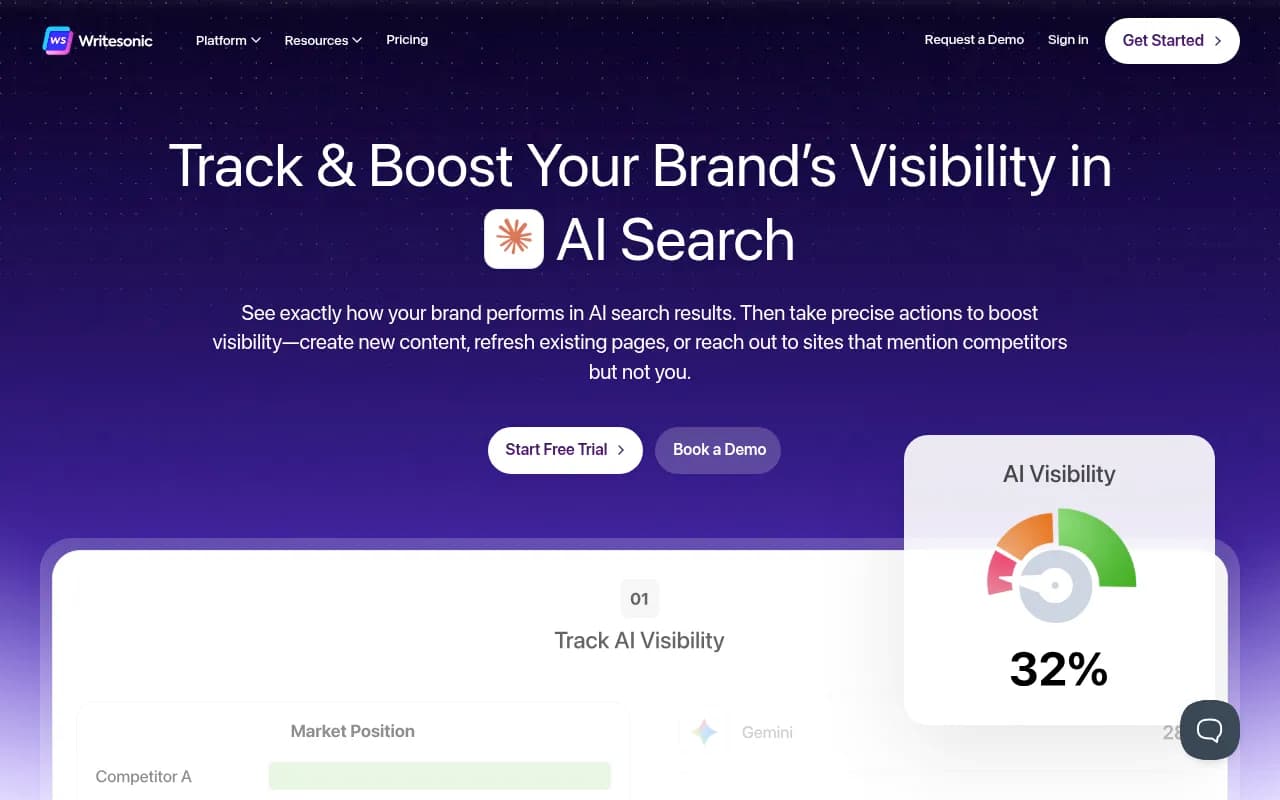
Writesonic positions itself as an end-to-end AI search visibility platform that goes beyond monitoring. It tracks how brands appear across ChatGPT, Perplexity, Gemini, and 10+ AI models, then helps you fix citation gaps with built-in content generation and optimization tools. The platform targets brands that want to take action on their AI visibility data, not just watch it.
Trusted by Series A startups through Fortune 500 companies, Writesonic combines tracking, gap analysis, content creation, and Reddit/UGC forum monitoring in one platform. The pitch: see where you're invisible in AI search, then generate the content needed to fix it.
LLM Pulse
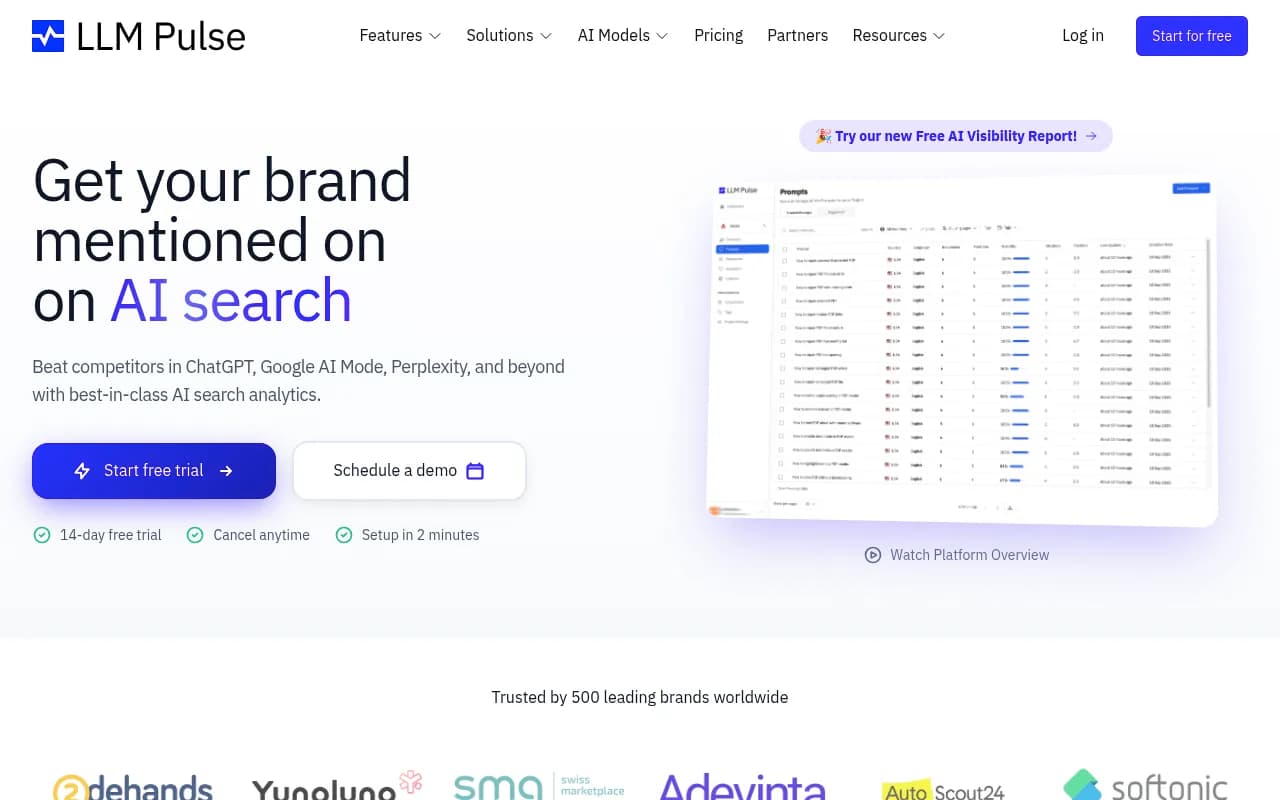
LLM Pulse describes itself as "your radar in the world of generative AI." It tracks key prompts over time and shows how AI sources reference your brand across major platforms. Used by 500+ brands worldwide, LLM Pulse focuses on visibility measurement, citation analysis, and sentiment tracking.
The platform offers a three-step workflow: track what AI models say about you, analyze your visibility score and share of voice, then get AI-powered content recommendations. It's lighter on the optimization side compared to Writesonic but emphasizes clean analytics and competitor benchmarking.
Side-by-Side Comparison
| Feature | Writesonic | LLM Pulse |
|---|---|---|
| Starting price | $39/mo (Lite) | €49/mo (~$53/mo, Starter) |
| Free trial | Yes | 14 days |
| AI models tracked | 10+ (ChatGPT, Perplexity, Gemini, Google AI Mode, DeepSeek, Grok, Claude, Copilot, Meta AI, AI Overviews) | 10+ (ChatGPT, Perplexity, Gemini, Google AI Mode, AI Overviews, DeepSeek, Grok, Claude, Copilot, Meta AI) |
| Content generation | ✓ Built-in AI writer | Limited recommendations |
| Citation gap analysis | ✓ Yes | Basic |
| Reddit/UGC tracking | ✓ Yes | ✗ No |
| Sentiment analysis | ✓ Yes | ✓ Yes |
| Competitor benchmarking | ✓ Yes | ✓ Yes |
| Prompt tracking | ✓ Yes | ✓ Yes |
| Content refresh tools | ✓ Yes | ✗ No |
| Multi-language support | ✓ Yes | ✓ Yes |
| API access | Enterprise | Not specified |
| Annual discount | 20% | 17% |
Pricing comparison
| Plan | Writesonic | LLM Pulse |
|---|---|---|
| Entry tier | Lite: $39/mo | Starter: €49/mo (~$53/mo) |
| Prompts included | Not specified | 40 prompts |
| Mid tier | Not specified | Growth: €99/mo (100 prompts) |
| High tier | Advanced: $499/mo | Scale: €299/mo (300 prompts) |
| Enterprise | Custom pricing | Not listed |
| Free trial | Yes (duration not specified) | 14 days |
| Annual savings | 20% | 17% |
Writesonic's pricing structure isn't fully detailed on their site but ranges from $39/mo to $499/mo with enterprise options. LLM Pulse is more transparent with prompt-based tiers. The key difference: Writesonic bundles content creation into every plan, while LLM Pulse charges purely for monitoring and analysis.
Feature deep-dive
AI model coverage
Both platforms track the same 10+ AI models: ChatGPT, Perplexity, Gemini, Google AI Mode, AI Overviews, DeepSeek, Grok, Claude, Copilot, and Meta AI. This is table stakes for any serious GEO platform in 2026.
The difference is in how they present the data. Writesonic emphasizes actionable insights tied to content gaps. LLM Pulse focuses on clean dashboards showing visibility scores, citation rates, and share of voice over time. Both approaches work -- it depends whether you want raw analytics or guided optimization.
Verdict: Tie on coverage, different philosophies on presentation.
Tracking and monitoring
LLM Pulse's core strength is prompt tracking. You define the questions that matter to your business, and it runs them weekly across all models. The dashboard shows exactly what each AI says about you, which sources get cited, and how your visibility score trends over time. Sentiment analysis flags negative or inaccurate responses.
Writesonic tracks prompts too but layers on citation gap analysis. It shows which prompts competitors rank for but you don't, then points to the specific content topics you're missing. This is more prescriptive than LLM Pulse's approach.
Verdict: LLM Pulse wins on pure monitoring clarity. Writesonic wins if you want the monitoring to tell you what to do next.
Content generation and optimization
This is where the platforms diverge sharply.
Writesonic includes an AI writing agent that generates articles, listicles, and comparison pages grounded in citation data. The workflow: identify a gap, generate content to fill it, publish, then track whether your visibility improves. It's a closed loop from insight to action to measurement.
LLM Pulse offers "AI-powered content recommendations" but these are lighter -- suggestions on what to write, not the actual content. You still need to create it yourself or use another tool.
Verdict: Writesonic by a mile if content creation matters. LLM Pulse if you have writers and just need direction.
Reddit and UGC forum tracking
Writesonic tracks Reddit threads and user-generated content forums that influence AI recommendations. This matters because AI models increasingly cite Reddit discussions, especially for product recommendations and comparisons. Seeing which threads mention competitors but not you is valuable.
LLM Pulse doesn't list Reddit tracking as a feature. It focuses on direct AI model responses and the sources they cite in those responses.
Verdict: Writesonic wins for brands that care about Reddit and forum visibility.
Citation and source analysis
Both platforms show which sources AI models cite when answering prompts. LLM Pulse presents this as a list of domains and URLs with citation frequency. Writesonic does the same but adds competitor citation analysis -- see which sites competitors get cited from that you don't.
LLM Pulse's citation view is cleaner and easier to scan. Writesonic's is more action-oriented ("here's who to reach out to").
Verdict: LLM Pulse for pure analysis, Writesonic for actionable outreach.
Competitor benchmarking
Both platforms let you track competitors and compare share of voice. LLM Pulse shows visibility scores side-by-side across models. Writesonic does the same but also highlights content gaps -- prompts where competitors appear but you don't.
The data is similar; the framing differs. LLM Pulse is about knowing where you stand. Writesonic is about knowing where you stand and what to do about it.
Verdict: Tie, with Writesonic slightly ahead for prescriptive insights.
User interface and ease of use
LLM Pulse emphasizes a clean, dashboard-first experience. The three-step workflow (track, analyze, optimize) is straightforward. Setup takes "2 minutes" according to their site, and the interface looks polished in screenshots.
Writesonic's interface is more feature-dense. There's more to navigate because there's more functionality (content generation, Reddit tracking, gap analysis). This can feel overwhelming if you just want to check a few metrics.
Verdict: LLM Pulse wins for simplicity. Writesonic wins for power users who want all the tools in one place.
Reporting and integrations
Neither platform details extensive integrations publicly. Writesonic mentions API access at the enterprise level. LLM Pulse doesn't specify integrations but offers CSV exports and dashboards you can share with stakeholders.
This is an area where both platforms could be stronger. For context, tools like Promptwatch offer Looker Studio integration and a full API for custom reporting workflows.

Verdict: Both are basic here. Enterprise users will want to ask about API and integration options directly.
Pros and cons
Writesonic pros
- Built-in content generation closes the loop from insight to action
- Reddit and UGC forum tracking catches discussions that influence AI
- Citation gap analysis is prescriptive, not just descriptive
- Content refresh tools help you update existing pages
- Trusted by Fortune 500 brands
Writesonic cons
- More expensive at the high end ($499/mo Advanced tier)
- Feature-dense interface has a steeper learning curve
- Pricing details aren't fully transparent on the website
- May be overkill if you only need monitoring
LLM Pulse pros
- Clean, easy-to-navigate dashboard
- Transparent prompt-based pricing (40/100/300 prompts per tier)
- 14-day free trial lets you test before committing
- Cheaper entry point (€49/mo vs $39/mo, but closer in practice)
- Strong focus on sentiment analysis and visibility scoring
LLM Pulse cons
- No built-in content generation -- recommendations only
- Missing Reddit and UGC forum tracking
- Less prescriptive on what actions to take
- Lighter on optimization tools compared to Writesonic
- Fewer details on enterprise features and integrations
Who should pick which tool
Choose Writesonic if:
- You want an all-in-one platform that tracks, analyzes, and creates content
- Reddit and forum discussions matter to your brand
- You need citation gap analysis to find content opportunities
- You have budget for a more expensive tool and want the full feature set
- You're a larger brand (Series A to Fortune 500) that needs enterprise-grade optimization
Choose LLM Pulse if:
- You mainly need monitoring and analytics, not content creation
- You already have writers and just need direction on what to write
- You want a simpler, cleaner interface without feature overload
- You're budget-conscious and want transparent prompt-based pricing
- You're a smaller team (startup, agency, solo marketer) that values ease of use
Consider both if:
- You're serious about AI search visibility and want to compare dashboards during free trials
- Your needs fall somewhere in the middle (some content creation, some pure monitoring)
- You want to benchmark pricing and features before committing to annual billing
Final verdict
Writesonic and LLM Pulse solve the same core problem -- tracking brand visibility in AI search -- but with different philosophies. Writesonic is the power tool for brands that want to optimize aggressively. LLM Pulse is the clean analytics dashboard for brands that want to monitor and understand.
If you need to create content based on your visibility data, Writesonic is the obvious choice. The built-in AI writer and citation gap analysis turn monitoring into action. If you have writers on staff and just need to know where you stand, LLM Pulse's simpler interface and transparent pricing make more sense.
Neither platform is a bad choice. The question is whether you want a full-stack GEO platform or a focused monitoring tool. Try both free trials and see which workflow fits your team.
One-liner: Writesonic is the optimization platform; LLM Pulse is the analytics dashboard. Pick based on whether you need to create or just understand.