Key Takeaways
- Scrunch starts at $250/mo with a 7-day trial, while Limy AI starts at $449/mo -- nearly double the entry price
- Both platforms monitor AI search visibility across ChatGPT, Perplexity, Claude, and other LLMs, but take different approaches to optimization
- Scrunch includes an Agent Experience Platform (AXP) that creates AI-optimized versions of your site -- Limy AI focuses on step-by-step optimization actions and sentiment analysis
- Limy AI emphasizes revenue attribution and B2A (Business-to-Agent) positioning, while Scrunch covers broader AI customer experience
- For teams under 10 people or startups testing AI visibility, Scrunch's lower entry point makes more sense. For enterprise brands focused on revenue tracking, Limy AI's positioning is clearer.
- Neither platform offers the content gap analysis and AI writing capabilities that tools like Promptwatch provide -- both are monitoring and optimization platforms, not content generation tools
Overview
Scrunch
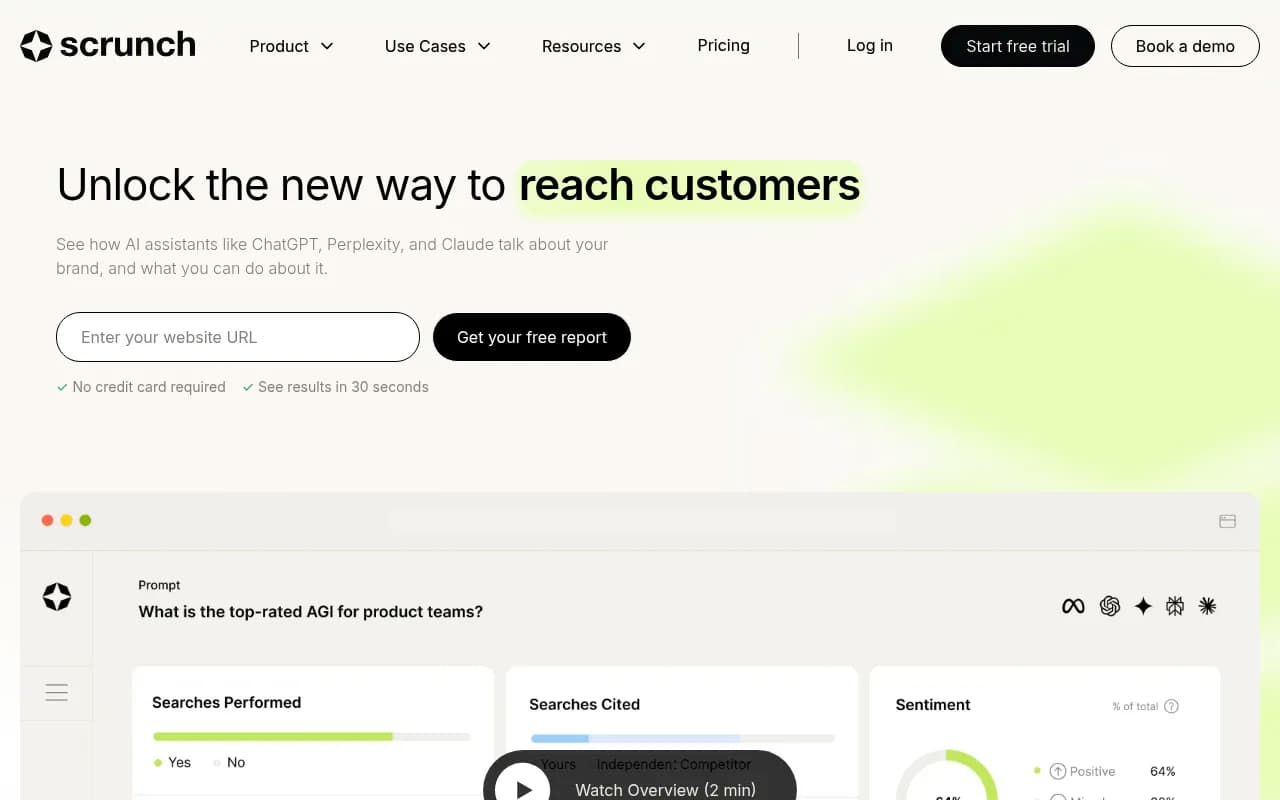
Scrunch positions itself as an AI customer experience platform. It monitors how AI assistants like ChatGPT, Perplexity, and Claude talk about your brand, then helps you do something about it. The platform covers three main areas: monitoring (track brand presence across LLMs), insights (understand how AI interprets your site), and an Agent Experience Platform that creates parallel, AI-optimized versions of your website.
Scrunch has over 500 companies using it, including Lenovo, Clerk, and Penn State University. The platform emphasizes real-time AI bot crawl tracking and error detection -- you can see exactly when AI bots hit your site and what breaks.
Limy AI
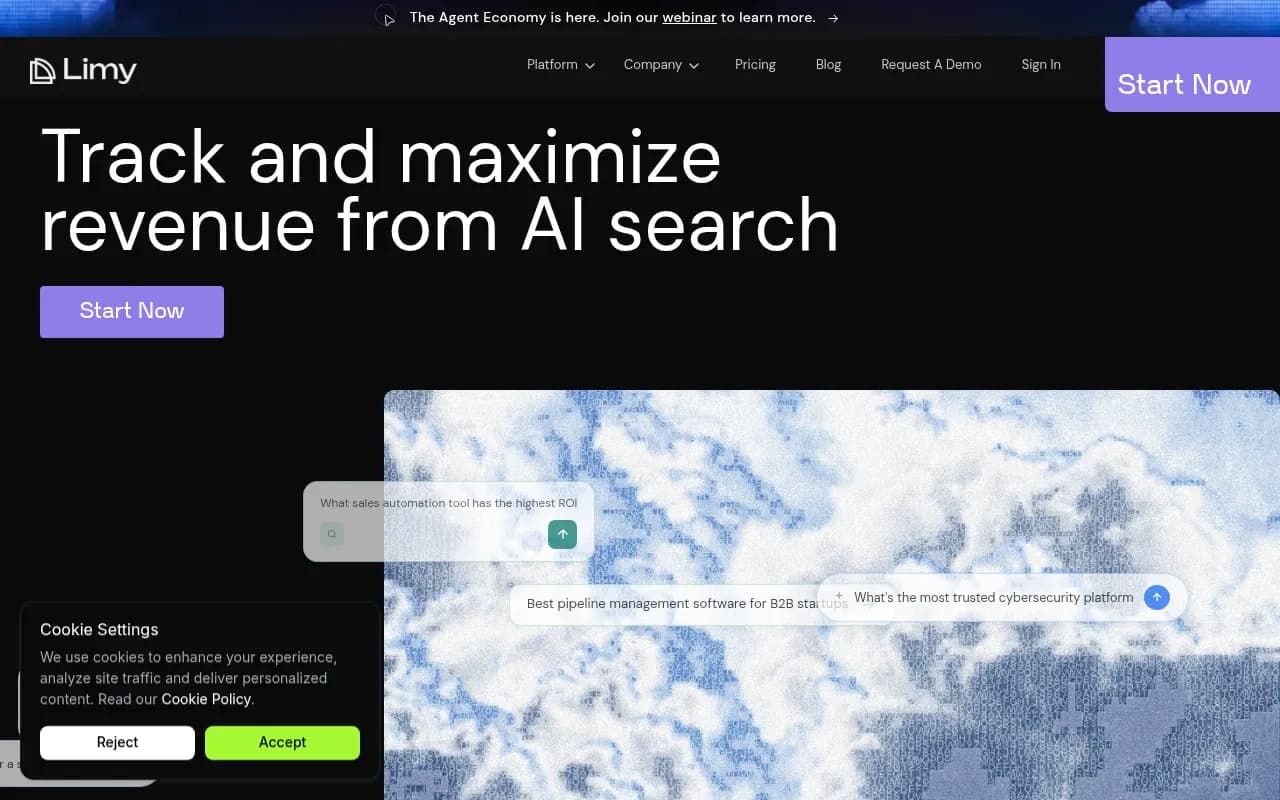
Limy AI calls itself a B2A (Business-to-Agent) optimization platform. The core pitch: businesses now sell products to AI agents that evaluate, choose, and act on behalf of humans. Limy helps you make sure your brand visibility in LLMs is "convertible and measurable."
The platform tracks and measures brand presence in AI search engines, provides step-by-step optimization actions, analyzes sentiment, and ties visibility to revenue. Limy AI's messaging is more explicitly revenue-focused than Scrunch's broader "customer experience" framing.
Side-by-side comparison
| Feature | Scrunch | Limy AI |
|---|---|---|
| Starting price | $250/mo (annual billing) | $449/mo |
| Free trial | 7 days | Not specified |
| AI models monitored | ChatGPT, Perplexity, Claude, others | ChatGPT, Perplexity, Claude, others |
| Real-time bot crawl logs | ✓ | Not specified |
| Error detection | ✓ | Not specified |
| Citation analysis | ✓ | ✓ |
| Competitor tracking | ✓ | ✓ |
| Sentiment analysis | Not specified | ✓ |
| Revenue attribution | AI traffic trends | Explicit revenue tracking |
| Agent Experience Platform | ✓ (AI-optimized site versions) | Not specified |
| Optimization actions | Tips and insights | Step-by-step actions |
| User seats | Not specified | Not specified |
| Target audience | Brands, agencies | Enterprise brands, B2B |
Pricing breakdown
Scrunch is more transparent about pricing tiers:
| Plan | Scrunch | Limy AI |
|---|---|---|
| Entry tier | $250/mo (Starter, annual) | $449/mo |
| Mid tier | $417/mo (Growth, annual) | Not disclosed |
| Enterprise | Custom | Custom |
| Free trial | 7 days | Not specified |
Limy AI's starting price is 80% higher than Scrunch's entry point. For a small team testing AI visibility, that's a meaningful difference. Scrunch also offers a clear 7-day trial with no credit card required -- Limy AI's trial terms aren't public.
Neither platform discloses what you get at each tier (prompt limits, site limits, user seats). You'll need to talk to sales for specifics.
Monitoring and tracking
Both platforms cover the basics: track how often your brand appears in AI responses, which prompts trigger mentions, how you rank against competitors, and which sources AI models cite.
Scrunch's differentiator here is real-time AI bot crawl tracking. You get a live feed showing when ChatGPT's crawler, Perplexity's bot, or Claude's indexer hits your site. You can see which pages they read, what errors they encounter, and how often they return. This is useful for diagnosing indexing issues -- if AI models aren't citing you, the first question is whether they can even read your site.
Limy AI doesn't highlight crawl logs in its messaging. The focus is more on the output side: what AI models say about you, sentiment (positive/negative/neutral), and how that connects to revenue.
Both platforms let you filter by persona, geography, topic, and competitor. Both track trends over time. The core monitoring feature set is similar.
Verdict: Scrunch has an edge if you care about the technical side (can AI bots crawl my site?). Limy AI is more about the business outcome (what are they saying and does it drive revenue?).
Optimization and insights
This is where the platforms diverge more clearly.
Scrunch provides "actionable tips to move up the ranks" and shows you which sites AI loves to cite. The insights module surfaces patterns -- maybe AI models consistently cite Reddit threads or YouTube videos in your category, signaling where you should build presence. Scrunch also flags errors when AI bots can't crawl your site, so you can fix technical issues.
Limy AI emphasizes "step-by-step optimization actions." The platform tells you what to do next, not just what's happening. Limy also includes sentiment analysis -- you can see if AI models are framing your brand positively, negatively, or neutrally, which matters if you're in a competitive or reputation-sensitive category.
Neither platform generates content for you. If you want AI-written articles optimized for AI search visibility, you'd need a tool like Promptwatch that includes an AI writing agent grounded in citation data.

Verdict: Limy AI's step-by-step action focus is clearer for teams that want to be told what to do. Scrunch's insights are more exploratory -- good for teams that want to understand patterns and make their own decisions.
Agent Experience Platform (Scrunch only)
Scrunch's most distinctive feature is the Agent Experience Platform (AXP). The idea: your website is built for humans, but AI bots read it differently. AXP creates a parallel version of your site that's "translated for AI traffic."
The homepage shows a code snippet example where a human-facing pricing page (263,220 bytes of HTML) presumably gets transformed into something cleaner for AI consumption. The details aren't fully explained on the public site, but the concept is that you serve one version to human visitors and another to AI crawlers.
This is a big bet on the idea that AI-optimized content should be structurally different from human-optimized content. It's not just about keywords or metadata -- it's about reformatting the entire page.
Limy AI doesn't have an equivalent feature. The optimization happens on your existing site.
Verdict: AXP is either a game-changer or overkill depending on your technical resources and how much you believe AI bots need a separate content layer. For most teams, optimizing the main site is simpler. For large enterprises with dev resources, AXP could be worth exploring.
Revenue attribution and B2A positioning
Limy AI's messaging is explicitly about revenue: "make sure your brand visibility in LLMs is convertible and measurable." The platform ties AI visibility to business outcomes. If you're trying to justify AI visibility spend to a CFO, Limy's framing makes that easier.
Scrunch mentions "AI traffic trends" and shows testimonials about 4x growth, but the revenue connection is less central to the pitch. Scrunch is more about understanding and optimizing your AI presence broadly.
Both platforms likely offer some form of traffic attribution (connecting AI visibility to site visits), but Limy AI makes it a core part of the story.
Verdict: If you need to show ROI to finance or leadership, Limy AI's revenue-first positioning is stronger. If you're in an earlier exploration phase, Scrunch's broader "customer experience" framing gives you more room to experiment.
Ease of use and onboarding
Scrunch offers a free report that shows results in 30 seconds with no credit card required. The 7-day trial is clearly advertised. The messaging suggests a low-friction onboarding process.
Limy AI's onboarding isn't detailed on the public site. The "Start Now" CTA goes to a registration page, but trial terms and setup time aren't disclosed.
Both platforms likely require some initial configuration (adding your domain, defining competitors, setting up prompt lists), but Scrunch's "see results in 30 seconds" claim suggests a faster time-to-value.
Verdict: Scrunch appears easier to test. Limy AI's higher price point and less transparent trial suggest a more sales-driven process.
Target audience and use cases
Scrunch's customer logos (Lenovo, Penn State, Clerk) and agency partnerships suggest a broad audience: mid-market companies, universities, and agencies managing multiple clients.
Limy AI's B2A framing and revenue focus skew more enterprise and B2B. The platform is positioned for companies where AI recommendations directly influence purchase decisions -- think SaaS, B2B tools, high-consideration products.
Who should pick Scrunch:
- Agencies managing AI visibility for multiple clients
- Mid-market brands exploring AI search for the first time
- Teams that want technical visibility into AI bot crawling behavior
- Companies with dev resources to experiment with Agent Experience Platform
- Brands that care about AI customer experience broadly, not just revenue
Who should pick Limy AI:
- Enterprise B2B brands where AI agents influence buying decisions
- Companies that need to tie AI visibility to revenue for internal buy-in
- Teams focused on sentiment and reputation management in AI responses
- Organizations that want prescriptive, step-by-step optimization guidance
- Brands with budget for a premium platform ($449/mo+)
Pros and cons
Scrunch pros
- Lower entry price ($250/mo vs $449/mo)
- Clear 7-day free trial with no credit card
- Real-time AI bot crawl logs and error detection
- Agent Experience Platform for creating AI-optimized site versions
- Broader "AI customer experience" positioning
- Over 500 companies using it, including recognizable brands
Scrunch cons
- Less explicit about revenue attribution
- Agent Experience Platform may be overkill for most teams
- Pricing tiers and feature limits not fully disclosed
- No content generation capabilities
Limy AI pros
- Revenue-first positioning makes ROI case easier
- Step-by-step optimization actions (not just insights)
- Sentiment analysis for reputation management
- B2A framing aligns with where the market is heading
- Explicit focus on making visibility "convertible and measurable"
Limy AI cons
- 80% more expensive than Scrunch at entry level
- Trial terms and onboarding process unclear
- Less transparency about features and pricing tiers
- No equivalent to Scrunch's Agent Experience Platform
- Smaller visible customer base
Final verdict
Scrunch wins on price, transparency, and technical depth. If you're testing AI visibility for the first time, want to understand how AI bots interact with your site, or manage multiple clients, Scrunch is the safer bet. The 7-day trial and lower entry price make it easy to experiment.
Limy AI wins on revenue focus and prescriptive guidance. If you're an enterprise brand that needs to justify AI visibility spend, wants step-by-step actions instead of exploratory insights, or operates in a category where AI sentiment matters, Limy AI's positioning is stronger. You're paying a premium for a more business-outcome-oriented platform.
Neither platform replaces a content strategy. Both assume you have content to optimize -- they help you understand and improve how AI models see it. If you're starting from scratch or need to fill content gaps, you'll want a platform that includes content generation, not just monitoring and optimization.
For most teams, I'd start with Scrunch's 7-day trial. The lower price and clearer onboarding make it easier to prove value before committing. If you hit Scrunch's limits or need more revenue-focused reporting, Limy AI is the natural upgrade path.