Key Takeaways
- Omnia focuses on discovery and monitoring with prompt research tools and citation tracking, while Limy AI emphasizes optimization and revenue attribution with step-by-step action plans
- Limy AI starts at $449/mo with a clear pricing structure; Omnia offers custom pricing with a free trial and lower entry point for smaller teams
- Omnia provides better prompt discovery features to find what questions people are actually asking AI engines; Limy AI excels at sentiment analysis and conversion tracking
- Both platforms track major AI engines (ChatGPT, Perplexity, Claude, Gemini), but Limy AI adds revenue attribution to connect visibility to actual sales
- Omnia is better for SEO teams wanting to understand the AI search landscape; Limy AI is built for product marketers who need to prove ROI from AI visibility
- Neither platform offers content generation -- if you need help creating content that ranks in AI search after finding gaps, Promptwatch combines monitoring with an AI writing agent that generates citation-optimized articles
Overview
Omnia
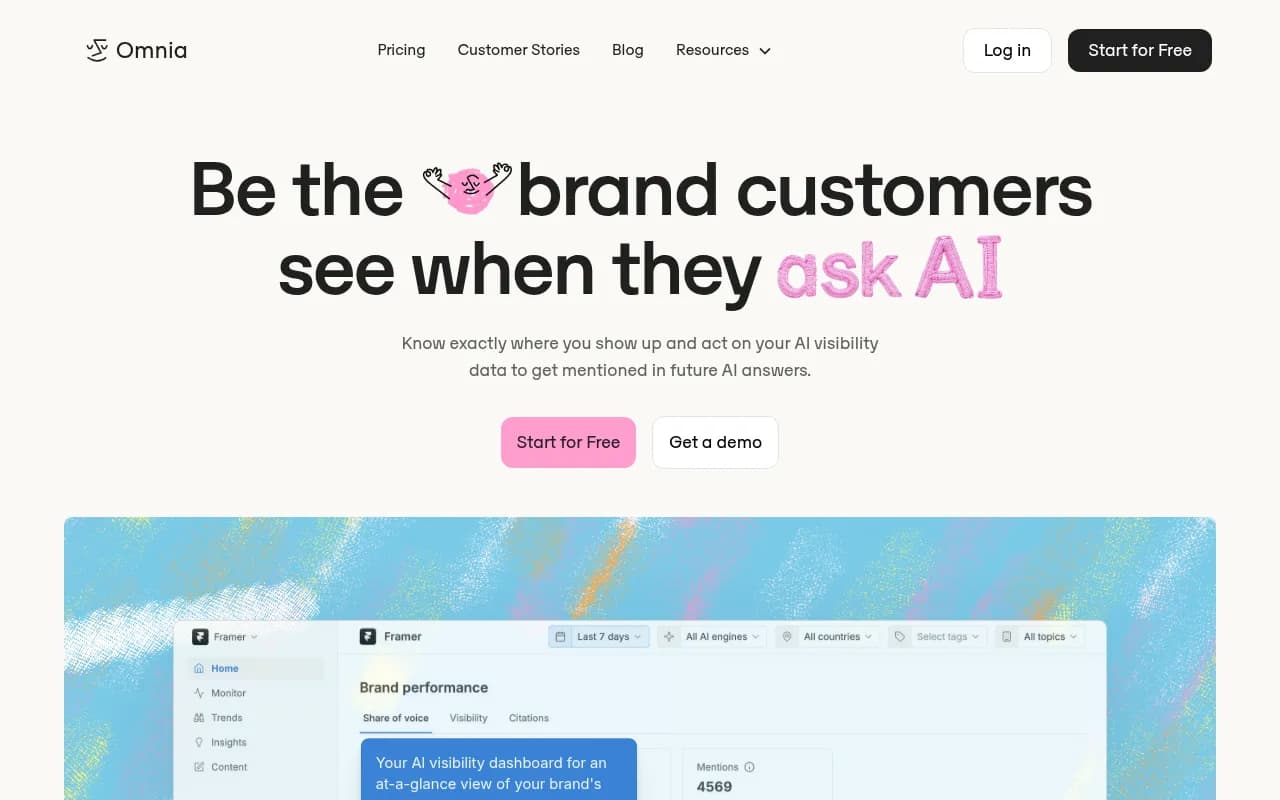
Omnia positions itself as an AI visibility platform built for SEO and marketing teams. The core pitch: monitor citations and mentions across ChatGPT, Perplexity, Google Gemini, and Microsoft Copilot, then translate that data into actionable insights. Omnia's standout feature is prompt discovery -- it helps you figure out what questions people are actually asking AI engines about your industry, not just track predefined queries.
The platform includes share of voice analytics, competitor benchmarking, and citation source tracking. Omnia also promises a "step-by-step AI visibility roadmap" that maps tracking data to content creation, technical SEO, and content placement actions.
Limy AI
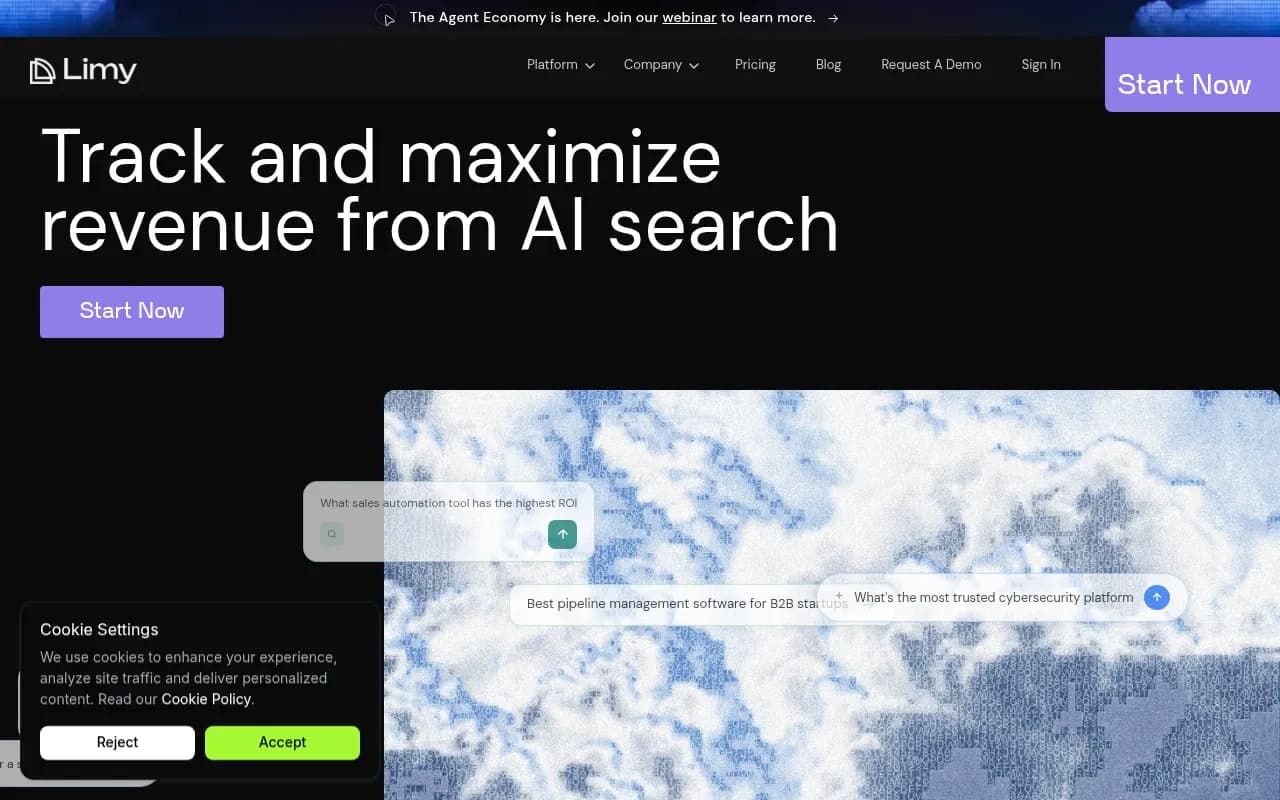
Limy AI calls itself a "B2A (Business-to-Agent) optimization platform" -- the idea being that AI agents are making decisions on behalf of humans, and brands need to optimize for that. Beyond monitoring how ChatGPT, Perplexity, and Claude recommend your products, Limy AI focuses on optimization actions, sentiment analysis, and revenue attribution.
The platform tracks brand mentions, analyzes how AI engines talk about you (positive, negative, neutral), and connects visibility to actual revenue. Limy AI's angle is less about discovering prompts and more about proving that AI visibility drives sales.
Side-by-Side Comparison
| Feature | Omnia | Limy AI |
|---|---|---|
| Starting Price | Custom pricing, free trial available | $449/mo |
| Free Tier | Free trial | No |
| AI Engines Tracked | ChatGPT, Perplexity, Gemini, Copilot | ChatGPT, Perplexity, Claude, others |
| Prompt Discovery | Yes -- finds real questions people ask | Limited |
| Citation Tracking | Yes | Yes |
| Competitor Benchmarking | Yes -- share of voice analytics | Yes |
| Sentiment Analysis | Not mentioned | Yes |
| Revenue Attribution | No | Yes |
| Optimization Actions | Roadmap with content/SEO suggestions | Step-by-step optimization playbook |
| Content Generation | No | No |
| Target Audience | SEO and marketing teams | Product marketers, revenue teams |
| Best For | Understanding the AI search landscape | Proving ROI from AI visibility |
Prompt discovery and research
Omnia wins here. The platform includes a dedicated prompt discovery tool that surfaces real questions customers are asking AI engines about your industry or product. This is huge -- most platforms make you guess which prompts to track or rely on keyword research tools built for traditional search. Omnia shows you the actual language people use when prompting ChatGPT or Perplexity.
Limy AI doesn't emphasize prompt discovery. The focus is on tracking a set of prompts you define, then optimizing your visibility for those specific queries. If you already know what prompts matter, Limy AI works fine. If you're still figuring out what to monitor, Omnia gives you a head start.
Verdict: Omnia for discovery, Limy AI assumes you know what to track.
Citation and source tracking
Both platforms track which sources AI engines cite when they mention your brand. Omnia shows you the URLs and content that ChatGPT or Perplexity pull from -- helpful for understanding whether AI engines are citing your website, a competitor's blog, or a Reddit thread.
Limy AI does the same but layers in sentiment analysis. You see not just where AI engines get their information, but how they talk about you -- positive, negative, or neutral. This matters if you're dealing with reputation issues or want to understand how AI engines frame your brand vs competitors.
Verdict: Tie on citation tracking, Limy AI adds sentiment context.
Competitor benchmarking
Omnia provides share of voice analytics that show how often you appear in AI search results compared to competitors. You can track multiple competitors and see who's winning for specific prompts or topics. The interface emphasizes visual comparisons -- charts and graphs that make it easy to spot gaps.
Limy AI also tracks competitors but frames it around market ownership. The pitch is less about share of voice and more about "owning the market in AI search" -- which competitors are recommended most often, how sentiment differs, and where you're losing ground.
Both platforms do the job. Omnia feels more analytics-focused (good for reporting to stakeholders), Limy AI feels more action-focused (good for prioritizing what to fix).
Verdict: Omnia for reporting, Limy AI for prioritization.
Optimization and actionable insights
This is where the platforms diverge most.
Omnia promises a "step-by-step AI visibility roadmap" that translates tracking data into content creation, technical SEO, and content placement actions. The roadmap is supposed to fill your brand's gaps -- if you're not showing up for a prompt, Omnia tells you what content to create or which technical issues to fix. In practice, this is still a roadmap, not automated execution. You get the plan, you do the work.
Limy AI goes further with what it calls "step-by-step optimization actions." The platform doesn't just tell you what's wrong -- it gives you a playbook for fixing it. Limy AI also emphasizes B2A optimization, meaning it's tuned for how AI agents evaluate and choose products, not just how they surface information. If you're selling a product that AI engines recommend (or don't recommend), Limy AI's optimization angle is more directly useful.
Neither platform generates content for you. If you need help actually creating the articles, listicles, or comparison pages that will rank in AI search, you'll need a separate tool. Promptwatch fills that gap by combining monitoring with an AI writing agent that generates content grounded in citation data.

Verdict: Limy AI for actionable optimization, Omnia for strategic planning.
Revenue attribution and ROI tracking
Limy AI's standout feature: revenue attribution. The platform connects AI visibility to actual sales, so you can prove that showing up in ChatGPT or Perplexity drives revenue. This is critical if you're trying to justify budget for AI search optimization to a CFO or VP of Sales.
Omnia doesn't mention revenue attribution. The focus is on visibility metrics -- impressions, share of voice, citation counts. You can infer that better visibility should drive more traffic and sales, but you're not tracking it directly in the platform.
Verdict: Limy AI if you need to prove ROI, Omnia if visibility metrics are enough.
Pricing comparison
| Plan | Omnia | Limy AI |
|---|---|---|
| Entry Price | Custom pricing (likely lower than $449/mo based on free trial positioning) | $449/mo |
| Free Trial | Yes | Not mentioned |
| Pro Plan | Available for advanced features | Included in base pricing |
| Transparency | Pricing on request | Clear starting price |
Omnia's custom pricing model means you'll need to talk to sales to get a quote. The free trial suggests they're targeting a range of budgets, including smaller teams who might not afford $449/mo. Limy AI's $449/mo starting price is transparent but higher than some competitors.
If you're a small team or agency testing the waters, Omnia's free trial gives you a risk-free way to evaluate. If you're a product marketing team with budget and need to prove ROI, Limy AI's clear pricing and revenue attribution justify the cost.
Verdict: Omnia for flexibility and lower entry point, Limy AI for predictable pricing.
User interface and ease of use
Omnia's interface emphasizes visual analytics -- charts, graphs, and dashboards that make it easy to spot trends. The prompt discovery tool is intuitive, and the roadmap feature walks you through what to do next. Good for teams who need to present data to stakeholders or collaborate across SEO, content, and product marketing.
Limy AI's interface is more action-oriented. The optimization playbook is front and center, and the revenue attribution dashboard connects visibility to sales. Less emphasis on pretty charts, more emphasis on "here's what to fix and why it matters."
Both platforms are usable. Omnia feels like an analytics tool with optimization features; Limy AI feels like an optimization tool with analytics features.
Verdict: Omnia for analytics-first teams, Limy AI for action-first teams.
AI engines covered
Omnia tracks ChatGPT, Perplexity, Google Gemini, and Microsoft Copilot. Solid coverage of the major players, though notably missing Claude.
Limy AI tracks ChatGPT, Perplexity, and Claude, with mentions of "others." Claude is a big deal for B2B and technical audiences, so its inclusion matters if that's your market.
Neither platform covers every AI engine. If you need comprehensive coverage across 10+ models (including Google AI Overviews, Meta AI, Grok, DeepSeek, Mistral), Promptwatch monitors all of them.
Verdict: Limy AI for Claude coverage, Omnia for Gemini and Copilot.
Omnia pros and cons
Pros:
- Prompt discovery tool finds real questions people ask AI engines
- Share of voice analytics make competitor benchmarking visual and intuitive
- Free trial lowers the barrier to entry
- AI visibility roadmap translates data into actionable steps
- Good for SEO teams who need to understand the landscape
Cons:
- No revenue attribution -- can't directly connect visibility to sales
- Custom pricing lacks transparency
- Doesn't track Claude
- No content generation -- you get the plan but have to execute it yourself
- Optimization features are less developed than Limy AI's
Limy AI pros and cons
Pros:
- Revenue attribution connects AI visibility to actual sales
- Step-by-step optimization playbook is more actionable than most competitors
- Sentiment analysis shows how AI engines talk about your brand
- Tracks Claude, which matters for B2B and technical audiences
- Clear pricing at $449/mo
Cons:
- Higher starting price than some competitors
- No free trial mentioned
- Prompt discovery is limited -- assumes you know what to track
- No content generation
- Less emphasis on visual analytics and reporting
Who should pick Omnia
Pick Omnia if you're an SEO or marketing team trying to understand the AI search landscape. The prompt discovery tool is genuinely useful for figuring out what questions people are asking, and the share of voice analytics make it easy to benchmark against competitors. The free trial lets you test before committing, and the lower entry price (likely) makes it accessible for smaller teams.
Omnia works best if you're early in your AI visibility journey and need to map out the terrain before optimizing. It's also a good fit if you need to present data to stakeholders -- the visual analytics and roadmap features make it easy to build a case for investment.
Who should pick Limy AI
Pick Limy AI if you're a product marketing or revenue team that needs to prove ROI from AI visibility. The revenue attribution feature is the killer app here -- you can show that appearing in ChatGPT or Perplexity drives actual sales, not just impressions. The step-by-step optimization playbook is more actionable than Omnia's roadmap, and sentiment analysis adds context that matters for reputation management.
Limy AI works best if you already know which prompts matter and need to optimize your visibility for those specific queries. It's also a better fit if you're selling a product that AI engines recommend directly (e.g. SaaS tools, consumer products) rather than just trying to drive traffic to a website.
Final verdict
Omnia and Limy AI solve different parts of the AI visibility problem. Omnia is better for discovery and understanding -- use it to figure out what prompts matter, how you stack up against competitors, and what content gaps you need to fill. Limy AI is better for optimization and ROI -- use it to fix your visibility issues, track sentiment, and prove that AI search drives revenue.
If you're just starting out, Omnia's free trial and prompt discovery tools give you a foundation. If you're past the discovery phase and need to optimize aggressively, Limy AI's action-oriented approach and revenue attribution justify the higher price.
Neither platform generates content, which is a gap both share. You'll still need to write (or hire someone to write) the articles and pages that will rank in AI search. Tools like Promptwatch bridge that gap by combining monitoring with AI-powered content generation.
Bottom line: Omnia for SEO teams who need to understand the landscape, Limy AI for product marketers who need to prove ROI.