Key Takeaways
- GeoGen is significantly cheaper -- starting at €20/mo vs Omnia's custom pricing (typically higher) -- making it more accessible for small teams and solo marketers
- Omnia focuses heavily on actionable insights with a built-in roadmap feature that translates tracking data into specific optimization steps, while GeoGen is more monitoring-focused
- Both platforms track the major AI models (ChatGPT, Perplexity, Gemini, Copilot), but neither currently offers the content generation capabilities found in platforms like Promptwatch
- GeoGen uses a credits-based system which can get expensive at scale, while Omnia's pricing structure is less transparent but may be more predictable for enterprise use
- Omnia appears to have stronger enterprise traction with recognizable brands like Exoticca and IronHack, while GeoGen targets smaller companies and agencies
- If you need prompt discovery and competitive benchmarking on a budget, GeoGen works. If you want guided optimization with a clearer action plan, Omnia is worth the premium.
Overview
Omnia

Omnia positions itself as an AI visibility platform built specifically for SEO and marketing teams. The core pitch: it doesn't just show you where you appear in AI search results -- it tells you what to do about it. The platform monitors citations across ChatGPT, Perplexity, Gemini, and Copilot, then translates that data into a step-by-step roadmap covering content creation, technical SEO, and content placement.
The company has landed clients like Exoticca, IronHack, and Europa Press, suggesting it's resonating with mid-to-large marketing teams that need more than raw data. Pricing is custom (you have to request a quote), but a free trial is available.
GeoGen
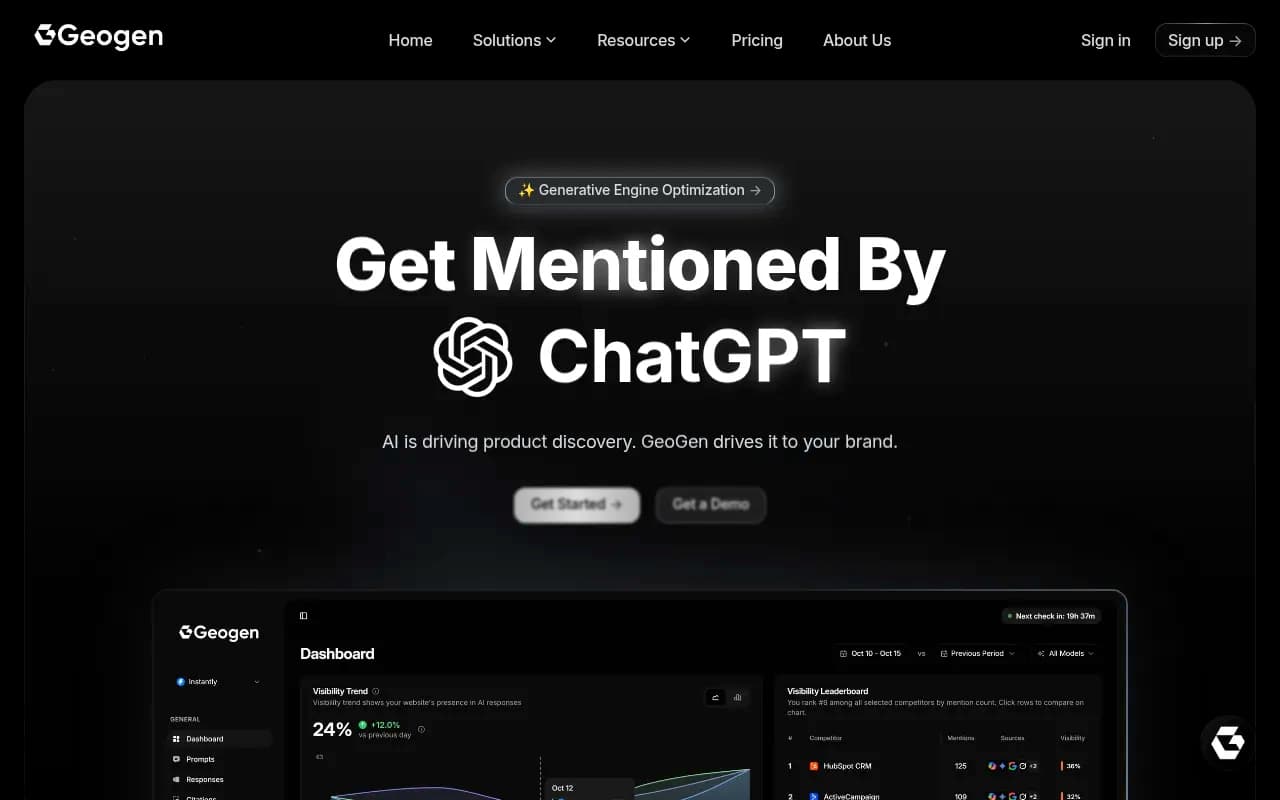
GeoGen takes a more straightforward approach: track your brand mentions across AI search engines, analyze citations, compare against competitors, and optimize content based on what you find. It covers the same core AI models (ChatGPT, Perplexity, Gemini, Copilot, plus Grok) and uses a credits-based pricing model starting at €20/mo.
The platform targets smaller companies and agencies that need visibility tracking without enterprise complexity. Client logos include CloudBlast, ProxyScrape, and TextBroker -- mostly SaaS and digital service companies. The interface looks clean and the pricing is transparent, which matters if you're evaluating tools without a procurement team.
Side-by-side comparison
| Feature | Omnia | GeoGen |
|---|---|---|
| Starting price | Custom pricing (free trial) | €20/mo (Micro plan) |
| AI models tracked | ChatGPT, Perplexity, Gemini, Copilot | ChatGPT, Perplexity, Gemini, Copilot, Grok |
| Prompt discovery | ✓ Real customer questions | ✓ Prompt tracking |
| Competitor benchmarking | ✓ Share of voice analytics | ✓ Competitor rankings |
| Citation analysis | ✓ Source tracking | ✓ Citation tracking |
| Optimization roadmap | ✓ Step-by-step action plan | ✗ Manual optimization |
| Content generation | ✗ Not included | ✗ Not included |
| Pricing model | Custom/enterprise | Credits-based tiers |
| Free trial | ✓ Available | ✗ Paid plans only |
| Target audience | Mid-to-large marketing teams | Small teams, agencies |
| Enterprise features | ✓ Advanced features in Pro | Custom enterprise pricing |
| API access | Not specified | Not specified |
Pricing comparison
This is where things get messy. Omnia doesn't publish pricing -- you have to request a quote. Based on their client roster and positioning, expect enterprise-level pricing (likely $500+/mo for meaningful usage).
GeoGen is transparent:
| Plan | Price (annual) | Credits/month | Best for |
|---|---|---|---|
| Micro | €20/mo | Limited credits | Solo marketers, testing |
| Starter | Not specified | More credits | Small teams |
| Growth | Not specified | Higher volume | Growing brands |
| Pro | €399/mo | Maximum credits | Agencies, multiple brands |
| Enterprise | Custom | Unlimited | Large organizations |
The credits system means you pay per query/check, which can spiral if you're tracking many prompts across multiple AI models. Omnia's custom pricing might actually be more predictable for high-volume users.
For comparison, Promptwatch starts at $99/mo with transparent per-site and per-prompt pricing, plus it includes content generation and crawler log analysis that neither Omnia nor GeoGen offer.

Feature deep-dive
Prompt discovery and tracking
Omnia emphasizes discovering "real questions people ask AI" about your industry or product. The interface shows trending prompts and suggests which ones you should monitor. This is useful if you're not sure what to track yet.
GeoGen offers prompt tracking but doesn't highlight the discovery angle as heavily. You can add prompts to monitor, but it feels more like you need to know what you're looking for upfront.
Verdict: Omnia has a slight edge here for teams starting from scratch. GeoGen works fine if you already know your target prompts.
Visibility and share of voice analytics
Both platforms track where you show up in AI responses and how you compare to competitors. Omnia calls this "share of voice" and presents it with competitor benchmarking. GeoGen offers similar competitor ranking comparisons.
The data looks comparable between the two. You'll see which AI models mention you, how often, and which competitors appear more frequently. Neither platform offers the depth of citation analysis you get from tools like Promptwatch (which tracks 880M+ citations and shows exactly which pages AI models cite).
Verdict: Tie. Both deliver the core visibility metrics you need.
Citation and source analysis
Omnia tracks "what citations AI engines pull information from" -- meaning it shows you which sources the AI models reference when they mention you or your competitors.
GeoGen offers citation tracking as well, though the website doesn't detail how granular this gets.
Neither platform appears to offer Reddit or YouTube tracking, which is a gap. AI models increasingly cite Reddit discussions and YouTube videos, and missing that data means you're flying blind on a major influence channel.
Verdict: Both are adequate but not comprehensive. If you need deep source analysis including Reddit/YouTube, look at Promptwatch.
Optimization and actionability
This is where Omnia separates itself. The platform includes an "AI visibility roadmap" that translates your tracking data into specific actions: content to create, technical SEO fixes, content placement strategies. It's trying to close the gap between "here's the data" and "here's what to do."
GeoGen doesn't offer this. You get the visibility data and citation analysis, but turning that into an action plan is on you.
Omnia's roadmap feature is valuable if your team struggles with the "so what?" question after looking at dashboards. But it's not the same as having an AI writing agent that actually generates the content for you (which is what Promptwatch does).
Verdict: Omnia wins on actionability. GeoGen is monitoring-only.
AI model coverage
GeoGen tracks one more model than Omnia: Grok (X's AI). Whether that matters depends on your audience. If you're targeting X users or tech-forward audiences, Grok coverage is useful. For most brands, the difference is negligible.
Neither platform tracks DeepSeek, Meta AI, or Mistral, which limits your view of the full AI search landscape.
Verdict: GeoGen has a slight edge with Grok, but both have coverage gaps.
User interface and ease of use
Omnia's website shows a polished interface with clear data visualization. The roadmap feature suggests they've thought about workflow, not just data display.
GeoGen's dashboard screenshots look clean and modern. The credits-based system might add complexity (you have to think about credit usage), but the core interface appears straightforward.
Verdict: Both look usable. Omnia might have a smoother workflow for teams that want guided optimization.
Enterprise and agency features
Omnia explicitly targets "SEO and marketing experts" and has recognizable enterprise clients. The custom pricing and Pro Plan suggest they're set up for larger teams.
GeoGen offers custom enterprise pricing but seems more focused on smaller teams and agencies. The €399/mo Pro plan is the highest published tier, which is accessible but not enterprise-scale.
Verdict: Omnia is better positioned for enterprise. GeoGen works for agencies managing multiple small clients.
Pros and cons
Omnia pros
- Actionable roadmap feature turns data into specific optimization steps
- Strong enterprise client base suggests reliability
- Prompt discovery helps teams starting from scratch
- Free trial lets you test before committing
- Share of voice analytics with clear competitor benchmarking
Omnia cons
- No transparent pricing -- you have to request a quote
- No content generation capabilities
- Missing Reddit and YouTube citation tracking
- Doesn't track newer AI models like DeepSeek or Meta AI
- Likely expensive for small teams or solo marketers
GeoGen pros
- Transparent, affordable pricing starting at €20/mo
- Tracks Grok in addition to the major AI models
- Clean, modern interface
- Good fit for agencies managing multiple small clients
- Lower barrier to entry than enterprise-focused competitors
GeoGen cons
- Credits-based pricing can get expensive at scale
- No optimization roadmap or guided action plan
- No content generation features
- Less enterprise traction and support infrastructure
- Still missing Reddit, YouTube, and newer AI model coverage
Who should pick which tool
Pick Omnia if:
- You're a mid-to-large marketing team that needs more than raw data
- You want a guided optimization roadmap, not just tracking
- You have budget for enterprise software and prefer custom pricing
- You're starting from scratch and need help discovering which prompts to monitor
- You value having recognizable brands as co-customers (signals reliability)
Pick GeoGen if:
- You're a small team, solo marketer, or agency on a tight budget
- You want transparent pricing and the ability to start at €20/mo
- You're comfortable turning data into action plans yourself
- You need to track Grok specifically (X/Twitter audience)
- You prefer a credits-based system where you pay for what you use
Consider Promptwatch if:
- You want both monitoring and content generation in one platform
- You need deeper citation analysis (880M+ citations tracked) and Reddit/YouTube insights
- You want AI crawler logs to see how AI engines discover your content
- You need page-level tracking and traffic attribution to connect visibility to revenue
- You want a platform that doesn't just show gaps but helps you fill them with AI-generated content
Final verdict
Omnia and GeoGen both deliver the core AI visibility tracking you need, but they're aimed at different buyers. Omnia is the premium option for teams that want hand-holding -- the roadmap feature is genuinely useful if you're overwhelmed by data and need clear next steps. GeoGen is the budget-friendly option for teams that know what to do with the data once they have it.
Neither platform is a complete solution. Both are monitoring-focused and lack content generation, deep citation analysis, and coverage of emerging AI models. If you're serious about AI search optimization, you'll likely need to pair either tool with a content creation workflow and possibly a more comprehensive platform like Promptwatch for the full picture.
Bottom line: If budget isn't a constraint and you want guided optimization, Omnia is worth the premium. If you're cost-conscious and comfortable with DIY optimization, GeoGen gets you 80% of the way there for a fraction of the price.