Key Takeaways
- Pricing gap: Omnia offers transparent pricing starting around $199/mo with a free trial, while Brandlight starts at $199/mo but pushes toward enterprise deals with custom pricing -- expect $750+/mo for full features
- Target audience: Omnia is built for SEO and marketing teams at mid-market companies; Brandlight targets Fortune 500 enterprises with dedicated implementation resources
- Feature depth: Brandlight offers more prominence tracking and cross-engine analysis; Omnia focuses on actionable insights and step-by-step roadmaps
- Setup complexity: Omnia is self-serve with a quick onboarding flow; Brandlight requires dedicated implementation and ongoing optimization resources
- Best for small teams: Omnia wins here -- transparent pricing, easier setup, and tools designed for teams without enterprise budgets
- Best for enterprises: Brandlight if you have the budget and resources for a white-glove implementation; otherwise Omnia still delivers the core tracking you need
Overview
Both Omnia and Brandlight tackle the same problem: helping brands understand and improve their visibility in AI search results. As ChatGPT, Perplexity, Claude, and other AI engines replace traditional search for millions of users, showing up in those responses matters. These platforms track where your brand appears, which competitors are winning, and what content AI models cite.
The difference is in execution and who they're built for.
Omnia
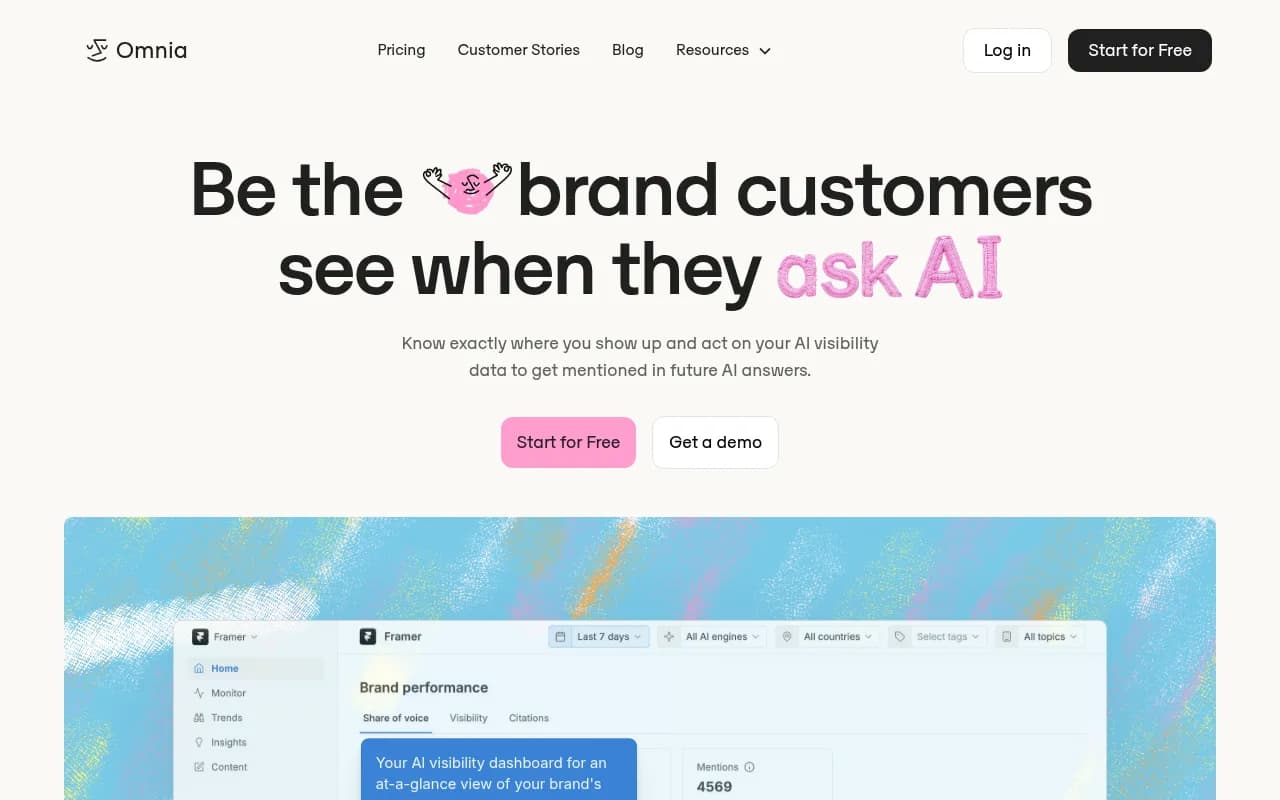
Omnia positions itself as a platform for SEO and marketing teams. It tracks citations and mentions across ChatGPT, Perplexity, Google Gemini, and Microsoft Copilot. The pitch: discover what questions people are asking AI, see where your brand shows up, and get a step-by-step roadmap to fix gaps. Omnia translates tracking data into content creation tasks, technical SEO fixes, and content placement recommendations.
The company lists clients like Exoticca, Ironhack, and Growth Hackers -- mid-market brands with lean marketing teams. Pricing is transparent with a free trial and a Pro Plan for advanced features. The interface feels designed for self-serve onboarding.
Brandlight
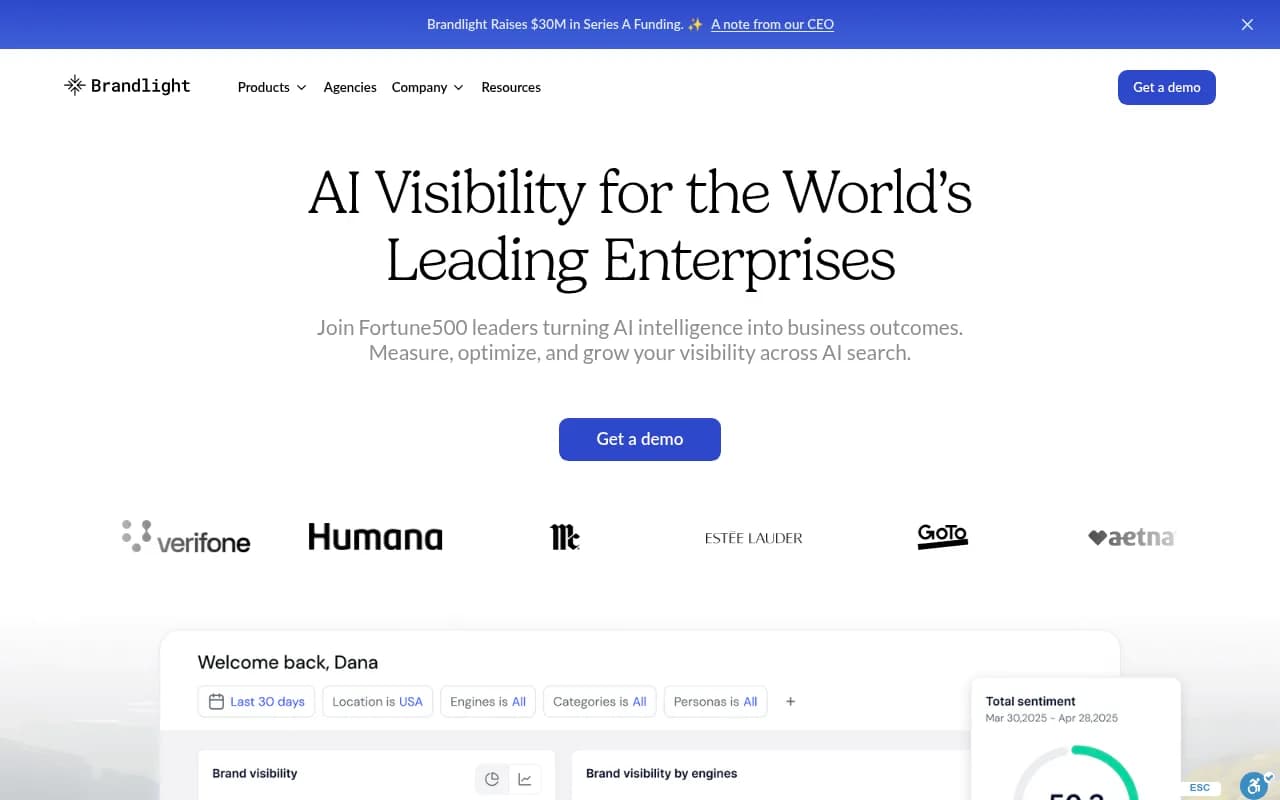
Brandlight goes after enterprise accounts. The homepage name-drops Fortune 500 companies: Mastercard, Estée Lauder, Aetna, Charter, Kimberly-Clark. The platform recently raised $30M in Series A funding. Pricing starts at $199/mo for a base tier but jumps to $750/mo for the "activation plan" with custom enterprise pricing above that.
Brandlight emphasizes prominence tracking -- not just whether your brand is mentioned, but how prominently. The platform offers cross-engine analysis to compare how different AI models represent your brand. Implementation requires dedicated resources, which makes sense for enterprise buyers with internal teams or agency support.
Side-by-Side Comparison
| Feature | Omnia | Brandlight |
|---|---|---|
| Starting price | ~$199/mo (Pro Plan) | $199/mo (base tier) |
| Enterprise pricing | Custom | $750/mo (activation), custom above |
| Free trial | Yes | Demo-based sales process |
| Target audience | SEO/marketing teams, mid-market | Fortune 500 enterprises |
| AI engines tracked | ChatGPT, Perplexity, Gemini, Copilot | Multiple (specific list not public) |
| Prominence tracking | Standard mention tracking | Advanced prominence metrics |
| Cross-engine comparison | Basic | Advanced |
| Actionable roadmaps | Yes (content, SEO, placement) | Requires dedicated optimization resources |
| Self-serve onboarding | Yes | No (implementation required) |
| Competitor benchmarking | Yes | Yes |
| Citation analysis | Yes | Yes |
| Prompt discovery | Yes (real customer questions) | Not emphasized |
| Setup complexity | Low (designed for self-serve) | High (enterprise implementation) |
Pricing comparison
Both platforms use tiered pricing, but the structures differ.
| Plan | Omnia | Brandlight |
|---|---|---|
| Free trial | Yes | Demo required |
| Base tier | ~$199/mo (Pro Plan) | $199/mo |
| Mid-tier | Custom | $750/mo (activation plan) |
| Enterprise | Custom pricing | Custom pricing |
| Annual discount | Likely available | Not specified |
Omnia's pricing is more transparent. You can start with a free trial and upgrade to the Pro Plan without talking to sales. Brandlight's base tier exists but the company clearly wants to move buyers toward the activation plan or custom enterprise deals. If you're a mid-market company with a $500-1000/mo budget, Omnia is the easier fit. If you're an enterprise with $2000+/mo to spend and want white-glove service, Brandlight makes sense.
User interface and ease of use
Omnia's interface feels built for speed. The homepage shows three tabs: "See the real questions people ask AI", "See your brand through AI's eyes", and "Act on your data". Each tab has a clear visual and a call-to-action. The screenshots show a clean dashboard with prompt trends, share of voice tracking, and insight details. The design language says "sign up and start tracking today".
Brandlight's site is heavier on enterprise messaging. The homepage leads with "AI Visibility for the World's Leading Enterprises" and a grid of Fortune 500 logos. There's no self-serve signup flow -- just a "Get a demo" button. The implication: this platform requires onboarding, training, and ongoing support. That's fine if you have the resources, but it's a barrier for smaller teams.
Verdict: Omnia wins for ease of use. Brandlight wins if you want a dedicated account team.
AI engine coverage
Omnia explicitly lists four AI engines: ChatGPT, Perplexity, Google Gemini, and Microsoft Copilot. That covers the major players but misses some newer entrants like Claude, DeepSeek, Grok, and Meta AI.
Brandlight doesn't publish a specific list of supported engines. The site mentions "AI search" and "cross-engine analysis" but no details. Based on the enterprise positioning, it's likely they cover more engines than Omnia, but you'd need to ask during the demo.
If you need to track a specific AI engine, confirm coverage before committing to either platform. For reference, Promptwatch tracks 10 AI models including ChatGPT, Perplexity, Claude, Gemini, DeepSeek, Grok, Meta AI, Mistral, Copilot, and Google AI Overviews.

Prompt discovery and trend analysis
Omnia makes prompt discovery a core feature. The platform shows "real questions customers are asking about your industry or product". The screenshots include a "Trends" view that surfaces popular prompts. This is useful if you're trying to understand what topics to create content around.
Brandlight doesn't emphasize prompt discovery in its public messaging. The focus is on tracking brand mentions and prominence, not surfacing trending questions. If prompt intelligence is important to you, Omnia has the edge.
Share of voice and competitor tracking
Both platforms offer share of voice tracking -- the percentage of AI responses where your brand appears compared to competitors.
Omnia's screenshots show a "Share of voice" popover with competitor comparisons. The interface looks straightforward: pick a topic, see your share vs competitors, drill into specific prompts.
Brandlight emphasizes "cross-engine approach" for comparing how each AI engine represents your brand. The pitch is that different engines have different biases, so tracking across all of them reduces blind spots. That's a valid point, but it's also something Omnia does (just with fewer engines).
Verdict: Tie on core functionality. Brandlight might have more sophisticated cross-engine analysis, but you're paying for it.
Actionable insights and optimization
This is where the platforms diverge most.
Omnia translates tracking data into a "step-by-step AI visibility roadmap". The third tab on the homepage says "Act on your data" and promises recommendations for content creation, technical SEO, and content placement. The screenshots show an "Insights" section with specific action items. The value proposition: we don't just show you the problem, we tell you how to fix it.
Brandlight takes a different approach. The site says the platform "requires dedicated resources for implementation and ongoing optimization". Translation: we'll give you the data, but you need internal teams or agency support to act on it. That's fine for enterprises with existing SEO and content teams. It's a problem for smaller companies.
Verdict: Omnia wins for self-serve optimization. Brandlight assumes you have resources to execute.
Citation and source analysis
Both platforms track which sources AI engines cite when mentioning your brand. This is table stakes for any AI visibility tool.
Omnia's screenshots show citation tracking with specific URLs and domains. You can see which pages AI models pull information from and identify gaps.
Brandlight mentions "prominence tracking" -- not just whether your brand is mentioned, but how prominently. That's a step beyond basic citation tracking. If an AI engine mentions your brand in the first sentence vs the last paragraph, that matters. Brandlight claims to measure this.
Verdict: Brandlight has more sophisticated prominence metrics. Whether that's worth the price premium depends on your use case.
Implementation and support
Omnia is designed for self-serve. Sign up, connect your data, start tracking. The free trial lets you test before committing. Support is likely email-based with documentation.
Brandlight requires implementation. The site explicitly says "dedicated resources for implementation and ongoing optimization". You're getting an account team, onboarding calls, and ongoing support. That's valuable if you're an enterprise with complex needs. It's overkill if you're a 10-person marketing team.
Verdict: Depends on your team size. Under 50 employees? Omnia. Over 500? Brandlight.
Pros and cons
Omnia pros
- Transparent pricing with free trial
- Self-serve onboarding (start tracking today)
- Actionable roadmaps (content, SEO, placement recommendations)
- Prompt discovery (see what questions people are asking)
- Built for lean marketing teams
- Clean, intuitive interface
Omnia cons
- Tracks only 4 AI engines (ChatGPT, Perplexity, Gemini, Copilot)
- Less sophisticated prominence tracking than Brandlight
- Fewer enterprise features (no dedicated account team)
- Smaller brand recognition (newer company)
Brandlight pros
- Advanced prominence tracking (how prominently your brand appears)
- Cross-engine analysis (compare representation across AI models)
- Enterprise-grade support (dedicated account team)
- Strong brand recognition (Fortune 500 clients, $30M Series A)
- Likely covers more AI engines than Omnia
Brandlight cons
- Higher price point ($750+/mo for full features)
- Requires dedicated implementation resources
- No self-serve option (demo-based sales process)
- Less emphasis on actionable optimization (you need internal teams to execute)
- Overkill for small and mid-market companies
Who should pick Omnia
Pick Omnia if you're:
- A mid-market company (10-500 employees)
- An SEO or marketing team without enterprise budgets
- Looking for self-serve onboarding (start tracking today)
- Interested in prompt discovery (what questions are people asking?)
- Want actionable recommendations (not just data)
- Need transparent pricing (no surprise enterprise fees)
- Comfortable with 4 AI engines (ChatGPT, Perplexity, Gemini, Copilot)
Omnia is the practical choice for most marketing teams. You get the core tracking you need, plus optimization recommendations, without the enterprise price tag or implementation overhead.
Who should pick Brandlight
Pick Brandlight if you're:
- A Fortune 500 enterprise with dedicated resources
- Willing to spend $750+/mo for advanced features
- Need sophisticated prominence tracking (how prominently you appear)
- Want cross-engine analysis (compare AI models side-by-side)
- Have internal teams or agency support to execute on insights
- Value white-glove implementation and ongoing support
- Need to track more than 4 AI engines
Brandlight makes sense if you have the budget and resources for an enterprise implementation. The platform offers more depth, but you're paying for it in both dollars and setup complexity.
Final verdict
For most companies, Omnia is the better choice. It delivers the core AI visibility tracking you need -- share of voice, competitor benchmarking, citation analysis -- with transparent pricing and self-serve onboarding. The actionable roadmaps are a real differentiator: you're not just seeing data, you're getting specific recommendations for content, SEO, and placement.
Brandlight is the right pick if you're an enterprise with $1000+/mo to spend and dedicated resources to execute. The prominence tracking and cross-engine analysis are more sophisticated, but you need internal teams or agency support to act on the insights. For a 10-person marketing team, that's a problem.
One-liner: Omnia gives you AI visibility tracking you can act on today; Brandlight gives you enterprise-grade data that requires enterprise-grade resources to use.