Key Takeaways
- Target audience split: Bluefish is built for Fortune 500 brands with $4,000+/month budgets and complex multi-brand needs. Omnia targets mid-market SEO and marketing teams looking for accessible AI visibility tracking.
- Pricing gap: Omnia offers transparent pricing with a free trial and plans likely under $500/month. Bluefish starts around $4,000/month with annual contracts -- a 8-10x difference.
- Feature depth vs accessibility: Bluefish provides deeper enterprise controls (custom audiences, tailored prompts, advanced segmentation). Omnia focuses on core monitoring with actionable insights and a clearer learning curve.
- Actionability approach: Omnia translates tracking data into a step-by-step roadmap (content creation, technical SEO, placement). Bluefish emphasizes understanding how AI "thinks" but leaves more execution to your team.
- AI commerce tracking: Bluefish includes agentic commerce monitoring. Omnia does not currently advertise this capability.
- Best fit: Choose Omnia if you're a growing brand or agency needing solid AI visibility tracking without enterprise complexity. Choose Bluefish if you're managing multiple Fortune 500 brands across markets and need infosec-approved depth.
Overview: Two platforms, two different markets
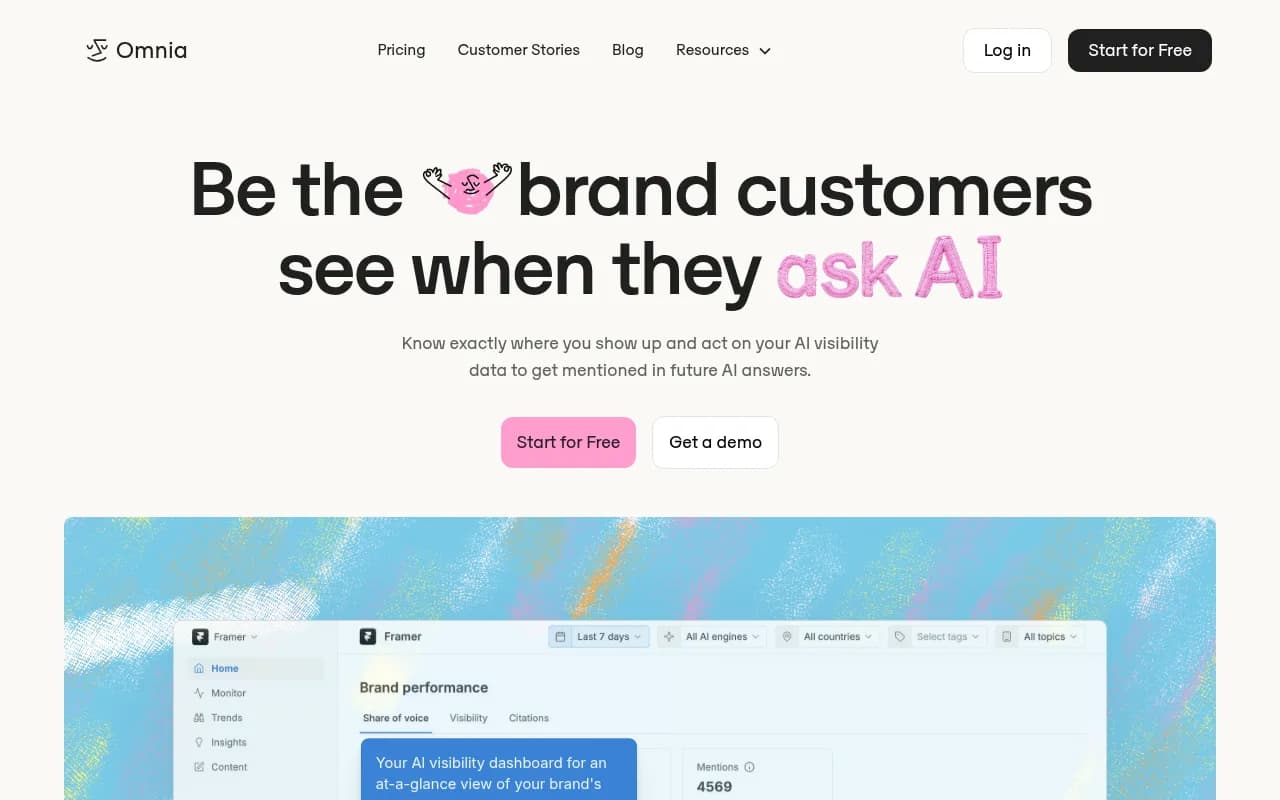
Omnia positions itself as an AI visibility platform for SEO and marketing experts. It tracks citations and mentions across ChatGPT, Perplexity, Google Gemini, and Microsoft Copilot. The pitch: discover what questions people ask AI about your industry, monitor where you show up versus competitors, and get a roadmap to fill visibility gaps. Omnia's website highlights brands like Exoticca, Ironhack, and Growth Hackers -- mid-market companies and agencies, not household names.
The interface looks clean. Three core modules: prompt discovery ("see the real questions people ask AI"), brand monitoring ("see your brand through AI's eyes"), and actionable insights ("act on your data"). Omnia promises to translate tracking into steps: content creation, technical SEO fixes, content placement. Free trial available, pricing on request but clearly aimed at teams with tighter budgets than enterprise.
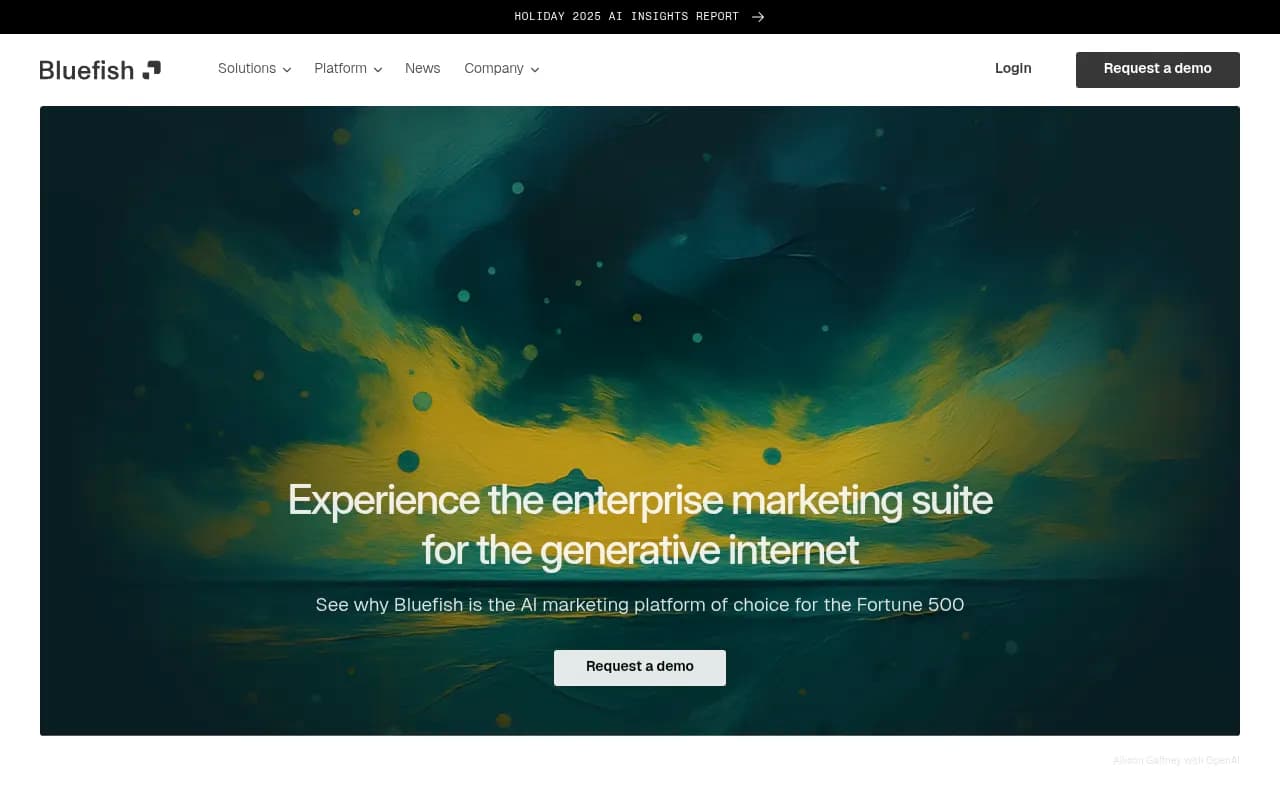
Bluefish calls itself "the AI marketing platform of choice for the Fortune 500." It's enterprise-grade from the ground up -- built for large marketing teams managing multiple brands across markets. The platform covers AI monitoring, AI optimization (GEO), GEO measurement, and AI commerce (agentic commerce tracking). Bluefish's messaging emphasizes depth: "go beyond superficial metrics," "understand how AI thinks," "custom audiences and tailored prompts."
Pricing starts around $4,000/month with annual contracts. The website mentions passing infosec reviews easily and offering data teams more customization than competitors. Bluefish recently launched "Collections" to measure ROI of digital campaigns in the AI channel and published research showing Super Bowl ads influence AI recommendations. This is a platform for brands with serious budgets and complex needs.
Side-by-Side Comparison
| Feature | Omnia | Bluefish |
|---|---|---|
| Starting price | Pricing on request (likely <$500/mo) | ~$4,000/month |
| Free trial | Yes | No (demo-based sales) |
| Target audience | Mid-market SEO/marketing teams, agencies | Fortune 500 brands, enterprise marketing |
| AI engines tracked | ChatGPT, Perplexity, Gemini, Copilot | ChatGPT, Perplexity, Gemini, Copilot + more |
| Prompt discovery | Yes (real customer questions) | Yes (custom audiences, tailored prompts) |
| Share of voice tracking | Yes | Yes (with deeper segmentation) |
| Citation analysis | Yes | Yes |
| AI commerce tracking | No | Yes (agentic commerce) |
| Actionable roadmap | Yes (content, SEO, placement steps) | Insights-focused (less prescriptive) |
| Custom audiences | Not mentioned | Yes |
| Multi-brand management | Possible but not emphasized | Core feature |
| Infosec/compliance | Not emphasized | Passes enterprise reviews |
| Contract terms | Flexible (free trial suggests monthly) | Annual contracts standard |
| Data export/API | Not mentioned | Advanced customization for data teams |
Pricing: The 8-10x gap
Omnia lists "Pricing available on request" with a free trial and mentions a "Pro Plan" for advanced features. Based on positioning and competitor benchmarks, expect pricing in the $200-$500/month range for small to mid-sized teams. The free trial lowers the barrier -- you can test before committing.
Bluefish starts around $4,000/month with custom enterprise plans based on number of brands, markets, and features. Annual contracts are standard. This isn't a platform you sign up for on a credit card. Sales cycles involve demos, infosec reviews, and procurement.
| Plan Type | Omnia | Bluefish |
|---|---|---|
| Free tier | Free trial | No |
| Entry plan | ~$200-$500/mo (estimated) | ~$4,000/mo |
| Enterprise | Custom | Custom (multi-brand, multi-market) |
| Contract | Likely monthly or annual | Annual standard |
| Payment | Self-serve or sales | Sales-driven |
The pricing gap reflects the target market. Omnia wants to be accessible to growing brands and agencies. Bluefish wants Fortune 500 budgets and delivers enterprise depth to justify it.
Feature depth: Enterprise controls vs actionable simplicity
AI engine coverage
Both platforms track the major AI search engines: ChatGPT, Perplexity, Google Gemini, Microsoft Copilot. Bluefish's website suggests broader coverage ("all AI native experiences") but doesn't list specific engines beyond the big four. Omnia is explicit about its four-engine focus.
Neither platform currently advertises tracking for newer models like DeepSeek, Grok, or Meta AI -- a gap that tools like Promptwatch fill by monitoring 10+ AI models including those emerging players.

Prompt discovery and audience targeting
Omnia's prompt discovery shows "real questions customers are asking about your industry or product." The interface (based on screenshots) displays trending prompts and lets you add them to monitoring. Straightforward.
Bluefish emphasizes "custom audiences" and "tailored prompts." You can segment by persona, market, or use case. This matters for enterprise brands running different campaigns in different regions -- you want to know how AI responds to "best running shoes" in the US vs UK, or how recommendations differ for budget-conscious vs premium shoppers. Omnia doesn't advertise this level of segmentation.
Verdict: Bluefish wins on depth. Omnia wins on simplicity for teams that don't need hyper-segmented data.
Share of voice and competitive tracking
Both platforms track share of voice -- how often your brand appears in AI responses versus competitors. Omnia's interface shows a clean share-of-voice chart with competitor benchmarks. Bluefish promises "deep visibility into brand reputation" with more granular segmentation.
The difference: Bluefish lets you slice share of voice by custom audience, prompt category, or market. Omnia gives you the headline number and top competitors. For most mid-market teams, Omnia's approach is enough. For a Fortune 500 brand tracking 20 competitors across 15 markets, Bluefish's depth is necessary.
Citation and source analysis
Omnia tracks "what citations AI engines pull information from." You see which sources (your website, competitor sites, third-party articles) AI models reference when mentioning your brand.
Bluefish offers similar citation tracking but with more control over how you analyze it. The platform's "advanced performance tools" let data teams customize and segment citation data in ways competitors can't match (per Bluefish's website).
Verdict: Both cover the basics. Bluefish offers more flexibility for teams with dedicated data analysts.
Actionability: Roadmaps vs insights
This is where the platforms diverge most.
Omnia explicitly promises a "step-by-step AI visibility roadmap." The website says: "Think content creation, technical SEO, and content placement, each mapped to fill your brand's real gaps." The interface shows an "Insights" section with specific recommendations. Omnia wants to tell you what to do next.
Bluefish focuses on "understanding how AI thinks" and "optimizing beyond just visibility." The platform provides deep insights but leaves more execution planning to your team. Bluefish's "Collections" feature (launched Feb 2026) helps measure ROI of campaigns in the AI channel, but it's not prescribing content topics or SEO fixes.
Verdict: Omnia is better for teams that want clear next steps. Bluefish is better for teams with internal strategists who want rich data to inform their own plans.
AI commerce tracking
Bluefish includes "agentic commerce" monitoring -- tracking how your brand appears in AI-driven shopping recommendations and purchase flows. This matters as AI models increasingly handle transactional queries ("buy the best laptop under $1000").
Omnia does not currently advertise AI commerce tracking. It's focused on search and informational queries.
Verdict: Bluefish is the only option here if AI commerce is a priority.
Multi-brand and enterprise features
Bluefish is built for managing multiple brands across markets. The platform "consistently passes infosec reviews with ease" and offers data teams more ways to customize, segment, and optimize. Annual contracts, dedicated support, and a sales-driven process signal enterprise focus.
Omnia's website doesn't emphasize multi-brand management or infosec compliance. It's built for a single brand or a handful of clients (for agencies). No mention of SSO, advanced permissioning, or compliance certifications.
| Feature | Omnia | Bluefish |
|---|---|---|
| Multi-brand management | Not emphasized | Core feature |
| Infosec/compliance | Not mentioned | Passes enterprise reviews |
| SSO/advanced permissions | Not mentioned | Likely included |
| Dedicated support | Not mentioned | Yes |
| Data export/API | Not mentioned | Advanced customization |
Verdict: Bluefish is the only real option for Fortune 500 marketing teams managing multiple brands.
User experience and learning curve
Omnia's interface (based on screenshots) is clean and focused. Three main sections, clear visualizations, and a "Start for Free" CTA that suggests low friction. The learning curve looks gentle -- you can probably get value in your first session.
Bluefish's interface (also from screenshots) is denser. More data, more controls, more segmentation options. This is a platform you need training on. The sales-driven process ("Request a demo") and lack of free trial mean you're committing before you fully understand the tool.
Verdict: Omnia is easier to learn and faster to value. Bluefish requires more investment upfront but delivers more power for teams that need it.
Integration and workflow
Neither platform advertises extensive integrations on their websites. Omnia doesn't mention API access or data exports. Bluefish says "data teams get more ways to customize, segment, and optimize data" -- suggesting API or export capabilities but not detailing them.
For teams that want to pipe AI visibility data into their existing analytics stack, this is a gap. Tools like Promptwatch offer Looker Studio integration and a full API for custom workflows.
Verdict: Both platforms are relatively closed ecosystems. Bluefish likely offers more export options but doesn't advertise them prominently.
Pros and cons
Omnia pros
- Accessible pricing (likely under $500/month)
- Free trial lowers risk
- Clear actionable roadmap (content, SEO, placement steps)
- Clean interface with gentle learning curve
- Good fit for mid-market brands and agencies
- Transparent about which AI engines it tracks
Omnia cons
- No AI commerce tracking
- Limited segmentation and custom audience options
- No mention of multi-brand management
- No infosec/compliance emphasis for enterprise buyers
- Smaller feature set compared to enterprise platforms
Bluefish pros
- Built for Fortune 500 scale and complexity
- AI commerce (agentic commerce) tracking included
- Custom audiences and tailored prompts for deep segmentation
- Passes infosec reviews (important for enterprise)
- Advanced data customization for analytics teams
- ROI measurement with Collections feature
Bluefish cons
- Starts at ~$4,000/month -- out of reach for most mid-market teams
- No free trial (demo-based sales process)
- Annual contracts standard (less flexibility)
- Steeper learning curve
- Less prescriptive on next steps (more insights, fewer roadmaps)
Who should choose which platform
Choose Omnia if you are:
- A mid-market brand or agency with a $200-$500/month budget
- Looking for clear, actionable next steps (not just data)
- Managing one brand or a small portfolio
- Wanting to test AI visibility tracking without a big commitment
- Prioritizing ease of use and fast time-to-value
- Focused on informational search (not commerce)
Choose Bluefish if you are:
- A Fortune 500 brand with enterprise budgets ($4,000+/month)
- Managing multiple brands across markets
- Needing deep segmentation (custom audiences, tailored prompts)
- Tracking AI commerce and agentic shopping flows
- Requiring infosec compliance and advanced data controls
- Having internal strategists who want rich data to inform their own plans
Consider alternatives if you:
- Want to track 10+ AI models including DeepSeek, Grok, Meta AI (neither Omnia nor Bluefish advertises this breadth)
- Need AI content generation built into the platform (neither offers this)
- Want crawler logs to see how AI engines discover your content (not mentioned by either)
- Are looking for a middle ground between Omnia's simplicity and Bluefish's enterprise depth
For teams that want the action loop -- find gaps, generate content, track results -- Promptwatch offers a different approach. It combines monitoring with AI content generation, crawler logs, and prompt intelligence to help you actually improve visibility, not just measure it.
Final verdict
Omnia and Bluefish serve different markets and do it well.
Omnia is the accessible option for mid-market teams. It gives you AI visibility tracking, clear competitive benchmarks, and a roadmap to improve. The free trial and transparent positioning make it easy to evaluate. If you're a growing brand or agency that needs solid AI search monitoring without enterprise complexity, Omnia fits.
Bluefish is the enterprise platform. It's built for Fortune 500 marketing teams managing multiple brands across markets. The depth -- custom audiences, AI commerce tracking, advanced segmentation, infosec compliance -- justifies the $4,000+/month price tag. If you're managing a portfolio of major brands and need granular control, Bluefish is worth the investment.
The 8-10x pricing gap isn't arbitrary. It reflects fundamentally different target customers. Choose based on your budget, team size, and complexity needs. Neither platform is objectively better -- they're solving different problems for different buyers.