Key Takeaways
- Gauge is an optimization platform with content generation and gap analysis -- Mentions.so is primarily a monitoring dashboard
- Mentions.so starts at $99/mo for basic tracking across all AI models -- Gauge's $99 Starter plan only covers ChatGPT
- Gauge includes 3-18 AI-generated articles per month depending on plan -- Mentions.so has no built-in content creation
- Both track the same core AI engines (ChatGPT, Claude, Gemini, Perplexity, etc.) but Gauge adds actionable recommendations
- Mentions.so offers a free tier for testing -- Gauge is freemium but requires payment for meaningful use
- If you just need visibility tracking, Mentions.so is cheaper and simpler. If you want to actually improve your rankings, Gauge closes the loop.
Overview
Mentions.so

Mentions.so is a brand mention tracking platform focused on AI search engines. It monitors how ChatGPT, Claude, Gemini, Perplexity, and other AI models talk about your brand, tracks sentiment, and compares your visibility against competitors. The interface is clean and the setup is fast -- add your domain, pick some prompts, and start getting daily reports on where you show up.
The core value is visibility: you see exactly what AI says about you, how often you're mentioned, and whether the sentiment is positive or negative. Mentions.so positions itself as "AI SEO" -- helping brands get recognized by AI platforms. It's built for marketers who want to know their AI footprint without digging into complex optimization workflows.
Gauge
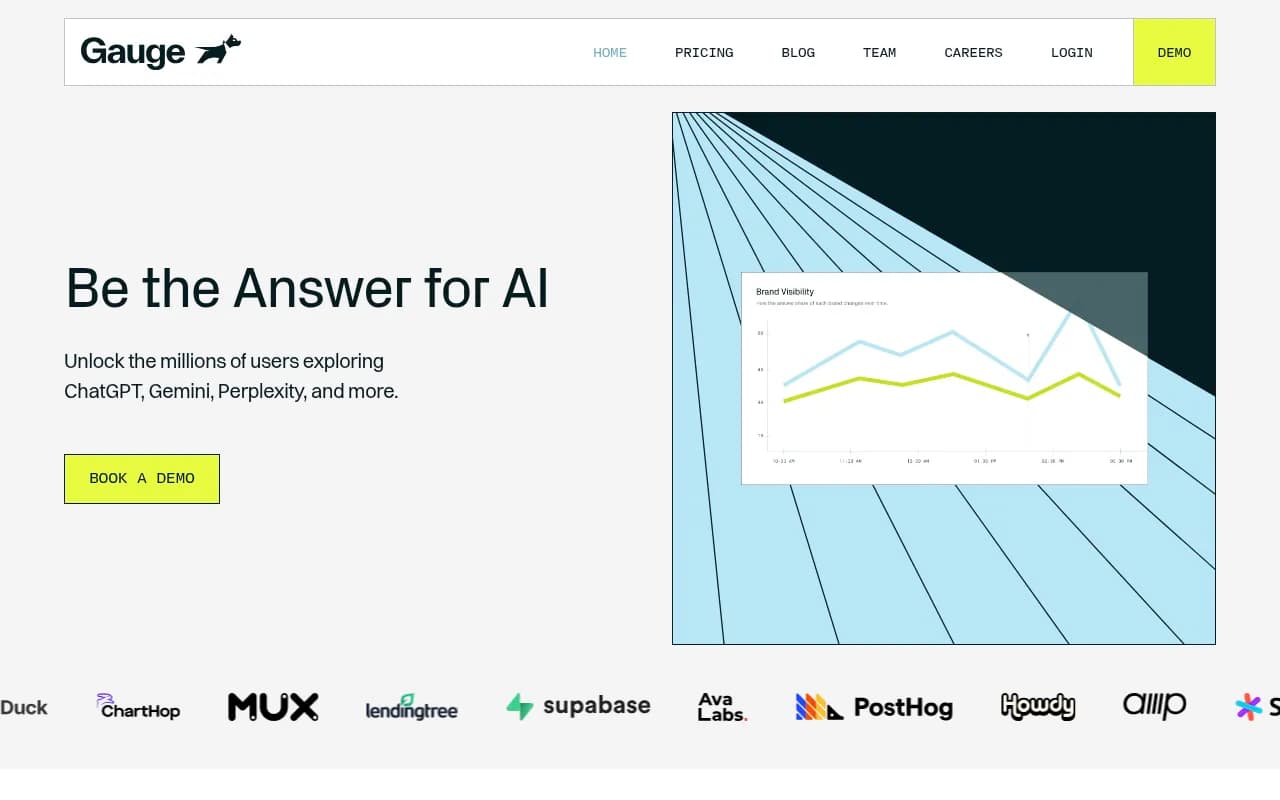
Gauge takes a different angle. It's not just tracking mentions -- it's built around improving them. The platform monitors the same AI engines (ChatGPT, Claude, Gemini, Perplexity, Copilot, AI Overviews) but adds layers of competitive intelligence, content gap analysis, and actionable recommendations. Gauge tells you what's missing from your site, why competitors are getting cited instead of you, and what to do about it.
The standout feature is the built-in content generation. Gauge doesn't just show you the gaps -- it writes articles to fill them, grounded in citation data and prompt analysis. You're not stuck with a dashboard full of problems and no solutions. The platform is aimed at teams that want to own their category in AI search, not just monitor it.
Side-by-Side Comparison
| Feature | Mentions.so | Gauge |
|---|---|---|
| AI models tracked | ChatGPT, Claude, Gemini, Perplexity, Grok, DeepSeek, Meta AI, Google AI Overview | ChatGPT, Claude, Gemini, Perplexity, Copilot, AI Mode, AI Overviews |
| Free tier | Yes | Freemium (limited) |
| Starting price | $99/mo (all models) | $99/mo (ChatGPT only) |
| Content generation | No | Yes (3-18 articles/mo) |
| Competitor tracking | Yes | Yes |
| Sentiment analysis | Yes | Not emphasized |
| Gap analysis | No | Yes |
| Traffic attribution | Yes | Not mentioned |
| Custom prompts | Yes (AI-suggested or manual) | Yes |
| Daily reports | Yes | Yes |
| API access | Not mentioned | Not mentioned |
| Multi-language support | Not mentioned | Not mentioned |
Monitoring capabilities
Both platforms cover the major AI engines that matter in 2026. Mentions.so explicitly lists ChatGPT, Claude, Gemini, Perplexity, Grok, DeepSeek, Meta AI, and Google AI Overview. Gauge covers ChatGPT, Claude, Gemini, Perplexity, Copilot, AI Mode, and AI Overviews. The overlap is nearly complete -- you're not missing critical models with either choice.
Mentions.so emphasizes real-time tracking and daily performance reports. You get a dashboard that shows mention frequency, sentiment trends over time, and side-by-side competitor comparisons. The interface leans visual -- charts showing sentiment shifts, bar graphs comparing your visibility to competitors, and a feed of actual AI responses mentioning your brand.
Gauge takes a more analytical approach. It tracks the same data but layers on competitive intelligence -- which content is being cited, what's being left out, and where your competitors are winning. The focus is less on sentiment and more on citation patterns. Gauge wants you to understand why you're not being mentioned, not just that you're not.
Verdict: Mentions.so wins on simplicity and sentiment tracking. Gauge wins on depth and competitive context.
Content optimization and gap analysis
This is where the platforms diverge sharply.
Mentions.so doesn't do content optimization. It shows you the data -- here's what AI says about you, here's how often you're mentioned, here's the sentiment -- but stops there. You're expected to take that information and figure out what to do with it yourself. The platform gives "practical recommendations" according to its marketing copy, but the live site data doesn't detail what those look like or how actionable they are.
Gauge is built around closing the loop. It identifies content gaps by analyzing what competitors are getting cited for that you're not. Then it generates articles to fill those gaps -- 3 articles per month on the Starter plan, 18 on the Growth plan. The content is grounded in citation data and prompt analysis, not generic SEO filler. Gauge also provides onsite and offsite recommendations -- specific actions to improve your AI visibility.
This is the core difference. Mentions.so is a monitoring tool. Gauge is an optimization platform. If you just want to track your brand, Mentions.so is enough. If you want to actually improve your rankings in AI search, Gauge gives you the tools to do it.
Verdict: Gauge by a mile. The content generation and gap analysis are the reason to pick Gauge over a pure monitoring tool.
Pricing comparison
| Plan | Mentions.so | Gauge |
|---|---|---|
| Free tier | Yes (limited features) | Freemium (limited) |
| Starter | $99/mo (all models, basic tracking) | $99/mo (100 prompts, ChatGPT only, 3 articles) |
| Mid-tier | Not listed | $599/mo (600 prompts, all models, 18 articles) |
| Agency/Enterprise | $599/mo | Custom pricing |
| Annual discount | 16% | Not mentioned |
Mentions.so has a simpler pricing structure. The $99/mo Starter plan gives you access to all AI models, which is a strong value proposition. The $599/mo Agency plan presumably adds more prompts, users, or workspaces, but the exact details aren't clear from the live site data. Annual billing saves 16%.
Gauge's pricing is more tiered by capability. The $99/mo Starter plan only covers ChatGPT, which feels limiting in 2026 when Claude, Gemini, and Perplexity are just as important. You need the $599/mo Growth plan to monitor all models and get 18 articles per month. That's a big jump.
For pure monitoring across all models, Mentions.so is cheaper. For optimization with content generation, Gauge's $599/mo Growth plan is the real entry point -- and at that price, you're paying for the content creation and gap analysis, not just the tracking.
Verdict: Mentions.so wins on price for basic tracking. Gauge is more expensive but includes content generation that justifies the cost if you need it.
User interface and setup
Mentions.so emphasizes simplicity. The setup is three steps: add your workspace (domain), set up prompts (AI-suggested or manual), and start getting daily reports. The interface shown on their site is clean and visual -- charts, graphs, and a feed of AI responses. It's designed for marketers who want to check a dashboard and move on.
Gauge's interface isn't detailed in the live site data, but the positioning suggests a more complex tool. The "complete toolkit" language and the emphasis on competitive intelligence, gap analysis, and content generation imply more layers and settings. That's not a weakness -- it's a trade-off. More power means more complexity.
Both platforms offer daily reports and custom prompts. Both let you track competitors. The difference is what you do with that data once you have it.
Verdict: Mentions.so is likely easier to get started with. Gauge requires more setup but gives you more control.
Traffic attribution and analytics
Mentions.so explicitly mentions tracking AI traffic and showing where it's coming from. The live site data includes a section titled "Track AI Traffic and See What's Driving Results" -- you can see how much traffic you're getting from AI models and which prompts or mentions are driving it. This is valuable for connecting visibility to actual business outcomes.
Gauge doesn't emphasize traffic attribution in the live site data. The focus is on visibility, citations, and content optimization. It's possible the feature exists but isn't highlighted, or it's a gap in the platform.
Verdict: Mentions.so has a clearer story on traffic attribution. Gauge might have it but doesn't lead with it.
Competitor analysis
Both platforms track competitors, but the depth differs.
Mentions.so shows side-by-side visibility comparisons -- bar charts showing your mention rate vs competitors over time. You can see who's winning for specific prompts and track sentiment trends. It's straightforward and visual.
Gauge goes deeper. It analyzes what content competitors are getting cited for, identifies gaps where they're visible and you're not, and gives you a roadmap to close those gaps. The competitive intelligence is tied directly to action -- here's where they're beating you, here's what to do about it.
Verdict: Gauge's competitor analysis is more actionable. Mentions.so's is easier to scan.
Pros and cons
Mentions.so pros
- Free tier available for testing
- $99/mo Starter plan covers all AI models (strong value)
- Clean, visual interface focused on sentiment and trends
- Traffic attribution to connect visibility to results
- Fast setup with AI-suggested prompts
- Annual billing discount (16%)
Mentions.so cons
- No content generation or optimization tools
- Recommendations are vague (not clear how actionable they are)
- Limited depth on competitive intelligence
- Doesn't help you fix the problems it surfaces
Gauge pros
- Built-in content generation (3-18 articles/mo depending on plan)
- Deep gap analysis showing exactly what's missing from your site
- Actionable onsite and offsite recommendations
- Strong competitive intelligence tied to citation patterns
- Designed for teams that want to improve, not just monitor
Gauge cons
- $99/mo Starter plan only covers ChatGPT (need $599/mo for all models)
- More complex setup and interface
- No free tier (freemium but limited)
- Traffic attribution not emphasized
- Higher price point for full feature set
Who should pick which tool
Pick Mentions.so if:
- You want a simple monitoring dashboard to track brand mentions in AI
- You're on a tight budget and need all AI models covered at $99/mo
- Sentiment analysis is important to you
- You want to connect AI visibility to traffic and see what's driving results
- You're comfortable taking the data and figuring out optimization yourself
- You want a free tier to test before committing
Pick Gauge if:
- You want to actually improve your AI visibility, not just track it
- You need content generation to fill gaps in your site
- You want clear, actionable recommendations on what to fix
- You're serious about competitive intelligence and understanding why competitors are winning
- You have the budget for the $599/mo Growth plan (the $99 Starter plan is too limited)
- You want a platform that closes the loop from insight to action
If you're just starting to think about AI visibility and want to understand where you stand, Mentions.so is the easier entry point. If you're ready to invest in improving your rankings and need tools to help you do it, Gauge is worth the higher price.
For teams that want both monitoring and optimization, tools like Promptwatch offer a middle ground -- tracking visibility across 10 AI models, identifying content gaps, and generating articles to fill them, with crawler logs and traffic attribution built in. [tool:promptwatch]
Final verdict
Mentions.so is a solid monitoring tool at a competitive price. Gauge is an optimization platform that helps you take action on the data. The choice depends on whether you want to track or improve.
If your goal is visibility into how AI talks about your brand, Mentions.so delivers that at $99/mo with all models included. If your goal is to dominate your category in AI search and you need content generation and gap analysis to get there, Gauge's $599/mo Growth plan is the investment.
One sentence summary: Mentions.so shows you the problem, Gauge helps you fix it.