Key Takeaways
- AI Peekaboo starts at $99/mo and includes white-label from day one -- AthenaHQ starts at $295/mo (self-serve) or $95/mo annual with no free trial
- AI Peekaboo is built specifically for SaaS companies and agencies with white-label dashboards and Looker Studio integration -- AthenaHQ targets enterprise marketing teams with a broader focus
- Both track 8+ AI models (ChatGPT, Perplexity, Google AI Overviews, Claude, Gemini, etc.) but neither offers content generation or optimization tools
- AthenaHQ has stronger enterprise positioning with clients like Coinbase, ZoomInfo, and Volkswagen -- AI Peekaboo focuses on agencies and mid-market SaaS
- Both are monitoring-focused platforms -- if you need content gap analysis and AI-optimized content generation to actually improve your visibility, you'll need a separate tool
- AI Peekaboo wins on price and agency features -- AthenaHQ wins on brand recognition and enterprise credibility
Overview
AI Peekaboo
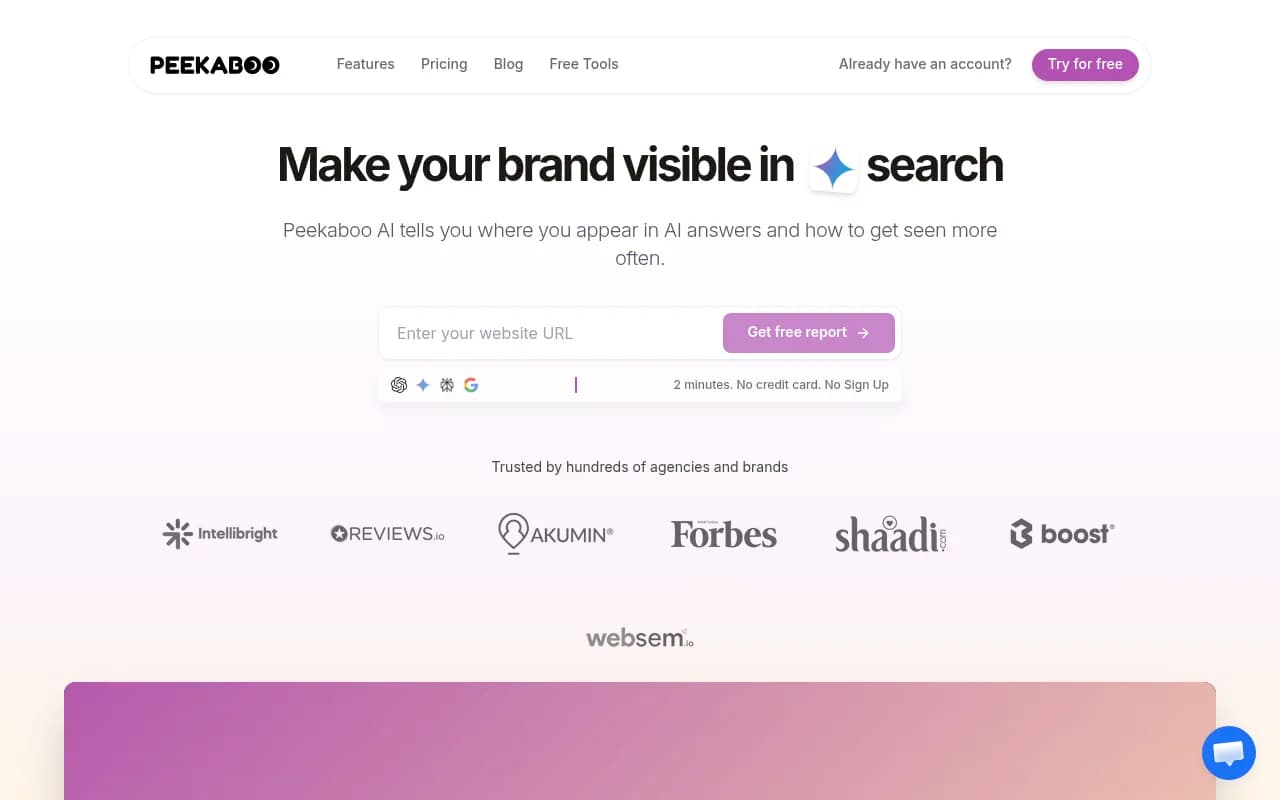
AI Peekaboo positions itself as "AI visibility for SaaS companies" -- a specialized tracking tool that monitors how your brand shows up in AI answer engines. The platform tracks prompts across ChatGPT, Gemini, Google AI Overviews, Perplexity, and Google AI Mode. What sets it apart is the white-label capability included in the base Pro plan at $99/mo, making it attractive for agencies that want to resell AI visibility tracking under their own brand. It also offers Looker Studio integration and API access for custom reporting workflows.
AthenaHQ

AthenaHQ calls itself an "end-to-end AEO & GEO platform" and markets heavily to enterprise marketing teams. The platform tracks 8+ AI models and emphasizes its client roster -- Coinbase, ZoomInfo, Volkswagen, DeVry University. AthenaHQ positions as a command center for AI search optimization specialists, with features like citation source analysis, automated content optimization recommendations, and ROI tracking. Pricing starts at $295/mo for self-serve or $95/mo on annual contracts, with no free trial available.
Side-by-Side Comparison
| Feature | AI Peekaboo | AthenaHQ |
|---|---|---|
| Starting price | $99/mo (Pro) | $295/mo (self-serve) or $95/mo annual |
| Free trial | Not specified | No |
| AI models tracked | 5+ (ChatGPT, Gemini, Google AIO, Perplexity, Google AI Mode) | 8+ LLMs |
| White-label dashboards | ✓ (included in Pro) | Not mentioned |
| Looker Studio integration | ✓ | Not mentioned |
| API access | ✓ | Not specified |
| Content generation | ✗ | ✗ |
| Citation source analysis | Not specified | ✓ |
| Competitor tracking | ✓ | ✓ |
| Target audience | SaaS companies, agencies | Enterprise marketing teams |
| Enterprise clients | Not disclosed | Coinbase, ZoomInfo, Volkswagen, etc. |
| ROI tracking | Not specified | ✓ |
Pricing comparison
This is where the two platforms diverge significantly.
| Plan | AI Peekaboo | AthenaHQ |
|---|---|---|
| Entry tier | $99/mo (Pro, white-label included) | $295/mo (self-serve) or $95/mo annual |
| Free trial | Not specified | None |
| Annual discount | Not specified | Available ($95/mo = $1,140/year vs $3,540/year monthly) |
| Enterprise | Custom pricing | Custom pricing |
AI Peekaboo is cheaper on paper if you're paying monthly. AthenaHQ's $95/mo annual option undercuts Peekaboo if you commit upfront, but you're locked in for a year with no trial period to test the platform first. That's a risky move for a tool you haven't used.
For agencies, AI Peekaboo's $99/mo with white-label included is hard to beat. AthenaHQ doesn't advertise white-label capabilities at all, which suggests it's either not available or buried in enterprise tiers.
AI model coverage
Both platforms track the major AI search engines, but the exact count and specifics differ.
AI Peekaboo explicitly lists 5 models: ChatGPT, Gemini, Google AI Overviews, Perplexity, and Google AI Mode. The website says "across ChatGPT, Gemini, Google AIO, Perplexity and Google AI Mode" repeatedly, so that's the confirmed set.
AthenaHQ claims "8+ LLMs" and mentions ChatGPT, Perplexity, Google AI Overviews, Claude, and Gemini in the description. The "+" suggests they track more but don't list them all publicly. Likely includes models like Copilot, Meta AI, or others.
Neither platform tracks as many models as some competitors (for context, Promptwatch monitors 10 AI engines including DeepSeek, Grok, Mistral, and Copilot alongside the usual suspects). But both cover the core set that most brands care about.

White-label and agency features
This is AI Peekaboo's clearest advantage.
AI Peekaboo includes white-label dashboards in the $99/mo Pro plan. Agencies can rebrand the entire interface and resell AI visibility tracking to clients under their own name. It also offers Looker Studio integration for custom reporting and API access for building custom workflows. These are table-stakes features for agencies that need to integrate AI visibility data into broader client dashboards.
AthenaHQ doesn't mention white-label anywhere on the site. The focus is on in-house marketing teams at enterprise companies, not agencies reselling to clients. No mention of Looker Studio or API access either, though enterprise plans might include API -- it's just not advertised.
If you're an agency, AI Peekaboo is the obvious pick. If you're an in-house team at a single company, white-label doesn't matter.
Enterprise positioning and credibility
AthenaHQ wins here by a mile.
The AthenaHQ homepage prominently displays logos for Coinbase, ZoomInfo, Volkswagen, DeVry University, OneSignal, Nextiva, and others. They've been featured in Forbes and the Wall Street Journal. They're Y Combinator-backed. The entire site screams "enterprise-grade platform used by recognizable brands."
AI Peekaboo doesn't disclose any client names or case studies. The positioning is "specialized for SaaS companies" but there's no social proof to back it up. For a buyer doing vendor evaluation at a large company, that lack of credibility signals is a red flag.
If you need to justify a purchase to a VP or CFO, AthenaHQ's brand recognition makes that conversation easier.
Content optimization capabilities
Neither platform helps you actually improve your AI visibility -- they just show you the current state.
AI Peekaboo is purely a tracking tool. You see which prompts mention your brand, track visibility scores over time, and monitor competitors. But there's no content gap analysis, no suggestions for what to write, no AI content generation.
AthenaHQ advertises "automated content optimization recommendations" and "citation source analysis" which sounds more actionable. The citation source analysis shows you which pages, domains, and sources AI models are pulling from when they mention (or don't mention) your brand. That's useful for understanding what content to create or which sites to get links from. But it's still analysis, not execution.
Both platforms stop at showing you the problem. If you want to actually generate content that ranks in AI search results, you'll need a separate tool. Platforms like Promptwatch go further by analyzing content gaps and generating AI-optimized articles based on real citation data, but that's a different category of tool.
Prompt tracking and competitor analysis
Both platforms let you track custom prompts and see how competitors perform.
AI Peekaboo shows a prompt library on the homepage with examples like "Which team chat tool is best for a 10-person startup?" and "What features should a paid team messenger absolutely include?" You select prompts to track, then monitor when and how AI models mention your brand in responses. Competitor tracking is mentioned but not detailed.
AthenaHQ emphasizes "cross-platform AI visibility tracking" and competitor benchmarking. The site mentions "unified command center for all GEO activities" and "end-to-end GEO workflow management" which suggests more sophisticated prompt organization and tracking workflows. But without a demo or trial, it's hard to know if the UX actually delivers on that promise.
Both platforms likely offer similar core functionality here -- the difference is probably in the UI and how easy it is to manage hundreds of prompts at scale.
ROI tracking and reporting
AthenaHQ explicitly mentions "ROI tracking for AI optimization efforts" as a feature. That's important for enterprise teams that need to justify budget and show results to leadership. Presumably this means connecting AI visibility metrics to traffic, conversions, or revenue -- though the specifics aren't detailed.
AI Peekaboo doesn't mention ROI tracking. The Looker Studio integration and API suggest you could build your own ROI dashboards by combining Peekaboo data with Google Analytics or other sources, but it's not built-in.
For enterprise buyers, built-in ROI reporting is a checkbox item that makes vendor evaluation easier. AI Peekaboo's DIY approach works for technical teams but not for everyone.
User experience and learning curve
Neither platform offers a free trial, so you're buying blind.
AI Peekaboo's website is clean and straightforward. The homepage shows exactly what you're tracking (prompts, visibility scores, AI model responses) with visual examples. It feels like a focused tool that does one thing.
AthenaHQ's website is more marketing-heavy with lots of enterprise positioning and feature lists. Phrases like "unified command center" and "end-to-end AEO & GEO platform" sound impressive but don't tell you much about the actual UX. The lack of screenshots or demo videos is frustrating.
Without trials, it's hard to judge which platform is easier to use. But AI Peekaboo's simpler positioning suggests a simpler product, which might be a pro or con depending on your needs.
Pros and cons
AI Peekaboo pros
- $99/mo entry price with white-label included
- Built specifically for SaaS companies and agencies
- Looker Studio integration and API access
- Clean, focused positioning
AI Peekaboo cons
- No disclosed enterprise clients or case studies
- No free trial mentioned
- Fewer AI models tracked than some competitors
- Monitoring-only -- no content generation or optimization tools
AthenaHQ pros
- Strong enterprise credibility (Coinbase, ZoomInfo, Volkswagen)
- Featured in Forbes and WSJ
- 8+ AI models tracked
- Citation source analysis and ROI tracking
- $95/mo annual option undercuts competitors if you commit upfront
AthenaHQ cons
- No free trial
- $295/mo self-serve pricing is steep
- Annual commitment required for lower pricing
- No white-label or agency-specific features mentioned
- Monitoring-focused -- limited content optimization capabilities
Who should pick which tool
Pick AI Peekaboo if:
- You're an agency that needs white-label dashboards to resell AI visibility tracking
- You want Looker Studio integration or API access for custom reporting
- You're a SaaS company with a limited budget ($99/mo vs $295/mo matters)
- You prefer a focused tool over an "enterprise platform"
Pick AthenaHQ if:
- You're an in-house marketing team at a mid-to-large company
- You need enterprise credibility and recognizable client logos for internal buy-in
- You can commit to annual pricing ($95/mo) and don't need a trial
- You want citation source analysis and ROI tracking built-in
- White-label capabilities don't matter to you
Consider a different tool entirely if:
- You need content gap analysis and AI content generation, not just monitoring -- both AI Peekaboo and AthenaHQ stop at tracking
- You want to track 10+ AI models including DeepSeek, Grok, and Mistral
- You need AI crawler logs to see how AI engines are actually indexing your site
- You want Reddit and YouTube tracking to understand what discussions influence AI recommendations
Final verdict
AI Peekaboo wins on price and agency features. AthenaHQ wins on enterprise positioning and credibility.
If you're an agency, AI Peekaboo is the clear choice -- $99/mo with white-label included is unbeatable. If you're an in-house team at a recognizable company and need to justify the purchase to leadership, AthenaHQ's client roster and press coverage make that easier.
But here's the bigger issue: both platforms are monitoring-only. They show you where you're invisible in AI search, but they don't help you fix it. You're left staring at dashboards wondering what to do next. For most teams, that's not enough -- you need content gap analysis, AI-optimized content generation, and optimization tools to actually move the needle. Neither platform delivers that.