Key takeaways
- YouTube is cited in up to 29.5% of Google AI Overviews, making it the single most-cited domain in AI search results
- How-to video citations in AI Overviews grew 651% year-over-year, according to BrightEdge data
- AI engines don't just index your video -- they read your transcript, title, description, and chapters to decide if your content is worth citing
- Traditional YouTube SEO (watch time, CTR, subscriber count) still matters, but AI citation optimization requires a different layer of work
- Tracking which of your videos actually get cited in AI responses requires dedicated tooling -- not just YouTube Analytics
Something shifted in early 2025 that most YouTube creators and SEO teams missed. Google's AI Overviews started pulling video content at scale. Not just linking to YouTube -- actually citing specific videos as source material for AI-generated answers.
By 2026, YouTube accounts for 39.2% of all social citations in Google AI Overviews. How-to video citations are up 651%. And according to BrightEdge data, YouTube is the single most-cited domain across all of Google's AI Overview responses.
That's a bigger deal than it sounds. YouTube has always been "good for SEO" in a vague, brand-awareness kind of way. Now it's core infrastructure for AI search visibility. If your videos aren't optimized for AI citation, you're leaving a massive channel untapped -- and your competitors are probably already there.
Why AI engines cite YouTube videos
Before getting into tactics, it helps to understand why AI models pull from YouTube at all.
ChatGPT, Perplexity, Claude, and Google's AI systems don't watch videos. They read text. What they're actually consuming when they "cite" a YouTube video is the transcript, the title, the description, and the structured metadata attached to it. YouTube auto-generates transcripts for virtually every video, and those transcripts are crawlable, indexable, and readable by AI systems.
This means your video is, in effect, a text document from the perspective of an AI model. A well-structured 15-minute tutorial has thousands of words of content that an AI can parse, evaluate for authority, and quote from.
The OtterlyAI YouTube Citation Study 2026 found that the videos most likely to get cited share a few consistent traits: they answer specific questions directly, they have clean transcripts (either auto-generated or manually uploaded), and they cover topics where the creator demonstrates genuine expertise rather than just summarizing what's already out there.
That last point matters. Backlinko's research found that 89% of ChatGPT citations come from websites (and content) that don't rank in Google's top 20. AI models are not just rewarding the same content that ranks well in traditional search. They're looking for something different -- depth, specificity, and trustworthiness signals that traditional SEO doesn't always capture.
The two layers of YouTube SEO in 2026
There are now effectively two separate optimization jobs when it comes to YouTube:
- Traditional YouTube SEO: optimizing for watch time, click-through rate, subscriber growth, and ranking within YouTube's own search
- AI citation optimization: making your video content readable, trustworthy, and quotable for AI engines like ChatGPT, Perplexity, and Google AI Overviews
These overlap but they're not the same thing. A video can rank #1 on YouTube for a keyword and never get cited by an AI. Conversely, a video with modest view counts can become a frequently cited source in AI responses if its content is structured correctly.
Most YouTube SEO advice in 2026 still focuses almost entirely on layer one. This guide covers both.
Optimizing your transcript for AI readability
Since AI models read your transcript, the quality of that transcript is the single most important factor for AI citation.
Auto-generated transcripts are fine as a baseline, but they have problems: no punctuation, no paragraph breaks, and frequent errors on technical terms, brand names, and proper nouns. If you're covering a specialized topic, the auto-transcript might be a mess of misheard words that makes your content look incoherent to an AI model.
The fix is straightforward: upload a corrected SRT or VTT file. YouTube accepts manual caption uploads, and a clean, accurate transcript dramatically improves how AI systems parse your content.
Beyond accuracy, think about how you structure what you say. AI models favor content that answers questions directly. If someone asks "how do I fix a crawl error in Google Search Console," the ideal video transcript doesn't spend the first three minutes on an intro and backstory -- it gets to the answer quickly, uses the right terminology, and explains the reasoning behind each step.
Practically, this means:
- Open with a direct statement of what the video covers and what the viewer will learn
- Use clear, specific language rather than vague descriptions ("click the Coverage report in the left sidebar" beats "go to that section over there")
- Repeat key terms naturally -- AI models use term frequency as a relevance signal
- Summarize key points verbally at the end of the video, since transcripts are read linearly
Title and description as AI context signals
Your video title and description aren't just for YouTube's algorithm -- they're the first thing AI models see when evaluating whether your video is relevant to a query.
Titles should be specific and question-aware. "YouTube SEO Tips 2026" is weaker than "How to Get Your YouTube Videos Cited in ChatGPT and Perplexity." The second title directly matches the kind of question someone might ask an AI model.
Descriptions are underused by most creators. YouTube gives you 5,000 characters. Most people write 100 words. That's a missed opportunity, because the description is crawlable text that AI systems read as context for your video's content.
A strong description for AI citation purposes should:
- Include a clear summary of what the video covers (2-3 sentences)
- List the specific questions or topics the video answers
- Use natural language that mirrors how people ask questions in AI search
- Include relevant terminology without keyword stuffing
Chapters (timestamps) are also worth taking seriously. When you add chapters to a video, you're essentially creating a structured table of contents that AI models can use to understand the video's scope and find specific segments relevant to a query.
Content formats that get cited
Not all video content gets cited equally. The OtterlyAI citation study and Backlinko's research both point to specific formats that AI models consistently favor.
How-to and tutorial content is the clear leader -- hence the 651% growth in how-to citations. When someone asks an AI "how do I do X," the AI wants to cite a source that actually shows how to do X. Step-by-step tutorials with clear structure are exactly what AI models look for.
Comparison videos perform well too. "Tool A vs Tool B" or "Method X vs Method Y" content matches a huge category of AI queries where users want a direct comparison rather than a general overview.
FAQ-style content works because it directly mirrors how AI models structure their responses. If your video answers ten common questions about a topic, an AI model can pull from it for any of those ten queries.
Original data and research is the highest-value format. If your video presents findings from a study, survey, or experiment you ran, that's exactly the kind of primary source AI models want to cite. Generic summaries of existing information are much less likely to get cited than content that introduces something new.
Opinion-led thought leadership can also work, but it needs to be specific and grounded. "I think AI search is important" won't get cited. "After analyzing 200 of our client campaigns, here's what we found about AI citation rates" has a real chance.
Schema markup and structured data for video
This is the technical layer that most creators skip entirely.
VideoObject schema markup tells search engines and AI crawlers exactly what your video is about, who made it, when it was published, and what it covers. It's JSON-LD code that you add to the page where your video is embedded (your website, not YouTube itself).
In 2026, AI crawlers actively look for VideoObject schema when deciding whether to cite video content. The key properties to include:
name: the video titledescription: a detailed description of the video contentuploadDate: publication datethumbnailUrl: thumbnail image URLcontentUrlorembedUrl: the video URLtranscript: if you can include the full transcript in the schema, do it
If your videos live only on YouTube and you don't have a website, you're limited to what YouTube's own structured data provides. But if you embed your videos on your site, adding VideoObject schema gives you a meaningful edge.
Optimizing existing videos, not just new ones
One of the most overlooked opportunities in YouTube SEO right now is going back to your existing video library.
Most channels have videos from 2022, 2023, and 2024 that were never optimized for AI citation. Those videos already have watch time, engagement signals, and potentially some domain authority from backlinks. Adding a corrected transcript, updating the description, adding chapters, and embedding them on your site with proper schema can turn a dormant video into an active AI citation source.
The Women in Tech SEO research on this topic found that optimizing existing videos consistently outperforms creating new content in terms of AI citation gains per hour of work. New videos take time to accumulate engagement signals. Existing videos already have them -- they just need the AI-readability layer added.
A practical approach: audit your top 20 videos by view count, identify which ones cover topics that match common AI queries in your niche, and prioritize those for optimization. Update the description, upload a corrected transcript, add chapters, and embed with schema on your site.
Tracking which videos get cited in AI responses
Here's the gap most teams hit: you can optimize your videos for AI citation, but YouTube Analytics won't tell you if it's working. YouTube Analytics shows views, watch time, and traffic sources from within YouTube's ecosystem. It doesn't show you when ChatGPT cites your video in a response, or when Perplexity pulls your transcript as a source.
To actually track AI citations, you need tools built for that purpose. Promptwatch tracks citations across 10 AI models including ChatGPT, Perplexity, Google AI Overviews, Claude, and Gemini -- and its Citation & Source Analysis shows exactly which pages and content types AI models are pulling from, including YouTube content.

For teams that want to monitor AI visibility more broadly, there are several other options worth knowing about:
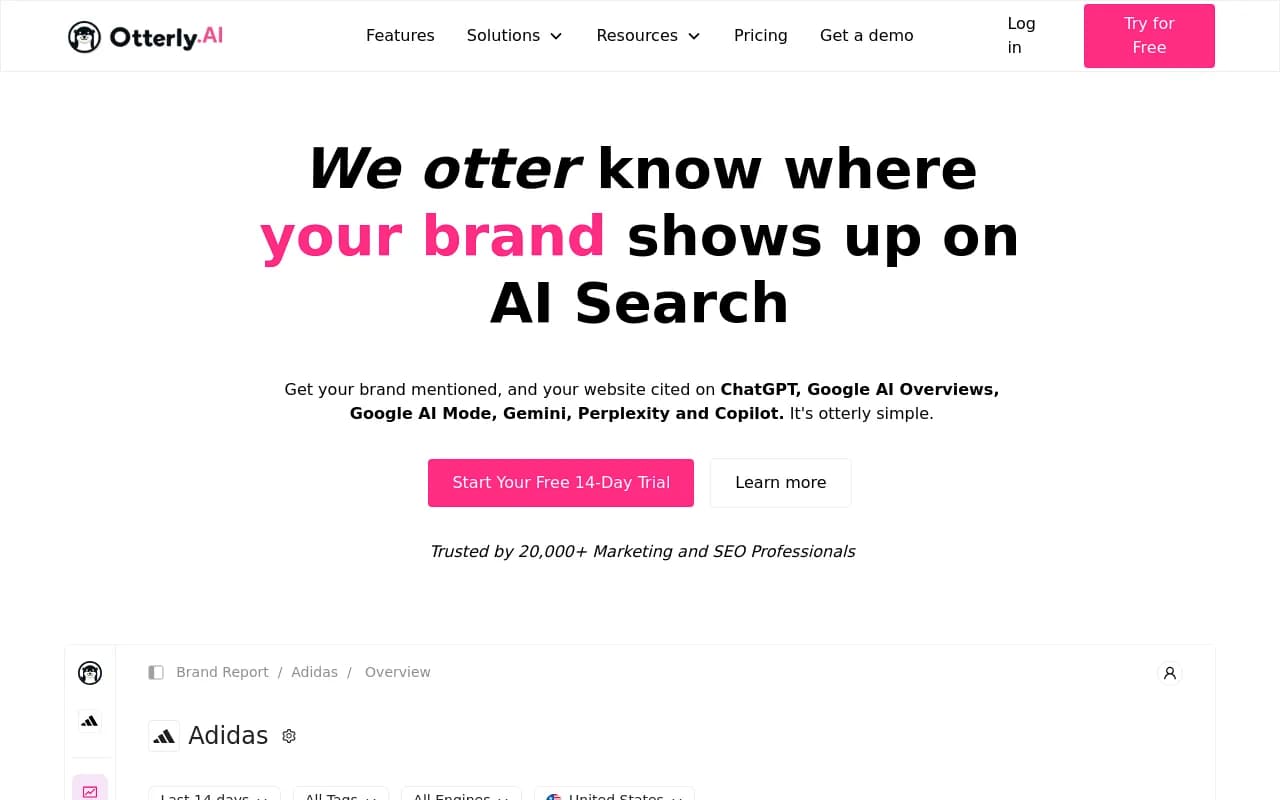
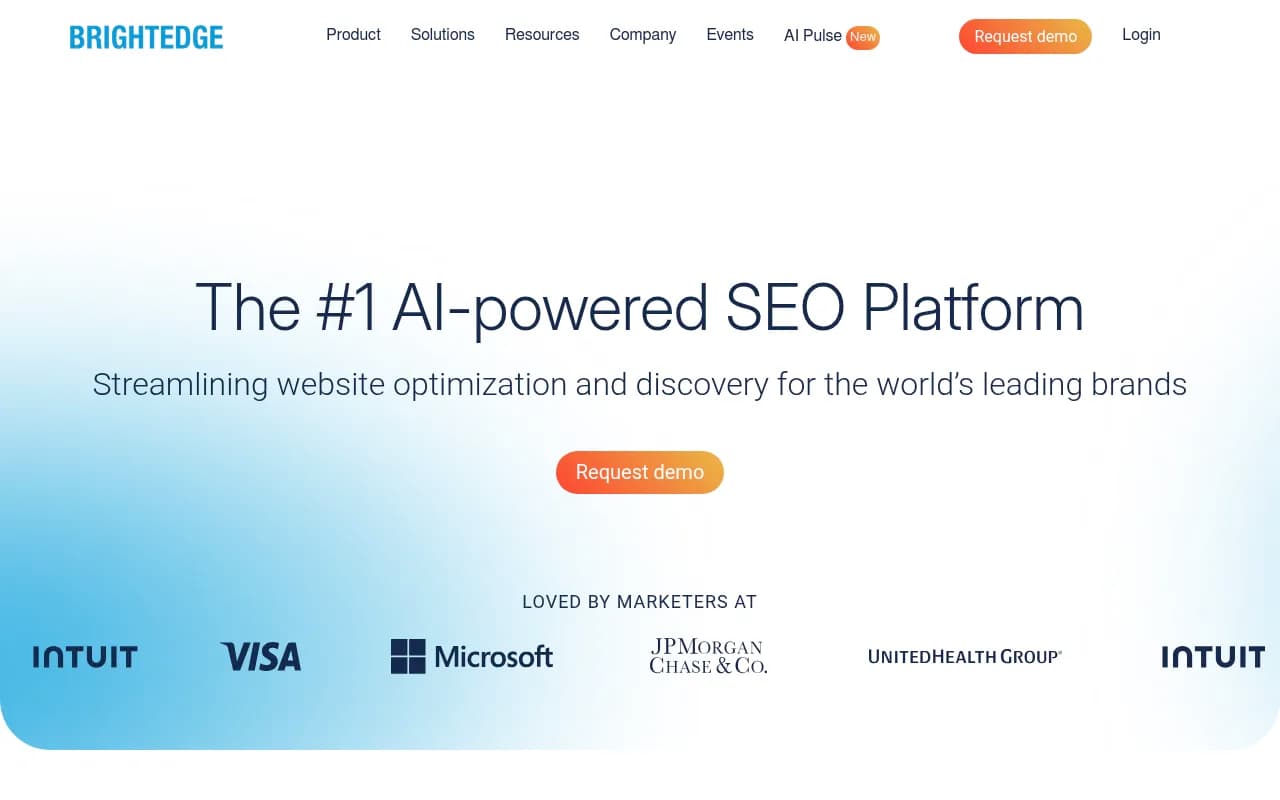
The key thing to look for in any AI citation tracking tool is whether it shows you source-level data (which specific URLs or videos are being cited) rather than just brand mention counts. Brand mentions tell you if AI models know your name. Source citations tell you if your content is actually being used as reference material -- which is what drives traffic.
The YouTube citation optimization checklist
Here's a practical checklist to work through for each video you want to optimize for AI citation:
Transcript quality
- Upload a manually corrected transcript (not just auto-generated)
- Verify technical terms, brand names, and proper nouns are accurate
- Check that the transcript reads coherently as text
Title and metadata
- Title directly answers a question or describes a specific task
- Description is at least 300 words and covers the video's key topics
- Chapters/timestamps are added for videos over 5 minutes
- Tags include specific terms (not just broad category keywords)
Content structure
- Video opens with a direct statement of what it covers
- Key information is stated clearly and specifically (not just gestured at)
- Video ends with a summary of key points
Technical
- Video is embedded on your website (not just hosted on YouTube)
- VideoObject schema markup is added to the embedding page
- Page where video is embedded has its own content (not just the embed)
Ongoing
- Monitor AI citation rates with a dedicated tracking tool
- Update descriptions and transcripts when content becomes outdated
- Cross-link related videos in descriptions
How YouTube fits into a broader AI visibility strategy
YouTube is one piece of a larger picture. AI models like ChatGPT and Perplexity pull from many source types: web articles, Reddit discussions, YouTube videos, academic papers, news sites. Your video content competes with all of these for citations.
The brands winning at AI visibility in 2026 are treating it as an integrated strategy rather than a channel-by-channel effort. A YouTube tutorial that's also supported by a detailed written article on your site, with both pieces citing original data or research, is far more likely to get cited than either piece alone.
Reddit is another channel that directly influences AI recommendations -- AI models frequently cite Reddit discussions as sources, and a YouTube video that gets discussed in relevant subreddits gains citation authority through that community signal. This is something most SEO teams aren't tracking yet.
The broader point: YouTube SEO in 2026 isn't just about YouTube anymore. It's about making your video content part of a web of authoritative, interconnected content that AI models recognize as trustworthy source material.
A comparison of what AI models look for vs traditional YouTube SEO
| Signal | Traditional YouTube SEO | AI citation optimization |
|---|---|---|
| Transcript quality | Minimal impact | High impact -- AI reads it as text |
| Watch time | Critical ranking factor | Indirect signal at best |
| Description length | 100-200 words typical | 300+ words recommended |
| Chapters/timestamps | Nice to have | Structural signal for AI |
| VideoObject schema | Rarely used | Actively read by AI crawlers |
| Original data/research | Not a factor | Strong citation trigger |
| Backlinks to video | Moderate impact | Increases citation authority |
| Subscriber count | Ranking signal | Minimal direct impact |
| Question-matching title | Helpful for search | Direct match for AI queries |
| Cross-platform presence | Brand signal | Amplifies citation likelihood |
The table makes the gap clear. Traditional YouTube SEO optimizes for an algorithm that rewards engagement and retention. AI citation optimization is about making your content readable, trustworthy, and directly useful as a reference source.
Both matter. But if you've been doing only one, you now know which one to add.
Where to start
If you're new to this, don't try to overhaul everything at once. Pick your three best-performing videos on topics that match common questions in your niche. Clean up the transcripts, rewrite the descriptions, add chapters, and embed them on your site with VideoObject schema.
Then set up some form of AI citation tracking so you can actually see if the changes are working. Without measurement, you're optimizing blind.
The 651% growth in how-to video citations isn't a fluke -- it reflects a real structural shift in how AI models are using video content as source material. The brands and creators who treat YouTube as an AI citation channel, not just a social platform, are the ones who will show up in ChatGPT and Perplexity responses when their customers are asking the questions that matter.