Key takeaways
- Profound is a solid AI visibility tracker, but it sits firmly in the "monitoring-only" category -- it shows you data without helping you act on it
- The most common complaints from teams switching away: high price relative to features, no content generation, limited prompt intelligence, and no crawler log access
- The platforms teams are moving to in 2026 fall into two camps: full-stack optimization platforms (like Promptwatch) and cheaper monitoring tools (like Otterly.AI or Peec AI) for teams that just need basic tracking
- If you're paying enterprise prices, you should be getting enterprise capabilities -- content gap analysis, AI writing, traffic attribution, and crawler logs are table stakes in 2026
Profound was one of the first serious platforms built specifically for AI search visibility. When it launched, the category barely existed. Tracking how your brand appeared in ChatGPT or Perplexity responses felt like a novelty -- something forward-thinking marketers were experimenting with, not a core business function.
That's changed. AI search is now a real traffic and revenue channel for thousands of brands, and the tools that serve it have matured fast. What felt cutting-edge in 2023 can feel limiting in 2026, and that's the situation a growing number of teams find themselves in with Profound.
This isn't a takedown. Profound does some things well. But if you're evaluating whether to stay or switch, you deserve an honest look at where it falls short and what the alternatives actually offer.
What Profound does well
Before getting into the frustrations, it's worth being clear about what Profound gets right.
The platform has strong brand monitoring across major AI models, clean dashboards, and a reasonably good answer tracking interface. For teams that are just starting to think about AI visibility -- what is our brand saying in ChatGPT responses? are we being cited? -- Profound gives you a clear picture.
The UI is polished. Onboarding is relatively smooth. And the company has been around long enough to have real data behind its tracking.

So why are teams leaving?
The core problem: monitoring without action
The most consistent complaint from teams switching away from Profound is that it tells you what's happening but not what to do about it.
You can see that a competitor is getting cited for 40 prompts you're invisible for. You can see your share of voice dropping. You can see which AI models are mentioning you and which aren't. But then what?
Profound doesn't have a built-in content gap analysis that shows you why you're invisible. It doesn't have an AI writing agent to help you create content that fixes those gaps. It doesn't give you crawler logs so you can see whether AI bots are even visiting your site. And it doesn't close the loop with traffic attribution to show whether your visibility improvements are actually driving revenue.
In 2026, that's a real gap. The teams that are winning in AI search aren't just tracking -- they're optimizing. And optimization requires tools that go beyond the dashboard.
Who's switching and why
The teams moving away from Profound tend to fall into a few categories.
Marketing teams that have moved past "awareness" mode. Early on, the goal was just to understand the AI visibility landscape. Now those same teams have buy-in, budget, and a mandate to improve their numbers. They need tools that help them create content, not just measure it.
Agencies managing multiple clients. Profound's pricing and feature set can get unwieldy at agency scale. Clients want to see progress, not just reports. Agencies need platforms that help them deliver results, not just data.
SEO teams that already use other tools. If you're running Semrush or Ahrefs for traditional SEO, you want your AI visibility platform to complement that workflow -- ideally with integrations, API access, and data you can actually act on.
Teams that hit the prompt limit wall. Profound's pricing tiers cap the number of prompts you can track, and several users have noted that the limits feel tight relative to the cost.
What teams are switching to
The alternatives break into two clear camps depending on what you actually need.
Full-stack optimization platforms
If you're switching because Profound doesn't help you act, you need a platform built around the full optimization loop: find gaps, create content, track results.
Promptwatch is the most complete option in this category right now. It covers 10 AI models (ChatGPT, Perplexity, Claude, Gemini, Grok, DeepSeek, Copilot, Meta AI, Google AI Overviews, and Google AI Mode), and the core differentiator is that it's built around doing something with the data.
The Answer Gap Analysis shows you exactly which prompts competitors rank for that you don't -- not as a vague "you're missing content" warning, but as a specific list of topics, questions, and angles your site needs to address. The built-in AI writing agent then generates articles, listicles, and comparisons grounded in real citation data (880M+ citations analyzed). And crawler logs show you which AI bots are visiting your pages, how often, and whether they're hitting errors.
That's a fundamentally different product from a monitoring dashboard.

For enterprise teams, AthenaHQ is worth a look -- it has strong multi-model tracking and good competitive analysis. The caveat is that it's still primarily a monitoring platform, so if content generation is your priority, it won't fill that gap.

Scrunch AI has been building out its feature set and is worth evaluating if you're in a more enterprise context, though it lacks some of the content optimization capabilities that teams switching from Profound are usually looking for.
Monitoring-only alternatives (for teams that just need tracking)
If you're switching from Profound because it's too expensive for what you need -- and you genuinely just want basic AI visibility tracking -- there are cheaper options that do the monitoring job without the enterprise price tag.
Otterly.AI is the most popular choice here. It's affordable, covers the main AI models, and gives you a clean view of brand mentions and citations. It won't help you optimize, but if you're a smaller team that just needs to keep an eye on things, it's a reasonable fit.

Peec AI is worth considering if you need multi-language tracking -- it's one of the stronger options for non-English markets.

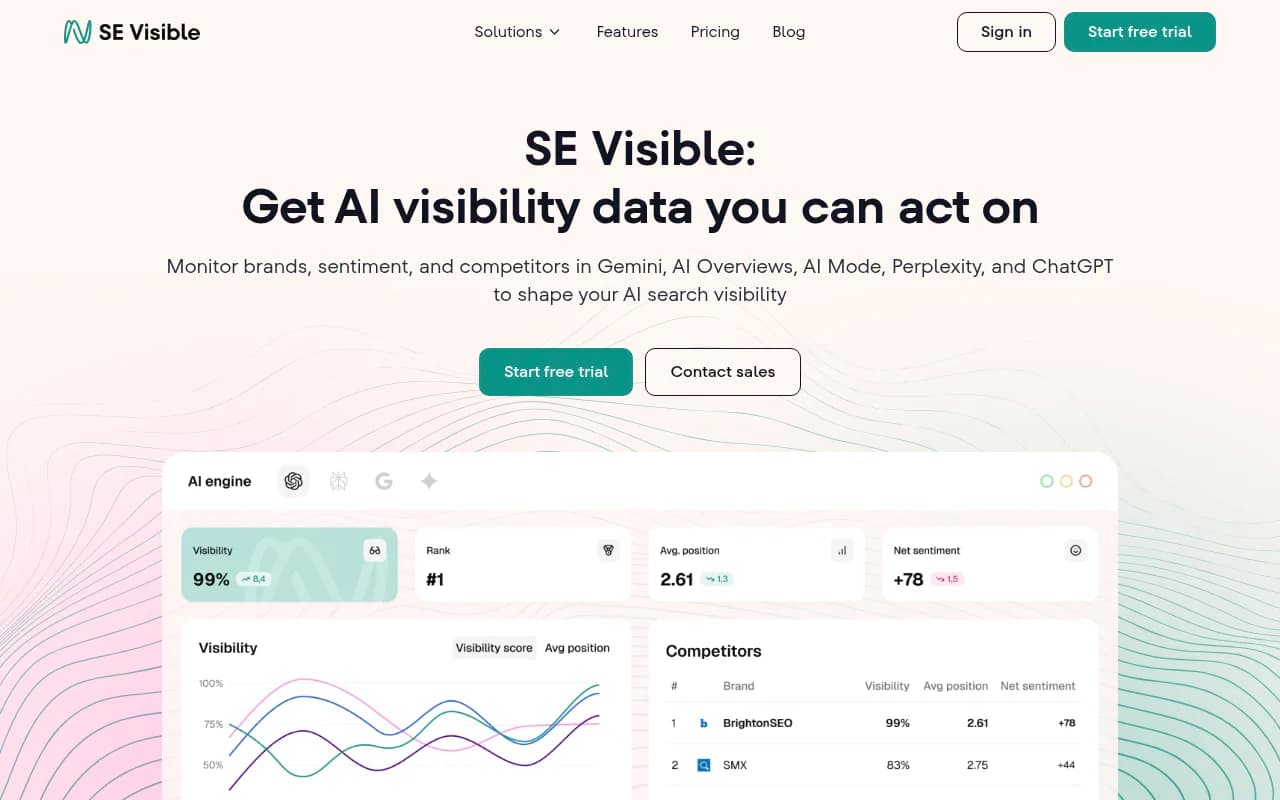
SE Visible from SE Ranking sits in a similar space: user-friendly, affordable, and good for teams that want AI visibility data without a steep learning curve.
Feature comparison: Profound vs. the main alternatives
| Feature | Profound | Promptwatch | AthenaHQ | Otterly.AI | Peec AI |
|---|---|---|---|---|---|
| AI model coverage | 6+ | 10 | 8+ | 5+ | 5+ |
| Content gap analysis | No | Yes | Limited | No | No |
| AI content generation | No | Yes | No | No | No |
| Crawler logs | No | Yes | No | No | No |
| Prompt volume/difficulty | Limited | Yes | No | No | No |
| Reddit/YouTube tracking | No | Yes | No | No | No |
| ChatGPT Shopping tracking | No | Yes | No | No | No |
| Traffic attribution | No | Yes | No | No | No |
| Multi-language | Limited | Yes | Yes | Limited | Yes |
| Agency/multi-site | Yes | Yes | Yes | Limited | Limited |
| Starting price | ~$149/mo | $99/mo | Custom | ~$49/mo | ~$49/mo |
The table makes the pattern obvious. Profound sits in the middle -- more capable than the basic monitoring tools, but without the optimization capabilities that justify a higher price point in 2026.
The question worth asking before you switch
Before you move platforms, it's worth being honest about what you actually need.
If your team is still in "understand the landscape" mode -- you're trying to convince stakeholders that AI visibility matters, you're building a baseline, you're not yet running content experiments -- then a cheaper monitoring tool might genuinely be the right call. Profound (or Otterly.AI, or Peec AI) will serve you fine.
But if you've moved past that stage -- if you have buy-in, if you're trying to actually improve your numbers, if you want to know why you're invisible and what to do about it -- then you need a platform that closes the loop. Monitoring data without an action path is just a more expensive way to feel informed.
The teams getting the most out of AI visibility platforms in 2026 are the ones treating it like SEO: track, create, optimize, repeat. The tools that support that cycle are the ones worth paying for.
Practical advice for making the switch
A few things worth doing before you commit to a new platform:
Run a parallel trial. Most platforms offer free trials. Run your current prompt set through a new tool for two to four weeks before canceling Profound. You want to see whether the data quality is comparable and whether the new platform surfaces gaps you weren't aware of.
Audit your actual usage. How many prompts are you actively tracking? How many reports are you actually reading? Teams often discover they're paying for capacity they don't use -- which changes the pricing math considerably.
Check for integrations. If you're using Google Search Console, Looker Studio, or a custom reporting stack, make sure the new platform can connect to it. Promptwatch has both a Looker Studio integration and an API; most of the cheaper tools don't.
Talk to the support team. This sounds obvious, but the quality of onboarding support varies enormously across this category. A 30-minute call before you sign up tells you a lot about what the post-sale experience will look like.
The AI visibility space has matured enough that switching costs are real but manageable. If Profound isn't giving you what you need in 2026, there are better options -- and the right one depends on whether you need to monitor or whether you need to optimize.