Summary
- Most AI visibility tools lack native Looker Studio integrations, but platforms like Promptwatch, Profound, and Semrush offer robust APIs for custom data pipelines
- API access is typically gated behind higher-tier plans ($250-$600/month), making it a premium feature for agencies and enterprises
- The best approach combines direct API connections with middleware tools like Zapier or Make to push AI visibility data into Google Sheets, then visualize in Looker Studio
- Promptwatch stands out as the only platform offering both API access and explicit Looker Studio integration documentation at a mid-market price point
- For agencies managing multiple clients, look for platforms with multi-brand workspaces and white-label reporting capabilities alongside API access
Tracking your brand's visibility in AI search results is no longer optional. When a potential customer asks ChatGPT or Perplexity for recommendations in your industry, you need to know if your brand appears in the answer. But raw monitoring dashboards aren't enough. Marketing teams need to pull AI visibility data into their existing reporting infrastructure -- specifically Looker Studio (formerly Google Data Studio) and custom analytics pipelines.
The problem: most AI visibility platforms are still new enough that native Looker Studio connectors don't exist. The solution: robust APIs that let you build your own data flows. This guide covers the six platforms that offer the best combination of AI search monitoring and integration capabilities, with specific details on API access, pricing tiers, and workarounds for Looker Studio reporting.
Why API access matters for AI visibility tracking
AI visibility tools track how often your brand appears in responses from ChatGPT, Claude, Perplexity, Google AI Overviews, and other generative engines. Most platforms provide their own dashboards with charts and tables. But if you're running a marketing agency, managing multiple brands, or reporting to executives who live in Looker Studio, you need to export that data.
APIs let you:
- Pull citation counts, visibility scores, and prompt-level data into your own database or data warehouse
- Combine AI visibility metrics with traditional SEO data (rankings, traffic, conversions) in unified dashboards
- Automate weekly or monthly reports without manual CSV exports
- Build custom alerts when visibility drops or competitors surge
- Feed AI visibility data into attribution models to understand revenue impact
Looker Studio integration specifically matters because it's the reporting tool most marketing teams already use. If you can pipe AI visibility data into Looker Studio, you avoid forcing stakeholders to log into yet another platform. The challenge: as of early 2026, no major AI visibility platform offers a native Looker Studio connector. You'll need to use their API plus a middleware layer (Google Sheets, BigQuery, or a tool like Zapier) to bridge the gap.
1. Promptwatch
Promptwatch is an end-to-end AI search visibility platform that tracks how your brand appears across 10 AI models including ChatGPT, Perplexity, Claude, Gemini, and Google AI Overviews. What sets it apart for integration-focused teams: explicit API documentation, Looker Studio setup guides, and a pricing structure that makes API access available at the mid-market tier instead of gating it behind enterprise contracts.

API and Looker Studio capabilities
Promptwatch offers a REST API that exposes:
- Citation counts and visibility scores by prompt, page, and time period
- Competitor comparison data (who's being cited more often for specific queries)
- AI crawler logs showing which LLM bots visited your site and when
- Prompt volume estimates and difficulty scores
- Source analysis (which URLs, Reddit threads, or YouTube videos AI models cite)
The platform includes Looker Studio integration documentation that walks through connecting the API to Google Sheets (via Apps Script or Zapier), then pulling that data into Looker Studio dashboards. This is the closest thing to a native connector available in the market right now.
API access is included starting at the Professional plan ($249/month), which also gets you crawler logs and multi-location tracking. Most competitors gate API access behind $500+ enterprise tiers.
Why Promptwatch for integrations
Beyond API access, Promptwatch's core value is the action loop: it doesn't just show you where you're invisible in AI search -- it helps you fix it. The platform identifies content gaps (prompts competitors rank for but you don't), then uses an AI writing agent to generate articles grounded in real citation data. You can track which pages get cited, close the loop with traffic attribution, and see the revenue impact.
For agencies and enterprises building custom reporting stacks, this combination of monitoring + optimization + API access is rare. Most platforms are monitoring-only dashboards that leave you stuck after showing the data.
Pricing: Essential $99/month (1 site, 50 prompts, 5 articles), Professional $249/month (2 sites, 150 prompts, 15 articles, API access), Business $579/month (5 sites, 350 prompts, 30 articles). Annual billing discounts available.
2. Profound
Profound is an enterprise-grade AI visibility platform with a strong focus on agencies and multi-brand management. It tracks how your brand appears in ChatGPT, Perplexity, Claude, Gemini, and other AI engines, with features like prompt volume estimates, competitor heatmaps, and shopping carousel tracking.

API and integration options
Profound offers API access on its higher-tier plans, though specific pricing isn't publicly listed (you'll need to contact sales). The API exposes:
- Brand mention frequency across AI engines
- Sentiment analysis of how your brand is described
- Competitor visibility comparisons
- Prompt-level data including volumes and difficulty
For Looker Studio integration, you'll need to use the API to push data into Google Sheets or BigQuery, then connect Looker Studio to that data source. Profound doesn't provide native Looker Studio connectors, but their API documentation is solid enough to build the pipeline yourself or hire a developer.
What makes Profound interesting for agencies: the platform includes pitch environments where you can audit a prospect's AI visibility before a sales call, plus white-label reporting options. If you're building client dashboards in Looker Studio, you can pull Profound data via API and brand the final reports as your own.
Agency-focused features
Profound's Agency mode includes multi-brand workspaces, team collaboration tools, and the ability to manage dozens of clients from a single account. Combined with API access, this makes it a strong choice for agencies that need both monitoring and custom reporting.
The platform also tracks AI shopping features (like ChatGPT's product recommendations), which is critical for ecommerce brands. If your clients sell products, this is one of the few tools that monitors whether they appear in AI-powered shopping carousels.
Pricing: Not publicly listed. Contact sales for agency and enterprise pricing.
3. Semrush AI Visibility Toolkit
Semrush is a legacy SEO platform that added AI visibility tracking in 2025. If you're already a Semrush user, the AI Visibility Toolkit is a natural extension -- it tracks brand mentions in ChatGPT, Perplexity, and Google AI Overviews alongside traditional SERP rankings.
API access and Looker Studio integration
Semrush has offered API access for years, covering their full suite of SEO tools (keyword research, backlinks, site audits, etc.). The AI Visibility Toolkit data is exposed via the same API, which means you can pull:
- AI mention counts by engine and time period
- Visibility scores and trends
- Competitor comparison data
Semrush's API is well-documented with code examples in Python, PHP, and other languages. For Looker Studio integration, the standard approach is to use the API to populate Google Sheets (via Apps Script or a tool like Supermetrics), then connect Looker Studio to the sheet. Semrush doesn't offer a native Looker Studio connector, but the API is mature enough that building the pipeline is straightforward.
API access is included on Business plans ($449/month) and higher. If you're already paying for Semrush, adding AI visibility tracking doesn't require a separate subscription.
Limitations for AI visibility
Semrush's AI tracking is solid but limited compared to dedicated platforms like Promptwatch or Profound. The main constraint: Semrush uses a fixed set of prompts instead of letting you define custom queries. You can't test specific questions your customers ask or track niche industry prompts. For broad brand monitoring, it works. For deep AI search optimization, you'll hit the ceiling quickly.
That said, if you're already invested in the Semrush ecosystem and need to add AI visibility to your existing Looker Studio dashboards, it's the path of least resistance.
Pricing: AI Visibility Toolkit included in Business plans starting at $449/month. API access included.
4. Ahrefs Brand Radar
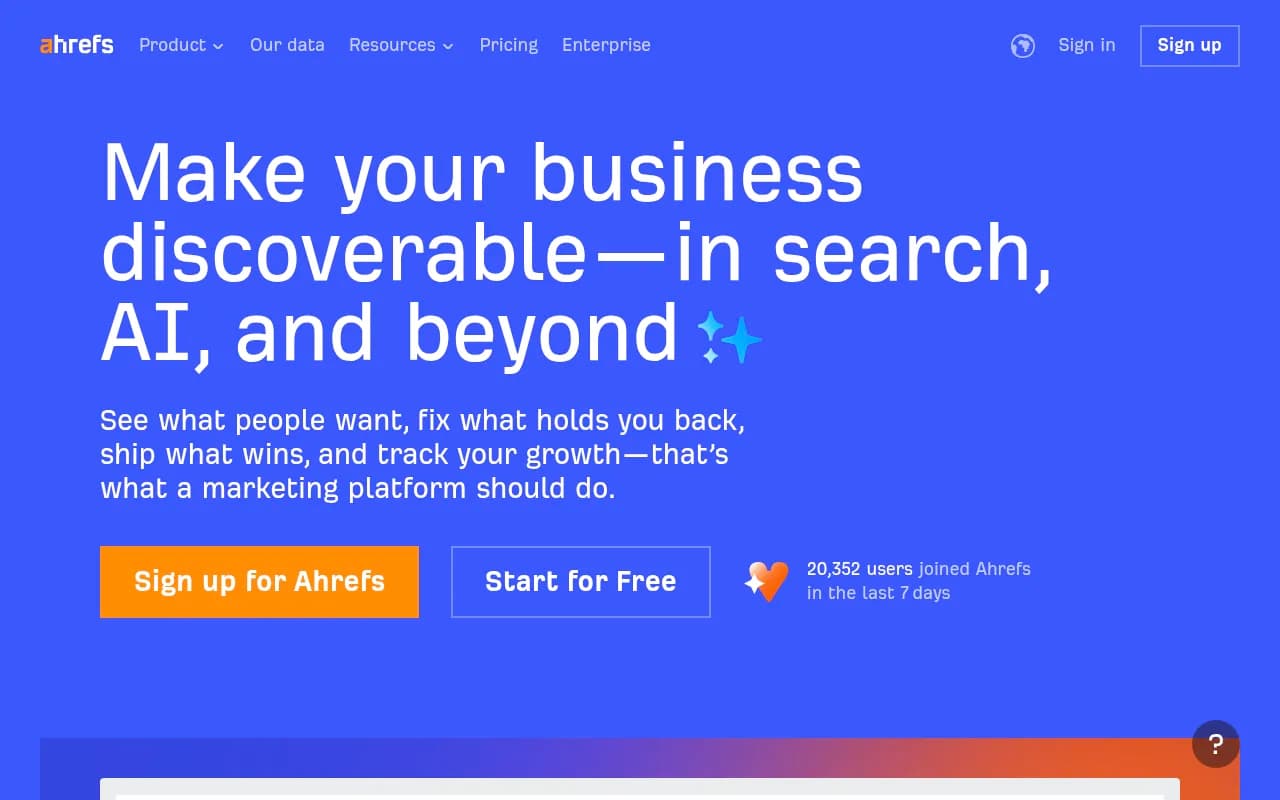
Ahrefs launched Brand Radar in late 2025 to track brand mentions in AI search results. Like Semrush, Ahrefs is a traditional SEO platform adding AI visibility as a feature rather than building a dedicated product.
API and integration capabilities
Ahrefs offers API access across its SEO toolkit, and Brand Radar data is exposed via the same API. You can pull:
- Brand mention frequency in AI responses
- Sentiment analysis
- Competitor comparison data
For Looker Studio integration, the workflow is identical to Semrush: use the API to push data into Google Sheets or BigQuery, then connect Looker Studio. Ahrefs doesn't provide a native connector, but the API is well-documented.
API access requires an Enterprise plan (pricing not publicly listed -- contact sales). This is a higher barrier than Promptwatch or Semrush, where API access is available at mid-market price points.
Trade-offs
Ahrefs Brand Radar has the same limitation as Semrush: it uses fixed prompts instead of custom queries. You can't test specific questions or track niche industry prompts. For agencies that need granular control over what they're monitoring, this is a dealbreaker.
The upside: if you're already an Ahrefs customer and need basic AI brand monitoring, adding Brand Radar to your existing subscription is simpler than adopting a new platform.
Pricing: Enterprise plans only (contact sales). API access included at Enterprise tier.
5. Otterly.AI
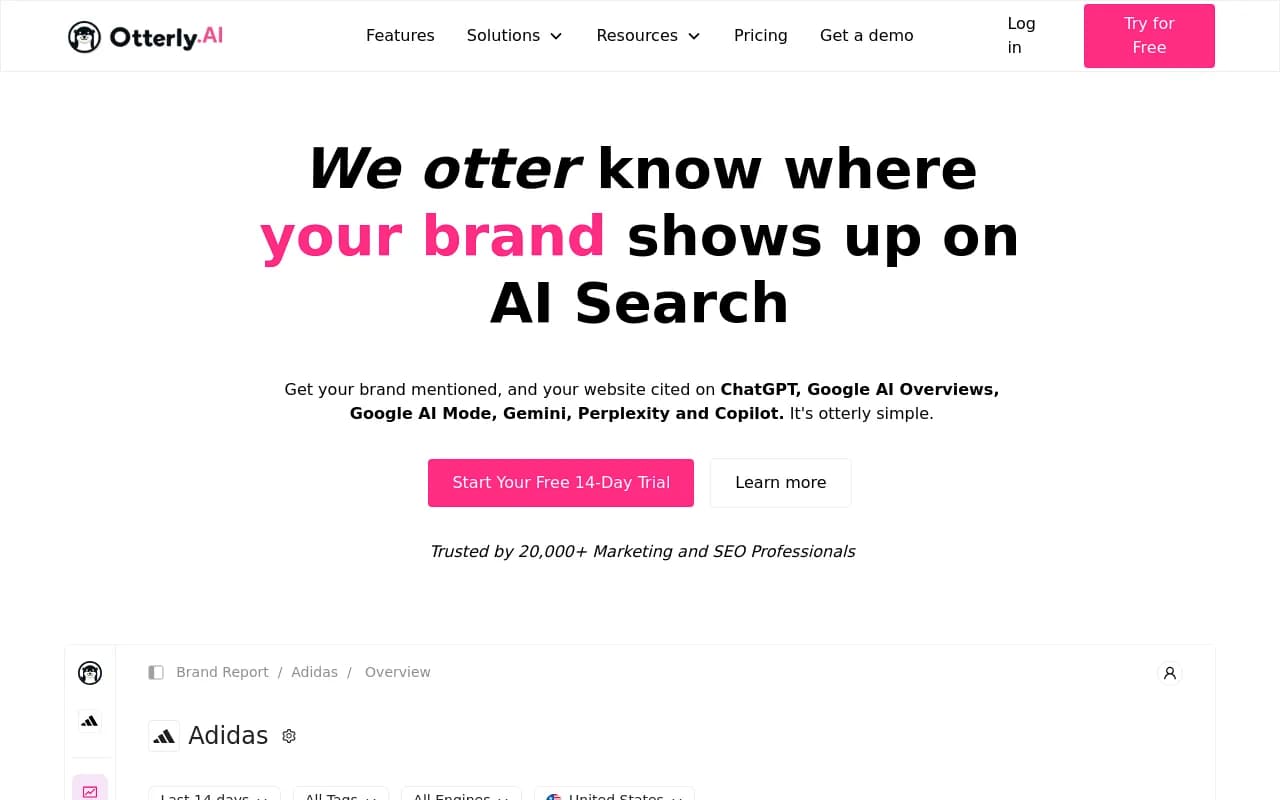
Otterly.AI is a budget-friendly AI visibility platform that tracks brand mentions across ChatGPT, Perplexity, Claude, and other engines. It's one of the most affordable options in the category, making it accessible for small teams and startups.
API access and limitations
Otterly.AI offers API access starting at the Professional plan ($199/month). The API exposes:
- Brand mention counts by engine
- Visibility trends over time
- Basic competitor comparison data
For Looker Studio integration, you'll need to use the API to push data into Google Sheets, then connect Looker Studio. Otterly.AI doesn't provide integration documentation as detailed as Promptwatch, so expect to figure out the pipeline yourself or hire a developer.
The main limitation: Otterly.AI is a monitoring-only tool. It shows you where your brand appears (or doesn't) but offers no content gap analysis, no AI writing tools, and no optimization features. If you need to act on the data -- not just look at it -- you'll need to pair Otterly.AI with other tools.
When Otterly.AI makes sense
If your budget is tight and you just need basic AI brand monitoring with API access, Otterly.AI is the cheapest option that checks both boxes. But for agencies managing multiple clients or brands that need to improve their AI visibility (not just track it), the lack of optimization features is a significant gap.
Pricing: Starter $49/month (no API), Professional $199/month (API access included).
6. SE Ranking AI Visibility Toolkit
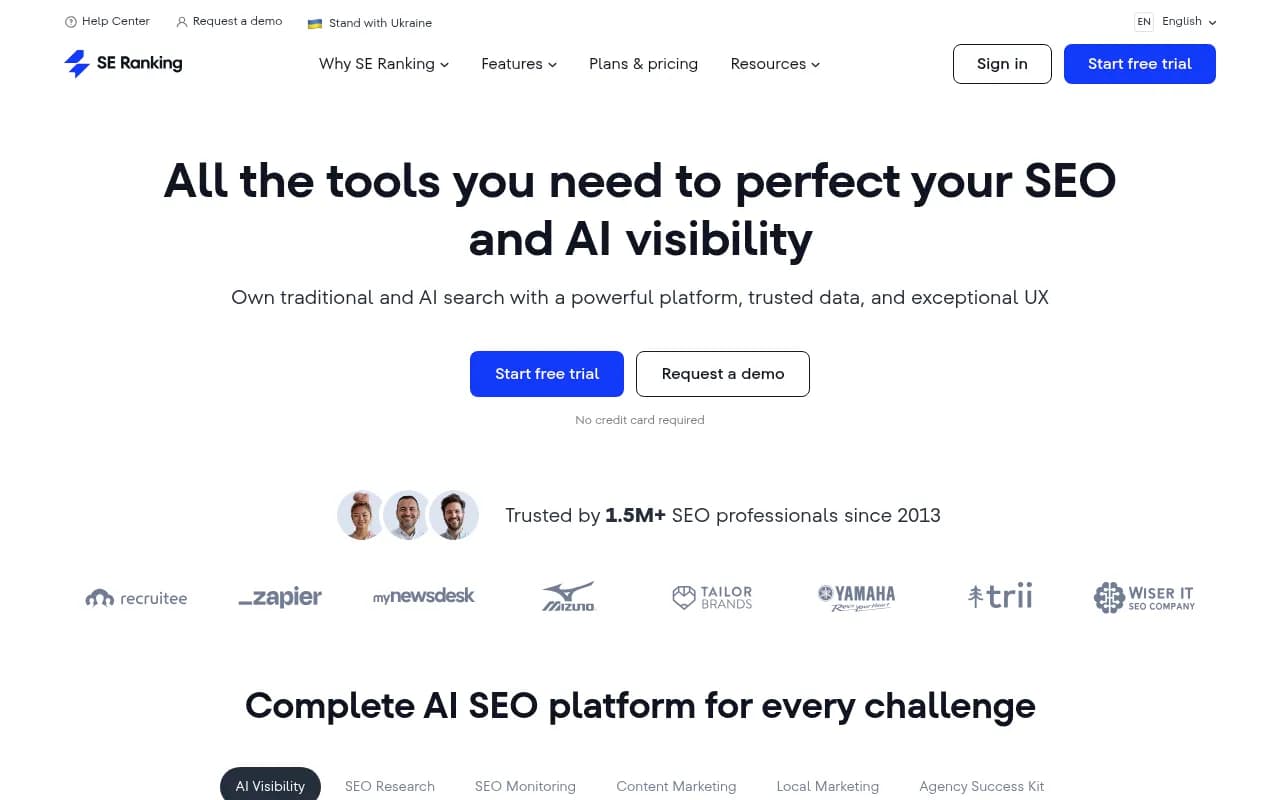
SE Ranking is an all-in-one SEO platform that added AI visibility tracking in 2025. Like Semrush and Ahrefs, it's a traditional SEO tool expanding into AI search monitoring.
API and Looker Studio integration
SE Ranking offers API access across its full platform, including the AI Visibility Toolkit. You can pull:
- Brand mention data from ChatGPT, Perplexity, and Google AI Overviews
- Visibility scores and trends
- Competitor comparison metrics
For Looker Studio integration, the standard workflow applies: use the API to populate Google Sheets or BigQuery, then connect Looker Studio. SE Ranking doesn't provide a native connector, but the API is documented well enough to build the pipeline.
API access is included starting at the Business plan ($239/month), which is more affordable than Semrush or Ahrefs. If you're looking for a budget-friendly SEO platform with AI visibility and API access, SE Ranking is a solid middle ground.
Limitations
Like other SEO platforms adding AI tracking as a feature, SE Ranking uses fixed prompts instead of custom queries. You can't test specific questions or track niche industry prompts. For broad brand monitoring, it works. For deep AI search optimization, you'll need a dedicated platform like Promptwatch.
Pricing: Business plan $239/month (API access included).
Comparison table: API access and Looker Studio integration
| Platform | API access | Looker Studio integration | Lowest plan with API | Custom prompts | Content optimization |
|---|---|---|---|---|---|
| Promptwatch | Yes | Documented workflow | $249/month | Yes | Yes (AI writing agent) |
| Profound | Yes | Via API + middleware | Contact sales | Yes | Limited |
| Semrush | Yes | Via API + middleware | $449/month | No (fixed prompts) | No |
| Ahrefs Brand Radar | Yes | Via API + middleware | Enterprise (contact sales) | No (fixed prompts) | No |
| Otterly.AI | Yes | Via API + middleware | $199/month | Yes | No |
| SE Ranking | Yes | Via API + middleware | $239/month | No (fixed prompts) | No |
How to build a Looker Studio dashboard for AI visibility
Since no platform offers a native Looker Studio connector, here's the standard workflow for integrating AI visibility data:
-
Choose your platform and plan: Make sure your subscription includes API access (typically $200-$500/month depending on the platform).
-
Set up API authentication: Most platforms use API keys or OAuth tokens. Follow their documentation to generate credentials.
-
Build the data pipeline: You have three options:
- Google Sheets + Apps Script: Write a script that calls the API and populates a Google Sheet on a schedule (daily or weekly). This is the simplest approach for non-technical teams.
- Zapier or Make: Use a no-code automation tool to pull data from the API and push it into Google Sheets. Easier than Apps Script but adds another subscription cost.
- BigQuery: For larger datasets or more complex reporting, use the API to push data into BigQuery, then connect Looker Studio directly to BigQuery. This requires more technical setup but scales better.
-
Connect Looker Studio: Once your data is in Google Sheets or BigQuery, connect Looker Studio as a data source. Build charts and tables showing visibility scores, citation counts, competitor comparisons, and trends over time.
-
Automate updates: Set your pipeline to refresh daily or weekly so your Looker Studio dashboard always shows current data.
For platforms with good API documentation (like Promptwatch or Semrush), this process takes a few hours. For platforms with sparse documentation (like Otterly.AI), expect to spend more time troubleshooting.
Which platform should you choose?
If you need both AI visibility tracking and Looker Studio integration, here's how to decide:
-
Choose Promptwatch if you want the best combination of monitoring, optimization, and integration capabilities at a mid-market price. The documented Looker Studio workflow, robust API, and content gap analysis tools make it the strongest all-around option. API access starts at $249/month.
-
Choose Profound if you're an agency managing multiple clients and need white-label reporting plus API access. The pitch environments and multi-brand workspaces are built for agency workflows. Pricing is custom (contact sales).
-
Choose Semrush if you're already a Semrush customer and want to add AI visibility to your existing SEO reporting. The API is mature and well-documented. API access starts at $449/month.
-
Choose Otterly.AI if budget is your top constraint and you just need basic monitoring with API access. At $199/month, it's the cheapest option that checks both boxes. But expect to build your own optimization workflows since the platform is monitoring-only.
-
Choose SE Ranking if you want an affordable all-in-one SEO platform with AI visibility and API access. At $239/month, it's cheaper than Semrush but more limited in features.
-
Choose Ahrefs Brand Radar if you're already an Ahrefs Enterprise customer and want to add AI brand monitoring without adopting a new platform. API access is included at the Enterprise tier (contact sales for pricing).
For most teams, Promptwatch offers the best balance of features, price, and integration capabilities. The combination of monitoring, content optimization, and API access at $249/month is hard to beat. If you're an agency or enterprise with more complex needs, Profound's multi-brand workspaces and white-label reporting justify the higher price tag.
Final thoughts
AI search visibility is moving fast. In 2024, most brands didn't even know they needed to track how ChatGPT or Perplexity mentioned them. By 2026, it's table stakes. The brands that win are the ones that not only monitor their AI visibility but integrate that data into their existing reporting infrastructure and act on it.
Looker Studio integration isn't a nice-to-have -- it's essential for teams that need to report AI visibility alongside traditional SEO metrics, paid media performance, and revenue attribution. The platforms that offer robust APIs (like Promptwatch, Profound, and Semrush) make this possible. The platforms that don't (or gate API access behind expensive enterprise contracts) force you to live in yet another dashboard.
As the market matures, expect to see native Looker Studio connectors emerge. Until then, the API + middleware workflow is the standard approach. Choose a platform with good API documentation, budget for a few hours of setup time, and you'll have AI visibility data flowing into your existing reporting stack.