Key takeaways
- Most GEO tools are monitoring-only dashboards -- they show you data but leave you to figure out what to do with it.
- The tools worth paying for in 2026 combine visibility tracking with content gap analysis and actual content creation.
- Promptwatch is the only platform rated "Leader" across all categories in a 2026 comparison of 12 GEO platforms, specifically because it closes the full loop from gap discovery to content generation to traffic attribution.
- Several strong monitoring-only tools (Otterly.AI, Peec AI, AthenaHQ) are worth considering if you already have a content workflow in place.
- Pricing ranges from ~$20/month for basic trackers to $579/month+ for full optimization platforms.
The GEO tool market has exploded. Two years ago there were maybe a dozen platforms worth considering. Now there are well over fifty, and most of them do roughly the same thing: they query ChatGPT or Perplexity with your brand name, count how often you show up, and present that in a dashboard.
That's useful. But it's not enough.
If you're a marketing team trying to actually grow your AI search visibility -- not just measure it -- you need tools that go further. You need to know which prompts your competitors are winning that you're not. You need to know what content to create to fix that. And ideally, you need help creating it.
This guide focuses specifically on tools that combine monitoring with content creation or optimization. Pure trackers get a mention where relevant, but the emphasis is on platforms that help you take action.
What to look for in a GEO tool in 2026
Before getting into the list, it's worth being clear about what separates a good GEO tool from a great one.
Monitoring breadth: Does it cover ChatGPT, Claude, Perplexity, Gemini, Google AI Overviews, and the other models your customers actually use? A tool that only tracks one or two engines gives you an incomplete picture.
Prompt intelligence: Can it tell you which prompts matter, how competitive they are, and which ones you have a realistic chance of winning? Volume estimates and difficulty scores are the difference between guessing and prioritizing.
Gap analysis: This is the big one. Does the tool show you specifically what you're missing -- the prompts and topics where competitors appear but you don't? Without this, you're flying blind on what to fix.
Content creation: Does the tool help you generate content designed to get cited by AI models, or does it just hand you a list of gaps and wish you luck?
Traffic attribution: Can you connect AI visibility to actual website traffic and revenue? This is still rare but increasingly important.
The top 10 GEO tools that combine monitoring and content creation
1. Promptwatch
Promptwatch is the most complete GEO platform available in 2026, and the only one in a recent 12-platform comparison to be rated "Leader" across every category. The reason it stands apart isn't the monitoring -- it's what happens after the monitoring.
The core workflow is a three-step loop: find gaps, create content, track results. The Answer Gap Analysis shows you exactly which prompts competitors are visible for that you're not. The built-in AI writing agent then generates articles, listicles, and comparison pages grounded in real citation data (over 880 million citations analyzed). Then page-level tracking shows whether your new content is actually getting cited, by which models, and how often.
On top of that, Promptwatch has AI crawler logs (real-time data on when ChatGPT, Claude, and Perplexity crawl your site), ChatGPT Shopping tracking, Reddit and YouTube citation insights, and query fan-outs that show how a single prompt branches into sub-queries. It covers 10 AI models including Google AI Overviews, Google AI Mode, DeepSeek, Grok, and Mistral.
Pricing starts at $99/month (Essential: 1 site, 50 prompts, 5 articles), $249/month (Professional: 2 sites, 150 prompts, 15 articles, crawler logs), and $579/month (Business: 5 sites, 350 prompts, 30 articles). A free trial is available.

2. Writesonic
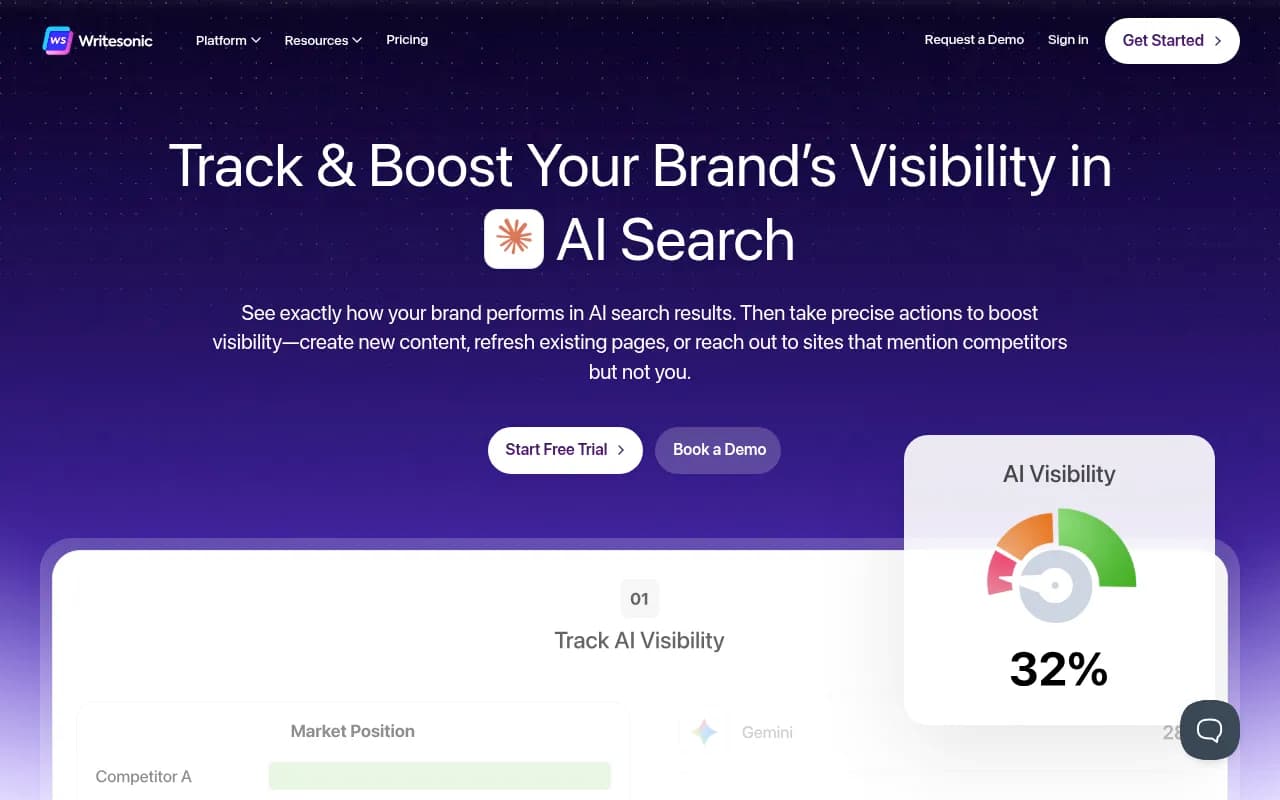
Writesonic has evolved well beyond its origins as an AI writing tool. Its GEO module now includes an "Action Center" that flags citation gaps, AI crawler analytics, and prompt monitoring across multiple engines. The integration with its content generation suite is the obvious advantage -- you can go from "I'm not appearing for this prompt" to a drafted article in the same platform.
It's priced accessibly (starting around $49/month), which makes it a reasonable entry point for smaller teams. The monitoring depth isn't as granular as Promptwatch -- fewer models covered, less data on prompt volumes -- but for teams that want a single tool for both tracking and writing, it's worth a look.
3. Relixir
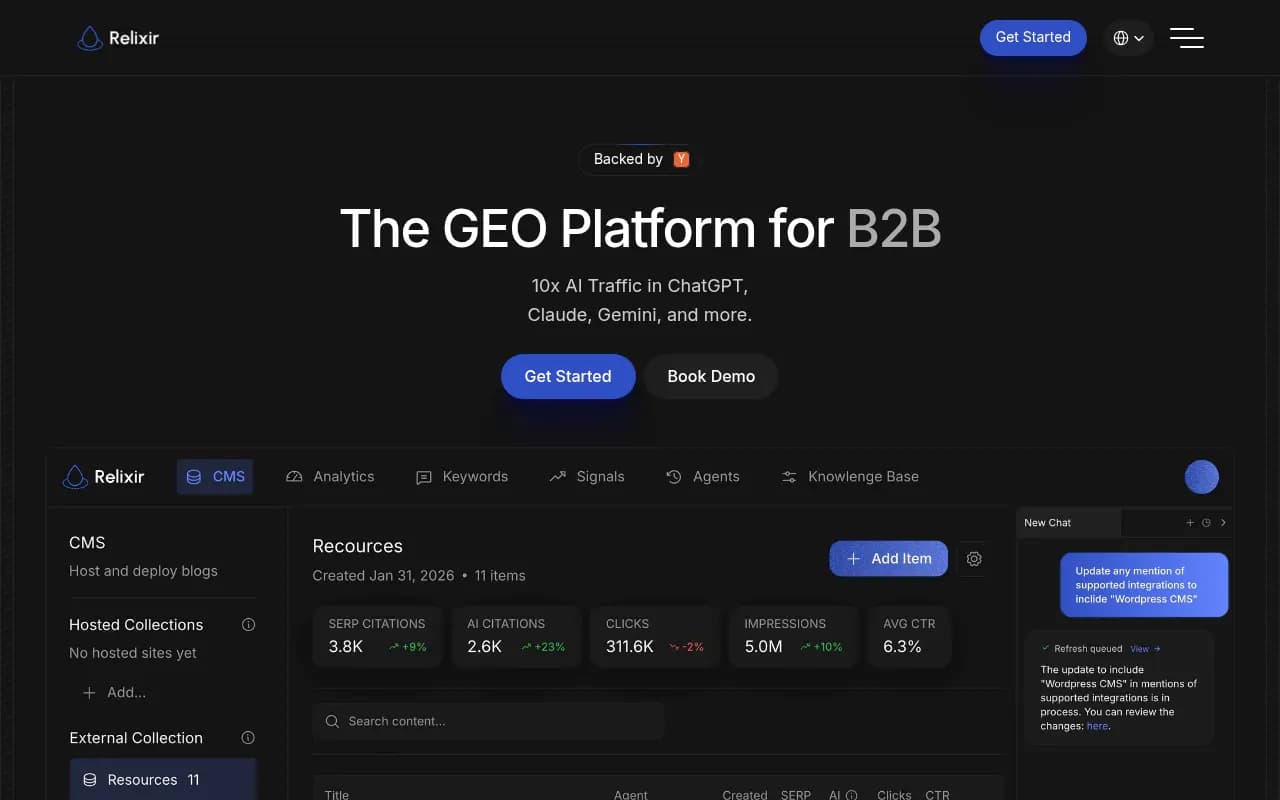
Relixir positions itself as an "AI-native CMS" for GEO, which is an interesting angle. Rather than bolting content creation onto a monitoring tool, it's built content management into the core product. It includes autonomous content optimization -- the platform can identify gaps and push fixes without requiring manual intervention at every step.
It's a newer entrant and the feature set is still maturing, but the architecture is smart. If you want a platform that treats GEO content as a living system rather than a one-time project, Relixir is worth evaluating.
4. Searchable
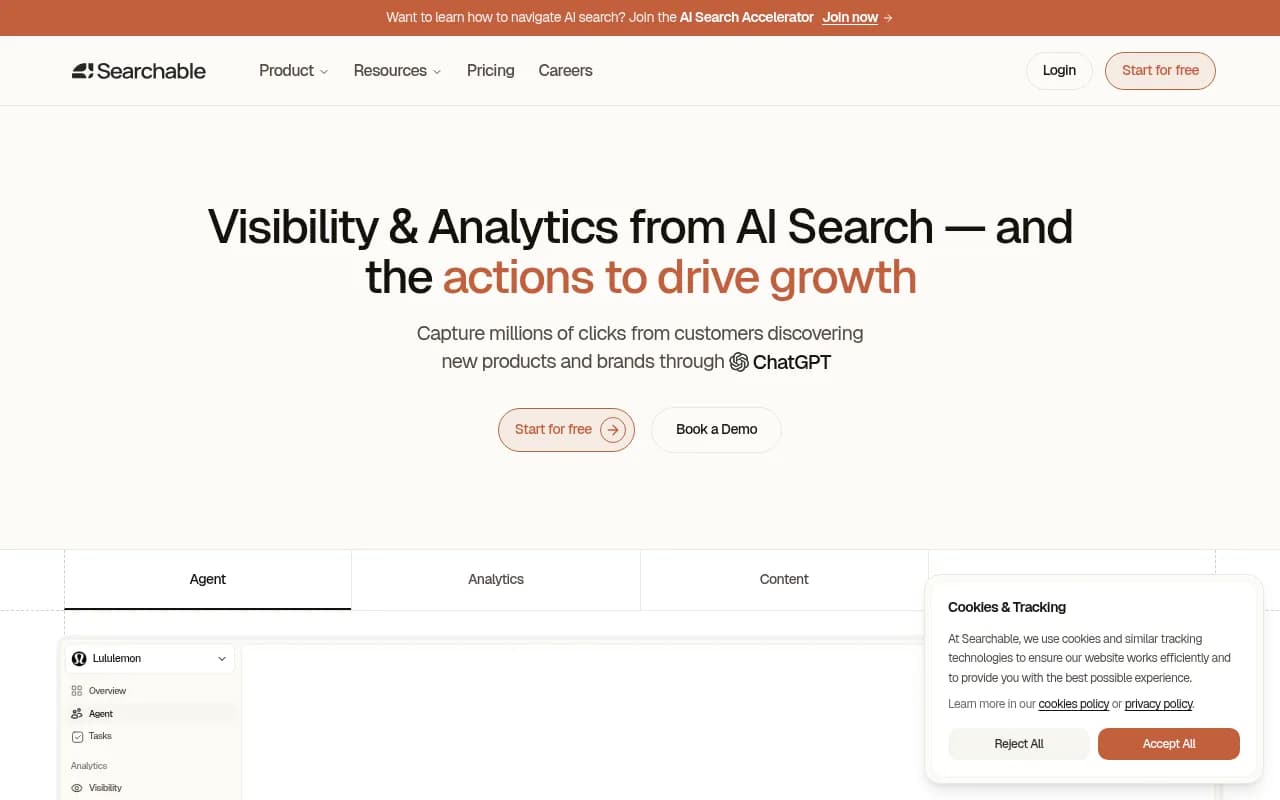
Searchable covers both monitoring and content optimization, with particular strength in helping teams understand which sources AI models are citing in their category. The source analysis feeds directly into content recommendations -- you can see which domains are being cited and what types of content they're producing, then use that to inform your own strategy.
It's not the deepest platform on this list, but it's solid for mid-market teams that want actionable recommendations without the complexity of an enterprise tool.
5. Whitebox
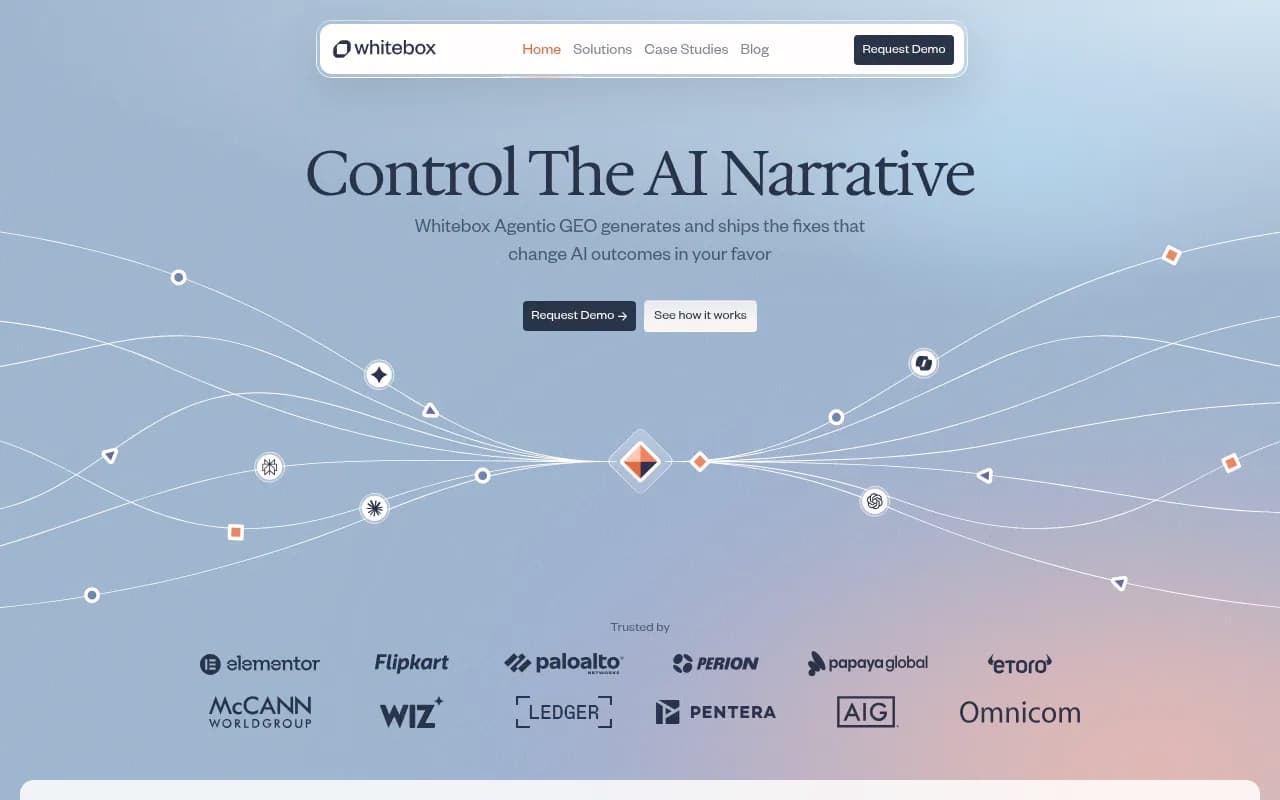
Whitebox takes an agentic approach: it doesn't just identify narrative gaps, it automatically generates and ships fixes. The platform monitors how AI models describe your brand, spots inaccuracies or missing narratives, and then creates content designed to correct those gaps. The "agentic" framing is accurate -- it's built to run with minimal manual input.
This is a good fit for brands that want GEO running in the background without dedicating significant team bandwidth to it. The trade-off is less granular control over what gets published.
6. SE Visible
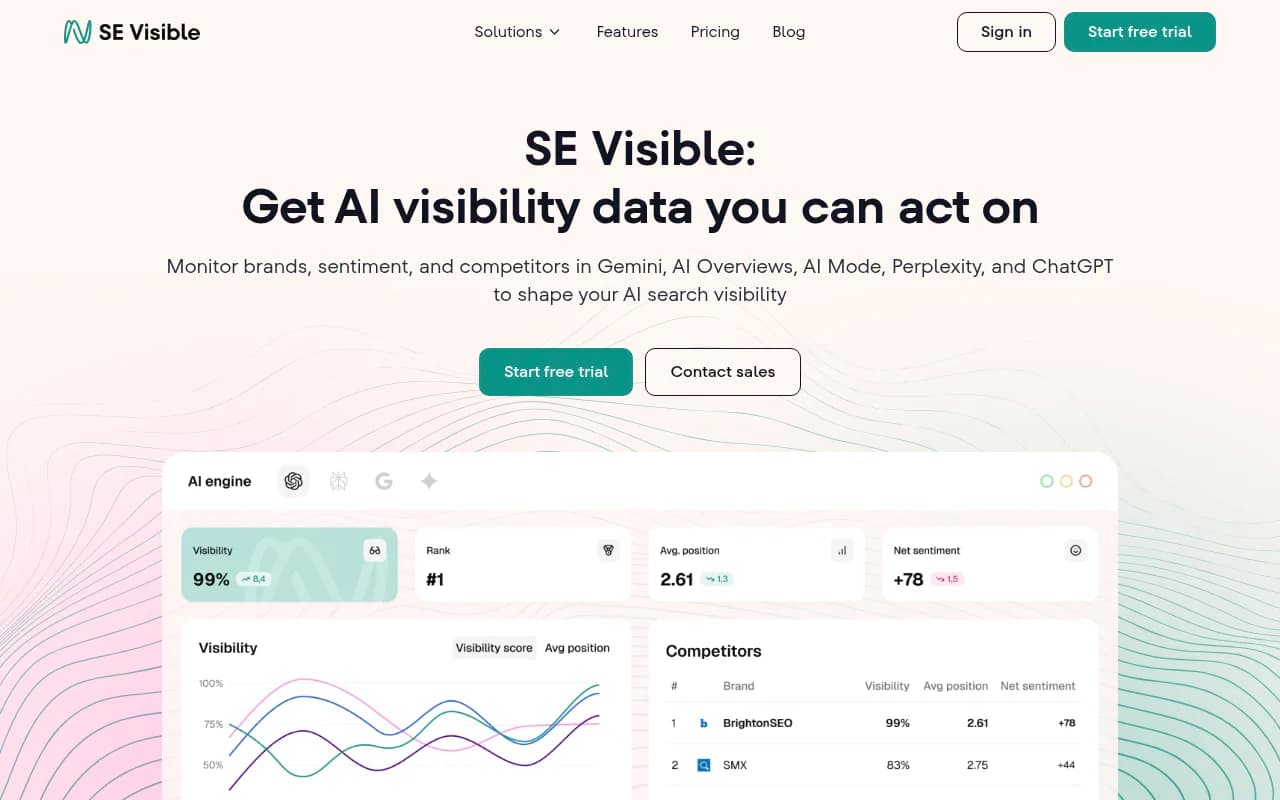
SE Visible (from SE Ranking) is one of the more data-rich monitoring tools that also includes content optimization features. It has a visibility score, net sentiment score, competitor benchmarking, and prompt/topic insights. The content side is less developed than Promptwatch or Writesonic, but the monitoring data quality is strong.
It covers Google AI Overviews, AI Mode, Gemini, ChatGPT, and Perplexity. Starting price is $189/month, which puts it in the mid-range. A good option for teams that prioritize data quality and want some content guidance built in.
7. Frase
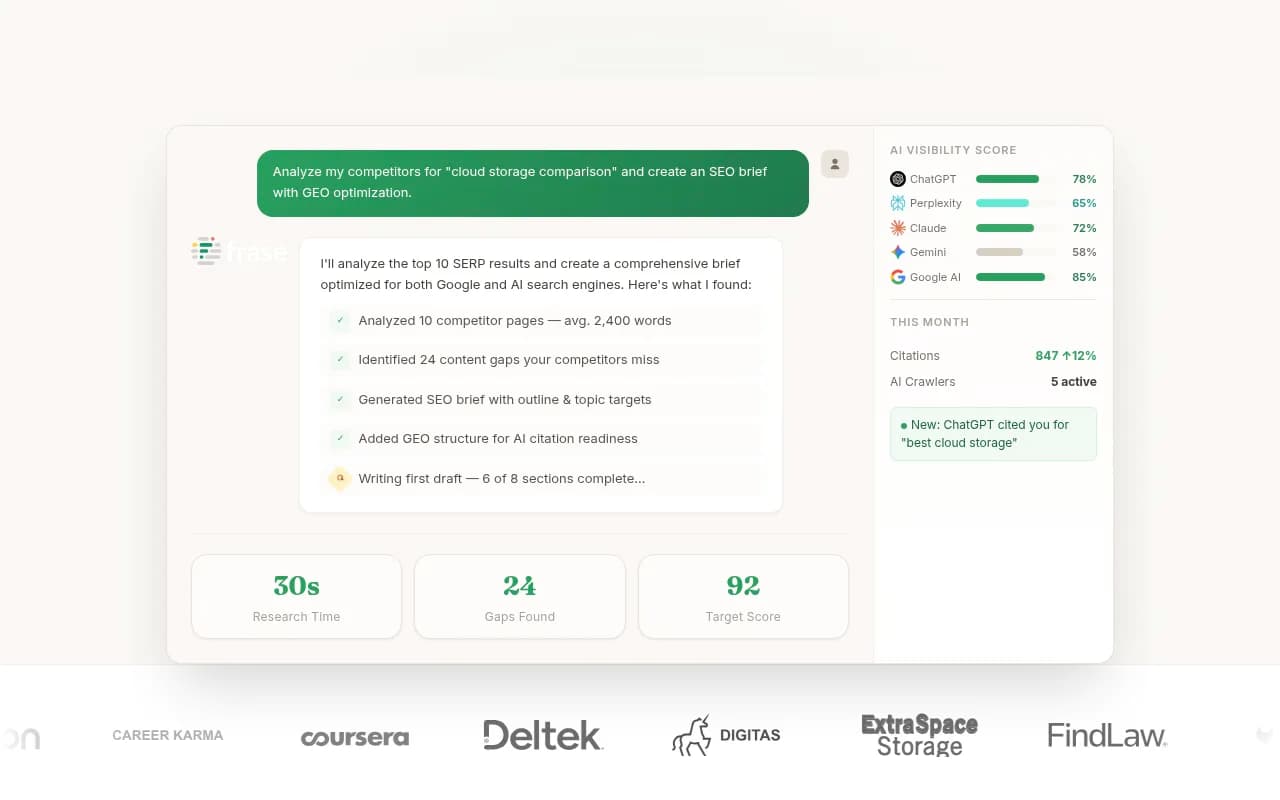
Frase has been a content optimization tool for years, and it's adapted reasonably well to the GEO era. It researches, writes, and optimizes content with AI visibility in mind. The GEO-specific features are newer additions, so it's not as purpose-built for AI search as some others on this list -- but the content quality tooling is mature and the workflow is smooth.
Best for teams that already use Frase for SEO content and want to extend that workflow into GEO without switching platforms.
8. GeoGen
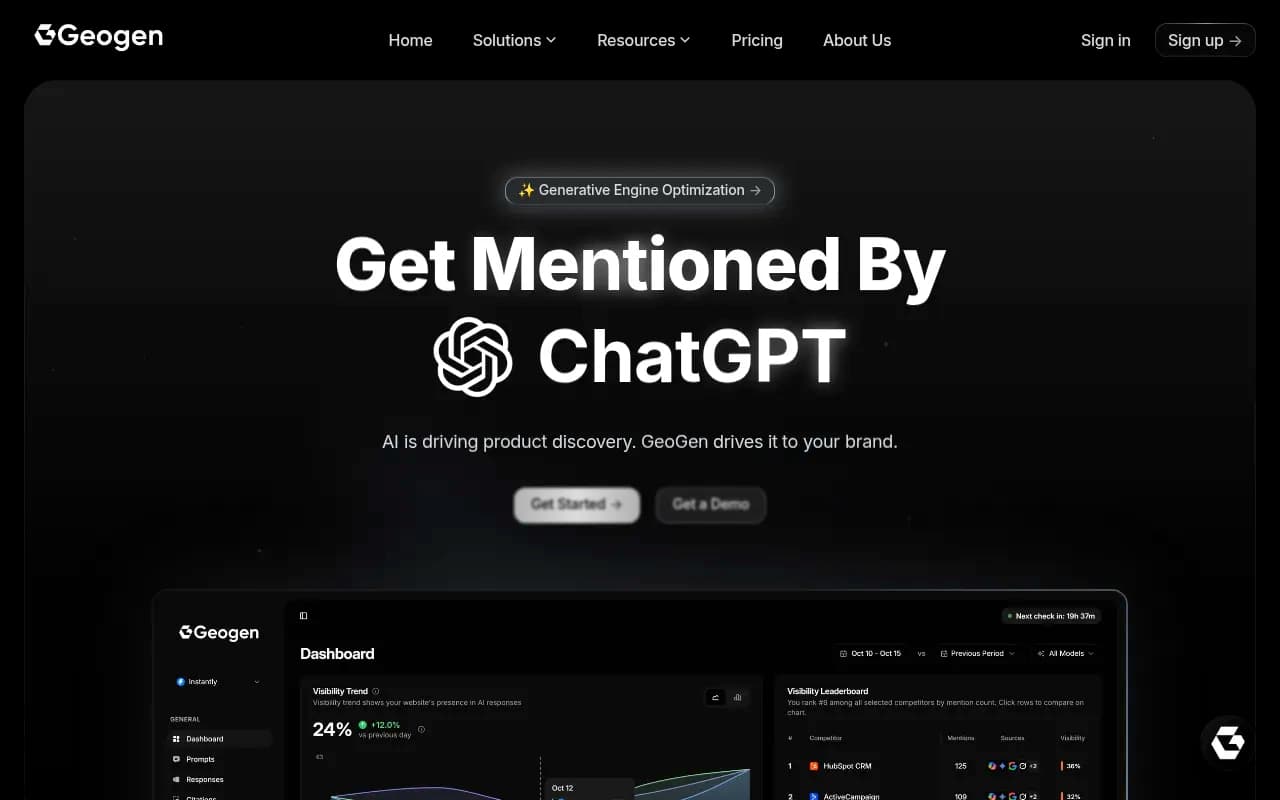
GeoGen focuses specifically on tracking and optimizing AI search visibility, with content generation built into the workflow. It's a newer platform with a narrower feature set than the top entries on this list, but it's purpose-built for GEO rather than being an SEO tool with GEO features bolted on. Worth watching as the product matures.
9. Qwairy
Qwairy describes itself as a "GEO strategy and optimization platform," which is a fair summary. It covers monitoring across major AI engines and provides optimization recommendations. The content creation features are present but not the platform's strongest suit -- it's better positioned as a strategy and tracking tool that informs your content work rather than doing it for you.

10. Atomic AGI
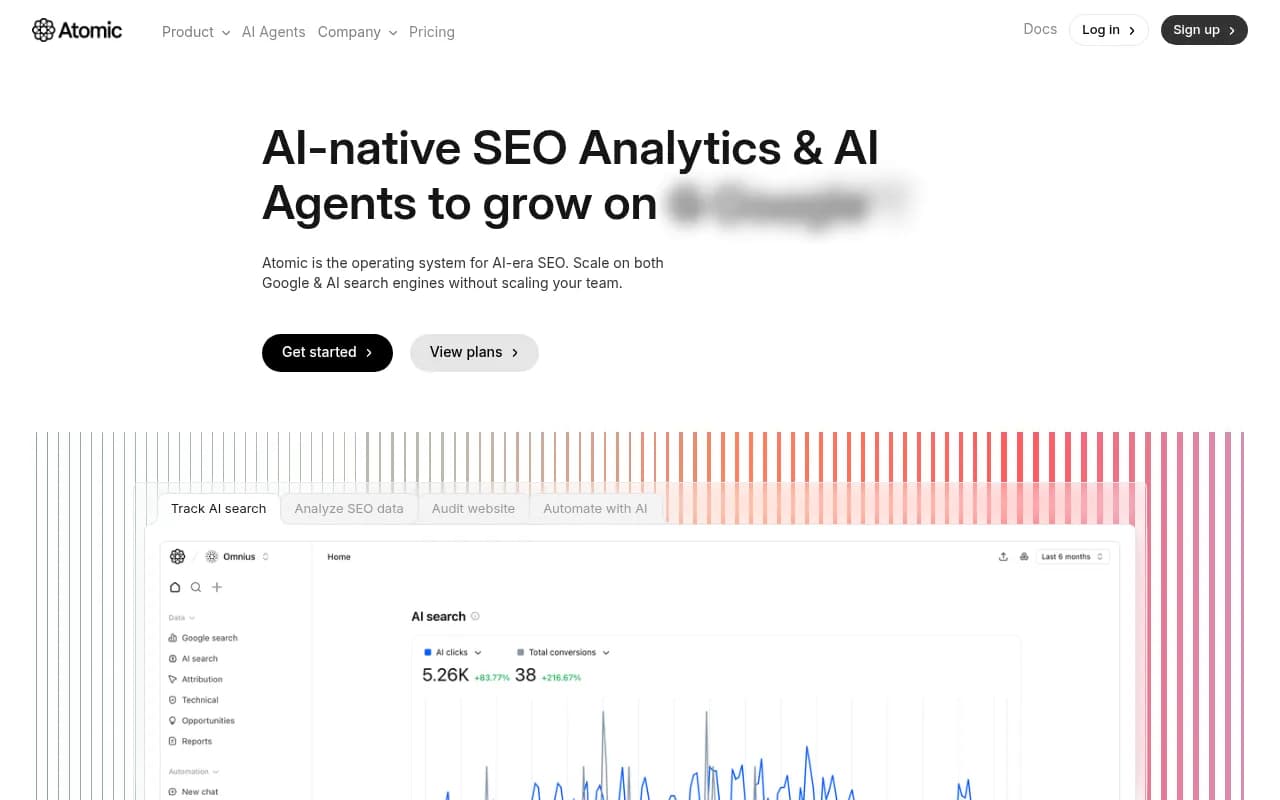
Atomic AGI tracks both Google and LLMs in a single platform, with automated content optimization built in. The dual focus on traditional SEO and AI search is useful for teams that don't want to maintain separate tools for each. The AI search features are less mature than dedicated GEO platforms, but the integration with traditional SEO data is a genuine differentiator.
Monitoring-only tools worth knowing about
Not every team needs content creation built into their GEO tool. If you have a strong content operation already and just need reliable tracking data, these platforms are worth considering.
AthenaHQ has strong prompt volume tracking and broad LLM coverage. It's monitoring-focused but the data quality is good.

Peec AI is well-priced for what it offers -- structured reporting, competitor source analysis, and daily tracking across selected models.

Otterly.AI is the most accessible entry point for AI visibility monitoring. It's bootstrapped, affordable, and does the basics well. No content features, but it's a reasonable starting point for smaller brands.

Profound covers the core monitoring use case with a clean interface. Good for teams that want straightforward visibility data without a lot of complexity.

Feature comparison
Here's how the main tools stack up across the capabilities that matter most for teams that want to both monitor and improve their AI visibility.
| Tool | AI models covered | Gap analysis | Content generation | Crawler logs | Traffic attribution | Starting price |
|---|---|---|---|---|---|---|
| Promptwatch | 10 (ChatGPT, Claude, Gemini, Perplexity, Grok, DeepSeek, Copilot, Mistral, Meta AI, Google AIOs) | Yes | Yes (AI writing agent) | Yes | Yes (GSC, snippet, logs) | $99/mo |
| Writesonic | Multi-engine | Partial (Action Center) | Yes | Partial | No | $49/mo |
| Relixir | Major LLMs | Yes | Yes (autonomous) | No | No | Custom |
| Searchable | Major LLMs | Partial | Partial | No | No | Custom |
| Whitebox | Major LLMs | Yes | Yes (agentic) | No | No | Custom |
| SE Visible | 5 (AIOs, AI Mode, Gemini, ChatGPT, Perplexity) | Partial | Partial | No | No | $189/mo |
| Frase | Limited | No | Yes | No | No | $15/mo |
| AthenaHQ | 8+ | No | No | No | No | $295/mo |
| Peec AI | Selected | No | No | No | No | ~$29/mo |
| Otterly.AI | Limited | No | No | No | No | ~$19/mo |
The monitoring-only trap
It's worth being direct about something: most GEO tools on the market right now are monitoring dashboards. They'll tell you your brand appeared in 23% of relevant ChatGPT responses last month, up from 19% the month before. That's interesting data. But it doesn't tell you what to do.
The tools that actually move the needle are the ones that connect visibility data to content action. You need to know not just that you're invisible for a prompt, but why -- what content is missing, what your competitors have that you don't, and what you should create to close that gap.
That's the distinction that matters in 2026. Monitoring is table stakes. The question is what happens after the monitoring.
How to choose the right tool for your situation
If you're a marketing team that wants an end-to-end solution: Promptwatch is the clear choice. The gap analysis, content generation, and traffic attribution work together in a way that no other platform currently matches. The $249/month Professional plan is the right starting point for most teams.
If you're a smaller brand on a tight budget: Writesonic at $49/month gives you both monitoring and content creation at a price point that's hard to argue with. The monitoring isn't as deep, but the content workflow is solid.
If you already have a strong content team and just need data: AthenaHQ or Peec AI will give you reliable monitoring data to feed into your existing process. Don't pay for content features you won't use.
If you want AI to handle GEO largely autonomously: Whitebox or Relixir are worth evaluating. Both take an agentic approach that minimizes the manual work required.
If you're an agency managing multiple clients: Promptwatch's agency/enterprise pricing and multi-site support make it the most practical option. The Looker Studio integration and API also make client reporting much easier.
The bottom line
The GEO tool landscape in 2026 is crowded, but the meaningful distinction is simple: does the tool help you fix your visibility gaps, or does it just show them to you?
Most tools stop at showing. A handful -- Promptwatch most completely, followed by Writesonic, Relixir, and Whitebox -- actually help you do something about it. That's the category worth investing in.
If you're evaluating platforms right now, start with the free trial on Promptwatch to see what the full monitoring-to-content loop looks like in practice. Then compare against whatever else you're considering. The difference between a tracker and an optimization platform becomes obvious pretty quickly once you've seen both.