Summary
- Entity optimization matters more than keywords: AI models parse entities (brands, products, people, standards) to understand authority. Consistent entity usage across your content signals topical depth.
- Schema markup is no longer optional: Structured data (FAQ, HowTo, Product, Organization) helps AI models parse and cite your content accurately.
- Content structure beats keyword density: Clear headings, scannable lists, and direct answers to common questions make your content more citable than keyword-stuffed paragraphs.
- AI crawlers need access: If ChatGPT, Claude, or Gemini can't crawl your pages, you don't exist in their training data. Check your robots.txt and user-agent rules.
- Track what's working: Tools like Promptwatch show which pages AI models cite, which prompts trigger your brand, and where competitors are winning.

Why on-page optimization matters for AI search
Half of consumers now use AI-powered search. By 2028, McKinsey estimates this shift will influence $750 billion in revenue. Google's AI Overviews appear in 60% of searches. ChatGPT has captured 59.7% of the AI search market.
If your content isn't structured for AI models to parse, cite, and recommend, you're invisible.
Traditional SEO focused on ranking in a list of ten blue links. AI search is different. Models like Claude and Gemini synthesize answers from multiple sources. They cite pages that provide clear, authoritative, well-structured information. They ignore pages that bury answers in fluff or lack semantic clarity.
The good news: most of the fixes are straightforward. You don't need to rewrite your entire site. You need to audit what's already there and make targeted improvements that help AI models understand and trust your content.
Fix 1: Optimize entity usage and consistency
AI models don't just look for keywords. They extract entities -- branded terms, product names, people, standards, acronyms, solutions, offerings. Consistent entity usage signals topical authority.
What to audit:
- Are your core entities (brand name, product names, key offerings) mentioned consistently across pages?
- Do you use the same terminology, or do you alternate between synonyms? (e.g. "AI search optimization" vs "generative engine optimization" vs "GEO")
- Are entities linked to authoritative sources (your own product pages, Wikipedia, industry standards)?
How to fix it:
- Build an entity map. List your brand, products, services, leadership team, industry terms, standards, and acronyms.
- Use tools like Gemini Advanced or Claude to extract entities from your top pages. Compare the output to your entity map.
- Update pages to use consistent terminology. If you call your product "AI Visibility Platform" on the homepage, use that exact phrase across all pages -- not "visibility tool" or "AI tracker."
- Add internal links from entity mentions to authoritative pages (product pages, about pages, glossary entries).
Why it works: AI models build knowledge graphs. Consistent entity usage helps them map your brand to specific topics and solutions. Inconsistent terminology confuses the model and dilutes your authority.
Fix 2: Add and validate schema markup
Structured data is how you tell AI models what your content is about. Schema markup (JSON-LD) wraps your content in machine-readable labels that models can parse without guessing.
What to audit:
- Do your pages have schema markup? (Check with Google's Rich Results Test or Schema.org validator)
- Are you using the right schema types? (FAQ, HowTo, Product, Organization, Article, BreadcrumbList)
- Is the schema valid? (No errors or warnings in the validator)
How to fix it:
- Add FAQ schema to pages with common questions. AI models love FAQ markup because it provides direct question-answer pairs.
- Add HowTo schema to guides and tutorials. This tells models your content is instructional.
- Add Product schema to product pages. Include name, description, price, availability, reviews.
- Add Organization schema to your homepage and about page. Include name, logo, social profiles, contact info.
- Validate all schema with Google's Rich Results Test and Schema.org validator. Fix errors and warnings.
Why it works: AI models prioritize structured data when generating citations. A page with valid FAQ schema is more likely to be cited than a page with the same information buried in paragraphs.
Fix 3: Restructure content for scannability
AI models don't read like humans. They scan for patterns: headings, lists, tables, direct answers. Dense paragraphs slow them down.
What to audit:
- Are your headings descriptive? ("Benefits" is vague. "How AI search improves conversion rates" is specific.)
- Do you answer common questions directly in the first paragraph of each section?
- Are you using lists, tables, and bullet points to break up text?
How to fix it:
- Rewrite vague headings. Use question-based headings ("How do I optimize for Claude?") or benefit-driven headings ("Why entity optimization matters for AI search").
- Lead each section with a direct answer. Put the key takeaway in the first 1-2 sentences.
- Convert paragraphs to lists wherever possible. Lists are easier for models to parse and cite.
- Add comparison tables. If you're comparing tools, features, or approaches, use a markdown table.
Example transformation:
Before: AI search optimization involves several factors including content structure, entity usage, schema markup, and technical accessibility. Each of these elements plays a role in how AI models interpret and cite your content.
After: AI search optimization depends on four core factors:
- Content structure: Clear headings, lists, and direct answers
- Entity usage: Consistent terminology for brands, products, and solutions
- Schema markup: Machine-readable labels (FAQ, HowTo, Product)
- Technical accessibility: AI crawlers need permission to read your pages
Why it works: Models extract information faster from structured content. The easier you make it for Claude or Gemini to parse your page, the more likely they are to cite it.
Fix 4: Ensure AI crawler access
If AI crawlers can't access your pages, you don't exist in their training data. This is the most common technical barrier to AI visibility.
What to audit:
- Does your robots.txt block AI crawlers? (Check for rules blocking GPTBot, Claude-Web, Google-Extended, PerplexityBot)
- Are pages blocked by meta robots tags? (Check for
<meta name="robots" content="noindex">or<meta name="googlebot" content="noindex">) - Are pages behind login walls or paywalls?
How to fix it:
- Review your robots.txt file. Look for User-agent rules that block AI crawlers.
- If you want to allow AI crawlers, remove or comment out blocking rules.
- Check meta robots tags on key pages. Remove
noindexdirectives unless you specifically want to hide the page. - For gated content, consider offering a preview or summary that AI crawlers can access.
Common AI crawler user-agents:
- GPTBot (OpenAI/ChatGPT)
- Claude-Web (Anthropic/Claude)
- Google-Extended (Google Gemini)
- PerplexityBot (Perplexity)
- Applebot-Extended (Apple Intelligence)
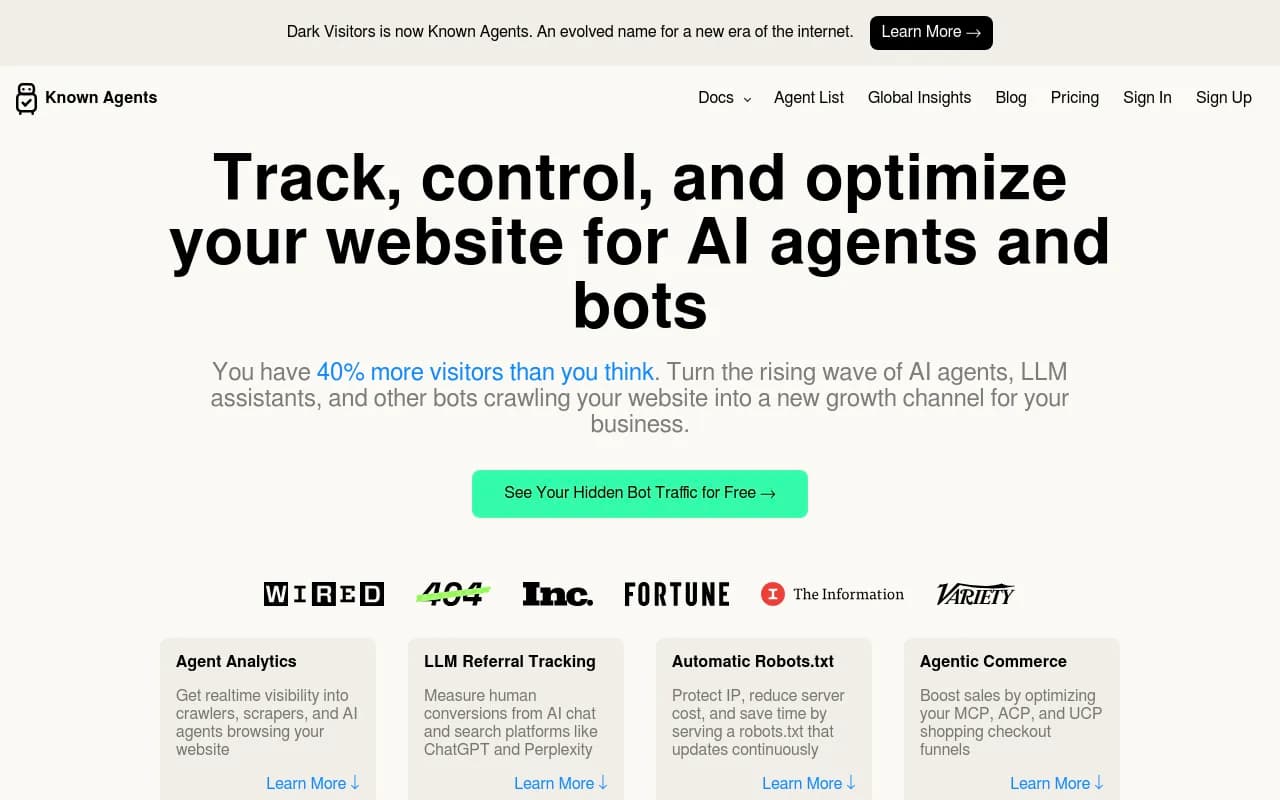
Tools like DarkVisitors track which AI crawlers are hitting your site and how often.
Why it works: AI models can't cite pages they've never seen. Crawler access is the foundation of AI visibility.
Fix 5: Optimize for prompt alignment
AI models respond to prompts, not keywords. You need to understand what questions your audience is asking and structure content to answer those questions directly.
What to audit:
- What prompts are your competitors visible for? (Use tools like Promptwatch or Peec AI to see competitor prompt coverage)
- Are your pages aligned to specific prompts? (Does each page answer a clear question or solve a clear problem?)
- Are you covering long-tail prompts? ("Best AI search tools for agencies" vs "AI search tools")
How to fix it:
- Build a prompt map. List the questions your audience asks about your product, service, or industry.
- Map each page to 1-3 core prompts. If a page doesn't align to a specific prompt, rewrite or consolidate it.
- Add FAQ sections that directly answer common prompts.
- Create new pages for high-value prompts you're not covering.
Example: If you sell an AI visibility platform, relevant prompts might include:
- "How do I track my brand in ChatGPT?"
- "What tools monitor AI search visibility?"
- "How do I optimize content for Claude?"
- "Best AI search tracking platforms for agencies"
Each of these prompts should map to a specific page or section.
Why it works: AI models match prompts to content. Pages that directly answer common prompts get cited more often than pages that meander.
Fix 6: Improve NLP and semantic clarity
AI models use natural language processing (NLP) to understand context, relationships, and meaning. Vague language confuses models. Precise language helps them cite you accurately.
What to audit:
- Are you using jargon without defining it?
- Are you using vague terms like "solution," "platform," or "tool" without specifying what they do?
- Are you explaining relationships between concepts? (e.g. "GEO is a subset of AI search optimization")
How to fix it:
- Define jargon on first use. If you mention "GEO," explain that it stands for Generative Engine Optimization.
- Replace vague terms with specific ones. Instead of "our platform," say "our AI visibility tracking platform."
- Add context sentences that explain relationships. "Unlike traditional SEO, which optimizes for Google rankings, GEO optimizes for citations in AI models like ChatGPT and Claude."
- Use tools like Gemini Advanced to extract key entities and check if they're clearly defined.
Why it works: AI models prefer content that's easy to parse. Clear definitions and explicit relationships reduce ambiguity and improve citation accuracy.
Fix 7: Track and iterate based on citation data
You can't improve what you don't measure. AI visibility tracking shows which pages are being cited, which prompts trigger your brand, and where competitors are winning.
What to audit:
- Which pages are currently cited by Claude, Gemini, ChatGPT, and Perplexity?
- Which prompts trigger citations to your site?
- Where are competitors cited but you're not?
How to fix it:
- Set up AI visibility tracking with a tool like Promptwatch, Peec AI, or Otterly.AI.
- Identify your top-cited pages. Analyze what they have in common (structure, schema, entity usage).
- Identify gaps. Run competitor prompts and see which pages they're cited for but you're not.
- Create or optimize pages to fill those gaps.
- Track results over time. Monitor citation growth, prompt coverage, and share of voice.
Key metrics to track:
- Citation count (how often your pages are cited)
- Prompt coverage (how many relevant prompts trigger your brand)
- Share of voice (your citations vs competitor citations)
- Page-level performance (which pages get cited most often)
- Model-specific visibility (are you stronger in Claude vs Gemini?)
Why it works: AI visibility is not a one-time fix. Models retrain, competitors optimize, and user behavior shifts. Continuous tracking lets you spot trends, catch drops, and double down on what's working.
Comparison: AI visibility tracking tools
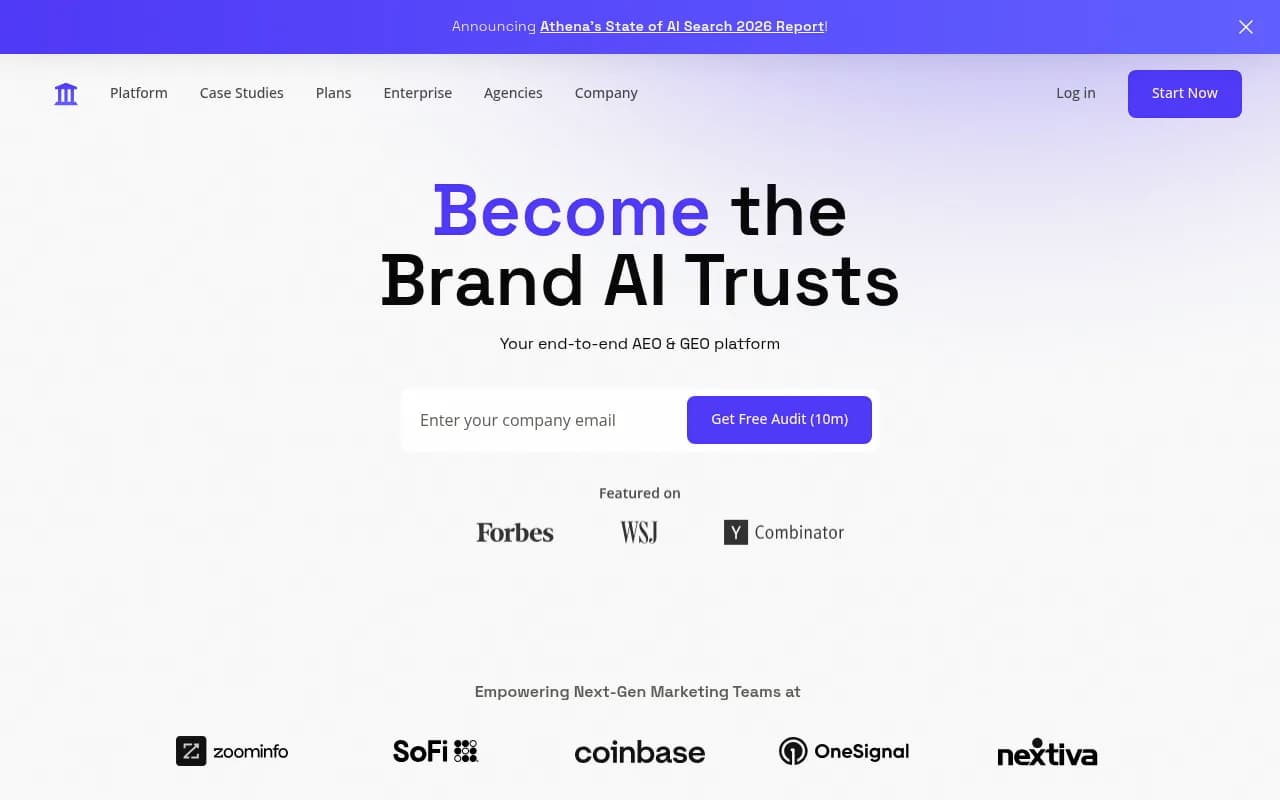
| Tool | AI models tracked | Content gap analysis | Crawler logs | Pricing |
|---|---|---|---|---|
| Promptwatch | 10 (ChatGPT, Claude, Gemini, Perplexity, Grok, DeepSeek, Copilot, Meta AI, Mistral, AI Overviews) | Yes | Yes | From $99/mo |
| Peec AI | 8 (ChatGPT, Claude, Gemini, Perplexity, Grok, Copilot, Meta AI, AI Overviews) | Limited | No | From €99/mo |
| Otterly.AI | 6 (ChatGPT, Gemini, Perplexity, Claude, Copilot, AI Overviews) | No | No | From $49/mo |
| AthenaHQ | 8 (ChatGPT, Claude, Gemini, Perplexity, Grok, Copilot, Meta AI, AI Overviews) | No | No | From $99/mo |
| Semrush | AI Overviews only | No | No | From $139.95/mo |


Common mistakes to avoid
Mistake 1: Blocking AI crawlers by default Many sites block GPTBot and Claude-Web in robots.txt without realizing it kills their AI visibility. If you want to be cited, you need to allow crawler access.
Mistake 2: Ignoring schema markup Schema is not optional for AI search. Models prioritize pages with structured data. If you're not using FAQ, HowTo, and Product schema, you're at a disadvantage.
Mistake 3: Writing for humans, not models AI models don't read like humans. They scan for patterns. Dense paragraphs, vague headings, and buried answers hurt your chances of being cited.
Mistake 4: Optimizing for one model Claude, Gemini, ChatGPT, and Perplexity all have different strengths and biases. Optimize for all of them by covering a wide range of prompts and using clear, structured content.
Mistake 5: Not tracking results You can't improve without data. Set up AI visibility tracking and monitor which pages get cited, which prompts trigger your brand, and where competitors are winning.
What to do next
- Run a content audit: Pick 10 high-value pages and check entity usage, schema markup, content structure, and crawler access.
- Fix the low-hanging fruit: Add FAQ schema, rewrite vague headings, and ensure AI crawlers can access your pages.
- Set up tracking: Use Promptwatch or a similar tool to monitor which pages are being cited and which prompts trigger your brand.
- Iterate based on data: Identify gaps, optimize underperforming pages, and create new content for high-value prompts you're not covering.
AI search is not a fad. It's how people discover brands in 2026. The brands that optimize now will dominate citations for years. The brands that wait will be invisible.