Key takeaways
- Otterly.AI is a solid entry-level AI search monitoring tool, well-suited for solo marketers and small teams who want to track brand mentions across AI engines without a steep learning curve.
- Its core strength is visibility monitoring: you can see how ChatGPT, Perplexity, Gemini, and others mention your brand, and compare yourself against competitors.
- The main gap is that Otterly stops at monitoring. There's no content generation, no crawler log analysis, no traffic attribution, and limited prompt intelligence.
- If you're past the "what's happening?" stage and need to actually fix your AI visibility, you'll likely outgrow it quickly.
- Teams that need a full optimization loop (find gaps, create content, track results) should look at platforms built for action, not just observation.
What Otterly.AI actually is
Otterly.AI is an AI search monitoring platform. You give it a set of prompts, it queries AI engines on your behalf, and it tells you whether your brand shows up, how often, and alongside which competitors. That's the core loop.
It covers the main AI engines: ChatGPT, Perplexity, Google AI Overviews, Gemini, Copilot, and a few others. You can track brand mentions, citation frequency, and share of voice across those platforms. The interface is clean, the onboarding is relatively fast, and the snapshot view gives you a decent overview of what's happening across AI search at a glance.
The tool has built a real following in the GEO (Generative Engine Optimization) community. Their blog publishes original research -- a 2026 YouTube Citation Study found that YouTube and Reddit account for 78.2% of all social media citations in AI search, which is the kind of data practitioners actually find useful. That research credibility has helped Otterly build an audience of SEOs and content marketers who are just starting to think about AI visibility.


What Otterly does well
Brand mention tracking across AI engines
This is Otterly's strongest feature. You set up your prompts, and the platform runs them across multiple AI engines to see where your brand appears. The snapshot view is particularly useful -- it gives you a quick read on how your brand is performing across Google AI Overviews, Perplexity, ChatGPT, and others without having to dig through individual reports.
For teams that are just starting to understand AI search, this is genuinely valuable. Knowing that you appear in 12% of relevant ChatGPT responses but 0% of Perplexity responses is actionable information, even if the tool doesn't tell you what to do about it.
Competitor benchmarking
You can track how competitors appear in the same prompts you're monitoring. This gives you a rough share-of-voice picture: who's winning in AI search for your category, and by how much. It's not the deepest competitive analysis you'll find in this space, but it's enough to understand the landscape and make a case internally for why AI visibility matters.
GEO audit capabilities
Otterly includes GEO audit features that analyze how well your content is structured for AI citation. This is more useful than it sounds -- AI engines have specific preferences for how information is presented, and a structured audit can surface quick wins. The audit won't tell you what to write, but it can tell you what's structurally wrong with what you have.
Accessible pricing and onboarding
Compared to enterprise-focused platforms, Otterly is affordable and relatively easy to get started with. There's no months-long onboarding process. You can add prompts, connect your brand, and start seeing data within a session. For a solo SEO or a small marketing team without a dedicated GEO budget, that accessibility matters.
What Otterly is missing
This is where the review gets honest.
No content generation
Otterly shows you where you're invisible. It does not help you fix it. There's no built-in content writer, no AI-assisted article generation, and no way to go from "I'm missing from these prompts" to "here's the content that could change that." You have to take the data out of Otterly and figure out the content strategy yourself.
For teams that are just doing initial research, this is fine. For teams that want to move fast on AI visibility improvements, it's a real friction point.
No AI crawler log analysis
Some platforms let you see exactly which AI crawlers (ChatGPT, Claude, Perplexity) are visiting your website, which pages they're reading, and how often they return. This is genuinely useful for understanding how AI engines discover your content and whether there are indexing issues blocking your visibility.
Otterly doesn't offer this. You're working with output data (what AI says about you) but not input data (how AI reads your site). That's a meaningful blind spot.
No traffic attribution
There's no way to connect AI visibility data to actual website traffic or revenue inside Otterly. You can see that you're being cited, but you can't see whether those citations are driving clicks, sessions, or conversions. For teams that need to justify GEO investment to leadership, this is a problem.
Limited prompt intelligence
Otterly lets you track prompts, but it doesn't tell you much about which prompts are worth tracking. There's no volume data, no difficulty scoring, and no query fan-out analysis (the idea that one prompt branches into multiple sub-queries that AI engines actually process). You're largely guessing at which prompts to prioritize.
No Reddit or YouTube tracking
Given Otterly's own research showing that YouTube and Reddit account for 78.2% of social media citations in AI search, it's notable that the platform doesn't help you monitor or optimize your presence on those channels. You can read about their importance in the Otterly blog, but you can't act on it inside the tool.
Who Otterly is actually for
Otterly makes the most sense for:
- Solo SEOs or content marketers who want a low-cost way to start tracking AI search visibility
- Small teams doing initial GEO research before committing to a larger platform
- Agencies that need a lightweight tool to show clients a basic AI visibility snapshot
- Anyone who just wants to know "are we showing up in AI search?" without needing to optimize yet
It's less suited for:
- Marketing teams that need to move from monitoring to action
- Brands with serious AI visibility gaps that need content strategy support
- Agencies managing multiple clients who need depth, attribution, and reporting
- Teams that need to connect AI visibility to revenue
How it compares to other tools in 2026
The AI visibility monitoring space has gotten crowded fast. Here's a quick comparison of Otterly against the tools it's most commonly evaluated alongside:
| Tool | AI monitoring | Content generation | Crawler logs | Traffic attribution | Prompt intelligence | Best for |
|---|---|---|---|---|---|---|
| Otterly.AI | Yes | No | No | No | Basic | Beginners, small teams |
| Promptwatch | Yes | Yes | Yes | Yes | Advanced | Growth teams, agencies |
| Peec AI | Yes | No | No | No | Basic | Multi-language monitoring |
| AthenaHQ | Yes | No | No | No | Moderate | Mid-market monitoring |
| Profound | Yes | Limited | No | No | Moderate | Mid-market |
| Scrunch AI | Yes | No | No | No | Basic | Brand monitoring |
The pattern is pretty clear. Most tools in this category, including Otterly, are monitoring dashboards. They show you data. The gap between "here's your visibility score" and "here's how to improve it" is where most platforms stop.
Promptwatch is the clearest example of a platform that tries to close that gap -- it combines monitoring with content gap analysis, an AI writing agent, crawler logs, and traffic attribution. Whether you need all of that depends on where you are in your GEO journey.

The research angle: Otterly's content is genuinely good
One thing worth separating from the product itself: Otterly's blog and research output is legitimately useful. Their GEO experiments -- testing whether image metadata influences AI citations, measuring the impact of URL structure on AI search visibility, running controlled YouTube content experiments -- are the kind of original research the GEO field needs more of.
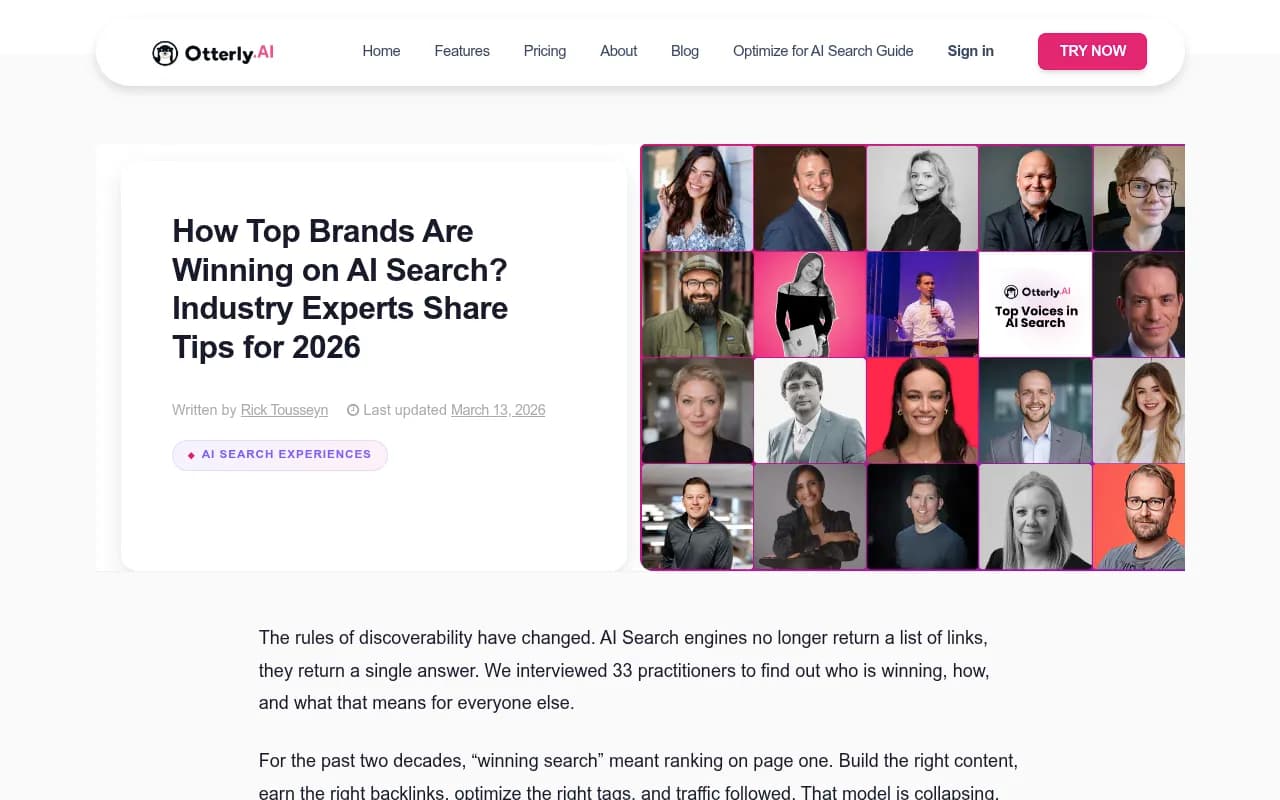
Their 2026 roundtable with 33 practitioners on how brands are winning in AI search is worth reading regardless of whether you use their tool. The core finding -- that ranking #1 on Google no longer guarantees appearing in AI-generated answers -- is something every marketing team should be grappling with right now.
The research builds trust in the brand. Whether the product lives up to that trust depends on what you need it to do.
Alternatives worth considering
If Otterly's limitations are a dealbreaker for your use case, here are some tools worth evaluating:
For lightweight monitoring at a similar price point:

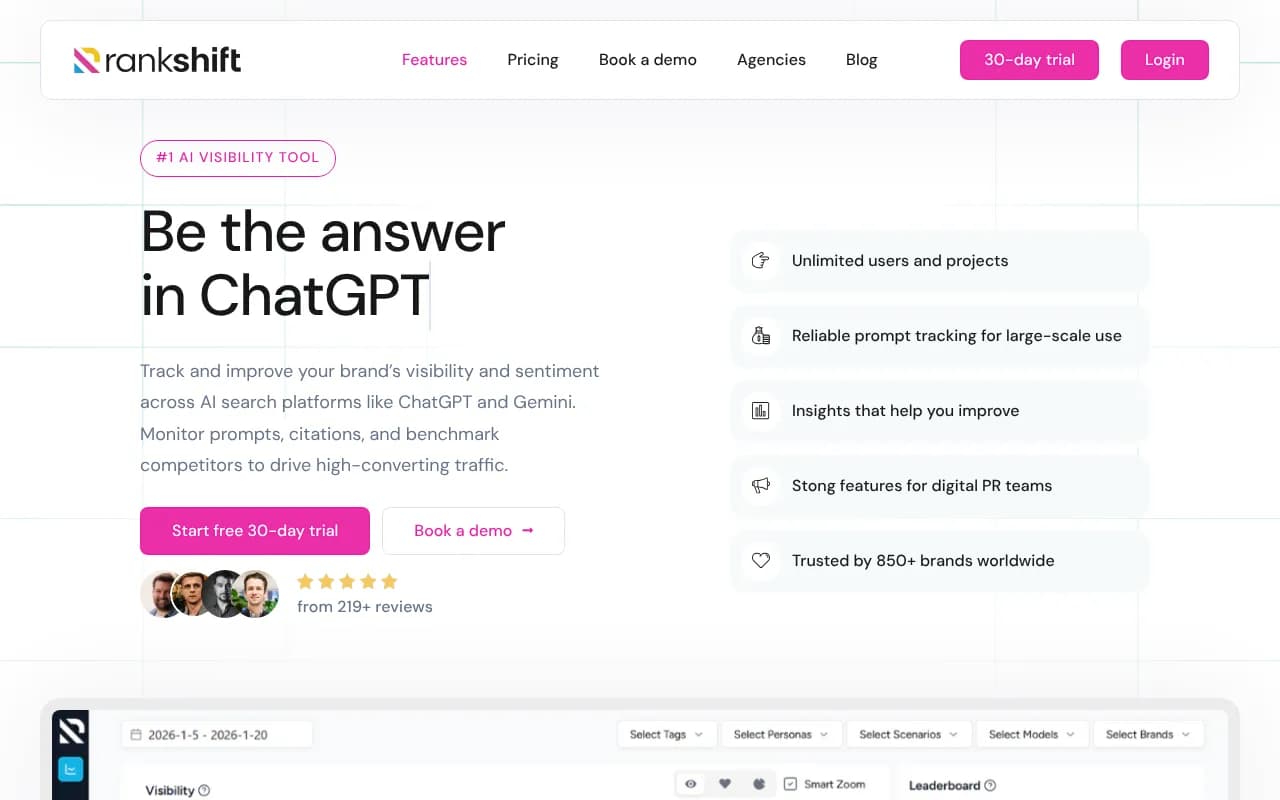
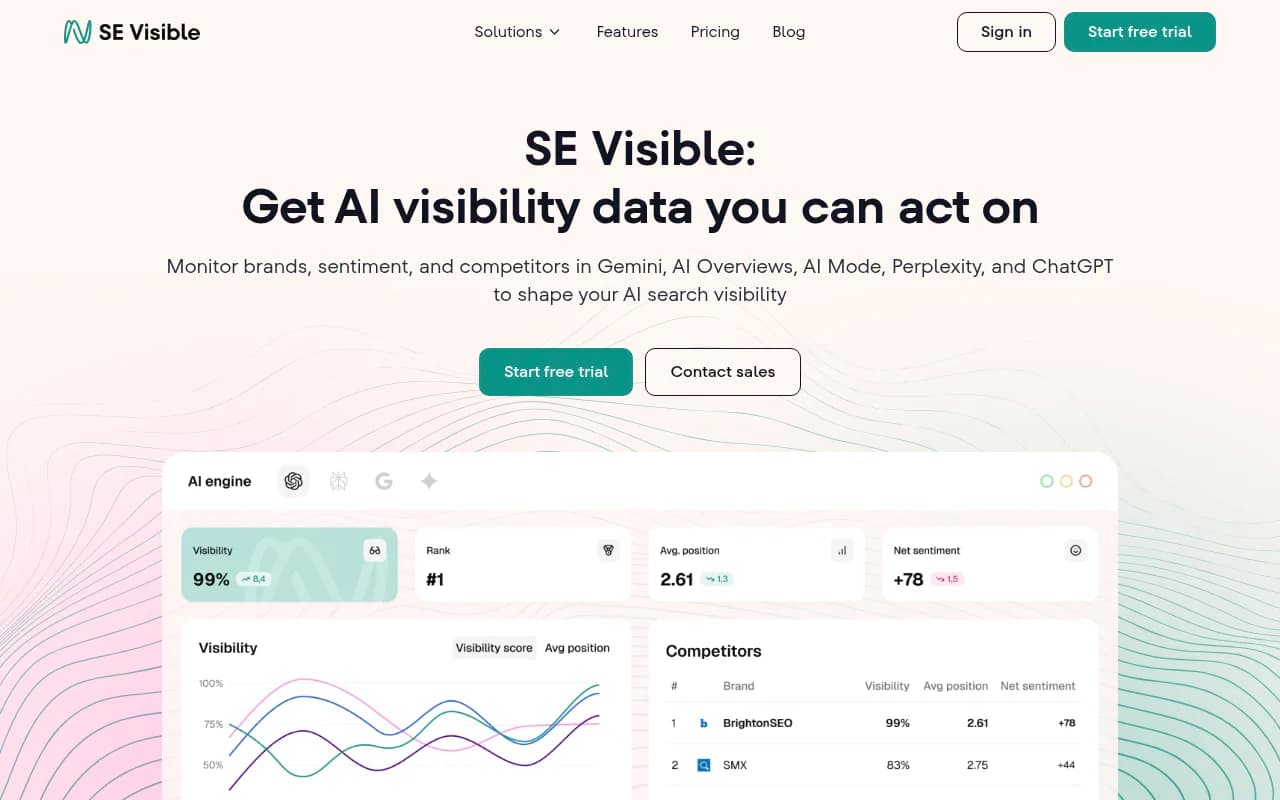
For teams that need more depth -- prompt intelligence, competitor analysis, and content gap identification:


For teams that want the full optimization loop (monitoring + content generation + attribution):
The honest verdict
Otterly.AI is a decent tool for what it is: an accessible, affordable way to start tracking your brand's presence in AI search. The interface is clean, the onboarding is fast, and the monitoring data is useful for teams that are just getting started with GEO.
The limitations are real, though. No content generation, no crawler logs, no traffic attribution, no prompt volume data. If you're past the "let's understand what's happening" stage and into "let's actually improve our AI visibility," Otterly will leave you needing other tools to fill the gaps.
The right question isn't whether Otterly is good -- it is, for its intended audience. The right question is whether you've outgrown it before you've even started. If your team needs to show results, not just data, you'll want a platform that goes further.