Key takeaways
- Most GEO platforms focus on broad, branded prompts -- very few surface long-tail or seasonal query variations that reflect how real buyers actually search in AI engines.
- Long-tail prompts in AI search behave differently from traditional SEO: they trigger more specific, citation-heavy responses where niche content has a real advantage.
- Seasonal prompt intelligence is largely absent from monitoring-only tools; you need a platform with prompt volume estimates and content gap analysis to act on it.
- Tools like Promptwatch surface prompt volumes, difficulty scores, and query fan-outs that help you identify and prioritize long-tail and seasonal opportunities -- then generate content to capture them.
- The gap between "we track prompts" and "we help you win prompts" is where most tools fall short.
Why long-tail and seasonal prompts matter in AI search
Here's something that gets overlooked in most GEO conversations: the prompts that actually convert aren't the obvious ones.
"Best CRM software" is a prompt. So is "best CRM for a 10-person SaaS company that just switched from spreadsheets and needs Slack integration." The second one is what a real buyer types into ChatGPT at 11pm before a board meeting. And the AI's response to that second prompt -- specific, detailed, often citing two or three sources -- is where visibility actually translates into traffic and revenue.
Long-tail prompts in AI search work differently than in traditional SEO. In Google, long-tail keywords had lower competition and lower volume. In AI search, long-tail prompts often trigger more opinionated, citation-heavy responses. The AI has to work harder to synthesize a specific answer, so it leans more heavily on the few sources that directly address the question. If your content covers that specific angle, your citation probability goes up significantly.
Seasonal prompts add another layer. "Best project management tool for Q4 planning" hits differently in October than in February. "Holiday gift ideas under $50 for remote workers" has a six-week window where it matters enormously. Most GEO platforms track a fixed set of prompts year-round and never flag when seasonal queries are spiking -- or when competitors are capturing them while you're not.
The result: brands optimize for the prompts they know about and miss the ones that are actually driving decisions.
How most GEO tools handle (or don't handle) prompt discovery
The majority of GEO platforms work like this: you enter a list of prompts, they query AI engines on a schedule, and they report back on whether your brand appeared. That's useful, but it's fundamentally reactive. You're only tracking what you already thought to track.
A few platforms go further and suggest prompts based on your industry or competitors. Fewer still provide volume estimates or difficulty scores. And almost none of them surface seasonal trends -- the idea that a prompt's importance fluctuates over time is largely absent from the current generation of monitoring tools.
Here's a rough breakdown of where the market sits:
| Capability | Most monitoring tools | Advanced platforms |
|---|---|---|
| Track pre-set branded prompts | Yes | Yes |
| Suggest competitor prompts | Sometimes | Yes |
| Long-tail prompt discovery | Rarely | Yes |
| Prompt volume estimates | No | Yes (few) |
| Seasonal prompt trends | No | Very few |
| Query fan-outs (sub-queries) | No | Yes (Promptwatch) |
| Content gap analysis | No | Yes (few) |
| AI content generation from gaps | No | Yes (few) |
The tools that sit in the "advanced" column are worth looking at more closely.
Tools that surface long-tail and seasonal prompt insights
Promptwatch
Promptwatch is the most complete option here, and the reason is the combination of prompt intelligence and content action. The platform's prompt discovery doesn't just show you which prompts competitors rank for -- it shows you volume estimates and difficulty scores for each one, plus query fan-outs that map how a single prompt branches into related sub-queries.
That fan-out feature is particularly relevant for long-tail discovery. If you're tracking "best accounting software for freelancers," Promptwatch surfaces the related queries that AI models generate from that root -- things like "best accounting software for freelancers who invoice in multiple currencies" or "accounting tools for freelancers with irregular income." Those are the long-tail variants you'd never think to track manually.
For seasonal content, the combination of prompt volume tracking and the built-in AI writing agent means you can spot a seasonal spike forming, identify the gap in your content, and publish something targeted before the window closes. Most platforms would just show you the data and leave you to figure out what to do with it.

Profound
Profound has solid prompt tracking across multiple AI engines and does a reasonable job surfacing competitor visibility gaps. It's more monitoring-focused than action-focused, but the breadth of prompt coverage is good. If you want to understand where you're losing ground on long-tail queries, Profound gives you enough data to see the pattern -- you just have to build your own response to it.

Semrush
Semrush's AI visibility features are built on top of its existing keyword infrastructure, which means it has more historical context for seasonal trends than most pure-play GEO tools. The limitation is that its AI prompts are largely fixed -- you can't freely explore long-tail variations the way you can in platforms built specifically for AI search. Still, for teams already in the Semrush ecosystem, the seasonal keyword data combined with AI Overview tracking gives you a workable starting point.
AthenaHQ
AthenaHQ does well on brand narrative monitoring -- understanding how AI models describe you, not just whether they mention you. For long-tail prompt discovery, it's more limited. The platform is monitoring-oriented, so you get good visibility into what's happening but less guidance on what to do about gaps you find.

Rankscale
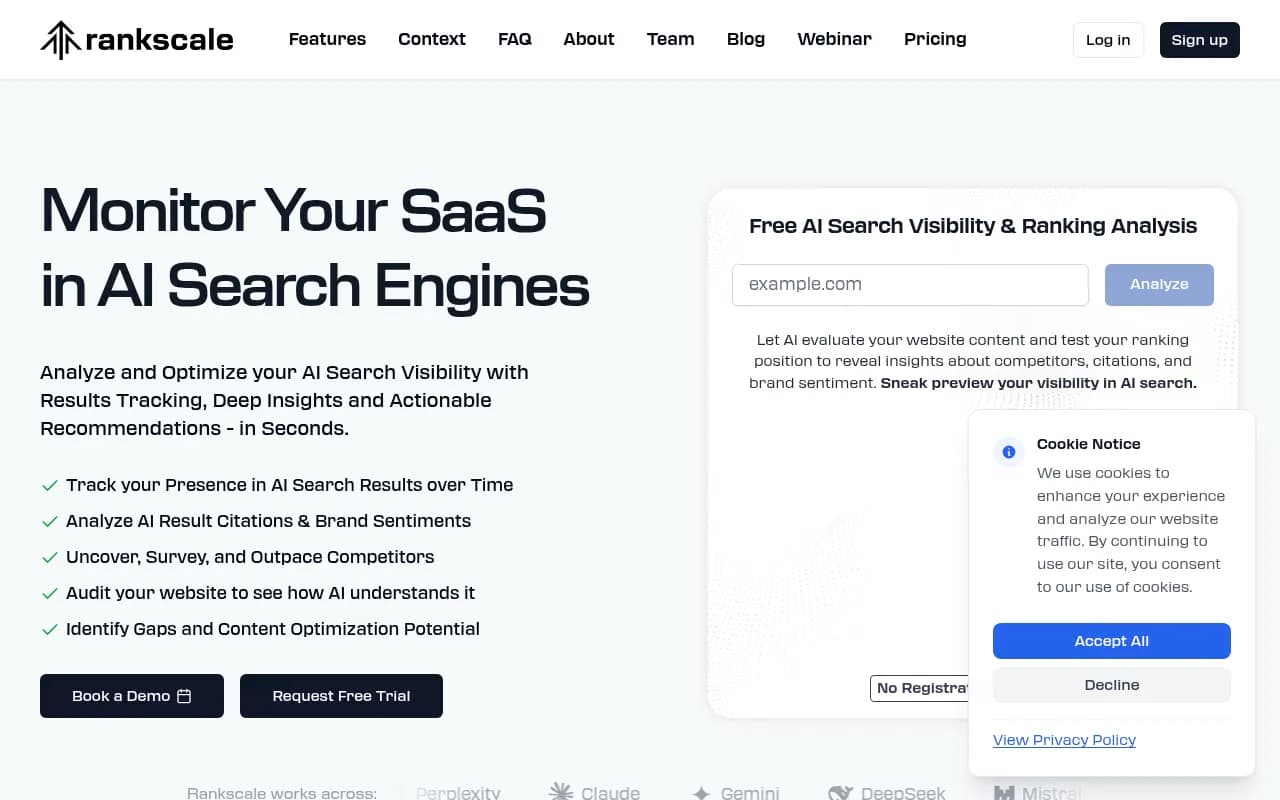
Rankscale focuses on AI search ranking across multiple models and has decent prompt suggestion features. It's a solid mid-tier option if you want more prompt breadth than basic monitoring tools offer, without the full investment of an enterprise platform.
Otterly.AI
Otterly is an accessible entry point for AI visibility monitoring. The prompt tracking is straightforward, but long-tail discovery and seasonal insights aren't really part of what it does. Good for getting started, not for deep prompt intelligence.

Peec AI
Peec AI handles multi-language monitoring well and covers a reasonable set of AI engines. For international brands trying to track seasonal prompts across different markets and languages, it's worth considering -- though the prompt intelligence depth is still fairly basic.

What "query fan-outs" actually mean for long-tail strategy
This concept deserves more attention than it usually gets. When someone types a prompt into ChatGPT or Perplexity, the AI doesn't just process that exact string. It internally generates related sub-queries to build a more complete answer. These fan-outs are the mechanism by which one root prompt spawns dozens of related information needs.
For GEO purposes, this means your content doesn't just need to answer the prompt your customer typed -- it needs to answer the cluster of related questions the AI is silently asking in the background. A page that only addresses the surface question will get cited less often than one that addresses the full cluster.
Promptwatch's query fan-out feature makes this visible. You can see the sub-queries associated with any tracked prompt, which tells you exactly what depth of coverage your content needs. It's one of the more practically useful features in the current GEO tool landscape, and it's directly relevant to long-tail strategy.
Seasonal prompts: the gap nobody's filling well
Let me be direct about this: seasonal prompt intelligence is genuinely underdeveloped across the GEO tool market in 2026.
Traditional SEO tools like Semrush and Ahrefs have years of seasonal keyword data. You can see that "best running shoes" spikes in January (New Year's resolutions) and again in March (spring training). That data doesn't automatically transfer to AI search behavior, but it's a reasonable proxy.
What's missing is a GEO-native view of seasonal prompt patterns -- which AI search queries spike at which times of year, how competitors' AI visibility changes seasonally, and which content gaps open up during peak periods. A few platforms are starting to build toward this, but it's not a solved problem yet.
The practical workaround most teams use: combine traditional seasonal keyword data (from Semrush, Ahrefs, or Google Trends) with GEO prompt tracking to identify seasonal windows, then use content gap analysis to find what's missing. It's a manual bridge between two data sources, but it works.
Promptwatch's Answer Gap Analysis is the closest thing to a native solution here -- it shows you which prompts competitors are visible for that you're not, and you can filter and prioritize those gaps. If you run that analysis before a seasonal peak, you can identify the content you need to create in time to matter.
A practical workflow for long-tail and seasonal GEO
Here's how to actually use these tools together rather than just monitoring in circles:
Step 1: Seed your prompt list with intent-specific long-tail variations. Don't just track "best [category] software." Track "best [category] software for [specific use case]" and "best [category] software for [specific company size/industry]." These are the prompts where AI responses are most citation-dependent.
Step 2: Use query fan-outs to expand your coverage map. If your platform supports it (Promptwatch does), look at the sub-queries associated with each root prompt. These are your long-tail content targets.
Step 3: Run an answer gap analysis before seasonal peaks. Four to six weeks before a seasonal window, identify which prompts in your category your competitors are winning that you're not. Those gaps are your content priorities.
Step 4: Create content specifically engineered for AI citation. Generic SEO content won't cut it. You need content that directly answers the specific prompt, covers the related sub-queries, and is structured in a way that AI models can parse and cite. Tools with built-in AI writing agents grounded in citation data (rather than generic content generators) produce better results here.
Step 5: Track page-level citation changes. After publishing, monitor which pages start getting cited and by which AI models. This closes the loop and tells you whether your long-tail content is actually working.
Comparing prompt intelligence depth across key platforms
| Platform | Long-tail discovery | Prompt volume scores | Seasonal awareness | Query fan-outs | Content generation |
|---|---|---|---|---|---|
| Promptwatch | Yes | Yes | Partial (via gap analysis) | Yes | Yes |
| Profound | Partial | No | No | No | No |
| Semrush | Partial (via keyword data) | Partial | Yes (historical) | No | Partial |
| AthenaHQ | Limited | No | No | No | No |
| Otterly.AI | No | No | No | No | No |
| Peec AI | No | No | No | No | No |
| Rankscale | Partial | No | No | No | No |
The table makes the gap pretty clear. Most platforms are monitoring dashboards. The ones that actually help you find and act on long-tail and seasonal opportunities are a much shorter list.
The content side of the equation
Discovering a long-tail prompt gap is only half the problem. The other half is creating content that actually gets cited.
This is where most GEO workflows break down. A team finds a gap, hands it to a content writer, and gets back a generic article that doesn't perform in AI search. The reason: AI citation isn't just about topic coverage. It's about how content is structured, how specifically it answers the question, how it compares to what competitors have published, and whether it addresses the sub-queries the AI is generating internally.
Content generated with citation data as a foundation -- knowing which sources AI models already cite, what those sources say, and what angles are underrepresented -- performs meaningfully better than content created from a keyword brief alone. Promptwatch's built-in writing agent is built around this: it uses 880M+ analyzed citations to inform what the content needs to cover, not just what topic to write about.
For seasonal content specifically, timing matters too. A well-crafted piece published two weeks before a seasonal peak has time to get crawled by AI bots and factored into responses. The same piece published during the peak is too late.
Bottom line
Long-tail and seasonal prompt intelligence is one of the most underdeveloped areas in GEO tooling right now. Most platforms will tell you whether you appeared in a response to a prompt you already knew about. Very few will help you discover the prompts you're missing, understand how they cluster and branch, or flag when seasonal windows are opening up.
If this is a priority for your team, the honest answer is that Promptwatch is the most complete option available in 2026 -- not because it's perfect, but because it's the only platform that connects prompt discovery (with volume scores and fan-outs) to content gap analysis to AI-native content creation to tracking. The rest of the market is still largely stuck at step one.
For teams with tighter budgets or simpler needs, Profound and Rankscale offer reasonable prompt breadth. And if you're already deep in the Semrush ecosystem, its AI visibility features plus traditional seasonal keyword data give you a workable (if manual) approach.
The brands that will win in AI search over the next 12 months aren't the ones tracking the most prompts. They're the ones finding the right prompts -- the specific, intent-rich, seasonally relevant ones -- and creating content that actually answers them.