Key takeaways
- Answer gap analysis in 2026 means finding the specific prompts and questions where AI models cite your competitors but not you -- not just keywords you're missing in Google.
- The gap isn't always about content volume. Often it's about content structure, specificity, and whether AI models can extract a clear, citable answer from your pages.
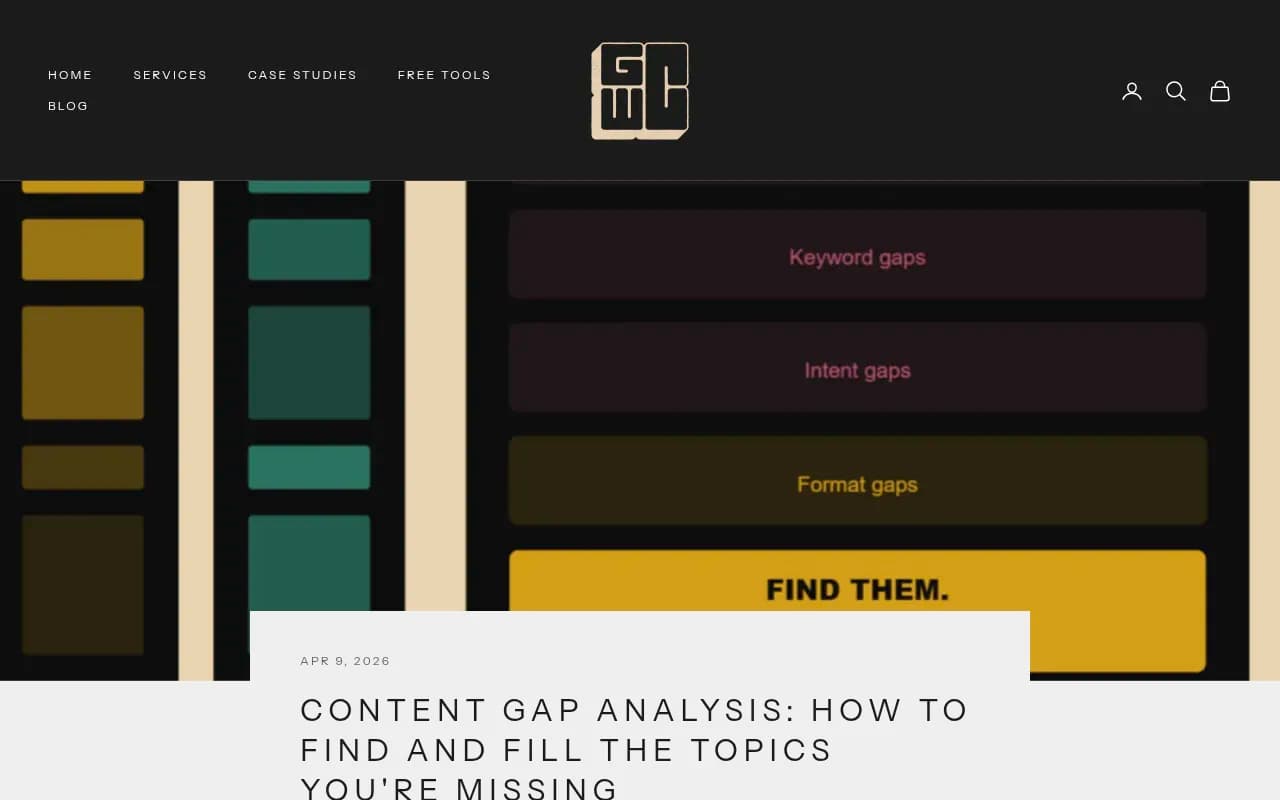
- There are four types of gaps to close: topic gaps, keyword/prompt gaps, intent gaps, and format gaps. Each needs a different fix.
- Prioritize gaps by commercial intent first, prompt volume second, and how winnable they look based on competitor content quality.
- Tracking AI citations requires different tools than traditional rank trackers -- most keyword tools won't show you what ChatGPT or Perplexity are actually citing.
Why "content gap analysis" means something different now
The classic version of content gap analysis was pretty mechanical: pull up Ahrefs or Semrush, run a competitor comparison, find keywords they rank for that you don't, write the missing articles. That still works for traditional Google rankings, and you shouldn't abandon it.
But there's a second game happening now, and most brands are losing it without realizing it.
AI search engines -- ChatGPT, Perplexity, Google AI Overviews, Claude, Gemini -- are answering questions directly. When someone asks "what's the best project management tool for remote teams" or "how do I reduce customer churn," these models generate an answer and cite specific sources. The brands that get cited build authority and visibility in a channel that's growing fast. The brands that don't get cited are invisible, even if they rank fine in traditional search.
Answer gap analysis is the process of finding where competitors are getting those AI citations and you aren't. It's more nuanced than keyword gap analysis because AI models don't just pull the top-ranking page -- they look for content that directly answers the question with enough specificity and structure to be citable.
The shift is real. As Yotpo's 2026 content gap analysis guide puts it: "The modern 'content gap' is not a lack of keywords, but a lack of Information Gain -- unique data or perspectives that AI models cannot easily generate from consensus." That framing is useful. If your content just restates what every other article says, an AI model has no reason to cite you specifically.
The four types of gaps you need to find
Before jumping into process, it helps to know what you're actually looking for. Not all gaps are the same, and the fix for each is different.
Topic gaps
These are entire subjects your competitors cover that you don't touch at all. In traditional SEO, this is the most obvious kind of gap. In AI search, topic gaps matter because AI models can't cite a page that doesn't exist. If a competitor has a detailed guide on "how to calculate customer lifetime value for SaaS" and you don't, they'll get cited for that prompt and you won't.
Prompt/question gaps
This is where AI search diverges from traditional SEO. A topic gap is broad; a prompt gap is specific. Your competitor might have a page about "email deliverability" that answers the question "why are my emails going to spam?" well enough for an AI model to cite it. You might have a longer, more comprehensive email deliverability guide that doesn't directly address that specific question -- so you get skipped.
AI models respond to prompts, not just topics. The gap analysis has to go down to the question level.
Intent gaps
Sometimes you have the content but it's aimed at the wrong audience or stage. A page written for developers won't get cited when someone asks a question from a marketing manager's perspective, even if the underlying topic is the same. Intent gaps are sneaky -- your content exists, but it's not matching the context of the prompt.
Format gaps
AI models prefer content they can extract clean answers from. Structured content with clear headings, direct answers near the top, and specific data points gets cited more often than dense, unstructured prose. If your competitor's page has a clear "What is X?" section followed by a numbered list of steps, and your page buries the same information in paragraphs, their page wins the citation.
How to actually run an answer gap analysis
Step 1: Define your prompt universe
Start by building a list of prompts -- real questions your target customers ask AI tools. This is different from keyword research. You're not looking for short-tail terms; you're looking for the conversational questions someone would type into ChatGPT or Perplexity.
Sources for these prompts:
- Your own customer support tickets and sales call transcripts
- "People also ask" boxes in Google
- Reddit threads in your niche (search for "how do I" or "what's the best" in relevant subreddits)
- Autocomplete suggestions in Perplexity and ChatGPT
- Your existing keyword data, converted into question format
Aim for 50-200 prompts to start. You can always expand later. Group them by topic cluster and by buyer journey stage (awareness, consideration, decision).
Step 2: Run the prompts and capture who gets cited
This is where the work gets tedious if you do it manually. For each prompt, you'd need to query ChatGPT, Perplexity, Google AI Overviews, and any other models your audience uses, then record which sources get cited in the response.
Manual spot-checking is fine for a quick audit of 10-15 prompts. For anything systematic, you need a tool that automates this at scale.
Promptwatch is built specifically for this. You feed it your prompt list, it runs them across 10+ AI models, and shows you exactly which competitors are getting cited and for which prompts. The Answer Gap Analysis feature shows you the specific prompts where competitors appear but you don't -- which is the exact list you need to prioritize content creation.

For a lighter-weight starting point, tools like Otterly.AI or Peec AI can give you basic citation monitoring, though they don't go as deep on the gap analysis side.


Step 3: Categorize the gaps by type and priority
Once you have your gap list, don't just start writing. Sort the gaps first.
A simple prioritization matrix:
| Gap type | Commercial intent | Prompt volume | Competitor content quality | Priority |
|---|---|---|---|---|
| Topic gap (you have nothing) | High | High | Weak | Immediate |
| Prompt gap (page exists, wrong angle) | High | Medium | Strong | High |
| Format gap (content exists, poor structure) | Medium | High | Weak | High |
| Intent gap (wrong audience) | Low | Low | Strong | Low |
High commercial intent plus weak competitor content is your best opportunity. If a competitor is getting cited for a prompt but their page is thin or outdated, you can write something better and displace them.
Step 4: Audit the competitor pages that are winning citations
For each high-priority gap, look at the actual page your competitor has that's getting cited. Ask:
- How long is it? (Not because longer is better, but to understand the depth expected)
- Does it answer the specific question directly and early?
- Does it use structured formatting -- headers, lists, tables, definitions?
- Does it include original data, quotes, or specific examples?
- Is it clearly written for a specific persona, or is it generic?
This tells you what you need to beat, not just match. If their page is a 600-word generic overview and it's getting cited, a well-structured 1,200-word piece with specific examples will likely outperform it. If their page is a deeply researched 3,000-word guide with original data, you need to bring something genuinely different -- a new angle, more recent data, or a perspective they missed.
Step 5: Create content engineered for AI citation
Writing for AI citation is different from writing for Google rankings, though there's significant overlap. The key differences:
Answer the question in the first 100 words. AI models often pull the opening of a section as the cited answer. If your page takes three paragraphs to get to the point, you'll lose to a page that leads with the answer.
Use clear, extractable structure. Headers that match the question format ("What is X?", "How does Y work?", "When should you use Z?") make it easy for AI models to identify what your page is about and what specific question it answers.
Include specific, citable facts. Numbers, named examples, step-by-step processes, and direct definitions are what AI models pull. Vague statements like "it depends on your situation" don't get cited.
Write for a specific persona. A page written for a CFO asking about budget allocation will get cited for CFO-level prompts. Generic content gets cited for nothing in particular.
Don't ignore E-E-A-T signals. Author credentials, publication dates, original research, and cited sources all influence whether AI models trust your content enough to cite it.
Tools for answer gap analysis in 2026
The tooling landscape has matured a lot. Here's a practical breakdown of what's available and what each is good for.
| Tool | Best for | Gap analysis depth | Content generation | Price range |
|---|---|---|---|---|
| Promptwatch | Full answer gap analysis + content creation | Deep (prompt-level) | Yes | $99-$579/mo |
| Semrush | Traditional + AI keyword gaps | Moderate | Yes (ContentShake) | $130+/mo |
| Ahrefs Brand Radar | Brand mentions in AI | Basic | No | Included in Ahrefs |
| Otterly.AI | Lightweight citation monitoring | Basic | No | Lower cost |
| Peec AI | Multi-language monitoring | Basic | No | Lower cost |
| AthenaHQ | AI visibility tracking | Moderate | No | Mid-range |
| Profound | Brand tracking across AI models | Moderate | No | Higher cost |


The honest summary: most tools will show you where you're being cited and where you're not. Fewer tools will tell you specifically which prompts competitors are winning that you're losing. And almost none of them help you actually create the content to close those gaps -- that's where Promptwatch's Content Agents differentiate, generating articles and briefs grounded in the actual prompt data and citation patterns.
Common mistakes that kill answer gap analysis results
Treating it as a one-time audit
AI search is dynamic. The prompts people use change, new competitors enter, and AI models update their citation patterns. A gap analysis done in January will look different by June. Build a process for ongoing monitoring, not a quarterly report.
Focusing only on your direct competitors
Some of the most valuable citation opportunities are topics where the entire category is underserved -- no competitor has a strong answer, so AI models are citing generic sources or giving weak answers. These are often easier to win than displacing a well-established competitor page.
Ignoring offsite citations
AI models don't only cite your own website. They cite Reddit threads, YouTube videos, review sites, and industry publications. If a competitor's product is being discussed positively on Reddit and those threads are getting cited, that's a gap too -- just not one you close by publishing a blog post.
Tools like Promptwatch track offsite citations, showing you which external sources are driving AI visibility for competitors. That data often points to PR opportunities, community engagement, or third-party content placements you'd never find through on-site analysis alone.
Writing content that answers the prompt but ignores the user
It's easy to over-optimize for AI citation and end up with pages that read like they were written for a robot. The irony is that AI models are increasingly good at detecting thin, formulaic content. Pages that genuinely help the reader -- with real examples, honest tradeoffs, and specific recommendations -- tend to get cited more consistently than pages that just check structural boxes.
Measuring whether your gap-closing efforts are working
This is where a lot of teams drop the ball. They create the content, publish it, and then... don't track whether it actually changed their AI citation rate.
Metrics to watch:
- Citation rate: what percentage of your tracked prompts now include your brand/pages in the AI response?
- Share of voice: across your prompt universe, how often are you cited vs. competitors?
- Page-level citations: which specific pages are being cited, by which models, and how often?
- Time to citation: how long after publishing does a new page start appearing in AI responses?
The last metric is more interesting than it sounds. AI models don't instantly discover new content -- they depend on crawlers, and the crawl-to-citation timeline varies significantly by model and page authority. Understanding this timeline helps you set realistic expectations and identify technical issues (like pages that aren't being crawled at all).
Promptwatch's crawler logs and agent analytics track exactly this: which AI crawlers are hitting your pages, when, and which pages have moved from crawled to cited. Most monitoring tools don't surface this data at all.
A practical starting point for this week
If you want to run a basic answer gap analysis without committing to a full platform yet, here's a manual version you can do in a few hours:
- Pick 20 prompts your customers likely ask AI tools -- mix of awareness and decision-stage questions.
- Run each prompt in ChatGPT, Perplexity, and Google AI Overviews. Note which sources get cited.
- Check whether your site appears in any of those citations. If not, note who does.
- For the top 5 gaps (prompts where a competitor appears but you don't), audit the competitor's cited page.
- Identify whether the gap is a topic gap (you have nothing), a format gap (your page exists but is poorly structured), or a prompt gap (your page exists but doesn't directly answer the question).
- Fix the easiest format and prompt gaps first -- these often require editing existing content rather than creating new pages, and they can show results faster.
That manual process will show you the shape of the problem. Once you know the shape, you can decide whether to scale it with tooling or keep it manual for a smaller site.
The brands winning in AI search right now aren't necessarily the ones with the most content. They're the ones who figured out which specific questions AI models are asking on behalf of their customers -- and made sure they had the best answer ready.