Key takeaways
- ChatGPT uses a two-stage retrieval process: scraping (where metadata and snippets matter) and reading (where structure and clarity win citations)
- Traditional SEO and Generative Engine Optimization (GEO) require different approaches -- GEO prioritizes extractability, clarity, and conversational alignment over keyword density
- The seven core ranking factors are: topical authority, content structure, E-E-A-T signals, technical accessibility, conversational alignment, citation-worthy formatting, and brand presence
- Tracking your ChatGPT visibility requires specialized tools that monitor citations, sentiment, and prompt coverage -- not just traditional keyword ranks
- Building citation-worthy content means writing for extraction: use clear headings, direct answers, structured data, and factual claims that AI models can safely quote
Understanding how ChatGPT actually picks sources
ChatGPT doesn't work like Google. When someone types a prompt, the model doesn't just look up indexed pages and return a list of links. It runs a process called "query fanout" -- converting the user's natural language prompt into multiple specific search queries, then crawling and reading candidate pages to extract information.
The retrieval happens in two critical stages where your content must survive:
The scraping phase: The search engine (primarily Google since September 2025) returns candidate URLs based on fan-out queries. At this stage, ChatGPT has limited information: metadata, URL slugs, and snippets. If your content doesn't signal relevance here, it gets discarded immediately.
The reading phase: ChatGPT crawls and reads the selected pages, analyzing full text to extract answers. If the content is unstructured, too complex, or buried under fluff, the model can't extract what it needs to build a response.
This means optimization requires a dual strategy: signaling relevance to the search engine to get picked, and structuring information clearly for the LLM to process and cite.
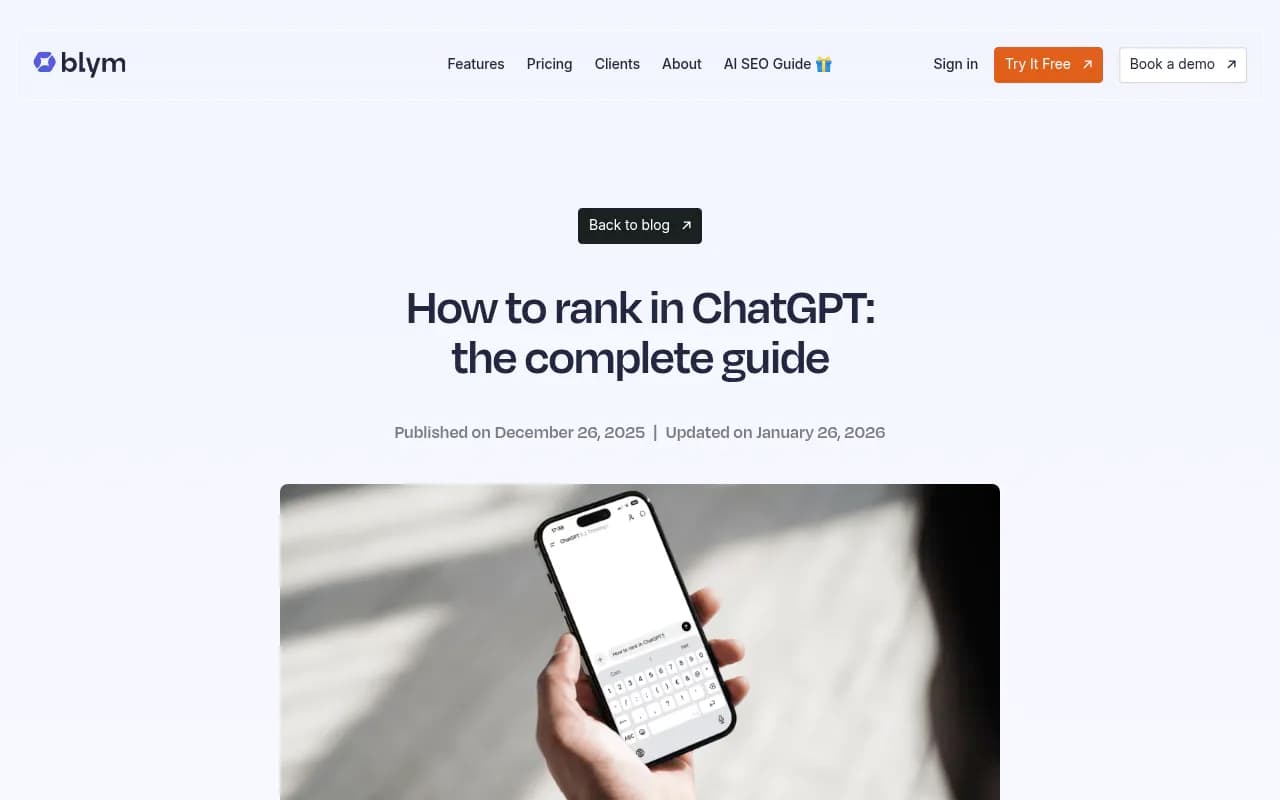
SEO vs GEO: Why traditional tactics don't work
Traditional SEO and Generative Engine Optimization share common ground -- both need high-quality, authoritative content. But their core objectives differ in ways that matter.
| Dimension | Traditional SEO | Generative Engine Optimization (GEO) |
|---|---|---|
| Goal | Rank in search results | Get cited in AI responses |
| Content structure | Optimized for keywords and user intent | Optimized for extraction and clarity |
| Formatting | Headings, internal links, multimedia | Direct answers, structured data, quotable facts |
| Authority signals | Backlinks, domain authority | E-E-A-T, brand mentions, cited sources |
| User behavior | Click-through rate, dwell time | Citation rate, sentiment in AI responses |
| Query type | Keyword-based | Conversational, prompt-based |
SEO aims to get users to click your link. GEO aims to get AI models to extract and cite your content. The shift is from "rank high" to "get quoted."
Keyword density doesn't help if your content is hard to parse. Long-form content doesn't help if the answer is buried in paragraph seven. Internal linking doesn't help if the LLM can't extract a clear claim.
GEO requires writing for machines that read like humans -- clear, structured, factual, and easy to extract.
The seven core ranking factors for ChatGPT in 2026
1. Topical authority and domain expertise
ChatGPT favors sources that consistently publish authoritative content in a specific domain. If your site has 50 articles on AI search optimization, you're more likely to be cited for AI-related prompts than a site with one generic post.
Build topical clusters: a pillar page covering the broad topic, supported by detailed subtopic pages that link back to the pillar. This signals depth and expertise.
2. Content structure and extractability
AI models extract information from structured content. Use:
- Clear H2/H3 headings that directly answer questions
- Short paragraphs (2-3 sentences max)
- Bulleted or numbered lists for steps, features, or comparisons
- Tables for side-by-side comparisons
- Direct answers in the first 1-2 sentences of each section
Avoid walls of text. Avoid burying the answer. The faster an LLM can extract a fact, the more likely it gets cited.
3. E-E-A-T signals (Experience, Expertise, Authoritativeness, Trustworthiness)
ChatGPT prioritizes content from sources it can trust. Strengthen E-E-A-T by:
- Adding author bios with credentials and expertise
- Citing primary sources, research, and data
- Including publication dates and update timestamps
- Linking to authoritative external references
- Displaying trust signals (certifications, partnerships, press mentions)
AI models cross-reference claims. If your content cites credible sources, it becomes more citation-worthy itself.
4. Technical accessibility and crawlability
If ChatGPT's crawler can't read your content, you won't rank. Ensure:
- Fast page load times (under 2 seconds)
- Mobile-responsive design
- Clean HTML structure
- No paywalls or login walls blocking content
- Proper robots.txt and sitemap configuration
- Schema markup for articles, FAQs, and how-tos
Check your server logs for AI crawler activity (OpenAI-User, GPTBot). If they're not visiting, you have a technical issue.
5. Conversational alignment and natural language
ChatGPT responds to prompts, not keywords. Write content that answers questions people actually ask:
- "How do I rank in ChatGPT?" not "ChatGPT ranking factors"
- "What's the difference between SEO and GEO?" not "SEO vs GEO comparison"
- "Why isn't my site showing up in AI responses?" not "AI visibility troubleshooting"
Use natural, conversational language. Write like you're explaining something to a colleague, not stuffing keywords into a template.
6. Citation-worthy formatting and quotable claims
AI models quote content that's easy to extract and attribute. Make your content quotable:
- Use clear, declarative statements ("ChatGPT uses a two-stage retrieval process")
- Include statistics and data points ("60% of organic traffic now comes from AI responses")
- Add pull quotes or callout boxes for key insights
- Structure comparisons in tables
- Use numbered lists for step-by-step processes
The easier it is for an LLM to extract a fact and cite it, the more likely you get mentioned.
7. Brand presence and cross-platform visibility
ChatGPT doesn't just read your website. It reads Reddit threads, YouTube transcripts, news articles, and social media discussions. Build brand presence across platforms:
- Publish on Medium, LinkedIn, and industry blogs
- Participate in Reddit discussions and Quora answers
- Create YouTube videos with transcripts
- Get mentioned in news articles and press releases
- Build backlinks from authoritative domains
The more places your brand appears, the more likely ChatGPT recognizes you as an authority.
Step-by-step: Optimizing content for ChatGPT citations
Step 1: Audit your current AI visibility
Before optimizing, you need to know where you stand. Use a ChatGPT rank tracker to monitor:
- Which prompts mention your brand
- How often you're cited vs competitors
- Sentiment of AI responses (positive, neutral, negative)
- Which pages are being cited
- Which prompts you're missing
Tools like Promptwatch show exactly which prompts competitors rank for but you don't -- the content gaps you need to fill.

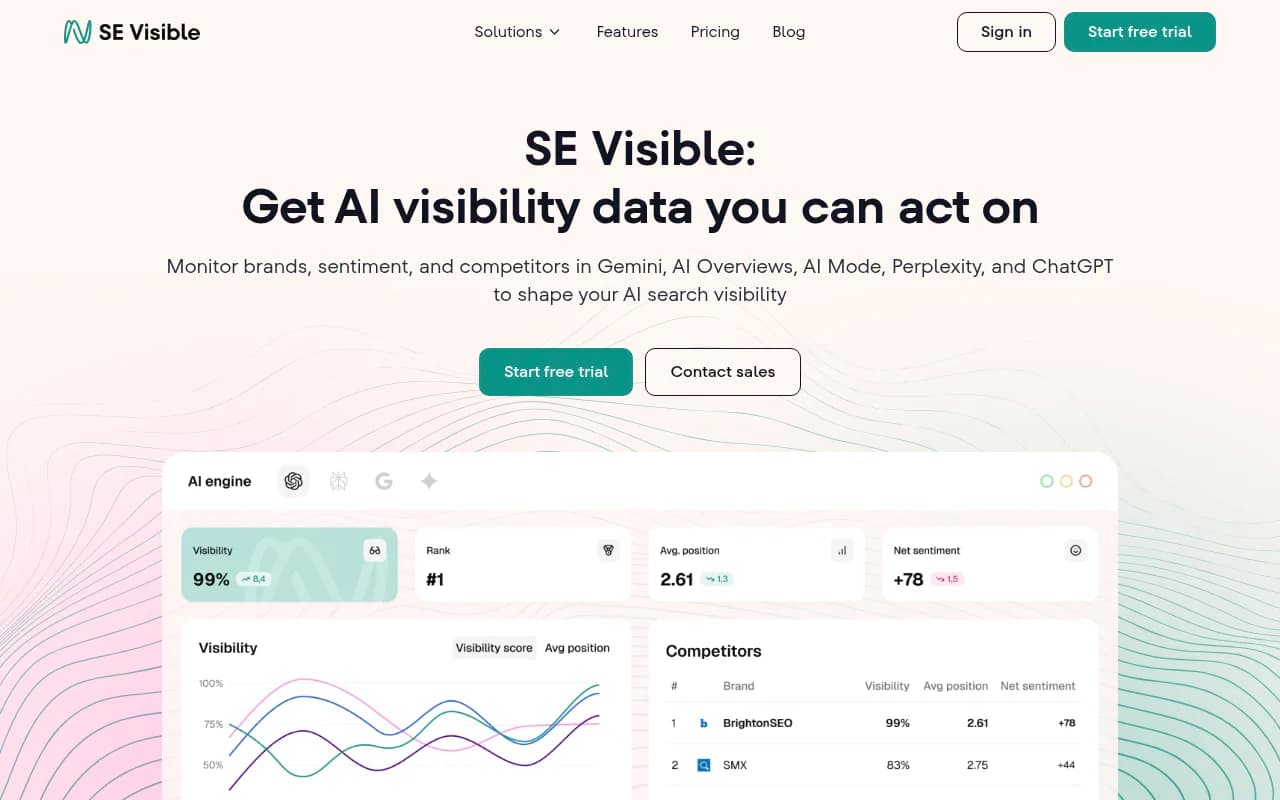
Other strong options include SE Visible for sentiment tracking, Otterly.AI for affordable monitoring, and Profound for enterprise-level narrative control.


Step 2: Identify high-value prompts to target
Not all prompts are worth optimizing for. Prioritize prompts that:
- Have high search volume (use prompt intelligence tools to estimate)
- Align with your business goals (bottom-of-funnel prompts for conversions)
- Show competitor citations (if they're ranking, you can too)
- Match your expertise (don't chase prompts outside your domain)
Build a list of 20-50 target prompts. These become your content roadmap.
Step 3: Create citation-worthy content
For each target prompt, create content optimized for extraction:
Structure: Start with a direct answer in the first paragraph. Use H2 headings that mirror the prompt. Break information into scannable sections.
Depth: Cover the topic comprehensively. ChatGPT favors sources that answer follow-up questions in the same article.
Clarity: Write in plain language. Avoid jargon unless you define it. Use short sentences.
Data: Include statistics, case studies, and concrete examples. AI models love citing numbers.
Formatting: Use tables for comparisons, lists for steps, and callout boxes for key takeaways.
Schema markup: Add Article, FAQPage, or HowTo schema to help AI models parse your content.
Step 4: Build topical authority with content clusters
One article won't make you an authority. Build a content cluster:
- Pillar page: A comprehensive guide covering the broad topic (e.g., "Complete guide to AI search optimization")
- Cluster pages: 5-10 detailed articles on subtopics (e.g., "How to write for ChatGPT", "ChatGPT ranking factors", "Tracking AI visibility")
- Internal linking: Link cluster pages back to the pillar, and link related cluster pages to each other
This signals depth and expertise to both Google and ChatGPT.
Step 5: Strengthen E-E-A-T signals
Add credibility markers to every article:
- Author bio with credentials and expertise
- Publication and update dates
- Citations to primary sources and research
- Links to authoritative external references
- Trust signals (certifications, partnerships, press mentions)
If you're citing data, link to the original source. If you're making a claim, back it up with evidence.
Step 6: Optimize technical infrastructure
Ensure AI crawlers can access and read your content:
- Check robots.txt and sitemap for crawl issues
- Monitor server logs for AI crawler activity (OpenAI-User, GPTBot)
- Fix slow page load times and mobile responsiveness
- Remove paywalls or login walls blocking content
- Add schema markup for articles, FAQs, and how-tos
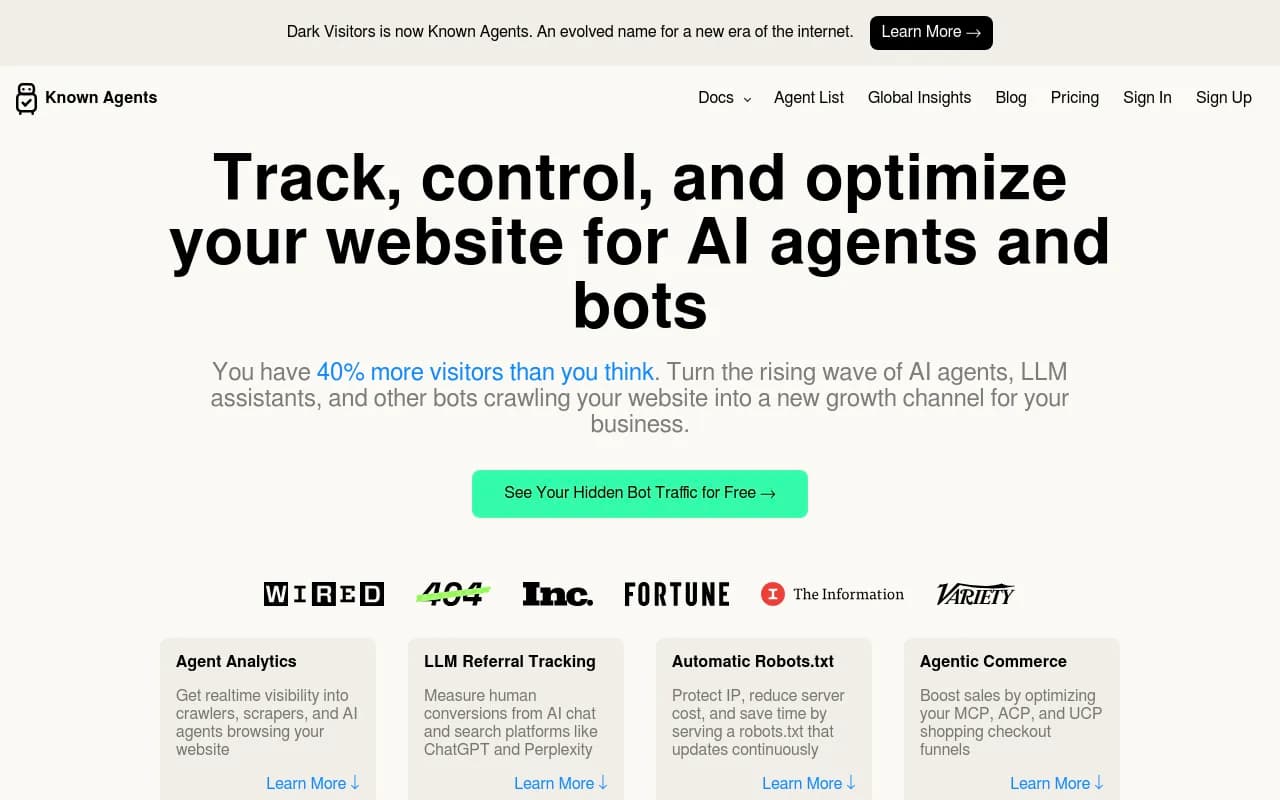
Tools like DarkVisitors track AI agent activity on your site.
Step 7: Build cross-platform brand presence
Publish content beyond your website:
- Write guest posts on industry blogs
- Answer questions on Reddit and Quora
- Publish on Medium and LinkedIn
- Create YouTube videos with transcripts
- Get mentioned in news articles and press releases
The more platforms you appear on, the more likely ChatGPT recognizes you as an authority.
Step 8: Track and iterate
AI visibility isn't set-it-and-forget-it. Monitor your performance weekly:
- Which prompts are you ranking for?
- Which pages are being cited?
- How does sentiment trend over time?
- What are competitors doing differently?
Use tools like Promptwatch to track citations, prompt coverage, and content gaps. Adjust your strategy based on what's working.
Choosing the right ChatGPT rank tracker
You can't optimize what you don't measure. ChatGPT rank trackers monitor citations, sentiment, and prompt coverage -- not traditional keyword ranks.
| Tool | Best for | Key features | Pricing |
|---|---|---|---|
| Promptwatch | End-to-end optimization | Content gap analysis, AI writing agent, crawler logs, 880M+ citations | $99-579/mo |
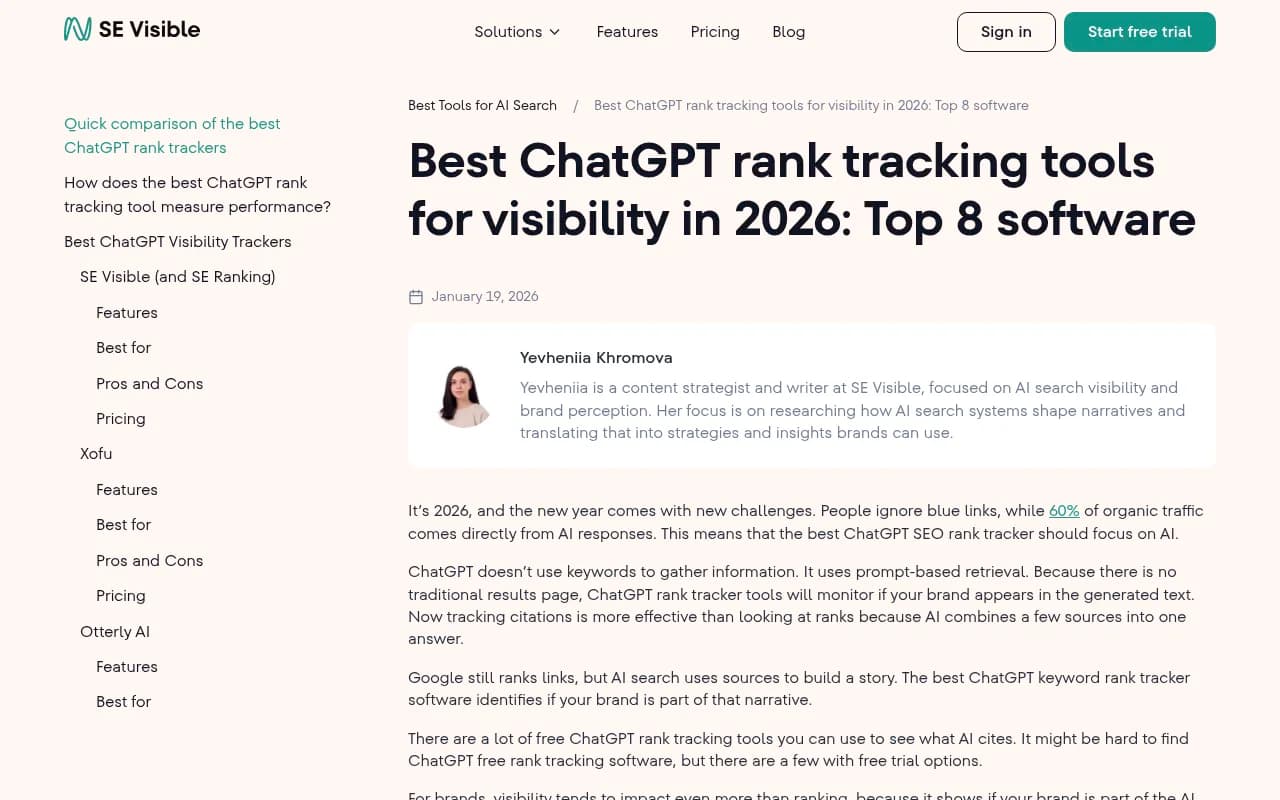
| SE Visible | Sentiment tracking | Visibility score, Net Sentiment Score, competitor benchmarks | $189/mo |
| Otterly.AI | Budget-conscious teams | Brand Visibility Index, cross-engine monitoring, GEO audit | $29/mo |
| Profound | Enterprise brands | Visibility score, conversation volume, narrative control | $99/mo |
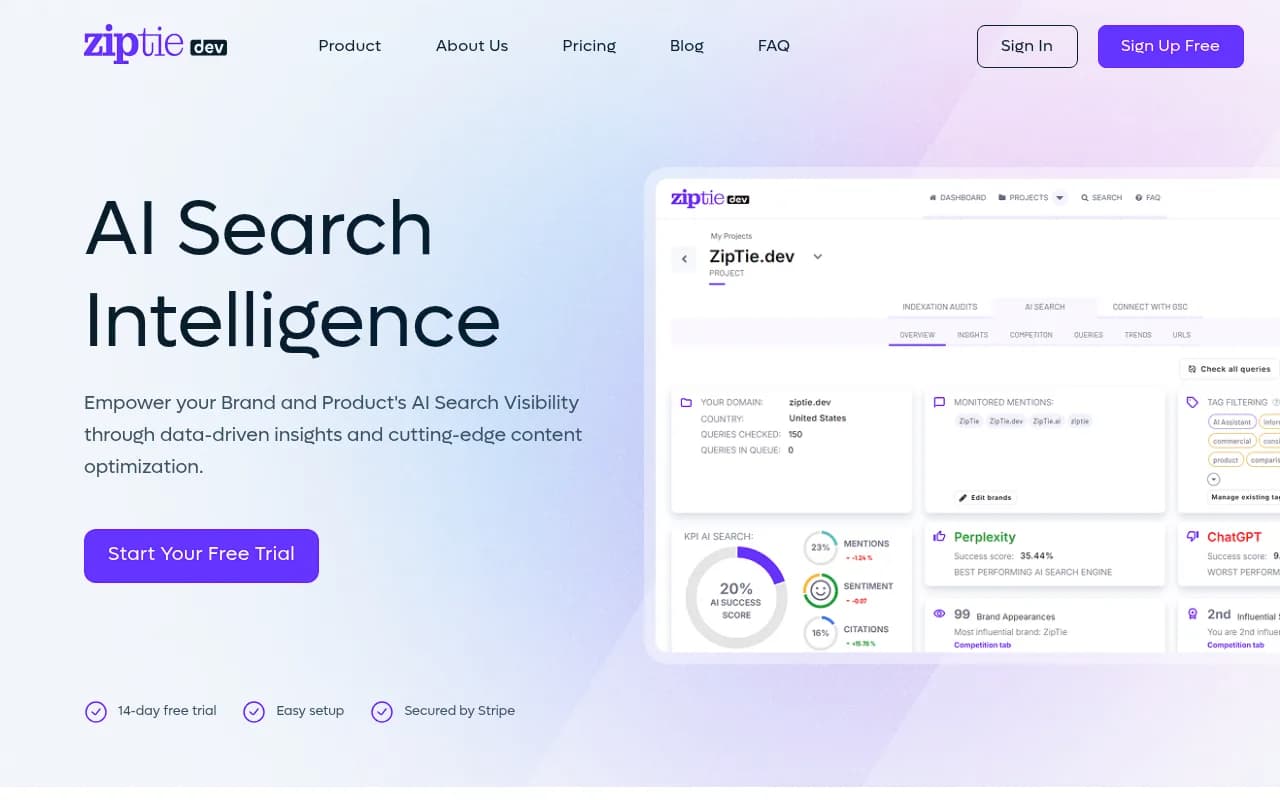
| ZipTie.dev | Actionable insights | AI success score, citation optimization, competitor analysis | $69/mo |
| AthenaHQ | Multi-engine tracking | 8+ AI search engines, citation tracking, sentiment analysis | Custom pricing |
Promptwatch stands out because it doesn't just show you data -- it helps you fix the gaps. Answer Gap Analysis shows exactly which prompts competitors rank for but you don't, then the AI writing agent generates content grounded in citation data and prompt volumes. Most competitors stop at monitoring. Promptwatch closes the loop with optimization.

Common mistakes that kill ChatGPT rankings
Writing for keywords instead of prompts
Keyword stuffing doesn't work. ChatGPT responds to natural language prompts. Write content that answers questions people actually ask.
Burying the answer
If the answer is in paragraph seven, ChatGPT won't find it. Put the direct answer in the first 1-2 sentences of each section.
Ignoring structure
Walls of text are unreadable for AI models. Use headings, lists, tables, and short paragraphs.
Skipping E-E-A-T signals
If your content lacks credibility markers (author bios, citations, trust signals), ChatGPT won't cite it.
Blocking AI crawlers
Check your robots.txt. If you're blocking OpenAI-User or GPTBot, you won't rank.
Publishing one-off articles
One article doesn't make you an authority. Build content clusters that signal depth and expertise.
Not tracking performance
You can't optimize what you don't measure. Use a ChatGPT rank tracker to monitor citations, sentiment, and prompt coverage.
The future of AI search optimization
ChatGPT is just the beginning. Perplexity, Claude, Gemini, and other AI models are changing how people discover information. The shift from blue links to AI responses is accelerating.
By 2027, most organic traffic will come from AI-generated answers, not traditional search results. Brands that optimize for citations now will dominate. Brands that wait will lose visibility.
The playbook is clear: build topical authority, structure content for extraction, strengthen E-E-A-T, ensure technical accessibility, write for conversational prompts, format for quotability, and build cross-platform presence.
Start with an audit. Use Promptwatch or another rank tracker to see where you stand. Identify the prompts you're missing. Build the content that fills those gaps. Track the results. Iterate.
AI search optimization isn't a one-time project. It's an ongoing process of understanding what AI models cite, why they cite it, and how to make your content more citation-worthy.
The brands that win in 2026 are the ones that treat GEO as seriously as they treated SEO in 2010. The opportunity is massive. The window is closing.