Key takeaways
- GetMint's own materials describe prompts, content briefs, a Brand Alignment score and a Sources Watchtower. They don't mention crawler logs or traffic attribution, and that gap is the main reason teams go looking elsewhere.
- Crawler logs answer "can AI bots even read my pages?" Traffic attribution answers "does AI send visitors who convert?" You want both, in one place.
- Promptwatch, Profound, Hall AI, Scrunch and Peec each cover some of this. Promptwatch is the one that ties IP-verified crawler logs, visitor analytics and content publishing into a single loop.
- Cheap or free routes exist: Cloudflare AI Crawl Control, raw server logs with a user-agent list, and DarkVisitors. They show bot hits but not what AI says about you.
- AI referral numbers are a floor, not a full count. No vendor can prove one specific AI mention caused one specific sale.
Why people leave GetMint for this reason
GetMint is a reasonable AI visibility and content tool. According to its own January 2026 blog post, the Advanced plan is priced on a call with a 12-month commitment, and includes 300+ prompts, 5 topics, 3 AI models, 10 briefs and articles a month, unlimited users and 3 countries. There is no free trial. Features include a Content Studio, Brand Alignment score, Expertise library, Sources Watchtower and a Kanban board.
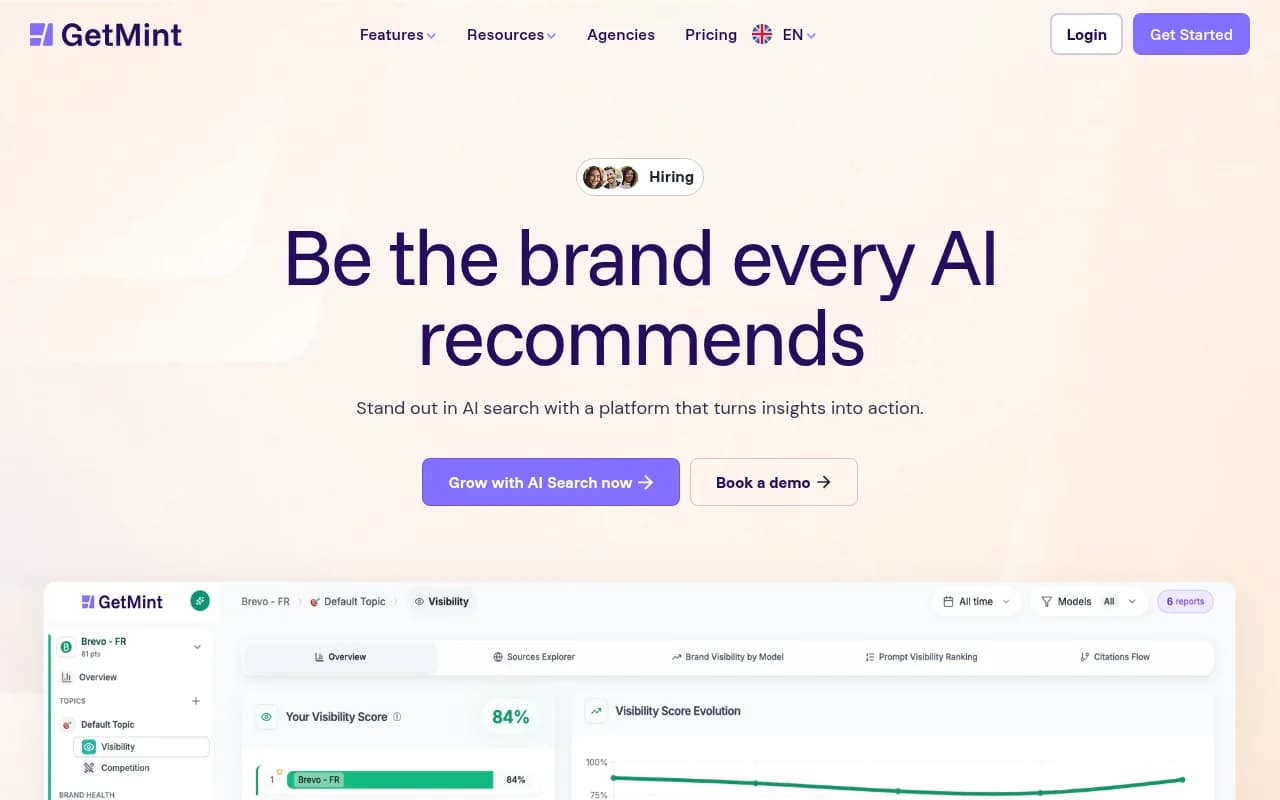
What that post does not mention is crawler logs or traffic attribution. That is a vendor page, so absence isn't proof, but if you are evaluating GetMint and these two things matter, ask for a demo of them specifically. If the answer is vague, you have your reason to look around.
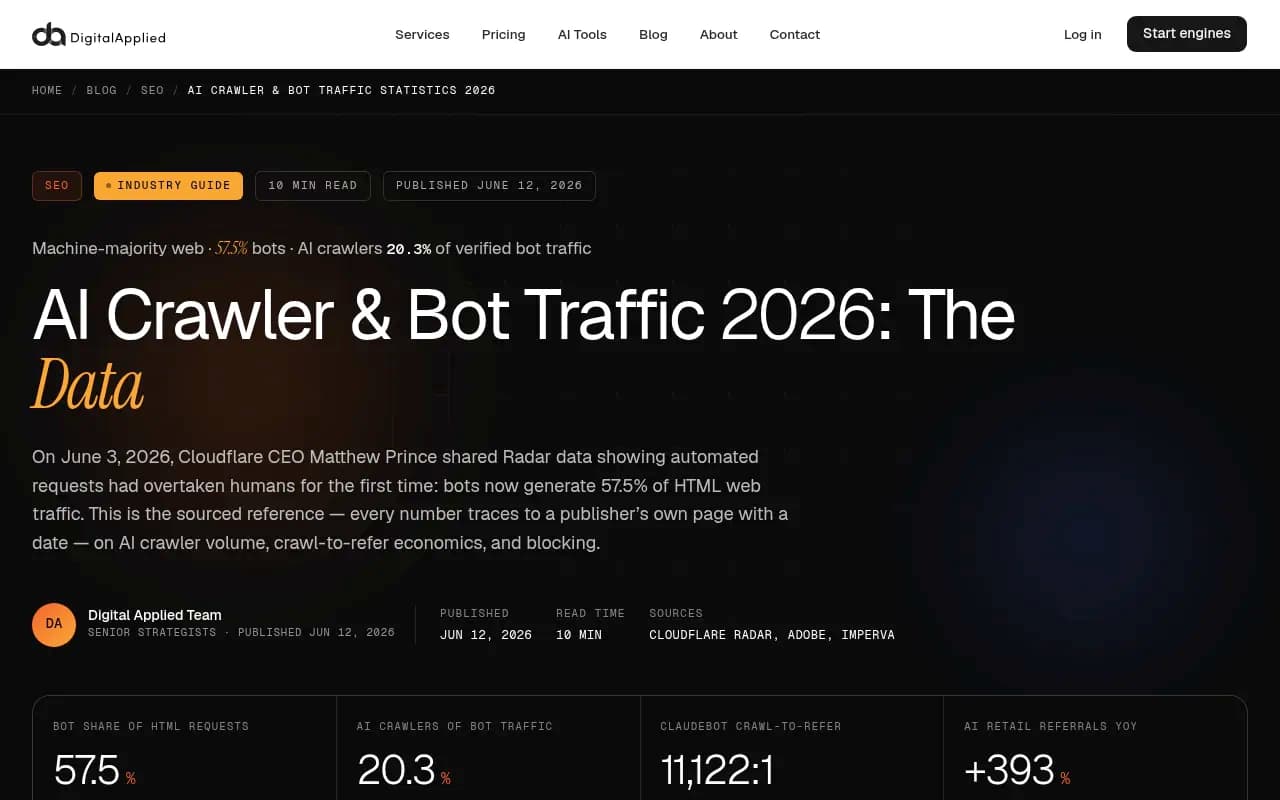
The context makes these features more important than they were a year ago. Cloudflare CEO Matthew Prince shared Radar data on June 3, 2026 showing automated requests at 57.5% of HTML web traffic, the first machine majority. According to the Digital Applied reference built on that data, AI crawlers were 20.3% of verified bot traffic in May 2026, and ClaudeBot's crawl-to-refer ratio was 11,122:1 in the week of May 25 to June 1. Lots of reading, almost no visitors sent back. If you only watch prompts and mentions, you can't see any of that happening on your own site.
What "crawler logs" and "traffic attribution" actually mean
These two phrases get used loosely, so let me pin them down.
Crawler logs
A crawler log records requests that AI bots make to your site: GPTBot, OAI-SearchBot, ChatGPT-User, ClaudeBot, PerplexityBot and so on. A good one tells you which pages were read, how often, and what errors the bot hit. The better ones verify the visit against the operator's published IP ranges, because anyone can fake a user agent string.
The distinction between bot types matters. HUMAN Security's August 2026 guide makes the point that scrapers feeding training sets, retrieval bots fetching a page mid-conversation, AI browsers and full agents are different things and shouldn't be lumped together. A training crawler hitting you 10,000 times is not the same signal as a user-triggered fetch hitting you once.
Traffic attribution
Attribution means measuring visits and conversions that arrive from AI assistants: ChatGPT, Perplexity, Gemini, Claude, Copilot. Two caveats before you buy anything. First, the number is an undercount, because many AI clicks arrive without a clean referrer. A recent comparison from ZipTie put it bluntly: identified AI-assistant visits are a floor and not a full count. Second, a referral session isn't proof that a particular mention caused a sale. If a vendor claims direct AI-to-revenue attribution, ask for the methodology document.
One more wrinkle for 2026: ChatGPT stopped sending a referrer on October 8, 2026, so tools now need a fallback such as counting visits tagged utm_source=chatgpt.com. Ask any vendor how they handle that.
What to check in any alternative
Before the list, a short checklist I'd actually use:
- Are crawler requests IP-verified, or just matched on user agent?
- Can you see crawler activity per page, with errors explained?
- How do logs get in: Cloudflare, Vercel, Fastly, a WordPress plugin, raw logs? Crawler tools only work if you can get the logs to them.
- Does attribution come from a GA4 connector, a script, or both?
- Does the tool connect crawling to citations, so you can tell an access problem from a content problem?
- What happens after you find a gap? Report only, or help fixing it?
GetMint alternatives compared
Prices for the non-Promptwatch tools below come from GetMint's own January 2026 comparison post and may be out of date. Confirm on each vendor's site.
| Tool | Crawler logs | Traffic attribution | Content workflow | Entry price (as reported) |
|---|---|---|---|---|
| Promptwatch | Yes, IP-verified | Yes, visitor analytics | Yes, Content Agent and CMS publishing | $95/mo |
| Profound | Yes, agent analytics | Documents GA4 or Adobe referral reporting | Limited | $99 (reported) |
| Hall AI | Yes, real-time bot logs | Blends agent and chat data | No | $199/mo (reported) |
| Scrunch AI | Edge-level AXP delivery | Documents GA4 or Adobe referral reporting | Limited | about $100 (reported) |
| Peec AI | Not documented | Documents GA4 referral reporting | No | Check site |
| DarkVisitors | Yes, bots and LLM referrals | LLM referrals only | No | Free tier |
| Cloudflare AI Crawl Control | Yes, at the edge | No | No | Free tier |
Promptwatch
Promptwatch is the closest match to what GetMint's materials leave out, and it also keeps the content side GetMint is known for. It is an end-to-end AI visibility platform, not just a tracker: it monitors what ChatGPT, Gemini, Claude, Perplexity, Google AI Overviews and others say about you, then shows where they get it and helps fix gaps.

For this specific search, the relevant parts are:
- AI crawler logs with IP-verified requests from GPTBot, OAI-SearchBot, ChatGPT-User, ClaudeBot, PerplexityBot and others. Spoofed bots are filtered out. You see which pages were read, errors with plain-language explanations, and a citation rate per page.
- Visitor analytics for AI-referred traffic and conversions from ChatGPT, Perplexity, Gemini, Claude, Copilot and more, installed through a script, Google Tag Manager or the WordPress plugin. There's an optional setting for the utm_source=chatgpt.com workaround.
- Log ingestion through Cloudflare, AWS CloudFront, Fastly, Vercel, Netlify, Akamai, Google Cloud CDN, a custom endpoint or the WordPress plugin.
- Search Insights, which lays Google Search Console and Bing data over AI crawls and citations, so you can ask which pages rank but never get cited.
- A Content Agent that writes and publishes to WordPress, Webflow or Framer, then tracks whether each page gets crawled, cited and clicked.
Its own research is useful here too. Promptwatch Data's AI crawler traffic report covers IP-verified requests from June 8 to September 6, 2026. OpenAI made up 79.8% of verified AI crawler requests in the week of August 31 to September 6, down from 94.8% in the week of June 8 to 14. The report's advice is sensible: compare your own logs against that mix, and if a provider is big in the chart but near zero in your logs, you may be blocked or unreachable for it. Separately, Meta-WebIndexer's share of crawler traffic went from about 2% to nearly 38% between mid-July and August 9, 2026, which is the kind of shift you'd never catch from a prompt tracker.
Pricing is Essential $95/mo, Professional $245/mo and Business $579/mo, with a 7-day free trial on monthly billing. Crawler logs start on Professional (25M logs), and the Content Agent starts on Business. Confirm on the pricing page. You can also run the free AI visibility report first. If you want a head-to-head, there's a Promptwatch vs GetMint page.
Worth knowing: Promptwatch has more surface area than a small team may need. If all you want is a basic mention counter, it's more than that.
Profound
Profound is the enterprise name in this space. ZipTie's October 2026 reading of vendor documentation says Profound, Scrunch and Peec each document analytics connections reporting AI-assistant referral sessions through GA4 or Adobe Analytics. The xSeek roundup describes Profound's crawler side as agent analytics plus answer insights, sales-led with custom pricing.

Good fit if you have enterprise budget and want a sales-led relationship. Less good if you want to publish content from the same tool, or you want transparent self-serve pricing. See Promptwatch vs Profound for a closer comparison.
Hall AI
Hall AI is the one GetMint's own comparison table flags for real-time bot logs, at $199/mo with 3 engines, 500 prompts and 2 seats (January 2026 numbers). The xSeek roundup frames it as server-level bot activity blended with LLM mentions, aimed at mid-market teams.
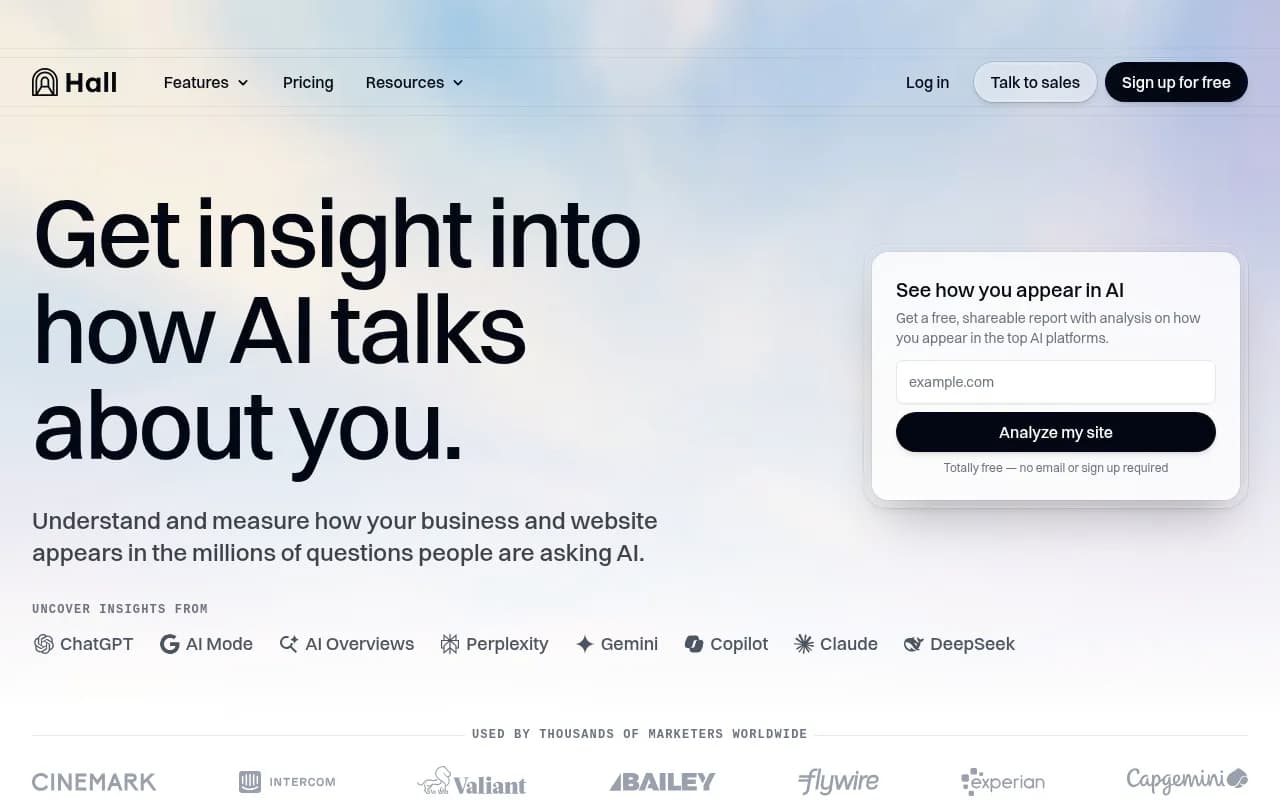
It's a decent pick if bot-log visibility is your main need and you don't care about a built-in content engine.
Scrunch AI
Scrunch takes a different angle. Its AXP is an edge or CDN-level integration that serves AI-friendly versions of your pages, which is a delivery feature rather than analytics. GetMint's own post lists the lack of that as a con for GetMint. The entry plan is around $100 but limited to ChatGPT, per that same post.
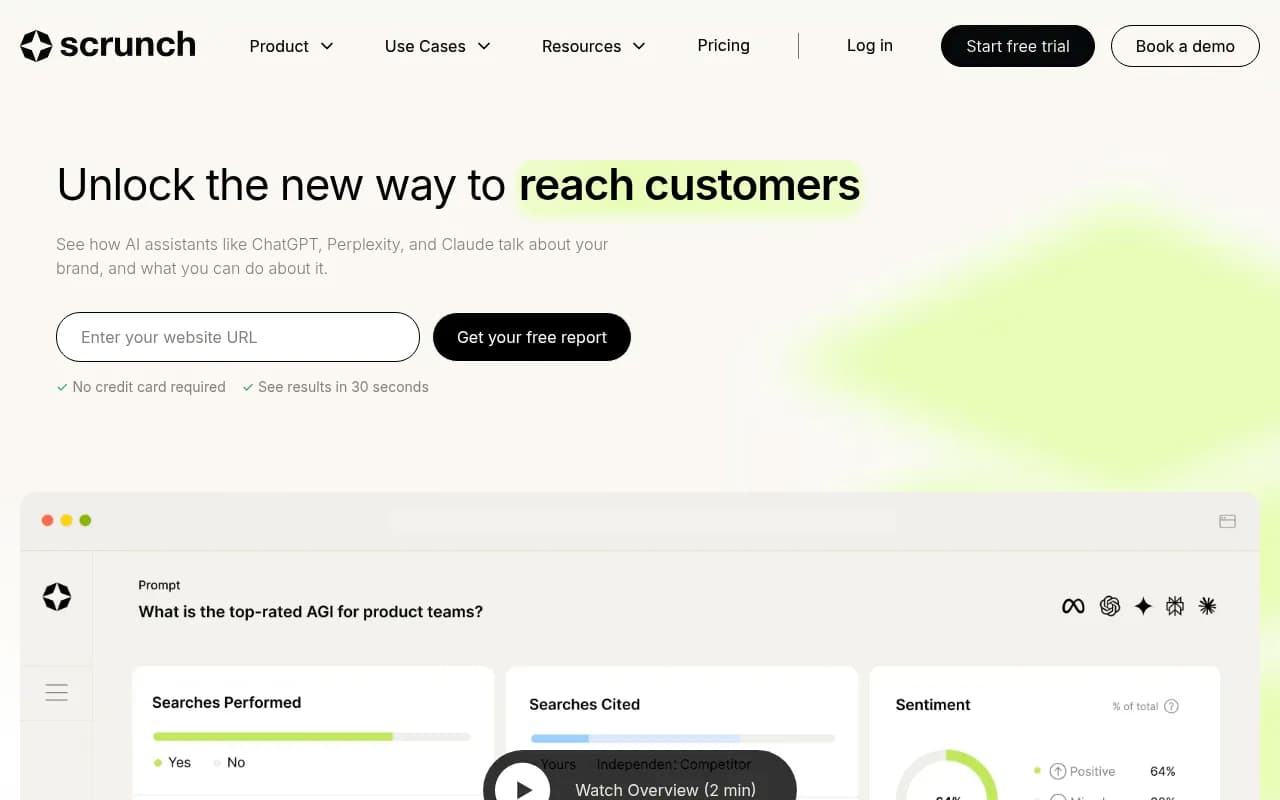
If you want to shape what bots see at the edge, Scrunch is interesting. If you want straightforward log analysis with per-page citation rates, look elsewhere. Note the catalog also lists a separate Scrunch AI entry.
Peec AI
Peec AI is a multi-language visibility tracker. Per ZipTie's October 2026 read, it documents GA4-based referral reporting, but I found no documented crawler log feature. Good for attribution-light needs; not a crawler tool.

Free and low-cost ways to see crawlers
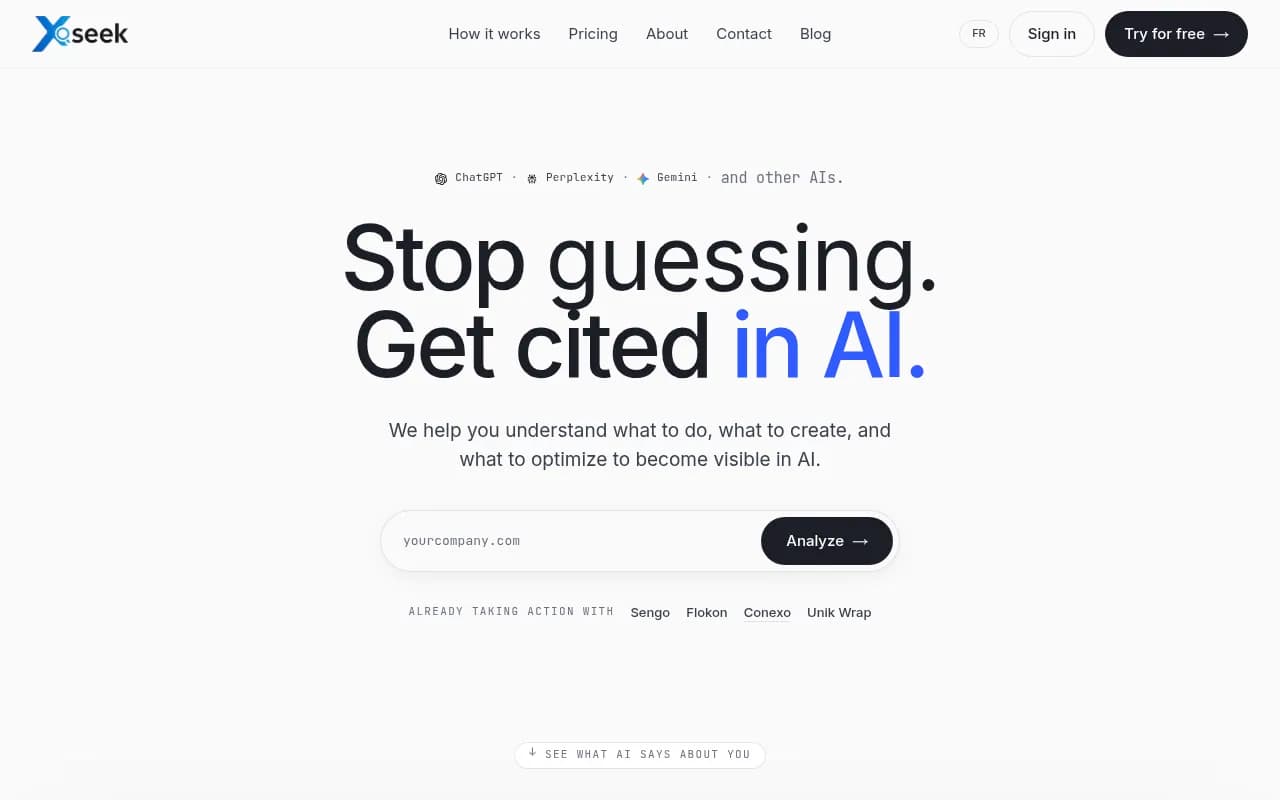
You don't need a full platform to start. The xSeek roundup names three free routes: Cloudflare AI Crawl Control's free tier, raw server log analysis with a curated user-agent list, and xSeek's free AI Robots tool.
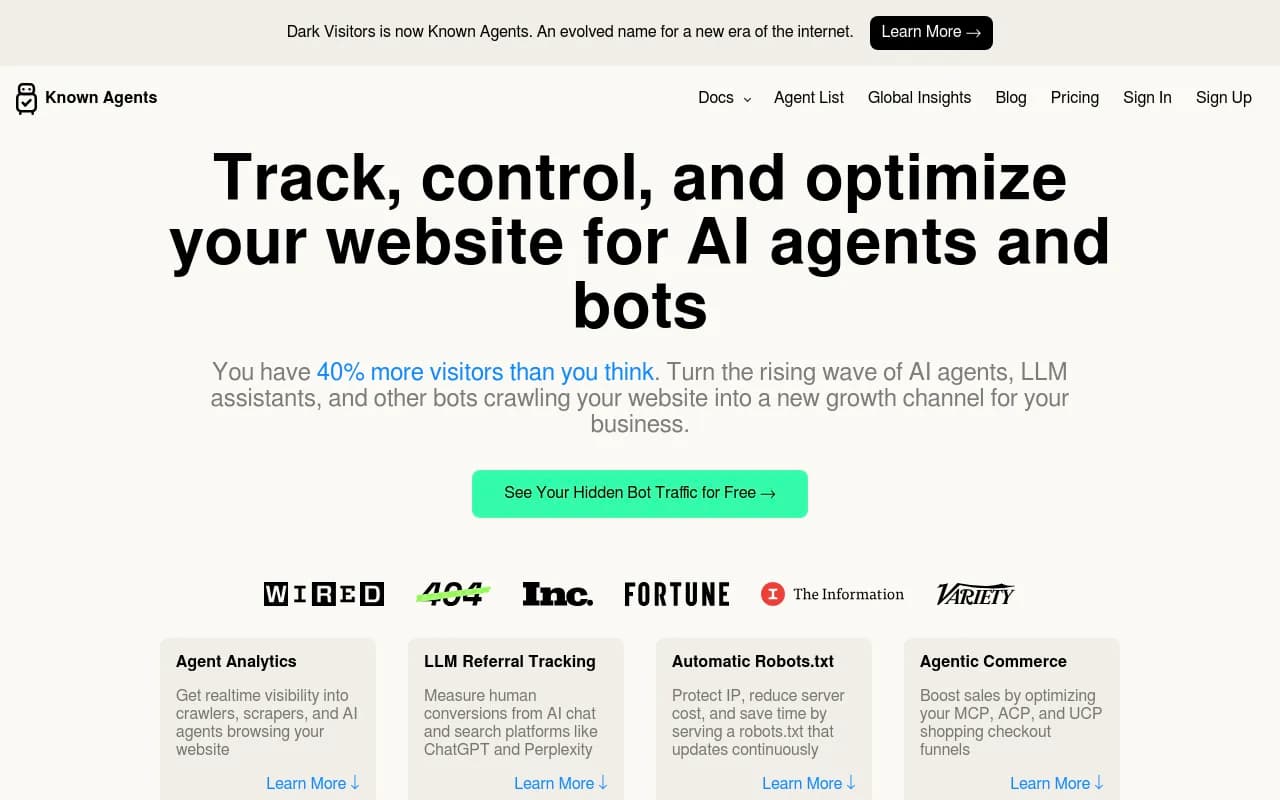
DarkVisitors (now Known Agents) covers crawler logs and LLM referrals, with automatic robots.txt generation. xSeek pairs prompt tracking with cited pages, and the roundup recommends running it next to Cloudflare for edge-level truth.
The catch with all of these: they show you bots, not what the models say about your brand, and raw logs without IP verification will count impostors. If you want to inspect a single URL's access, Promptwatch also has a free AI crawler URL inspector, and a robots.txt generator for AI.
How to pick
| Your situation | Pick | Why |
|---|---|---|
| Want logs, attribution and content publishing in one tool | Promptwatch | Closed loop from crawl to citation to traffic |
| Enterprise budget, sales-led buying | Profound | Agent analytics plus documented GA4 or Adobe reporting |
| Mainly need bot logs, mid-market | Hall AI | Real-time bot activity |
| Want edge-level delivery for AI agents | Scrunch | AXP at the CDN layer |
| Just testing, near-zero budget | Cloudflare plus DarkVisitors | Free tiers show who is hitting you |
| Stay with GetMint | GetMint plus Cloudflare logs | Cover the gap yourself |
Getting attribution right, whichever tool you choose
A few habits will keep you honest:
- Treat AI referral sessions as a floor. Report them as "identified AI visits", not total AI traffic.
- Track AI visibility changes next to organic, direct and branded search over the same period. It isn't causal proof, but sustained correlation is a defensible story for stakeholders.
- Watch citation share inside your own prompt set. If your content displaces a competitor's citation, that is evidence even without a click.
- Compare your logs to industry mixes. If a major provider is near zero in your logs, check robots.txt, CDN and WAF rules before you rewrite any content.
- Split training crawlers from answer-time fetchers. A provider total hides the difference, so look per crawler.
For background reading on how Promptwatch collects and attributes this data, the attributing AI traffic guide in its Academy is a good start. If you want a wider list of tools in this category, the GEO software directory at bestgeosoftware.com is worth a browse.
Bottom line
GetMint's published materials stop at prompts, briefs and brand scoring. If you need to know whether AI bots can read your site and whether AI sends you customers, pick something that shows both. For most teams that want one tool covering crawler logs, attribution and content, that's Promptwatch. If you only need bot visibility, Hall AI or a free Cloudflare setup will do the job. Start with a week of logs from whichever you choose, and let what you find decide whether you need more.