Key takeaways
- An AI visibility tool is a data processor under GDPR. The LLM providers behind it are subprocessors, and most of them are US-based.
- Ask for a signed DPA, a published subprocessor list, and the transfer mechanism. Do not rely on the EU-US Data Privacy Framework alone, because its legal challenge is still moving through the courts.
- Crawler analytics and visitor analytics put IP addresses and log data in play. That needs a separate privacy check from prompt tracking.
- The AI Act probably does not make a visibility tool high-risk, but content-generation features can trigger transparency duties. Ask for the vendor's classification.
- Transparency about data flows is a better signal than a GDPR badge in a footer.
Why GDPR applies to a tool that tracks ChatGPT mentions
It feels odd at first. You are tracking whether ChatGPT names your brand, so where is the personal data? But the tool still sends prompts, your domain, competitor names and sometimes content to third-party LLM providers. Depending on the setup, it may also ingest server logs, analytics events, team member accounts and CMS credentials. That makes the vendor your processor under Article 28 of the GDPR, and you the controller.
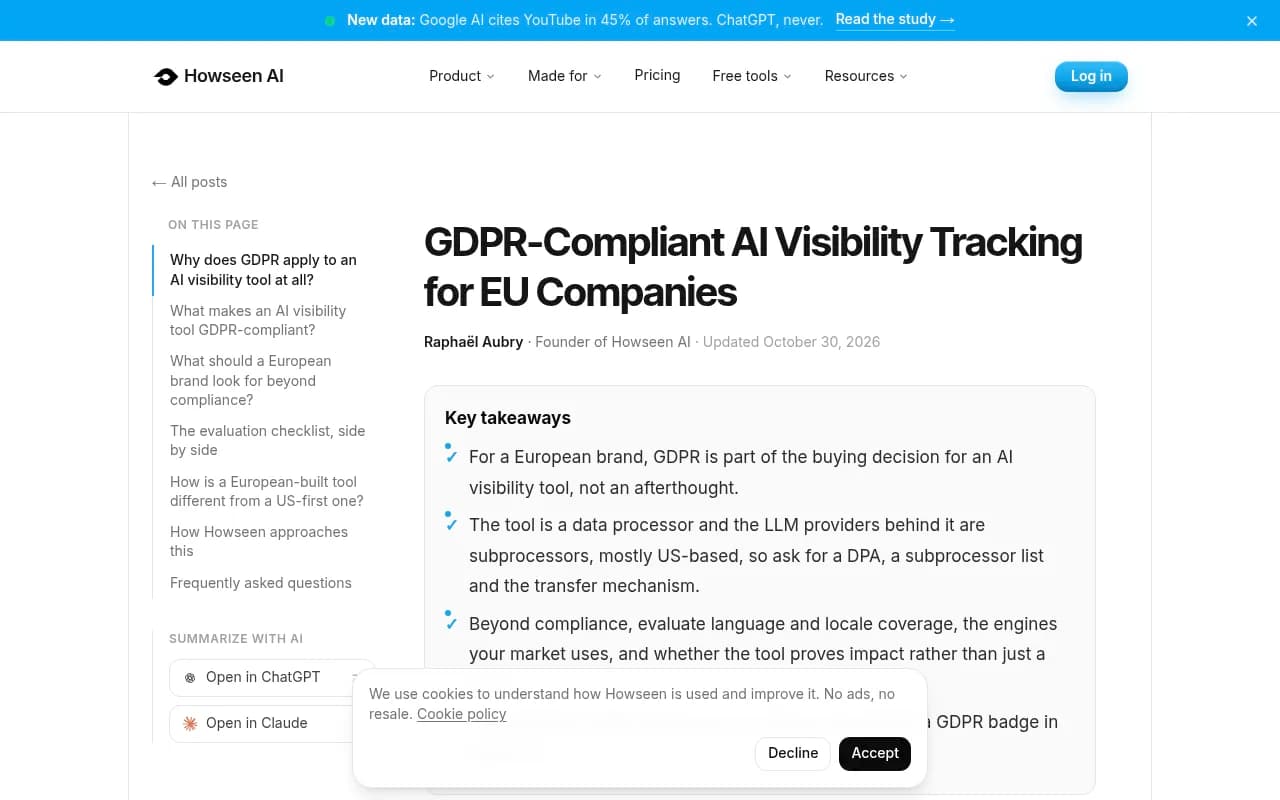
Most tools in this category were built US-first. That is fine in itself, but it means the data chain is longer than you would guess. As the founder of Howseen put it in a recent evaluation guide, the LLM providers behind the tool are subprocessors, mostly in the United States, so the questions are about contracts and transfers, not just server location.
The checklist below is what I would run any vendor through before putting a card on file. It works the same for a 39 euro starter plan and a five-figure enterprise contract.
The checklist at a glance
| Check | What to ask | Red flag |
|---|---|---|
| DPA | Can I sign an Art. 28 DPA today, without a sales call? | DPA only on request, or none |
| Subprocessors | Where is the public list, and how are changes announced? | No list, or "we use trusted partners" |
| Transfer mechanism | SCCs, DPF certification, or both? | Only DPF, no fallback |
| Data residency | Where are the account database and app servers? | "It's in the cloud" |
| Training use | Is my data used to train any model? | No written answer |
| Collection method | UI monitoring or API? What goes into the prompts? | Personal data in prompts |
| Log and analytics data | Do you process IPs, and who stores them? | Crawler or visitor features with no privacy docs |
| Certification | ISO 27001 or SOC 2 report available? | Marketing claims only |
| Deletion and retention | How do I delete my data, and how fast? | No self-serve deletion |
| AI Act position | How do you classify the product? | Blank stare |
The rest of this guide explains each row.
1. Data Processing Agreement
No DPA, no compliant deployment. It is that simple. The agreement should name the vendor as processor, describe what data is processed and why, list retention periods and security measures, and reference the subprocessors.
Prio's checklist for European founders makes a point I agree with: if a vendor makes you ask for the DPA through a sales call, they are not taking compliance seriously. The good vendors link a DPA from the footer or the account settings and let you countersign it online.
2. Subprocessors and where they sit
This is the row where AI visibility tools differ most from ordinary SaaS. To measure whether your brand appears in ChatGPT, Gemini or Perplexity, a tool has to query those engines or scrape their interfaces. Each provider in that chain, plus the cloud host, the database vendor and any embedding or analytics service, is a subprocessor.
What you want to see:
- A public subprocessor page with names, purposes and countries.
- A notice period when the list changes, ideally with a right to object.
- A clear statement of which subprocessors ever receive anything beyond your brand and prompt text.
If an AI tool sends data to an embedding service you have never heard of, that is your compliance risk, not theirs.
3. Transfer mechanisms: do not bet on one legal basis
Since 10 July 2023 the European Commission has treated US companies certified under the EU-U.S. Data Privacy Framework as adequate. So one valid answer from a vendor is "our US subprocessors are DPF-certified."
But I would not stop there. On 3 September 2025 the EU General Court dismissed the Latombe v Commission challenge (T-553/23) and upheld the adequacy decision. Latombe said he would appeal to the CJEU, and law firm commentary in December 2025 described the Court of Justice as set to review the challenge. I could not verify the current status of that appeal in late 2026, so check it before you sign anything long-term.
The practical position: ask for Standard Contractual Clauses as a fallback in the DPA. If the DPF is ever struck down, you do not want to be renegotiating contracts in a hurry. For sensitive use cases, a transfer impact assessment is worth the afternoon it takes.
4. Data residency
GDPR does not demand that everything sits in the EU. It demands a lawful basis for transfers and transparency. Still, a vendor that can say "our customer database is in Frankfurt, our application servers are in Frankfurt" has fewer legal questions to answer than one that cannot name a region.
I would treat EU hosting as a tie-breaker, not a dealbreaker. Valid transfer mechanisms and honest documentation matter more than where every byte lives. A vendor with EU servers and a hidden chain of US subprocessors is worse than a US vendor with a clean, public list and SCCs.
5. Training and prompt content
Two questions here, and they are different:
- Does the vendor use your data to train or fine-tune models?
- Do the prompts it sends to LLM providers contain personal data?
For pure brand tracking, prompts should be generic buyer questions like "best project management software for agencies", with no personal data in them. Ask to see a sample. If the tool lets you paste customer emails or support transcripts into prompts, that changes the risk profile completely.
Also ask how data is collected. Some platforms monitor the real user interfaces of ChatGPT, Gemini, Perplexity and others. Others call the APIs. The answers can differ between the two, which is an accuracy question as much as a privacy one, but it also changes what is sent and to whom.
6. Crawler logs, visitor analytics and the IP address problem
This is the part most checklists skip. Some AI visibility platforms go beyond prompt tracking and offer AI crawler analytics or visitor attribution. Those features mean connecting your server, CDN or WAF logs to the vendor, or installing a tracking script. Log data can include IP addresses, and under GDPR an IP address is personal data. (This is my inference, not something the vendors' reports state.)
So if a tool offers these features, your checklist grows:
- Which log fields does it ingest, and can you filter them before they leave your CDN?
- How long are raw logs retained?
- Does the tracking script set cookies or fingerprint visitors, and does it need consent under ePrivacy rules?
- Are crawler requests verified against the operators' published IP ranges? Promptwatch Data's AI crawler traffic report only counts requests from those published ranges, which filters out spoofed user agents. A tool that trusts user-agent strings alone will give you dirty data.
For context on why crawler data is worth having: in that report, OpenAI made up 79.8% of IP-verified AI crawler requests from Aug 31 to Sep 6, 2026, down from 94.8% in the Jun 8 to Jun 14 window. Anthropic, Google, Perplexity and Mistral make up the rest. The mix shifts fast, which is why a tool should track each provider separately.
7. The tools worth putting on a shortlist
I did not gather vendor-specific DPA or hosting facts for this guide, so treat the list below as a set of candidates to interrogate, not a ranking of who is compliant. Run each one through the table above.
Promptwatch is the one I would check first if you want more than a dashboard. It is ISO/IEC 27001 certified and GDPR compliant, based in Amsterdam, and it covers crawler logs, visitor analytics and content workflows in one product. That certification is third-party evidence, which is more than most competitors can show. Because it also processes log data, run the IP and retention questions from section 6 past them like any other vendor.

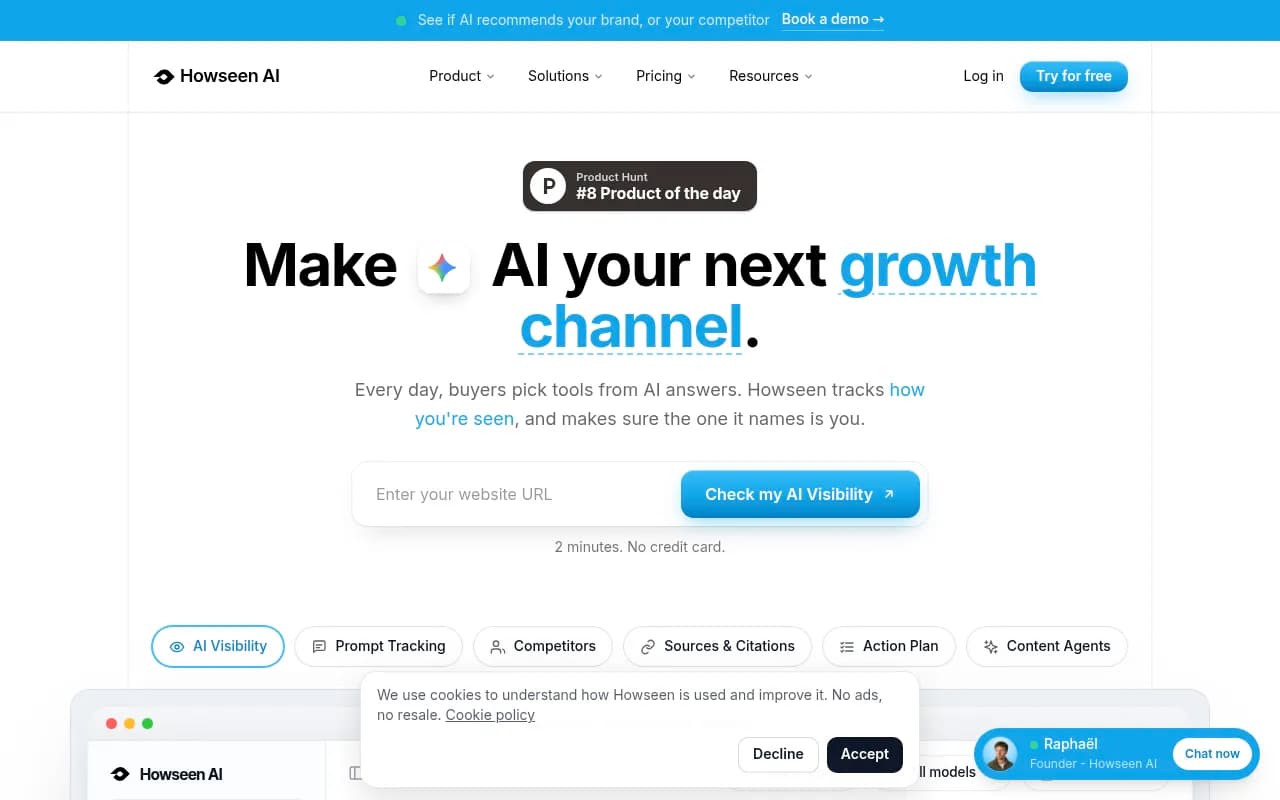
Howseen is a France-built tracker that states its customer database and application servers are in Frankfurt and bills in euros, from 39 euros a month. It focuses on the exact prompts and European language coverage.
Peec AI is built around multi-language tracking, which matters for multilingual EU markets.

Otterly.AI is an affordable monitoring option popular with small teams.

Profound is a US-based enterprise-leaning platform. Ask hard questions about transfers and subprocessors.

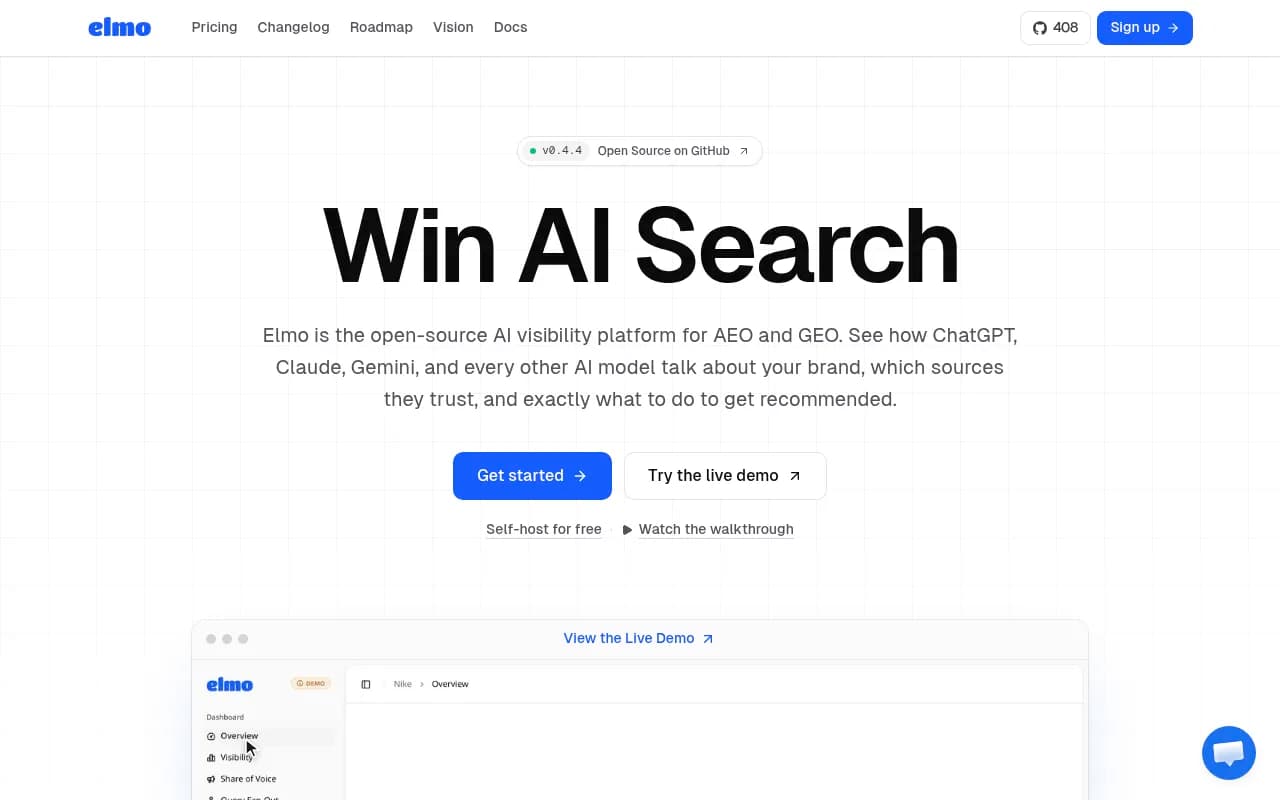
Elmo is open source and self-hosted, which is the strongest answer to data residency if you have the engineering time.
| Tool | Angle for a GDPR review | Verify before buying |
|---|---|---|
| Promptwatch | ISO/IEC 27001, GDPR compliant, EU-based company | DPA, log retention, subprocessor list |
| Howseen | Frankfurt hosting, euro billing | Subprocessors behind its LLM queries |
| Peec AI | Multi-language coverage | DPA, hosting, transfers |
| Otterly.AI | Low-cost entry | Subprocessors, retention |
| Profound | Enterprise features | SCCs, DPF status, residency options |
| Elmo | Self-hosted, you control the data | Your own security and LLM API contracts |
For a wider field, the GEO software directory at bestgeosoftware.com lists more options to screen.
8. Beyond compliance: does it work for a European market?
A compliant tool that tracks the wrong things is a waste of budget. Three checks:
- Language and locale. A French question can produce a different brand set than the same question in English. The tool should run prompts in your languages and countries, not translate an English template.
- Engine coverage. Each engine behaves differently. Promptwatch Data's average sources per response report (dated September 2025, so figures may have drifted) showed ChatGPT citing about 5 sources per answer, Google AI Overviews about 10, and Perplexity almost exactly 10. A single blended score hides that.
- Proof of impact. A visibility score is not a result. Look for a path from visibility to traffic or conversions, or at least a metric you can track over time, like share of voice.
9. EU AI Act: ask, but do not panic
The Digital Omnibus on AI (Regulation (EU) 2026/1744) entered into force on 27 July 2026. It moved high-risk obligations for Annex III systems from 2 August 2026 to 2 December 2027, and Annex I systems to 2 August 2028.
What was not deferred: Article 50 transparency duties applied from 2 August 2026. Those cover disclosing AI interactions and labelling AI-generated content. The Art. 50(2) watermarking duty has a grace period to 2 December 2026 for systems already on the market before August. GPAI provider obligations have applied since 2 August 2025.
My read, and it is an inference: a brand-monitoring tool is probably not high-risk. But if it also generates articles or publishes content on your behalf, Article 50 may apply to that feature. The vendor should be able to tell you how it classified the product and what labelling it does. If it cannot, that tells you something about how it handles compliance generally.
10. Red flags that should end the conversation
- The DPA is "available on request" and the request goes unanswered for a week.
- The subprocessor list is missing, or vague about the LLM providers.
- The only transfer basis is the DPF, with no SCCs.
- Crawler or visitor features exist, but no documentation covers IP handling.
- Pricing scales per query in a way that makes logging expensive, so you are tempted to turn privacy features off.
- Claims of being "GDPR certified". There is no official GDPR certificate. ISO 27001 and SOC 2 reports are real attestations; a footer badge is not.
A 30-day plan for a small team
Week 1: scope
Decide whether you need prompt tracking only, or also crawler logs and visitor analytics. That one decision sets most of your risk. Name one owner for the purchase.
Week 2: collect documents
Gather the DPA, subprocessor page, security certificates and privacy policy from two or three shortlisted vendors. Put the answers in the table above side by side. The gaps tell you more than the demos.
Week 3: test
Run a trial with a small prompt set in your languages. Check admin controls, deletion options, and what the tool actually sends. Compare what the UI shows with what you see when you ask the engines yourself.
Week 4: sign and record
Sign the DPA, record the vendor in your processing register, and calendar a review for when the subprocessor list changes or the CJEU rules on the DPF appeal.
Bottom line
Pick the vendor that answers the DPA, subprocessor and transfer questions in writing without making you chase. Then confirm it covers your languages and engines. If two tools tie, take the one with third-party certification and the clearer data map.
If you want a second pair of hands on shortlisting and rollout, the team at 1001 SEO Media works with AI visibility platforms for clients and can help with the SEO and GEO side once the legal review is done.