Key takeaways
- Gauge has one self-serve plan, Growth, at $599 a month. It covers 600 prompts run daily on ChatGPT, Google AI Mode and Microsoft Copilot, plus 18 articles, 3 seats and a single location.
- Gauge's own math is about a penny per answer (54,000 answers a month). That is a fair volume argument, but volume is only one of the variables that matter.
- Perplexity, Gemini, Google AI Overviews, sentiment analysis and exports sit behind a custom Enterprise quote.
- Cheaper tools start around $79 to $125 a month but run far fewer prompts, usually weekly. The right pick depends on whether you need daily sampling or a tool that fixes gaps.
- Check live prices before you buy. Everything below was read from vendor pages in early November 2026.
What Gauge actually sells
Gauge has changed shape. Its AI visibility product is now called Gauge Chat, the company brands itself the "Agent-Led Growth Platform," and it sells a separate product, Gauge Agents, for coding-agent evaluations. If you land on the pricing page expecting a simple tracker, expect some confusion.
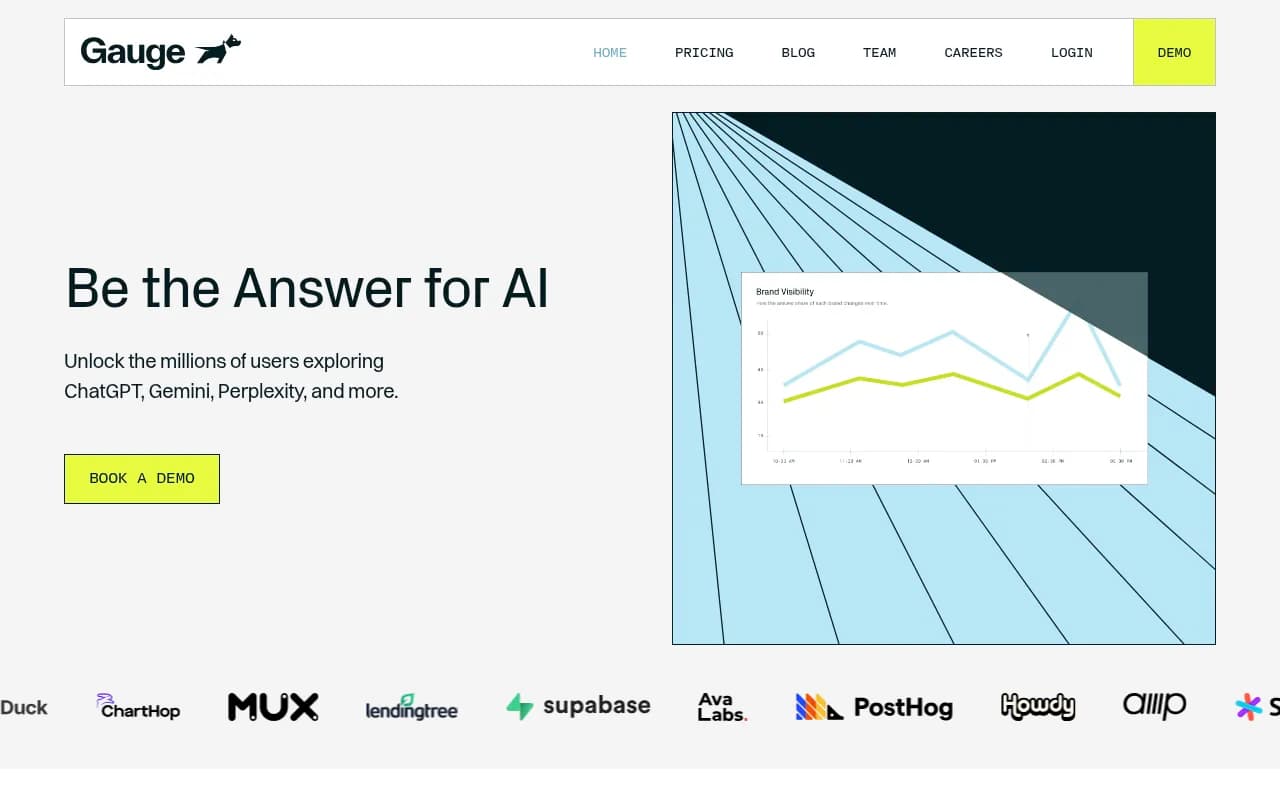
For the visibility product there are two options: one self-serve plan and a custom Enterprise tier. No tiers in between. That is unusual in a category where most vendors publish three or four plans, and it means your budget conversation starts at $599.
Gauge Growth: what the $599 includes
Per Gauge's pricing page (scraped in November 2026), Growth includes:
- 600 prompts, run daily, which Gauge counts as 54,000 answers a month
- 3 platforms: ChatGPT, Google AI Mode, Microsoft Copilot
- 18 publish-ready articles a month from its content engine
- 3 seats, email and Slack support
- Unlimited Ask Gauge agent chats, unlimited domains and competitors, one location
- GA4, Search Console and DataForSEO integrations
- Publishing to Webflow, Framer, Sanity and GitHub
Optional Claude and Grok tracking works on any plan if you bring your own Anthropic or xAI API key. The provider bills you directly for those runs, so the real cost is a bit above $599 if you use them.
Checking the penny-per-answer claim
The math holds up. 600 prompts across 3 platforms for 30 days is 54,000 answers. $599 divided by 54,000 is about $0.011 each. Gauge's argument is that cheaper-looking tools cost more per answer. For raw sampling volume, that is true.
Two caveats. First, you pay for answers you may not need. Most teams do not have 600 prompts worth tracking daily. Second, Promptwatch Data on ChatGPT query fanouts shows average fanouts per response fell from 2.15 in early December to about 1.84 by early March, while average query length dropped from roughly 117 characters to about 53. ChatGPT is running shorter, keyword-like searches under the hood. Whether your pages match those queries can matter more than how many prompts you sample.
What is not in the $599
This is where the price gets more complicated.
- Perplexity, Gemini and Google AI Overviews are Enterprise-only on Gauge. That is a notable gap if your buyers use Perplexity or you care about AI Overviews.
- Sentiment analysis and exports are listed as Enterprise additions.
- One location only. Multi-location brands need a custom quote.
- Only 3 seats.
One customer quote on Gauge's own pricing page, from Compt's VP Marketing, calls it "the most expensive tool we have." Gauge puts that up as a testimonial, presumably because the person went on to say it pays for itself. Still, it tells you how the price lands.
If you want the ads angle: Gauge sells ChatGPT ads data as a feature, according to Mentionova's comparison. Promptwatch Data's ChatGPT ads report found ads in an average of 20.1% of web-searching ChatGPT responses over May 20 to August 17, 2026, with the 7-day average at 32.4%. That is large enough that ads data is no longer a gimmick.
Gauge Agents pricing
Gauge Agents is separate. There is a free hosted plan with 500 credits at signup and then 100 credits a week, paid plans from $499 a month, and a free open-source local CLI that needs Docker plus your own Claude Code or Codex subscription. Unless you evaluate coding agents, you can ignore it when comparing visibility tools.
How Gauge compares on price
| Tool | Entry price | Prompts at entry | Engines at entry | Cadence |
|---|---|---|---|---|
| Gauge Growth | $599/mo | 600 | ChatGPT, AI Mode, Copilot | Daily |
| Profound Lite | $499/mo (per Cintra) | 100 | Varies | Daily |
| Mentionova Starter | $125/mo ($99 annual) | 25 | ChatGPT, Perplexity, Google | Weekly by default |
| Mentionova Scale | $400/mo ($320 annual) | 100 | 6 engines incl. Claude, Gemini, Reddit | Weekly by default |
| Get AI Cited | From $79/mo | Not confirmed | Not confirmed | Not confirmed |
| Promptwatch Essential | $95/mo | 50 | All supported models | Daily |
| Promptwatch Professional | $245/mo | 150 | All supported models | Daily |
| Promptwatch Business | $579/mo | 350 | All supported models | Daily to hourly |
Caveat on the table: Profound, Mentionova and Get AI Cited numbers come from vendor and review pages, and I did not verify them independently. Promptwatch prices are from its pricing page; confirm at promptwatch.com/pricing.
Cintra's take is that Gauge Growth gives 6x the volume of Profound Lite for a slightly higher price. On volume per dollar, that reads right. Whether you need that volume is the actual question.

Mentionova's comparison page is worth reading for the pricing detail, with the obvious caveat that Mentionova is a competitor. It also says plainly where Gauge is the better buy, which is more candor than most vendor comparisons manage.
Alternatives that give more per dollar
"More per dollar" depends on what you count. Here are the options sorted by what they do best.
If you want the full loop, not just a dashboard
Promptwatch is an end-to-end AI visibility platform. It monitors real ChatGPT, Gemini, Perplexity, AI Overviews, AI Mode, Copilot and other interfaces, traces where answers come from, and then helps you fix gaps with the Action Board, content gap analysis and (on Business) the Content Agent, which can publish to WordPress, Webflow or Framer. IP-verified AI crawler logs and visitor analytics then show whether the new pages get read, cited and clicked.

The price comparison against Gauge is straightforward. Business at $579 a month is slightly under Gauge's $599 and includes 350 prompts, 10 AEO articles, state and city tracking, local GEO targeting at exact coordinates, Fact Check, ChatGPT Shopping, Ads Radar and hourly tracking. Every plan tracks all supported models, so you do not hit a wall where Perplexity or Gemini needs a custom quote. Gauge gives you more raw prompts and 18 articles; Promptwatch gives you more engines, more analysis layers and crawler data. If you are smaller, Essential at $95 and Professional at $245 sit far below Gauge's floor. There is a 7-day free trial on monthly billing, and a free AI visibility report if you want to test before paying. Agencies should look at the Kick-off, Growth and Scale plans from $199.
For more detail, see the Promptwatch comparison page.
If you want the cheapest entry point
Mentionova starts at $99 a month billed annually for 25 prompts. It adds briefs, CMS drafts and Reddit reply drafts.

The trade-off is volume and cadence. 25 prompts run weekly is a spot check, not a daily series. Fine for a small brand getting started. Not a Gauge replacement for a team that wants trend lines.
Other low-cost options in the catalog include Otterly.AI, Peec AI and Airefs for monitoring-first budgets.


If you want an enterprise-grade competitor
Profound is the usual comparison. Per Cintra, Profound Lite costs $499 a month and limits you to 100 daily prompts.

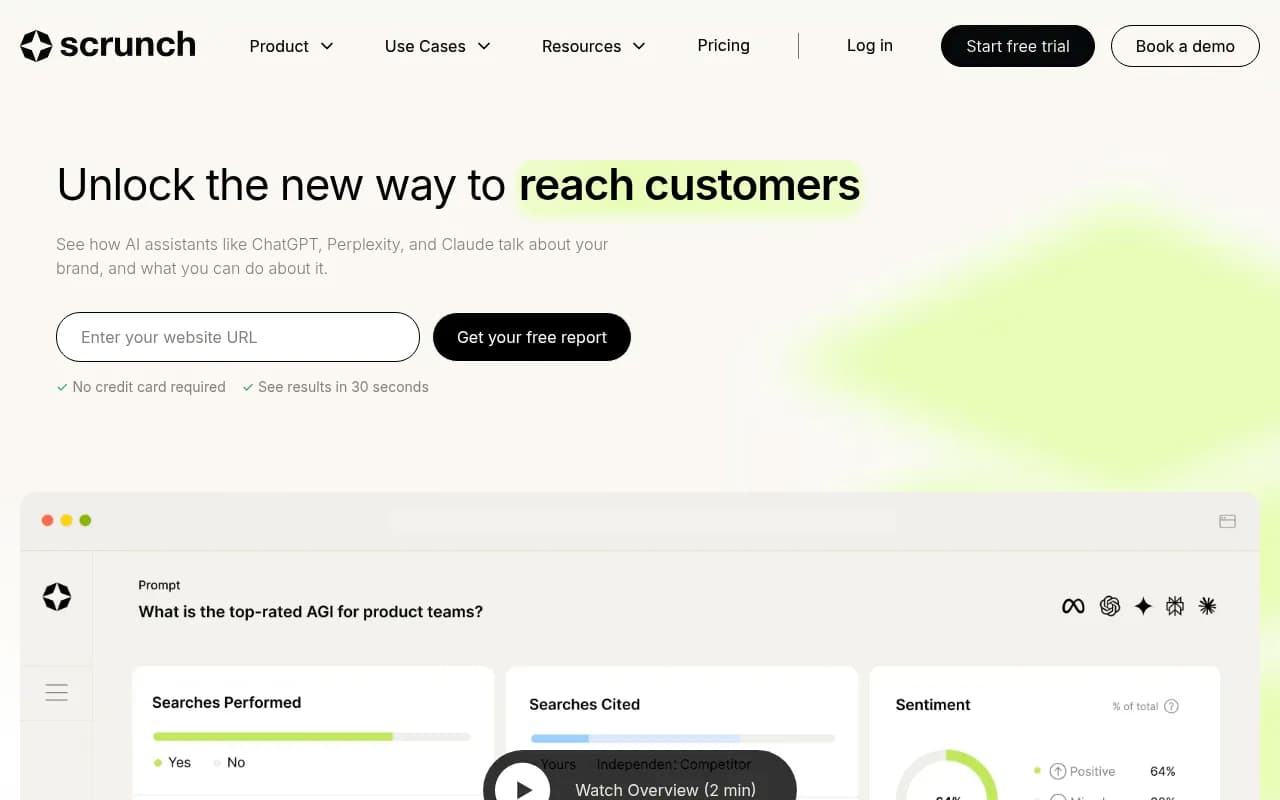
Scrunch and AthenaHQ also play in the same neighborhood, with monitoring depth but higher price points than the budget crowd.

If you only need generic SEO plus AI tracking
Semrush and SE Ranking bolt AI tracking onto a broader SEO suite. G2 lists Semrush and SE Ranking among Gauge's "alternatives," along with Birdeye, Meltwater and Writesonic. Treat that list with suspicion. Gauge has just 4 G2 reviews (4.8 average), and several of the listed tools are general marketing categories, not close AEO matches.

How to decide: a short checklist
- Count the prompts you would actually track. If it is under 150, Gauge's 600 is surplus capacity you pay for.
- List the engines your buyers use. If Perplexity or Gemini matter, Gauge Growth does not cover them.
- Decide whether you want to write and publish. Gauge includes 18 articles. Tools with an agent and a publishing pipeline can do more of the work, then show whether it moved citations.
- Check whether you need crawler logs and AI traffic data. If you cannot tell whether AI bots read your pages, tracking prompts is only half the picture.
- Ask about seats and locations. Gauge's 3 seats and single location can bite agencies and multi-location brands.
A sample comparison scenario
Imagine a 10-person SaaS marketing team tracking 120 prompts. On Gauge they pay $599 for capacity they use a fifth of, and they still lack Perplexity and Gemini. On Promptwatch Professional ($245, 150 prompts, all models, daily) they spend less than half and cover more engines, though they get 5 articles instead of 18. Whether that trade-off wins depends on how much content they produce in-house.
A note on timing
Promptwatch's pricing page showed a Black Friday banner offering 30% off through November 30 (23:59 CET) at the time of research. Annual billing on most tools in this space also brings roughly two months free. If you are buying this month, compare effective prices, not list prices.
Where to browse more options
If you want to widen the shortlist, the GEO software directory at bestgeosoftware.com lists dozens of trackers with pricing context, and ai-rank-tools.com focuses on AI rank trackers.
AI Growth Agent splits tools into monitoring platforms and content engines, which is a useful lens even if you take its own recommendations with salt.
Verdict
Gauge Growth is a reasonable buy if you want high-volume daily sampling on ChatGPT, AI Mode and Copilot, and you have budget for $599 a month with a single location and no Perplexity or Gemini. It is a poor fit for small teams, multi-location brands, or anyone who needs sentiment and exports without a custom quote.
For most buyers, the better value is a tool that matches their real prompt count, covers all the engines their customers use, and goes beyond dashboards to help fix gaps. Start with a trial, track the same 50 to 100 prompts in two tools for a week, and compare what you learn, not what you are billed.