Key takeaways
- Developer tool discovery is moving from Google and Hacker News into coding agents and AI search. The agent often picks the tool before a human reads a single landing page.
- Promptwatch Data shows ChatGPT's software citations skew toward docs, GitHub, and review sites. Vendor docs and help centers form the largest group (2.64% of software citations in the sample).
- Social posts matter very differently by engine: YouTube dominates Google AI Overviews, Reddit and LinkedIn lead on Perplexity, and ChatGPT barely cites social at all.
- Your docs, your repo, and your crawler access are now marketing assets. If AI bots cannot read them, you are invisible at the moment of choice.
- Measure it: track prompts, citations, AI crawler logs, and AI-referred traffic, not just rankings.
Why the old developer funnel is breaking
The classic dev-tool playbook went like this: write a good blog post, rank for a problem keyword, get a Hacker News front-page moment, and let a developer sign up with a GitHub login. It still works in places. But a growing share of the decision happens somewhere you cannot see.
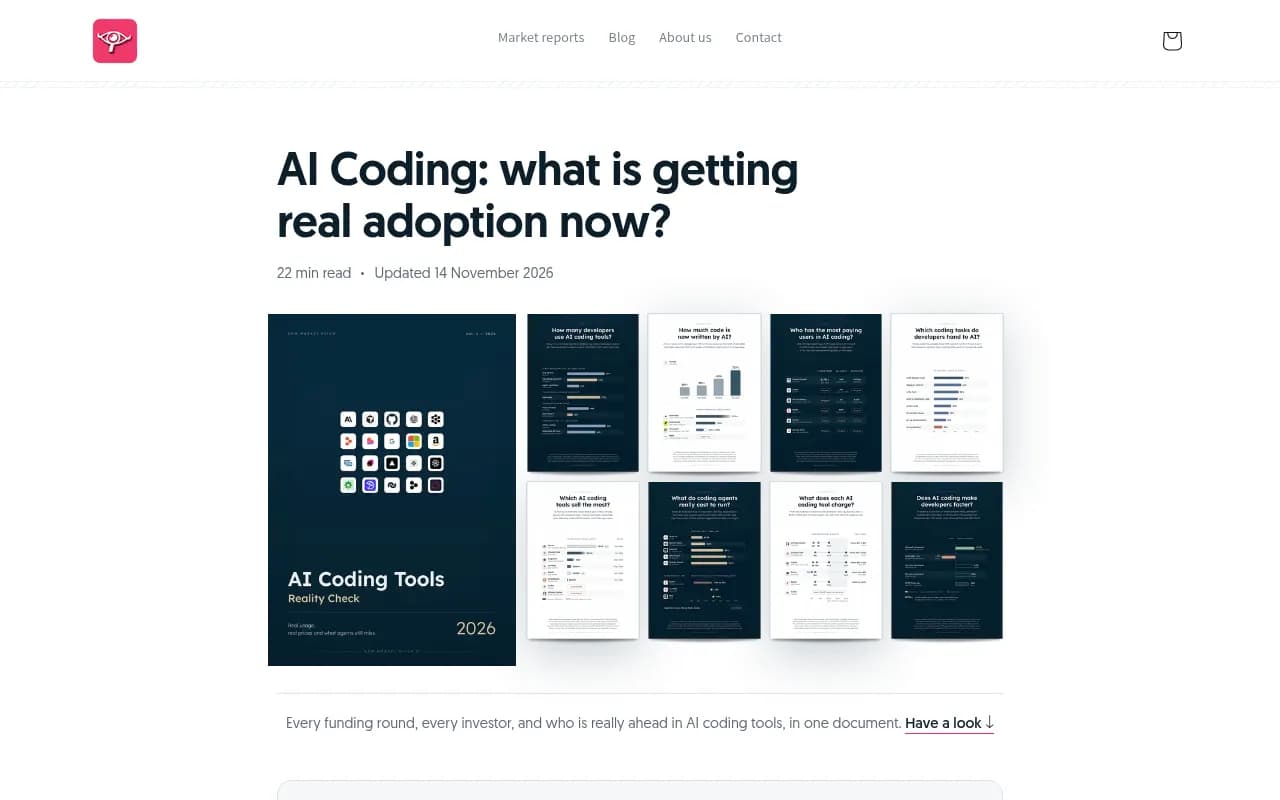
The adoption numbers explain why. According to a roundup from New Market Pitch, citing Stack Overflow's 2026 survey, 66% of developers use an AI coding assistant or agent at work, and 73% of those use it every day. The same report puts Claude Code's professional adoption at 18% in January 2026 and 39% by May to July 2026, and says Anthropic disclosed a run rate above $2.5 billion in February. I could not independently verify those figures, so treat them as directional. The direction is hard to argue with, though.
When a developer types "add auth to this app" or "which vector database should I use for this" into a terminal agent, the agent proposes a library, writes the integration, and moves on. The developer may never visit your pricing page. Your product either made the shortlist inside the model or it did not.
That is a different problem than ranking number three on Google. It is closer to being the default answer.
Three places discovery now happens
It helps to split the new discovery surface into three layers, because each one needs different work.
Coding agents and IDEs
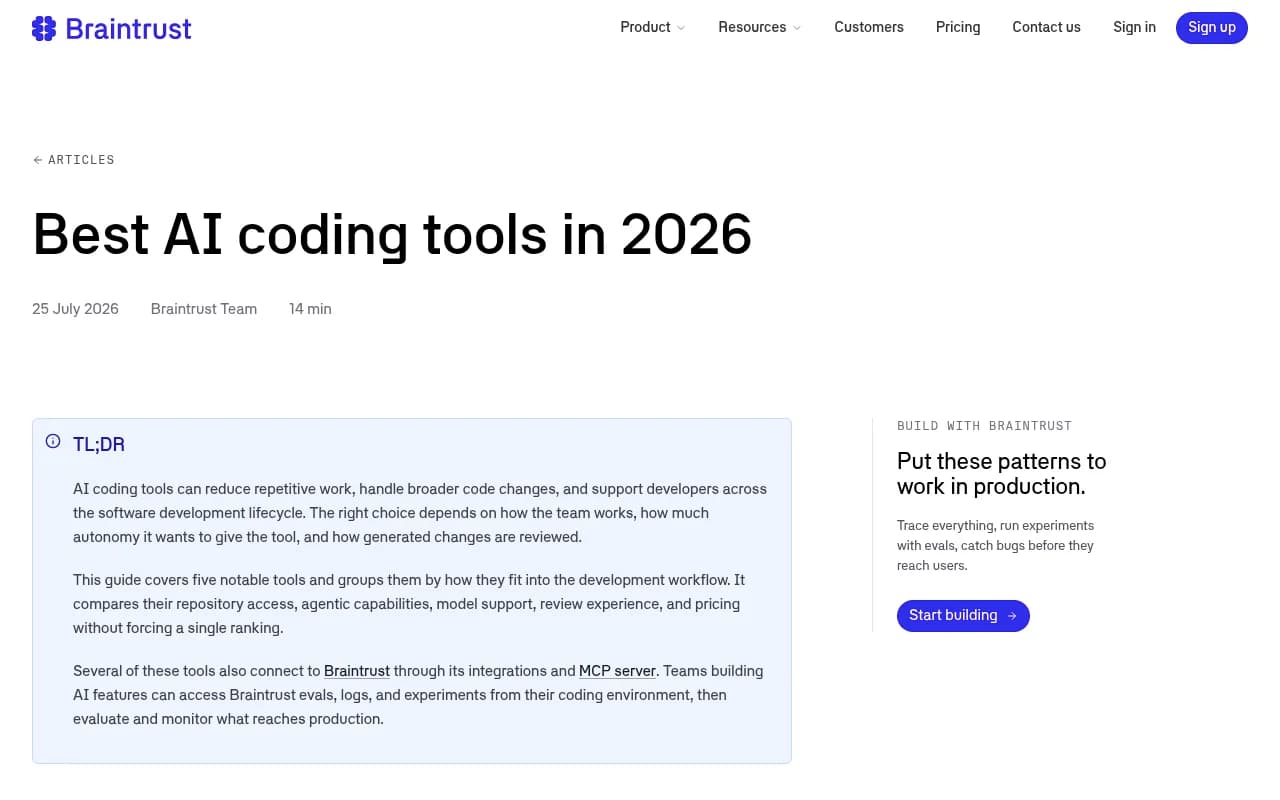
Braintrust's guide to AI coding tools in 2026 sorts them into three patterns: standalone AI editors like Cursor and Windsurf, extensions for existing IDEs like GitHub Copilot, and command-line or delegated agents like Claude Code and Codex. Each pattern recommends tools differently. An editor with codebase context leans on what is already in the project. A terminal agent leans on its training data, web search, and whatever docs it fetches mid-task.
If your product is an SDK, API, or CLI, how these agents describe and recommend it is now a channel. Tools like Promptwatch track how Codex, Claude Code, and OpenCode recommend tools, SDKs, and docs, which is the only systematic way I know of to see this.

AI search engines
The second layer is the plain old question typed into ChatGPT, Perplexity, Gemini, or Google AI Overviews: "best feature flag tool for a small team," "Postgres hosting comparison." These are the evaluation queries that used to land on a listicle or a G2 page. Now the answer is synthesized, with a handful of citations underneath.
Agent-built workflows
The third layer is the strangest. Marketers and growth teams are themselves using Claude Code to build lead gen systems. Eric Nowoslawski's July 2026 video on lead generation with Claude Code claims his team gets 200 to 300 positive cold email responses a day for customers using agentic workflows, waterfall company sourcing, and skills files. That is his claim and a sales pitch for his agency, so weigh it accordingly. But the practical point stands: your outbound competitors are automating, and the people receiving that outreach are developers who have also learned to delegate everything to agents.
The consequence for dev-tool marketing: cold outreach gets noisier while agent recommendations get more decisive. That tilts the value toward being the thing the agent already knows.
What AI search actually cites for software
Here is where I would stop guessing and look at data. Promptwatch Data analyzed organic software prompts in ChatGPT from Sep 28 to Oct 4, 2026, in its Most Cited Sites in ChatGPT for Software-Related Prompts report.
| Source type | Share of software citations (23 domains charted) |
|---|---|
| Docs and help centers | 2.64% |
| Vendor sites | 2.01% |
| Review sites and analysts (G2, Gartner, Capterra, Software Advice) | 1.57% |
| GitHub | 1.2% |
| App stores | 0.47% |
A few things jump out. GitHub is the single most cited domain at 1.2%, followed by learn.microsoft.com at 0.98% and G2 at 0.73%. Vendor pages and docs together earn 4.65%, roughly three times what review sites and analysts earn. Yet the review sites combined still outrank any single vendor, Microsoft included.
The numbers look small because they are shares of all software citations spread over a long tail. The ordering is what matters.
Translate that into work:
- Docs are your best-performing marketing page. Make them crawlable, fast, and written to answer comparison and how-to questions, not just reference calls.
- A public GitHub presence is a citation source in its own right for developer tools.
- G2 and Capterra profiles are not vanity. Keep them complete and current, because ChatGPT leans on them for "best X" prompts.
- Your own site should be the main source. Everything else is supporting.
Other Promptwatch Data reports point the same way. Product pages are the most cited content type in ChatGPT at 22.4% of citations (Sep 28 to Oct 4, 2026), and in the content half-life study, landing pages and docs stayed cited longest while news lost half its pages within 36 days. Evergreen docs beat launch-week blog posts for staying power.
Social channels: it depends on the engine
Developers love Reddit threads and YouTube tutorials, and marketers have rushed to seed both. The data says to be more selective. Promptwatch's Social Media Citations by AI Model report for November 2026 (Oct 11 to Nov 9, 2026) shows social platforms as a share of each engine's citations:
| Engine | Social share of citations | Top platform |
|---|---|---|
| Google AI Overviews | 13.16% | YouTube (6.71%) |
| Perplexity | 1.94% | Reddit (0.82%) |
| ChatGPT | 0.64% | Reddit (0.40%) |
One caveat: the October comparison window was 7 days and the November one was 30, so month-over-month shifts are rough. Even so, YouTube alone in AI Overviews outweighs the other six tracked platforms combined. LinkedIn dropped from 1.55% to 0.78% there. On ChatGPT, social is close to irrelevant: the earlier October report had it at 0.46%, and Reddit's share fell from about 4% to 0.5% on August 14, 2026 before partly recovering.
My read: if your buyers search on Google, a good YouTube walkthrough of your product is worth more than another Reddit campaign. If they use Perplexity, Reddit and LinkedIn are the places to show up. If they live in ChatGPT, own-site content does most of the work. Skip X.
Crawler access is a marketing problem now
Here is the unglamorous part. Many developer-focused sites sit behind aggressive Cloudflare or WAF rules, or block AI bots in robots.txt because someone read a scary thread in 2024. Then the same company wonders why ChatGPT recommends a competitor.
Promptwatch Data's AI Crawler Traffic report tracked IP-verified requests from June 8 to Sep 6, 2026. OpenAI accounted for 79.8% of verified AI crawler requests in the week of Aug 31 to Sep 6, down from 94.8% in the week of Jun 8 to 14, as Anthropic, Google, Perplexity, and Mistral traffic grew. And the Meta-WebIndexer data shows one crawler going from about 2% to nearly 38% of tracked requests in under a month. The mix shifts fast.
A simple audit:
- Check robots.txt, CDN, and WAF rules for each AI provider, not just GPTBot.
- Compare your server logs to the public mix. If a provider that is a big share in the report is near zero on your site, you are probably blocked.
- Confirm your docs render without JavaScript tricks that bots cannot execute.
- Do not bother building a markdown-only shadow site for search. Markdown files make up just 0.05% of AI search citations, because markdown serves agents, not AI search.
For the crawler side specifically, Promptwatch's AI crawler logs show IP-verified visits and the path from crawl to citation. DarkVisitors is another option focused on tracking agents and bots on your site.
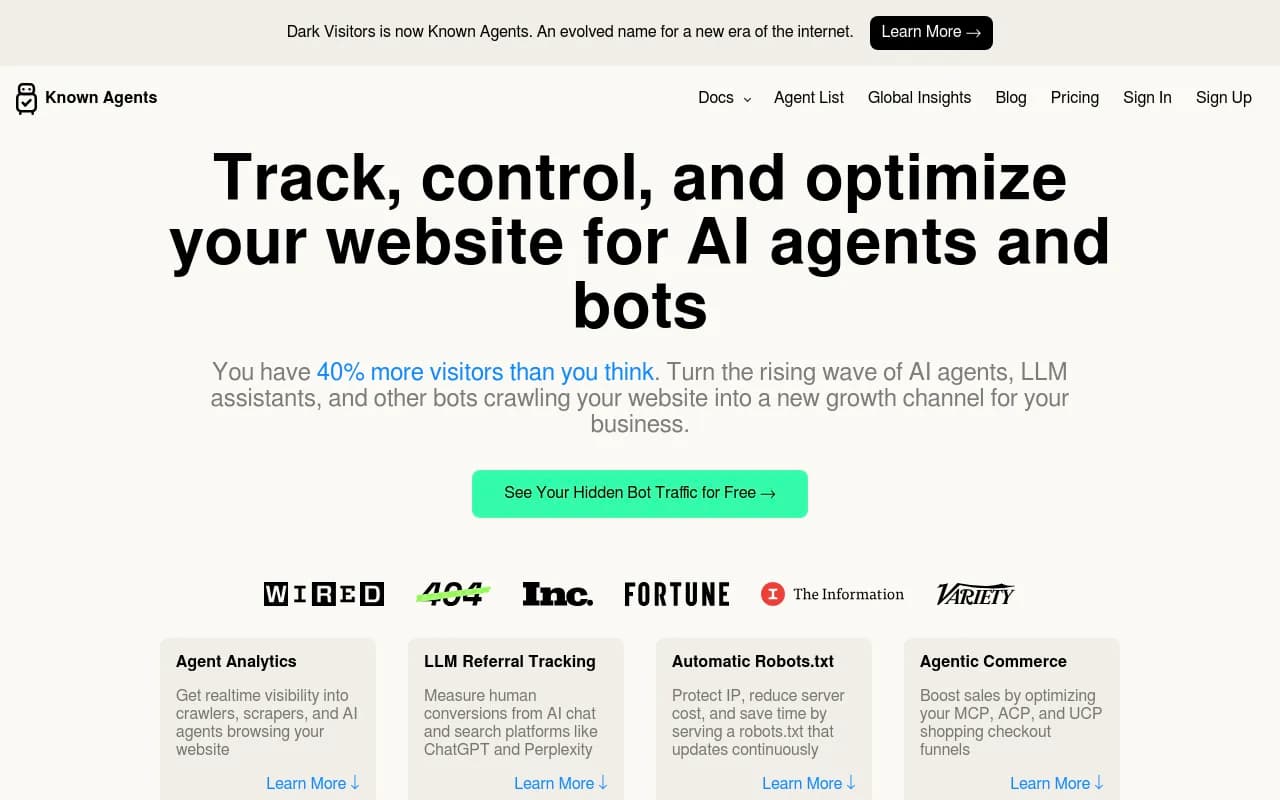
The free Agentic Readiness Check is a decent first pass for which AI crawlers can read you and whether you support standards like llms.txt.
Practical playbook for dev-tool marketers
1. Write docs like landing pages
Structure each docs page around a question an agent or a human would ask: "how to add rate limiting to a Node API," "X vs Y for event streaming." Include comparison tables, honest limitations, and copy-pasteable code. Agents quote what they can parse cleanly.
2. Track the prompts your buyers actually use
Build a prompt set from real evaluation queries: category prompts, competitor comparisons, and integration questions. Use Search Console queries and People Also Ask for ideas. Then run them across ChatGPT, Gemini, Perplexity, AI Overviews, and the coding agents, and note who gets named and cited. Promptwatch's prompt tracking does this on real interfaces rather than just APIs, which matters because user-facing answers can differ from API output. For a broader view of the category, the directory at bestgeosoftware.com lists alternatives.
3. Fix what AI says about you
Agents repeat claims: "no free tier," "poor TypeScript support," "hard to self-host." Some of those are stale. Find the pages teaching the wrong thing and update them. Promptwatch's Brand Narrative pulls the individual claims out of responses, and Fact Check points to the source pages, but even a manual review of 50 responses will show you the pattern.
4. Keep third-party profiles clean
Set an owner for G2, Capterra, GitHub README, package registry pages, and app store listings. They are boring. They are also in the citation list.
5. Close the loop with traffic data
AI-referred visitors are a small slice for most dev tools, but they tend to be high intent. Watch the fine print: ChatGPT stopped sending a referrer on October 8, 2026, so unattributed direct traffic may be hiding AI visits. Tagging links with utm_source=chatgpt.com where you control them, and using a visitor analytics setup that can count tagged visits, recovers some of it. Promptwatch's guide to attributing AI traffic walks through the setup.
Tool options by job
| Job | Example tools | Notes |
|---|---|---|
| End-to-end AI visibility, content, crawler logs, traffic | Promptwatch | Tracks coding agents too; Content Agent publishes to WordPress, Webflow, Framer |
| Prompt and citation monitoring | Profound, Peec AI, Otterly.AI | Mostly dashboards; check for crawler logs and content tooling |
| Bot and agent tracking | DarkVisitors | Narrow focus on agents visiting your site |
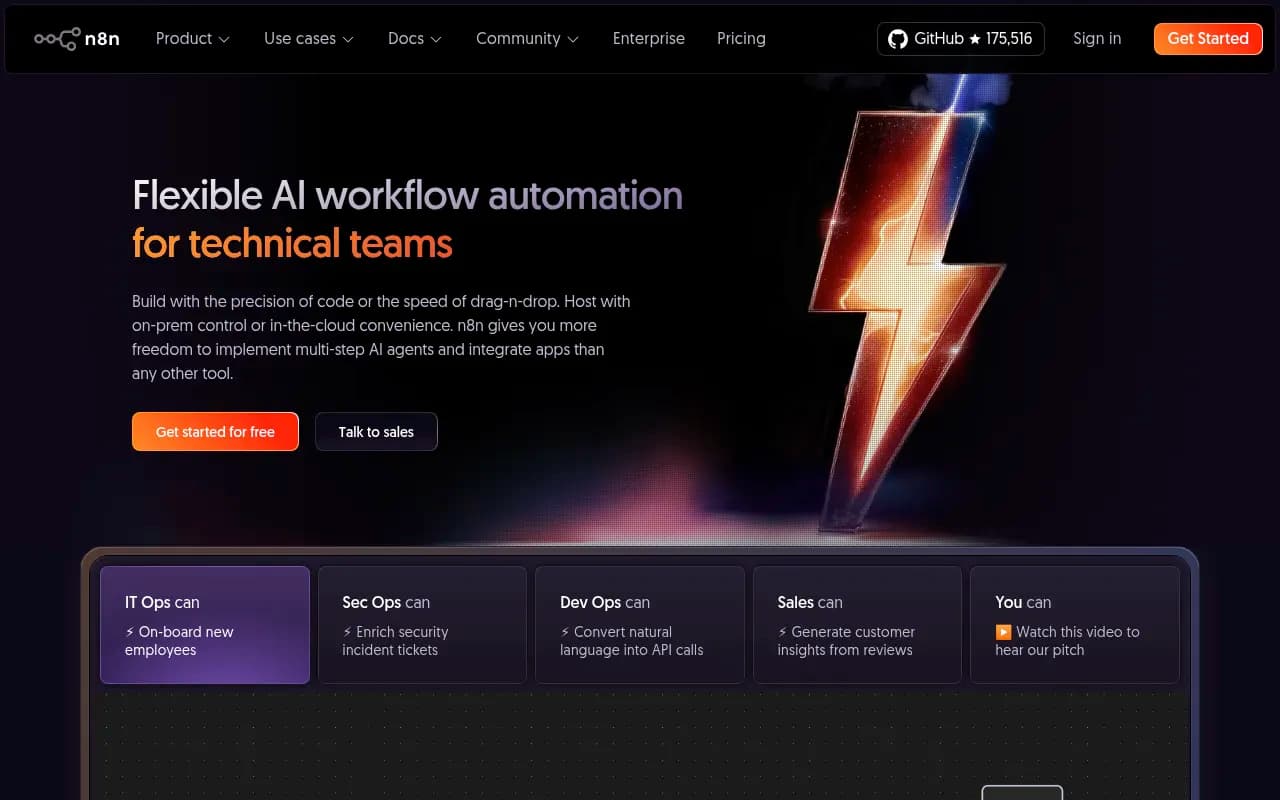
| Automating outbound and workflows | n8n, Zapier | Glue for agent-built lead gen |
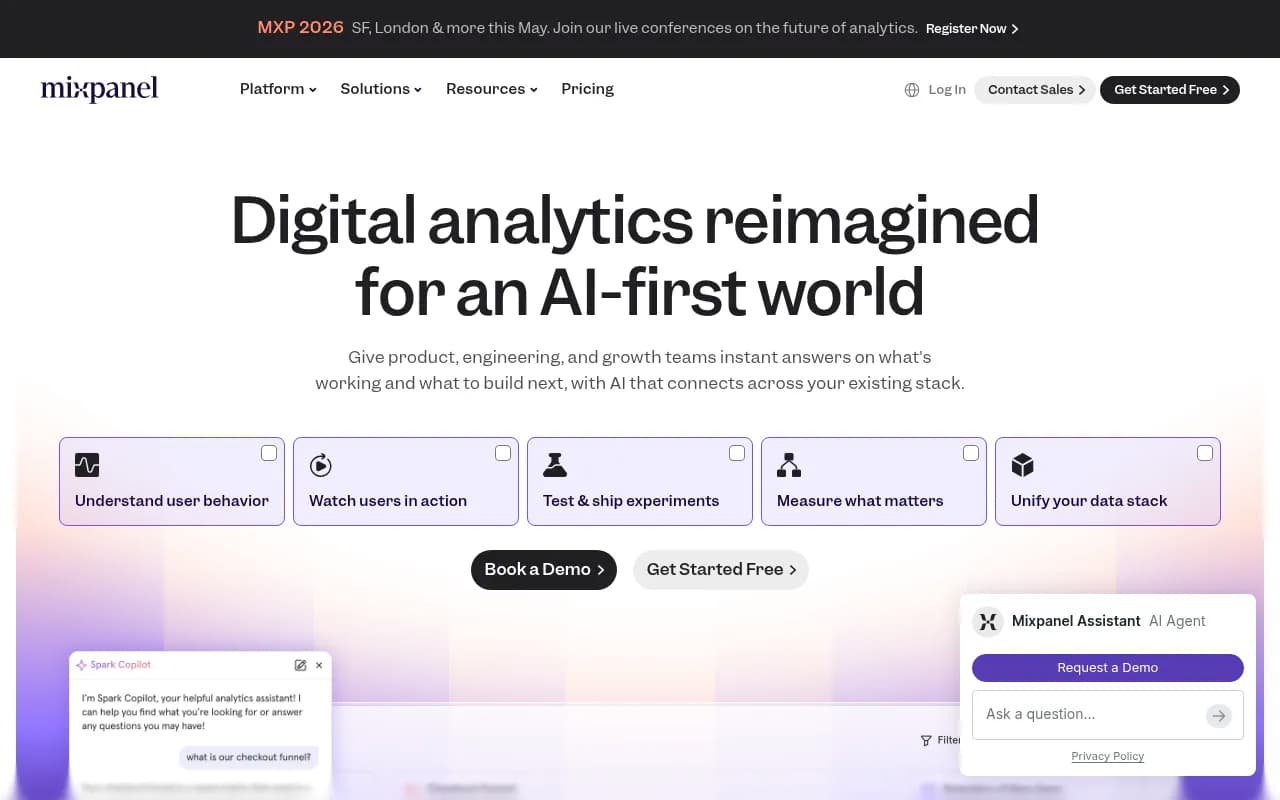
| Product analytics after signup | Mixpanel, Amplitude | See what AI-referred users do next |



If you want a side-by-side of the monitoring tools, the GEO platform comparison and the rank-tracker directory at ai-rank-tools.com are good starting points. Pricing for Promptwatch starts at $95/mo for Essential, but confirm current plans at promptwatch.com/pricing; there is also a 7-day free trial and a free AI visibility report.
What I would not do
I would not chase every new surface. Agents, skills files, MCP servers, and llms.txt files all get hyped. Some of them will matter. Most of the proven citation volume today still goes to ordinary web pages: docs, product pages, GitHub, and review sites.
I also would not trust any single adoption statistic from this fast-moving space, including the ones above. The survey figures and run rates come from secondary sources and company disclosures. The pattern across them is consistent, but the exact percentages will be stale by spring.
And I would not abandon classic channels. Communities, conference talks, and word of mouth still shape what developers type into the agent in the first place. What changed is that the agent now sits between your reputation and the purchase.
A 30-day starter plan
- Week 1: Audit crawler access and robots.txt for all major AI bots. Fix blocks.
- Week 2: Build a 30 to 50 prompt set from real buyer questions. Record a baseline of who gets named and cited.
- Week 3: Rewrite your five most important docs and comparison pages. Update G2, Capterra, and GitHub profiles.
- Week 4: Publish one YouTube walkthrough and one honest comparison page. Re-run the prompt set and compare.
Then repeat. The teams that treat AI discovery as an ongoing loop, rather than a one-time SEO project, are the ones getting recommended by default.
For more background on the research behind these numbers, browse the full Promptwatch Data hub.