Summary
- ChatGPT dominates conversational queries and creative tasks -- prioritize it if your brand serves consumers looking for recommendations, how-tos, or product comparisons
- Perplexity excels at research and fact-checking -- focus here if you're in B2B, SaaS, or any industry where users need sourced, verifiable information
- Claude wins on nuanced, long-form content analysis -- ideal for technical documentation, legal content, and complex explanations
- Visibility across prompts matters more than citation rank -- appearing in 100 prompts at position 3 beats appearing in 10 prompts at position 1
- Start with one platform, master it, then expand -- spreading thin across all three dilutes your effort and makes tracking ROI nearly impossible
The AI visibility landscape has split into three distinct ecosystems
A year ago, optimizing for AI search meant throwing content at ChatGPT and hoping it stuck. That's no longer the case. ChatGPT, Perplexity, and Claude have evolved into fundamentally different platforms with distinct user bases, citation behaviors, and content preferences.
The question isn't whether you should optimize for AI visibility -- you should. The question is which platform deserves your attention first. Spreading resources across all three is a recipe for mediocre results everywhere. You need to pick one, understand its mechanics, and dominate it before moving to the next.
This guide breaks down the citation patterns, user intent, and optimization strategies for each platform. By the end, you'll know exactly where to focus based on your industry, content type, and resources.
Understanding how each platform actually works
ChatGPT: The conversational recommendation engine
ChatGPT is where people go when they want a conversation, not a list of links. Users ask open-ended questions like "What's the best project management tool for a remote team?" or "How do I fix a leaky faucet?" They expect a direct answer with context, not a search results page.
Citation behavior: ChatGPT cites sources inconsistently. Sometimes it links to the exact page it pulled information from. Other times it synthesizes information from multiple sources without attribution. When it does cite, it favors:
- High-authority domains (think .edu, .gov, established media)
- Content with clear, structured answers (FAQ formats, step-by-step guides)
- Recent content (anything published in the last 6-12 months gets a boost)
User intent: ChatGPT users are looking for recommendations, explanations, and creative solutions. They're not fact-checking or deep-diving into research papers. They want actionable advice delivered in a conversational tone.
Who should prioritize ChatGPT:
- Consumer brands (e-commerce, travel, food, lifestyle)
- Service providers (agencies, consultants, freelancers)
- SaaS companies targeting small businesses or individuals
- Anyone selling products that require recommendations or comparisons
Perplexity: The research assistant that shows its work
Perplexity is ChatGPT's more serious sibling. It's built for users who want answers but also want to verify those answers. Every response includes inline citations linking directly to source material. Users can click through to read the original content, which means Perplexity drives actual traffic -- not just visibility.
Citation behavior: Perplexity is citation-heavy by design. It pulls from a mix of web sources, academic papers, news articles, and technical documentation. Key patterns:
- Cites 3-5 sources per response on average
- Favors authoritative, well-structured content with clear headings
- Prioritizes recency for news and trends, but values evergreen content for technical topics
- Includes Reddit threads and forum discussions when relevant
User intent: Perplexity users are doing research. They're comparing vendors, fact-checking claims, or diving deep into a topic. They're more likely to be in a B2B buying cycle or conducting competitive analysis.
Who should prioritize Perplexity:
- B2B SaaS companies
- Technical service providers (dev tools, infrastructure, security)
- Research-heavy industries (finance, healthcare, legal)
- Anyone competing on data, case studies, or thought leadership
Claude: The nuanced analyst for complex content
Claude is the platform people turn to when they need help with long-form content, technical documentation, or nuanced analysis. It's less about quick answers and more about deep understanding. Users paste in entire documents, ask for summaries, or request detailed critiques.
Citation behavior: Claude doesn't cite sources in the traditional sense. It's not a search engine. Instead, it references the content you provide directly in the conversation. This makes it harder to "rank" in Claude the way you would in ChatGPT or Perplexity. Instead, visibility in Claude comes from:
- Being the document users upload for analysis
- Having content that's referenced in user prompts
- Being mentioned in conversations as a trusted source
User intent: Claude users are working on complex projects. They're writing reports, analyzing contracts, debugging code, or refining creative work. They're not browsing -- they're collaborating with the AI.
Who should prioritize Claude:
- Technical documentation providers
- Legal and compliance content creators
- Academic and research institutions
- Anyone producing long-form, nuanced content that requires deep analysis
The data: What actually drives AI visibility
A 2025 analysis of citation patterns across ChatGPT, Claude, and Perplexity revealed something counterintuitive: appearing in more prompts matters more than your citation rank within a single prompt.
Here's what that means in practice:
| Metric | Brand A | Brand B |
|---|---|---|
| Total prompts cited | 100 | 10 |
| Average citation rank | 3rd | 1st |
| Total visibility score | 300 | 10 |
| Estimated traffic impact | High | Low |
Brand A appears in 100 different prompts at an average rank of 3. Brand B dominates 10 prompts but appears nowhere else. Brand A wins on total visibility because it's capturing a wider range of user intents.
This has massive implications for your content strategy. Instead of obsessing over ranking first for a handful of high-value prompts, you should aim for consistent visibility across a broad set of related prompts. That means:
- Creating topic clusters, not isolated articles
- Covering adjacent use cases and edge cases
- Building content that answers follow-up questions
- Optimizing for long-tail, conversational queries
How to choose your starting platform
Here's a decision framework based on your industry and content type:
Start with ChatGPT if:
- Your customers are consumers, not businesses
- You sell products or services that require recommendations ("What's the best...")
- Your content is conversational, actionable, and practical
- You have a strong blog or content library with how-tos, guides, and comparisons
Example: An e-commerce brand selling outdoor gear should prioritize ChatGPT. Users ask questions like "What hiking boots are best for beginners?" or "How do I choose a camping tent?" ChatGPT is where those conversations happen.
Start with Perplexity if:
- Your customers are businesses or professionals
- You compete on data, research, or thought leadership
- Your content includes case studies, whitepapers, or technical documentation
- You want to drive actual traffic, not just visibility
Example: A B2B SaaS company selling marketing automation software should prioritize Perplexity. Users ask questions like "What's the ROI of marketing automation?" or "How does HubSpot compare to Marketo?" Perplexity's citation-heavy format drives qualified traffic.
Start with Claude if:
- Your content is long-form, technical, or nuanced
- You produce documentation, legal content, or academic research
- Your audience uses AI to analyze or refine existing content, not search for new content
Example: A legal tech company providing contract templates should prioritize Claude. Users upload contracts for analysis, and Claude references trusted sources. Visibility comes from being the go-to resource users reference in their prompts.
Optimization strategies for each platform
Optimizing for ChatGPT
-
Write conversationally: ChatGPT favors content that sounds like a human wrote it for another human. Avoid jargon, use short paragraphs, and answer questions directly.
-
Structure for scannability: Use headings, bullet points, and numbered lists. ChatGPT pulls structured content more reliably than dense paragraphs.
-
Cover the full question spectrum: Don't just answer "What is X?" -- also answer "How does X work?", "Why should I use X?", and "What are alternatives to X?"
-
Update frequently: ChatGPT prioritizes recent content. Refresh your top-performing articles every 3-6 months with new data, examples, or insights.
-
Use schema markup: Structured data helps ChatGPT understand your content. Implement FAQ schema, HowTo schema, and Product schema where relevant.

Optimizing for Perplexity
-
Cite your sources: Perplexity values content that references authoritative sources. Link to studies, reports, and data wherever possible.
-
Write for researchers: Perplexity users want depth. Don't skim the surface -- provide detailed analysis, comparisons, and context.
-
Optimize for follow-up questions: Perplexity conversations often involve multiple queries. Structure your content to answer the initial question and the likely follow-ups.
-
Leverage Reddit and forums: Perplexity cites Reddit threads and forum discussions more than ChatGPT. Participate in relevant communities and link back to your content.
-
Focus on evergreen topics: Perplexity's citation model favors content that remains relevant over time. Invest in comprehensive guides, not news articles.
Optimizing for Claude
-
Create reference-worthy content: Claude users don't search -- they reference. Your goal is to become the document users upload or the source they mention in prompts.
-
Write long-form, detailed content: Claude excels at analyzing complex material. Produce in-depth guides, technical documentation, and comprehensive reports.
-
Make content easy to copy and paste: Users often paste content into Claude for analysis. Use clear formatting, avoid paywalls, and make your content accessible.
-
Build authority in niche topics: Claude is used for specialized tasks. Dominate a specific niche rather than competing on broad topics.
Tools to track and optimize AI visibility
You can't improve what you don't measure. Here are the platforms that help you track how your brand appears across ChatGPT, Perplexity, and Claude:
| Tool | Best for | Key feature |
|---|---|---|
| Promptwatch | All-in-one tracking and optimization | Answer gap analysis shows exactly which prompts competitors rank for but you don't |
| Otterly.AI | Budget-conscious teams | Affordable monitoring across multiple AI platforms |
| Peec AI | Multi-language brands | Tracks AI visibility in 50+ languages |
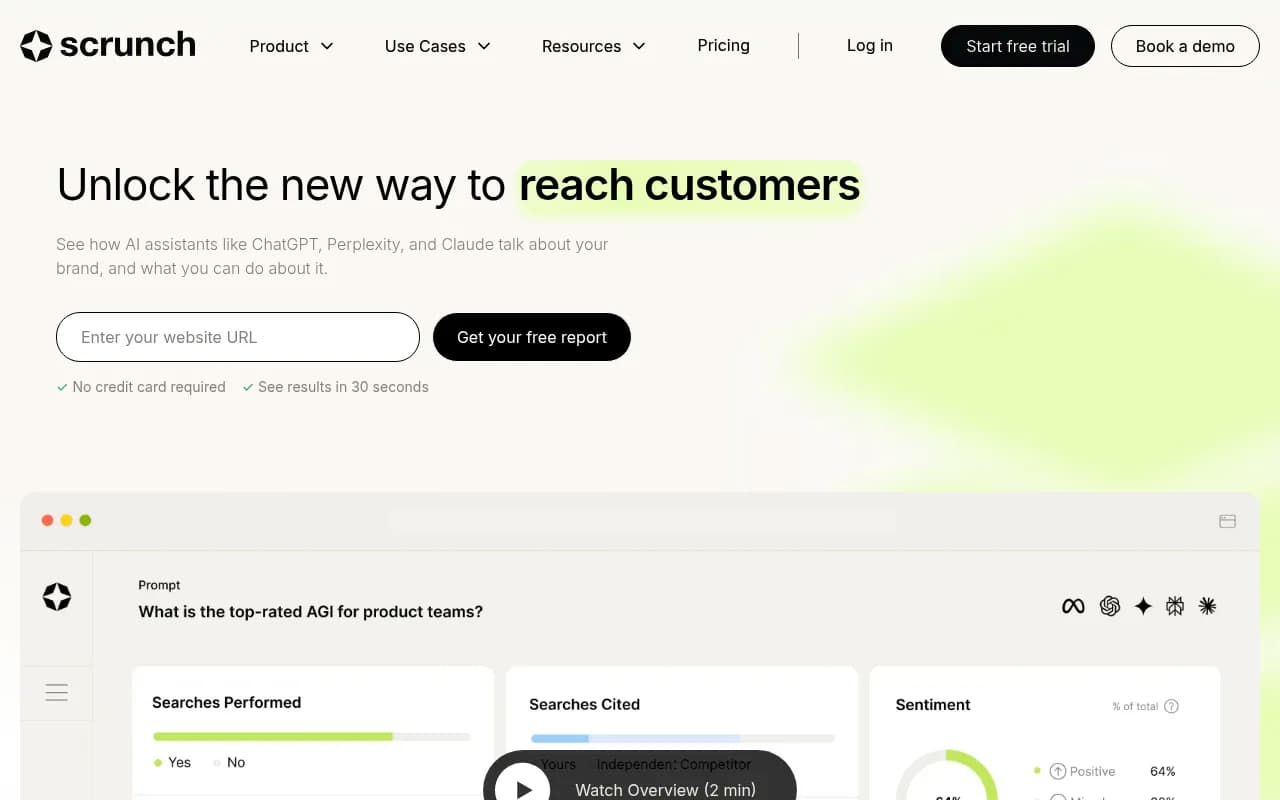
| Scrunch | Enterprise teams | Deep analytics and custom reporting |
Promptwatch is the only platform that goes beyond monitoring. It shows you where you're invisible, then helps you fix it with AI-generated content grounded in real citation data. Most competitors stop at showing you the problem.


The 90-day roadmap: How to dominate one platform before expanding
Month 1: Audit and baseline
- Choose your starting platform (ChatGPT, Perplexity, or Claude)
- Set up tracking with Promptwatch or a similar tool
- Run 50-100 prompts related to your industry and document where you appear
- Identify your top 3 competitors and track their visibility
- Create a spreadsheet of prompts where competitors appear but you don't
Month 2: Content creation and optimization
- Use the gap analysis to prioritize content creation
- Write or refresh 10-15 articles targeting high-value prompts
- Implement schema markup on all new and updated content
- Optimize existing content for conversational queries
- Publish at least 2 pieces per week
Month 3: Measurement and iteration
- Re-run your initial 50-100 prompts and measure visibility changes
- Track which content pieces are getting cited most often
- Identify patterns in what works (format, length, structure)
- Double down on high-performing content types
- Expand to adjacent prompts and topics
After 90 days, you should see measurable improvement in visibility on your chosen platform. Only then should you consider expanding to a second platform. Trying to optimize for all three simultaneously dilutes your effort and makes it impossible to isolate what's working.
Common mistakes that kill AI visibility
Mistake 1: Optimizing for all platforms at once
You don't have the resources to dominate ChatGPT, Perplexity, and Claude simultaneously. Pick one, master it, then expand. Spreading thin means you'll rank nowhere.
Mistake 2: Ignoring citation data
Most brands guess at what content to create. Use tools like Promptwatch to see exactly which prompts your competitors rank for. Create content that fills those gaps.
Mistake 3: Writing for search engines, not AI models
AI models don't care about keyword density or backlinks. They care about clear, structured, conversational content that directly answers questions. Stop writing for Google and start writing for humans (and the AI models that serve them).
Mistake 4: Treating AI visibility as a one-time project
AI models update constantly. Content that ranks today might not rank next month. Set up a recurring process to refresh content, track visibility, and adapt to changes.
Mistake 5: Focusing on vanity metrics
Being cited in ChatGPT feels good, but it doesn't matter if it's not driving traffic or conversions. Track the full funnel: visibility → traffic → leads → revenue. Most AI visibility tools stop at visibility.
The future: Multi-platform visibility is inevitable, but not yet
Eventually, you'll need to optimize for ChatGPT, Perplexity, Claude, and whatever comes next. But that's a 2027 problem, not a 2026 problem. Right now, the brands winning in AI search are the ones that pick one platform, understand its mechanics, and dominate it before expanding.
The mistake most companies make is trying to be everywhere at once. They spread their content budget across all three platforms, track nothing, and wonder why they're not seeing results. The brands that win are the ones that go deep on one platform, measure obsessively, and iterate fast.
Start with the platform that matches your audience and content type. Use tools like Promptwatch to track your progress. Create content that fills gaps. Measure what works. Then, and only then, expand to the next platform.
AI visibility is the new SEO. The brands that figure it out first will dominate the next decade of search. The brands that wait will be invisible.