Key takeaways
- AI assistants mostly describe your API from your docs, GitHub and review sites. Fix those sources first and the wrong answers usually follow.
- No tool I found is built specifically to detect hallucinated API endpoints. You combine a brand-level AI monitor with a manual endpoint test set.
- Brand-level AI visibility platforms catch wrong pricing and phantom features. Page-change monitors and LLM observability tools cover the other angles.
- Pricing across these tools varies widely, so compare prompts, models and refresh rate, not headline price.
- Run a monthly audit of 20 to 30 prompts covering pricing, endpoints, SDKs and competitor comparisons.
Why AI gets APIs wrong
Ask a chatbot how to authenticate against your API and you will get a confident answer. Sometimes it is right. Sometimes it names an endpoint you never built, quotes a pricing tier you retired two years ago, or credits you with a webhook feature that belongs to a competitor.
This is a different problem from the one developers usually write about. Speakeasy documented the agent-side version: their LangChain-based agent occasionally hallucinated non-existent endpoints like /winners/latest, and their Haystack agent did the same until they added more detailed descriptions to the OpenAPI document. That is about agents you build. This guide is about the reverse: what third-party AI systems tell your prospects and customers about your API.
The damage is quiet. A developer evaluating you asks ChatGPT, gets a wrong rate limit or a missing feature, and moves on. You never see that conversation. PageCrawl's write-up on brand hallucinations describes the same pattern: wrong pricing, phantom features, confused competitor comparisons and outdated descriptions are the norm for brands that have not looked, and teams usually find out by accident.
Where AI gets its API facts
Before picking tools, it helps to know what you are trying to fix. Promptwatch Data analysed software-related prompts in ChatGPT from Sep 28 to Oct 4, 2026. Docs and help centers earned the largest share of any source type at 2.64% of software citations, vendor sites 2.01%, review sites and analysts 1.57%, and GitHub 1.2%. GitHub was the single most cited software domain, followed by learn.microsoft.com and G2.
My reading, and it is an inference rather than something the report states: when AI describes your API, it is mostly summarising your docs, your repos and your G2 or Capterra profiles. So a wrong answer usually traces back to one of three things:
- A docs page that is stale, thin, or blocked from AI crawlers.
- A README or old repo that still describes a deprecated version.
- A review-site profile with old pricing or feature lists.
The tools below help you find the wrong answer. The fix almost always happens on those pages.
Four kinds of tools you need to know about
Nobody sells a single product called "API hallucination detector". What exists is four overlapping categories, and you will likely combine two.
| Category | What it answers | Catches hallucinated endpoints? | Examples |
|---|---|---|---|
| AI visibility and GEO platforms | What do ChatGPT, Gemini, Perplexity and AI Overviews say about us, and which sources do they cite? | Yes, if you track endpoint prompts and read the responses | Promptwatch, Profound, Peec AI, Scrunch |
| Hallucination-specific alerts | Does the answer contradict our known facts (pricing, features)? | For pricing and features, yes | Serpely, ArcAI (seoClarity) |
| Page-change monitors | Did the AI answer page change, and is the new claim wrong? | Only on pages you point it at | PageCrawl |
| LLM observability | What does our own agent call and does it hallucinate? | Your own agents only | Langfuse, LangSmith, Helicone |
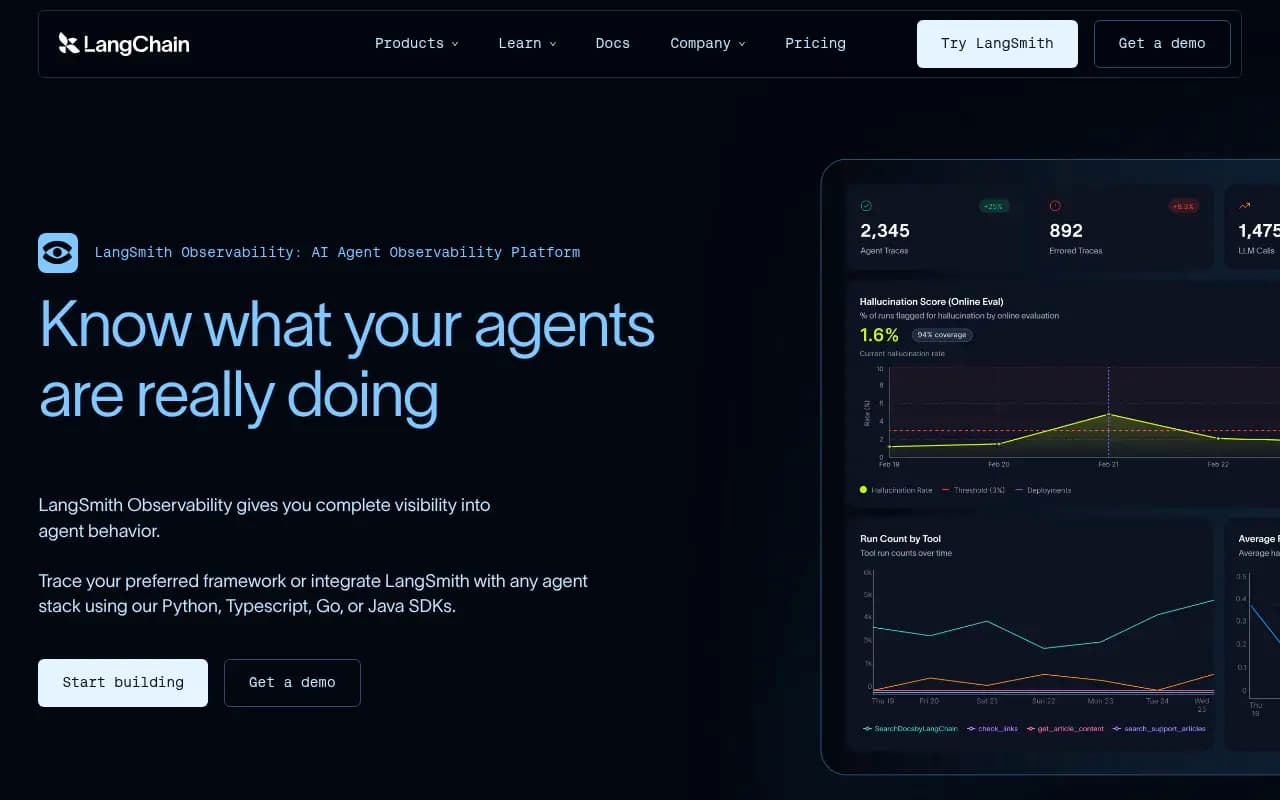
The last row is worth separating clearly. LangSmith and Helicone watch the apps you ship. They will not tell you what ChatGPT says about your API to a stranger.
Brand-level AI visibility platforms
These are the main workhorse. You enter the prompts a developer would ask, the platform runs them across AI engines on a schedule, and you read what comes back along with the sources cited.
Promptwatch
Promptwatch is the one I would start with for an API company, mostly because it connects the wrong answer to a cause. Its Brand Narrative feature extracts the individual claims AI makes about you (for example "pricing starts at X" or "no webhook support") and groups repeated ones by theme such as Pricing and Features, with a score per theme. Fact Check, on the Business plan and above, lets you mark a claim Accurate or Inaccurate and then finds the pages crawled from your site that state it or its opposite, so you know which doc page the AI is learning the wrong thing from.

Two other pieces matter for APIs. Prompt tracking collects answers from the real interfaces of ChatGPT, Google AI Overviews, Gemini, Perplexity and others, and tracks AI coding agents (Codex, Claude Code, OpenCode) that recommend tools, SDKs and docs, which is where a lot of developers now ask integration questions. And AI crawler logs show whether bots can actually read your docs at all, which separates an access problem from a content problem.
Pricing is listed at promptwatch.com/pricing: Essential $95/month, Professional $245/month, Business $579/month, with a 7-day free trial on monthly billing. Crawler logs start at Professional, and Fact Check at Business. There is also a free AI visibility report if you just want a first look before committing.
Profound and Scrunch
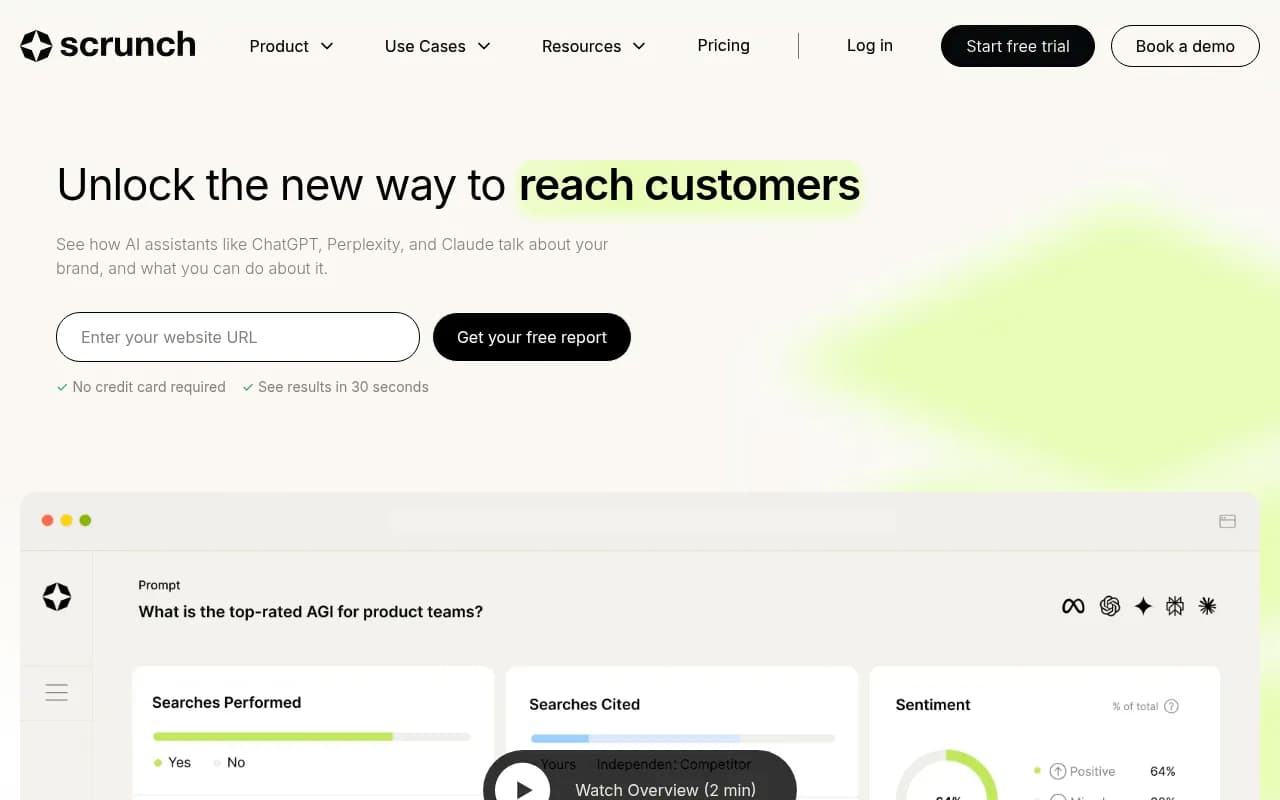
Profound gives an executive-level view of topic coverage, and its Conversation Explorer shows what people ask in your category. Brainlabs describes it as best for a clear, repeatable snapshot rather than a deeply diagnostic tool. Scrunch pairs tracking with site-level changes that make content easier for AI to read. Both are credible, but for an API company chasing specific wrong claims I would want the claim-level view.

Peec AI, Otterly.AI and other trackers
Peec AI is built around prompt discovery and clean exports. Its Starter plan is listed at 85 EUR per month for 50 questions, three selected models and one project, per ZeroRank's roundup. That is a useful reference point for how tight the prompt limits get at entry level: 50 prompts disappears quickly if you want pricing, endpoints, SDKs, rate limits and comparisons across several languages.


Semrush, Rankscale and AthenaHQ
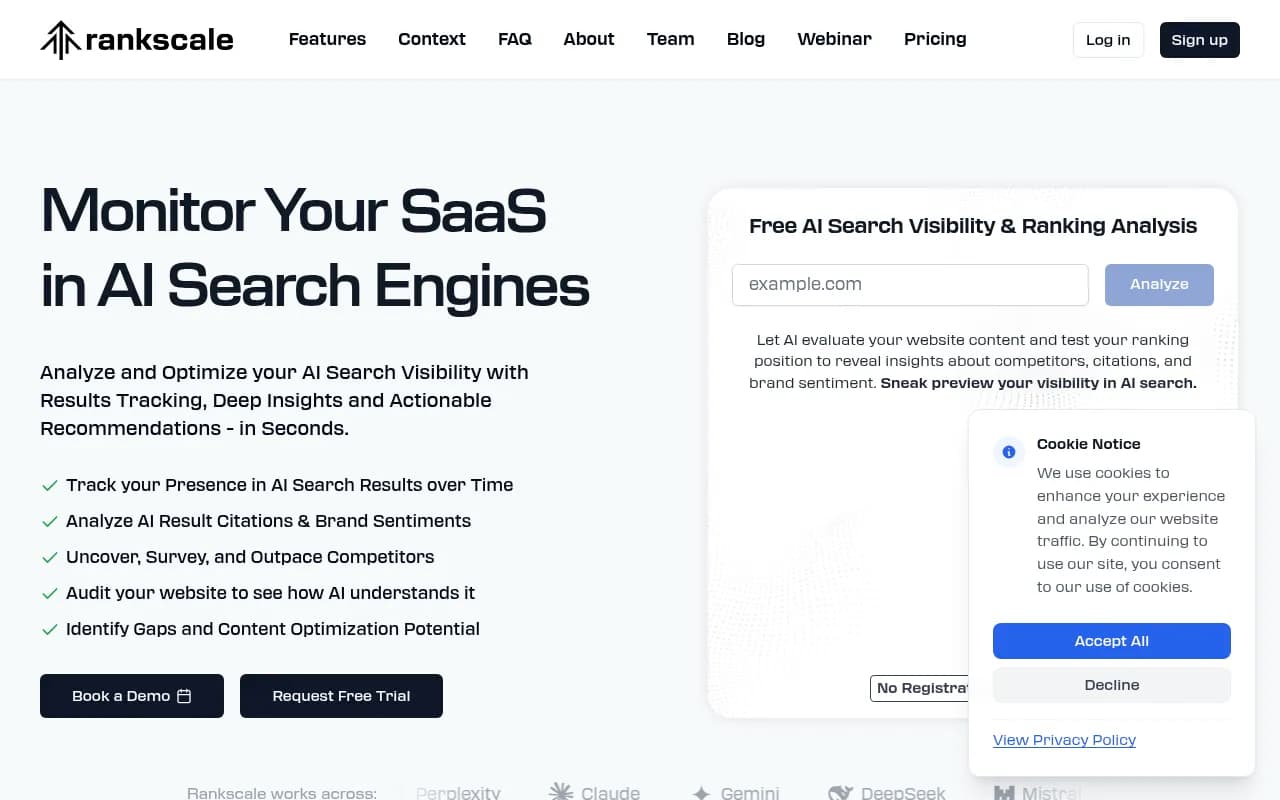
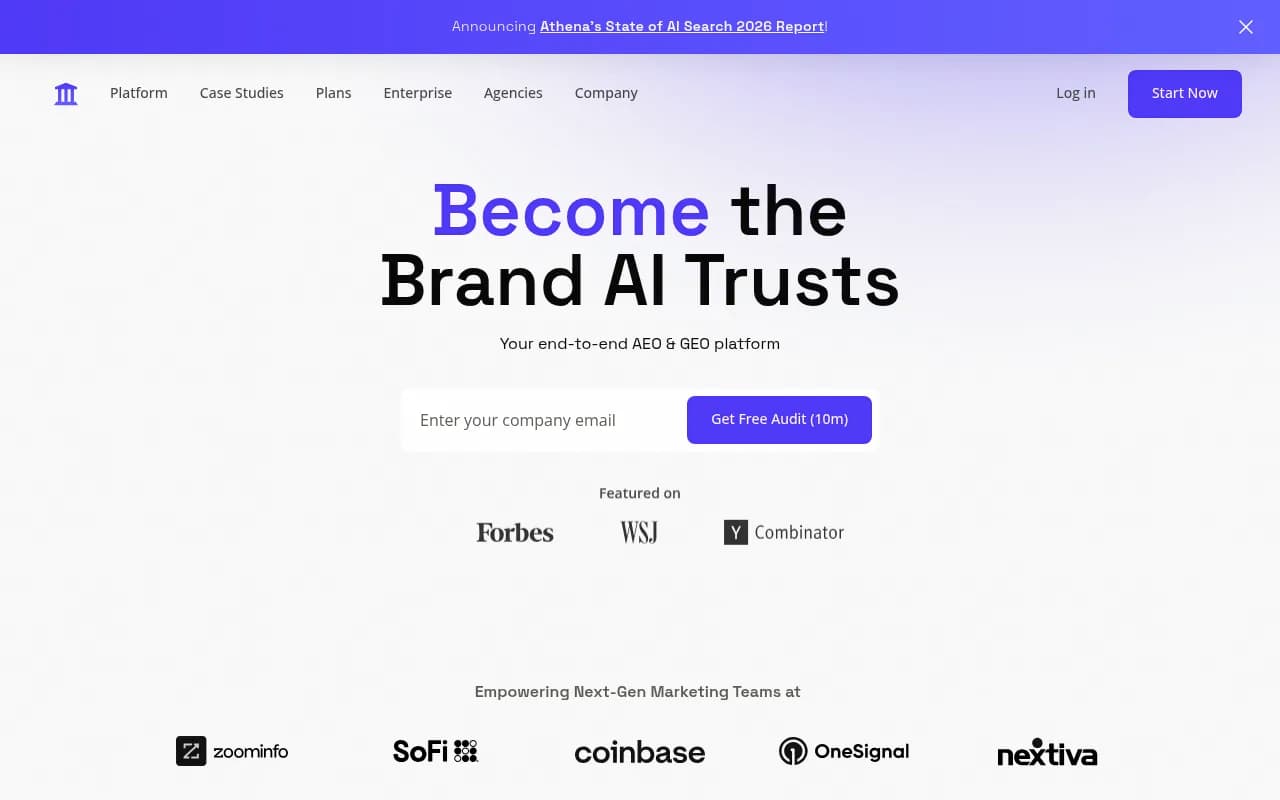
Brainlabs frames Semrush as the pick for teams that want AI visibility inside an existing SEO workflow, and notes it is useful for diagnosing misinformation because it shows which domains and URLs AI references when describing you. Per ZeroRank, the Semrush AI Visibility Base subscription covers 25 custom prompts with daily tracking and is priced per domain. Rankscale leans on an AI Readiness Score that audits whether your site is referenceable. AthenaHQ lists an Essential tier that is free with 300 credits and Starter at $295/month with 3,600 credits, with API access costing extra.
For a longer list of options, the GEO software directory at bestgeosoftware.com is a good place to browse.
Hallucination-specific alerting
Serpely's Hallucination Alerts run continuous prompt monitoring across ChatGPT, Gemini, Perplexity and Google AI Overviews, then check each response against your brand's known facts (pricing, features, leadership, positioning) rather than only checking whether you were mentioned. That fact-comparison approach is the right idea for an API company: you load the truth once, and contradictions get flagged. I did not verify Serpely's pricing, so check it directly.
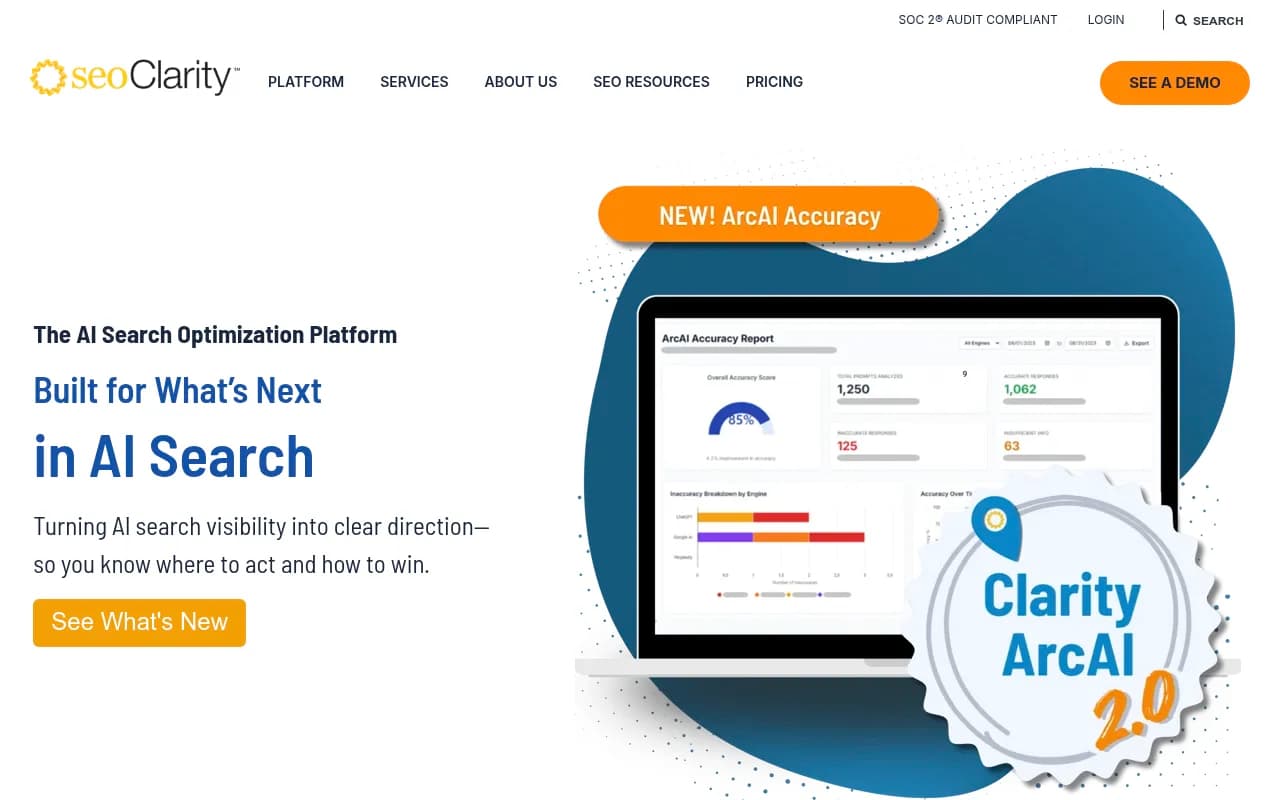
seoClarity's ArcAI also lists hallucination detection alongside traffic share, engagement and sentiment issues, and is aimed at enterprise teams.
Page-change monitoring with PageCrawl
PageCrawl takes a cheaper, more manual route. You run a query like "[your brand] pricing" on Perplexity, paste the results URL into a monitor, and its AI flags substantive changes, such as a new claim or a wrong fact, while ignoring harmless rewording. The company's published plans are Standard at $80/year for 100 monitors checked every 15 minutes, and Enterprise at $300/year for 500 monitors with 5-minute checks. I did not re-verify those prices, and PageCrawl itself was running a Black Friday discount, so confirm on its pricing page.
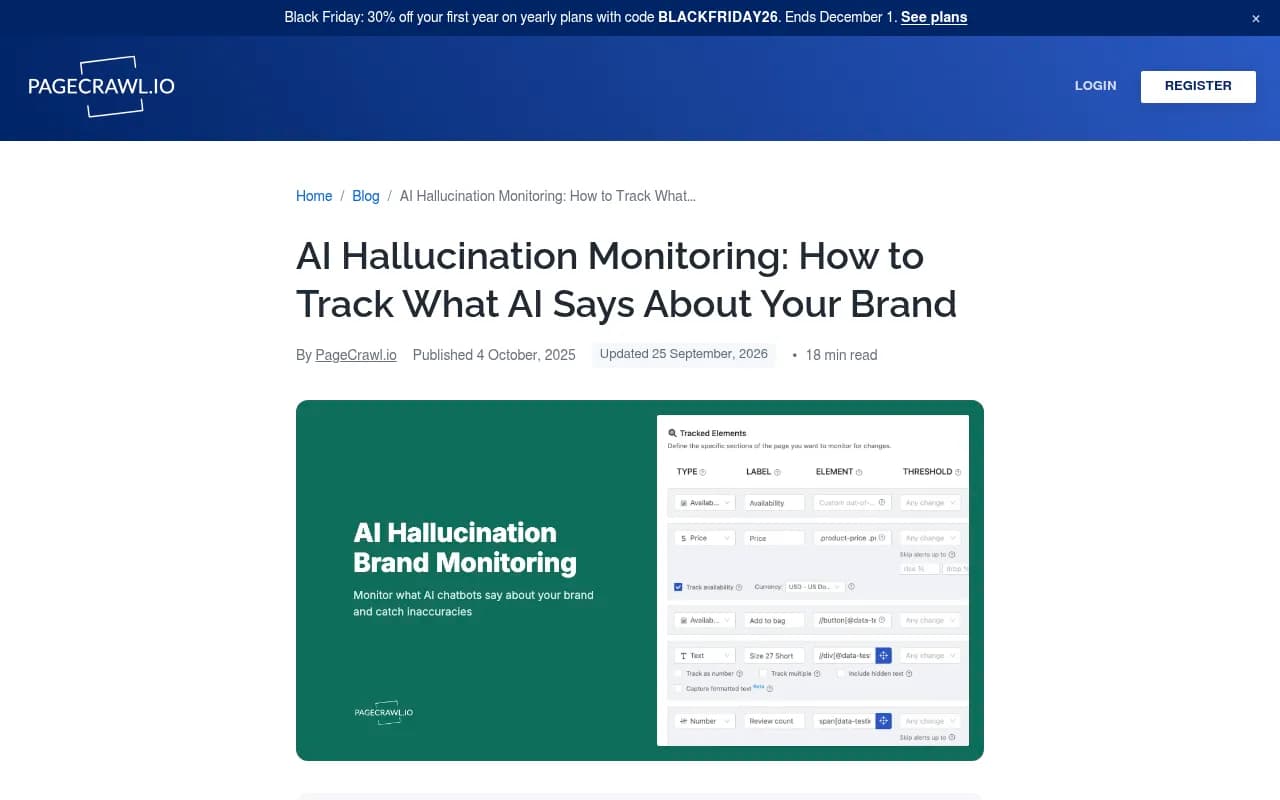
The limit is coverage. It watches the specific AI answer pages you give it, mostly Perplexity-style search URLs. It will not run a broad prompt matrix across ChatGPT and Gemini. For a small API with a handful of high-stakes queries, that may be enough.
LLM observability: the other half of the problem
If you also ship an AI agent or SDK that wraps your own API, you have the Speakeasy problem too. Here observability tools help. Logz.io's 2026 roundup lists Langfuse, Arize Phoenix, LangSmith, Braintrust and Opik for tracing and evaluating LLM apps, and suggests judging them on OpenTelemetry alignment, agent depth, evaluation, cost attribution, production context and data control.
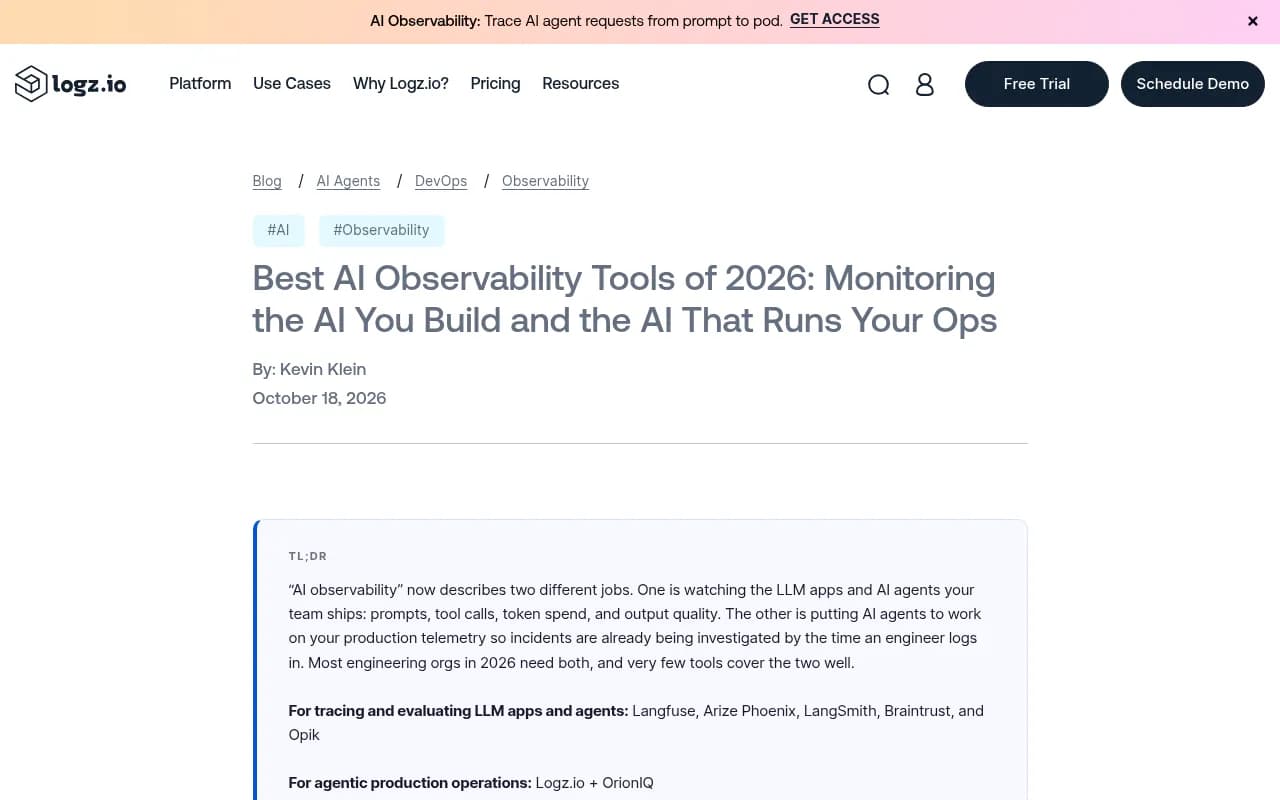
In practice these show you a trace where your agent picked a non-existent tool or endpoint. Helicone and LangSmith are in our catalog:

The pricing figures in the research are modest. Per Monte Carlo, Langtrace has a free plan with up to 5,000 spans a month, and Evidently's Pro plan is $50/month. Treat them as indicative. And remember the category boundary: none of these tell you what outside AI systems say about you.
Comparison: which tool for which job
| Job | Best fit | Starting point |
|---|---|---|
| Track claims about pricing, features and endpoints across engines, trace to the source page | Promptwatch | 7-day trial, plans from $95/month |
| Executive snapshot of topic coverage | Profound | Check vendor pricing |
| Cheap prompt tracking with discovery | Peec AI | Starter 85 EUR/month, 50 questions |
| Contradiction alerts against known facts | Serpely | Check vendor pricing |
| Watch specific Perplexity answer pages | PageCrawl | Standard $80/year |
| Debug your own agent calling your API | LangSmith, Langfuse, Helicone | Free tiers or self-hosting |
A practical audit you can run this week
1. Build a test set
Write 20 to 30 prompts a developer would actually type. Cover pricing and free tier limits, authentication, rate limits, a few specific endpoints, SDK languages, webhooks, and comparisons with two competitors. Add a few prompts that ask for code, since that is where invented endpoints appear.
Promptwatch Data on ChatGPT query fanouts suggests short, keyword-style queries are common (average query length fell to about 53 characters when fanouts returned in April 2026), so include terse versions like "acme api pricing" next to the longer ones. See the ChatGPT query fanouts report.
2. Write down the truth
Create a single fact sheet: current plans, limits, endpoint list, deprecations. Every tool above is only as good as the reference you check against. Fact Check and Serpely both rely on this.
3. Run it and score the answers
Mark each response as correct, outdated, or invented. Keep invented endpoints in their own column. Those are the ones that send developers to a 404 and straight to a competitor.
4. Trace each error to a source
Look at which URLs the AI cited. If the cited page is yours, update it. If it is a G2 profile, a Stack Overflow answer or an old GitHub repo, fix or supersede that. This is where citation data earns its keep.
5. Fix the sources
- Publish a crawlable endpoint reference and a dedicated pricing page. Promptwatch's fanout advice is to build separate pages for sub-questions like pricing, comparisons and how-tos, with headings that read like search queries.
- Keep a public GitHub presence and current READMEs.
- Keep G2 and Capterra profiles complete.
- Publish an accurate OpenAPI document. Speakeasy found detailed descriptions in the spec reduced endpoint hallucination for agents, and a clean spec is also something AI crawlers can read.
- Check AI crawlers are not blocked. Promptwatch's Agentic Readiness Check is a free way to see which crawlers can reach your site.
6. Re-run monthly
AI answers shift. Promptwatch Data recorded ChatGPT's average citations per response dropping around the GPT-5.3 rollout on March 4, 2026, which is the kind of change that quietly rearranges which of your pages get quoted. A monthly re-run, or daily tracking for the important prompts, catches regressions.
What I would not rely on
A few honest caveats. Markdown files, including llms.txt-style content, make up only 0.05% of AI search citations according to Promptwatch Data, so do not expect a single file to override a wrong claim. It serves agents more than AI search. Also, a one-off check proves little because answers vary by run, model and location. And I could not find a tool that validates generated code against your real OpenAPI spec as a monitoring service, so that part stays manual: take the code snippets AI produces and test the endpoints.
Picking a setup
- Small API, tight budget: a prompt tracker like Peec AI or Otterly.AI plus PageCrawl for two or three critical queries.
- Growing API company with docs and SDKs: an end-to-end platform such as Promptwatch so wrong claims are linked to pages, crawler access and fixes, not just flagged.
- Enterprise with compliance concerns: look at seoClarity ArcAI or a Promptwatch Business or Enterprise plan for Fact Check and audit logs.
- You also ship agents: add Langfuse or LangSmith for your own traces.
If you need help turning the findings into docs, structured content and digital PR that correct the record, an agency like 1001 SEO Media works on AI search visibility and can take the fixes off your team's plate.
Start with the fact sheet and the 20-prompt test set. Even run by hand in a browser, it will show you in an hour whether AI is quietly sending developers to endpoints that do not exist.