Key takeaways
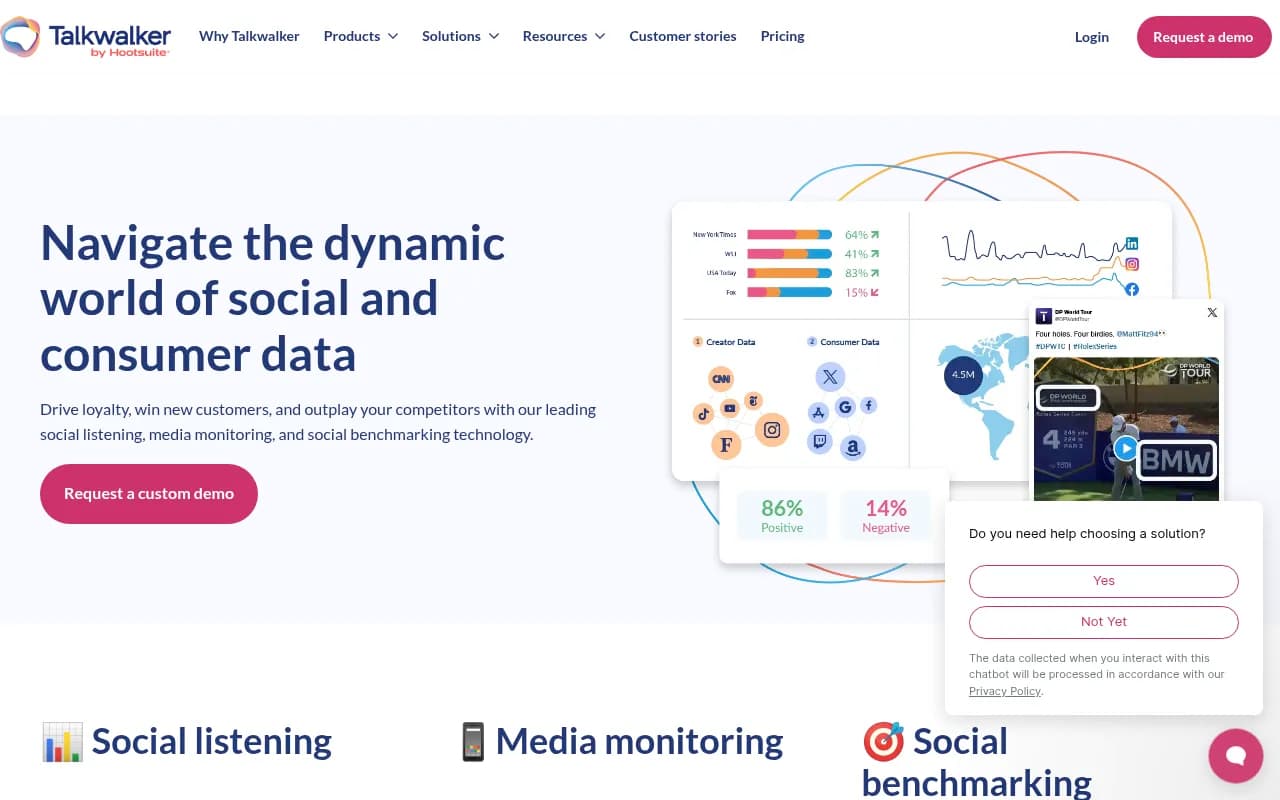
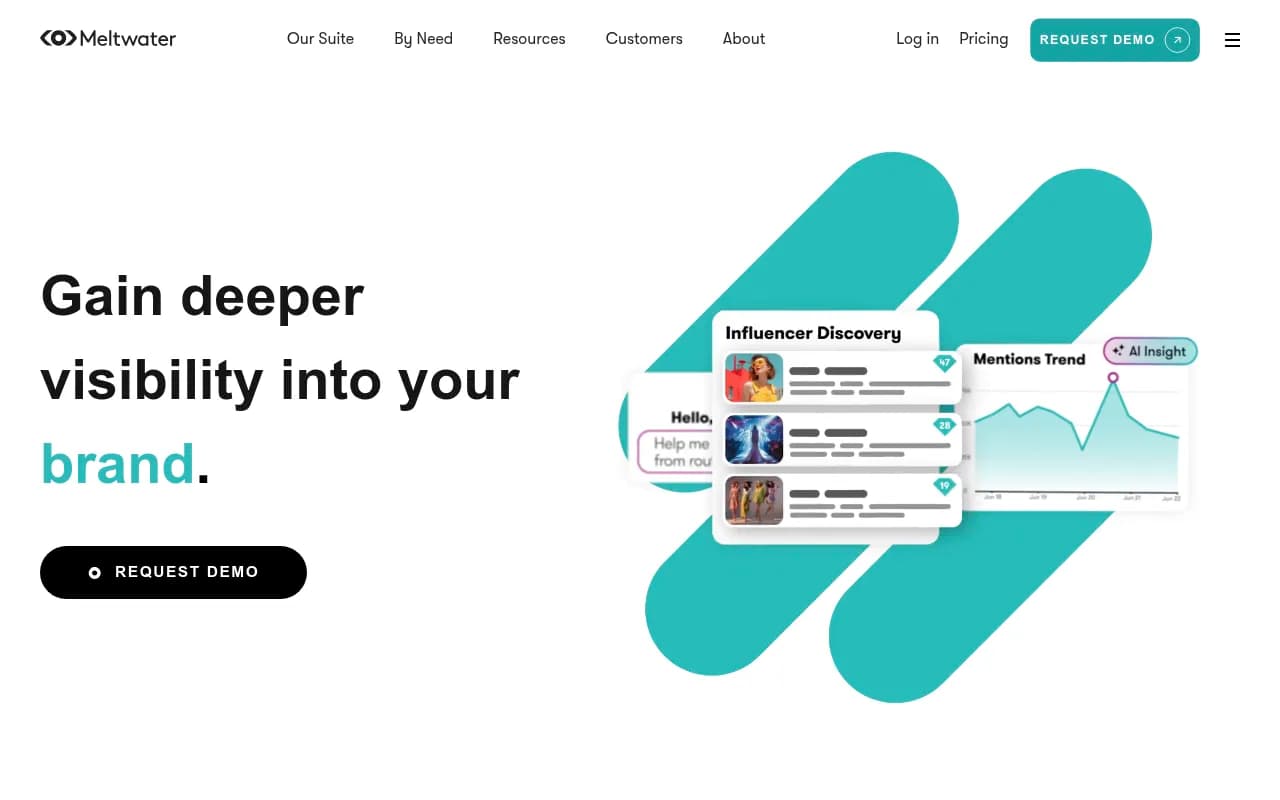
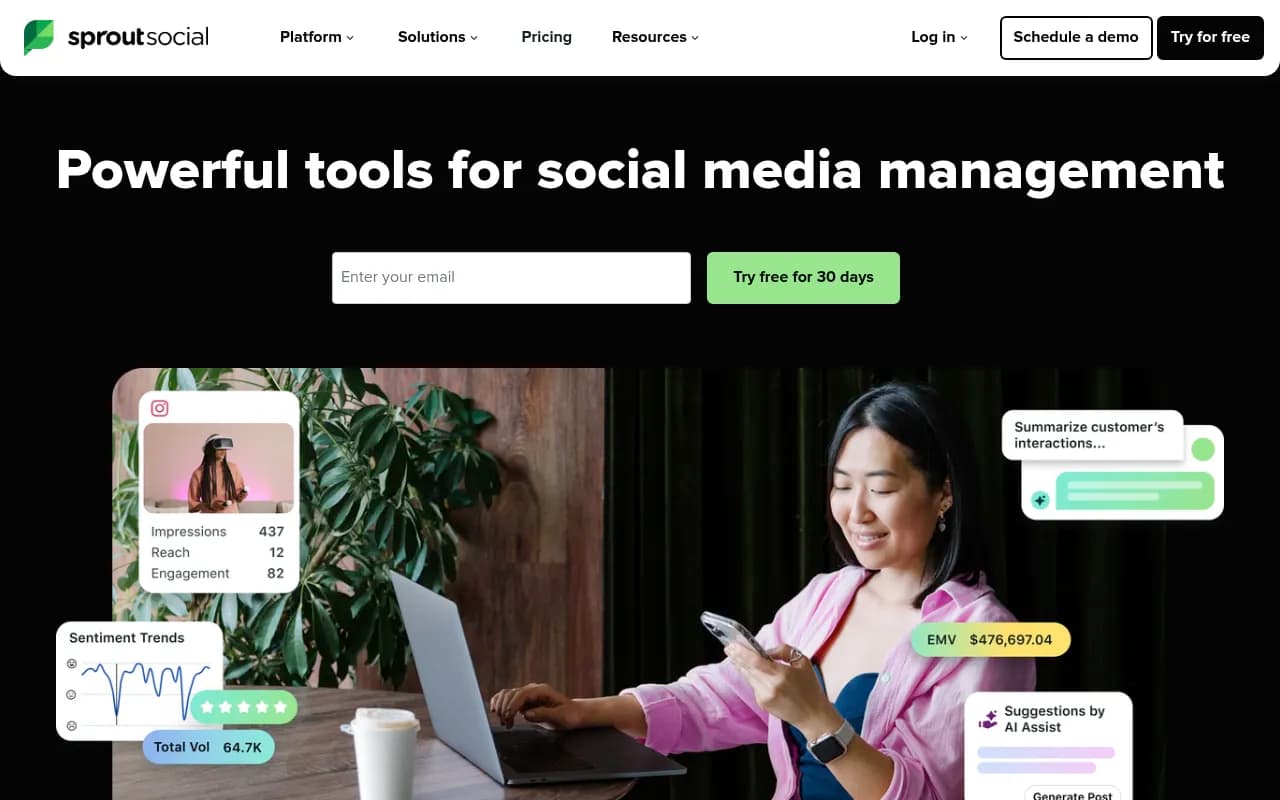
- Brand sentiment in AI answers is a different job from social listening. Brand24, Brandwatch, Talkwalker, Sprout Social and Meltwater read posts and articles. They cannot show you the sentence ChatGPT writes about you.
- A single prompt tells you almost nothing. Run a set of about 100 prompts across organic, brand-specific and competitor-comparison types, and repeat them over time.
- Brand-specific prompts are the ones that matter most for sentiment, because ChatGPT cites fewer sources for them, so each source has more say over how you are described.
- Tools worth shortlisting: Promptwatch, Omnia, Peec AI, Profound, Otterly.AI and ZipTie. They differ mostly in engine coverage, how they score sentiment, and whether they help you fix problems or only report them.
- Note on the title: I have not run a 100-prompt benchmark and I am not going to invent scores. What follows is the protocol I would use, plus what the vendors publish about themselves.
Why I am not publishing made-up test scores
Guides titled "tested on 100 prompts" usually come with a leaderboard. Most of those leaderboards cannot be reproduced, and AI answers change from run to run, so a ranking of sentiment scores is stale within weeks. I would rather give you a test design you can run on your own brand in an afternoon, and an honest read of what each tool claims to do.
Two more caveats. Several of the sources behind this guide are vendors comparing themselves with rivals (Omnia, Promptwatch and ZipTie each publish one). I use their facts where they are dated and checkable, and I flag where a vendor is grading its own homework. And pricing in this category moves constantly, so confirm everything on the vendor page before buying.
Two different jobs, two different kinds of tool
When people say "AI brand sentiment tools" they mean one of two things.
The first is classic sentiment analysis: a model scores how people feel about you on social media, news and review sites. The second is measuring how AI engines such as ChatGPT, Gemini, Perplexity and Google AI Overviews describe you when a buyer asks them for a recommendation. The answer is a sentence nobody on your team wrote and few people read.
Omnia's November 2026 comparison puts social listening tools (Brand24, Brandwatch, Talkwalker, Sprout Social, Meltwater) at $199 a month or higher, or by sales quote. Its AEO-style tools start much lower, with entry plans running from $29 to $99 a month, plus EUR 79 for Omnia itself. Omnia sells one of those tools, so treat the exact figures as a snapshot, but the split between the two categories is real.
There is a funny wrinkle in Omnia's data. When it asked AI engines to recommend sentiment tools, Brand24 showed up in 98.2% of answers and Brandwatch in 94.5%. So the engines happily recommend the social listening tools for this job, even though those tools cannot read AI answers. If you ask ChatGPT which tool to buy, you may get the wrong category.
How to design a 100-prompt sentiment test
A tool is only as useful as the prompts you feed it. Here is the set I would build.
Split the prompts by type
Promptwatch Data looked at how many domains ChatGPT cites per response (Sep 28 to Oct 4, 2026) and found the behavior changes a lot by prompt type:
- Organic prompts (general questions that name no brand): 52.5% of responses cite 10 or more domains.
- Brand-specific prompts, like "is Asana good for small teams": the most common count is 5 domains, 40.7% cite 5 or fewer, and only 21.3% cite 10 or more.
- Competitor comparison prompts, like "Asana vs Monday.com": 49.1% cite 10 or more domains.
That last pattern drives the design. Sentiment forms mostly in brand and comparison prompts, and for brand prompts a handful of review sites and forums carry the description. So I would weight the set roughly like this:
| Prompt type | Count | Example | What it reveals |
|---|---|---|---|
| Organic category | 30 | best project management tools for agencies | Whether you are mentioned at all, and where |
| Brand-specific | 40 | is [brand] reliable, [brand] pricing complaints | Tone, claims and the sources behind them |
| Competitor comparison | 20 | [brand] vs [competitor] for small teams | Relative framing and who gets recommended |
| Persona or use-case | 10 | what should a 10-person nonprofit use | How different buyers see you |
The 40 brand-specific prompts are where I would spend the most time writing variations: price, support, reliability, ease of use, security, cancellation, and the specific complaint you already hear from customers.
Run each prompt more than once
The same prompt can return different output depending on phrasing, timing and platform behavior. Adobe makes this point about response variability in its own guide to tracking brand mentions, and it matches what anyone sees when they test by hand.
Promptwatch Data's average sources per response report (an older page, dated Sep 23, 2025, so treat the numbers as approximate) found ChatGPT citing about 5 sources per web-search answer, Google AI Overviews about 10, and Perplexity almost exactly 10 every day. Copilot swung from under 2 to nearly 17 within weeks. Two practical conclusions: Perplexity is the steadiest engine for repeat testing, and Copilot should be judged on monthly trends, not weekly snapshots.
Use real interfaces where you can
Answers collected through an API can differ from what a user sees in the ChatGPT or AI Overviews interface, including the citations. If a tool only calls APIs, its sentiment scores describe the model, not the product your buyer uses. Ask each vendor how they collect.
Score the same things every time
For each response, record:
- Is the brand mentioned, and in what position among the brands listed?
- Tone: positive, neutral or negative, and the specific words used (reliable, expensive, buggy).
- Individual claims: are they accurate?
- Which sources were cited, and did any of them come from your own domain?
Then compare against two or three competitors with the identical prompts. A 70 out of 100 sentiment score means nothing alone. It means something when your closest rival gets 82 on pricing prompts.
The tools compared
This table reflects what vendors state publicly, using Omnia's November 2026 notes for Omnia, Peec AI and Profound, and the Promptwatch pricing page for Promptwatch. It is not a scored benchmark.
| Tool | Sentiment output | Engines | Starting price (verify on vendor site) | Fixes problems or only reports? |
|---|---|---|---|---|
| Promptwatch | 0-100 score per response, by topic and competitor, plus claim-level Brand Narrative | 11 AI platforms, captured from live interfaces | Essential $95/mo, Professional $245/mo, Business $579/mo | Yes: Action Board, Content Agent, crawler logs |
| Omnia | Endorsed, neutral or undermined per feature, linked to the sentence behind it | ChatGPT, Perplexity, AI Overviews, AI Mode; others on request | Growth EUR 79/mo, 25 prompts, 14-day trial | Suggests next actions |
| Peec AI | Scores per brand per prompt | ChatGPT, Perplexity, Gemini and others; 3 models on Starter | Starter $95/mo, 50 prompts | Mostly tracking |
| Profound | Brand sentiment and the sources driving it | Up to 9 engines on Enterprise, including Claude and Copilot | Enterprise is custom | Monitoring-led |
| Otterly.AI | Sentiment inside AI visibility monitoring | Multiple AI engines | Entry plans in the $29 to $99 range for the category | Monitoring |
| ZipTie | Sentiment alongside visibility analysis | Multiple AI engines | Check vendor | Analysis-focused |
Promptwatch
Promptwatch is the tool I would start with if sentiment is one part of a bigger visibility problem. It scores sentiment from 0 to 100 on every collected response (roughly 50 is neutral, and the score is separate from visibility), breaks it down by prompt, topic and competitor, and shows competitor sentiment heatmaps. Brand Narrative goes a step further and pulls out the individual claims AI makes, such as "affordable for small teams" or "its mobile app lacks features", groups them under themes like Pricing, Support or Reputation, and scores each theme against competitors. Fact Check (Business and above) lets you mark a claim inaccurate and finds the pages on your own site that state it.
The part that matters for a sentiment project is the next step. If ChatGPT calls your support slow, you want to know which cited page says so, whether AI crawlers can even read your rebuttal, and then publish something to fix it. Promptwatch has IP-verified crawler logs, an Action Board of prioritized tasks and a Content Agent for that. Prompts run daily on every plan, and you can run a monitor every 12, 6 or 1 hours on Business. Pricing and plan limits are at promptwatch.com/pricing, and there is a 7-day free trial plus a free AI visibility report if you want a first look.

Promptwatch's own comparison article is, of course, written by a vendor, so read it as one input. The head-to-head pages, like Promptwatch vs Profound and Promptwatch vs Peec, lay out the feature differences.
Omnia
Omnia's approach to sentiment is the most readable I have seen in this group: each feature of your product is labeled endorsed, neutral or undermined, and each label links to the sentence that produced it. For a small team that wants to see the evidence rather than a number, that is useful. The Growth plan at EUR 79 a month covers 25 prompts, which is tight for a 100-prompt test, so you would be working in rotation or on a higher tier. It also published the guide that ranks itself among ten tools, which it admits.
Peec AI
Peec AI gives scores per brand per prompt with positive-sentiment summaries. Starter is listed at $95 a month for 50 prompts and 3 models, so the same 100-prompt limit applies. It suits teams who want simple tracking and a clean per-prompt view, less so teams who need crawler data or content creation.

Profound
Profound is built for larger teams, with up to nine engines on Enterprise including Claude and Copilot, and it reports brand sentiment along with the sources driving it. Enterprise pricing is custom, so budget a sales conversation.

Otterly.AI and ZipTie
Otterly.AI is the budget-friendly end of the category and fine for a first experiment. ZipTie puts more weight on analysis and data quality. I would put both on a shortlist for a trial if cost is the main constraint, but check how each collects responses and how it defines a sentiment score before you rely on it.

If you want to browse beyond these, the GEO software directory at bestgeosoftware.com lists many more AI visibility tools.
Where social listening tools still fit
Do not throw them out. AI engines learn about your brand partly from what is written about it, so the conversations Brand24, Brandwatch, Talkwalker, Sprout Social and Meltwater track are upstream of what AI says. If reviews or Reddit threads turn sour, expect that to show up in answers eventually. That is the right use: early warning, not a measurement of the AI answer itself.
Brandwatch Consumer Intelligence
One caution on Reddit specifically. Promptwatch's data shows reddit.com's share of ChatGPT citations falling from about 4% to 0.5% on August 14, 2026 (report), and ChatGPT got only 0.46% of its citations from social platforms in the week of Sep 28 to Oct 4, 2026, versus 12.2% for Google AI Overviews (report). So social sentiment matters less for ChatGPT's wording than it did, and more for Google's AI surfaces. Review sites, docs and comparison pages carry more weight in ChatGPT.
Pitfalls that skew sentiment results
Reading one run as truth
I have seen teams panic over a single negative answer. Run it five times and the problem often vanishes, or turns out to be real and consistent. Only the repeated pattern is worth acting on.
Ignoring which sources shaped the answer
For brand prompts, the cited sources are few, so a single outdated review page can set the tone. Promptwatch's guidance from its data is to check which review sites and forums get cited for brand prompts, because they shape the description. A sentiment tool that cannot show you the cited URLs is a thermometer with no way to find the fever.
Confusing visibility with sentiment
A brand can be mentioned first and described badly, or mentioned last and praised. Score them separately. Promptwatch, for one, scores sentiment independently of visibility for exactly this reason.
Letting the vendor's prompts do the work
Prompts a real buyer would type beat generic ones. Write the brand-specific set yourself, using your support tickets and sales call objections as raw material.
Forgetting that content ages
Promptwatch Data tracked every page ChatGPT cited on July 6, 2026 for 90 days: landing pages and docs stayed cited longest, while news lost half its pages within 36 days (report). That is encouraging if you plan to fix sentiment with evergreen pages, and a warning if you plan to rely on a press cycle.
A simple way to run your pilot
- Write the 100 prompts using the split above and keep them in a spreadsheet.
- Pick two tools from the table and start their free trials. Omnia offers 14 days with no card, and Promptwatch offers 7 days on monthly billing.
- Load the same prompts into both and add two competitors.
- Let them run for at least a week so repeat runs smooth out the noise.
- Compare: do both tools flag the same weak themes? Can each show you the sentence and the cited source? Does either tell you what to do next?
- Pick the tool that surfaces claims and sources most clearly, then take the three worst themes and fix the pages behind them.
For background on the metrics themselves, the Academy pages on citations vs mentions and Visibility Score are a short read.
Which tool for which team
| If you are... | Start with |
|---|---|
| A marketing or SEO team that wants to detect and fix sentiment problems | Promptwatch |
| A small team that wants evidence sentences behind each label | Omnia |
| Wanting simple per-prompt tracking | Peec AI |
| An enterprise with many engines to cover | Profound |
| Watching spend closely | Otterly.AI, then upgrade if needed |
| Tracking upstream social and press conversation | Brand24 or Brandwatch, alongside an AI tool |
The honest bottom line: pick the tool by the job, test it on prompts your buyers would really type, and judge it by whether you can trace a bad sentence back to a page you can change. A score alone is not much use. If you can find the cited source and the claim behind it, you have something to act on.
For more AI rank and visibility tool options, the directory at ai-rank-tools.com is a good place to keep exploring.