Key takeaways
- Otterly.AI is a cheap, readable monitor ($29/month Lite), but it has no catalog import and its fixes are recommendations your team applies by hand.
- For product-level ChatGPT Shopping data, the shortlist is Promptwatch, Peec AI, Ranketta, Goodie AI and Azoma. They differ in whether they measure, fix, or do both.
- ChatGPT shopping cards appear on only a small share of web-search responses, and the rate changes in steps. Watch the trend, not a single day.
- Several comparison posts online are written by vendors with a stake in the answer. Check pricing and coverage on each vendor's own page before you buy.
Why e-commerce teams outgrow Otterly.AI
I like Otterly.AI. It is quick to set up, tracks ChatGPT, Google AI Overviews, Perplexity and Copilot daily, and holds a 4.7 rating on G2 from 54 reviews. For a brand that just wants to know whether AI mentions it, the $29/month Lite plan is hard to beat.

The trouble starts when you sell physical products. A brand mention score tells you shoppers see your company name. It doesn't tell you whether a specific SKU shows up in the product carousel, what price ChatGPT cites for it, or which competitor product gets picked instead.
According to a competitor's comparison dated 27 October 2026 (so take it with a grain of salt), Otterly tracks which products surface for your monitored prompts in ChatGPT's product answers, and which retailers appear next to them. ChatGPT Shopping is the only shopping surface it tracks, and its shopping page doesn't describe a catalog import. Another e-commerce roundup says the same thing from a different angle: Otterly can follow a product only if you write a prompt for it, and the fixes are recommendations rather than edits to your store.
That is a fair design for a monitor. It's just not what a store with 2,000 SKUs needs.
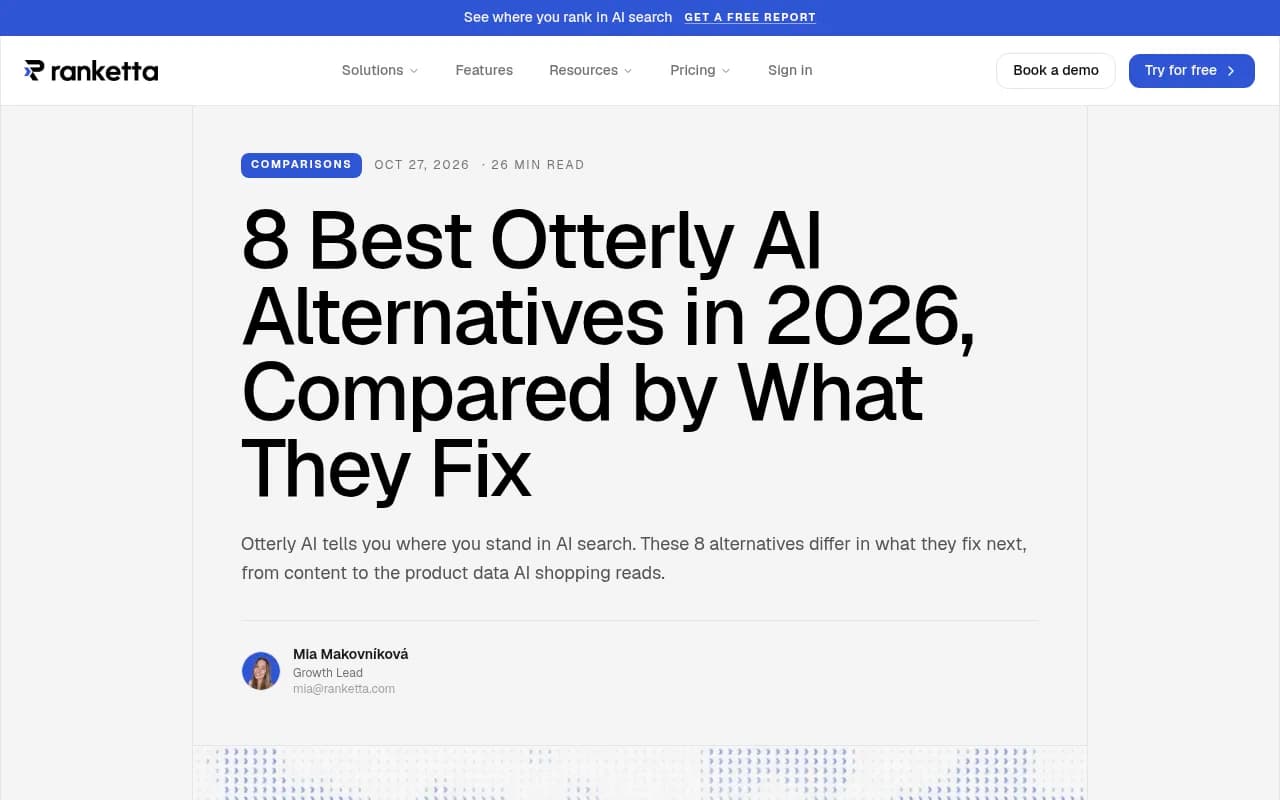
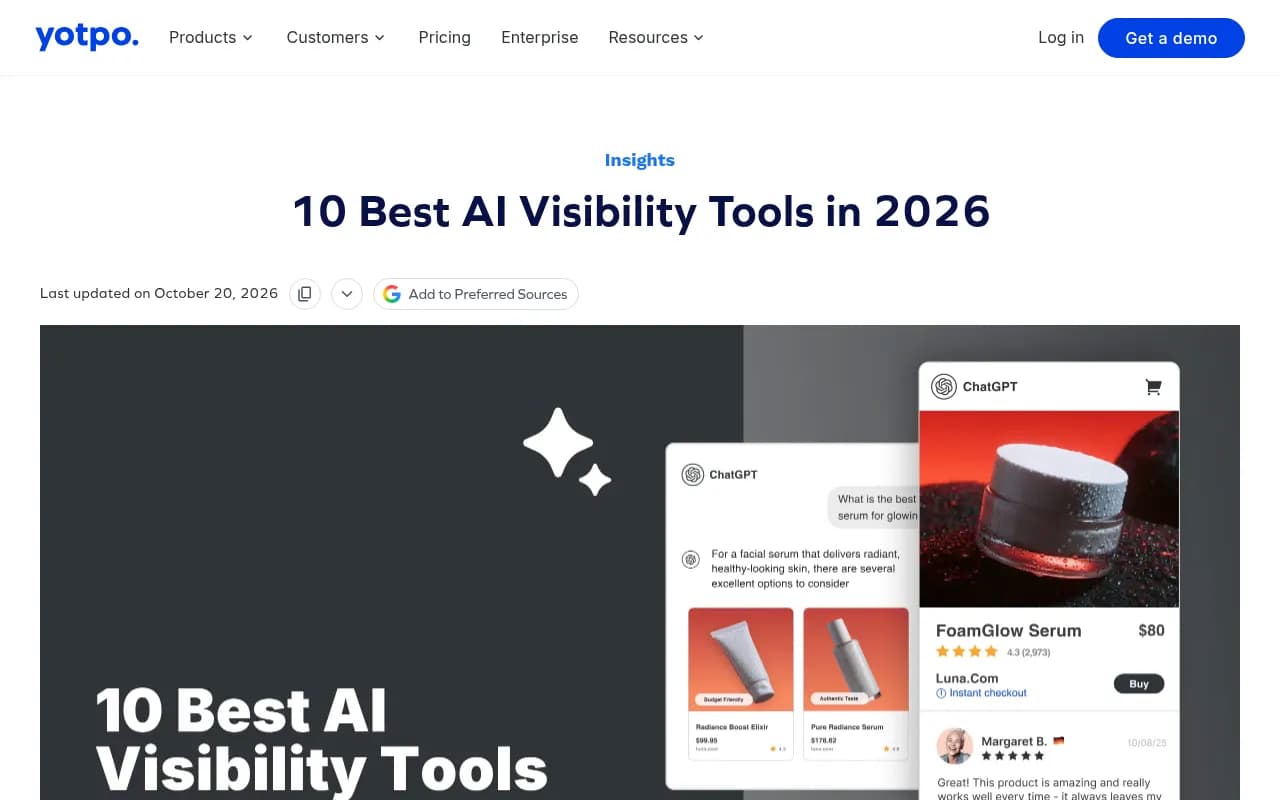
The screenshot above is from one such comparison. Useful as a reference for how e-commerce teams are framing the problem: tracking is the easy part, and the product data fix is the hard part.
How much ChatGPT Shopping actually matters right now
Before paying for shopping analytics, calibrate your expectations. Promptwatch's ChatGPT Shopping usage data measures the share of web-search responses that include product cards, recommendations or price comparisons. Across all prompt types, that is only a low single-digit percentage. The report doesn't give an exact figure for the average.
Two details matter more than the average:
- The rate moves in steps. In the report's window it roughly doubled overnight in late May, then fell back weeks later. Promptwatch reads that as OpenAI tuning when cards appear. (The page's own date is unclear, so check the live chart before quoting it.)
- Shopping features concentrate on commercial and transactional prompts, where trigger rates run far higher than the all-prompts average.
That means you should track the buying prompts your customers actually type, not generic category queries. A tool that only reports a blended number will mislead you.
Ads are the other half of the picture. In Promptwatch's ChatGPT ads data (May 20 to Aug 17, 2026), ads appeared in an average of 20.1% of ChatGPT responses that ran a web search. The 7-day average at the end of the window was 32.4%, and 73.3% of ad-bearing responses were organic prompts. If you sell products, paid placements are already competing with your organic shopping presence.
What to look for in an e-commerce alternative
I'd score every candidate on five questions:
- Does it track individual products or SKUs, or only brand-level mentions?
- Can you import your catalog (Shopify, CSV, Merchant Center) instead of hand-writing prompts?
- Does it show competing products, retailers and cited prices?
- Does it collect answers from the real shopper interface, or only from an API?
- What happens after the report: a to-do list, content briefs, or actual edits?
The fifth question separates the category. Some tools measure. Others change your product data. A few try to do both.
Comparison table
| Tool | Shopping data | Catalog import | What happens after the report | Entry price |
|---|---|---|---|---|
| Otterly.AI | ChatGPT Shopping only, via your prompts | No | Recommendations | $29/mo (Lite, 15 prompts) |
| Promptwatch | ChatGPT Shopping and Amazon Alexa product results, uploaded catalog performance | Yes, own catalog upload | Action Board, Content Agent, crawler logs, traffic | $95/mo (Essential); shopping on Business at $579/mo |
| Peec AI | Product appearances, win rate, cited prices, retailers | Yes (Shopify, CSV, Merchant Center) | Content briefs | Shopping pricing not published |
| Ranketta | Product-level tracking | Yes | Rewrites titles, descriptions, GTINs; writes to Shopify or Merchant Center | Check vendor |
| Goodie AI | AI shopping surfaces | Check vendor | Agentic commerce optimizer | Check vendor |
| Azoma | ChatGPT, Rufus and other shopping surfaces | Check vendor | Enterprise shopping optimization | Enterprise |
| Profound | ChatGPT Shopping analysis on Enterprise | Check vendor | Browser-collected data, CMS publishing | Custom |
Prices and coverage come from vendor blogs and listings. Confirm each on the vendor's own pricing page.
The alternatives
Promptwatch: shopping data plus the fix and the measurement loop
Promptwatch is the option I'd look at first if you want shopping visibility connected to everything around it. Its ChatGPT Shopping feature shows which products ChatGPT recommends in shopping carousels, which competitors it picks instead, and how your own uploaded catalog performs. It filters by model, date range and monitor, and it also covers Amazon Alexa product results. Alerts fire when competitors appear in shopping results instead of you.

What makes it more than a shopping dashboard is the rest of the loop. Answers are collected from the real interfaces of ChatGPT, Gemini, Perplexity, Google AI Overviews and others, because user-facing results and shopping recommendations can differ from API output. IP-verified AI crawler logs show whether GPTBot and OAI-SearchBot can actually read your product pages. Visitor analytics show whether AI sends traffic and conversions. The Action Board turns gaps into a prioritized to-do list, and the Content Agent can write and publish pages to WordPress, Webflow or Framer.
The honest caveat: shopping insights start on the Business plan at $579/month (Essential is $95 and Professional $245, without shopping). Pricing is on promptwatch.com/pricing, and there's a 7-day free trial on monthly billing. Promptwatch doesn't write back to your Shopify product fields the way Ranketta claims to, so if feed-level edits are your main need, read the Ranketta entry too. For a head-to-head on monitoring-only tools, see Promptwatch vs Otterly.
Peec AI: best for per-product tracking from a catalog
Peec AI is the cleanest pick if you mainly want measurement. Its shopping analytics tracks product appearances, win rate, average position, cited prices, ratings, retailers, competing products and the queries behind shopping carousels. It can compare your catalog price to the price AI cites, which is a genuinely useful check.

Coverage includes ChatGPT Shopping, Gemini, Perplexity and AI Overviews, though the shopping analysis leans heaviest on ChatGPT. Data updates daily. Downsides from the research: separate Shopping Analytics pricing isn't published, API access is unavailable on Starter, and regional specificity can be thin. A competitor's post says it imports products from Shopify, CSV or Merchant Center and now drafts content briefs.
Ranketta: best if you want product data rewritten
Ranketta is the most execution-focused tool in this group. Per its own comparison, it rewrites product titles, descriptions, categories and GTINs with a confidence score on each change, then writes them back to Shopify or sends them to Google Merchant Center. It collects answers from browser sessions and supports catalog import.
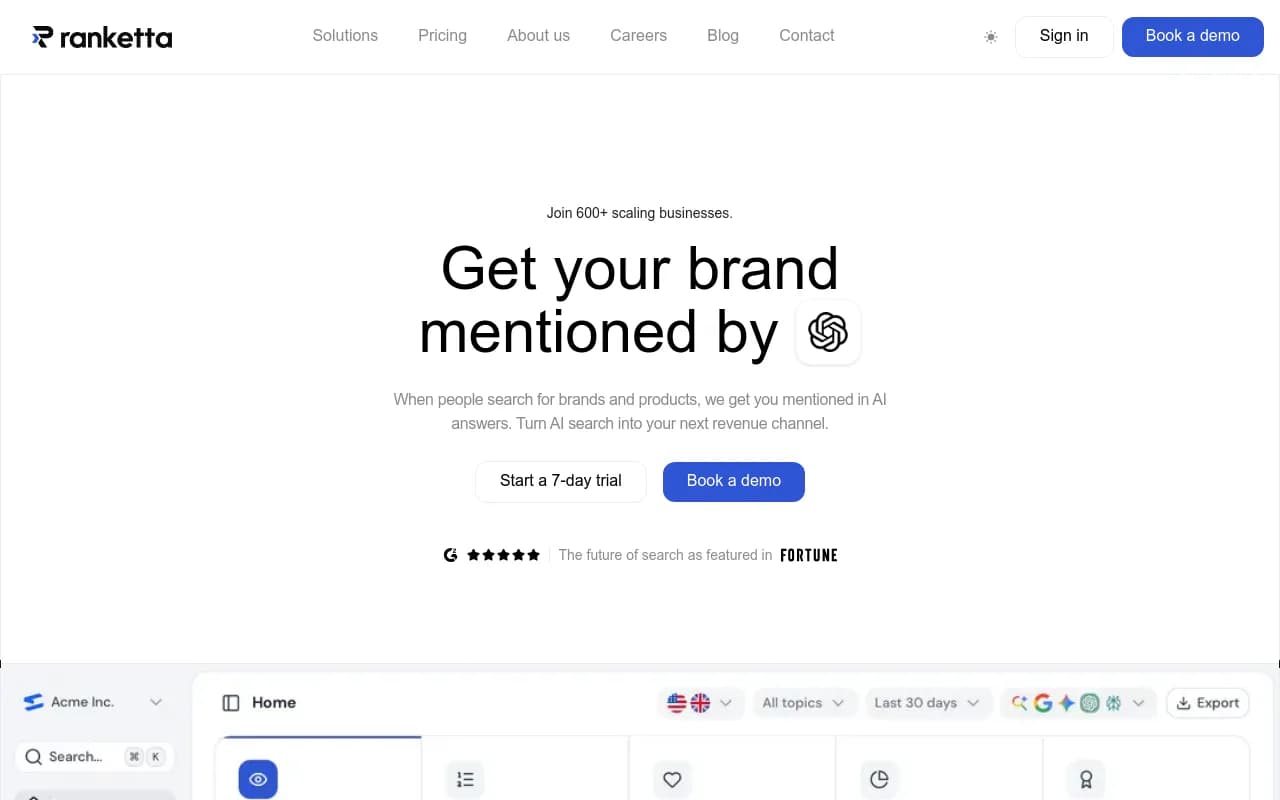
Two cautions. The source of most claims about Ranketta is Ranketta's own blog, which also ranks itself first. And automated rewriting of product data deserves a human review step, whatever the confidence score says.
Goodie AI: agentic commerce focus
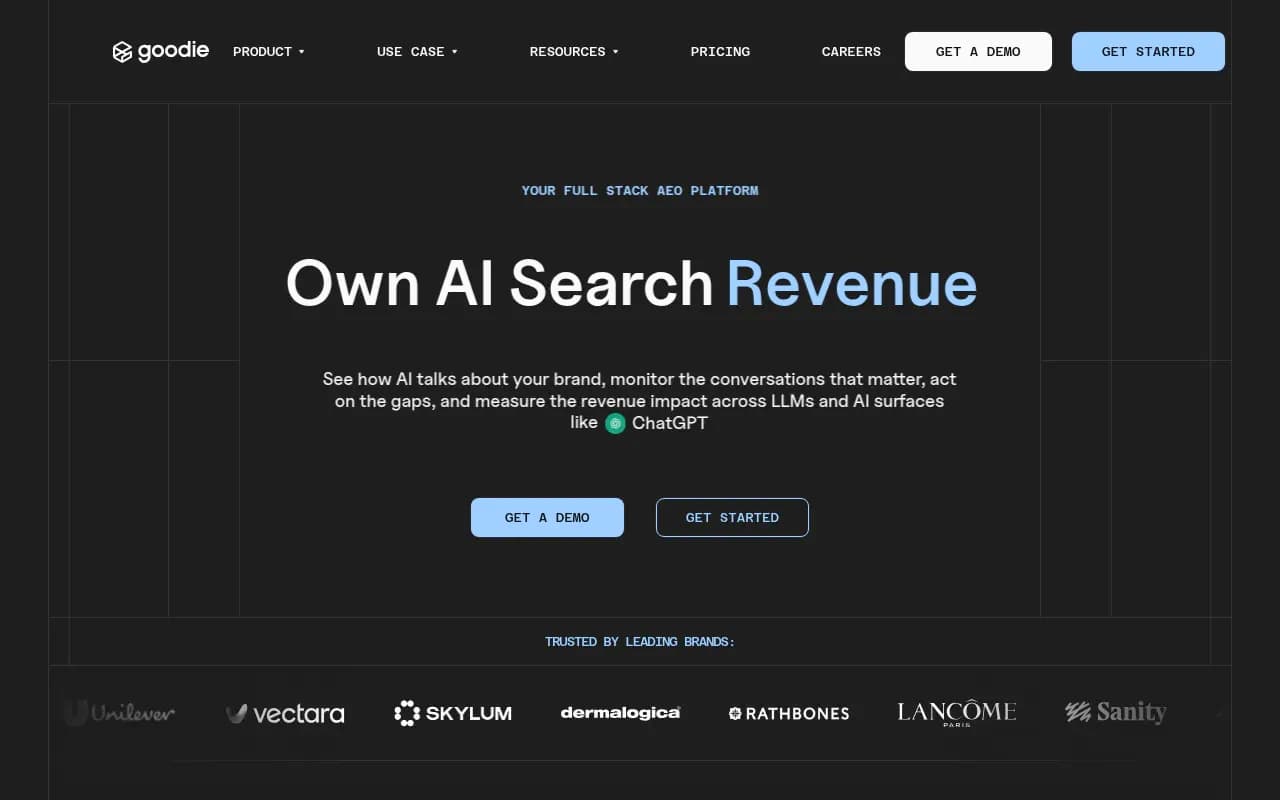
Goodie AI pairs high-volume prompt testing across major LLMs with an Optimization Hub, an Agentic Commerce Optimizer and sentiment-shift detection. It's aimed at e-commerce and product-led brands. I haven't seen independent pricing, so request a demo and ask exactly which shopping surfaces are tracked.
Azoma: enterprise AI shopping optimization
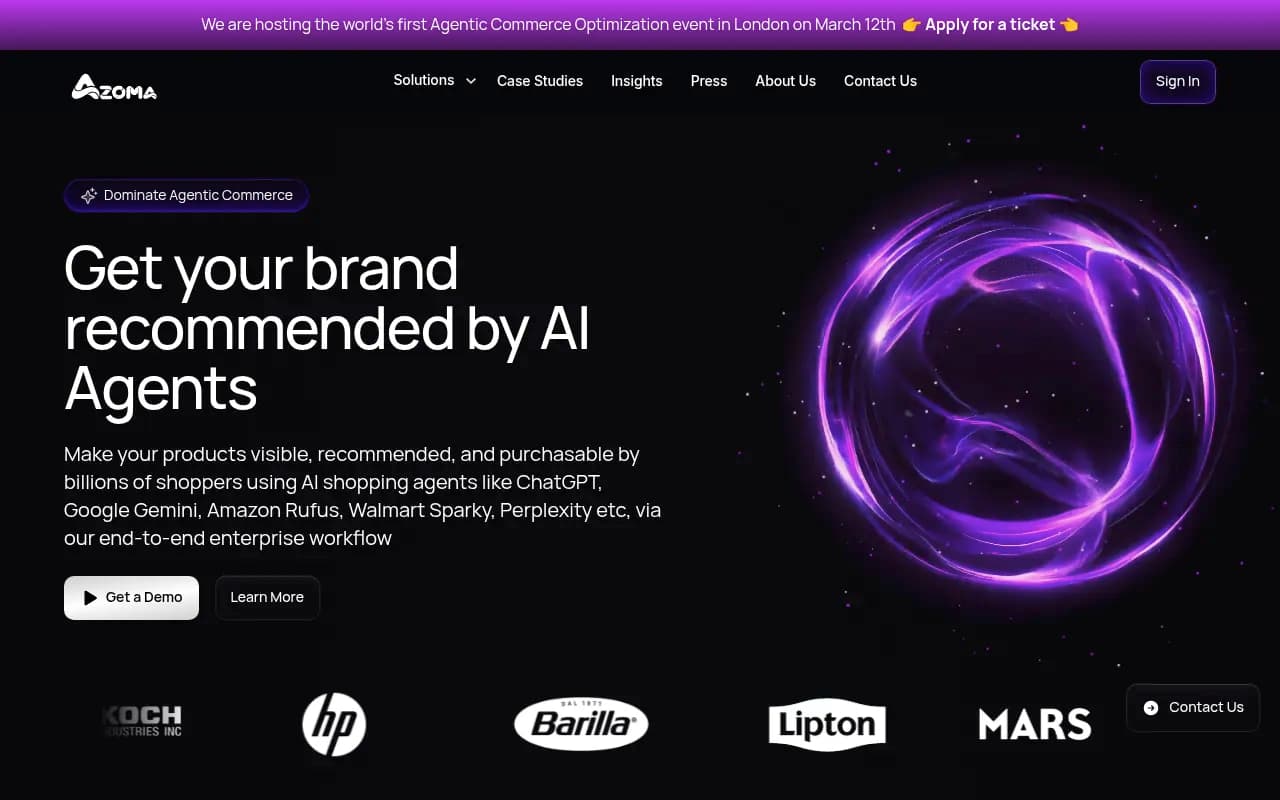
Azoma positions itself around AI shopping optimization for ChatGPT, Rufus and similar surfaces. It looks aimed at larger retailers with marketplace exposure, so expect a sales process rather than a self-serve card.
Profound: enterprise monitoring, shopping on the top tier
Profound offers strong monitoring and CMS publishing, with SOC 2 Type II. But its brand plans are a free trial and Enterprise, and ChatGPT Shopping analysis sits on Enterprise. Fine for a big brand, awkward for a mid-sized store.

Yotpo Discover: ecommerce-native, tied to reviews
Yotpo Discover is built specifically for ecommerce and ties AI visibility to customer sentiment. It's most attractive if you already run Yotpo for reviews. Yotpo's own list of best tools naturally puts it first, so treat that ranking as marketing.
AthenaHQ, Semrush and Ahrefs
AthenaHQ connects to Shopify and Google Analytics 4 and, per one comparison, can publish product copy to Shopify on Enterprise and Agency plans. Semrush's AI Visibility Toolkit and Ahrefs Brand Radar are easy picks if your team already pays for those suites, but both are better for brand-level tracking than SKU-level shopping analysis.


Which one should you pick?
| Your situation | Start with |
|---|---|
| You only want to know if AI mentions you, cheaply | Otterly.AI Lite |
| You want shopping visibility plus crawler access, traffic and content in one place | Promptwatch |
| You want per-SKU numbers and price comparison | Peec AI |
| You want product titles and GTINs rewritten and pushed to the store | Ranketta |
| You're a large retailer across marketplaces | Azoma or Profound |
| You already run Yotpo | Yotpo Discover |
A practical five-step trial
- Export your 20 best-selling and 20 most-wanted SKUs.
- Write the commercial and transactional prompts your buyers use, not generic category ones.
- Run the same prompts in two tools for two weeks and compare which products appear, which competitors fill the cards, and which prices are cited.
- Check the basics AI needs: complete Product schema, accurate prices and availability, and a clean merchant feed. Promptwatch's shopping data report recommends exactly this.
- Confirm AI crawlers can fetch your product pages. A free AI crawler URL inspector is a quick way to rule out an access problem before blaming content.
Treat ChatGPT shopping like early Google Shopping: modest traffic now, but brands that establish product visibility early will be hardest to displace. If you want to browse more options, the GEO software directory lists dozens of trackers by category.
Bottom line
Otterly.AI is still the cheapest way to start. Once you need to know which SKU loses and why, you need a tool that imports your catalog and shows competing products. Pick a measurer (Peec AI), an editor (Ranketta), or a platform that connects shopping data to crawler access, traffic and content work (Promptwatch). Whichever you choose, run your own prompts for two weeks first, because the shopping card trigger rate swings enough to fool a one-day check.