Key takeaways
- Homeowners and commercial buyers now ask ChatGPT, Gemini and Google AI Overviews who to hire for solar, storage and heat pumps. GEO tools show whether your company is named in those answers.
- Monitoring alone is not enough. Pick a tool that also shows which pages AI cites, whether AI crawlers can read your site, and what to publish next.
- Residential installers need local and service-area visibility. B2B developers and equipment suppliers need comparison and documentation content.
- The "top solar GEO agency" lists floating around are mostly vendor-authored. Read them as marketing, not as independent research.
- Start with a free visibility scan, shortlist two or three tools, and run them against the same 30 to 50 prompts.
Why energy and solar companies need GEO tools
Solar is a research-heavy purchase. A homeowner weighing a $25,000 system does not type one query and click one link. They ask an AI assistant things like "are solar panels worth it in Arizona", "best solar installers near me", "Enphase vs Tesla Powerwall", then follow up with pricing and incentive questions. Each of those answers names companies, and each name is either yours or a competitor's.
That is what GEO (generative engine optimization) is about: being the company the AI recommends and cites. A GEO tool does three jobs. It tracks your visibility across engines, it shows where the AI is getting its answers, and ideally it helps you fix gaps.
The energy sector has a few quirks that change what you should look for:
- Heavy local intent. Installers sell in service areas, and "near me" style prompts matter more than national rankings.
- Complex, regulated topics. Net metering, tax credits, interconnection rules and incentives change by state. AI answers about them are often wrong or stale, so you need to see what the models say about you.
- Long consideration cycles, so you want to measure AI-referred leads, not just mentions.
- Mixed buyer types. A residential installer, a utility-scale developer and a battery manufacturer each have completely different prompt sets.
What the citation data says about where to invest
No Promptwatch report covers the energy sector specifically, so treat this as general ChatGPT behavior rather than solar-specific findings. In Promptwatch's data on content types ChatGPT cites (Sep 28 to Oct 4, 2026), product pages were the most cited type at 22.4% of classified citations, with landing pages at 16.8%. Together that is about 39% of citations going to pages that describe what a company sells.
For commercial prompts, the "best X for..." kind that solar buyers use, the picture is sharper: product pages took 26.0%, landing pages 20.6%, listicles 15.0% and comparisons 7.9%. Those four types make up almost 70% of commercial citations.
For an installer, that translates into plain advice. Your service pages (residential solar, battery storage, EV chargers, commercial installs) need to be specific about pricing ranges, equipment brands, warranties, service areas and who the offer is for. Get included in the "best solar installers in [state]" roundups that AI already cites. Collect reviews on the sites your category relies on. Add a proper brand FAQ page.
If you sell software to solar companies, such as design, CRM or monitoring tools, Promptwatch's software citation data is a useful proxy. G2, Gartner, Capterra and Software Advice together earn 1.57% of software citations, which is more than any single vendor site. That is my inference rather than something the report states, but it suggests your G2 and Capterra profiles are worth the effort.
What to look for in a GEO tool
Before comparing products, decide which of these matter to you:
- Real interface tracking. Answers from the actual ChatGPT or AI Overviews interface can differ from API outputs.
- Location control. Solar queries are local. Can you run prompts as if asked from a specific city or ZIP?
- Citation and source data. You need to know which domains and pages get cited, including review sites, Reddit and directories.
- Crawler visibility. If AI bots cannot read your site, no amount of content fixes it.
- Action, not just reporting. Does the tool tell you what to publish, or help publish it?
- Traffic attribution. Can you connect AI visibility to actual quote requests?
- Price per tracked prompt. Installers with three service lines do not need an enterprise contract.
Best GEO tools for energy and solar companies
Promptwatch: best all-round pick for installers and developers
Promptwatch is the platform I would start with for most energy companies, mainly because it closes the loop rather than stopping at a dashboard. It tracks ChatGPT, Google AI Overviews, Google AI Mode, Gemini, Perplexity, Copilot and others through their real interfaces, in the country and language you choose. For solar, the useful parts are:
- Local GEO/SEO targeting on Business and above, where you pin a monitor to exact coordinates so ChatGPT and Google's AI surfaces answer as if asked from that spot. That fits "solar installer near me" prompts and multi-branch operators.
- Brand Narrative, which pulls out the individual claims AI makes about you, such as "expensive" or "slow installation", and scores them by theme like Pricing or Support. Fact Check (Business and above) helps when a model repeats a wrong incentive claim or an outdated warranty.
- IP-verified AI crawler logs, so you can tell whether GPTBot or ClaudeBot can actually read your quote pages.
- Content gap analysis and the Content Agent (Business and Enterprise), which writes and publishes pages for the prompts where competitors beat you, to WordPress, Webflow or Framer.
- Visitor analytics that attribute AI-referred traffic and conversions.
Pricing starts at Essential $95/mo (50 prompts), Professional $245/mo and Business $579/mo (350 prompts, the first plan with the Content Agent and local targeting). Confirm current numbers at promptwatch.com/pricing. There is a 7-day free trial on monthly billing, and a free AI visibility report if you only want a first look.

Honest caveat: if you only need a rough pulse on 20 prompts, the Business tier is more than you need. Essential or Professional covers most single-location installers.
Profound and Scrunch: enterprise monitoring
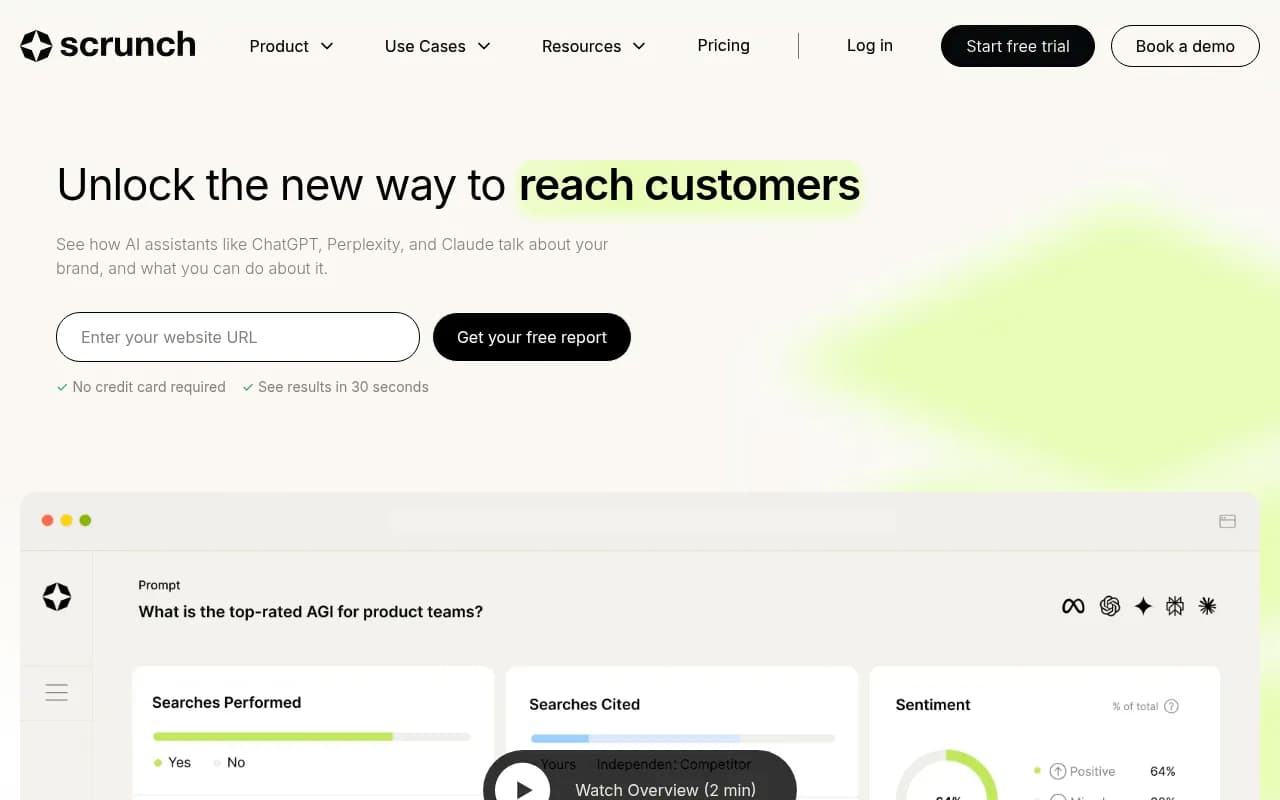
Profound and Scrunch both have strong monitoring and analytics, and suit larger utilities or national developers with procurement teams. They cost more and are lighter on execution, so expect to do the content work elsewhere. Compare them directly in Promptwatch vs Profound.

Otterly.AI and Peec AI: simple, affordable trackers
Both are good if you want a clean report on whether you appear in AI answers and nothing more. For a small installer testing the waters, that is a reasonable first step. The tradeoff is no crawler logs, no visitor analytics and no content generation, so you will need other tools to act on what you find.


Semrush and Ahrefs Brand Radar: if you already live in them
If your SEO team already pays for Semrush or Ahrefs, adding their AI tracking is the lowest-friction option. Expect fixed prompt sets and shallower AI-specific data than dedicated platforms.

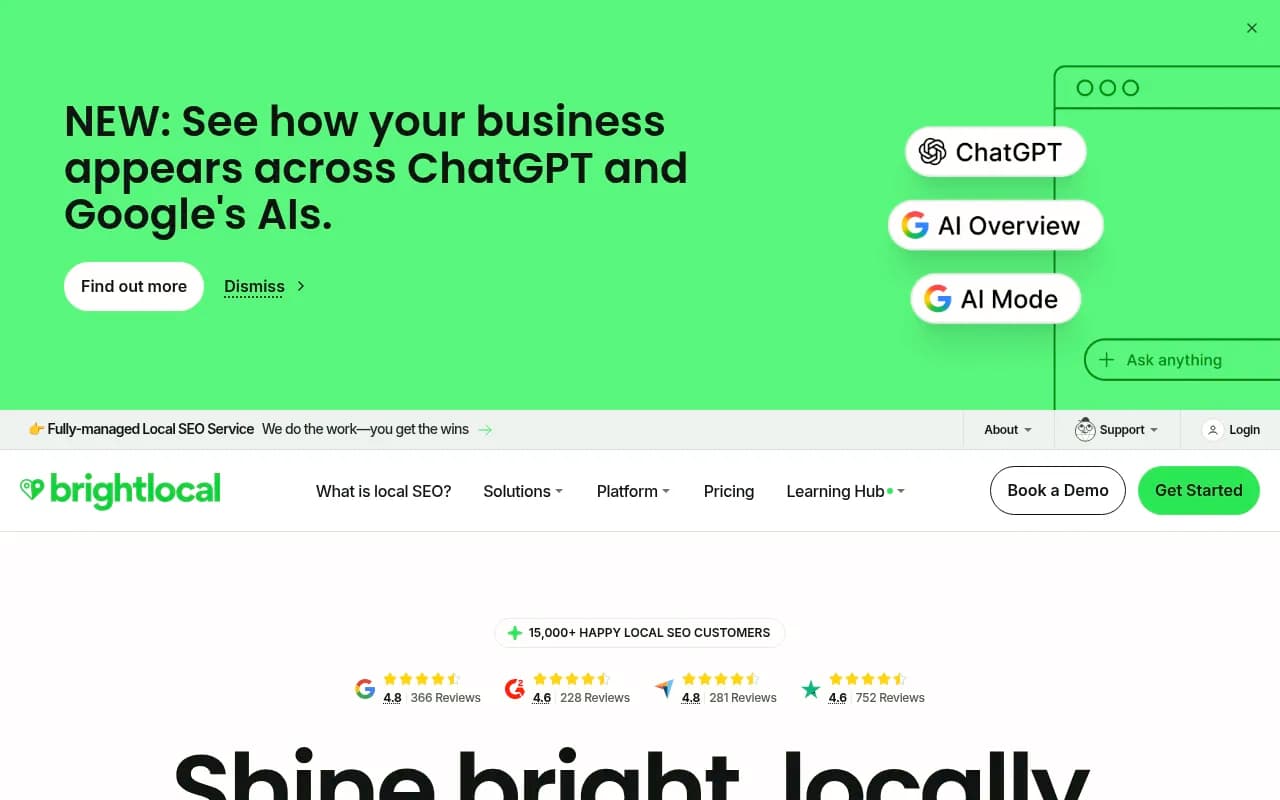
Local reputation tools: BrightLocal and Reputation.com
For residential installers, reviews and listings feed local AI answers. These are not GEO platforms, but they cover the review and citation side that GEO tools only measure.

Budget options for small installers
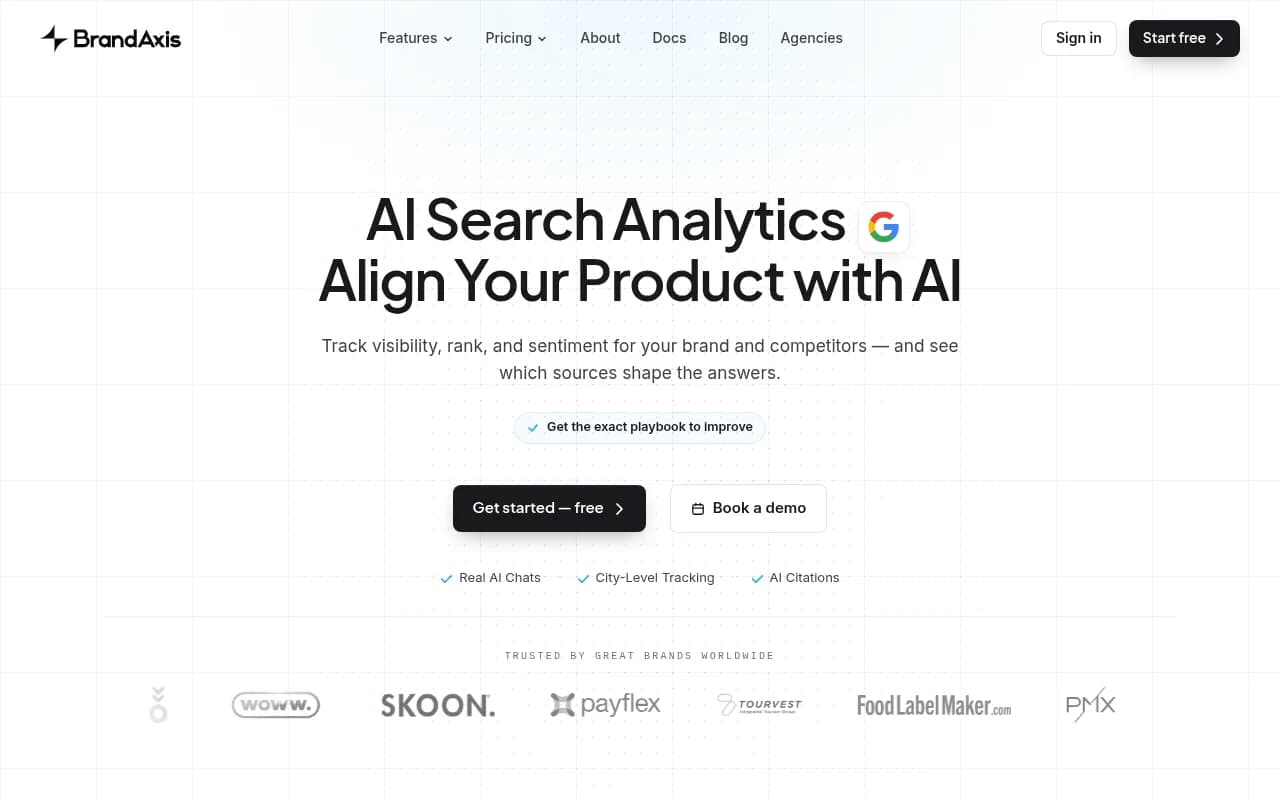
Smaller teams might also look at lower-cost trackers from our catalog such as Otterly.AI above, Airefs, BrandAxis or Radix AI. Check prompt limits and location support before paying, because many cheap tiers are country-level only. For a wider survey, the GEO software directory at bestgeosoftware.com lists far more options.
Comparison table
| Tool | Best for | Local targeting | Crawler logs | Content creation |
|---|---|---|---|---|
| Promptwatch | Installers, developers, multi-location brands | Yes (Business and up) | Yes | Yes (Content Agent) |
| Profound | Large enterprises | Varies by plan | No | No |
| Scrunch | Enterprise monitoring | Varies by plan | No | Limited |
| Otterly.AI | Small teams wanting a simple tracker | Country level | No | No |
| Peec AI | Multi-language tracking | Country level | No | No |
| Semrush / Ahrefs | Teams already using them | Limited | No | Limited |
| BrightLocal | Local reviews and listings | Yes (local SEO) | No | No |
Feature claims for competitors reflect general positioning; check each vendor's current plan before buying.
Picking by company type
Residential solar installer
Your fight is local. Track 30 to 50 prompts covering "best solar installer in [city]", battery backup, financing, incentive questions and brand comparisons. Use local targeting, watch which review sites and directories AI cites, and fix your service-area pages. Professional or Business from Promptwatch fits here.
Commercial and utility-scale developer
Buyers search for EPC contractors, PPA structures and equipment specs. Documentation, case studies and comparison pages matter more than reviews. You want crawler logs and citation data so you can tell whether technical pages are being read.
Equipment suppliers and manufacturers
Product pages dominate commercial citations, so spec clarity is your lever. Track prompts like "best residential battery for backup" and brand-versus-brand comparisons. If you sell through retail channels, Promptwatch's ChatGPT Shopping tracking (Business and up) shows which products AI recommends.
Energy software and climate-tech startups
Treat yourself as a SaaS company. G2 and Capterra listings, public docs and "best X software" listicles drive citations. A tracker with prompt volumes and difficulty scoring helps you pick which battles are winnable.
A note on the solar GEO agency rankings
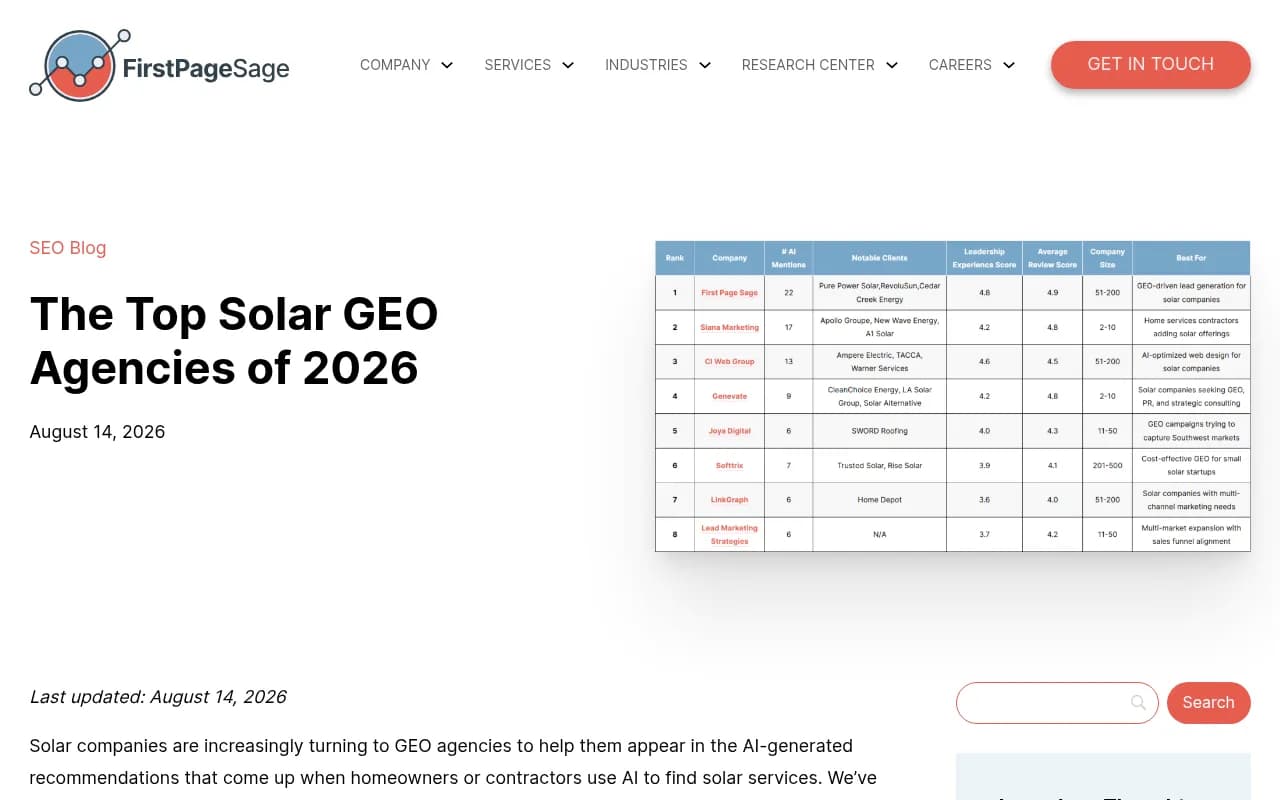
Search for this topic and you will find lists such as First Page Sage's "Top Solar GEO Agencies of 2026", which puts First Page Sage at number one. It is self-published, so it is vendor-authored. Its criteria (AI mentions in test searches, notable clients, leadership score, review score, company size) are at least stated, but the author scores itself.
The Bluelinks Agency list of renewable energy AEO and GEO agencies has the same problem and is also internally inconsistent: one ranking position is missing, and several entries are AI-automation or compliance firms rather than GEO providers. I would not use either as a vetted shortlist. If you want an agency, ask for client references in energy, examples of pages that got cited, and the tools they report from. 1001 SEO Media, which publishes this directory, is a GEO and SEO agency and uses Promptwatch for AI visibility reporting, so factor that in when weighing our recommendations.
One more disambiguation. "Geo mapping software" for solar, such as Esri ArcGIS for site design and shading analysis, is a different category entirely. It helps you design systems, not get recommended by AI. Do not confuse it with GEO tooling.
How to run a two-week evaluation
- Write 40 prompts across four groups: local service ("best solar installer in Phoenix"), comparison ("Tesla Powerwall vs Enphase"), incentives ("federal solar tax credit changes"), and brand queries.
- Run the free AI visibility report and a free Agentic Readiness Check to see whether AI crawlers can reach your site.
- Start trials with two tools and load the same prompts and locations into each.
- Compare the outputs: do they use real interfaces, can they target your service area, and do they show citations?
- Pick the weakest prompt group and publish or refresh pages against it. Check again in two to four weeks.
- Decide based on which tool made the next action obvious, not which dashboard looked nicest.
Common mistakes
- Tracking only branded prompts. You will look great and learn nothing.
- Ignoring incentive accuracy. If AI repeats an expired tax credit with your name attached, fix the source pages.
- Blocking AI crawlers by accident through robots.txt or a CDN rule. The free robots.txt generator for AI is a quick sanity check.
- Buying an enterprise platform for three service pages.
- Measuring mentions without measuring leads. Tie AI traffic to quote requests.
Bottom line
For most energy and solar companies, the right choice is a tool that handles local prompts, shows citation sources and helps you ship fixes. Promptwatch covers that end to end. If budget is tight, a simple tracker plus a good local reviews tool gets a single-location installer started. For more options, browse the GEO software directory, then run a two-week test on your own prompts before committing to anything annual.