Key takeaways
- Copy.ai has moved away from being a copywriting tool and toward a GTM automation platform. Its Growth plan starts at $1,000/mo, and the once-generous free tier is now trial-only.
- No single tool wins on "publishable" drafts across every format. Jasper wins on brand voice at scale, Surfer wins on SEO-structured long-form, Anyword wins on performance prediction, and raw Claude or ChatGPT still wins on pure sentence quality for a single skilled operator.
- The real cost metric isn't price per seat, it's cost per usable draft. A $39/mo tool where you bin four out of five outputs costs more than a $99/mo tool where you keep three of five.
- Google doesn't penalize AI-written content for being AI-written. It penalizes thin, generic, mass-produced content, regardless of who or what typed it.
- If your team is publishing content specifically to show up in ChatGPT, AI Overviews, or Perplexity, drafting quality is only half the job. Tools like Promptwatch help you figure out whether what you published is actually getting cited.
Why everyone is suddenly searching for Copy.ai alternatives
Copy.ai used to be the easy recommendation. Generous free tier, template library, decent output for cold emails and ad variations. Then somewhere around 2025 it rebranded itself as an "AI-native GTM platform" and started chasing sales and RevOps teams instead of writers. The templates are still technically there, but the product now wants you thinking in workflows, credits, and data enrichment, not drafts.
That pivot shows up in the pricing. The Chat plan is $29/mo for basically unlimited chat, fine. But the moment you need the workflow features that used to be the whole point of Copy.ai, you're at $1,000/mo for Growth (75 seats, 20,000 workflow credits) or $2,000/mo for Expansion. Those workflow credits burn faster than people expect across multi-step GTM sequences, and I've seen more than one Trustpilot review complain about getting stuck on the free plan with no clear way to cancel. That's not a copywriting complaint, it's a software complaint, but it's why people go looking elsewhere.
The other complaint, and this one is about writing quality, is that Copy.ai's output has gotten more generic. The same prompt run through Claude or a GPT-4-class model now frequently beats Copy.ai's template-shaped copy. When the underlying models get better faster than your wrapper does, the wrapper stops adding value.
What "publishable" actually means
Before comparing tools, it's worth being honest about what a publishable draft requires, because most AI writing demos are lying to you by cherry-picking a 300-word example.
Longer content is where tools fall apart. Budget tools tend to drift off the brief somewhere past 800 words and need a full rewrite pass to get back on topic. The better tools hold focus across 2,000+ words with minimal drift, but "the better tools" is doing a lot of work in that sentence, because which tool is better depends entirely on the format.
Brand voice has the same problem at a different length. Almost every tool nails a 100-word email in your brand voice after you feed it a few samples. Far fewer hold that voice past 1,200 words without needing recalibration. If your team needs long-form blog posts or landing pages that sound like your brand and not like a competent stranger, test this specifically, don't take it on faith.
Here's a checklist I'd actually use before picking a replacement:
- Test the tool against your real ideal customer profile, not a generic demo prompt
- Measure cost per usable output, not cost per seat
- Check whether it can pull real context from your CRM or product docs, otherwise you get filler like "I noticed your company is growing"
- Test brand-voice retention past 1,200 words, not just in a single email
- Confirm there's a real export or CMS path so copy isn't getting hand-pasted by someone on your team
The main contenders, compared
| Tool | Best for | Brand voice at length | Pricing (entry) | Free tier |
|---|---|---|---|---|
| Jasper | Marketing teams publishing at volume | Strong once trained on samples | $69/seat/mo ($59 annual) | No, 7-day trial only |
| Surfer AI | SEO-structured blog content | Moderate, optimized for structure over voice | $99/mo ($79 annual) | No, money-back guarantee |
| Writer.com | Enterprise teams needing governed, on-brand output | Strong, domain-specific models available | $39/user/mo ($29 annual) | 14-day trial |
| Anyword | Performance-focused ad and landing copy | Moderate | $39/mo ($49 monthly) | Yes, limited |
| Claude / ChatGPT | Solo writers who can prompt well | Depends entirely on the operator | $20/mo | Limited free tier |
| Copy.ai | GTM workflow automation, not pure copywriting anymore | Weak at scale | $29/mo (Chat only) | Trial only |
Jasper
Jasper
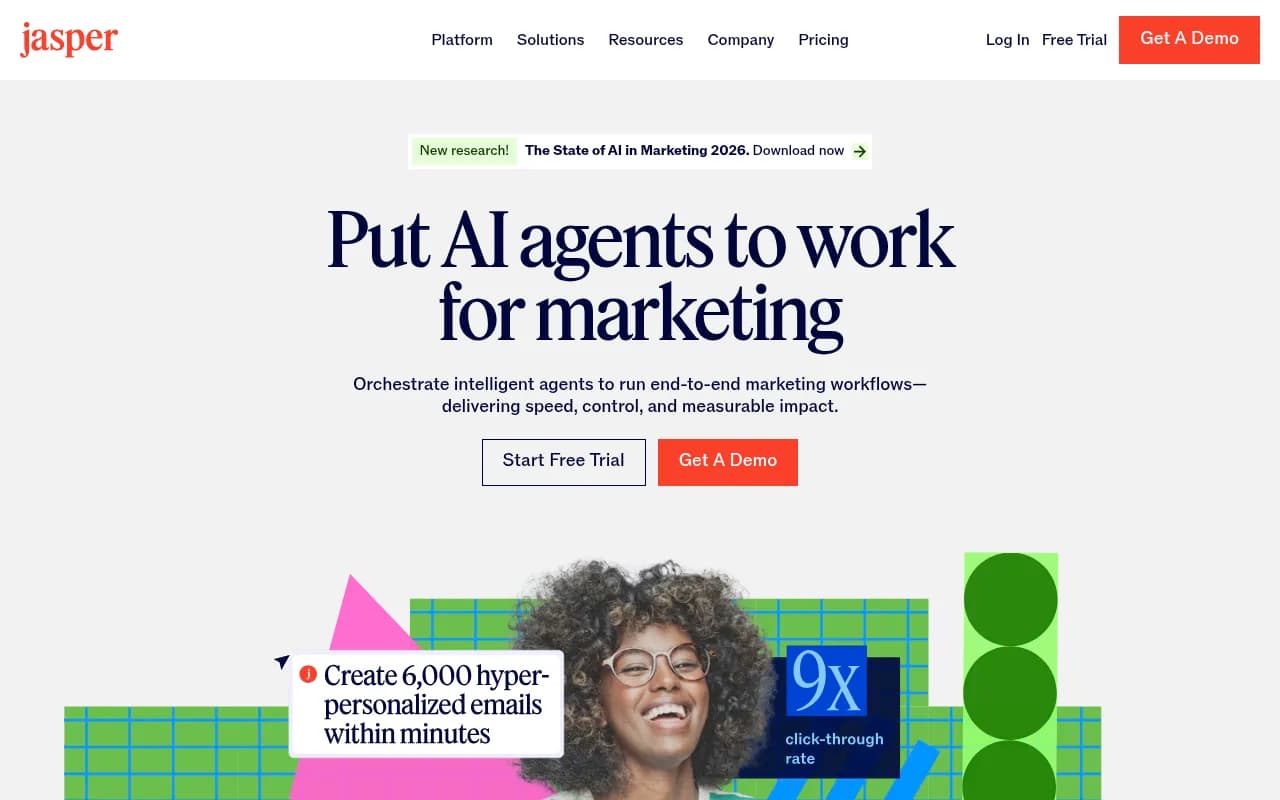
Jasper's real differentiator isn't the writing itself, it's Brand Voice. Feed it roughly ten pieces of existing copy and it stops sounding like a generic LinkedIn ghostwriter. Pair that with its Knowledge base, which grounds output in actual product facts instead of inventing features, and you get fewer factual errors in long-form drafts than most competitors. Pricing sits at $69/seat/month monthly or $59/seat/month billed annually, and that's just the Pro tier: one seat, two Brand Voices, five Knowledge Assets. Want a second seat without going to Business? You can't, self-serve tops out at one seat. Jasper now frames itself as an "agent workspace" with over 100 specialized agents, which tells you where the company's ambitions are, but the core drafting quality for blog posts, landing pages, and sales enablement content is still the reason people pay for it.
Best fit: teams producing content at volume across multiple formats who are willing to invest time training Brand Voice. Weak fit: anyone who just needs the occasional short cold email, that's overkill.
Surfer AI
Surfer SEO
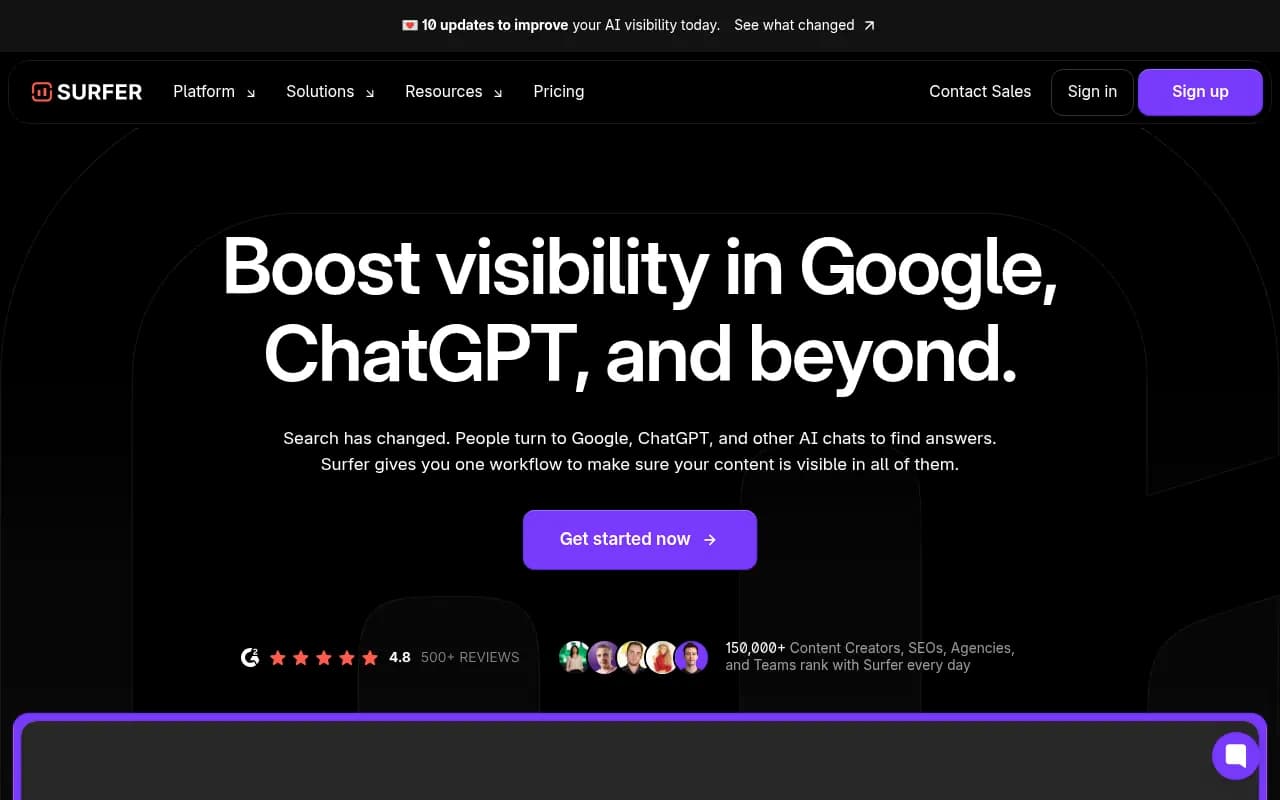
If your bottleneck is SEO-structured long-form, not general marketing copy, Surfer AI is the fastest path from keyword to a draft that's already optimized for on-page structure. Alex Birkett, who writes about AI copywriting workflows, put it plainly: "It's not going to win any literary awards, but it's the fastest path I've found from keyword to publishable draft." That's the honest pitch. Surfer isn't trying to write clever ad copy or emotionally resonant emails, it's trying to make sure your blog post covers the subtopics and structure that rank.
Essential is $99/mo ($79 annual) for 30 Content Editor articles and 5 AI-generated articles, plus 100 page audits. Scale jumps to $219/mo for more of everything plus SERP Analyzer and Rank Tracker. Extra AI articles cost $29 each beyond your plan allotment, which adds up if you're publishing heavily. Surfer has also started leaning into AI visibility messaging, adding AI Tracker insights to its recommendations in August 2026, acknowledging that ranking in Google isn't the only game anymore.
Best fit: SEO teams and agencies publishing blog content on a schedule. Weak fit: anyone needing ad copy, email sequences, or creative writing.
Writer.com
Writer.com is built for enterprise teams that need governance as much as generation, things like domain-specific models (Fin for finance, Med for healthcare), customizable roles and policies, and unlimited scheduled content routines at the Enterprise tier. Starter is $39/user/month ($29 annual) for up to five users, but the real product is the Enterprise tier, which is custom-quoted and can run into the hundreds of thousands annually for large seat counts with heavy API usage. The pricing model layers seats with API token consumption, so a big team with high usage can end up paying far more than the sticker price suggests.
Capterra rates Writer's customer service 4.8/5, which matters more than it sounds like once you're negotiating custom enterprise terms. But for a five-person marketing team that just wants better drafts, Writer.com is probably overbuilt. It's competing for IT and ops buyers, not solo copywriters.
Anyword
Anyword's angle is different from all three above: it scores copy before you even publish it, using what it calls a Predictive Performance Score to estimate how a given headline or ad variant will perform. Starter is $39/mo billed annually ($49 monthly) and includes unlimited copy generation plus 100 performance predictions a month. The scoring is directional, useful for A/B testing decisions, not gospel, so treat it as a tiebreaker between drafts rather than a guarantee.
Best fit: teams running a lot of paid ad variants or landing page tests where a data-informed nudge beats a coin flip.
Claude and ChatGPT, unwrapped
There's a blunt argument worth taking seriously: a $20/month frontier model with a well-written prompt beats most $49/month wrappers on raw output quality. I don't think that's wrong, exactly. Claude and ChatGPT genuinely produce better sentences than most templated tools when the person prompting them knows what they're doing.
Claude
Gemini
The catch is consistency across a team. A 30-person SDR floor using raw ChatGPT gets 30 different prompting styles and 30 different levels of editing discipline. That's fine for a solo operator or a two-person team with tight quality control. It falls apart the moment you need five writers producing content that sounds like the same brand.
Rytr, Writesonic, and the budget tier
Rytr is genuinely the cheapest option, around $9/mo with a real free-forever tier, and it's fine for short-form copy where heavy editing afterward is expected. Writesonic has repositioned itself more toward AI search visibility tracking than pure copywriting, with its Professional plan at $249/mo now bundling GEO tracking for 100 AI prompts alongside article generation. Worth knowing if you want drafting and visibility monitoring in one subscription, less useful if you just want clean long-form copy.
What happens after the draft matters more than people think
Here's the part most "best AI writing tool" roundups skip entirely. Getting a publishable draft is step one. Whether that draft ever gets cited by an AI assistant, or even ranks in Google, depends heavily on format and structure choices you make before you hit publish.
Promptwatch's citation data from August 2026 shows ChatGPT Search citing product pages at roughly 25-30% of citations through most of the month, while how-to content more than doubled its share (from 4.3% to 9.1%) and documentation-style pages rose from 3.3% to 8.2% in the last nine days alone. Social post citations, meanwhile, collapsed from 4.4% to under 1% after August 14, the same day Reddit's citation share across ChatGPT fell sharply. If your content strategy leans on social-style posts to get picked up by AI assistants, that channel is drying up fast.
There's also a common misconception worth killing here: publishing markdown versions of your drafts does nothing for AI search visibility. Promptwatch's data on markdown in AI search found markdown files account for just 0.05% of citations across ChatGPT, Claude, Perplexity, and AI Overviews, versus 99.94% for standard HTML. Clean HTML and content that directly answers a question still wins, not file format tricks.
One more thing worth knowing if you're deciding where to invest editing time: you don't need a massive domain authority site to get cited. Promptwatch's citation-share-by-domain-rank data for August 2026 shows domains with a DR of 46-75 earned close to half of all ChatGPT citations, while the very top tier (DR 91-100) actually saw its share drop sharply mid-month. A well-optimized draft on a mid-authority site is genuinely competitive.
If tracking whether your published drafts are showing up in ChatGPT, Gemini, Perplexity, or Google AI Overviews is part of your job, that's a separate problem from drafting, and it needs a separate tool.

Promptwatch goes past simple mention tracking. It shows which of your published pages are actually getting cited, logs when AI crawlers visit those pages and whether they hit errors, and its Content Agents can generate and publish GEO-optimized drafts directly to Webflow, Framer, or WordPress on a schedule. For a content team that's already investing in better drafting tools like Jasper or Surfer, pairing that with visibility data closes the loop between "we published it" and "it's actually working."
So which one should you actually pick
If you're a marketing team producing blog posts, landing pages, and sales enablement content at volume and brand consistency matters, Jasper is the strongest general pick despite the price. If SEO-structured long-form is your bottleneck specifically, Surfer AI gets you from keyword to draft faster than anything else on this list. If you're running paid ad tests constantly, Anyword's scoring earns its subscription. If you're a solo writer or a two-person team that's disciplined about prompting, skip the wrapper entirely and pay $20 for Claude or ChatGPT directly.
What almost nobody should do in 2026 is stay on Copy.ai purely for copywriting. It's chasing a different customer now, and the free tier that made it a reasonable starting point is gone. If you want to keep exploring alternatives beyond this list, the broader software directory at surferstack.com covers a wider set of content and SEO tools worth comparing side by side.
Whatever you pick, don't judge it on a single 300-word demo. Run it on a real 1,500-word brief in your actual brand voice, count how many of the five drafts you'd genuinely publish without a rewrite, and do that math against the subscription price. That number tells you more than any feature comparison table, including this one.