Key takeaways
- Refresh frequency determines whether you catch a citation shift the same week it happens or find out after a competitor has already capitalized on it. Promptwatch's own data shows AI search behavior can flip overnight: ChatGPT's
site:operator usage jumped from 0.4% to 17% of fanout queries in a single day on August 8, 2026. - "Daily" is not a standardized term. Some platforms run daily queries on every tier (Otterly.AI), some gate it to higher plans (Profound, Peec AI), and some let you dial frequency up or down against a credit budget (Ahrefs Brand Radar).
- Weekly tracking isn't useless, but it hides fast, single-platform shifts. Reddit's share of ChatGPT citations collapsed from roughly 4% to 0.5% in one day on August 14, 2026 — a weekly scan would have shown that change five or six days late, by which point the story is already over.
- Price scales with refresh cadence almost everywhere. Expect to pay more for daily tracking across more engines and more prompts; the cheapest daily options start around $25-30/month for a small prompt set.
- Ask vendors directly whether "daily" means a daily query run or an interpolated estimate between less frequent runs. The two look identical on a dashboard but tell you very different things.
Why refresh frequency deserves its own buying criterion
Most comparisons of AI visibility tools rank by engine coverage, price, or dashboard polish. Refresh frequency rarely gets its own section, which is strange, because it's the variable that decides whether the data you're looking at describes today or describes last Tuesday.
Here's the thing: AI search answers aren't static. They move with model updates, with competitor content pushes, and sometimes with changes nobody announces. Promptwatch's data on the GPT-5.3 rollout is a good example — average citations per ChatGPT web-search response dropped from about 6.4 the week before the rollout to roughly 4.7-4.9 by late March 2026, a cut of nearly 27% in available citation slots, and it happened within a day of the model shipping, not gradually over weeks. If your tracker only refreshes weekly, you'd see a confusing drop days after the actual cause, with no way to tie it to the event.

The same pattern shows up in ChatGPT's citation sourcing. On August 8, 2026, ChatGPT Search started using the site: operator at scale, jumping from about 0.4% to roughly 17% of all fanout queries overnight, with searches per response nearly doubling the same day, according to Promptwatch's data on ChatGPT's site-operator fanouts. And on Reddit specifically, ChatGPT's citation share for reddit.com fell from around 3.8% to 0.5% in a single day on August 14, 2026, an 86% relative collapse, while Google AI Overviews and AI Mode declined much more gradually over two weeks, per Promptwatch's report on dropping Reddit citations. That's a near-perfect illustration of why refresh cadence matters: a daily tool sees a cliff; a weekly tool sees a slow slide, or misses the window entirely depending on when its snapshot lands.
Daily, weekly, and the gray area in between
Before ranking tools, it's worth being precise about what "daily" actually buys you, because the term gets used loosely across the category.
True daily query runs
The platform actually sends your prompts to the AI engines every day and records a fresh response. This is the gold standard, but it's also the most expensive to run at scale, since every prompt-engine-location combination consumes a query.
Daily dashboards with interpolated data
Some tools query less often (say, every 3-4 days) and fill the gaps with modeled or extrapolated values so the chart looks continuous. The AEO Vision team flags this directly in its own writeup on refresh frequency, warning that "several newer entrants claim daily tracking but use weekly API calls with estimated interpolation between runs." That's a vendor making a competitive point, so take it as a prompt to ask questions rather than gospel, but it's a fair question to put to any sales rep: does daily mean a daily query, or a daily chart update built from less frequent data?
Adjustable frequency tied to budget
Ahrefs Brand Radar does something different from the fixed-tier model. Refresh frequency there is a dial, not a plan feature — you choose daily, weekly, or monthly per prompt, and daily consumes more of your query budget than weekly or monthly for the same prompt set. That's a genuinely useful model if you want daily tracking on your 20 highest-value prompts and monthly tracking on a long tail of 200 others.
Weekly as the default floor
Most of the category still runs on a weekly cadence by default, with daily reserved for higher-priced tiers. That's not automatically wrong. If your market moves slowly and your competitors rarely ship content, weekly is often enough. The AEO Vision piece estimates that roughly 80% of B2B SaaS categories see "fast-moving" citation shifts, with average week-over-week swings of 8 to 15 percentage points possible — treat that as a self-reported vendor stat rather than an independently verified industry number, but it lines up with what we're seeing in Promptwatch's citation-share data month over month.
Platforms ranked by how often they actually refresh
True daily tracking on every tier
Otterly.AI is the standout here. Every published tier, including the $29/month Lite plan with 15 prompts, explicitly lists daily tracking frequency, covering ChatGPT, Google AI Overviews, Perplexity, and Microsoft Copilot as core engines (Claude, AI Mode, and Gemini are paid add-ons). That makes it one of the cheapest ways to get genuinely daily data, not just daily data gated behind an enterprise contract.

Promptwatch monitors ChatGPT, Gemini, Claude, Perplexity, Grok, Google AI Overviews, Google AI Mode, and more using continuously updated, real UI monitoring rather than API-only sampling, which matters because user-facing answers and citations can differ from what an API returns. The platform's own research reports, built on more than 4.5 billion analyzed citations, clicks, and prompts, are themselves refreshed on rolling daily and monthly cycles, which gives you a sense of the underlying pipeline's cadence. Beyond monitoring speed, Promptwatch also runs Agent Analytics (crawler logs showing when AI bots actually visit your pages) and Content Agents that publish fixes to your CMS, so fast data doesn't just sit in a dashboard, it feeds directly into action.
Daily tracking on paid tiers, weekly or none on entry plans
Peec AI offers daily tracking starting at its Starter plan, confirmed at roughly €70/month annual (about €82 monthly) for 50 prompts across 3 of 6 engines. Pricing in USD runs $95/month (Starter), $245/month (Pro), and $495/month (Advanced), all including daily refresh, with extra model add-ons priced separately. One nuance worth flagging: Peec AI's agency-focused "Integrations" tier at $675/month explicitly reverts to weekly refresh, so bigger isn't automatically faster in their pricing structure.

Profound advertises daily tracking, but the details vary by source. Its own pricing page describes a free 7-day trial with 50 prompts run daily across ChatGPT, Gemini, and Google AI Overviews, while its Enterprise tier promises "ongoing daily tracking" across up to 9 answer engines. Third-party pricing breakdowns put a Starter tier around $99/month that may not include daily refresh, with a Growth tier (roughly $399-499/month depending on the source) that does. Verify refresh cadence against your specific plan before signing, since the published numbers don't fully agree with each other.

Adjustable frequency, your budget decides
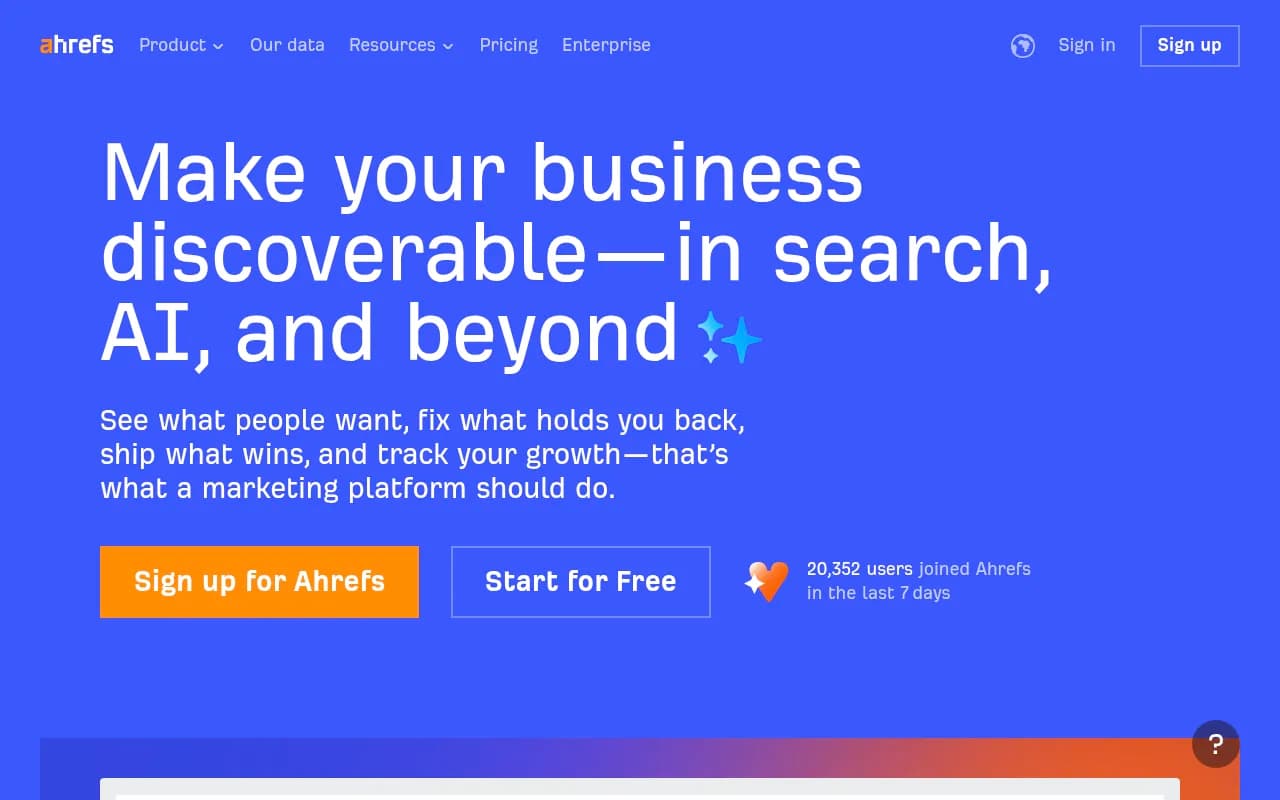
Ahrefs Brand Radar stands apart structurally. Its Custom Prompts product starts at $50/month as an add-on to a paid Ahrefs plan, and its AI Visibility Index starts at $199/month with access to 448 million-plus modeled prompts out of the box. Refresh frequency (daily, weekly, or monthly) is chosen per prompt and tied to how many "checks" you consume, across 6 engines including AI Overviews, ChatGPT, Gemini, Perplexity, Copilot, and AI Mode. This is worth considering if your prompt list is large and you only need daily eyes on a priority subset.
Weekly by default, or lagging
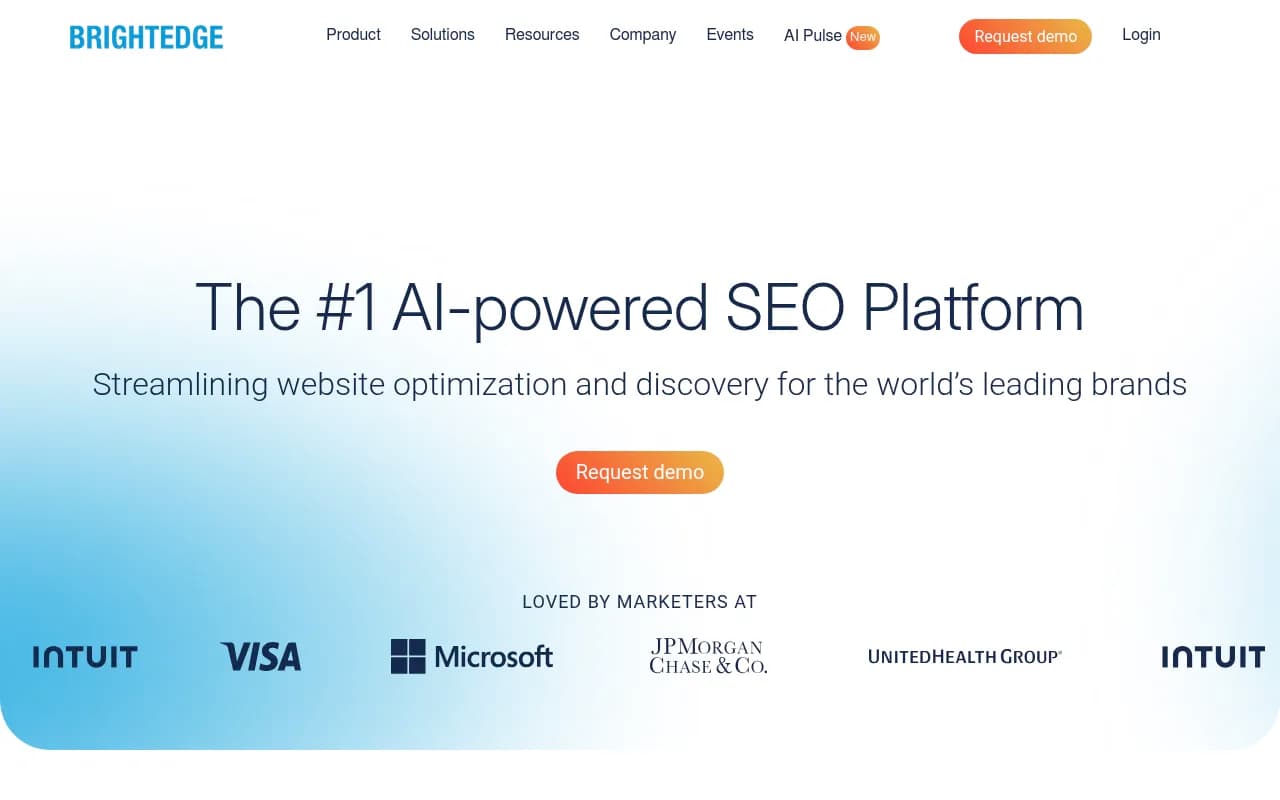
BrightEdge Prism is enterprise-only, with no self-serve pricing and typical annual contracts in the $42,000-$69,000 range according to purchase-order data. Several reviews flag data freshness as a specific weakness, describing update lags in the 24-48 hour range for its AI module, which pushes some enterprise teams to run a separate, faster tool alongside it just for AI citation tracking.
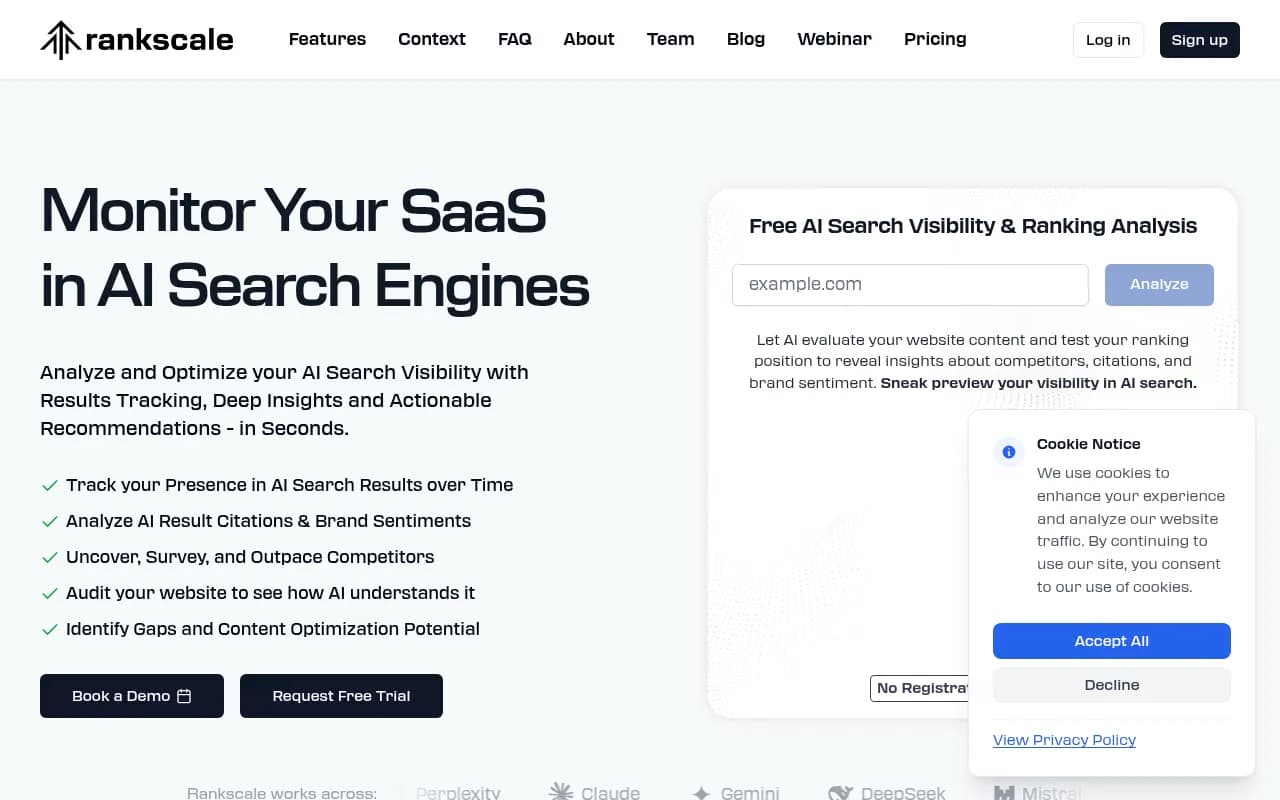
RankScale scales from $20/month (Essentials) up to $780/month (Enterprise) with a credit-based model and no per-engine upsells, which is appealing on paper. A third-party buyer's guide comparing alternatives warns that some tools in this price range "quietly refresh weekly at the bottom tier," so confirm cadence before assuming daily is included at the entry price.
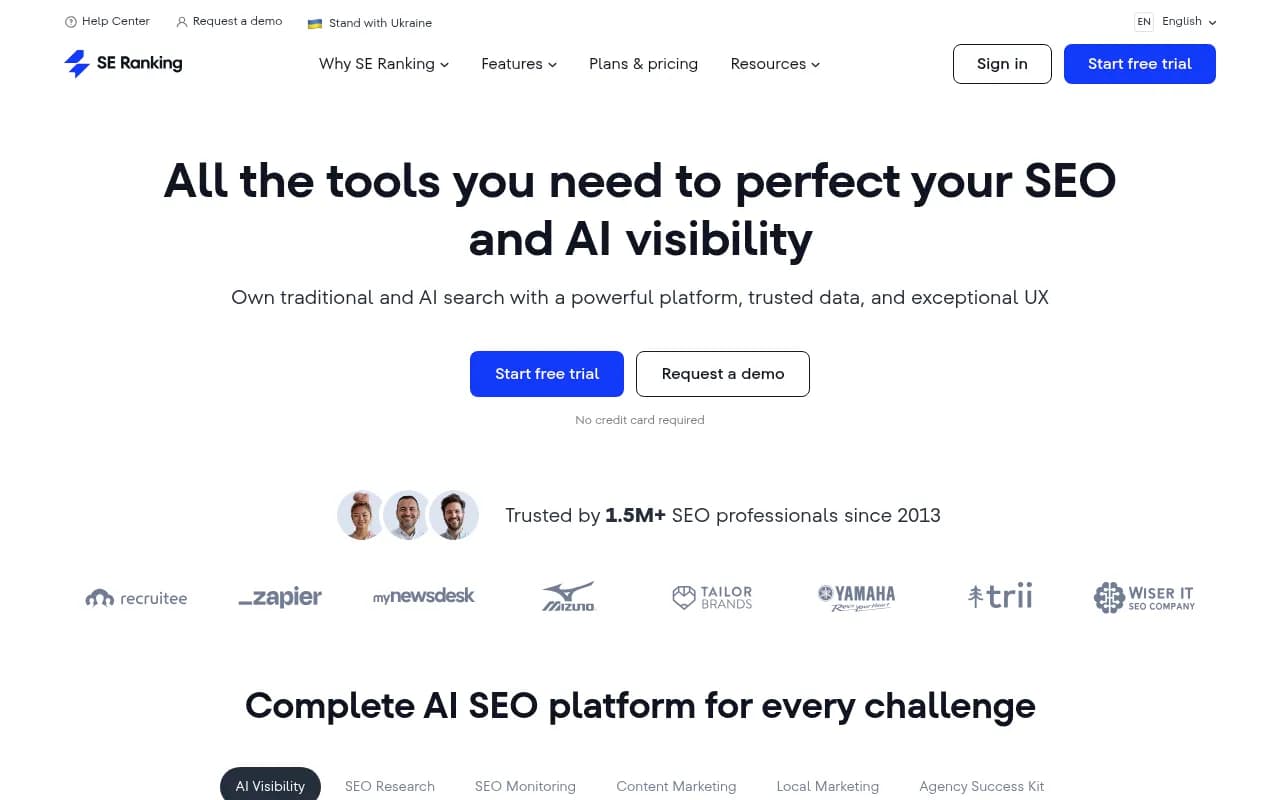
Semrush's AI Visibility Toolkit and SE Ranking's AI Visibility Tracker are both add-ons to existing platform subscriptions ($745/month bundled estimate for Semrush's module; roughly $119/month as an SE Ranking add-on). Refresh cadence for these modules isn't prominently advertised the way it is for dedicated AI visibility tools, which is its own small signal about priority.
Comparison table: refresh frequency and starting price
| Platform | Daily refresh included at entry tier? | Engines (core) | Entry price |
|---|---|---|---|
| Otterly.AI | Yes, all tiers | ChatGPT, AI Overviews, Perplexity, Copilot | $29/mo |
| Peec AI | Yes, from Starter | 3 of 6 engines | ~$95/mo (€70/mo annual) |
| Promptwatch | Continuous / real UI monitoring | ChatGPT, Gemini, Claude, Perplexity, Grok, AI Overviews, AI Mode and more | $95/mo (Essential) |
| Profound | Trial only; Growth tier and up | ChatGPT, Gemini, AI Overviews (trial) | ~$99-499/mo depending on tier |
| Ahrefs Brand Radar | Adjustable, costs more credits | 6 engines | $50/mo (add-on) or $199/mo (standalone) |
| RankScale | Verify at entry tier | Multiple, credit-based | $20/mo |
| BrightEdge Prism | No (24-48 hr lag reported) | Enterprise suite | Custom (~$4,200/mo avg) |
Pricing details shift frequently across this category, so treat the table as a snapshot and confirm current numbers at checkout.
How to decide which cadence you actually need
Don't default to "daily is always better." Daily tracking costs more, generates more noise, and is only useful if someone on your team is actually reviewing it. A practical framework:
- Map your category's volatility. If competitors publish aggressively or your space depends on a handful of high-intent prompts, daily tracking earns its cost. If your market is slow-moving, weekly is often fine and considerably cheaper.
- Separate your prompt list into tiers. Your 10-20 highest-value prompts (the ones tied to actual pipeline) deserve daily eyes. A long tail of exploratory prompts can run weekly or monthly, which is exactly the model Ahrefs Brand Radar is built around.
- Build an alert threshold, not a daily ritual. Checking a dashboard every morning and reacting to normal variance burns time without adding insight. A better pattern, echoed in AEO Vision's own guidance, is to alert only on meaningful deltas: citation rate drops greater than 10 percentage points week over week, a new competitor appearing in your top 5 priority prompts, or sentiment flipping from positive to cautious. Save broader review for a weekly session, using the daily data as raw input rather than a constant stream to react to.
- Ask the "real query or interpolated" question explicitly. It's a fair thing to ask any vendor on a sales call, and the answer tells you whether you're paying for genuine freshness or a prettier chart.
Where to go from here
If you're assembling a shortlist, the GEO software directory at bestgeosoftware.com is a reasonable place to browse the broader category beyond the handful covered here, and ai-rank-tools.com focuses specifically on rank-tracking style AI visibility tools if cadence and pricing structure are your main filters.
For teams that want fast data paired with the ability to act on it immediately, rather than just watching a dashboard move, it's worth looking at platforms that combine monitoring with content generation and crawler-level diagnostics. Promptwatch's Agent Analytics shows exactly when AI crawlers hit your pages and whether they errored out, which explains the "why" behind a visibility shift rather than just flagging that one occurred — a layer most monitoring-only tools, regardless of refresh speed, simply don't have.