Key takeaways
- Promptwatch covers the full loop (tracking, crawler logs, citation analysis, content generation, CMS publishing), so most teams don't need a second platform doing the same job twice
- The gaps worth filling with a second tool are narrow: developer-first API access, enterprise AXP-style crawl governance, or a free secondary check for a client pitch
- Stacking tools on prompts, credits, or checks gets expensive fast because every vendor meters usage differently, so convert everything to $/response before comparing
- Ahrefs Brand Radar and Semrush AI Visibility Toolkit make sense as add-ons only if you're already paying for their core SEO suite for other reasons
- For most teams, the smarter move than adding a second tracker is pushing Promptwatch harder, using Agent Chat, Unified Actions, and the Content Agent you're probably not using yet
Why teams end up asking this question at all
I keep seeing the same scenario in agency Slack channels and on r/aeo: a team has Promptwatch running for a client, it's doing its job, tracking citations, flagging crawler errors, publishing AEO content. And then someone asks, "should we also get Peec AI for this other client?" or "do we need Scrunch for the enterprise account?"
It's a fair question. Not every client needs the same depth. A five-person SaaS company testing the AI search waters has different needs than a Fortune 500 retailer with an internal AXP mandate. The honest answer is that most teams don't need two full platforms doing the same job. But there are a handful of real reasons to add a second tool to the stack, and a longer list of reasons people think they need to but don't.
This guide is for teams that already have Promptwatch running somewhere, whether that's your own brand, a client account, or an agency-wide subscription, and want to know what (if anything) is worth layering on top.

What Promptwatch already does, so you know what's actually missing
Before adding anything, it's worth being honest about what's already covered. Promptwatch tracks citations and visibility across ChatGPT, Perplexity, Google AI Overviews, Google AI Mode, Claude, Gemini, Meta Llama, DeepSeek, and Grok on every paid tier, no per-engine add-on fees. That alone rules out most of the reasons people reach for a second tool, since plenty of competitors charge extra per model.
On top of tracking, Promptwatch ships AI crawler log analysis (it turned on Fastly log ingestion back in mid-2025, well before most of the category), citation lifecycle data broken into 22 content types and 20 source types, Reddit and YouTube citation reports, content gap analysis against your own site, and a Content Agent that writes and publishes AEO articles straight into Webflow, Framer, or WordPress. Agent Chat lets you ask plain-English questions about your own visibility data, and Unified Actions turns all of it into a prioritized to-do list.
So the question isn't "what does Promptwatch lack in general" (not much). It's "what does my specific team or client need that falls outside this scope." That's a shorter list.
The legitimate reasons to add a second AI visibility tool
You need a pure API, developer-first layer
If your engineering team wants to pipe AI visibility data directly into an internal dashboard without touching a UI, a tool like ZipTie is built specifically for that workflow. It's not trying to be a full GEO platform, it's a diagnostic layer that developer teams can query programmatically.
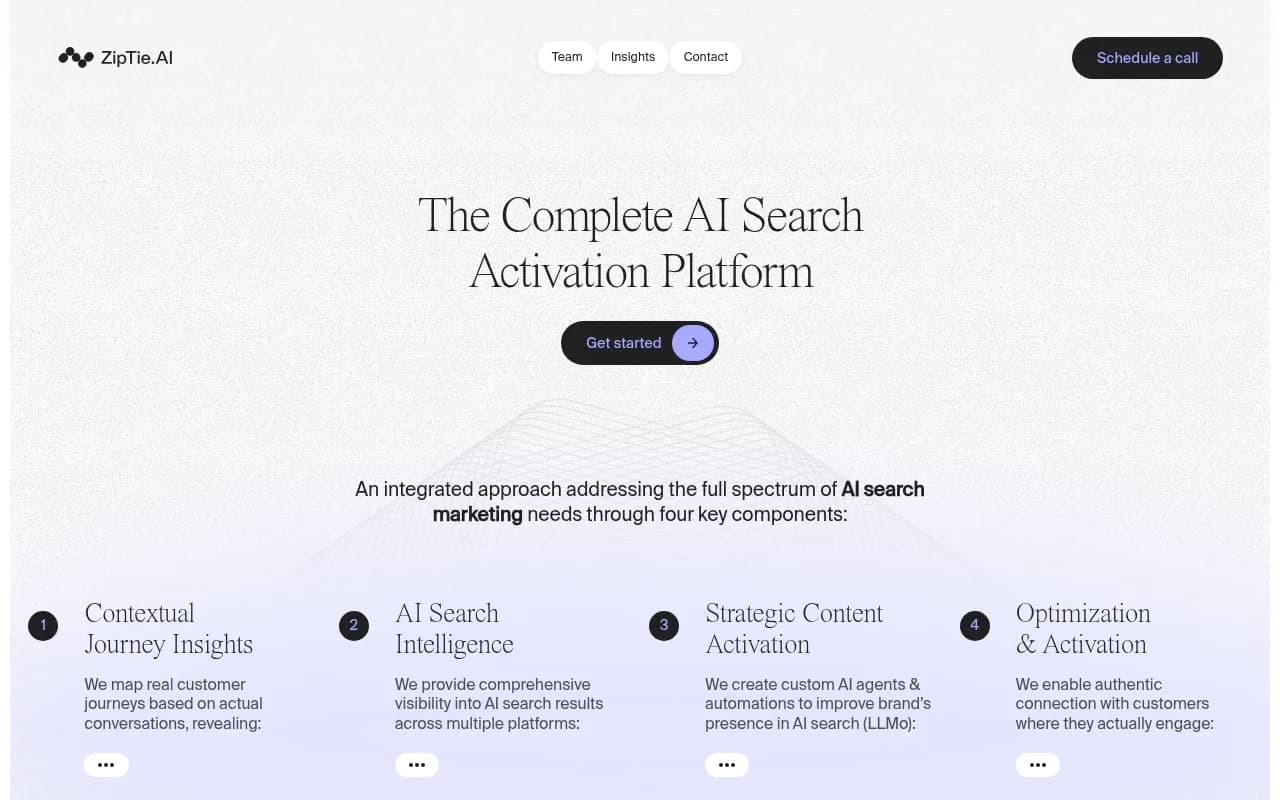
Promptwatch does have a REST API v2 and an MCP server that works with Claude, Cursor, and other MCP-compatible clients, so plenty of dev teams never need a second API. But if the whole workflow is meant to live outside any dashboard, a narrower API-first tool can be simpler to wire up for a single, specific use case.
Your client is already locked into an enterprise SEO suite
If a client is already paying for Ahrefs or Semrush for link-building, keyword research, and site audits, their AI visibility add-on (Brand Radar or the AI Visibility Toolkit) might get used anyway simply because it's bundled into a renewal they're not canceling. That's a real-world reason, not a feature argument. Ahrefs Brand Radar also tracks YouTube, TikTok, and Reddit brand mentions and "web visibility" across its own 16.9 billion-page index, which is a genuinely different data source than most AI-specific trackers pull from.
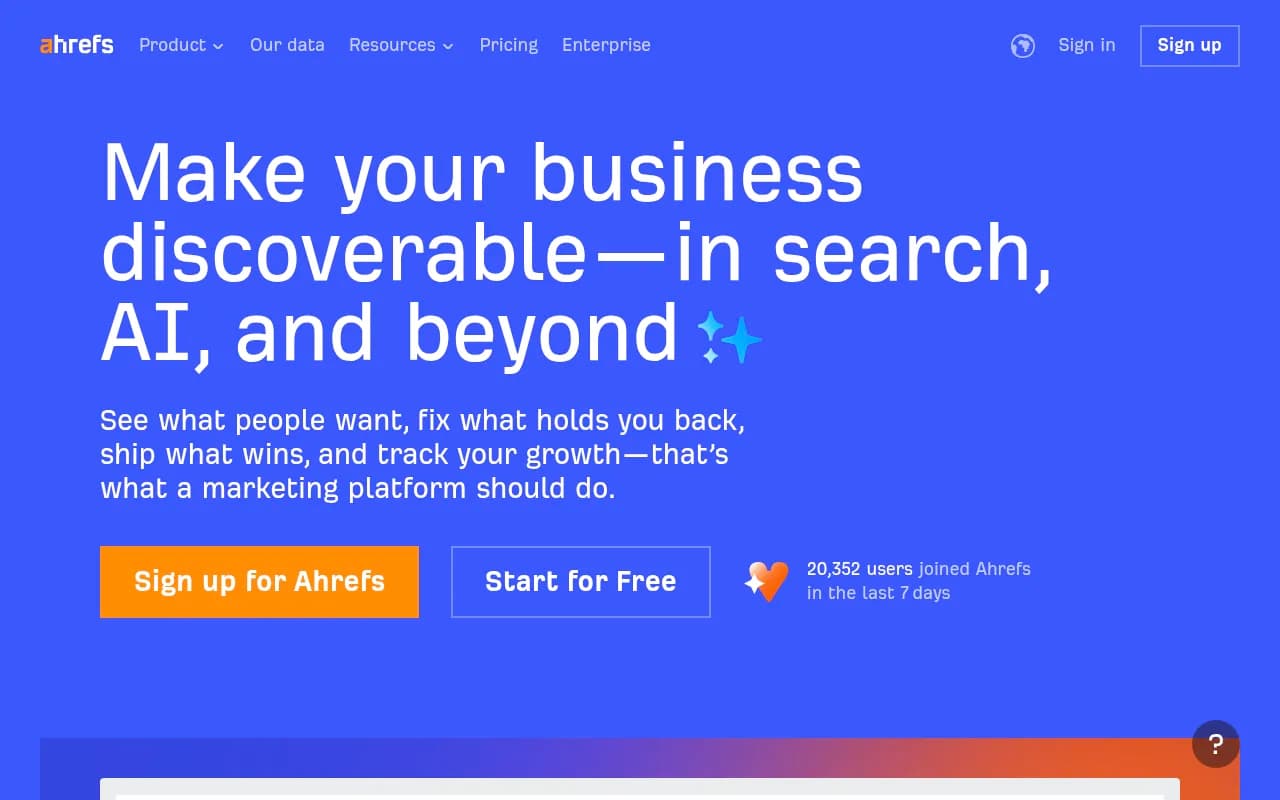
Worth knowing before you recommend either as a sidecar: Semrush's AI Visibility Toolkit only covers ChatGPT, Perplexity, Gemini, SearchGPT, and Google AI Overviews, missing Claude, Grok, and Copilot natively. Ahrefs' standalone AI Visibility Index runs $199/mo per platform, or $699/mo for the full seven-platform bundle, on top of whatever SEO plan you're already paying for.
You're pitching an enterprise account that wants crawl governance language
Some enterprise buyers, particularly ones with a security or infrastructure mandate, want to hear about an "Agent Experience Platform" explicitly, treating AI crawlers as a first-class infrastructure concern rather than an SEO metric. Scrunch AI leans hard into this framing with its Enterprise tier (SOC 2 Type II, SSO, custom audits). If that's the language your prospect's security team is asking for, it can be worth bringing into a proposal alongside Promptwatch's own crawler logs and citation data.
You want a free secondary data point for a sales pitch
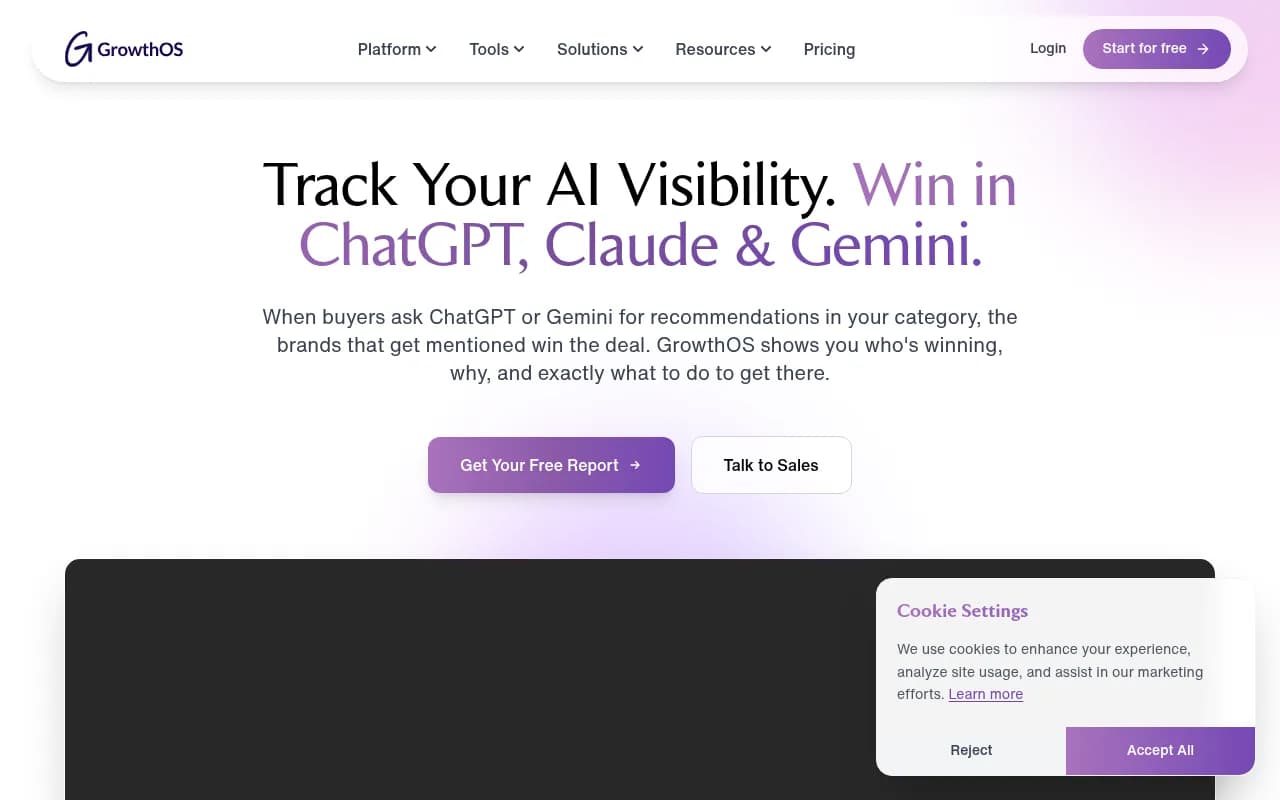
Tools like GrowthOS offer a free AI visibility snapshot across ChatGPT, Claude, Gemini, and Perplexity. That's genuinely useful as a one-off lead magnet or a quick second opinion to show a prospect before they commit to a full platform, not as an ongoing tracking tool.
Where a second tool is usually just redundant spend
The pattern I see most often is teams adding a dedicated prompt tracker like Peec AI or Otterly.AI alongside Promptwatch because someone read a comparison post ranking it highly on "ease of use." Peec AI does have a clean, focused dashboard and unlimited team seats on every tier, which is a real differentiator against seat-capped competitors. But it caps you at 3 tracked models on its entry Starter plan ($95/mo) unless you pay $35 to $165/mo extra per model, and it doesn't do crawler log analysis, content generation, or CMS publishing at all.

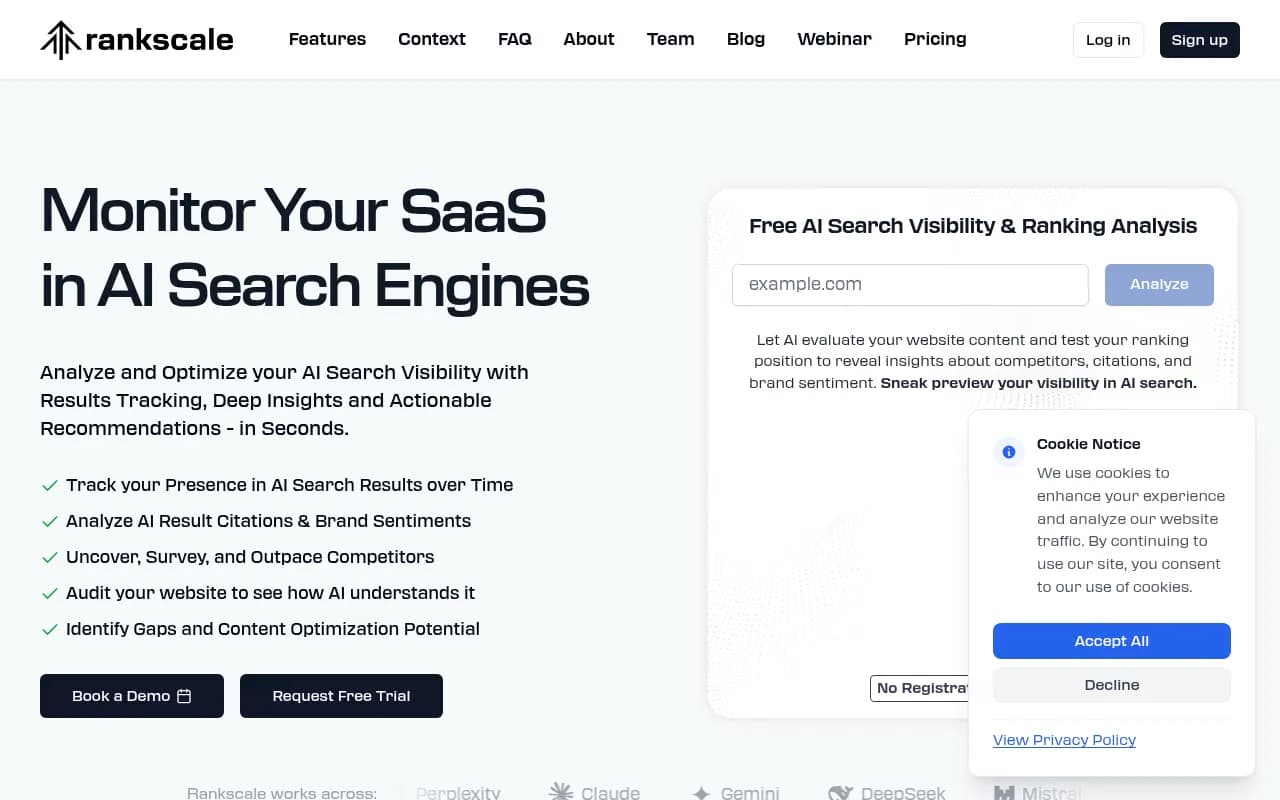
If you're already paying for Promptwatch's full model coverage and content loop, adding Peec on top for "a second opinion" on citation counts is mostly paying twice for the same tracking layer. The same logic applies to Rankscale, which covers an impressively broad 17+ engines starting around $20/mo on a credit-metered model, but is purely a tracker with no action layer.
Profound is worth a specific callout here because its positioning changed in September 2026: it dropped self-serve brand plans entirely and now only sells Agency ($399/client workspace) and custom Enterprise pricing. If you were considering Profound as a lightweight add-on, that door is largely closed unless you're buying at agency or enterprise scale.

A fair cost comparison, converted to the same unit
The trap in this category is that every vendor meters usage differently: prompts, credits, checks, or "AI answers." Headline prices aren't comparable until you convert everything to a cost per tracked response.
| Platform | Entry price | Models covered at entry price | Crawler log analysis | Content generation + CMS publish |
|---|---|---|---|---|
| Promptwatch | $95/mo | 9 models, no per-engine fee | Yes | Yes (AEO articles, Webflow/Framer/WordPress) |
| Peec AI | $95/mo | 3 models (extra engines $35-165/mo) | No | No |
| Scrunch AI | $250/mo | 4 engines (9 at Enterprise) | Yes (infrastructure-focused) | No |
| Ahrefs Brand Radar | $199/mo per index, $699/mo bundle | 7 indexes + Claude | No | No |
| Semrush AI Visibility Toolkit | $99/mo per domain | 5 engines, missing Claude/Grok/Copilot | No | No |
| AthenaHQ | $295/mo (free tier exists) | 11 models | No | Content recommendations only |
| Rankscale | ~$20/mo (credit-metered) | 17+ engines | No | No |
| Profound | Agency $399/mo+ | 3 engines on trial | No | No |
Promptwatch's own "Best GEO & AI Visibility Platforms Compared" page runs this same math across 20 tools and is self-published, so take the framing with a grain of salt, but the underlying unit economics (Essential tier works out to roughly $0.016 per tracked response) hold up against third-party pricing pages too.
When a specialist tool genuinely complements Promptwatch instead of duplicating it
A few categories are narrow enough that they rarely overlap with what Promptwatch already does well:
- Social listening at the mention level across 13 billion+ pages, which is what a tool like Brand24 or Awario is built for, is a different animal than AI citation tracking and can run in parallel without redundancy
- Technical crawl auditing for your whole site (not just AI bot behavior) is still better handled by a dedicated crawler like Screaming Frog or Sitebulb
- Prompt management for engineering teams building their own LLM features, which is what PromptLayer does, has nothing to do with brand visibility tracking and shouldn't be confused with it despite the similar name

These aren't "alternatives" to Promptwatch at all, they just get lumped into the same roundup posts because they share the word "prompt" or "AI." Worth clarifying with a client so budget doesn't get wasted on the wrong category.
A practical decision framework
Before adding anything to a Promptwatch-based stack, I'd ask three questions in order:
- Is the gap something Promptwatch's own roadmap covers already, Agent Chat, crawler logs, Shopping Insights, Ads Radar, that you simply haven't turned on yet? Check the plan tier first.
- Is the gap tied to a specific client requirement (an existing Ahrefs contract, a security team's SOC 2 checklist) rather than a genuine data gap?
- Would doubling the tracking budget actually change a decision you're making, or is it just a second number to put in a slide?
If the answer to all three is no, the better use of that budget is usually upgrading your existing Promptwatch tier, more prompts, more AEO articles per month, state or city-level tracking, rather than buying a second subscription that tracks the same citations from a slightly different angle.
A note on data quality when you do compare tools
Whatever you decide, ground any comparison in current data, not an 18-month-old blog post. Promptwatch's own research shows how fast this category moves: Reddit's share of ChatGPT Search citations collapsed from roughly 4% to 0.5% in a single day on August 14, 2026, the same day ChatGPT started using the site: operator at scale in its query fanouts. A platform comparison written in early 2026 using data from that period is already describing a different AI search than the one your clients are showing up in today.
For broader context on what's cited where, Promptwatch's monthly citation share reports (by domain, by content type, by platform) are a more current reference point than most third-party "best tools" listicles, which tend to recycle screenshots and pricing from months earlier.
If you want to browse the wider category before committing to anything, the GEO software directory at bestgeosoftware.com and the AI rank tracking listings at ai-rank-tools.com are useful for scanning what else exists without reading through a dozen vendor comparison pages that all claim to be "unbiased."