Key takeaways
- AI-powered search now accounts for more than 40% of searches, and financial services brands that aren't appearing in AI-generated responses are missing a rapidly growing audience segment.
- According to Knownful data, JPMorgan Chase leads AI visibility in banking with a 67.14% score -- most financial brands score far lower, leaving significant room to improve.
- Compliance adds a layer of complexity unique to finance: citations need to be accurate, brand claims need to be defensible, and AI-generated content must meet regulatory standards.
- Most AI visibility tools only monitor -- they show you where you're invisible but don't help you fix it. The best platforms for financial services close that loop with content gap analysis and optimization.
- Tracking AI crawler activity on your site is especially important for financial brands, since it reveals which pages AI engines are actually reading and whether they're encountering errors.
Why financial services brands need to think differently about AI search
Most industries treat AI search visibility as a marketing problem. For financial services, it's also a compliance problem.
When ChatGPT recommends a mortgage lender, or Perplexity summarizes the "best investment platforms for beginners," the brands that appear in those responses aren't just winning attention -- they're being implicitly endorsed by an AI system that millions of people trust. That's a significant opportunity. It's also a significant risk if the AI is citing outdated rate information, misrepresenting product terms, or attributing claims your compliance team never approved.
This dual reality -- opportunity and risk -- shapes everything about how financial services brands should approach AI search in 2026.
The good news is that the tools have matured considerably. A year ago, most AI visibility platforms were basic dashboards that told you whether your brand appeared in a handful of ChatGPT responses. Now, the better platforms track citations across 10+ AI models, analyze the context and accuracy of those citations, identify content gaps, and help you create content that actually gets cited. That's a meaningful shift.
The challenge for financial brands is knowing which capabilities actually matter for your specific situation -- and which compliance-adjacent features are real versus marketing language.
The compliance dimension: what makes AI search different for finance
Traditional SEO has compliance guardrails that are reasonably well understood. You know what claims require disclaimers. You know what your legal team will and won't approve. The review process, while sometimes slow, is predictable.
AI search breaks that model in a few ways.
First, AI models synthesize information from multiple sources. If ChatGPT cites your website alongside a Reddit thread and a three-year-old blog post, the resulting summary might blend your current product terms with outdated information from other sources. You don't control the synthesis -- only the inputs.
Second, AI models can misrepresent your brand even when citing you accurately. A response might quote your content correctly but frame it in a way that implies a guarantee you didn't make, or compare your product to a competitor in a way your legal team would never approve.
Third, the regulatory environment is still catching up. The SEC, FCA, and other regulators haven't issued comprehensive guidance on AI-generated financial content, which means financial brands are operating in a gray area where the safest posture is to be proactive rather than reactive.
What this means practically: financial services brands need AI visibility tools that go beyond "are we being cited?" to answer "how are we being cited, in what context, and is the information accurate?"
What to look for in an AI search platform for financial services
Before getting into specific tools, here's a framework for evaluating platforms against financial services requirements.
Multi-model coverage
Your customers use different AI tools for different purposes. Someone researching mortgage options might use Perplexity. Someone asking for investment advice might use ChatGPT or Gemini. Someone in the UK might rely on a different set of models entirely. A platform that only tracks one or two AI engines gives you an incomplete picture.
Look for coverage across at least ChatGPT, Perplexity, Google AI Overviews, Claude, and Gemini. Ideally also Copilot, Grok, and DeepSeek.
Citation context, not just mention counts
Knowing your brand was mentioned 47 times last week tells you almost nothing useful. You need to know: what was the question being asked, what did the AI say about you, what other sources were cited alongside you, and was the information accurate?
For financial brands specifically, citation context is where compliance risk lives.
Content gap analysis
If a competitor is being cited for "best savings accounts for high earners" and you're not, you need to know that -- and you need to understand why. Is it a content gap? A credibility gap? A technical issue with how AI crawlers are reading your site?
The best platforms identify these gaps and help you prioritize which ones to address first.
AI crawler visibility
This one is underappreciated. AI engines like ChatGPT and Perplexity send their own crawlers to index web content. If those crawlers are hitting error pages on your site, or if they're not crawling your most important product pages, your visibility will suffer regardless of how good your content is.
Real-time crawler logs -- showing which pages AI bots are visiting, how often, and what errors they encounter -- are genuinely useful for financial brands with large, complex websites.
Multi-region and multi-language support
Financial services brands often operate across multiple markets with different regulatory environments. A platform that can monitor AI responses in different languages and from different geographic locations is essential for any brand operating internationally.
The AI visibility landscape for financial services in 2026
According to data from Knownful (cited in Wellows), JPMorgan Chase leads the banking sector with a 67.14% AI visibility score. Bank of America sits at 62.14%, Wells Fargo at 55%. Most mid-tier financial brands score considerably lower.
That gap matters because AI search is increasingly where financial decisions start. Someone asking "which bank has the best checking account for freelancers" isn't going to scroll through ten results -- they're going to act on the first two or three recommendations an AI gives them.
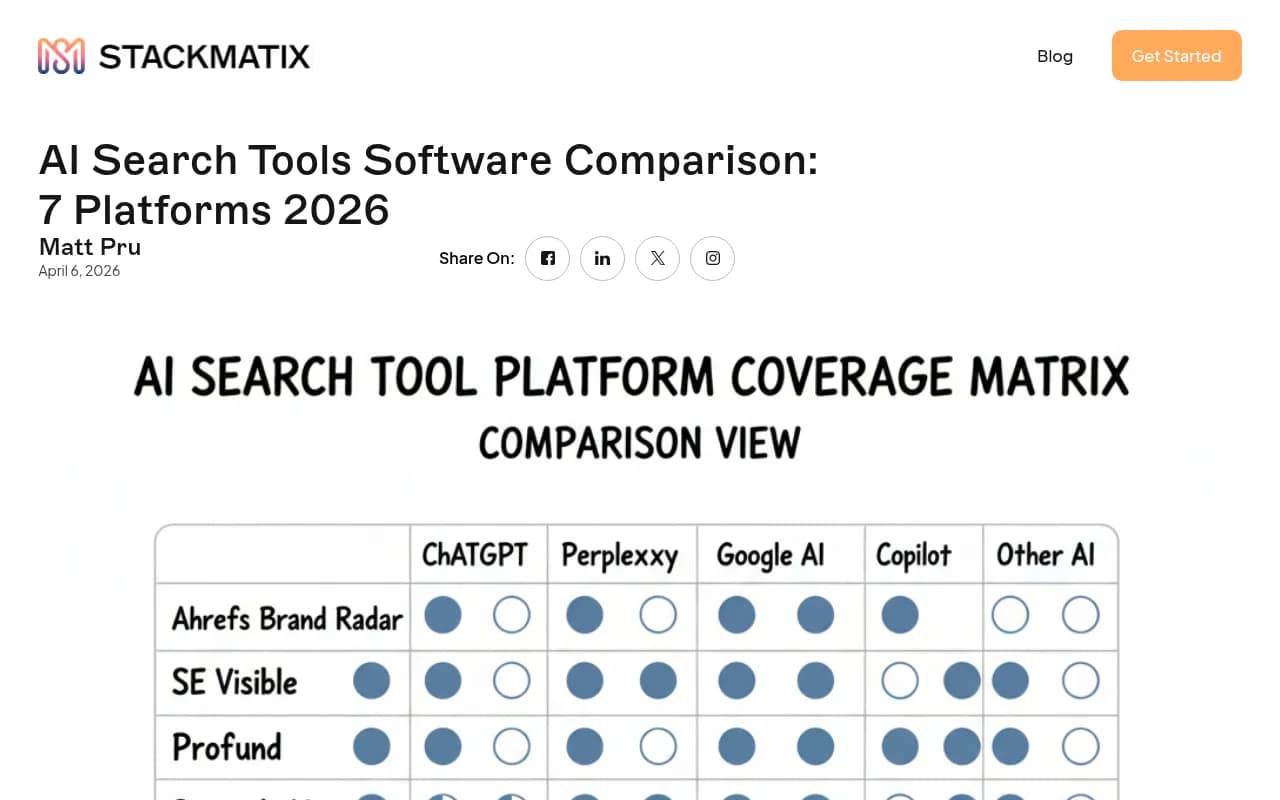
Here's a quick comparison of the major AI visibility platform categories and how they map to financial services needs:
| Platform type | Examples | Monitoring | Citation context | Content gap analysis | AI content generation | Crawler logs | Best for |
|---|---|---|---|---|---|---|---|
| Full-stack GEO platforms | Promptwatch, Profound | Yes | Yes | Yes | Yes (Promptwatch) | Yes (Promptwatch) | Enterprise financial brands |
| Monitoring-focused | Otterly.AI, Peec AI, AthenaHQ | Yes | Partial | No | No | No | Teams that just need a dashboard |
| Traditional SEO + AI | Semrush, Ahrefs Brand Radar | Partial | No | No | No | No | Brands already using these tools |
| Enterprise search (internal) | Hebbia | N/A | N/A | N/A | N/A | N/A | Internal document search, not brand visibility |
| Niche/emerging | Brandlight, Scrunch AI, Bluefish | Yes | Partial | No | No | No | Specific use cases |
The distinction between "monitoring-only" and "full-stack" platforms is the most important one for financial services brands. Monitoring tells you where you stand. Full-stack platforms help you change where you stand.
Platform recommendations for financial services brands
For enterprise financial brands: Promptwatch
Promptwatch is the platform I'd point most financial services brands toward, and the reason is straightforward: it's the only platform in this category that closes the full loop from "we're not visible" to "here's the content that will fix that."

Most platforms stop at the monitoring stage. Promptwatch's Answer Gap Analysis shows you exactly which prompts competitors are being cited for that you're not -- and then its built-in AI writing agent generates content designed to close those gaps. That content is grounded in 880M+ citations analyzed, so it's not generic filler; it's engineered around what AI models actually cite.
For financial brands specifically, the AI crawler logs are worth calling out. You can see in real time which pages ChatGPT, Perplexity, and Claude are crawling on your site, how often they return, and what errors they encounter. If your mortgage product pages are throwing 404s to AI crawlers, you'll know immediately rather than wondering why your visibility scores aren't improving.
Promptwatch monitors 10 AI models (ChatGPT, Perplexity, Google AI Overviews, Google AI Mode, Claude, Gemini, Meta/Llama, DeepSeek, Grok, Copilot) and supports multi-language, multi-region monitoring with customizable personas. For a financial brand serving different customer segments -- retail banking customers vs. wealth management clients, for example -- the persona customization is genuinely useful.
Pricing starts at $99/month for the Essential tier (1 site, 50 prompts). The Professional tier at $249/month adds crawler logs and city/state-level tracking, which most financial brands will want.
For monitoring with solid coverage: Profound
Profound is a strong monitoring platform with good multi-model coverage and solid competitive intelligence features. It doesn't have content generation capabilities, but if your team already has a content production process and just needs reliable visibility data, it's worth evaluating.

For teams already in the Semrush ecosystem: Semrush
If your SEO team lives in Semrush, the AI visibility features are a reasonable starting point. The coverage is more limited than dedicated GEO platforms -- Semrush uses fixed prompts rather than custom ones -- and there's no AI traffic attribution, but it lowers the barrier to entry for teams that don't want to add another tool.
For budget-conscious teams: Peec AI or Otterly.AI
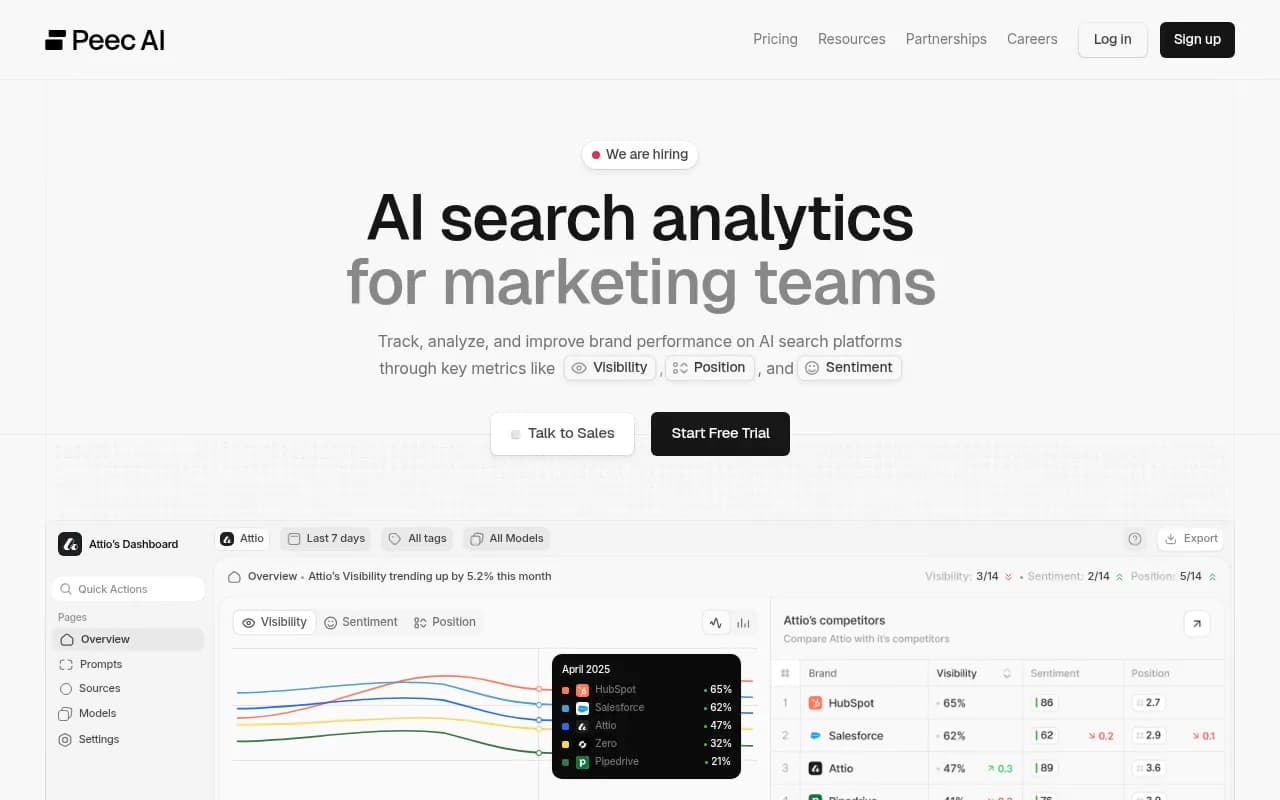
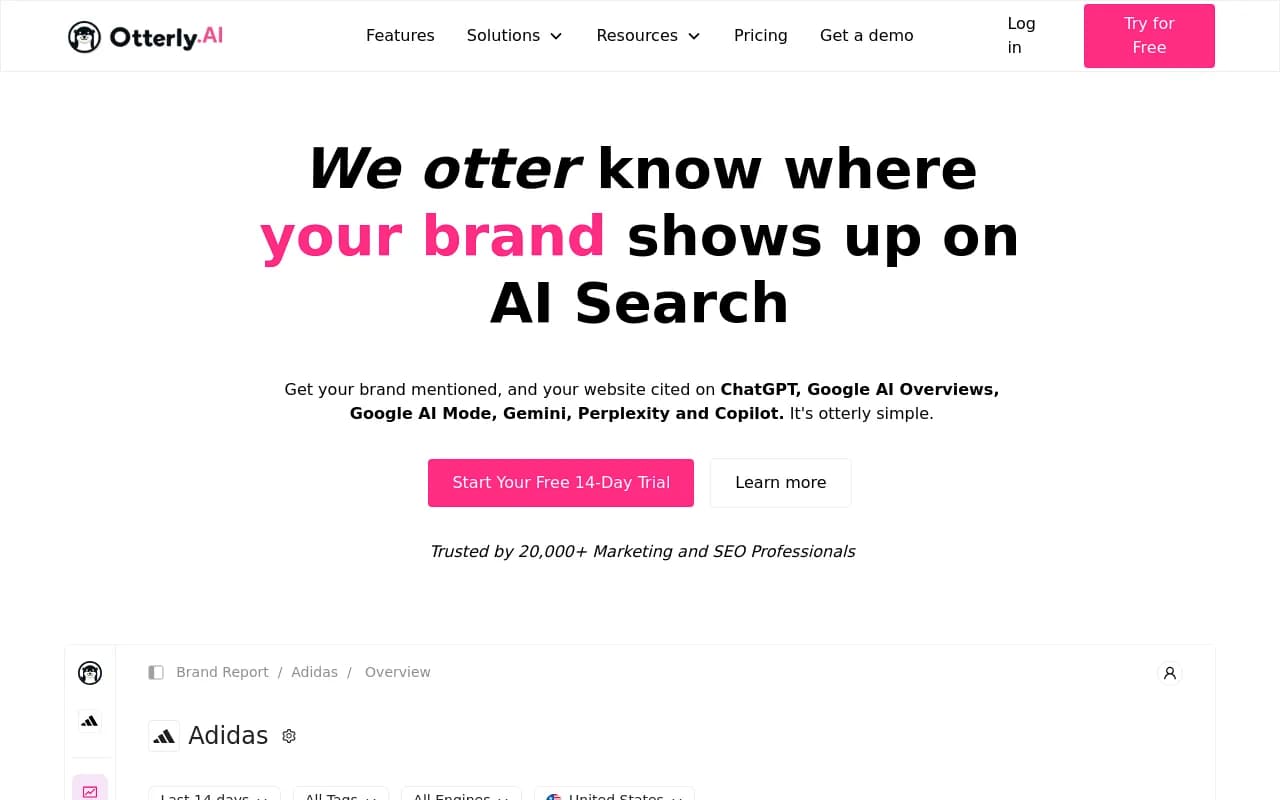
Both are monitoring-only platforms with lower price points. Peec AI has solid multi-language support, which matters for international financial brands. Otterly.AI is straightforward and affordable. Neither will help you fix visibility gaps, but they'll tell you where those gaps are.
For agencies managing financial services clients: AthenaHQ or Scrunch AI
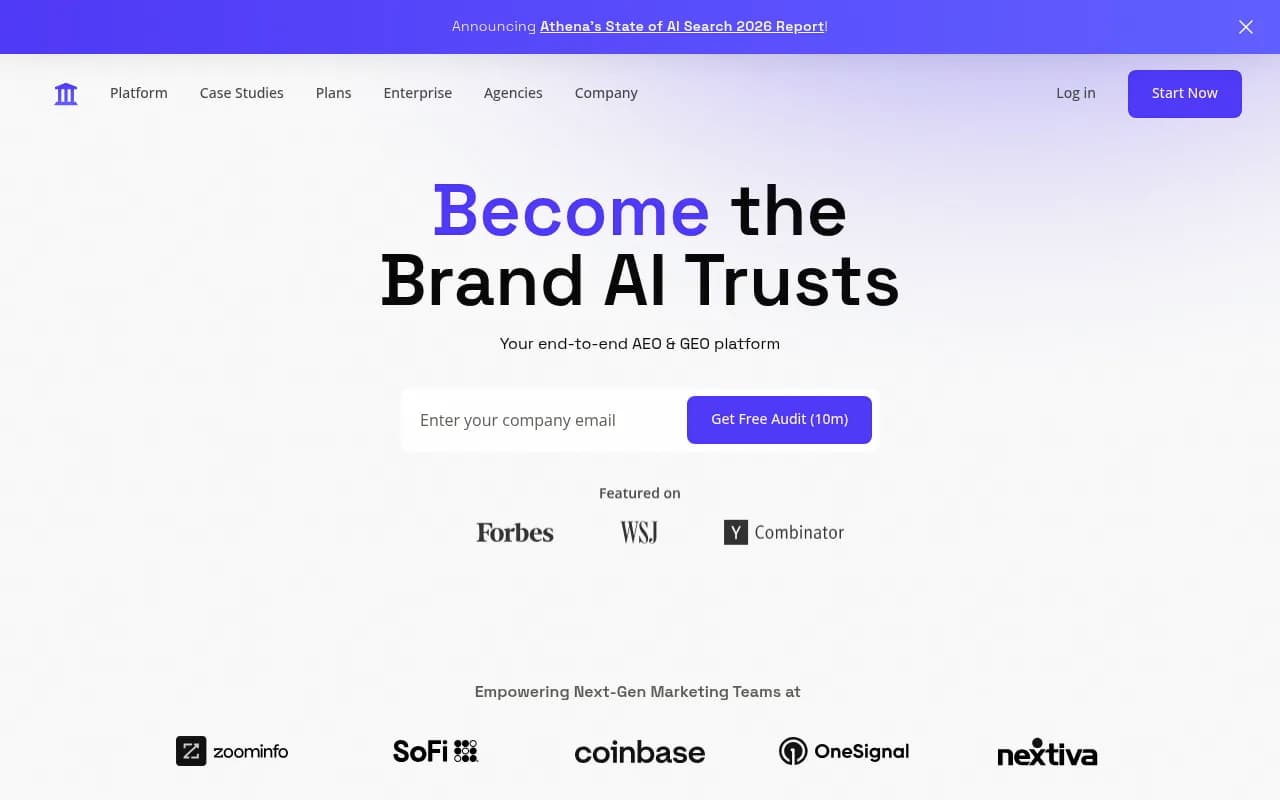
AthenaHQ tracks across 8+ AI search engines and has a clean interface for managing multiple clients. Scrunch AI has good monitoring capabilities. Both are monitoring-focused, so pair them with a content strategy process if you're managing financial brands that need to actively improve their visibility.
Compliance-specific considerations when using these platforms
Audit trails for AI-generated content
If you're using a platform's AI writing features to generate content for a financial services website, you need an audit trail. Who approved this content? When was it reviewed by compliance? What sources was it based on?
Promptwatch's content generation is grounded in citation data, which gives you a starting point for compliance review -- you can see exactly what sources the AI drew from. But the compliance review process itself is still your responsibility. Build that into your workflow before you publish anything.
Monitoring for inaccurate citations
Set up regular checks for how AI models are describing your products. Pay particular attention to:
- Interest rates and fees (these change, and AI models may be citing outdated content)
- Product eligibility criteria (AI models sometimes generalize or simplify)
- Regulatory claims (anything that implies FDIC insurance, SEC registration, etc.)
- Comparative claims (AI models often compare products in ways brands wouldn't approve)
Most platforms let you set up keyword-based alerts. Use them for your product names, key claims, and any regulatory terms associated with your brand.
The robots.txt and llms.txt question
Financial brands often have complex content hierarchies -- public-facing product pages, regulatory disclosures, press releases, and sometimes gated content. Make sure your robots.txt and llms.txt files are configured to guide AI crawlers toward the content you want cited and away from content that could cause compliance issues.
AI crawler logs (available in Promptwatch's Professional tier and above) will show you whether crawlers are respecting these configurations or finding workarounds.
Building an AI search strategy for financial services: a practical framework
Step 1: Establish your baseline
Before you can improve your AI visibility, you need to know where you stand. Run a baseline audit across the AI models your customers are most likely to use. For most financial brands, that's ChatGPT, Perplexity, and Google AI Overviews at minimum.
Document: which prompts mention your brand, what the AI says about you, which competitors appear alongside you, and whether the information is accurate.
Step 2: Identify your highest-value prompts
Not all prompts are equal. "Best savings account" is a high-volume, high-intent prompt. "History of savings accounts" is not. Use prompt intelligence features (Promptwatch has volume estimates and difficulty scores for each prompt) to prioritize the prompts where visibility will actually drive business outcomes.
For financial services, high-value prompt categories typically include:
- Product comparisons ("best X for Y customer type")
- Regulatory and compliance questions ("is X FDIC insured")
- How-to queries ("how to open a business checking account")
- Rate and fee comparisons
Step 3: Close content gaps
For each high-value prompt where competitors appear but you don't, identify why. Usually it's one of three things: you don't have content addressing that topic, your content exists but isn't structured in a way AI models can easily parse, or your content exists but isn't being crawled.
Fix the crawling issues first (they're often quick wins). Then address content gaps systematically, prioritizing by prompt volume and business value.
Step 4: Monitor and iterate
AI model behavior changes. A prompt that cited you consistently last month might not this month, because the underlying model was updated or because a competitor published better content. Build a regular monitoring cadence -- weekly for high-priority prompts, monthly for the broader set.
Track your visibility scores over time and connect them to traffic and conversion data. Promptwatch supports this through GSC integration, a code snippet, or server log analysis. For financial brands with complex attribution models, the server log option is often the most reliable.
The accuracy problem: a note on AI citations in financial services
One thing worth saying plainly: AI models are not always accurate when they cite financial information. They hallucinate. They cite outdated content. They blend information from multiple sources in ways that can create misleading impressions.
This is a problem for financial services brands in two directions. First, AI models might misrepresent your products in ways that create regulatory risk. Second, AI models might accurately cite your content but in a context that implies something you didn't intend.
The solution isn't to avoid AI search -- that's not realistic when 40%+ of searches involve AI. The solution is to be proactive: publish clear, well-structured content that's easy for AI models to parse accurately, monitor how you're being cited, and have a process for flagging and addressing inaccurate citations.
Some platforms are starting to add "citation accuracy" features that flag when AI-generated responses about your brand contain factual errors. This is genuinely useful for financial brands and worth asking about when evaluating tools.
Final thoughts
The financial services brands that will win in AI search over the next few years aren't the ones that monitor most carefully -- they're the ones that act most effectively on what they find. Monitoring is table stakes. The real advantage comes from closing the loop: finding gaps, creating content that fills them, and tracking whether that content actually gets cited.
For most financial brands, that means choosing a platform that does more than show you a dashboard. It means choosing one that helps you build the content infrastructure AI models want to cite -- accurately, compliantly, and at scale.
The compliance constraints are real, but they're manageable. The opportunity is also real, and it's growing every month as more customers start their financial decisions with an AI query rather than a Google search.