Key takeaways
- AirOps is a no-code content workflow builder, not a full GTM or AI visibility platform -- the distinction matters a lot depending on your team's needs.
- Its biggest limitations are rarely discussed: slow performance on large datasets, limited CMS integrations, a steep learning curve, and multi-engine AI visibility locked behind expensive tiers.
- The pricing jumps sharply from Solo to Pro ($2,000/month), which catches many teams off guard.
- For teams that need to track and improve how their brand appears in AI search engines, AirOps is not the right tool -- purpose-built platforms do that job better.
- There are solid alternatives depending on what you actually need: workflow automation, content generation, or AI visibility monitoring.
AirOps has been getting a lot of attention in 2026. It shows up in "top AI content tools" lists, it has real customers (Webflow, Ramp, Carta), and its pitch -- a no-code workflow builder for content teams -- sounds genuinely useful. So why does almost every review feel like it was written by someone who spent two hours on the homepage?
This one won't be that. Let's go through what AirOps actually does, what the real limitations are, and when you should look elsewhere.
What AirOps actually is
AirOps calls itself a "content engineering platform." That's accurate, if a little vague. In practice, it's a drag-and-drop workflow builder that lets content and SEO teams build multi-step AI pipelines -- connect a data source, run it through an AI model, apply brand guidelines, and push the output to a CMS.
Think of it as an assembly line for content. You design the steps once, then run them at scale. It's genuinely useful for teams producing large volumes of structured content: product descriptions, SEO articles, comparison pages, and similar repeatable formats.
What it is not: a GTM platform, a CRM, a lead enrichment tool, or an AI visibility tracker. That sounds obvious, but a lot of teams discover this after they've already signed up.
The limitations most reviews skip
1. Performance degrades at scale
AirOps uses a spreadsheet-style interface called Grids for managing content at scale. It works well for smaller datasets. Once you push past 100 rows, performance slows noticeably. For a platform that's supposed to help you scale content production, that's a meaningful ceiling. Teams running large SEO programs -- thousands of pages, bulk refreshes -- will hit this wall.
2. CMS integrations are narrow
AirOps publishes directly to WordPress and Webflow. That's it for native CMS integrations. If your stack includes Shopify, a custom CMS, a headless setup, or anything else, you're looking at custom API work or middleware. This isn't a dealbreaker for every team, but it's a real constraint that the marketing materials don't exactly shout about.
3. The learning curve is steeper than advertised
"No-code" is technically accurate. But building useful workflows in AirOps requires a clear mental model of how pipelines work, how to structure prompts, and how to connect data sources correctly. Non-technical marketers often need significant ramp-up time, and there's a gap between what the demo looks like and what your first real workflow looks like. Teams without someone who can own the platform technically will struggle.
4. Brand kits are limited on lower tiers
Brand consistency is one of AirOps's selling points -- you can define tone guidelines, writing samples, and formatting rules. But on the Solo plan, you get one brand kit and limited knowledge bases. For agencies managing multiple clients, or companies with distinct product lines, this is a real constraint that pushes you toward higher tiers.
5. AI visibility monitoring is expensive and incomplete
This is the one that surprises people most. AirOps has an "Answer Engine" diagnostic tool, but on the Solo plan it only covers ChatGPT. Multi-engine monitoring -- covering Perplexity, Gemini, Claude, and others -- requires the Pro plan at $2,000 per month. That's a steep jump for what is, by most accounts, a monitoring feature rather than a core workflow capability.
And even at Pro, AirOps's AI visibility features are monitoring-oriented. It shows you where you appear. It doesn't have the depth of prompt intelligence, citation analysis, crawler logs, or content gap analysis that dedicated GEO platforms offer.
6. No GTM capabilities beyond content
AirOps has no lead enrichment, no buying intent signals, no outbound sequence builder, and no native CRM sync below the Pro tier. If your team is running a full GTM motion -- not just content production -- AirOps covers one piece of it. Teams that bought it expecting broader automation coverage have been disappointed.
The pricing reality
AirOps pricing in 2026 looks roughly like this:
| Plan | Price | Key limits |
|---|---|---|
| Solo | ~$49-99/mo | 1 brand kit, ChatGPT visibility only, limited knowledge bases |
| Starter | ~$299-499/mo | More workflows, limited multi-engine visibility |
| Pro | ~$2,000/mo | Multi-engine AI visibility, CRM sync, advanced features |
| Enterprise | Custom | Full feature set, dedicated support |
The jump from Starter to Pro is where most teams get caught. The features that make AirOps genuinely useful for AI visibility -- multi-engine monitoring, deeper analytics -- are locked behind a price point that's hard to justify unless content is a core revenue driver for your business.
There are also credit-based costs for AI model usage that can add up faster than expected, especially for teams running high-volume pipelines.
Where AirOps genuinely works well
To be fair: AirOps is good at what it's designed for. If you're a content or SEO team that needs to:
- Build repeatable AI pipelines for structured content production
- Maintain brand consistency across large content volumes
- Connect content workflows to WordPress or Webflow
- Run programmatic SEO at scale (within the row limits)
...then AirOps is a solid choice. The workflow builder is genuinely well-designed once you learn it, and the brand kit system does help maintain consistency across outputs.
The problem is that the platform's positioning has expanded into AI visibility and GEO territory, and that's where it's less competitive.
What to use instead (depending on what you actually need)
For AI visibility monitoring and GEO
If your goal is to understand and improve how your brand appears in AI search engines like ChatGPT, Perplexity, Gemini, and Claude, AirOps is not the right tool. You need a platform built specifically for that.
Promptwatch is worth looking at here. It tracks brand visibility across 10 AI models, shows you which prompts competitors are being cited for that you're missing, and has content generation tools built around closing those gaps. The distinction from AirOps is that Promptwatch is built around the full loop: find gaps, create content to fill them, track whether it worked. AirOps can generate content, but it doesn't tell you what to create based on AI citation data.

Profound is another option specifically for enterprise brands focused on AI search monitoring.

For workflow automation beyond content
If you need broader automation -- connecting CRMs, enriching leads, building multi-step GTM workflows -- AirOps isn't the right fit. Tools like Zapier or n8n handle cross-app automation at a different level of flexibility.
For content optimization with SEO grounding
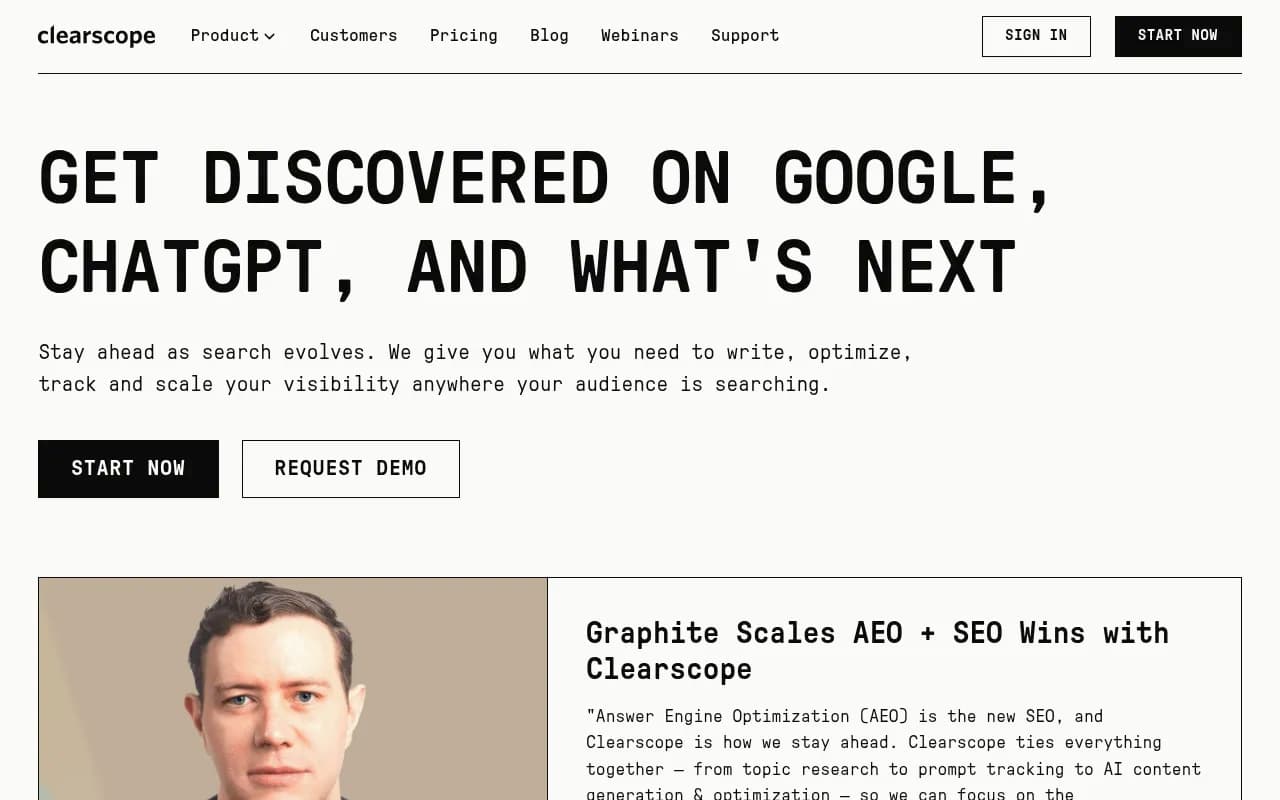
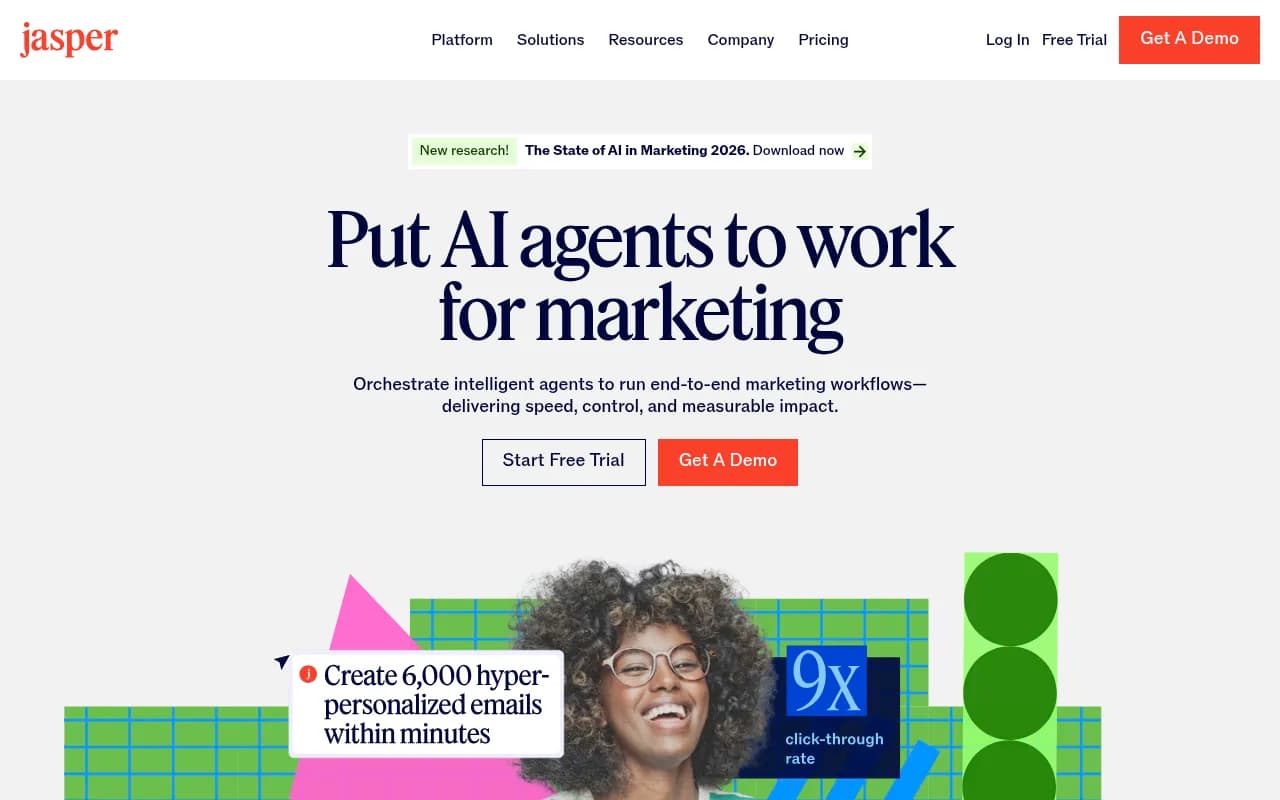
If you need content that's optimized for both traditional search and AI search, tools like Surfer SEO or Clearscope handle the optimization layer, while Jasper covers AI-assisted writing at scale with more CMS flexibility.
How AirOps compares to alternatives
| Tool | Best for | AI visibility | Content generation | Pricing entry point |
|---|---|---|---|---|
| AirOps | Content workflow pipelines | Limited (ChatGPT only on Solo) | Yes, workflow-based | ~$49/mo (Solo) |
| Promptwatch | AI search visibility + GEO | Full (10 models) | Yes, gap-driven | $99/mo |
| Profound | Enterprise AI monitoring | Strong | No | Enterprise |
| Jasper | AI writing at scale | No | Yes, flexible | ~$49/mo |
| Surfer SEO | SEO content optimization | Partial | Yes | ~$89/mo |
| n8n | Workflow automation | No | No | Free (self-hosted) |
The AI visibility gap is the real story
The most interesting thing happening in 2026 is that content teams are realizing traditional SEO metrics don't capture what's actually happening with AI search. G2's Sydney Sloan put it plainly in a recent AirOps webinar: 93% of B2B buyers now use AI search as part of their research process, and the brands getting cited in those answers are winning deals before competitors even know they're in consideration.

That shift changes what "content at scale" means. It's not just about producing more articles -- it's about producing content that answers the specific questions AI models are pulling from when they generate responses. AirOps can help you produce content faster, but it doesn't tell you which questions to answer or whether your content is being cited.
That's the gap where dedicated GEO platforms earn their keep. If you're running content operations and you're not tracking AI citations, you're flying blind on an increasingly important traffic channel.
The honest verdict
AirOps is a real product that does real things. The workflow builder is genuinely useful for content teams that have a clear, repeatable production process and the technical capacity to build and maintain pipelines. The brand kit system is a nice touch for maintaining consistency.
But the limitations are real too. Performance issues at scale, narrow CMS support, a steep learning curve, and a pricing structure that locks meaningful AI visibility features behind a $2,000/month wall -- these aren't minor footnotes. They're the things that determine whether AirOps fits your team or doesn't.
If you're primarily a content production team with WordPress or Webflow and you need workflow automation, AirOps is worth evaluating. If you need AI visibility monitoring, GTM automation, or CMS flexibility beyond those two platforms, look at the alternatives first.
The right tool is the one that matches what you actually need -- not the one with the best demo.