Key takeaways
- AI visibility tools mostly monitor public AI answers, so they touch less sensitive data than a typical AI vendor. The risk sits in the optimization and publishing side, where content goes live under your name.
- In healthcare, ChatGPT leans on government and research sources. Promptwatch Data shows NIH, the FDA and the NHS lead citations, so your pages need to agree with them.
- Ask every vendor about SOC 2, data residency, SSO, audit logs and human review before any content is published. Do not assume any of it exists.
- Monitoring-only tools are the easier procurement. Tools that write and publish content need a compliance workflow around them.
- Crawler logs matter more in regulated sectors than elsewhere, because WAF rules often block AI bots by accident.
Why regulated teams need a different checklist
Most AI visibility buying guides assume a marketing team that can ship a blog post on Tuesday and fix it on Wednesday. A bank's compliance officer would faint at that. A hospital system has legal review, clinical review and a brand committee. A law firm has bar advertising rules that vary by state.
But the underlying problem is the same. People now ask ChatGPT, Gemini, Perplexity and Google AI Overviews about mortgages, symptoms and divorce lawyers, and the answers name specific organizations. If you are absent, or worse, described wrongly, that is a business problem and sometimes a regulatory one.
I will be upfront about one limit. I did not independently verify vendor certifications for this guide, and pricing and compliance claims change fast. Treat the tables below as a question list to bring to demos, not as a verdict.
The regulatory backdrop in 2026
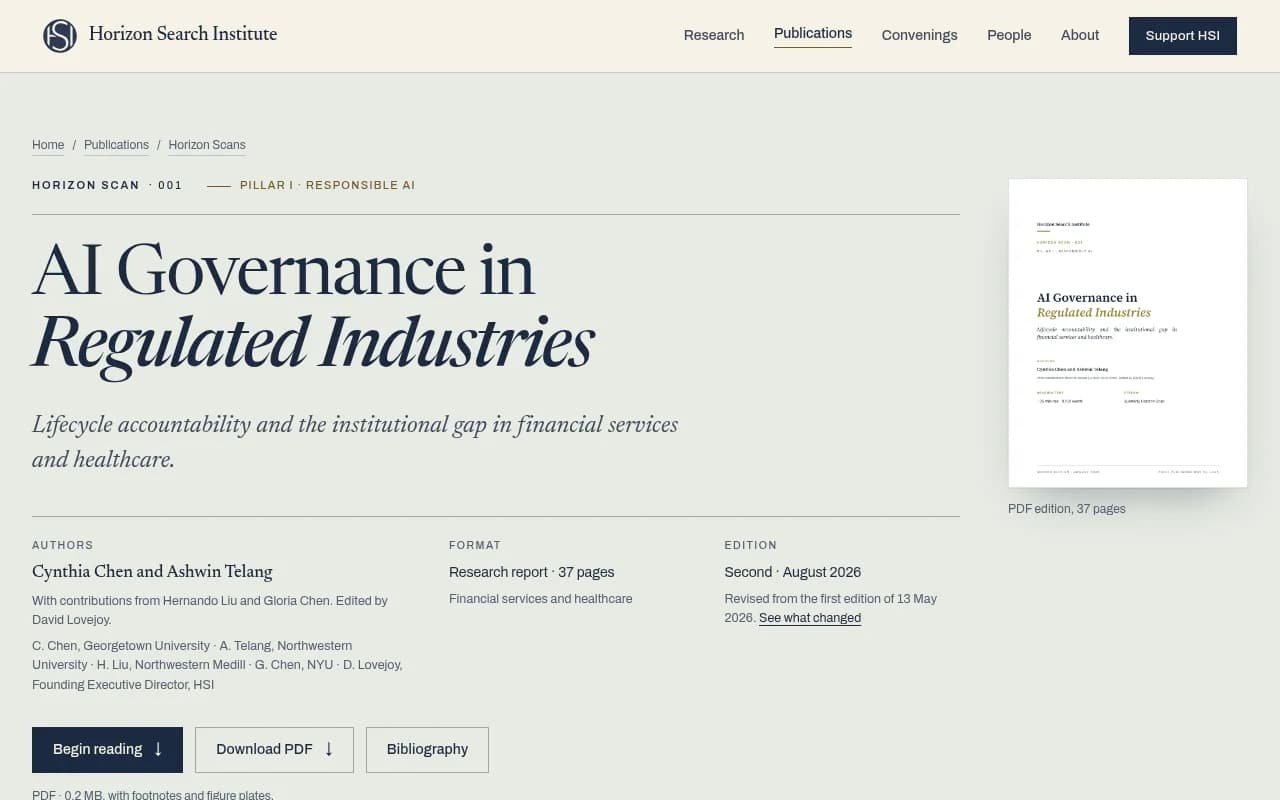
Two recent sources are worth reading before you talk to vendors. The Horizon Search Institute's Horizon Scan 001 (second edition, August 2026, 37 pages) covers AI governance in financial services and healthcare. Its central point is that deployment is outpacing accountability. According to the report, the banking agencies retired SR 11-7 in April 2026 and replaced it with SR 26-2, and they placed generative and agentic AI expressly outside the new guidance's scope. So banks have modernized principles but no directly applicable supervisory framework for agentic systems.
The Fuselab UX guide adds that Fed SR 26-2 and OCC Bulletin 2026-13 call for risk-based validation, ongoing monitoring and documentation of each model's limits. On the healthcare side, the Horizon Scan points to state rules such as Texas patient disclosure requirements for AI use and California's SB 1120, which keeps physicians in charge of utilization review decisions.
What does this have to do with a visibility tool? Two things. First, your own vendors fall under third-party risk management, so a tool that uses AI agents to write content needs the same scrutiny as any model you deploy. Second, a regulator or plaintiff may ask what you published, who approved it and what it was based on. If an agent wrote it, you want a record.
The Glean overview of industries with stringent AI compliance needs is a useful companion for the wider picture, including EU AI Act implications for credit and risk tools.
What AI visibility tools actually do
It helps to split the category into three layers, because the compliance burden differs for each.
- Monitoring. The tool runs prompts against ChatGPT, Gemini, Perplexity and others, then records whether your brand is mentioned, cited, and how it is described. No customer data is needed.
- Diagnostics. Crawler logs, site audits and citation analysis explain why you are or are not showing up. Crawler logs require a connection to your CDN or server logs, which your security team will want to review.
- Action and publishing. Content gap analysis, AI-generated drafts and direct CMS publishing. This is where regulated teams should slow down.
A bank can approve layer one in a week. Layer three needs a policy.
What the data says about regulated sources
Healthcare is the clearest example of why these tools matter. Promptwatch Data's ChatGPT healthcare citation report covers organic healthcare prompts from Sep 9 to Oct 8, 2026. NIH is the most cited source at 5.46% of all healthcare citations, mostly PubMed Central and PubMed. The FDA is second at 1.76% and the NHS third at 1.1%. Government and public health sites together earn 7.06%. Mayo Clinic (0.49%) and Cleveland Clinic (0.4%) are the only hospitals in the top 20.
Two takeaways. Hospitals and clinics as a source type earn only 0.89% of citations, so a health system's own website is competing against federal agencies and journals. And the practical advice from that report is boring but sound: back medical claims with peer-reviewed studies, make sure pages agree with FDA, CDC, NHS and NICE guidance, work with medical associations, and keep doctor profiles on directories like Doctify and WebMD complete.
That last point deserves emphasis. The tool you buy should show you citations from third-party pages, not only your own domain, since your visibility is often decided on sites you do not control.
For software and travel the pattern is similar: Promptwatch Data's software citation report shows documentation and help centers earn the largest share, and the travel report shows booking and search sites earn more than half. I could not find a Promptwatch report for banking or legal, so for those sectors expect to run your own prompt sets and see which sources come up.
Questions to ask every vendor
Data handling and security
- Does the tool need any customer or patient data? For monitoring it should not. If a vendor asks for it, ask why.
- Is there SOC 2 Type II, and can you see the report? Is data stored in the EU or US, and can you choose?
- Does it support SSO and role-based access? Is there an audit log of who changed what?
- Do prompts you track, and the responses collected, get used to train anyone's models?
Accuracy of what is collected
This one is easy to overlook. Responses from the real ChatGPT interface can differ from API outputs, including citations. If a vendor only queries APIs, you may be reporting to your board on something your customers never see. Ask which interface each model is tracked through, and which countries and languages.
For a bank operating in several jurisdictions, country-level tracking is not optional. A mortgage answer in the UK and one in the US are different products with different rules.
Crawler access and logs
Regulated sites tend to have aggressive bot protection, and that blocks AI crawlers by accident. Promptwatch Data's AI crawler traffic report (IP-verified requests, June 8 to Sep 6, 2026) shows OpenAI accounted for 79.8% of verified AI crawler requests in the week of Aug 31 to Sep 6, down from 94.8% in early June. The report's advice is to compare your own logs against that mix: a provider that is large in the report but near zero in your logs suggests you are blocked.
Ask whether a vendor verifies crawler IPs against operator-published ranges, or just trusts user-agent strings, which are trivially spoofed. Also check whether integration needs a CDN log feed, a plugin or raw server logs, and have security sign off on that connection.
Content generation and publishing controls
- Is there a review inbox so nothing goes live without human approval?
- Can you load approved facts, disclaimers and tone rules so drafts stay on-brand and on-policy?
- Is every published change recorded, with who approved it?
- Can you turn off autonomous publishing entirely?
For financial promotions, FINRA, SEC and FCA-style rules apply to content that reads like marketing. For law firms, state bar advertising rules apply. I did not research those rules in depth, so have counsel confirm that AI-assisted pages fall under your existing review process. They almost certainly do.
Comparison of tool categories
| Category | Typical regulated-sector fit | Main risk | Example tools |
|---|---|---|---|
| Monitoring-only trackers | Easy to approve, low data exposure | Shallow insight, no fix path | Otterly.AI, Peec AI, Rankscale |
| Enterprise visibility platforms | Strong reporting, SSO, procurement-friendly | Price, sales-led onboarding | Profound, Scrunch, BrightEdge |
| Traditional SEO suites with AI add-ons | Already in your vendor list | Fixed prompt sets, limited AI depth | Semrush One, Ahrefs Brand Radar, seoClarity |
| End-to-end visibility and action platforms | Covers diagnostics and content, needs workflow controls | Publishing governance | Promptwatch |
| Brand and media monitoring | Familiar to comms and risk teams | Not built for citation analysis | Brandwatch, Meltwater, Mention |
Tools worth shortlisting
Platforms that go past monitoring
Promptwatch is the one I would put on a regulated shortlist if you need diagnostics and action in the same place. It tracks the real interfaces of ChatGPT, Google AI Overviews, AI Mode, Gemini, Perplexity and Copilot by country, and it includes IP-verified AI crawler logs, weekly site audits, and visitor analytics that tie AI traffic to your site. Its Content Agent can plan, write and publish to WordPress, Webflow or Framer, with a review inbox for teams that want humans approving everything. That review step is the feature regulated teams should insist on. Pricing starts at $95 a month for Essential and the Business tier is $579, so confirm current numbers at promptwatch.com/pricing, and ask directly about certifications and data residency since I did not verify those.

Profound is the main enterprise alternative and is strong on monitoring, though it costs more and has less on the execution side.

Scrunch is aimed at brands that care about how AI agents read their site, which can suit large institutions with complicated web estates.
Simpler monitoring for a first pass
If your compliance team has never approved an AI tool, starting with a basic tracker is reasonable. Otterly.AI and Peec AI are both low-cost and do not need anything from your systems.


The trade-off is that they tell you whether you were mentioned, not why, and they will not show crawler activity.
Suites you may already own
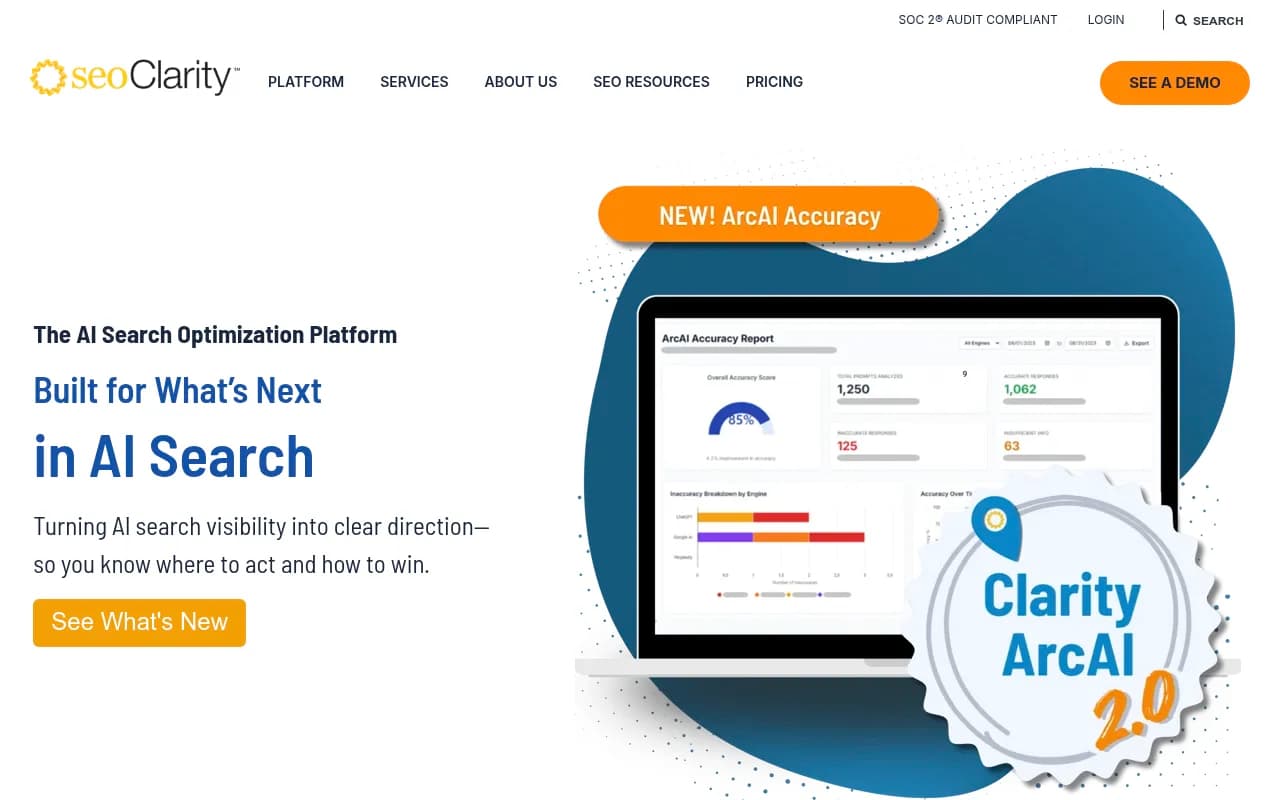
If procurement already approved Semrush, seoClarity or BrightEdge, their AI modules are the path of least resistance. Expect less depth in prompt coverage than a dedicated platform, but also a shorter security review.
Brand monitoring for comms teams
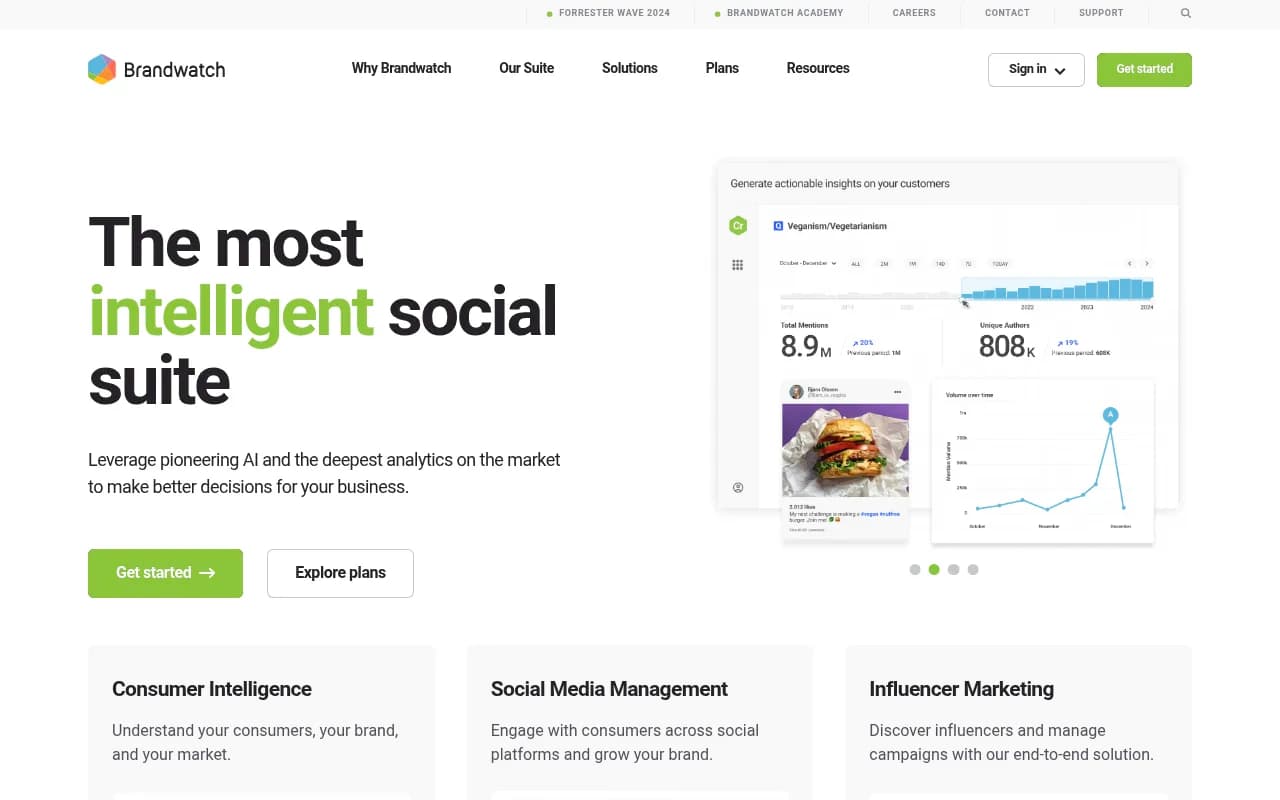
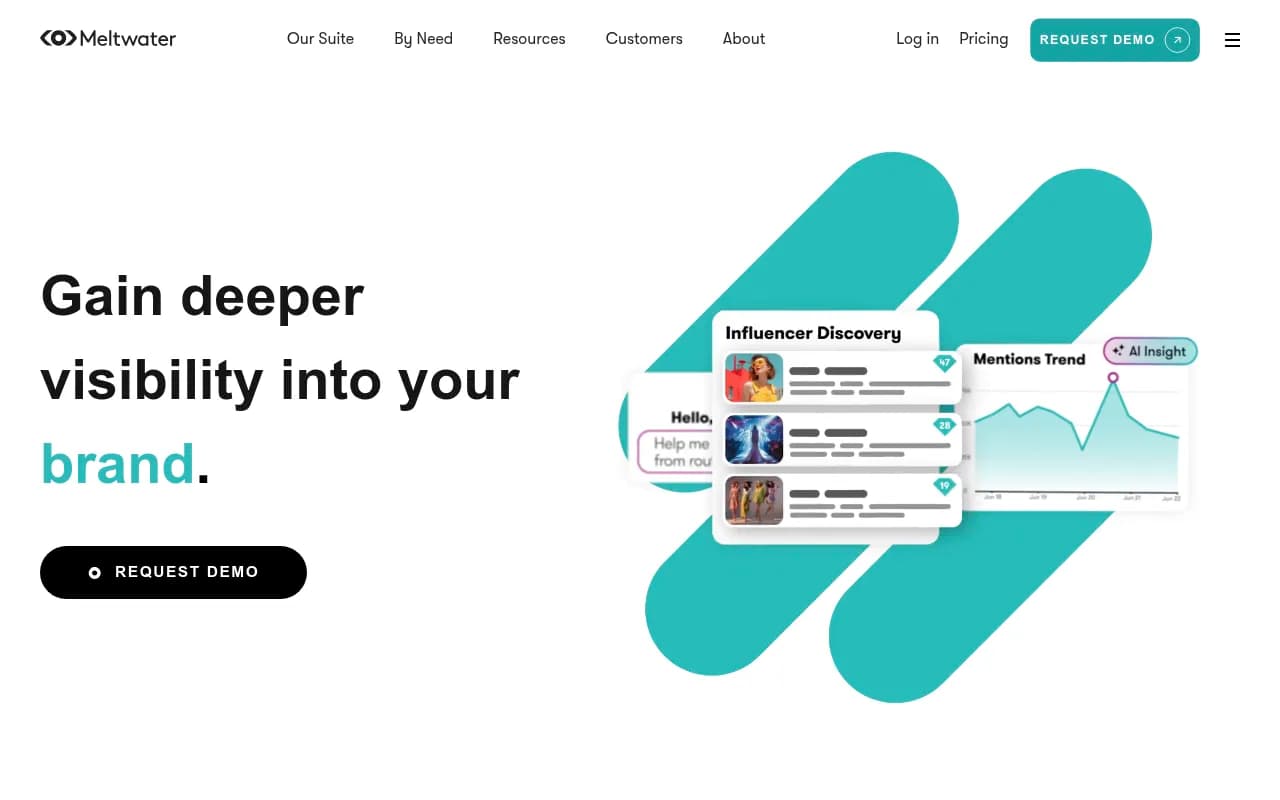
Communications and reputation teams in banks and hospitals often run Brandwatch or Meltwater already. These catch press and social conversation but do not tell you which pages AI cites.
Brandwatch Consumer Intelligence
For a wider list, the directory at bestgeosoftware.com is a decent place to scan alternatives.
Sector notes
Banks and financial services
Buyers here worry about third-party risk, so expect a vendor questionnaire. Ask for SOC 2, penetration test summaries and a data flow diagram. Keep monitoring prompts away from anything that looks like customer identifiers. Track branded prompts ("Is [bank] safe?"), competitor comparisons and product queries by country, and watch sentiment. A wrong rate or fee in an AI answer is something compliance will want logged and escalated.
Healthcare and life sciences
The key point from the citation data is that authority sources dominate, so your content strategy is about being consistent with them. Your visibility tool should show which PubMed articles, agency pages and association sites are cited for your prompts, so you know where to publish or be referenced. Any AI-drafted clinical content needs clinical review. Full stop. Also check for the state disclosure rules the Horizon Scan describes if your content touches patient-facing AI.
Legal
Law firms live and die on local and practice-area prompts. State and city tracking matters, since "divorce lawyer" means something different in Austin and Ohio. Check bar advertising rules before any automated publishing, and consider keeping the tool on monitoring plus human-written content.
A sensible rollout
- Start with monitoring on a limited prompt set, no integrations, and get that approved quickly.
- Add crawler log access after security review. Fix accidental blocks in robots.txt, CDN and WAF rules.
- Add content work only with a documented approval chain, a fact base and a named reviewer.
- Report quarterly to risk or compliance on what was changed and what moved.
If you would rather have a team handle the strategy, agencies such as 1001 SEO Media work on technical SEO, content and GEO, and 1001 SEO Media uses Promptwatch for its own AI visibility measurement. The same vendor questions above apply to any agency.
Bottom line
AI visibility tools are among the lower-risk AI purchases a regulated company can make, as long as you separate watching from publishing. Approve the watching quickly, then put real governance around anything that writes in your name. For research on how AI engines pick sources, Promptwatch's data hub is a good place to start.