Key takeaways
- We found no independent, stopwatch-style onboarding timings for any AI visibility platform, so this guide doesn't invent any. It compares the things that decide how fast a first insight is possible: trial access, prompt allowances, engine selection and billing units.
- Tools with a free tier or an instant trial get you to a first result fastest. Tools gated behind a demo or an enterprise quote are slowest, no matter how good the dashboard is.
- Prices are not comparable at face value. Vendors bill in prompts, responses, credits or keywords, and a plan with more prompts on fewer engines can return fewer answers.
- Treat any first snapshot with suspicion. Copilot citation counts swing wildly in the first weeks, while Perplexity is the steadiest engine to test against.
- The section near the end gives you a simple protocol for timing onboarding yourself, which is the only way to get a number you can trust for your own stack.
Why "minutes to first insight" is hard to measure
I wanted to publish a table of stopwatch times. I couldn't, honestly. After going through vendor pages, third-party pricing roundups and practitioner write-ups, nobody has published timed onboarding runs for these tools. Anyone who gives you a crisp "4 minutes 12 seconds to first dashboard" for a dozen platforms is either measuring a single setup or guessing.
What the sources do give us are the constraints that set the floor. Can you start without talking to a salesperson? Do you need a card? How many prompts can you load on day one? Do you have to pick engines before you see anything? Those answers explain most of the difference in onboarding speed, and they're the part you can verify on the vendor's own pages.
One caveat on the pricing figures below. Most come from a competitor-run roundup (Xtrusio read vendor pricing pages between October 9 and 23, 2026), cross-checked against other third-party reviews. Plans change often, so confirm everything on the vendor's own pricing page before you buy.
What actually determines time to first insight
Access friction
The biggest variable is whether you can sign up and run something today. A self-serve trial or free tier gets you a result in one sitting. A demo request gets you a calendar invite. Semrush's AI Visibility Toolkit has no free trial at all, per the pricing roundup. Profound's brand-side trial runs 50 prompts a day for 7 days, but anything past that is a custom Enterprise quote.
Prompt allowance
A first insight needs enough prompts to say something. Fifteen prompts is a smoke test. Fifty is a reasonable starter set. If you have to build a prompt list from scratch, that setup work dwarfs any difference in signup speed.
Engine selection
Peec AI asks you to choose 3 models. Otterly's base four engines (ChatGPT, AI Overviews, Perplexity, Copilot) exclude Gemini, Claude and AI Mode, which are paid add-ons. Picking engines is a quick step, but picking the wrong ones means your first insight misses where your buyers actually look.
Billing units
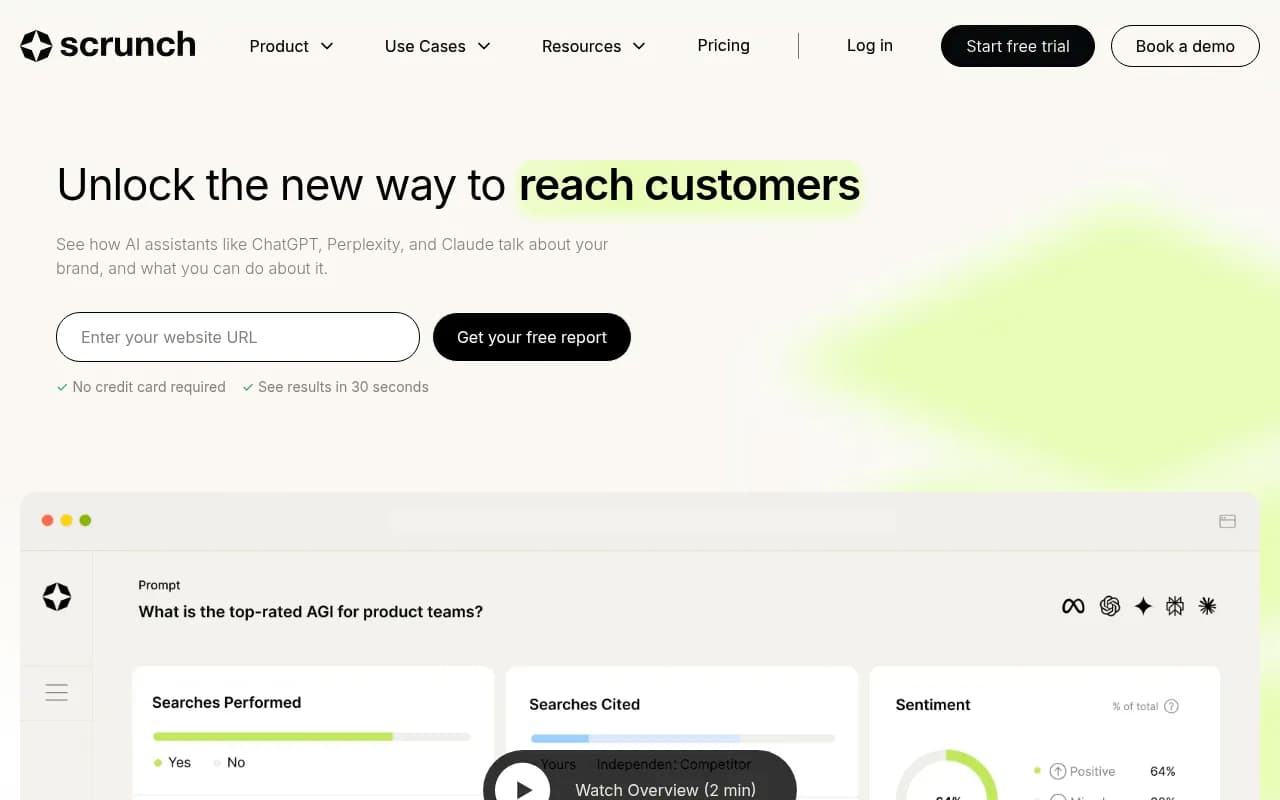
Prompts, responses, credits, keywords. Peec's Starter works out to 4,500 answers a month (50 prompts x 3 models x 30 days). Scrunch Core caps at 5,000 responses a month. AthenaHQ sells credits at roughly $0.08 per AI response on Starter. You can't compare these by headline price. Convert everything to answers per month and then to cost per answer.
The 12 platforms at a glance
This table covers what's verifiable. Trial and pricing details are from third-party reads of vendor pages in October 2026, so treat them as a starting point.
| Platform | Entry price | Prompts on entry plan | Trial or free access | First-run friction |
|---|---|---|---|---|
| Promptwatch | $95/mo (Essential) | 50 | 7-day free trial on monthly billing, free AI visibility report | Low, all AI models on every plan |
| Otterly.AI | $29/mo (Lite) | 15 | Not confirmed in our sources | Low, but Claude, AI Mode and Gemini cost extra |
| Peec AI | $95/mo (Starter) | 50 | Not confirmed in our sources | Medium, you choose 3 models |
| Scrunch | $250/mo (Core, conflicting sources) | 125 | 7-day free trial | Low to medium, verify current plans |
| Semrush AI Visibility | $99/mo per domain | 25 | None | Low if you already have Semrush, otherwise a card first |
| Profound | Custom after trial | 50 a day for 7 days on trial | Free trial | Medium, 3 engines on trial, then a sales conversation |
| AthenaHQ | Free Essential plan, credits for more | 300 credits | Free plan | Low, but credits drain as you test |
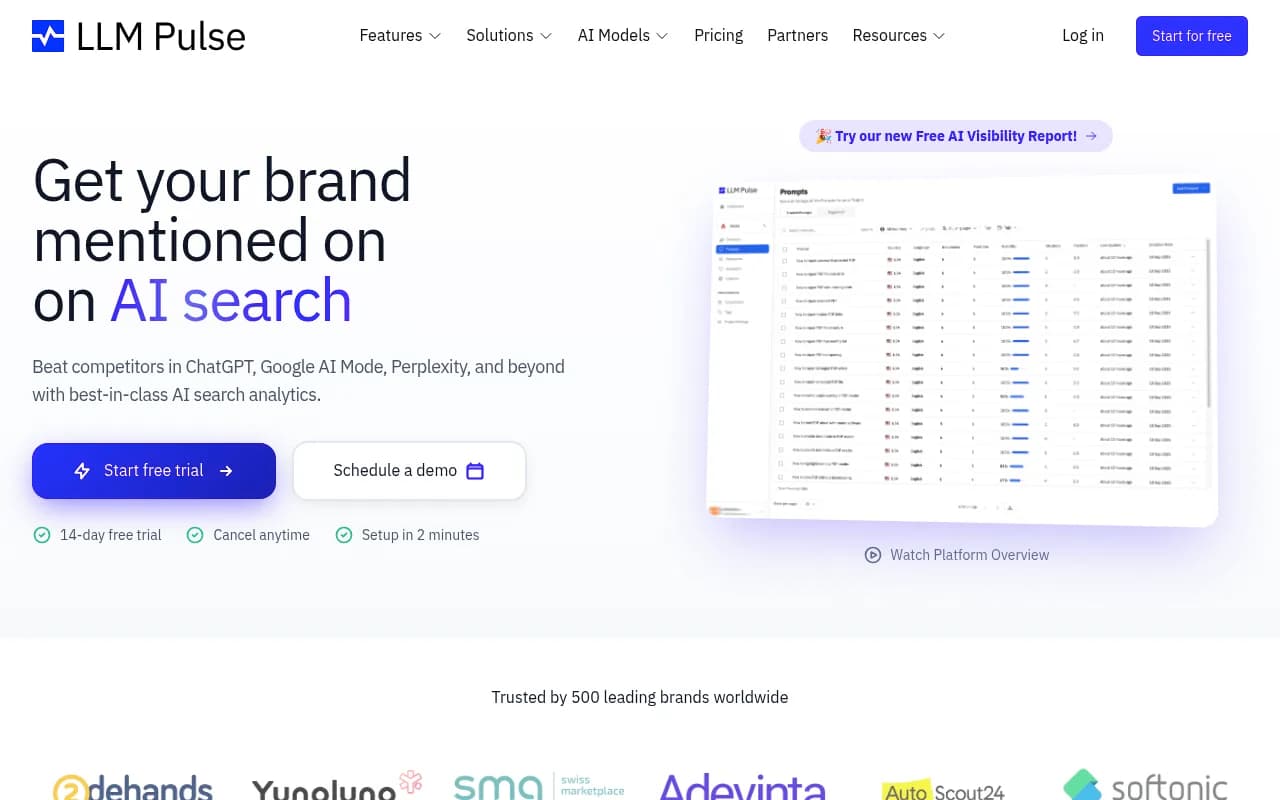
| LLM Pulse | Not confirmed | Not confirmed | 14-day free trial | Low |
| HubSpot AEO | $50/mo | 25 on the free tier | Free tier | Low for existing HubSpot users |
| Surfacd | GBP 59/mo | Not confirmed | 7-day trial | Low |
| Ahrefs Brand Radar | Bundled in paid plans | Small custom-prompt allowance | Not confirmed | Low if you're already a subscriber |
| Searchable | Free start available | Not confirmed | Start for free | Low, no verified onboarding steps found |
Notice the pattern. Nearly every tool has a cheap or free door. The differences show up in what you can do once you're through it.
Platform notes: what to expect in the first session
Promptwatch
Promptwatch is an end-to-end AI visibility platform, so the first session goes past a visibility number. You can run the free AI visibility report with no login to see how ChatGPT, Gemini and Perplexity describe your brand, then start the 7-day trial (monthly billing) to load prompts into a monitor. Essential at $95/mo covers 50 prompts with daily tracking, and every plan tracks all supported AI models, so there's no engine-picking decision to slow you down. Beyond the first dashboard it also covers crawler logs, visitor analytics and a content workflow, which matters if you want the first insight to turn into an action. Confirm current pricing at promptwatch.com/pricing.

Otterly.AI
The cheapest published door in the set: Lite at $29/mo for 15 prompts on four engines. That's fast to start and thin to learn from. Fifteen prompts will confirm the tool works, not describe your market. Add-ons for Claude ($29), AI Mode ($9) and Gemini ($9) on Lite add up if you need them from day one.

Peec AI
Starter is $95/mo for 50 prompts and 1 project, with 3 models of your choice. That model choice is the one decision you have to get right on day one. Pick the engines your buyers use, not the ones that are cheapest to track.

Scrunch
A 7-day free trial is reported. Pricing is the messy part: one source lists Core at $250/mo for 125 prompts with 5,000 responses a month and 5 site audits, another lists $300/mo for 350 custom prompts. Plans may have been restructured, so check scrunch.com/pricing. One practitioner who tested nearly every tool described Scrunch as prompt-dependent and largely manual, which is worth keeping in mind if you expect it to build your prompt list for you.
Semrush AI Visibility
Semrush's AI Visibility Toolkit starts at $99/mo per domain for 25 prompts, with no free trial. If your team is already in Semrush, the account friction is zero. If not, you're paying before you see anything. Per-prompt cost is the highest in the roundups, up to $3.98.
Profound
The trial is generous on volume (50 prompts a day for 7 days across 3 engines) and then the path turns to a custom Enterprise quote, up to 9 engines. One third-party estimate puts a 600-prompt Enterprise plan around $2,250/mo, but that's an estimate, not a published price. Great for a serious evaluation, less so if you want to keep going casually after day seven.

AthenaHQ
A free Essential plan with 300 credits gets you in the door, and the credit model means your testing has a visible cost. At about $0.08 per response on Starter, a careless first prompt batch burns through credits quickly.

LLM Pulse
A 14-day free trial is the longest in the set, which helps if you want to watch results settle. It also has the lowest price per prompt in one comparison, at EUR 0.66.
HubSpot AEO
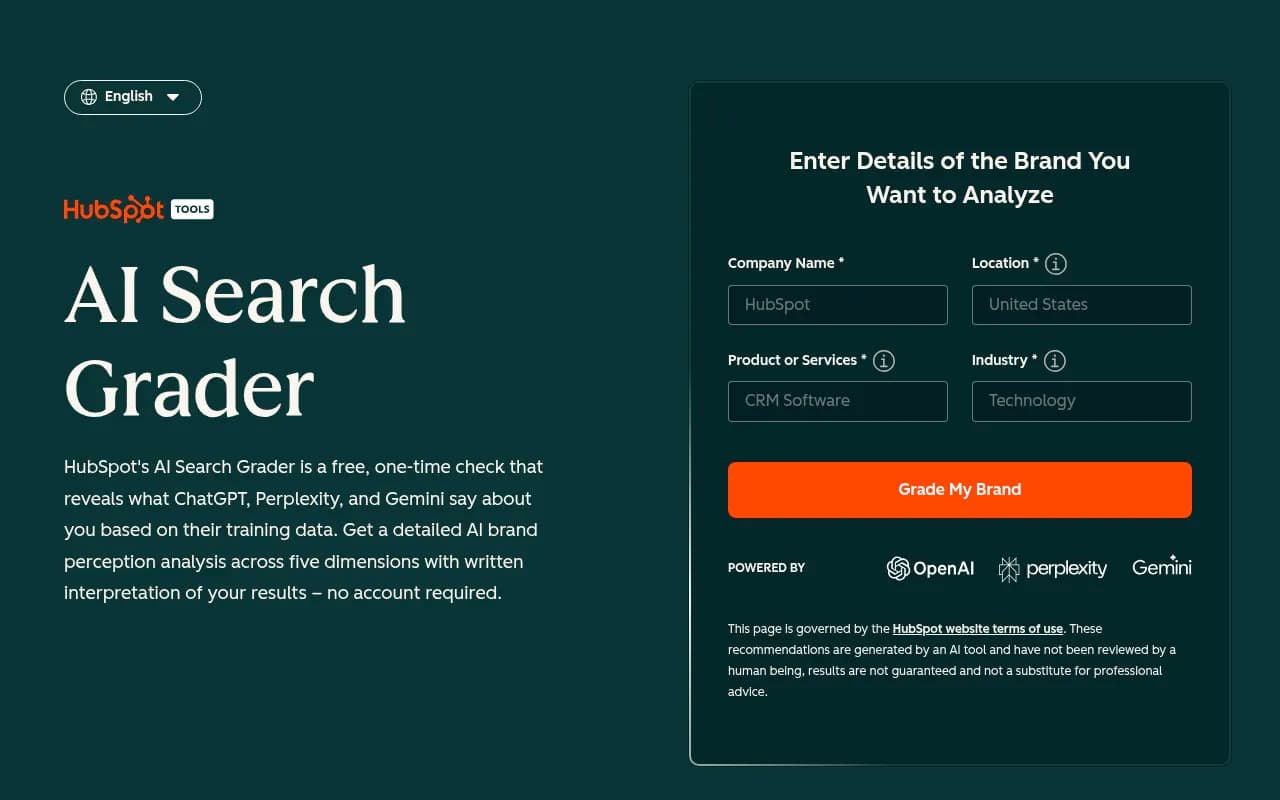
Listed at $50/mo with a free tier for 25 prompts. HubSpot also has a free one-off grader, which is the quickest possible sanity check if you just want a rough read before committing.
Surfacd
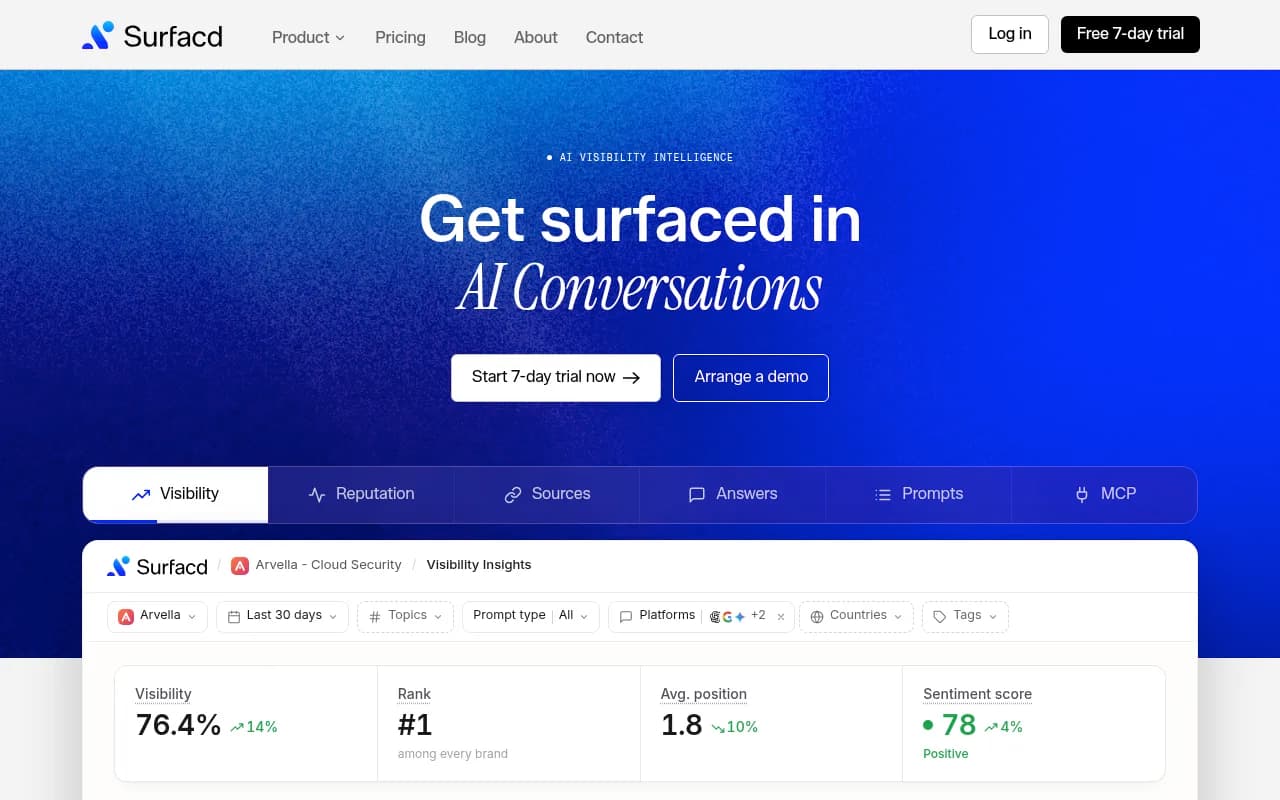
GBP 59/mo with a 7-day trial and unlimited users. Fine for small teams, though we found no verified onboarding steps beyond that.
Ahrefs Brand Radar
Brand Radar sits inside paid Ahrefs plans with only a small custom-prompt allowance. If you already use Ahrefs, you have a first look today. If you want to design your own prompt set, the allowance is the limit.

Searchable
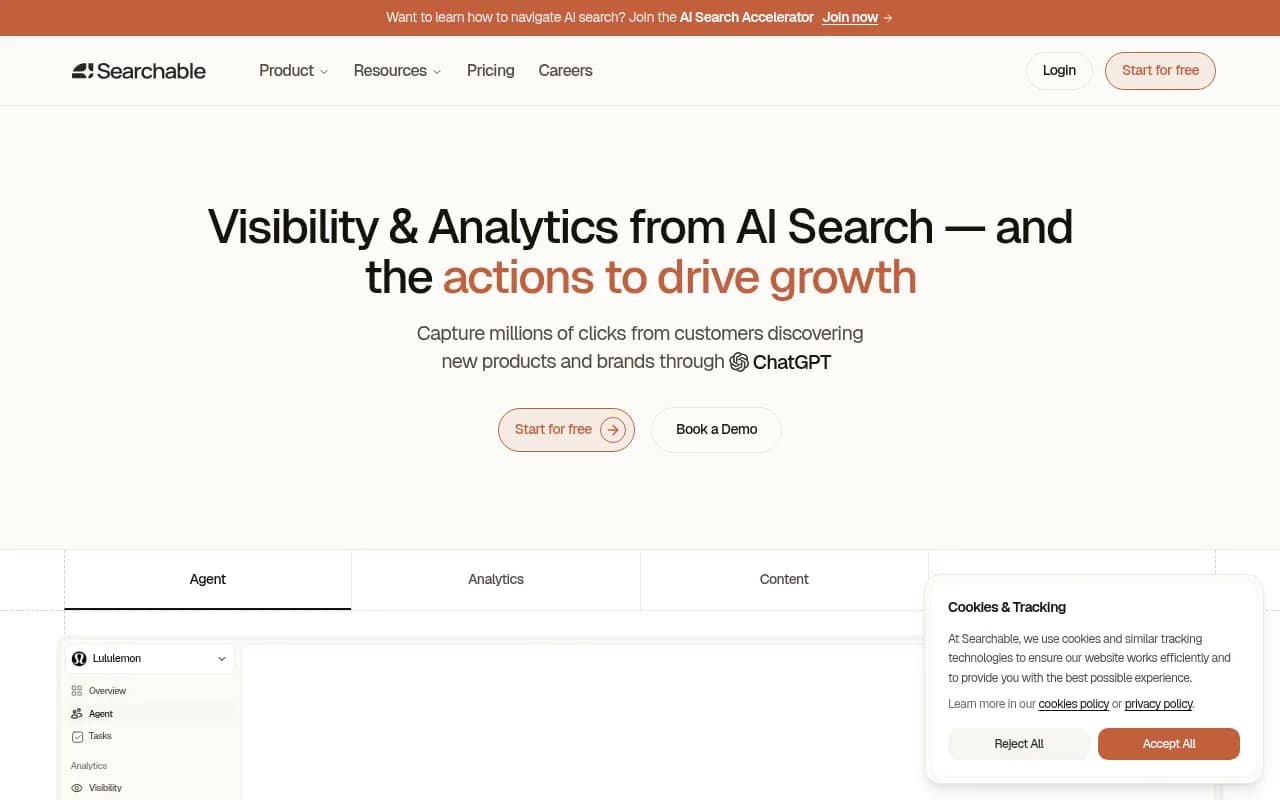
Searchable has a free start and a free visibility report. We found no verified step-by-step onboarding details, so I'm not going to describe its setup.
Why your first snapshot can mislead you
Getting a number quickly is easy. Trusting it is another matter.
First, the engines are inconsistent. A practitioner who tested almost every tool wrote in May 2026 that manual prompt runs gave different results even with incognito windows and US-based teammates, and asked what exactly they were trusting in a dashboard. That's the right question. A dashboard is an average of noisy answers.
Second, citation counts depend on the engine. Promptwatch's average sources per response data shows ChatGPT citing about 5 sources per web-search answer, Google AI Overviews about 10, and Perplexity almost exactly 10 every day. Copilot swung from under 2 to nearly 17 within a few weeks before settling at the low end. The report's advice is to judge Copilot on monthly trends, not weekly snapshots. So if your first dashboard shows a dramatic Copilot swing, don't act on it.
Third, what ChatGPT answers depends on sub-queries you didn't type. Promptwatch's ChatGPT query fanouts report puts the average at about 2.15 fanouts per response in early December 2025 and about 1.84 by early March 2026, with fanout query length shrinking over the same period. The prompt is only half the story. The searches ChatGPT runs from it shape the result, and those change.
For a first test, Perplexity is the steadiest engine to anchor on. Use ChatGPT and Copilot for direction, not for conclusions.
Compare cost per answer, not price per month
Published plans run from $29 for 15 prompts to custom enterprise quotes. Per-prompt cost in one comparison runs from EUR 0.66 at LLM Pulse to $3.98 at Semrush. Xtrusio's own calculation runs from $1.22 (Otterly Premium) to $3.96 (Semrush Base). These are vendor-competitor and reviewer figures, so use them for ballpark ranking only.
A better method: for each shortlisted tool, write down prompts, engines, runs per month and billing unit. Multiply to get answers per month and divide the price. A tool that looks cheap on prompts may be expensive per answer once engine add-ons are included.
| Check | Question to answer | Why it matters |
|---|---|---|
| Billing unit | Prompts, responses, credits or keywords? | Prices aren't comparable otherwise |
| Engines | Which are included, which are add-ons? | Gemini, Claude and AI Mode are extras on some plans |
| Frequency | Daily, weekly or on demand? | Sets how fast results stabilize |
| Trial | Self-serve, card needed, how long? | Seven days is tight for noisy data |
| Seats and projects | How many included? | Agencies hit limits fast |
A protocol for timing onboarding yourself
Since nobody has done this independently, here's a repeatable way to produce your own numbers. Do it for your top three candidates on the same day.
- Start a timer at the signup page. Use a fresh email and no sales contact.
- Stop at four milestones and write down the elapsed time: account created, first brand and competitors configured, first prompts loaded, first populated result.
- Use the same 25 prompts everywhere. Mix branded, comparison and category questions.
- Pick the same engines in each tool, or note where a tool forces a different set.
- Record anything that blocked you: card required, sales call, waiting for a first run, credits consumed.
- Wait a week and rerun. The gap between first-day and day-seven numbers tells you how noisy the tool is.
The milestone that varies most is usually the last one. Some tools show data in minutes. Others queue the first run and you're waiting. Log it.
Which one to start with
- You want to look today and spend nothing: use a free report or free tier first (Promptwatch's free AI visibility report, HubSpot's grader, Searchable, AthenaHQ's free plan).
- You want the cheapest real tracking: Otterly Lite or LLM Pulse, knowing the prompt count is small.
- You want tracking that also tells you what to do next: Promptwatch, since the same product covers crawler logs, visitor analytics and content execution, not only a score.
- You already pay for a suite: check whether Semrush, Ahrefs or HubSpot already include an allowance before buying anything new.
- You need a deep evaluation across many engines: Profound's trial has the heaviest daily volume, as long as you're ready for a sales conversation afterward.
If you're still building a shortlist, the GEO software directory at bestgeosoftware.com lists many more options than these twelve.
What I'd do differently
I'd stop optimizing for the fastest signup. Every tool here gets you to a dashboard quickly. The harder question is whether the dashboard tells you something you can act on in week two. Start with a small prompt set, anchor on stable engines, and run the timing protocol above. Then pick the tool that survives a week of real use, not the one with the shortest signup form.