Key takeaways
- Google's search dominance has dropped below 90% for the first time since 2015, while ChatGPT now commands over 80% of AI search engine market share -- you genuinely need to optimize for both.
- Most "AI SEO tools" fall into two camps: traditional SEO platforms with AI features bolted on, and GEO (Generative Engine Optimization) platforms built specifically for AI search visibility.
- The majority of GEO tools are monitoring-only -- they show you where you're invisible but don't help you fix it.
- A small number of platforms bridge both worlds: tracking Google rankings AND helping you appear in ChatGPT, Perplexity, Claude, and other AI engines.
- Choosing the right tool depends on your priority: if you're still mostly Google-focused, a traditional platform with AI add-ons may be enough; if AI search is a real channel for you, a dedicated GEO platform is worth the investment.
Search in 2026 is genuinely split. Google is still the dominant force for most industries, but the numbers have shifted in ways that are hard to ignore. ChatGPT now handles over 80% of AI search engine queries, and Google's overall share of web search dropped below 90% for the first time in a decade. Users are increasingly asking AI assistants for direct answers instead of clicking through ten blue links.
That creates a real problem for SEO teams. The tools you've been using for years -- Semrush, Ahrefs, Moz -- were built for a world where ranking on page one was the whole game. That world still exists, but it's smaller than it was. And the new game, getting cited in AI-generated answers, requires a different kind of optimization entirely.
This guide breaks down what's actually available in 2026, what each category of tool does well, and where the gaps are.
The two types of "AI SEO tools" (and why the distinction matters)
Before comparing specific platforms, it's worth being clear about what "AI SEO tool" actually means in 2026, because the term covers two very different things.
The first type is traditional SEO platforms that have added AI features. Semrush, Ahrefs, SE Ranking -- these tools have been around for years and have layered in AI-powered content suggestions, automated audits, and some degree of AI search monitoring. They're still primarily built around Google rankings.
The second type is GEO platforms: tools built from scratch to track and optimize your visibility in AI-generated responses. These monitor ChatGPT, Perplexity, Claude, Gemini, and similar engines. Some just show you data. A few actually help you do something about it.
The honest answer is that most teams in 2026 need both -- or at least a tool that handles both competently. Let's look at what's out there.
Traditional SEO platforms with AI features
These are the tools most SEO teams already know. They've added AI capabilities at varying depths.
Semrush
Semrush has gone all-in on AI features. Its ContentShake AI tool generates and optimizes content, and the broader platform now includes some AI search tracking. The limitation is that its AI monitoring uses fixed prompts rather than custom queries, which makes it less useful if your customers ask questions that don't fit a preset template. There's also no AI traffic attribution -- you can see impressions in AI results but not connect them to actual site visits.
Ahrefs Brand Radar
Ahrefs launched Brand Radar as its answer to GEO tracking. It monitors brand mentions across AI engines and is currently in beta (free access). The catch: like Semrush, it uses fixed prompts and has no AI traffic attribution. It's useful as a starting point but isn't built for teams that need to act on the data.
SE Ranking
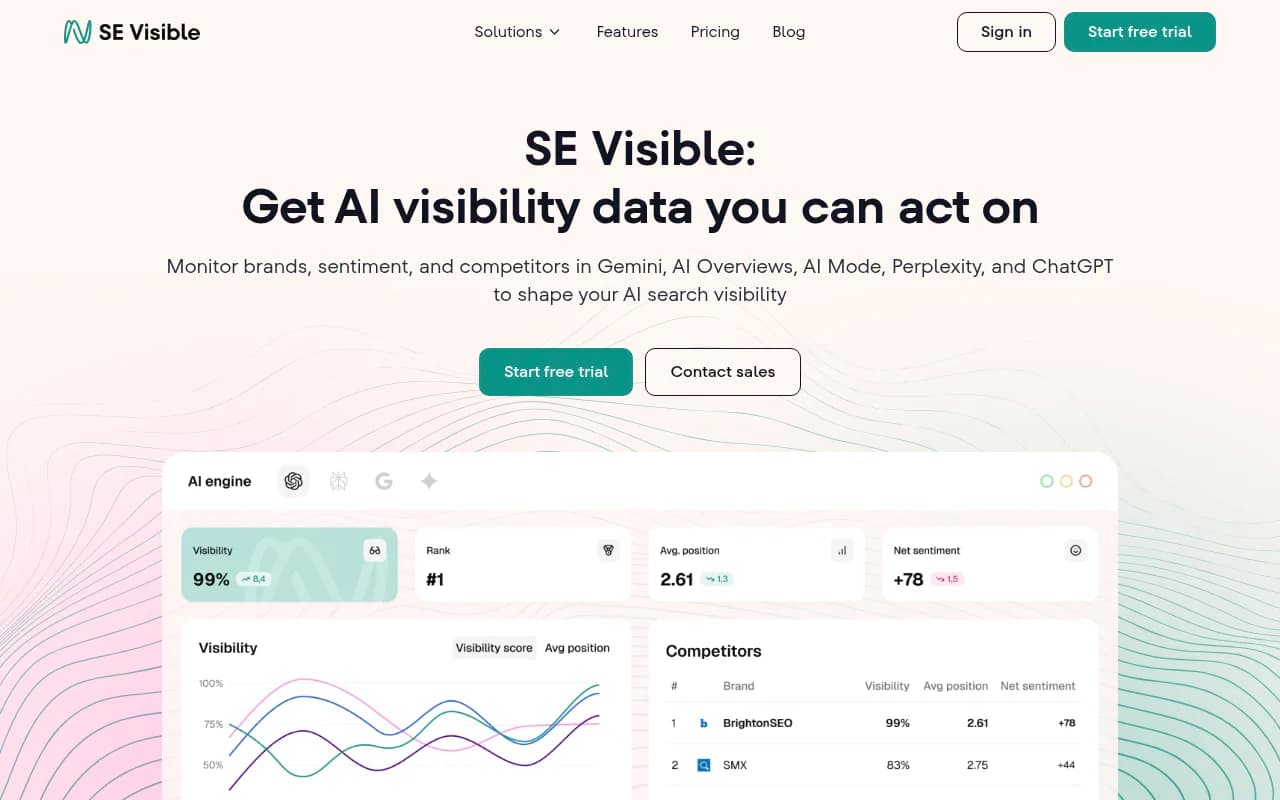
SE Ranking has built out a solid AI SEO toolkit that covers both traditional ranking and some AI visibility features. Their SE Visible product handles the AI search side specifically. For teams that want one platform covering both Google and AI search at a reasonable price point, it's one of the more complete traditional-SEO-first options.
Surfer SEO
Surfer is primarily a content optimization tool -- it scores your content against top-ranking pages and suggests improvements. It's excellent for Google-focused content optimization. AI search visibility isn't really its focus, but if you're writing content that needs to rank on Google first, Surfer is still one of the better tools for that job.
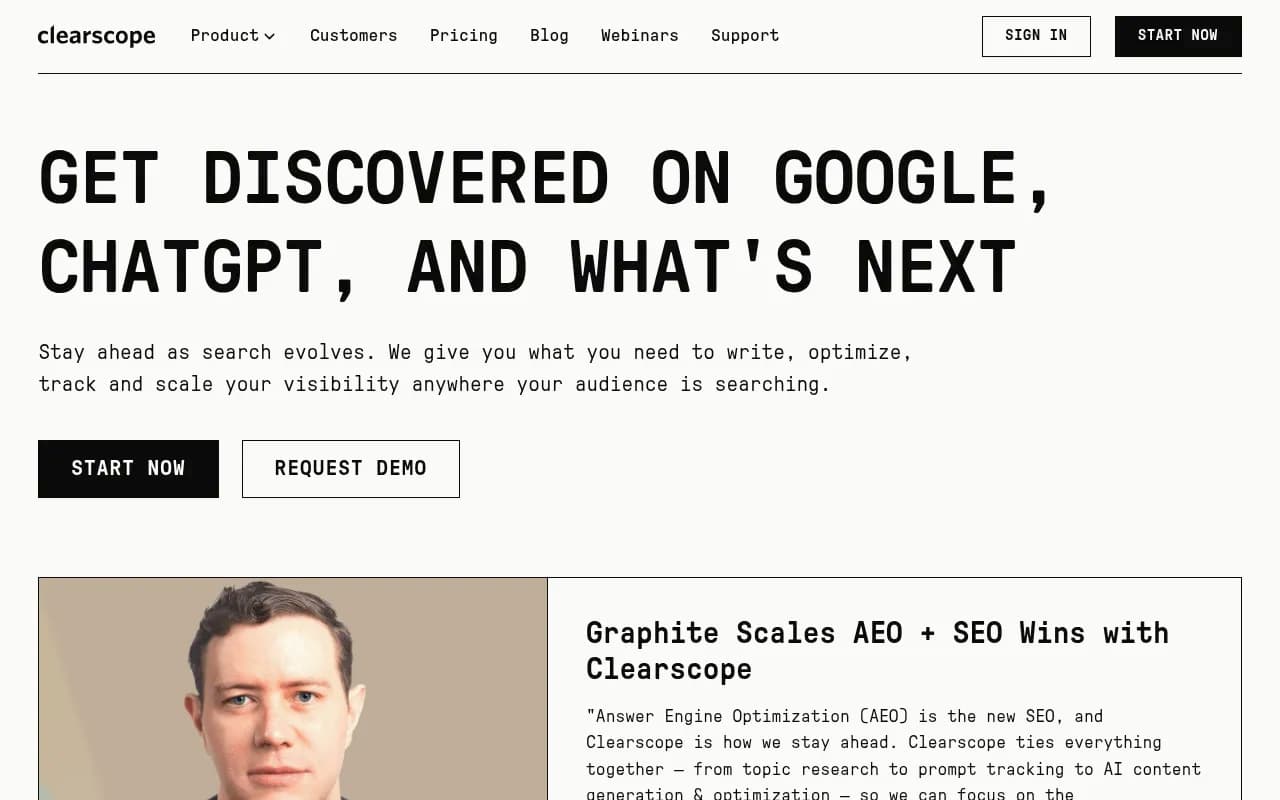
Clearscope
Similar positioning to Surfer -- content optimization grounded in real search data. Clearscope has started incorporating AI search signals into its recommendations, which makes it more relevant in 2026 than it was a couple of years ago. Still primarily a Google-focused tool.
Dedicated GEO and AI visibility platforms
This is where things get more interesting -- and more complicated. There are now dozens of platforms claiming to track your AI search visibility. Most of them do roughly the same thing: run prompts through AI engines, check whether your brand appears, and show you a dashboard.
The meaningful differences come down to: how many AI models they cover, whether they track custom prompts or fixed ones, whether they offer content gap analysis, and whether they actually help you create content or just show you data.
Promptwatch
Promptwatch is one of the few platforms that goes beyond monitoring into actual optimization. The core workflow is: find the prompts where competitors appear but you don't (Answer Gap Analysis), generate content designed to earn citations (using an AI writing agent trained on 880M+ citation data points), then track whether your visibility improves. It monitors 10 AI models including ChatGPT, Perplexity, Claude, Gemini, Grok, DeepSeek, and Google AI Overviews.
What makes it different from most GEO tools is the action loop. Most platforms stop at "here's where you're invisible." Promptwatch shows you what content to create and then helps you create it. It also includes AI crawler logs (showing which pages AI bots are actually reading on your site), ChatGPT Shopping tracking, Reddit and YouTube citation analysis, and traffic attribution via GSC integration or server logs.

Profound
Profound is a strong enterprise option with deep analytics and a solid feature set. It covers AI monitoring across major models and has good reporting. The price point is higher ($399/mo starting), and it doesn't include Reddit tracking or ChatGPT Shopping monitoring. For large brands with dedicated analytics teams, it's worth evaluating.

AthenaHQ
AthenaHQ covers 8+ AI search engines and has some automation features. It's more monitoring-focused than optimization-focused -- the platform surfaces data well but doesn't have built-in content generation. If you have a content team that can act on the insights independently, that's fine. If you need the tool to help you create content, it falls short.

Peec AI
Peec AI is a solid mid-market option with good multi-language support. It tracks AI visibility across major models and has reasonable analytics. It's primarily a monitoring tool -- no content generation, no crawler logs. Starting at €89/mo, it's priced reasonably for what it does.

Otterly.AI
Otterly is the budget-friendly entry point for AI visibility monitoring. At $29/mo it's accessible, and it covers the basics. The trade-off is that it's monitoring-only with limited analytics depth. No crawler logs, no visitor analytics, no content generation. Good for individuals or small teams that just want to know whether their brand shows up.

SE Visible
SE Ranking's dedicated AI visibility product. It's user-friendly and integrates with the broader SE Ranking platform, which is useful if you're already a customer. Covers the main AI models and provides clear reporting.
Scrunch AI
Scrunch AI focuses on enterprise AI search visibility with deep analysis capabilities. It's on the higher end of the market and is better suited to large organizations with complex monitoring needs.
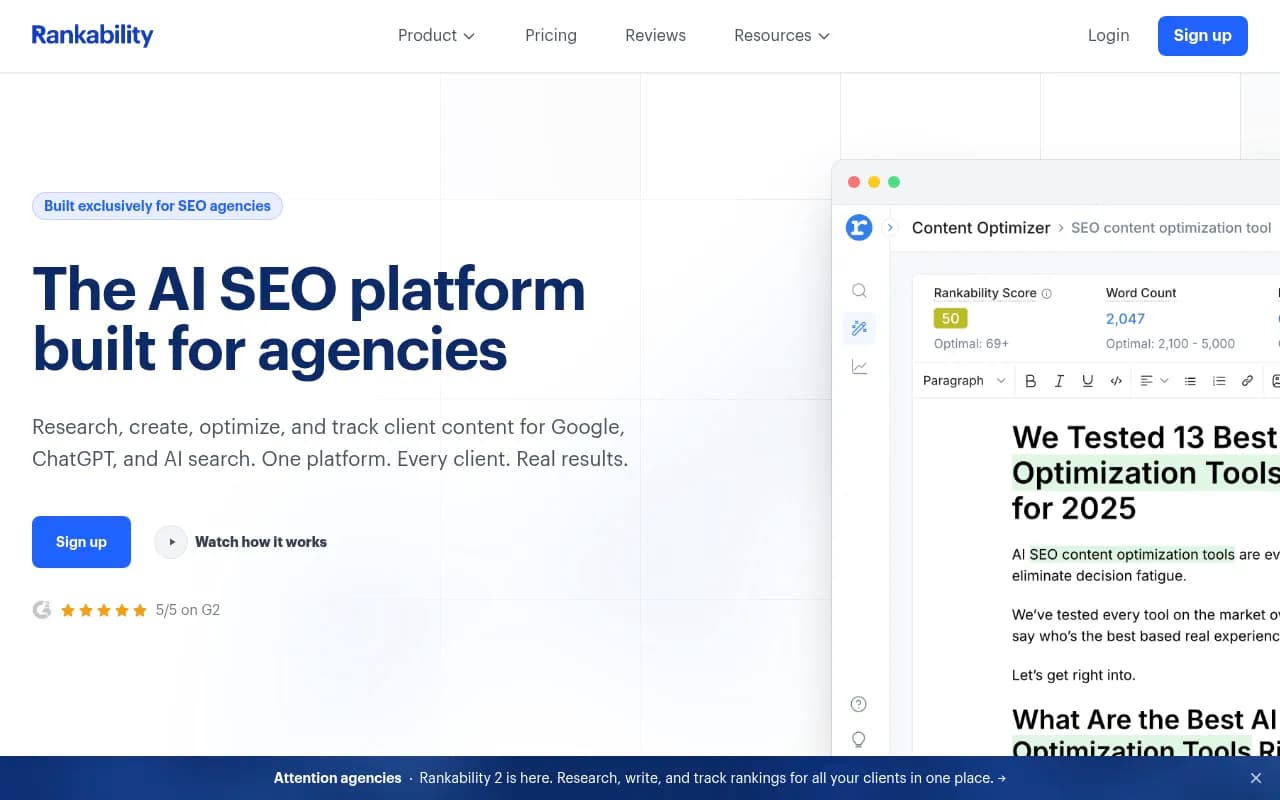
Rankability
Rankability is positioned toward agencies and includes coaching alongside the analytics. If you're an agency that wants structured guidance alongside data, it's worth looking at. Starting at $149/mo.
Comparison table: AI SEO tools in 2026
| Tool | Google ranking | AI search tracking | Content generation | AI crawler logs | Custom prompts | Starting price |
|---|---|---|---|---|---|---|
| Semrush | Yes | Basic (fixed prompts) | Yes (ContentShake) | No | No | $99/mo |
| Ahrefs Brand Radar | Yes | Basic (fixed prompts) | No | No | No | $129/mo+ |
| SE Ranking | Yes | Yes (via SE Visible) | Yes | No | Yes | $65/mo |
| Surfer SEO | Yes | No | Partial | No | No | $89/mo |
| Clearscope | Yes | Partial | No | No | No | $189/mo |
| Promptwatch | No | Yes (10 models) | Yes | Yes | Yes | $99/mo |
| Profound | No | Yes | No | No | Yes | $399/mo |
| AthenaHQ | No | Yes (8+ models) | No | No | Yes | $295/mo |
| Peec AI | No | Yes | No | No | Yes | €89/mo |
| Otterly.AI | No | Yes | No | No | Limited | $29/mo |
| Scrunch AI | No | Yes | No | No | Yes | Custom |
How to choose the right tool for your situation
The right answer depends on where your traffic actually comes from and where you want it to come from.
If 95% of your organic traffic is still from Google and you're just starting to think about AI search, a traditional platform like SE Ranking or Semrush with its AI add-ons is probably enough for now. You get Google ranking data you already need, plus a starting point for AI visibility.
If AI search is already a meaningful traffic source, or you're in a category where users frequently ask AI assistants for recommendations (software, finance, travel, health), you need a dedicated GEO platform. The monitoring-only tools (Otterly, Peec AI) are fine for awareness, but if you want to actually improve your visibility, you need something that helps you identify content gaps and create content that earns citations.
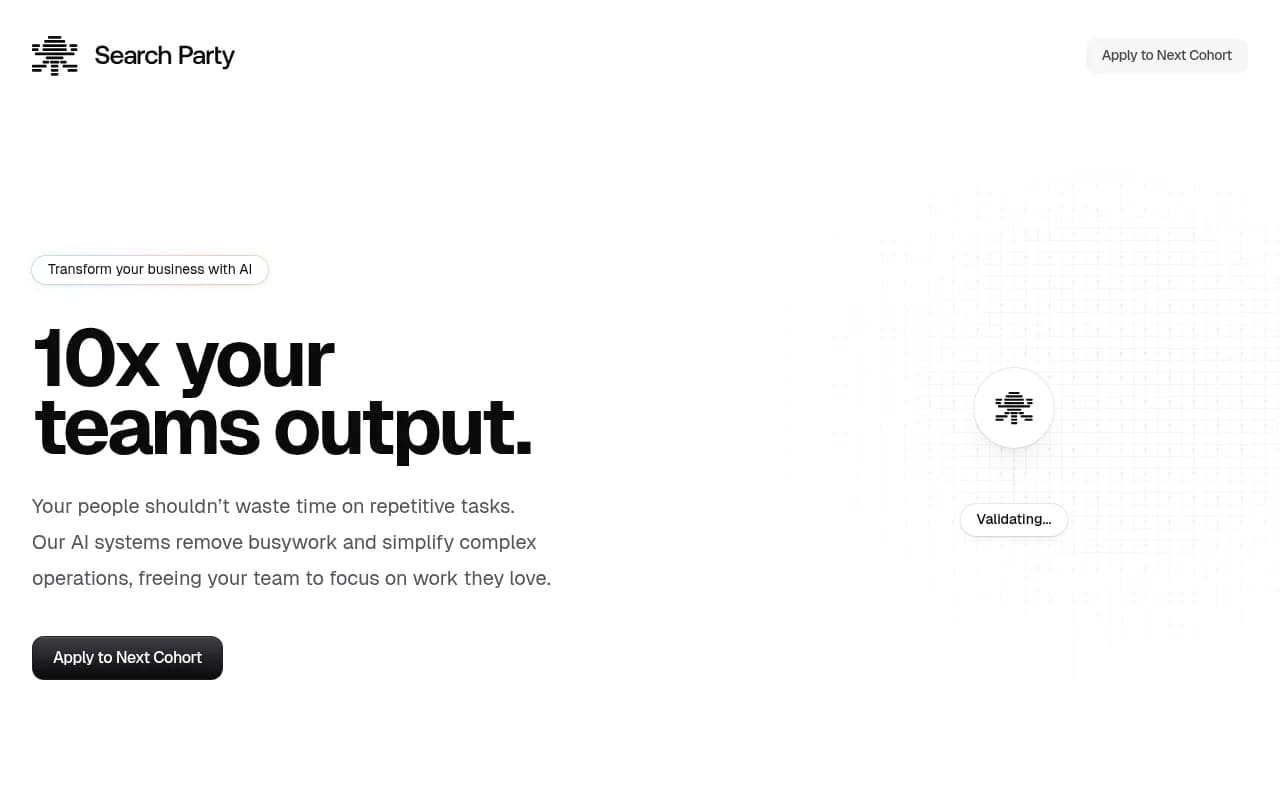
If you're an agency managing multiple clients, the economics change. You need multi-site support, white-label reporting, and enough prompt volume to track each client meaningfully. Promptwatch has agency and enterprise pricing for this, and Search Party is another agency-oriented option.
For enterprise teams with complex needs and existing tech stacks, Profound or Scrunch AI are worth evaluating, though the price points are significantly higher.
What "ranking in ChatGPT" actually means
It's worth being specific about this, because the mechanics are different from Google ranking.
When someone asks ChatGPT a question, the model doesn't crawl the web in real time (unless using browsing mode). It draws on training data and, in some cases, retrieval-augmented generation that pulls from indexed sources. Getting cited means your content needs to be:
- Authoritative and specific on the topic the user is asking about
- Written in a way that directly answers questions (not just optimized for keywords)
- Indexed and accessible to AI crawlers
- Referenced by other sources that AI models trust (Reddit threads, industry publications, YouTube)
This is why content gap analysis matters. It's not enough to know you're not appearing -- you need to know which specific questions you're not answering, and then create content that answers them better than what's currently out there.
Tools like Promptwatch surface this through Answer Gap Analysis: you can see the exact prompts where competitors are getting cited and you're not, which gives you a concrete content roadmap rather than a vague directive to "create more content."
A note on AI crawler logs
One capability that's underappreciated: knowing whether AI engines are actually crawling your site.
Most GEO platforms show you whether your brand appears in AI responses. Very few show you whether AI crawlers are visiting your pages, which pages they're reading, how often they return, and whether they're hitting errors. This matters because if ChatGPT's crawler can't access your content, it doesn't matter how well-written it is.
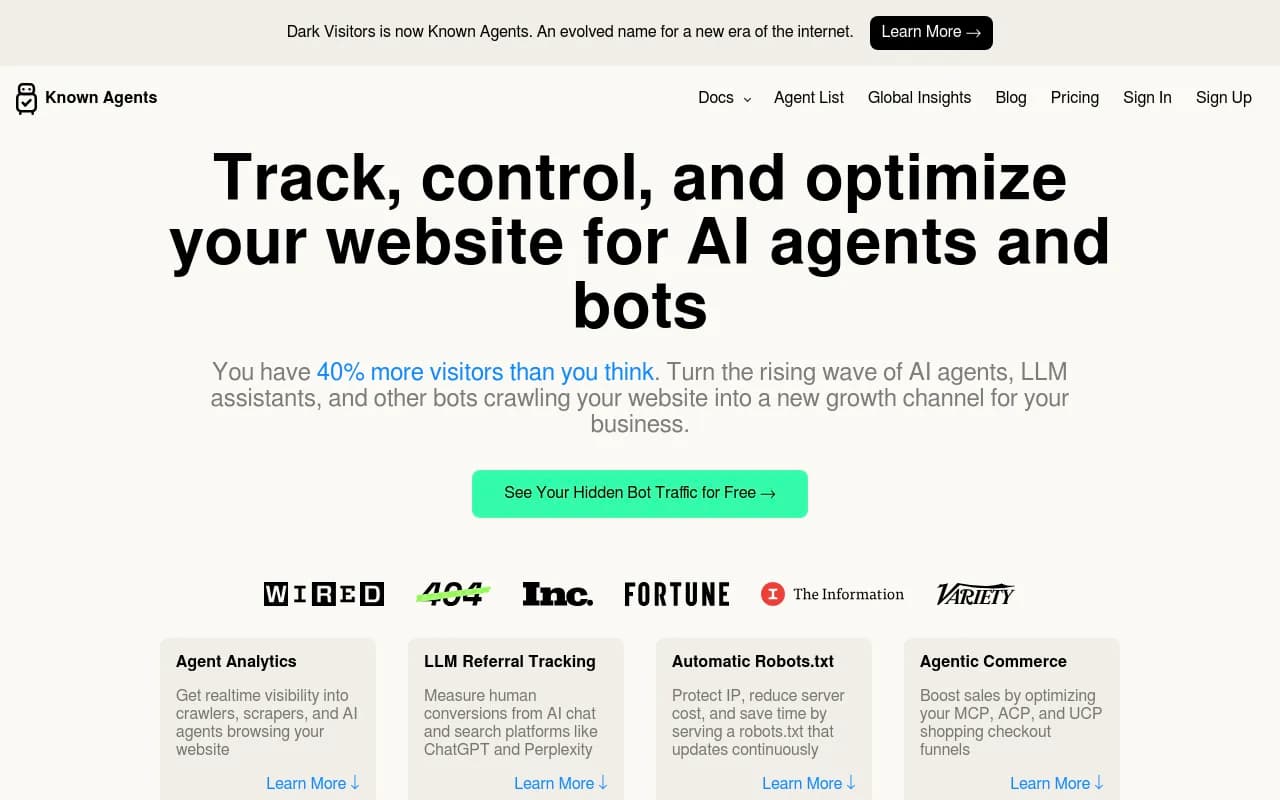
Platforms like Promptwatch include real-time AI crawler logs that show activity from ChatGPT, Claude, Perplexity, and others. DarkVisitors is another tool focused specifically on tracking AI agent activity on your site.
The content generation question
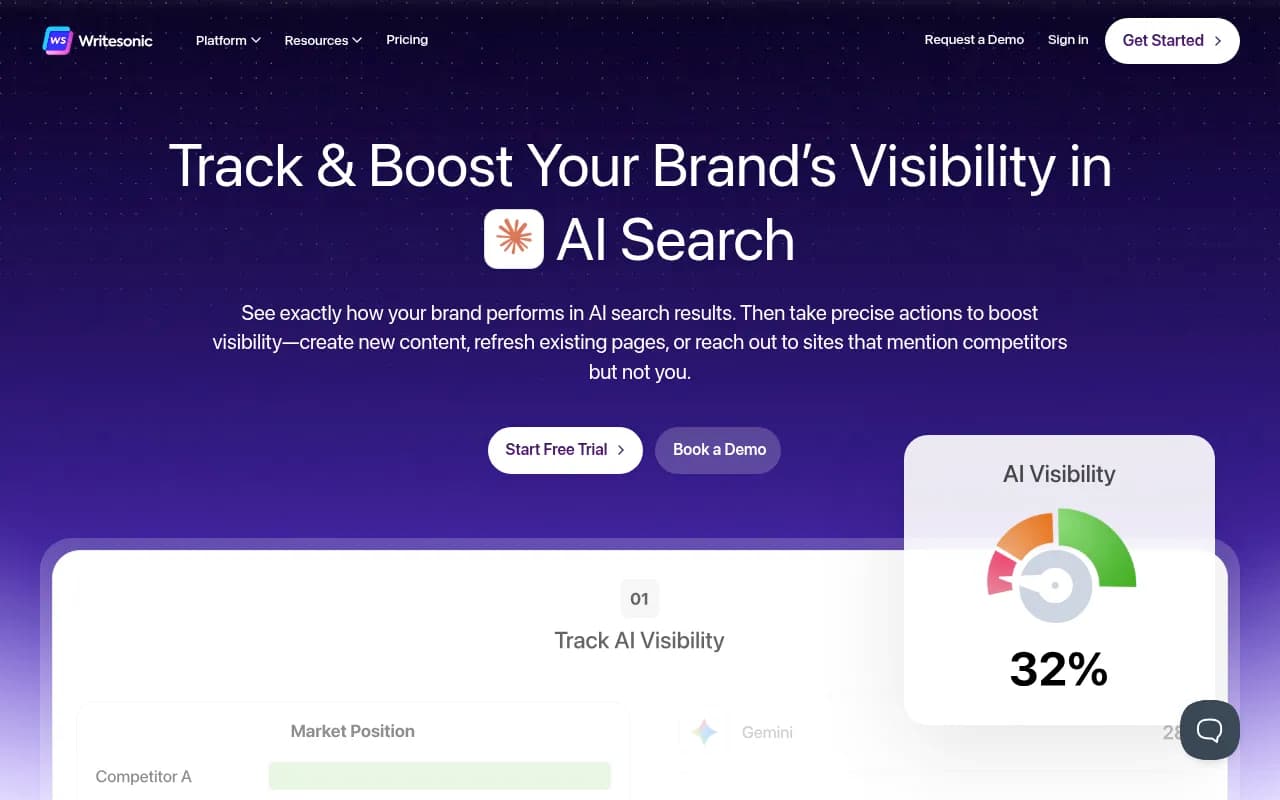
A few tools now include AI content generation specifically designed to earn citations. This is different from generic AI writing tools like Jasper or Writesonic, which generate content for human readers.
Citation-optimized content generation uses data about what AI models actually cite -- which sources, which formats, which topics -- to write content that's more likely to be referenced in AI responses. Promptwatch's writing agent is built on 880M+ citations analyzed, which means the content it generates is grounded in real citation patterns rather than general writing quality.
If you're using a general AI writing tool for GEO purposes, you're essentially guessing. The specialized tools use actual citation data to inform what they write.
Bottom line
The SEO tool market in 2026 is genuinely fragmented. Traditional platforms are adding AI features that are useful but shallow. Dedicated GEO platforms are proliferating, but most are monitoring dashboards that leave you with data and no clear path to improvement.
The tools worth paying for are the ones that close the loop: show you where you're invisible, explain why, help you create content that fixes it, and track whether it worked. That's a short list right now.
For most teams, the practical approach is: keep your existing Google-focused SEO tool if it's working, and add a dedicated GEO platform if AI search is a real channel for your business. Don't assume your traditional SEO platform's AI features are sufficient -- the fixed-prompt monitoring that Semrush and Ahrefs currently offer is a starting point, not a strategy.
The brands that figure out AI search visibility in 2026 will have a meaningful head start. The ones that wait until it's obvious will be playing catch-up.