Key takeaways
- AI citations and brand mentions are different signals -- most tools (and most agency reports) conflate them, which inflates numbers and hides real visibility gaps
- Each AI platform has its own source preferences: ChatGPT leans on Wikipedia, Perplexity on Reddit, Gemini on brand-owned domains -- a single-platform report misses most of the picture
- Agencies need a consistent citation reporting framework across clients, not ad hoc screenshots from manual queries
- The metrics that matter most are citation rate, share of voice vs. competitors, which pages are being cited, and whether citations are driving actual traffic
- Tools built for agencies (multi-site, white-label, exportable data) save significant time compared to stitching together single-brand tools
There's a Reddit thread from early 2026 that sums up where most agencies are right now. Someone posted about adding AI citation tracking to their monthly reports, and the top reply was blunt: "Fun fact, AI citation tracking is impossible to do accurately. I mean... we still do it because, as you highlight, it's a metric clients care about."
That tension -- clients demanding the data, the data being genuinely hard to capture -- is the defining challenge for agencies right now. This guide is about navigating it practically: what to track, how to report it across multiple client sites, which tools actually help, and how to build a process that doesn't collapse under its own complexity.
Why citation tracking is different from what agencies have done before
Traditional SEO reporting is relatively clean. You pull rankings, impressions, clicks, conversions. The data sources are consistent, the metrics are standardized, and clients understand what a ranking means.
AI citation tracking is none of those things -- at least not yet.
When ChatGPT answers a question about "best project management software for remote teams," it might cite your client's blog post, mention a competitor's brand without citing anything, or produce a response that looks authoritative but links to a Wikipedia article your client has no connection to. Three different signals, three different implications, and most basic monitoring tools treat them identically.
The core distinction agencies need to internalize: a citation is a formal source attribution (a link or footnote in the AI's response). A mention is just the brand name appearing in the text. They're related but not the same thing, and conflating them produces reports that look impressive but don't reflect actual visibility.
There's also the platform fragmentation problem. Research from Topify found that only 11% of domains are cited by both ChatGPT and Perplexity for the same query. Each engine has its own source preferences:
| AI platform | Primary source preference | Notes |
|---|---|---|
| ChatGPT | Wikipedia (47.9% share) | Training-data heavy, less real-time |
| Perplexity | Reddit (46.7% share) | Community content dominates |
| Google AI Mode | YouTube (23.3% share) | Video and Google-owned properties |
| Claude | Niche blogs / editorial | Long-form, authoritative content |
| Gemini | Brand-owned domains (52.1%) | Favors direct brand sources |
This means a client with a strong blog presence might get cited regularly in Claude but be invisible in Perplexity unless they have Reddit presence. A report that only checks one platform is structurally incomplete.
The seven metrics that actually belong in a citation report
Before picking tools or building dashboards, agencies need to agree internally on what they're measuring. Here's what holds up under client scrutiny:
Citation rate: Out of all the prompts you're monitoring, what percentage return a response that cites your client's domain? This is the headline number -- the equivalent of a visibility score.
Share of voice: How does the client's citation rate compare to named competitors across the same prompt set? A citation rate of 12% sounds mediocre until you learn the category leader is at 9%.
Platform breakdown: Which AI engines are citing the client, and which aren't? This tells you where the content gaps are and where to focus optimization effort.
Page-level citation data: Which specific pages on the client's site are being cited? A single high-performing page might be doing most of the work, and the client needs to know that.
Prompt-level data: Which queries trigger citations and which don't? This is where gap analysis lives -- the prompts where competitors appear but the client doesn't.
Citation trend over time: Is visibility improving, declining, or flat? Month-over-month change is the metric clients actually care about when they're paying for ongoing work.
Traffic attribution: Are AI citations driving actual visits? This is the hardest metric to capture but the most important for proving ROI. It requires either a tracking snippet, Google Search Console integration, or server log analysis.
Building a multi-client reporting framework
The operational challenge for agencies isn't understanding what to measure -- it's doing it at scale without the process falling apart.
Standardize your prompt sets per client
Every client needs a defined set of prompts that get monitored consistently. These should include:
- Category-level queries ("best [product type] for [use case]")
- Comparison queries ("[client brand] vs [competitor]")
- Problem-aware queries ("how do I solve [problem the client solves]")
- Brand-direct queries (the client's own name, to catch sentiment and accuracy)
The prompt set should be agreed on with the client at onboarding and reviewed quarterly. Don't let it drift -- consistency is what makes trend data meaningful.
Separate monitoring from reporting
Monitoring is continuous. Reporting is periodic. These are different workflows and they need different tools.
For monitoring, you want something running automated queries across platforms on a schedule, logging results, and alerting you to significant changes. For reporting, you want something that can aggregate that data into a format clients can actually read -- ideally with white-label options if you're presenting under your agency's brand.
Build a client-agnostic template
The report structure should be identical across clients, even if the data differs. This makes production faster and makes it easier to train junior team members. A solid template includes:
- Executive summary (2-3 sentences on what changed and why it matters)
- Citation rate trend (chart, current month vs. previous 3 months)
- Share of voice vs. top 3 competitors
- Platform breakdown (which AI engines are citing, which aren't)
- Top cited pages (with citation counts)
- Prompt gap analysis (prompts where competitors appear but the client doesn't)
- Recommended actions for next month
The last section is what separates a good agency report from a data dump. Clients don't want to stare at numbers -- they want to know what you're going to do about them.
Tools worth using for agency-scale citation tracking
The market has matured enough in 2026 that there are real options for agencies -- but they vary significantly in what they actually track and how well they handle multi-client workflows.
Full-platform options with agency features
Promptwatch is the tool most worth evaluating if you're running citation tracking across multiple client sites. It monitors 10 AI platforms simultaneously (ChatGPT, Perplexity, Claude, Gemini, Google AI Overviews, Grok, DeepSeek, Copilot, Meta AI, Mistral), and the agency value is in what it does beyond monitoring. The Answer Gap Analysis shows exactly which prompts competitors appear for but your client doesn't -- which is the data you need to actually write the "recommended actions" section of your report. It also has a built-in AI writing agent that generates content grounded in citation data, so you can close the gap rather than just document it. Crawler logs, page-level citation tracking, and traffic attribution round out the picture.

For agencies that want something more focused on tracking without the content generation layer, a few other tools are worth knowing:
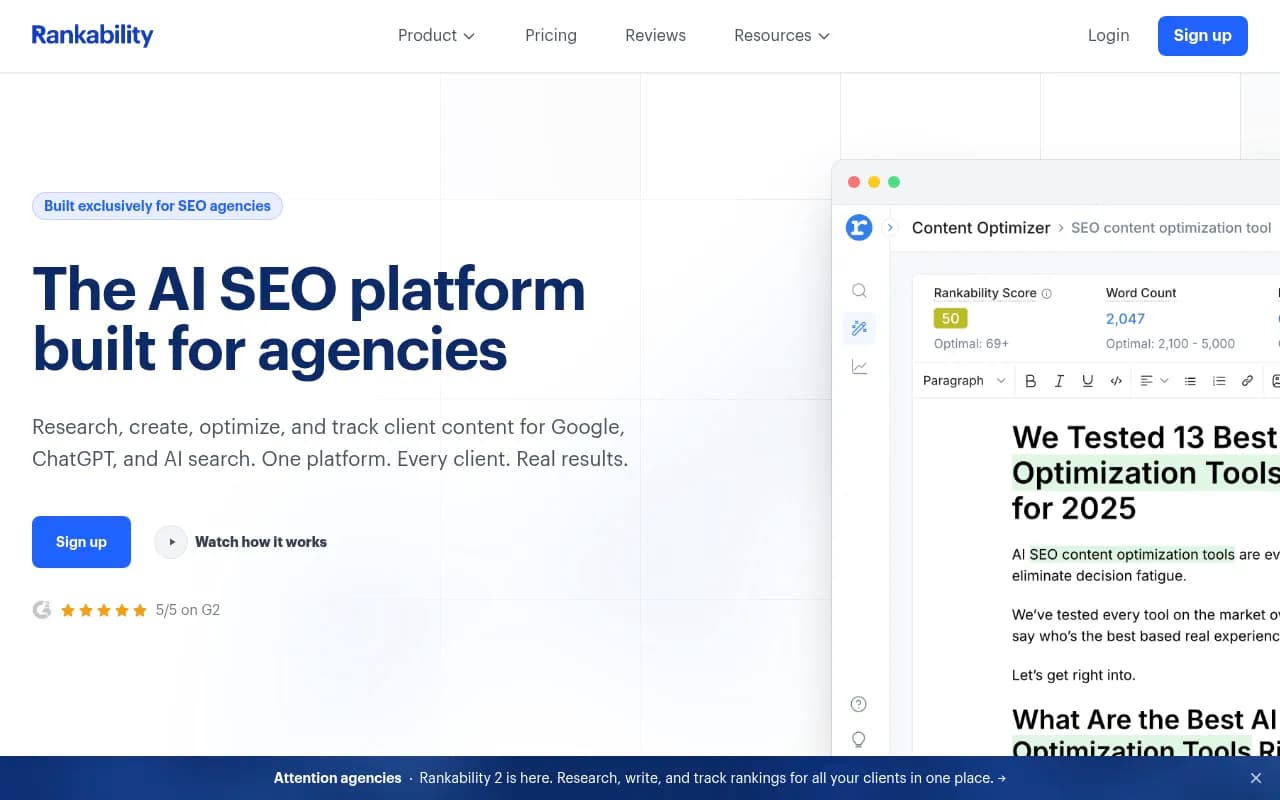
Rankability is built specifically for agencies, with multi-site management and reporting features designed around client deliverables.
Profound has strong feature depth for brand-level tracking across AI engines, though it sits at a higher price point that makes sense for larger agency retainers.

AthenaHQ covers 8+ AI engines and is solid for monitoring, though it's more dashboard than action platform -- you'll still need to figure out what to do with the data yourself.

Otterly.AI is one of the more affordable options and works well for smaller agencies or clients with limited budgets. The trade-off is that it's monitoring-only -- no content gap analysis, no crawler logs, no traffic attribution.

Peec AI is worth noting for agencies with international clients -- it has strong multi-language and multi-region support that most tools lack.

Lighter-weight options for specific use cases
If you have clients who primarily care about one or two platforms, some more focused tools make sense:
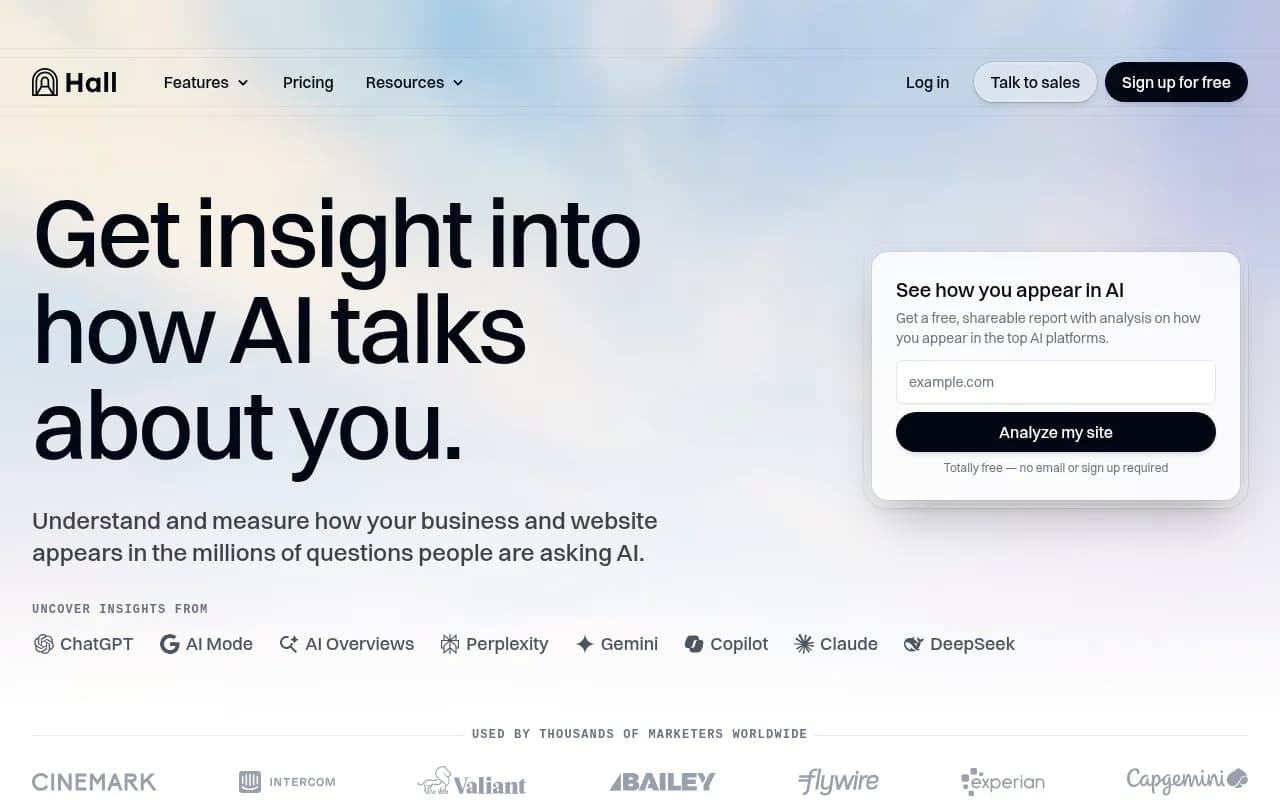
Hall AI tracks how AI platforms cite and discuss brands, with a clean interface that's easy to show clients directly.
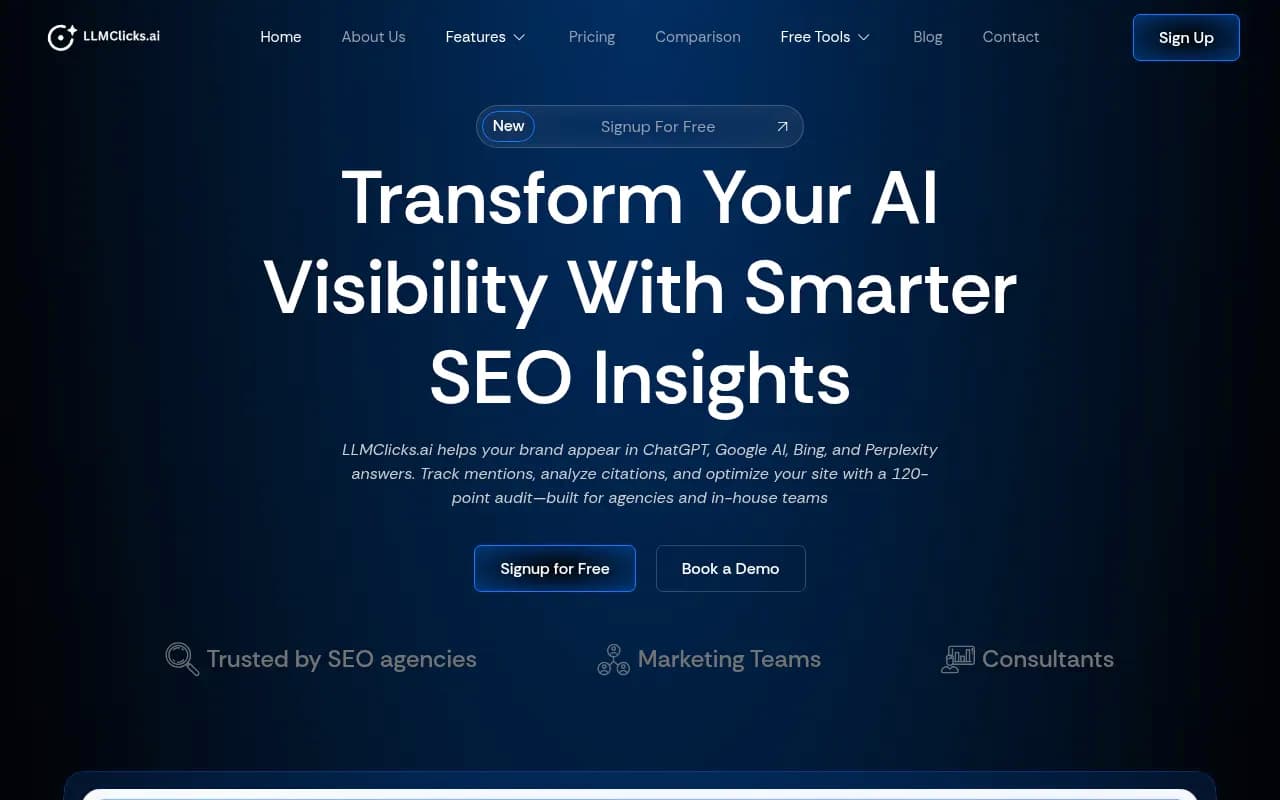
LLM Clicks focuses specifically on citation tracking for AI-powered search, with traffic attribution built in.
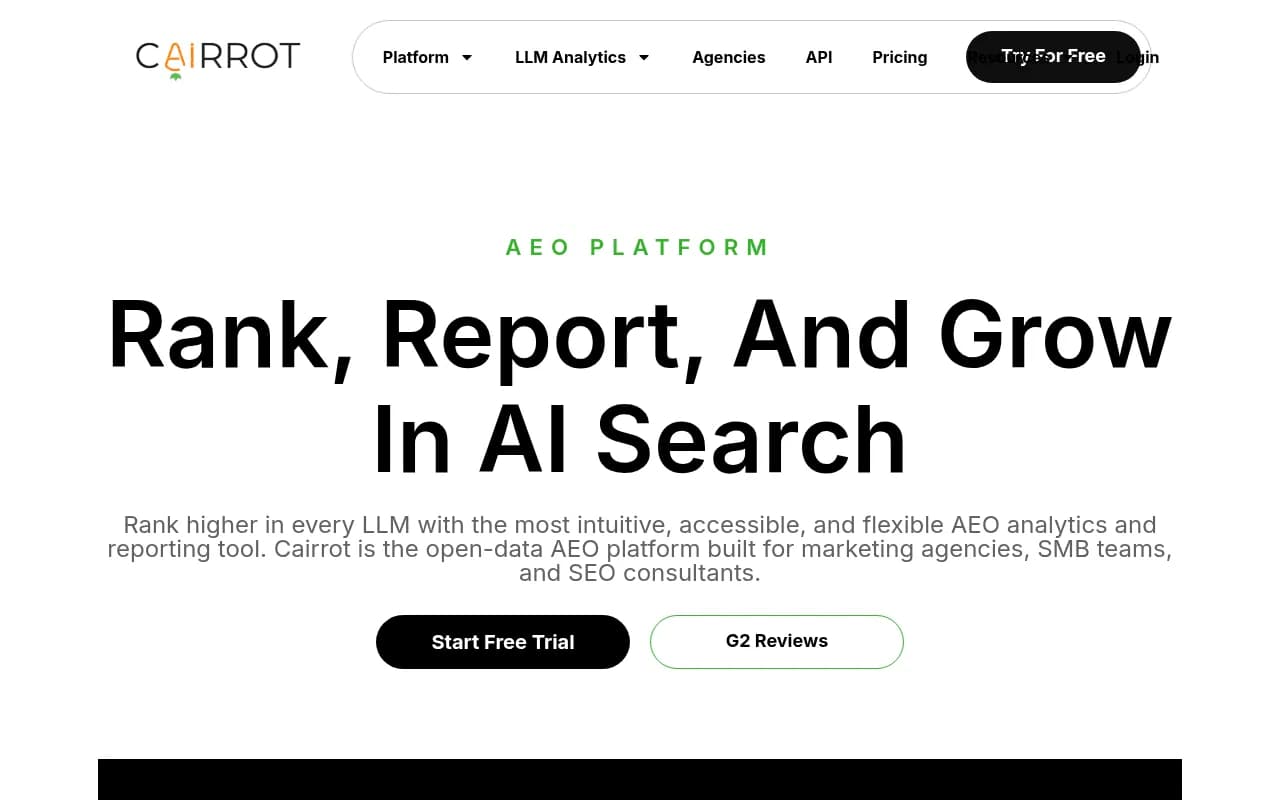
Cairrot is built specifically for marketing agencies doing LLM visibility tracking, which makes the multi-client workflow more natural.
Wellows handles AI search visibility tracking for both brands and agencies, with a reporting layer that works for client-facing deliverables.
Comparison: agency-relevant features
| Tool | Multi-site | Content gap analysis | Traffic attribution | Crawler logs | White-label |
|---|---|---|---|---|---|
| Promptwatch | Yes (up to 5 on Business) | Yes | Yes | Yes (Pro+) | Yes |
| Rankability | Yes | Limited | No | No | Yes |
| Profound | Yes | Limited | No | No | No |
| AthenaHQ | Yes | No | No | No | No |
| Otterly.AI | Yes | No | No | No | No |
| Peec AI | Yes | No | No | No | Limited |
| Cairrot | Yes | No | No | No | Yes |
The platform-specific content strategy problem
Here's something most agency citation reports miss entirely: the content type that gets cited varies dramatically by platform. A strategy that works for one AI engine can actively fail on another.
Perplexity's preference for Reddit content (46.7% source share) means clients who have no Reddit presence are structurally disadvantaged on that platform. No amount of blog optimization fixes that. Agencies need to be honest with clients about this -- and factor community content into the strategy, not just owned-domain content.
Claude's preference for niche editorial content means long-form, authoritative pieces on specific topics outperform broad overview articles. If a client's blog is full of "ultimate guides" that cover everything at a surface level, Claude is less likely to cite them than a competitor with narrower, deeper content.
Google AI Mode's bias toward YouTube content (23.3% source share) is particularly important for clients who haven't invested in video. This is a real gap that shows up in citation data and is worth surfacing explicitly in reports.
The practical implication for agencies: your citation report should include a section on which content types and channels are underperforming by platform, not just which prompts are missing.
Handling the "accuracy" objection from clients
The Reddit comment at the start of this guide -- "AI citation tracking is impossible to do accurately" -- reflects a real limitation. AI responses aren't deterministic. Run the same prompt twice and you might get different sources cited. The data is probabilistic, not precise.
Clients who come from a traditional SEO background sometimes push back on this. They're used to exact ranking positions and exact click counts. Citation rate feels fuzzy by comparison.
The honest answer is: yes, it's probabilistic, and that's fine. Google rankings fluctuate too -- we report averages and trends, not single data points. The same logic applies here. What matters is the trend over time and the relative position vs. competitors, not whether the citation rate is exactly 14.3% or 15.1% on any given day.
The more important point is that AI search is where a growing share of your clients' potential customers are getting answers. Tinuiti's research on AI citation patterns found that these platforms now shape how millions of consumers perceive brands during the research phase. Not tracking it because the data isn't perfect is like refusing to track brand awareness because surveys have margins of error.
Connecting citations to revenue: the attribution challenge
The hardest part of AI citation reporting for agencies is the last mile: proving that citations drive business outcomes, not just visibility scores.
There are three approaches, in order of reliability:
Tracking snippet: A JavaScript snippet on the client's site that captures referral traffic from AI platforms. This works for platforms that pass referral data (Perplexity does; ChatGPT is inconsistent).
Google Search Console integration: GSC data can show traffic from AI-adjacent queries and help correlate visibility improvements with organic traffic changes. It's indirect but useful.
Server log analysis: The most complete picture. AI crawlers leave traces in server logs, and tools like Promptwatch can parse these to show which pages AI engines are reading, how often, and whether those crawls correlate with subsequent traffic. Most agencies don't do this yet, which means it's a genuine differentiator if you offer it.
The goal is to build a chain from "AI cited this page" to "user clicked through" to "user converted." You won't always close the loop completely, but even partial attribution is more compelling than visibility scores alone.
What a good agency citation report actually looks like
To make this concrete: here's the structure that works in practice for monthly client reporting.
The executive summary should be two or three sentences written for a non-technical reader. "Your citation rate across AI platforms increased from 11% to 16% this month, driven by three new blog posts that are now being cited by Claude and Perplexity. ChatGPT remains a gap -- we're addressing this with the content plan outlined below."
Then the data: trend charts, share of voice, platform breakdown, top cited pages. Keep it visual. Clients don't read tables of numbers -- they look at charts and read the callouts.
Then the gap analysis: here are the prompts where your competitors appear and you don't. Here's what content we're creating to address them.
Then the actions: what we did last month, what we're doing next month, what we need from you.
That last section -- what we need from you -- is often missing from agency reports. If closing a citation gap requires the client to publish a Reddit post, or update a product page, or create a video, say so explicitly. The report should be a working document, not a scorecard.
Getting started without overcomplicating it
If you're building this capability from scratch, don't try to instrument everything at once.
Start with one client, a focused prompt set (20-30 prompts), and two or three AI platforms. Run it for 60 days. Get a feel for what the data looks like, what clients respond to, and where the gaps are. Then scale the process to other clients.
The agencies that are doing this well in 2026 aren't necessarily using the most sophisticated tools -- they're the ones who built a consistent process early and stuck with it. Citation data compounds over time. The trend line you start building today is the thing that proves value six months from now.
Pick a tool that handles multi-site management cleanly, exports data you can use in your own reporting templates, and gives you enough depth to actually act on what you find -- not just document it.