Key takeaways
- Otterly.AI is a solid entry point for AI visibility monitoring, but it has no crawler log monitoring — you can't see when GPTBot, ClaudeBot, or PerplexityBot visit your site, what they read, or why they skip certain pages.
- Most Otterly alternatives have the same blind spot. Of the nine tools covered here, only a handful offer any form of AI crawler visibility.
- The tools that go furthest aren't just monitoring dashboards — they close the loop between "where am I missing?" and "here's what to publish to fix it."
- Crawler logs matter more than most teams realize: if an AI bot can't crawl your page, it can't cite it. Knowing which pages get crawled (and which don't) is the first step to improving citations.
- Pricing across the category ranges from free tiers to $500+/month enterprise plans, so there's a real option at every budget.
There's a specific frustration that builds up after a few weeks with any AI visibility monitoring tool. You open the dashboard, see your brand mentioned in 4 out of 12 tracked prompts, watch a competitor sitting at 9 out of 12, and then... nothing. The tool has done its job. It showed you the gap. What it can't tell you is why the gap exists or what's happening when AI crawlers actually visit your website.
That second part — the crawler side — is where almost every tool in this category falls short. Otterly.AI included.
To be fair, Otterly does what it says. It tracks brand mentions across ChatGPT, Perplexity, Google AI Overviews, and Gemini. The interface is clean. The entry price ($29/month) is accessible. For a first look at AI visibility, it works fine.
But "first look" is the ceiling. As one user put it on Reddit: "It tracks the source, but gives zero actionable strategy on how to restructure content to get cited." And the crawler blind spot is real — Otterly doesn't show you when AI bots visit your site, which pages they read, or what errors they hit. That's a significant gap when you're trying to understand why you're not getting cited.
This guide covers nine alternatives, with particular attention to which ones actually surface crawler behavior. Because knowing that GPTBot visited your site last Tuesday and bounced off a 404 is more actionable than knowing your brand appeared in 3 out of 10 responses.
Why crawler log monitoring matters for GEO
Before getting into the tools, it's worth being specific about what crawler log monitoring actually means in this context.
When ChatGPT, Perplexity, or Claude builds a response, they're drawing on content their crawlers have already indexed. GPTBot crawls for OpenAI. ClaudeBot crawls for Anthropic. PerplexityBot crawls for Perplexity. These bots behave differently from Googlebot — they have different crawl frequencies, different priorities, and different reactions to technical errors.
If your page has a crawl issue (blocked by robots.txt, slow server response, broken canonical), a traditional SEO audit might catch it. But it won't tell you specifically that PerplexityBot tried to access that page three times and failed each time. That's the data crawler log monitoring provides.
Most AI visibility tools query AI models via API and report on what comes back. That's useful. But it's entirely separate from understanding the crawl side of the equation. The tools that combine both — response monitoring AND crawler behavior — give you a much more complete picture.
The 9 best Otterly.AI alternatives in 2026
1. Promptwatch — best overall, especially for crawler log monitoring
Promptwatch is the most complete option on this list, and the one most directly built around the crawler log problem. It's the only platform in this comparison that shows you real-time logs of AI crawlers hitting your website — which pages GPTBot, ClaudeBot, PerplexityBot, and others read, what errors they encounter, how often they return, and when a page moves from "crawled" to "cited."
That last part is the key insight. Promptwatch tracks the full timeline from crawl to citation, so you can see exactly when a piece of content you published started getting picked up by AI models. Most tools show you citations. Promptwatch shows you the path that led to them.
Beyond crawler logs, it covers 10 AI models (ChatGPT, Perplexity, Google AI Overviews, Google AI Mode, Claude, Gemini, Meta/Llama, DeepSeek, Grok, Mistral, Copilot), runs Answer Gap Analysis to show which prompts competitors rank for that you don't, and has Content Agents that generate articles and briefs grounded in real prompt data. The loop is: find the gap, create content that fills it, watch the citations follow.
It's used by 1,480+ brands including Booking.com and Center Parcs. Pricing starts at $99/month (Essential), $249/month (Professional, which includes crawler logs), and $579/month (Business). Free trial available.

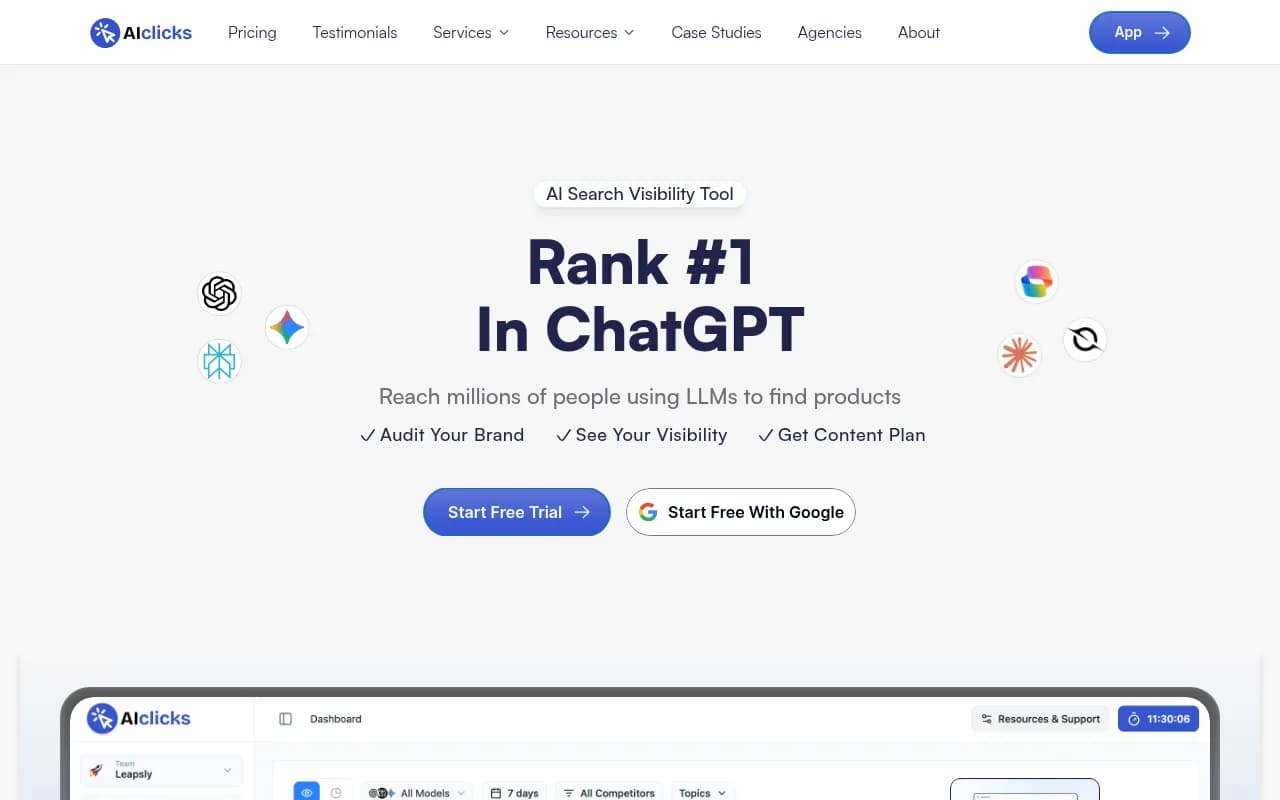
2. AIClicks — best for keyword-based tracking
AIClicks takes a different approach to prompt tracking. Where Otterly uses a prompt-based system (you define the exact questions to track), AIClicks works from keywords — which some teams find more intuitive, especially if they're coming from traditional SEO workflows.
It uses headless browsers to query AI model interfaces directly rather than going through APIs, which means the data reflects what users actually see rather than what the API returns. Those can differ, particularly for shopping recommendations and featured citations.
The platform covers major AI engines and offers competitive comparison features. It's positioned as a more affordable alternative to Otterly for teams that find Otterly's prompt limits restrictive. No crawler log monitoring.
3. Peec AI — best for clean, multi-language analytics
Peec AI is a focused analytics tool — no content generation, no crawler logs, just clean AI visibility data with strong multi-language support. If you're monitoring a brand across multiple markets and need reliable tracking in French, German, Spanish, or other languages, Peec AI handles that better than most.
The interface is straightforward and the reporting is easy to share with stakeholders who don't need to understand the technical details. It's a monitoring-only tool, so the "now what?" question remains unanswered, but the data quality is solid.

4. AthenaHQ — best for enterprise teams tying AI visibility to revenue
AthenaHQ is built for larger organizations that need AI visibility data connected to business outcomes. It tracks across 8+ AI search engines and has features specifically designed for ecommerce — including tracking when your products appear in AI shopping recommendations.
The enterprise focus shows in the pricing and the onboarding process. It's not the right tool for a solo marketer or small agency, but for a brand that needs to justify GEO investment to a CFO, the revenue attribution features help make that case. No crawler log monitoring.

5. SE Ranking — best for budget-conscious agencies
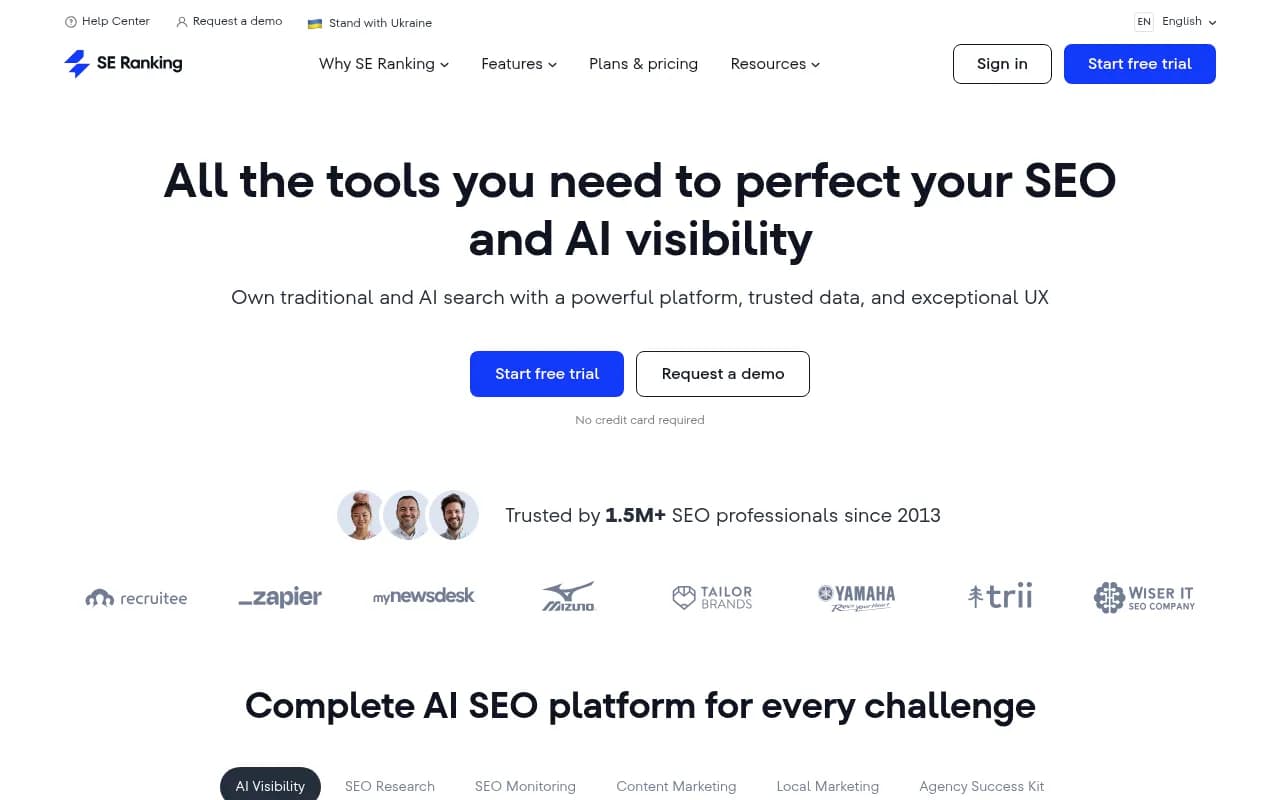
SE Ranking has been a solid all-in-one SEO platform for years, and its AI visibility module (called AI Overviews tracking) is a reasonable add-on for teams already using it for traditional SEO. You get rank tracking, site auditing, and AI visibility in one subscription, which makes the per-feature cost lower than buying a dedicated GEO tool.
The AI visibility features aren't as deep as dedicated platforms — prompt volumes, competitor heatmaps, and content gap analysis are limited or absent. But if your team is already paying for SE Ranking and wants a first look at AI visibility without adding another tool, it's a practical starting point.
6. Semrush — best for teams already inside the Semrush ecosystem
Semrush added AI visibility tracking to its platform, and it's useful if you're already a Semrush customer. The integration with existing keyword data, site audit tools, and content features means you don't have to context-switch between platforms.
The limitation is that Semrush uses fixed prompt sets rather than letting you define custom prompts, which means you're tracking what Semrush decides to track rather than the specific questions your customers are actually asking. For a broad market overview that's fine. For precise brand monitoring it's a constraint.
7. Nightwatch — best for rank tracking teams expanding into AI
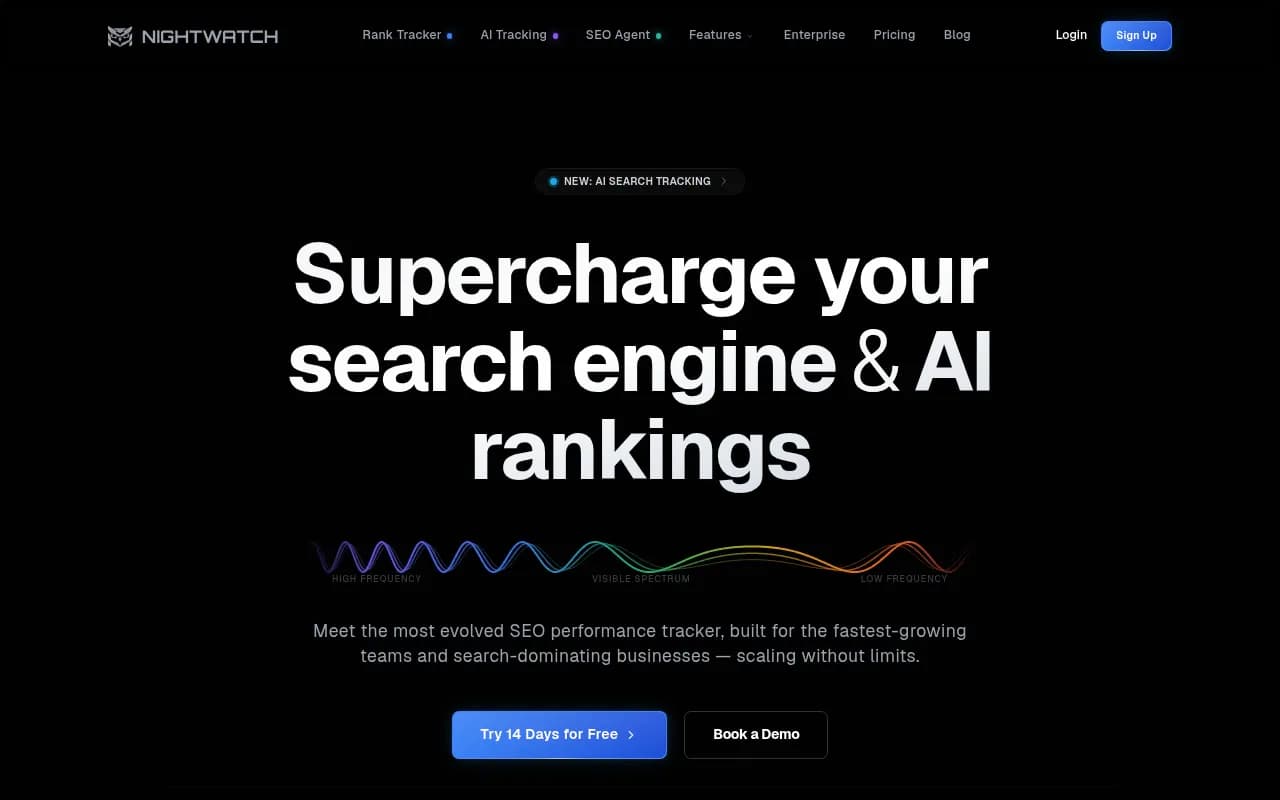
Nightwatch is primarily a rank tracking platform that has added AI visibility monitoring. If your team's core workflow is traditional SERP tracking and you want to extend that into AI search without switching tools, Nightwatch is a natural fit.
The AI monitoring features cover major platforms and the rank tracking data is genuinely good. It's not a dedicated GEO platform, so the depth of AI-specific features (prompt intelligence, content gap analysis, crawler logs) isn't there. But for teams that want one tool to cover both traditional and AI search, it's worth considering.
8. Profound — best for deep AI search analytics
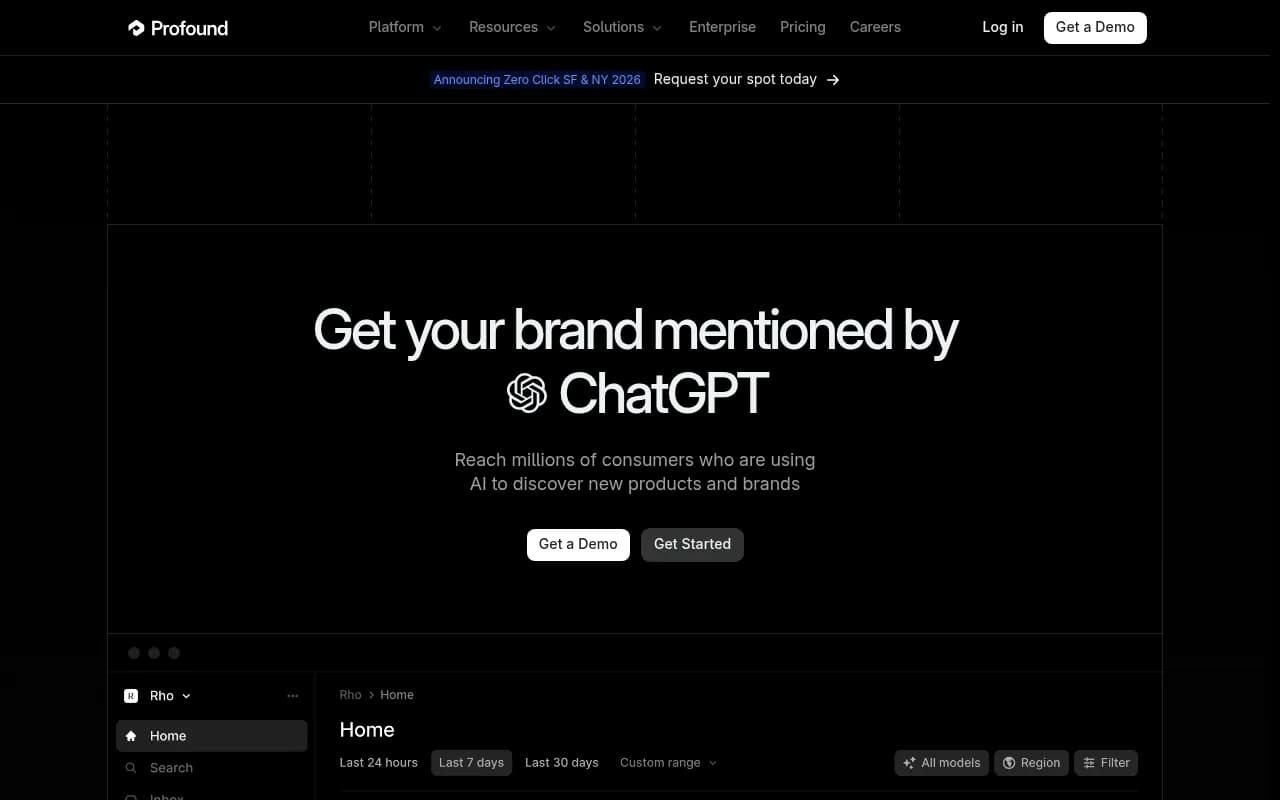
Profound has a strong feature set for AI search monitoring, with detailed analytics on how brands appear across AI platforms. It covers citation tracking, competitor analysis, and some content optimization guidance.
The pricing sits higher than most alternatives on this list, which makes it harder to justify for smaller teams. And like most tools in this category, it doesn't surface crawler log data. But the analytics depth is real — teams that need detailed reporting on AI search performance will find more to work with here than in lighter tools.
9. DarkVisitors — best for understanding which AI bots are visiting your site
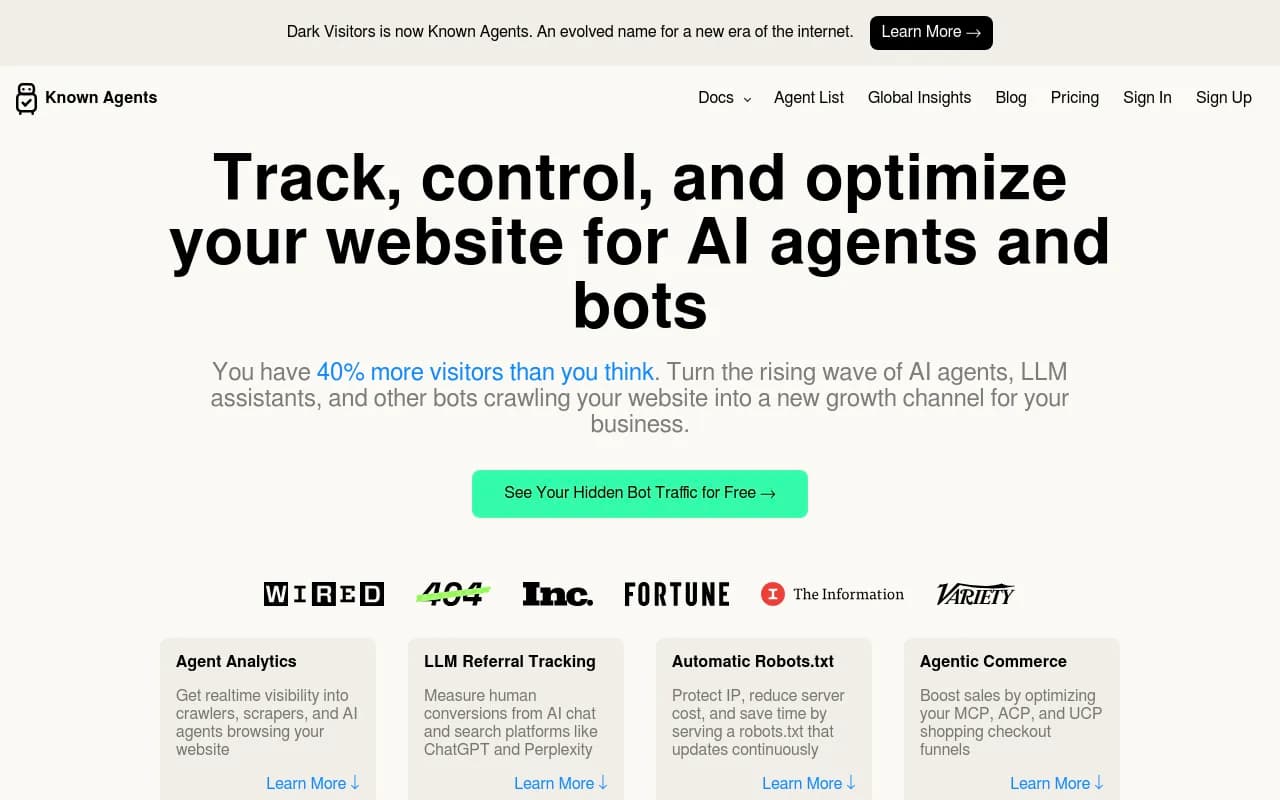
DarkVisitors is different from everything else on this list. It's not an AI visibility monitoring platform in the traditional sense — it doesn't track brand mentions or prompt responses. What it does is catalog AI agents and bots, help you understand what each one does, and give you tools to manage their access to your site.
For the specific question of "what are AI bots doing on my site?" DarkVisitors is the most direct answer available as a standalone tool. You can see which bots are documented, what data they collect, and how to allow or block them via robots.txt. It's a complement to a monitoring platform rather than a replacement for one.
How these tools compare on crawler log monitoring
This is the feature that most teams don't think to ask about until they're deep into a GEO workflow and realize they have no idea why certain pages aren't getting cited. Here's where each tool stands:
| Tool | Crawler log monitoring | AI models tracked | Content generation | Pricing starts at |
|---|---|---|---|---|
| Promptwatch | Yes (real-time, page-level) | 10 | Yes (Content Agents) | $99/mo |
| AIClicks | No | 5+ | No | Affordable tier |
| Peec AI | No | 5+ | No | Mid-range |
| AthenaHQ | No | 8+ | Limited | Enterprise |
| SE Ranking | No | 3 (AI Overviews focus) | No | ~$65/mo |
| Semrush | No | Fixed prompt sets | Via ContentShake | $139/mo+ |
| Nightwatch | No | 4+ | No | $39/mo |
| Profound | No | 5+ | Limited | Higher tier |
| DarkVisitors | Bot catalog only | N/A | No | Free tier |
| Otterly.AI | No | 4 (Gemini/AI Mode paid add-on) | No | $29/mo |
The crawler log gap is stark. Of the ten tools in this table (including Otterly), only Promptwatch offers real-time, page-level crawler log monitoring that shows you when AI bots visit, what they read, and what errors they hit.
DarkVisitors is a partial answer — it helps you understand AI bots and manage access — but it doesn't give you live logs of what's happening on your specific site.
What to look for beyond crawler logs
Crawler logs are the most underrated feature in this category, but they're not the only thing worth evaluating. Here's what else separates useful tools from expensive dashboards:
Prompt customization. Can you track the specific questions your customers are asking, or are you stuck with whatever prompts the tool decides to monitor? Semrush's fixed prompt sets are a real limitation here.
Update frequency. AI search results change constantly. Weekly updates (which some tools still use) mean you're making decisions on stale data. Daily or near-real-time updates matter.
Content gap analysis. Knowing you're missing from 7 out of 10 responses is useful. Knowing which specific topics, angles, and question formats would get you into those responses is actionable. Most tools stop at the first part.
Multi-model coverage. ChatGPT and Google AI Overviews get the most attention, but Perplexity, Claude, Gemini, DeepSeek, and Grok are all growing. A tool that only covers 3-4 models will leave blind spots.
Traffic attribution. Can the tool connect AI citations to actual website traffic and revenue? This is what turns GEO from a vanity metric into a business case.
The monitoring-only trap
There's a pattern worth naming directly. Most AI visibility tools — including Otterly and most of the alternatives on this list — are monitoring dashboards. They show you data. They don't help you act on it.
This isn't a minor inconvenience. The whole point of tracking AI visibility is to improve it. If your tool shows you a gap but can't help you close it, you're paying for a problem statement without a solution.
The tools that break this pattern are the ones that combine monitoring with content gap analysis and content generation. When you can see exactly which prompts you're missing, understand why (what content those AI responses are citing), and then generate content designed to fill those gaps — that's when the investment starts paying off.
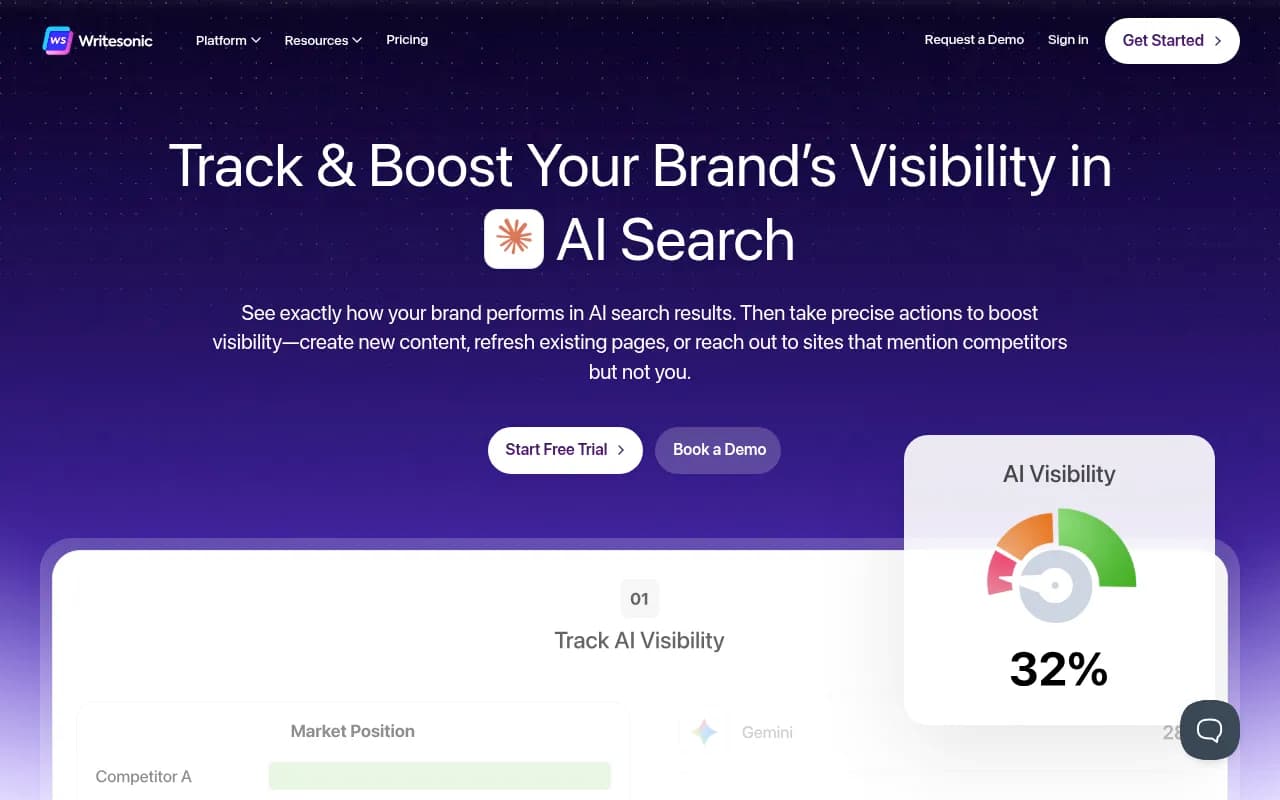
Promptwatch is the clearest example of this in the current market, with its Answer Gap Analysis feeding directly into Content Agents that produce articles grounded in real prompt data. But even a tool like Writesonic, which combines AI visibility tracking with content creation features, moves in this direction.
The question to ask of any tool you're evaluating: "After I see the data, what does this tool help me do about it?"
Which tool should you actually use?
It depends on where you are in your GEO journey and what problem you're trying to solve.
If you're just starting out and want to understand whether AI search is relevant to your brand, Otterly's $29/month entry tier or Nightwatch's lower pricing is a reasonable starting point. You'll get a sense of the landscape without a big commitment.
If you're past the "is this real?" phase and want to actually improve your AI visibility, you need a tool that goes beyond monitoring. Promptwatch is the most complete option, particularly if crawler log data matters to your workflow. The Professional plan at $249/month includes crawler logs, and the content generation features mean you're not just watching the problem — you're working on it.
If you're an agency managing multiple clients, the Business tier of Promptwatch or a dedicated agency plan makes more sense than trying to stack multiple single-site tools.
If your primary concern is understanding AI bot behavior on your site specifically (rather than brand monitoring), DarkVisitors is worth adding as a free complement to whatever monitoring tool you use.
A note on the category overall
The AI visibility tool market is still young and moving fast. Tools that existed 18 months ago have added features, changed pricing, or disappeared entirely. The monitoring-only approach that defined the first wave of tools is already starting to feel insufficient as teams get more sophisticated about GEO.
The direction the category is moving is clear: from "here's where you appear" toward "here's how to appear more, and here's the content to make that happen." Crawler log monitoring is part of that shift — it's one more layer of data that moves you from observing AI search to actually understanding and influencing it.
The tools that will matter most in 2026 and beyond are the ones that treat AI visibility as an optimization problem, not just a reporting problem.