Key Takeaways
- Otterly.AI starts at $29/mo for 15 prompts while GeoGen starts at €20/mo (~$22) with a credits-based system -- GeoGen is slightly cheaper at entry level
- Both monitor the same core AI engines (ChatGPT, Perplexity, Gemini, Copilot, Google AI Overviews) but neither offers crawler log analysis or content generation features
- Otterly.AI includes a dedicated GEO Audit tool analyzing 25+ on-page factors; GeoGen focuses more on competitor ranking comparisons and citation analysis
- GeoGen uses a credits-based pricing model that can be confusing; Otterly.AI uses straightforward prompt limits per plan
- Neither platform helps you create content to improve visibility -- they're monitoring-only dashboards that show you data but leave optimization up to you
- For teams wanting to close the loop from monitoring to action, tools like Promptwatch add content gap analysis and AI-powered content generation on top of tracking
Overview
Otterly.AI

Otterly.AI positions itself as the "#1 rated AI search monitoring platform" for tracking brand mentions and website citations across ChatGPT, Perplexity, Google AI Overviews, Google AI Mode, Gemini, and Copilot. The platform launched with a focus on making generative engine optimization accessible, particularly for smaller teams and agencies. Its standout feature is the GEO Audit tool that analyzes on-page factors to identify what's blocking your site from earning more AI citations.
The interface is built around three core workflows: AI keyword research to find prompts your audience is asking, brand monitoring to see where you rank, and GEO auditing to diagnose issues. Otterly.AI emphasizes getting teams "into action mode" with clear recommendations, though the platform itself doesn't generate content -- you still need to write or optimize pages yourself based on the audit findings.
GeoGen
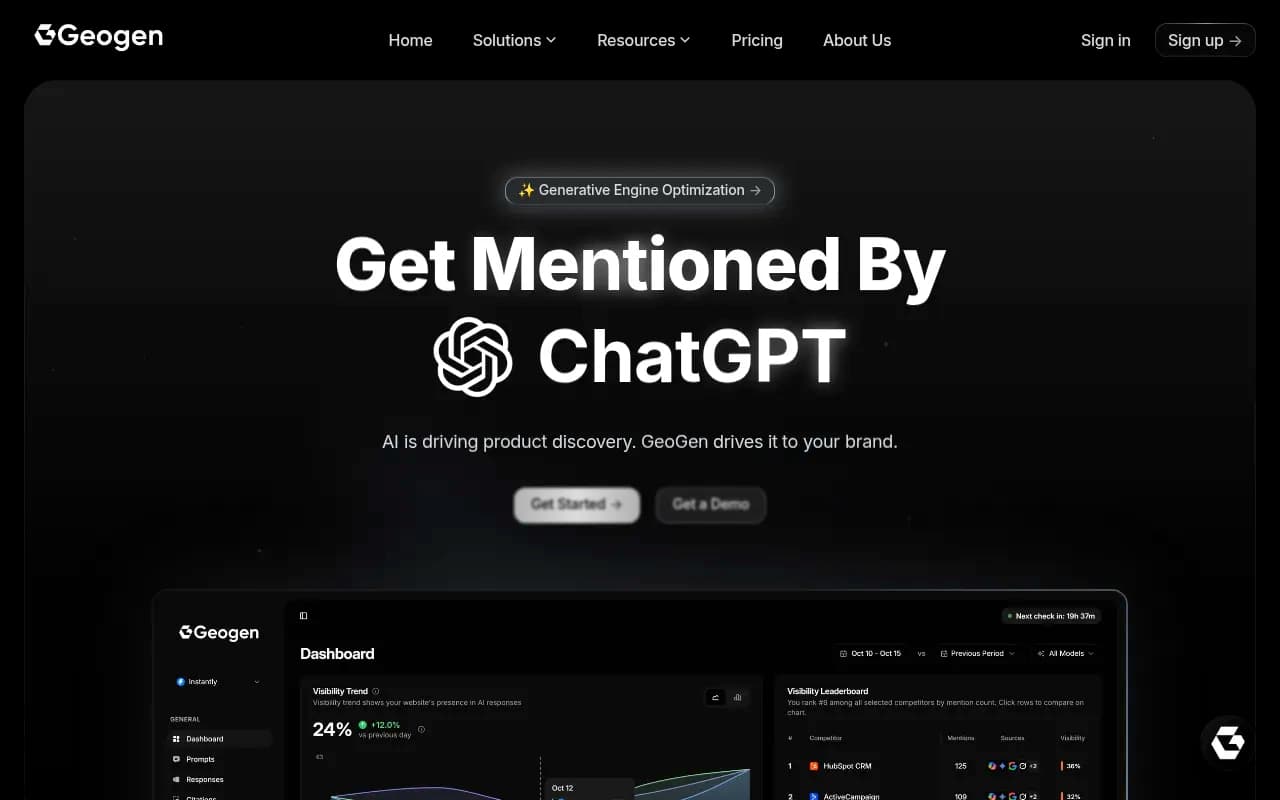
GeoGen is a European-based GEO platform (pricing in euros) that tracks brand visibility across the same set of AI engines: ChatGPT, Gemini, Perplexity, Grok, and Microsoft Copilot. The platform markets itself around helping brands "get mentioned" by AI models, with a dashboard that shows brand mentions, citation analysis, and competitor comparisons.
GeoGen uses a credits-based pricing system where each query or analysis consumes credits from your monthly allocation. This can be flexible if your usage varies month to month, but it also means you need to track credit burn rates. The platform is trusted by companies like CloudBlast, GdprWise, ProxyScrape, and TextBroker according to their site. Like Otterly.AI, GeoGen is a monitoring and analytics tool -- it shows you the data but doesn't help you create optimized content.
Side-by-side comparison
| Feature | Otterly.AI | GeoGen |
|---|---|---|
| Starting price | $29/mo (15 prompts) | €20/mo (~$22, credits-based) |
| Free trial | 14 days | Not specified |
| AI engines monitored | ChatGPT, Perplexity, Google AI Overviews, AI Mode, Gemini, Copilot | ChatGPT, Perplexity, Gemini, Grok, Copilot |
| GEO audit tool | Yes (25+ on-page factors) | Not highlighted |
| Competitor tracking | Yes | Yes (emphasized) |
| Citation analysis | Yes | Yes |
| Content generation | No | No |
| Crawler log analysis | No | No |
| Pricing model | Prompt-based tiers | Credits-based |
| Company location | Not specified | Europe (€ pricing) |
| Highest tier | Custom (Premium, unlimited) | €399/mo (Pro) + custom enterprise |
| Brand mention tracking | Yes | Yes |
| Keyword research | Yes (AI keyword research) | Not specified |
AI model coverage
Both platforms cover the big five AI search engines that matter in 2026. Otterly.AI monitors ChatGPT, Perplexity, Google AI Overviews, Google AI Mode, Gemini, and Microsoft Copilot. GeoGen tracks ChatGPT, Perplexity, Gemini, Grok, and Copilot.
The main difference: Otterly.AI includes Google AI Mode (the conversational search experience in Google) as a separate tracking category, while GeoGen explicitly lists Grok (X's AI) instead. In practice, this is a wash -- both cover the platforms where most consumer AI search happens. Neither platform monitors DeepSeek, Meta AI, or Mistral, which are tracked by more comprehensive tools.
What's missing from both: real-time crawler logs showing when AI bots hit your site, which pages they read, and whether they encounter errors. Without this data, you're flying blind on the indexing side. You can see where you rank in AI responses, but you can't see if AI models are even discovering your new content.
Pricing breakdown
| Plan | Otterly.AI | GeoGen |
|---|---|---|
| Entry tier | $29/mo (Lite: 15 prompts) | €20/mo (Micro, credits-based) |
| Mid tier | $189/mo (Standard: 100 prompts) | €99/mo (Starter) |
| High tier | Custom (Premium: unlimited prompts) | €399/mo (Pro) |
| Enterprise | Custom pricing | Custom pricing |
| Billing | Monthly or annual | Annual (monthly available) |
| Free trial | 14 days | Not specified |
Otterly.AI uses a straightforward prompt-based model: you get X prompts per month to track. If you're monitoring 50 branded queries, you know exactly what you need. The Lite plan at $29/mo is good for testing or very small brands. Standard at $189/mo gives you 100 prompts, which covers most mid-sized companies. Premium is custom pricing for unlimited tracking.
GeoGen's credits-based system is less transparent. The Micro plan at €20/mo (~$22) includes credits, but the site doesn't specify how many queries one credit buys or how fast you'll burn through them. This can be a problem if you're trying to budget -- you might run out of credits mid-month and need to upgrade. The upside is flexibility if your usage is spiky.
For most teams, Otterly.AI's pricing is easier to predict. You know your prompt count and can map it to a plan. GeoGen's credits model works if you're already familiar with how their system meters usage, but it's a learning curve for new users.
GEO audit and optimization features
This is where Otterly.AI pulls ahead. The platform includes a dedicated GEO Audit tool that analyzes 25+ on-page factors to diagnose why your site isn't earning more AI citations. It looks at content structure, metadata, internal linking, schema markup, and other signals that AI models use when deciding which sources to cite. You get a scored report showing strengths and weaknesses, plus specific recommendations.
GeoGen doesn't highlight a comparable audit feature on their site. Their focus is more on tracking and competitor analysis -- showing you where you rank and who's beating you. That's useful for benchmarking, but it doesn't tell you what to fix. You're left inferring optimization opportunities from the data.
The catch with both platforms: neither one helps you implement the fixes. Otterly.AI tells you "your page is missing X" but you still need to write the content, add the schema, or restructure the page yourself. GeoGen shows you "competitor Y is ranking for this prompt" but doesn't explain why or how to catch up.
If you want a platform that goes beyond diagnosis to actually help you create optimized content, you're looking at a different category of tool. Promptwatch combines monitoring with content gap analysis and an AI writing agent that generates articles grounded in citation data -- it's built around the action loop of finding gaps, creating content, and tracking results.

Competitor tracking and citation analysis
Both platforms let you track competitor brand mentions and see which domains AI models cite most often. This is table stakes for any GEO tool in 2026.
Otterly.AI shows you which brands get recommended for specific prompts and which websites get cited. You can compare your share of voice against competitors and spot opportunities where you're not showing up but should be. The interface emphasizes "staying ahead of competitors by spotting opportunities."
GeoGen puts competitor ranking comparisons front and center in their marketing. The dashboard shows side-by-side brand mention counts and citation frequency. You can see who's winning for each prompt category and drill into the specific sources AI models are pulling from.
In practice, both tools deliver similar insights here. The real question is what you do with the data. Knowing that competitor X is cited 3x more often than you is useful, but only if you can figure out why and close the gap. Neither platform gives you the "why" in depth -- you're left doing manual content analysis to reverse-engineer what's working.
AI keyword research
Otterly.AI includes an AI keyword research feature that helps you discover the prompts your audience is asking on ChatGPT, Perplexity, and Google. This is genuinely useful -- traditional keyword research tools don't capture conversational AI queries, which are longer and more specific than Google searches. You can use these prompts to guide content creation and find gaps in your coverage.
GeoGen doesn't highlight keyword research as a core feature on their site. They focus more on tracking performance for prompts you already know about. If you're trying to discover new opportunities or understand what questions people are asking AI models in your space, Otterly.AI has the edge.
That said, keyword research is only half the battle. You still need to create content targeting those prompts, optimize it for AI citation, and track whether it works. Otterly.AI gives you the prompt list but doesn't help with content creation. Tools that combine prompt discovery with content generation (like Promptwatch's AI writing agent) close this loop more effectively.
User interface and ease of use
Otterly.AI's interface is clean and focused on three main workflows: keyword research, brand monitoring, and GEO auditing. The dashboard shows your visibility score, top-performing prompts, and citation trends over time. The GEO Audit tool is a separate module that runs analysis on specific URLs. Navigation is straightforward -- most users can figure out the core features without a tutorial.
GeoGen's dashboard (based on the screenshots on their site) shows brand mention counts, citation analysis, and competitor comparisons in a grid layout. The interface looks modern and data-dense. The credits-based system adds a layer of complexity -- you need to keep an eye on your credit balance and understand how different actions consume credits.
Both platforms are usable, but Otterly.AI's prompt-based model is more intuitive for teams coming from traditional SEO tools. You're tracking queries, not managing a credit budget. GeoGen's interface works fine once you understand the credits system, but there's a learning curve.
What's missing from both platforms
Neither Otterly.AI nor GeoGen offers:
- Content generation: You get audit findings and competitor data, but you're on your own for writing optimized content
- Crawler log analysis: No visibility into when AI bots hit your site, which pages they read, or indexing errors
- Traffic attribution: No way to connect AI visibility to actual website traffic or revenue
- Reddit/YouTube tracking: Both platforms miss the social signals that influence AI recommendations
- Prompt volume data: No estimates of how often specific prompts are being asked
- Multi-language support: Limited or unclear support for non-English markets
These gaps matter because they leave you stuck in monitoring mode. You can see the problem but can't fix it efficiently. More comprehensive platforms like Promptwatch include crawler logs, content gap analysis, AI-powered content generation, and traffic attribution -- the full optimization loop, not just the monitoring piece.
Pros and cons
Otterly.AI pros
- Affordable entry point at $29/mo for small teams
- Dedicated GEO Audit tool with 25+ on-page factors analyzed
- AI keyword research to discover new prompt opportunities
- Straightforward prompt-based pricing that's easy to budget
- 14-day free trial to test before committing
- Clear focus on getting teams "into action mode" with recommendations
Otterly.AI cons
- No content generation -- you still need to write everything yourself
- No crawler log analysis to see if AI bots are indexing your content
- Limited to 15 prompts on the cheapest plan (not enough for most brands)
- No traffic attribution to connect visibility to revenue
- Missing Reddit, YouTube, and social signal tracking
GeoGen pros
- Slightly cheaper entry tier at €20/mo
- Credits-based system offers flexibility for variable usage
- Strong competitor comparison features
- Includes Grok tracking (X's AI engine)
- European company if data residency matters
GeoGen cons
- Credits-based pricing is confusing and hard to predict
- No highlighted GEO audit tool (less diagnostic depth)
- No content generation capabilities
- No crawler log analysis
- Unclear keyword research features
- Less transparent about what you get at each pricing tier
Who should pick Otterly.AI
Otterly.AI makes sense if you want a straightforward monitoring tool with built-in diagnostics. The GEO Audit feature is genuinely useful for identifying on-page issues, and the AI keyword research helps you find new prompts to target. The pricing is predictable and the interface is intuitive.
Best for: Small to mid-sized marketing teams, agencies managing multiple clients, brands that want to understand why they're not getting cited and need a clear audit report. If you're comfortable creating content yourself and just need the data and diagnostics, Otterly.AI delivers.
Not ideal for: Teams that want end-to-end optimization including content creation, brands that need crawler log analysis to debug indexing issues, or companies that want to track AI visibility alongside traditional SEO metrics in one platform.
Who should pick GeoGen
GeoGen works if you're already familiar with credits-based SaaS pricing and want a monitoring tool with strong competitor comparison features. The European base might matter if you have data residency requirements. The inclusion of Grok tracking is a nice touch if you care about X's AI ecosystem.
Best for: European companies, teams with variable usage patterns who benefit from credits flexibility, brands that prioritize competitor benchmarking over diagnostic audits.
Not ideal for: Teams that want transparent, predictable pricing, brands that need deep GEO audits to diagnose issues, or companies that want content creation help. The credits model adds friction that most teams don't need.
Final verdict
Otterly.AI is the better choice for most teams. The GEO Audit tool gives you actionable diagnostics, the AI keyword research helps you find opportunities, and the pricing is straightforward. GeoGen's credits-based model and lack of highlighted audit features make it harder to justify unless you have specific reasons to prefer it (European data residency, variable usage patterns).
That said, both platforms are monitoring-only tools. They show you the problem but don't help you fix it. If you want a platform that goes from monitoring to action -- finding content gaps, generating optimized articles, tracking crawler behavior, and connecting visibility to revenue -- you're looking at a different tier of tool. Promptwatch is the only platform rated as a "Leader" across all GEO categories in 2026 comparisons, and it's built around the action loop that monitoring-only tools skip.
For teams that just need visibility tracking and are comfortable handling content creation themselves, Otterly.AI at $29-189/mo is a solid pick. For teams that want the full optimization stack, neither of these platforms closes the loop.