Key Takeaways
- GetCito is open-source and offers a free self-hosted option (you pay API costs), while Omnia is closed-source with custom pricing starting around $299/mo bundled with agency services
- Omnia focuses purely on monitoring and analytics -- tracking share of voice, citations, and competitive benchmarks across AI platforms
- GetCito combines monitoring with an agency model, offering hands-on optimization services and a roadmap builder that translates data into action steps
- Both platforms track major AI engines (ChatGPT, Perplexity, Gemini, Copilot), but GetCito also monitors DeepSeek and Grok
- If you want a self-service analytics dashboard, Omnia is cleaner. If you want someone to help you act on the data, GetCito's agency-plus-tool model might fit better
- Neither platform offers the content gap analysis or AI writing agent that platforms like Promptwatch provide -- they're monitoring-first, not optimization-first
Overview
Omnia
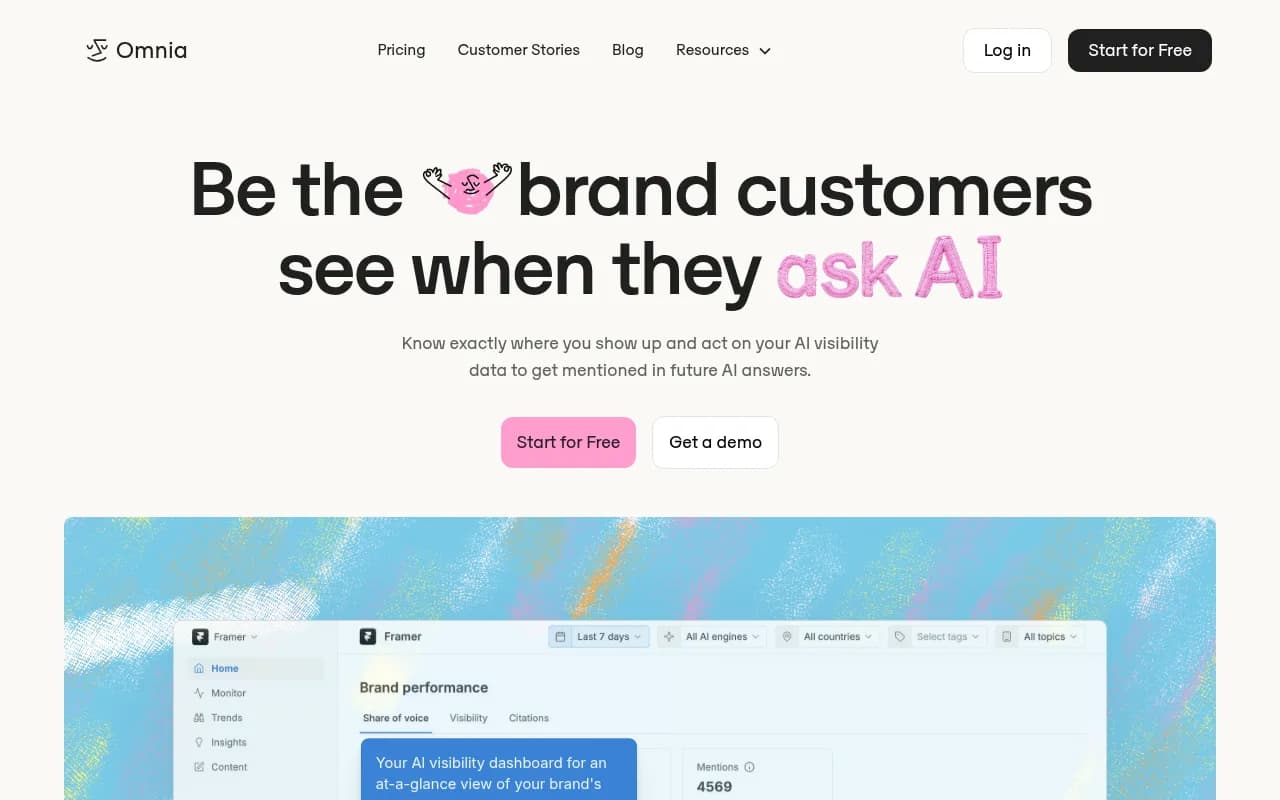
Omnia is an AI visibility platform built for SEO and marketing teams who want to understand how their brand shows up across AI search engines. It tracks citations, mentions, and share of voice across ChatGPT, Perplexity, Gemini, and Copilot. The platform organizes data hierarchically -- from broad topics down to specific prompts -- and provides visual metrics like share of voice charts and competitor comparisons. Omnia's strength is its clean analytics interface and focus on competitive benchmarking. It's a monitoring tool, not an optimization platform. You get the data, but you're on your own to figure out what to do with it.
Pricing is custom (request a quote), with a free trial available. The Pro Plan unlocks advanced features, but specifics aren't public.
GetCito
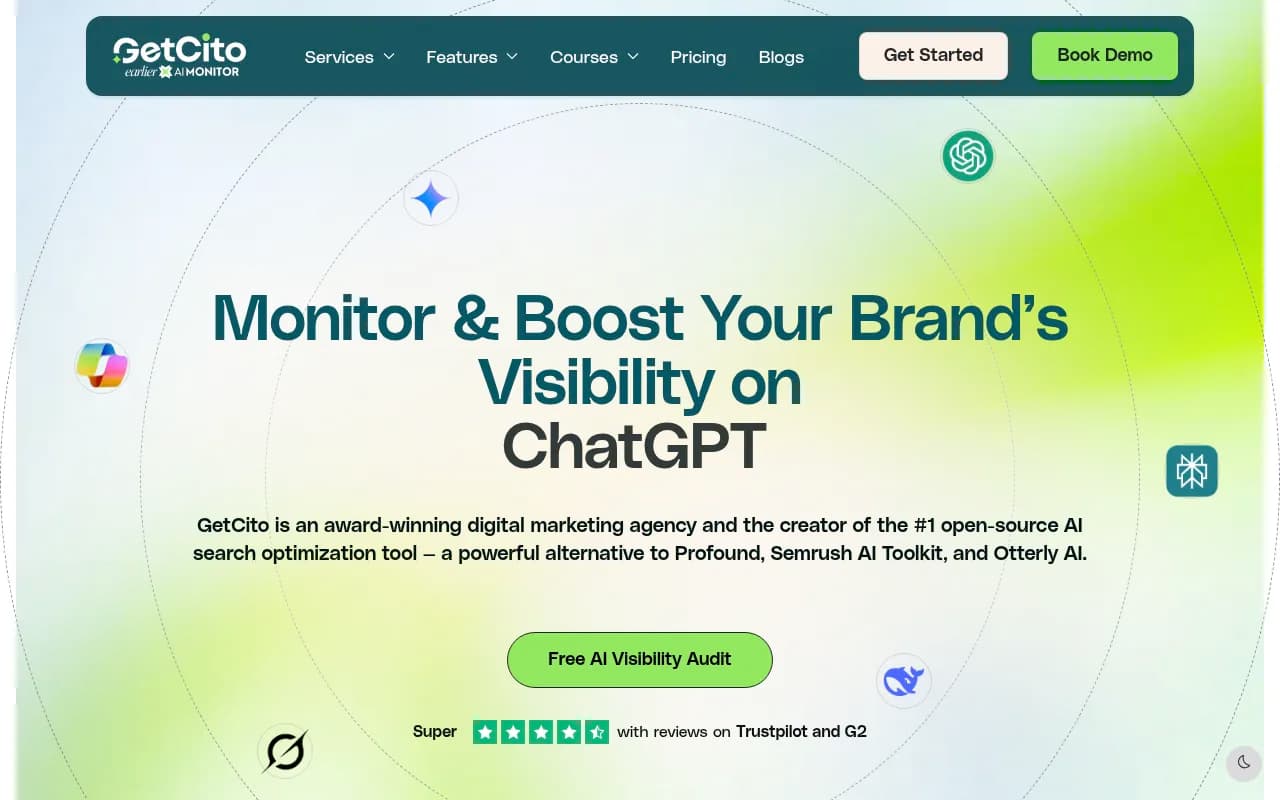
GetCito started as "AI Monitor" and positions itself as both a tool and an agency. It's open-source, which means you can self-host it for free (though you'll pay for API calls to the AI engines). The paid plans start at $299/mo and bundle the tool with agency services -- strategy, content optimization, and hands-on help. GetCito tracks ChatGPT, Perplexity, Gemini, Copilot, DeepSeek, and Grok. Beyond monitoring, it offers sentiment analysis, a roadmap builder that translates tracking data into action steps (content creation, technical SEO, content placement), and benchmarking against industry averages.
The agency angle is the differentiator here. GetCito isn't just showing you where you rank -- they're offering to help you improve it. The trade-off: the tool itself feels less polished than pure SaaS platforms, and the open-source version requires technical setup.
Side-by-Side Comparison
| Feature | Omnia | GetCito |
|---|---|---|
| Pricing | Custom (quote required), free trial | Free self-host (API costs) + $299/mo with agency services |
| Open Source | No | Yes |
| AI Engines Tracked | ChatGPT, Perplexity, Gemini, Copilot | ChatGPT, Perplexity, Gemini, Copilot, DeepSeek, Grok |
| Share of Voice Analytics | ✓ | ✓ |
| Citation Tracking | ✓ | ✓ |
| Competitor Benchmarking | ✓ | ✓ (includes industry averages) |
| Sentiment Analysis | ✗ | ✓ |
| Optimization Roadmap | ✗ | ✓ (action steps for content, SEO, placement) |
| Agency Services | ✗ | ✓ (bundled with paid plans) |
| Prompt Discovery | ✓ | ✓ |
| Self-Service Dashboard | ✓ (clean UI) | ✓ (less polished) |
| Technical Setup Required | No | Yes (for self-hosted version) |
| Free Tier | Trial only | Yes (self-host) |
Monitoring Capabilities
AI engine coverage
Omnia tracks four major AI platforms: ChatGPT, Perplexity, Google Gemini, and Microsoft Copilot. That covers the big players, but it's a narrower set than some competitors.
GetCito monitors those same four plus DeepSeek and Grok. DeepSeek has been gaining traction in 2026, especially in technical and research contexts, so having it in the mix matters if your audience skews technical. Grok (X's AI) is still niche but growing.
Neither platform tracks Claude, Meta AI, or Mistral -- gaps that platforms like Promptwatch fill. If you need comprehensive multi-model coverage, you'll want to look elsewhere.
Verdict: GetCito wins on breadth (six engines vs four), but both miss some important models.
Share of voice and competitive analysis
Both platforms offer share of voice metrics -- the percentage of AI responses where your brand gets mentioned vs competitors. Omnia presents this with clean visual charts and hierarchical organization (topic → subtopic → prompt). You can drill down from a broad category like "project management software" to specific prompts like "best tool for remote teams."
GetCito also tracks share of voice but adds industry benchmarking. You're not just comparing yourself to direct competitors -- you're seeing how you stack up against category averages. This is useful for setting realistic targets.
Omnia's UI is more polished. GetCito's interface feels more utilitarian, which makes sense given its open-source roots.
Verdict: Omnia has the cleaner dashboard, but GetCito's industry benchmarks add context that pure competitor comparisons miss.
Citation and source tracking
Both platforms show which sources AI engines cite when they mention your brand. You can see if they're pulling from your website, a press release, a Reddit thread, or a competitor's content.
Omnia organizes citations by topic and prompt, making it easy to spot patterns. GetCito does the same but also flags sentiment -- whether the citation is positive, neutral, or negative. That's a meaningful difference. Knowing you're cited is one thing. Knowing the AI is recommending you vs just mentioning you in passing is another.
Verdict: GetCito's sentiment layer makes citation tracking more actionable.
Optimization and Action
Prompt discovery
Omnia helps you discover what prompts to monitor by surfacing real questions people ask AI about your industry or product. You're not guessing which queries matter -- you're seeing actual user behavior.
GetCito offers similar prompt discovery, though the interface is less refined. The bigger difference is what happens after discovery. Omnia stops at showing you the prompts. GetCito's roadmap builder takes those prompts and suggests specific actions: create content targeting this prompt, optimize this page for better citations, place content on this third-party site.
Neither platform offers the content gap analysis you'd get with Promptwatch, which shows exactly which prompts competitors rank for but you don't, then helps you generate content to fill those gaps.
Verdict: GetCito edges ahead by connecting discovery to action, but both are monitoring-first platforms.
Optimization roadmap
This is where the two platforms diverge sharply.
Omnia doesn't offer optimization tools. It's a pure analytics platform. You get the data, you figure out what to do. That's fine if you have an in-house team that knows how to translate AI visibility metrics into content strategy, technical SEO, and outreach.
GetCito's roadmap builder is its standout feature. It analyzes your tracking data and generates a step-by-step plan: create this type of content, fix these technical issues, get cited on these platforms. The paid plans bundle this with actual agency services -- someone from GetCito will help you execute the roadmap.
The trade-off: you're paying for services, not just software. If you want a self-service tool, that's friction. If you want help, it's a selling point.
Verdict: GetCito wins if you need guidance. Omnia wins if you just want data.
Agency services
Omnia is software only. No services, no hand-holding.
GetCito's paid plans ($299/mo and up) include agency support. You're not just getting the tool -- you're getting strategy calls, content optimization help, and execution support. The company describes itself as "agency expertise + tool intelligence," and that's accurate. The tool is the data layer; the agency is the action layer.
This model works well for smaller teams or companies new to AI visibility. It's less appealing if you have experienced SEO/marketing staff who just need the data.
Verdict: GetCito's agency model is a differentiator, but it's not for everyone.
Pricing
| Plan | Omnia | GetCito |
|---|---|---|
| Free Tier | Trial only | Self-host (pay API costs) |
| Starter | Custom pricing | $299/mo (tool + agency services) |
| Pro | Custom pricing | Custom (higher tiers available) |
| Enterprise | Custom pricing | Custom |
| Open Source | No | Yes |
Omnia doesn't publish pricing. You request a quote, which typically means they're pricing based on company size, number of prompts tracked, or other variables. The free trial lets you test the platform, but you'll need to talk to sales for real numbers.
GetCito's free tier is genuinely free if you self-host. You'll pay for API calls to ChatGPT, Perplexity, etc., which can add up depending on how many prompts you track and how often you query. The $299/mo paid plan bundles the hosted tool with agency services, which is a different value proposition than pure SaaS.
For pure monitoring, GetCito's self-hosted option is cheaper. For monitoring plus help, the $299/mo plan is competitive if you'd otherwise hire an agency or consultant. Omnia's custom pricing makes it hard to compare directly, but it's likely in a similar range for mid-market companies.
Verdict: GetCito is more transparent and offers a true free option. Omnia's custom pricing is standard for B2B SaaS but less accessible for smaller teams.
User Experience
Interface and usability
Omnia has a cleaner, more polished interface. The dashboard is intuitive, the charts are easy to read, and the hierarchical organization (topic → prompt) makes sense. It feels like a mature SaaS product.
GetCito's UI is more utilitarian. It works, but it doesn't have the same visual polish. The open-source roots show. If you're self-hosting, you'll need some technical chops to get it running. The hosted version is easier but still feels less refined than Omnia.
Verdict: Omnia wins on UX. GetCito is functional but rougher around the edges.
Setup and onboarding
Omnia offers a free trial with guided onboarding. You connect your brand, add competitors, define topics, and start tracking. It's straightforward.
GetCito's self-hosted version requires more setup -- you're deploying the tool yourself, configuring API keys, and managing infrastructure. The hosted version is simpler, and the agency services include onboarding help. But there's more friction than a pure SaaS tool.
Verdict: Omnia is easier to get started with. GetCito's open-source flexibility comes with setup complexity.
Pros and Cons
Omnia
Pros:
- Clean, polished interface that's easy to navigate
- Strong share of voice and competitive benchmarking
- Hierarchical organization makes it easy to drill down from topics to specific prompts
- Free trial lets you test before committing
- Pure SaaS -- no technical setup required
Cons:
- Monitoring only -- no optimization tools or content generation
- Custom pricing lacks transparency
- Tracks only four AI engines (misses DeepSeek, Grok, Claude, Meta AI, Mistral)
- No sentiment analysis or industry benchmarking
- You're on your own to act on the data
GetCito
Pros:
- Open-source with a free self-hosted option
- Tracks six AI engines including DeepSeek and Grok
- Sentiment analysis adds context to citation tracking
- Roadmap builder translates data into action steps
- Agency services bundled with paid plans for hands-on help
- Industry benchmarking shows how you compare to category averages
Cons:
- Less polished UI compared to pure SaaS competitors
- Self-hosted version requires technical setup
- Agency model isn't for everyone -- some teams just want the tool
- API costs for self-hosted version can add up
- Smaller user base and community compared to established platforms
Who Should Pick Which Tool
Choose Omnia if:
- You want a clean, easy-to-use analytics dashboard without setup hassle
- Your team is experienced with AI visibility and just needs the data
- You're tracking brands in industries where ChatGPT, Perplexity, Gemini, and Copilot are the dominant AI engines
- You prefer a pure SaaS model with no technical setup
- Visual share of voice charts and competitor comparisons are your primary need
Choose GetCito if:
- You want a free option and don't mind self-hosting
- You need to track DeepSeek or Grok in addition to the major AI engines
- Sentiment analysis matters -- you want to know if citations are positive or just mentions
- You're new to AI visibility and want agency support to help you act on the data
- You like the idea of a roadmap that tells you exactly what to optimize
- You're comfortable with a less polished UI in exchange for open-source flexibility
Consider Promptwatch if:
- You need more than monitoring -- you want content gap analysis that shows exactly what competitors rank for but you don't
- You want an AI writing agent that generates articles, listicles, and comparisons grounded in real citation data
- You need comprehensive coverage across 10+ AI engines including Claude, Meta AI, Mistral, and Google AI Overviews
- You want crawler logs showing how AI engines discover and index your content
- You need the full action loop: find gaps, generate content, track results

Final Verdict
Omnia and GetCito are both solid monitoring platforms, but they serve different needs.
Omnia is the better choice if you want a polished, self-service analytics tool. The interface is clean, the data is well-organized, and it's easy to get started. But it stops at monitoring. You get the insights, then you're on your own to figure out what to do with them.
GetCito is the better choice if you want help acting on the data. The roadmap builder and bundled agency services mean you're not just seeing where you rank -- you're getting a plan to improve it. The open-source option is a bonus if you're technical and want to avoid subscription costs. The trade-offs are a less polished UI and more setup complexity.
Neither platform is a full optimization solution. They're monitoring-first tools. If you need content gap analysis, AI-generated content, or deeper optimization capabilities, you'll want to look at platforms like Promptwatch that close the loop from tracking to action.
For pure monitoring with a great UX: Omnia. For monitoring plus hands-on help: GetCito. For end-to-end optimization: look elsewhere.