Key takeaways
- AthenaHQ's credit system burns faster than advertised -- 50 prompts across 5 engines daily exhausts a monthly plan in roughly 14 days
- The most useful features (persona targeting, multi-region tracking, Citation Engine, BI integrations) are locked behind Enterprise pricing
- There's no free trial at $295/month, which makes evaluation difficult compared to most competitors
- Teams switching away typically land on one of three types of tools: full-stack GEO platforms, monitoring-focused alternatives, or content-first solutions
- The biggest gap across almost all alternatives is the lack of an action loop -- most tools show you data but don't help you fix anything
AthenaHQ launched out of Y Combinator and built real momentum fast. It tracks brand visibility across 8+ AI models, has solid Shopify and GA4 attribution, and the co-founder has been vocal about hitting seven-figure ARR. For a lot of teams, it was the first serious AI visibility tool they tried.
But "first serious tool" and "best long-term fit" aren't the same thing. In 2026, the market has matured enough that teams have real choices -- and a growing number of them are making a switch. The reasons tend to cluster around the same three complaints.
The three things that keep coming up
The credit math doesn't work
AthenaHQ's self-serve plans include 3,600 monthly credits. That sounds like a lot until you do the actual math. Running 50 prompts across 5 AI engines daily costs roughly 250 credits per day. At that rate, you're out of credits in about 14 days. The second half of the month, you're either paying for add-ons ($100 per 1,250 credits) or you stop monitoring.
For teams running serious AI visibility programs -- tracking competitors, testing new content, monitoring across regions -- the real monthly spend can easily double the stated plan price. That's not a pricing complaint so much as a predictability problem. Budgets are hard to defend when the actual cost is a moving target.
The best features require an Enterprise conversation
Persona targeting. Multi-region and multi-language tracking. The Citation Engine. BI tool integrations. Advanced content optimization. These are exactly the features a mature AI visibility program needs -- and on AthenaHQ, they're all behind custom Enterprise pricing.
This creates a frustrating evaluation dynamic. You sign up for the self-serve plan, build out your tracking setup, and then discover that the things you actually need require a sales call and a contract negotiation. Teams that don't have the budget or timeline for that end up stuck.
No free trial at $295/month
Most tools in this space -- including most of the alternatives covered below -- offer some form of free trial or free tier. AthenaHQ doesn't. You're committing $295/month before you've seen whether the platform fits your workflow, your data needs, or your team's way of working.
That's a real barrier, especially for smaller teams and agencies evaluating multiple tools simultaneously.
What teams actually need from an AI visibility platform
Before jumping to alternatives, it's worth being clear about what the job is. AI visibility platforms exist to answer a few core questions:
- Which AI models are mentioning my brand, and in what context?
- Which prompts are my competitors winning that I'm not?
- What content do I need to create to close those gaps?
- Is my new content actually getting picked up and cited?
Most platforms answer the first question reasonably well. The second question is where things start to diverge. The third and fourth questions -- the action questions -- are where most tools fall short entirely.
If you're switching away from AthenaHQ, the honest question to ask is: do you want a better monitoring dashboard, or do you want a platform that helps you actually improve your AI visibility?
The alternatives worth considering
Full-stack GEO platforms
These are the tools that go beyond monitoring into optimization and content generation.
Promptwatch is the most complete option in this category. It covers the full loop: Answer Gap Analysis shows which prompts competitors are visible for that you're not, Content Agents generate articles and briefs grounded in real prompt data, and page-level tracking shows exactly which pages are being cited and by which models. It also has AI crawler logs -- real-time data on when ChatGPT, Claude, Perplexity, and others are hitting your site, which pages they're reading, and when those pages move from crawl to citation. That last piece is something almost no competitor offers.
Promptwatch monitors 10 AI models including ChatGPT, Perplexity, Google AI Overviews, Claude, Gemini, DeepSeek, Grok, and Copilot. Pricing starts at $99/month for the Essential plan (1 site, 50 prompts, 5 articles), with a free trial available.

Profound is another strong option in this tier. It has good content workflow features and solid AI crawler insights, and it's been positioning itself directly against AthenaHQ in the market. The trade-off is price -- Profound sits at a higher price point than most alternatives, and it lacks Reddit tracking and ChatGPT Shopping monitoring.

Monitoring-focused alternatives
If your primary need is accurate tracking without the complexity of a full GEO platform, a few tools are worth looking at.
Peec AI is a clean, multi-language monitoring tool. It's straightforward to set up and covers the major AI models. It doesn't have content generation or crawler logs, but if you just need reliable visibility data across languages and regions, it delivers.

Otterly.AI is one of the more affordable options in the space. It's monitoring-only -- no content generation, no crawler logs, no visitor analytics -- but it's a reasonable entry point for teams that are just starting to track AI visibility and aren't ready to invest in a full platform.

Hall AI tracks how AI platforms cite and talk about your brand, with a free entry point that makes evaluation easy. It's particularly useful for teams that want to understand citation patterns before committing to a larger platform.

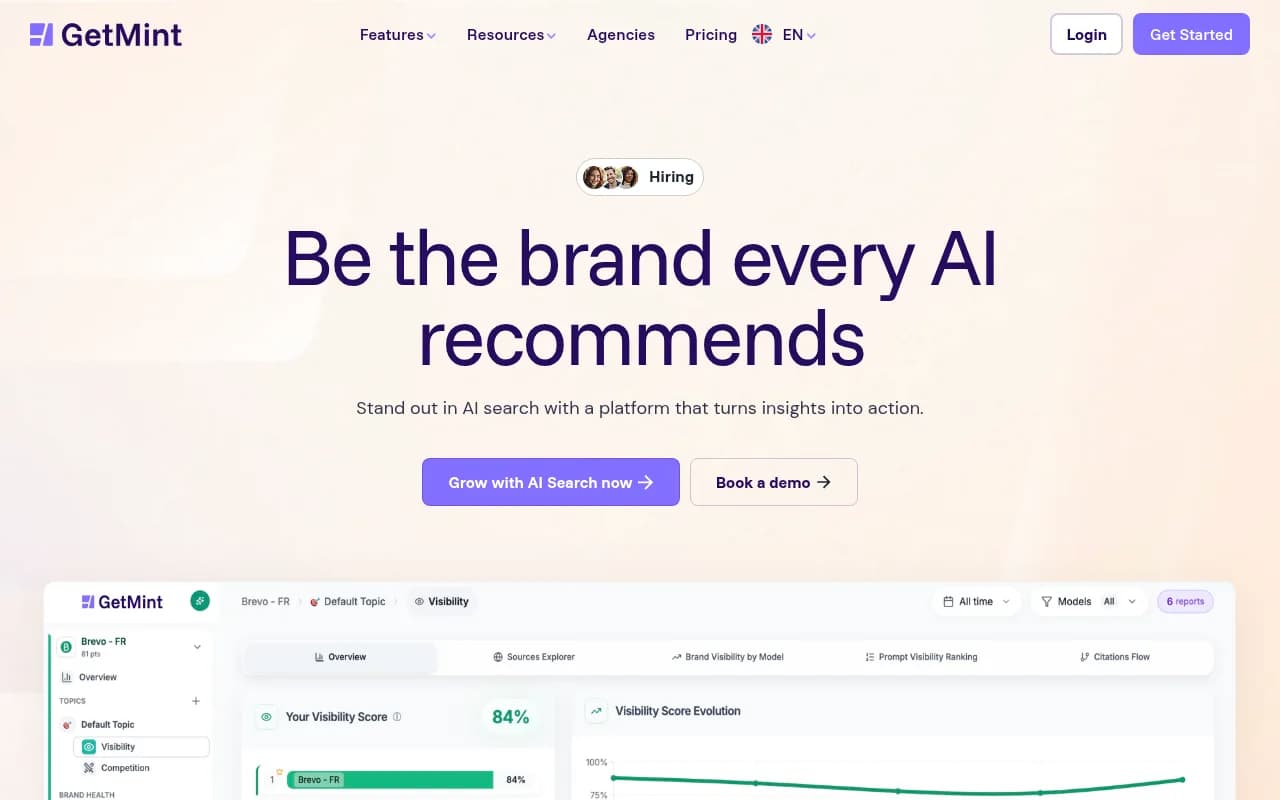
GetMint comes up frequently in conversations about AthenaHQ alternatives, specifically for teams switching because of cost predictability. It's simpler and cheaper, with flat pricing that doesn't have the credit-burn problem.
Content-first solutions
Some teams switching away from AthenaHQ aren't primarily looking for a monitoring tool -- they want help creating content that actually gets cited by AI models.
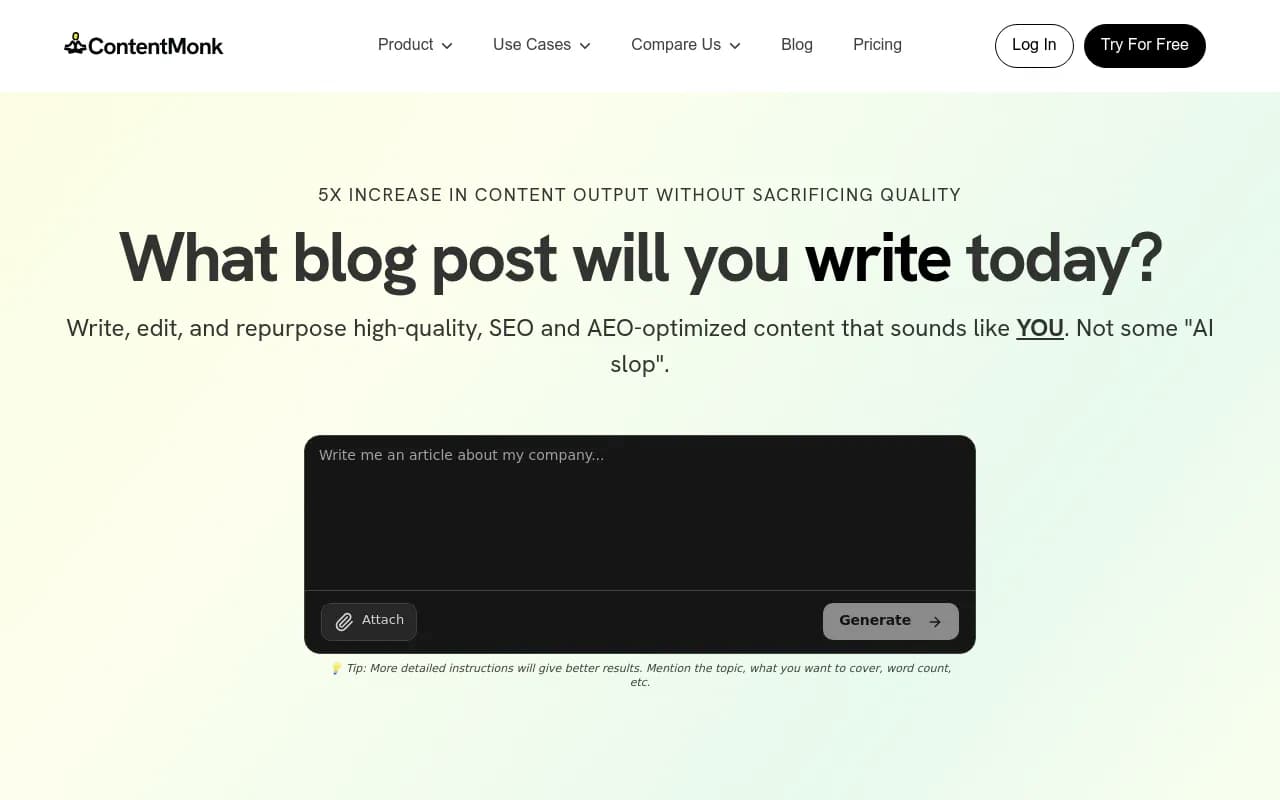
ContentMonk positions itself as an AthenaHQ alternative focused on getting brands mentioned by AI assistants. It's more content-creation-oriented than most visibility platforms, which makes it a different kind of tool rather than a direct replacement.
Feature comparison
Here's how the main alternatives stack up against AthenaHQ across the dimensions that matter most:
| Platform | Free trial | AI models tracked | Content generation | Crawler logs | Prompt volume data | Starting price |
|---|---|---|---|---|---|---|
| AthenaHQ | No | 8+ | Limited (Enterprise) | No | No | $295/mo |
| Promptwatch | Yes | 10 | Yes (Content Agents) | Yes | Yes | $99/mo |
| Profound | Yes | Multiple | Partial | Yes | No | Higher |
| Peec AI | Yes | Multiple | No | No | No | Lower |
| Otterly.AI | Yes | Multiple | No | No | No | Lower |
| Hall AI | Free tier | Multiple | No | No | No | Free+ |
| GetMint | Yes | Multiple | No | No | No | Lower |
The pattern is pretty clear. AthenaHQ has a strong feature set, but it's priced above most alternatives and gates the advanced features behind Enterprise. Promptwatch is the only option that matches or exceeds AthenaHQ's feature depth while starting at a lower price and including a free trial.
The monitoring-only trap
One thing worth saying directly: most of the alternatives in this space -- including several listed above -- are monitoring-only tools. They show you where you're visible and where you're not. They don't help you do anything about it.
That's fine if you have a content team that can take visibility data and turn it into a publishing strategy. But for most marketing teams, the gap between "we know we're not being cited for these prompts" and "we've published content that fixes that" is where AI visibility programs stall out.
The tools that close that gap -- by identifying specific content gaps, generating briefs or full articles grounded in prompt data, and then tracking whether the new content gets picked up -- are genuinely different from monitoring dashboards. It's worth being clear about which type of tool you're actually buying.
How to think about making the switch
A few practical considerations before you commit to an alternative:
Map your actual prompt volume first. Before evaluating any platform, calculate how many prompts you actually need to run per day across how many AI models. Then check whether the platform's pricing model handles that without surprise costs. The credit-burn problem that frustrates AthenaHQ users can exist in other tools too if you're not careful.
Test the data quality, not just the interface. AI visibility data varies significantly between platforms depending on how they query models, how often they refresh, and whether they're hitting user-facing interfaces or just APIs. User-facing interfaces can return different answers than API calls -- which matters if you're trying to understand what actual users see.
Ask specifically about what's included at each tier. The AthenaHQ situation -- where the features you need are Enterprise-only -- isn't unique to AthenaHQ. Before signing up for any platform, get a clear list of what's available at the plan you're actually considering, not just what the platform is capable of in theory.
Think about where you want to be in six months. If you're just starting to track AI visibility, a simpler monitoring tool is probably fine. If you're trying to actively improve your AI visibility -- publishing content, closing gaps, attributing traffic -- you'll outgrow a monitoring-only tool quickly and end up switching again.
The bottom line
AthenaHQ is a legitimate platform. The Y Combinator backing, the case studies, the 8+ LLM coverage -- none of that is marketing fiction. But the pricing model creates real friction, the credit system punishes active monitoring programs, and the Enterprise feature wall means the self-serve plans are missing pieces that matter.
Teams switching away tend to fall into two groups. The first group wants a simpler, cheaper monitoring tool -- and for them, Otterly.AI, Peec AI, or GetMint are reasonable landing spots. The second group wants to actually move the needle on AI visibility, not just measure it -- and for them, a full-stack platform like Promptwatch makes more sense.
The market in 2026 has enough options that you don't have to accept a tool that doesn't fit. The main thing is being honest about which problem you're actually trying to solve.