Key takeaways
- AI search has fundamentally changed the goal: you're no longer trying to rank first, you're trying to be cited inside AI-generated answers
- Monitoring tools like Searchable show you where you're invisible — but they don't help you fix it
- Real AI search optimization in 2026 requires three things: finding content gaps, creating content that AI models want to cite, and tracking whether it's working
- Gartner projects a 25% drop in traditional search engine volume by end of 2026 as AI chatbots absorb that traffic
- The gap between monitoring-only platforms and full optimization platforms is widening fast — and it's costing brands real revenue
Search has changed more in the last 18 months than in the previous decade. And if you're still measuring success by keyword rankings and click-through rates, you're optimizing for a game that's already moved on.
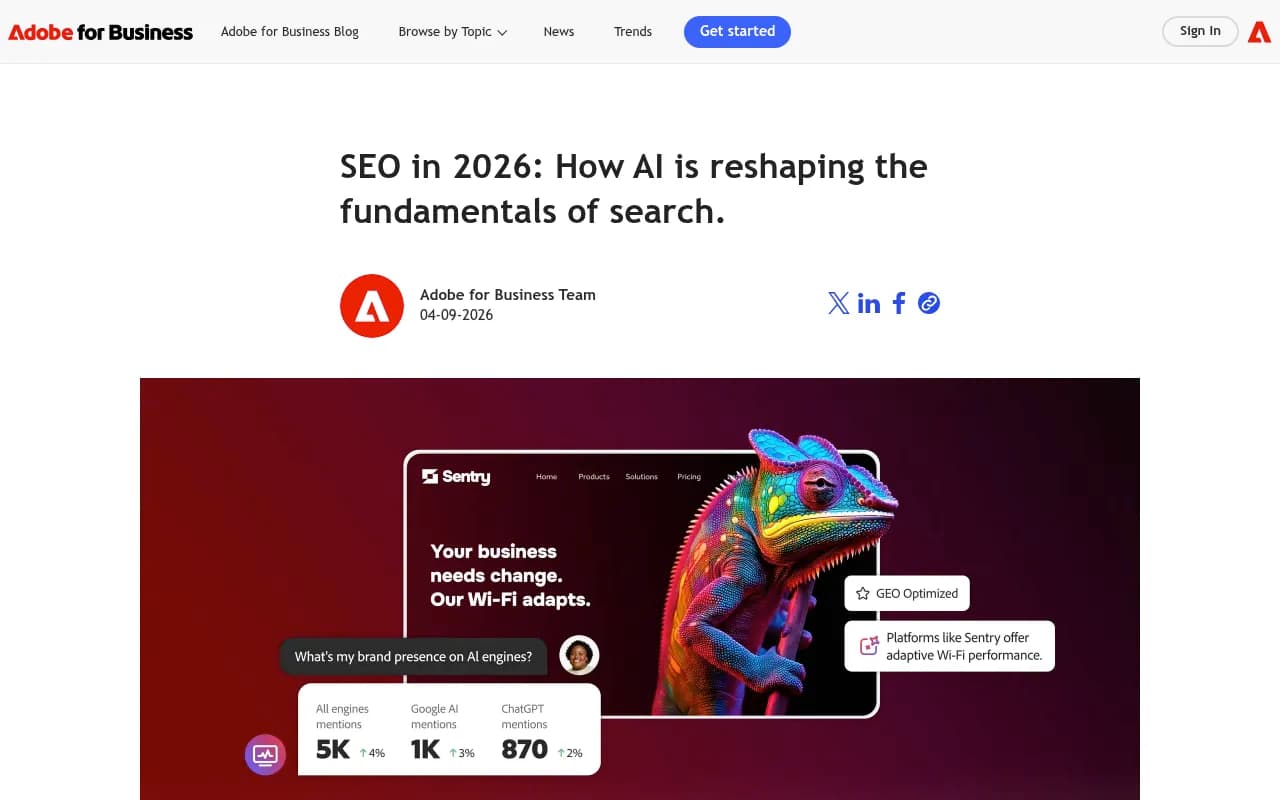
By 2026, the first interaction most users have with a brand isn't clicking a link. It's reading an AI-generated answer that either mentions you or doesn't. As Adobe's business blog put it: "The goal is no longer just to rank first. The goal is to be cited within the answer."
That's a different problem. And it requires different tools.
Searchable is one of several platforms that emerged to help brands navigate this shift. It has monitoring capabilities and some content tooling. But for teams that are serious about AI search optimization — not just watching the scoreboard — there are real gaps worth understanding before you commit to a platform.
What "AI search optimization" actually means in 2026
Before getting into what Searchable does or doesn't do, it's worth being precise about what the problem actually is.
Traditional SEO was about signals: backlinks, keyword density, page speed, structured data. You optimized pages so Google's crawler would rank them higher. The user still had to click.
AI search is different. When someone asks ChatGPT "what's the best project management tool for remote teams?" or asks Perplexity "which accounting software do accountants actually recommend?", the AI assembles an answer from its training data and real-time retrieval. It cites sources. It makes recommendations. And if your brand isn't in that answer, you don't exist for that user in that moment.
This creates three distinct problems:
- You need to know which prompts are being asked — and which ones your competitors are winning that you're not
- You need to create content that AI models can extract, verify, and cite
- You need to track whether your content is actually getting cited, and by which models
Most monitoring tools handle a version of problem three. Very few handle all three. And the difference between "we can see we're not being cited" and "we know exactly why and we've fixed it" is the difference between a dashboard and an optimization platform.
What Searchable actually offers
Searchable positions itself as an AI search visibility platform. It covers prompt monitoring across major AI engines, gives you visibility scores, and tracks how your brand appears in AI-generated responses.
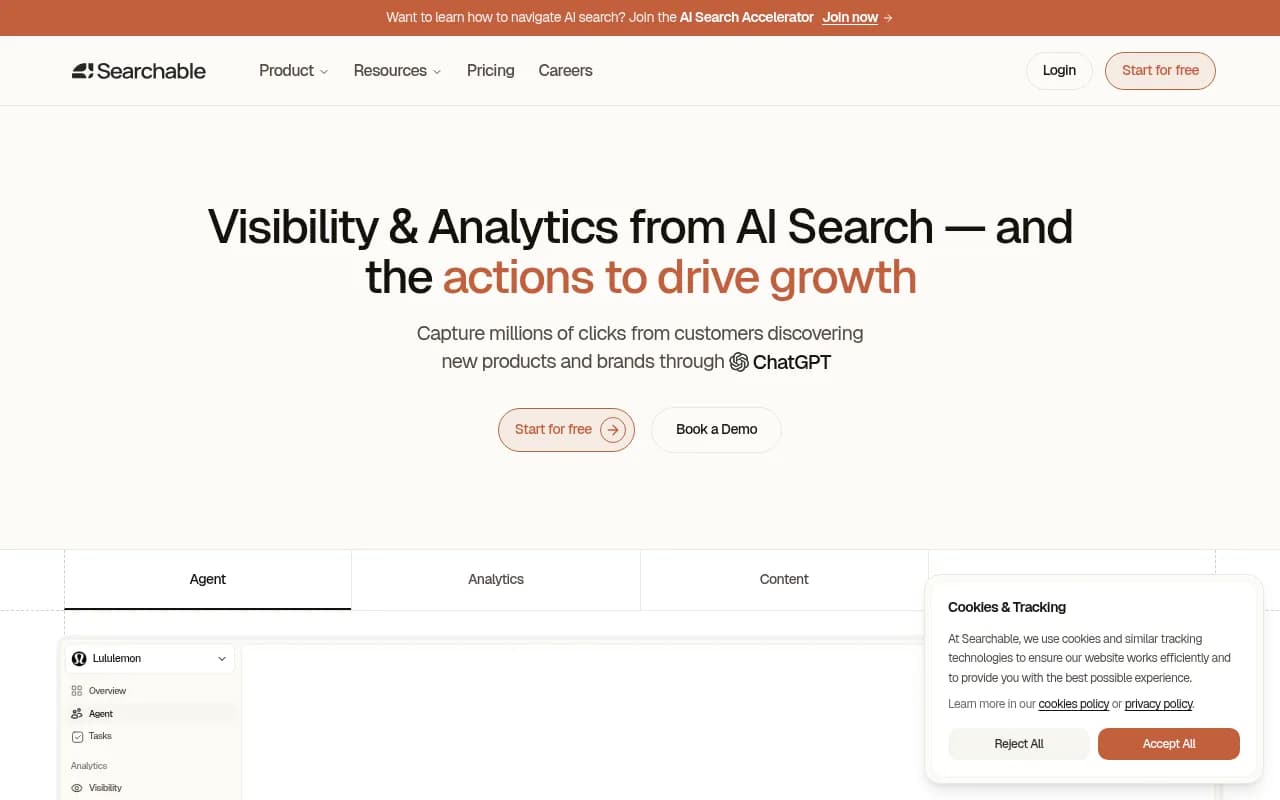
For teams just getting started with AI visibility, that's genuinely useful. Knowing that you're invisible for a category of prompts is better than not knowing. But as a complete solution for brands that want to improve their AI search presence — not just observe it — Searchable has some meaningful limitations.
The core issue: Searchable is primarily a monitoring tool. It shows you the problem. It doesn't have the infrastructure to help you solve it.
The three things monitoring-only tools miss
1. Answer gap analysis that tells you what to create
Knowing you're not being cited for "best CRM for small business" is step one. Step two is understanding exactly what content your site is missing that would make AI models want to cite you for that prompt.
This requires comparing what AI models are actually saying in their responses — the sources they cite, the angles they cover, the questions they answer — against what's on your site. That's answer gap analysis, and it's the bridge between "we have a visibility problem" and "here's what we need to publish."
Without this, you're left guessing. You might publish more content, but if it doesn't address the specific gaps AI models are exposing, you won't move the needle.
2. Content generation grounded in real prompt data
Even if you know the gaps, creating content that AI models will actually cite is harder than it looks. It's not about keyword density or word count. AI models favor content that's specific, authoritative, well-structured, and directly answers the questions being asked.
Generating that content at scale — with the right brand voice, the right angles, the right supporting evidence — requires tooling that understands both the prompt landscape and your existing content. Generic AI writing tools don't have that context. You need content generation that's grounded in citation data, prompt volumes, competitor analysis, and your own brand guidelines.
3. Crawler intelligence that shows how AI engines discover your content
Here's something most brands don't think about: AI models don't just read your content once and remember it forever. They crawl, they re-crawl, they encounter errors, they prioritize some pages over others. Understanding how AI crawlers interact with your site — which pages they're reading, which ones they're skipping, what errors they're hitting — is critical for diagnosing why content that should be getting cited isn't.
This is AI crawler log analysis, and it's almost entirely absent from monitoring-only platforms. Without it, you can't tell whether your visibility problem is a content problem or a technical indexing problem.
How the alternatives stack up
There are now dozens of tools in the AI visibility space. Here's an honest comparison of the major players:
| Tool | Prompt monitoring | Answer gap analysis | AI content generation | Crawler logs | Traffic attribution |
|---|---|---|---|---|---|
| Searchable | Yes | Limited | Limited | No | No |
| Otterly.AI | Yes | No | No | No | No |
| Peec.ai | Yes | No | No | No | No |
| AthenaHQ | Yes | Limited | No | No | No |
| Profound | Yes | Yes | No | No | Limited |
| Promptwatch | Yes | Yes | Yes | Yes | Yes |
The pattern is pretty clear. Most tools in this space were built to answer the question "are we being cited?" Fewer were built to answer "why not, and how do we fix it?"




What a real optimization loop looks like
The brands that are winning in AI search in 2026 aren't just monitoring. They're running a continuous cycle:
Find the gaps. Use answer gap analysis to identify which prompts competitors are winning that you're not. Get specific — not just "we're weak on CRM prompts" but "for the prompt 'best CRM for real estate agents', ChatGPT cites three competitors and none of our pages, because we don't have content that specifically addresses real estate use cases."
Create the content. Generate articles, comparison pages, and FAQ content that directly addresses those gaps. Not generic content — content engineered around the specific angles, questions, and evidence that AI models are already looking for.
Track the results. Watch your citation frequency improve across models. Use page-level tracking to see exactly which new pages are getting picked up, by which AI engines, and on what timeline. Connect that back to actual traffic and revenue.
This loop — find gaps, create content, track results — is what separates optimization from observation.
Tools worth considering beyond Searchable
If you're evaluating alternatives, here are a few worth looking at depending on your situation:
For teams that want a full optimization platform:
Promptwatch is the most complete option in the market right now. It covers all three stages of the optimization loop: answer gap analysis, AI-native content generation, and detailed tracking including crawler logs, page-level citation data, and traffic attribution. It monitors 10 AI models including ChatGPT, Perplexity, Claude, Gemini, Grok, and Google AI Overviews. More than 1,480 brands use it, including Booking.com and Center Parcs.

For teams that want solid monitoring with good UX:
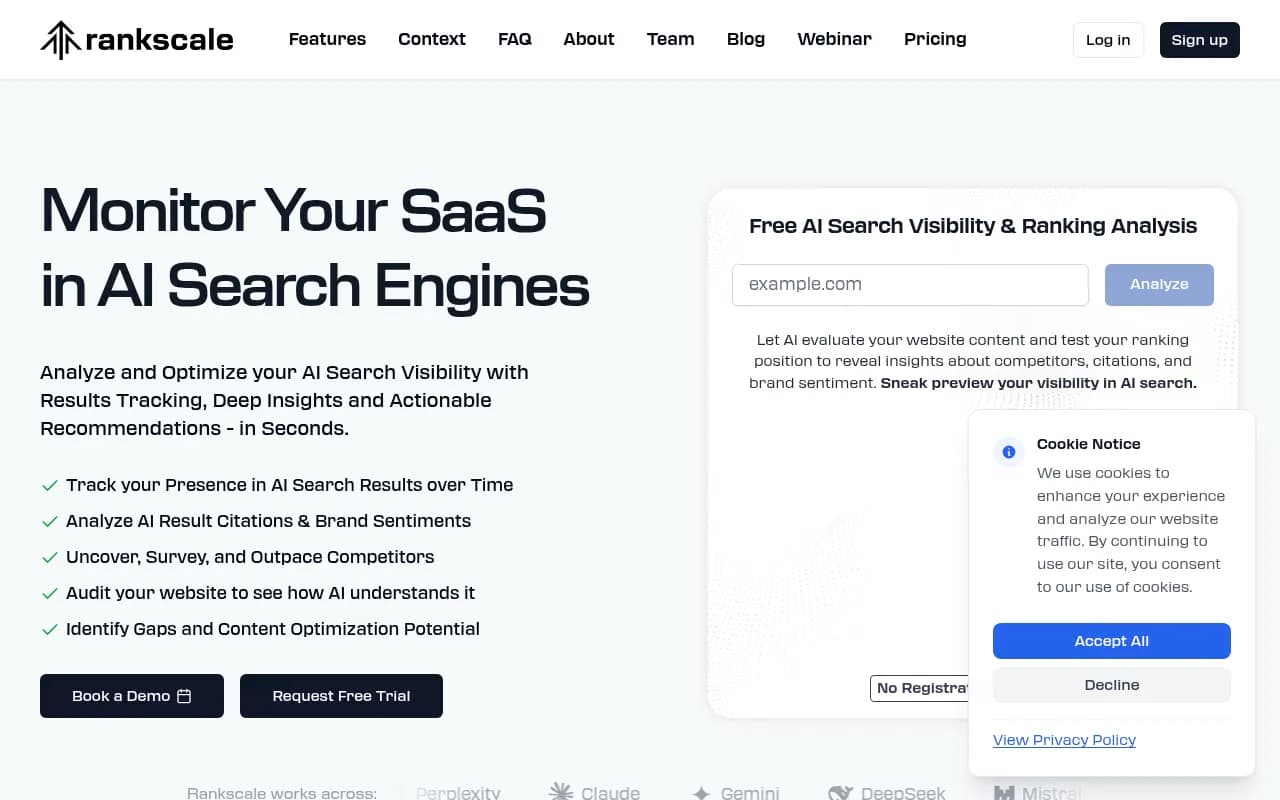
For agencies managing multiple clients:
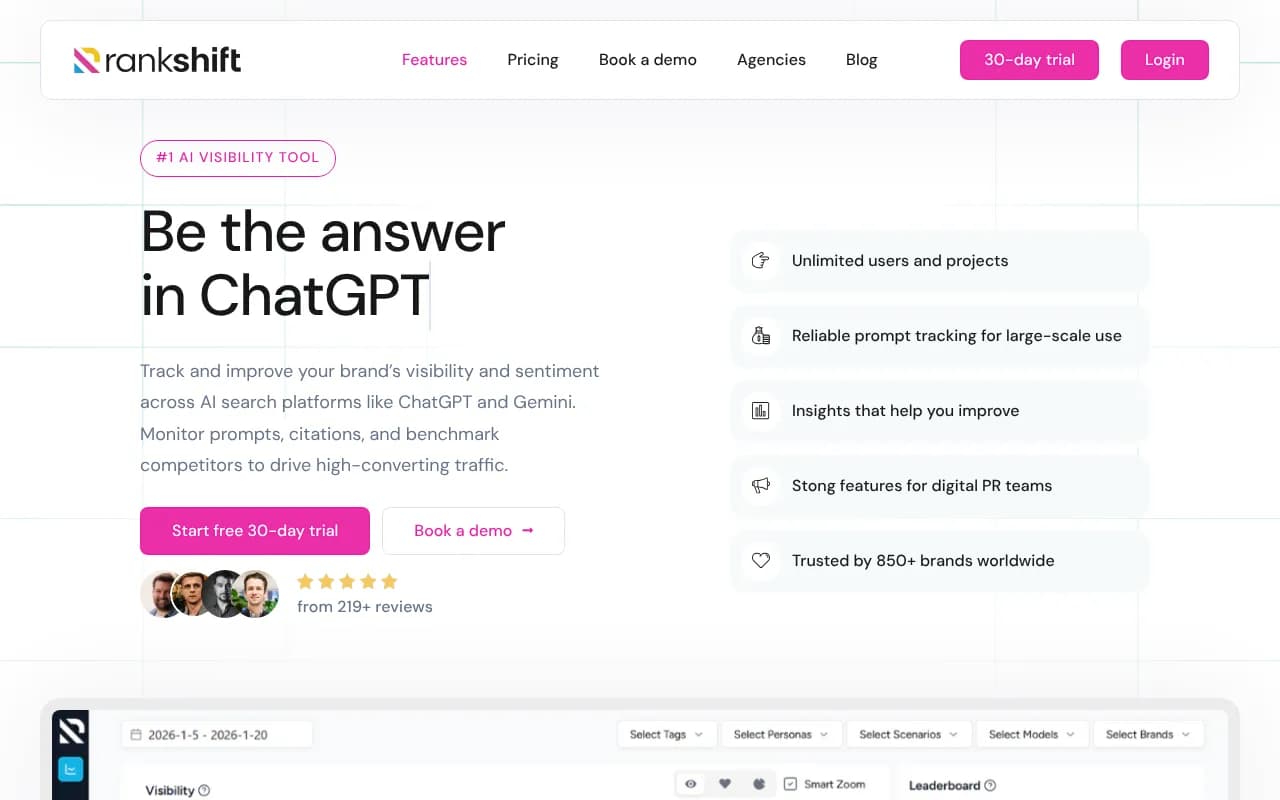
For teams that want budget-friendly entry points:
The prompt volume problem
One thing that doesn't get talked about enough: not all AI prompts are worth optimizing for.
Some prompts get asked thousands of times a day. Others are rare. Some are highly competitive — every major brand in your category is already being cited. Others are winnable with a single well-structured page.
Without prompt volume data and difficulty scoring, you're flying blind on prioritization. You might spend three months optimizing for prompts that barely get asked, while ignoring high-volume prompts where you could rank with relatively little effort.
This is where prompt intelligence matters. Knowing the volume, difficulty, and competitive landscape for each prompt lets you prioritize the work that will actually move your visibility scores.
The Reddit and YouTube factor
Here's something that surprises most marketers: AI models don't just cite brand websites. They cite Reddit threads, YouTube videos, review sites, and third-party listicles. A lot.
When someone asks ChatGPT "what do real users think of [your product]?", the answer is often assembled from Reddit discussions, not your marketing pages. If those discussions are negative, incomplete, or don't exist, your AI visibility suffers — regardless of how good your website content is.
Tracking which external sources AI models are citing for prompts relevant to your brand, and understanding the Reddit and YouTube conversations that influence those citations, is a dimension of AI search optimization that most monitoring tools ignore entirely.
What the data is telling us
Gartner projects a 25% drop in traditional search engine volume by end of 2026. That's not a prediction about the distant future — that's this year. The traffic that used to flow through Google's blue links is being absorbed by AI chatbots that answer questions directly.
For brands that haven't started optimizing for AI search, the window isn't closing — but it's getting narrower. The brands that establish AI visibility now, while the space is still relatively early, will be much harder to displace than those that wait.
The question isn't whether to invest in AI search optimization. It's whether the tools you're using are actually helping you optimize, or just helping you watch.
The bottom line on Searchable
Searchable isn't a bad tool. For teams that are completely new to AI visibility and want a starting point for monitoring, it does the job. But "monitoring" and "optimizing" are different things, and in 2026, the difference matters.
If you're serious about improving your AI search presence — not just tracking it — you need tools that help you identify content gaps, generate content that AI models will cite, and understand how AI crawlers interact with your site. That's a meaningfully different product category than what most monitoring-only platforms offer.
The brands winning in AI search right now aren't the ones with the best dashboards. They're the ones that turned their visibility data into action.