Summary
- AI-referred traffic grew 527% year-over-year but most analytics platforms misattribute it as "direct" -- you need proper tracking to see the real impact
- AI search visitors convert at 4.4x the rate of traditional organic search, making citation tracking one of the highest-ROI measurement investments
- Five new metrics matter more than rankings: Citation Frequency, Brand Visibility Score, AI Share of Voice, Sentiment Analysis, and LLM Conversion Rate
- Connect citations to revenue using three methods: GA4 referral tracking, attribution platforms like Cometly, or server log analysis for crawler activity
- ROI calculation: Companies seeing positive GEO ROI report 300-500% returns when they track the full funnel from citation to conversion
The attribution problem nobody talks about
Your brand just got cited in ChatGPT's response to a high-intent buyer question. Someone clicked through to your site, spent 8 minutes reading your pricing page, and converted into a $12,000 annual contract.
Your analytics dashboard shows this as "direct traffic."
This is the invisible revenue problem of 2026. Promptwatch data shows that 89% of B2B buyers now use generative AI during their purchasing journey, but most marketing teams have zero visibility into whether AI systems mention their brand -- and even less visibility into whether those mentions drive actual revenue.

The traffic is real. AI-referred traffic grew 527% between January and May 2025. Visitors from AI search engines convert at 4.4x the rate of traditional Google organic. But if you can't measure it, you can't optimize it, and you definitely can't justify the budget to your CFO.
This guide walks through exactly how to connect AI citations to revenue in 2026 -- from basic GA4 setup to enterprise attribution platforms to calculating actual ROI numbers you can put in a board deck.
Why traditional analytics miss AI traffic
Google Analytics 4 was built for a world where people clicked blue links in Google. It wasn't built for a world where ChatGPT summarizes your competitor's pricing page and then casually drops your URL in a footnote.
Here's what breaks:
Referral headers get stripped. When someone clicks a link inside ChatGPT's web interface, the referrer is often blank or shows as "chatgpt.com" without any context about which prompt or conversation led to the click. Perplexity is slightly better but still inconsistent. Claude and Gemini are worse.
Mobile apps don't send referrers at all. If someone uses the ChatGPT iOS app and taps your link, GA4 sees it as direct traffic. Same with Perplexity's mobile app. You're flying blind on the fastest-growing segment.
AI models don't "visit" your site before citing you. Traditional SEO assumes Google crawls your page, indexes it, and then shows it in results. AI models read your content during training or via real-time web search, synthesize it, and cite you without ever sending a trackable visit. The citation happens upstream of any analytics event.
Conversions get misattributed. Even if you do capture the AI referral, GA4's default attribution models give credit to the last click. If someone discovers you via Perplexity, comes back via Google three days later, and converts, Google gets the credit. Your GEO work looks like it did nothing.
The result: your AI visibility efforts look like they're not working when they're actually driving your highest-value traffic.
The three-layer tracking stack
To connect citations to revenue, you need three layers working together. Most brands only have one (if that).
Layer 1: Citation monitoring
Before you can measure ROI, you need to know when and where you're being cited. This is the foundation.
What to track:
- Citation frequency: how often your brand or URLs appear in AI responses across different models (ChatGPT, Claude, Perplexity, Gemini, etc.)
- Prompt coverage: which queries trigger citations vs. which ones show competitors instead
- Citation quality: are you mentioned as the top recommendation, buried in a list, or cited with negative sentiment?
- Share of voice: your citation rate vs. competitors for the same prompt set
How to track it:
Manual method: Run your target prompts in ChatGPT, Perplexity, Claude, and Gemini every week. Copy-paste responses into a spreadsheet. Note whether you're cited, where you rank, and what competitors appear. This works for 10-20 prompts but doesn't scale.
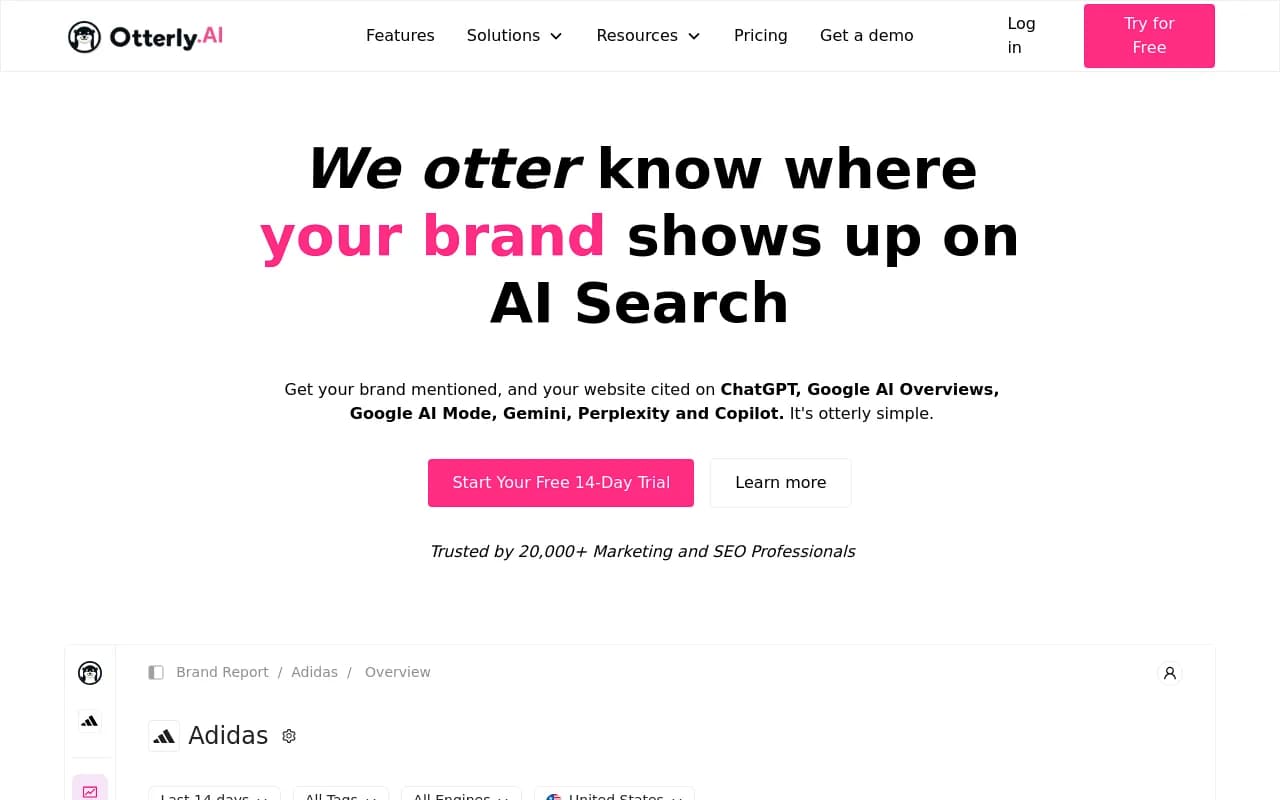
Automated platforms: Tools like Promptwatch, Otterly.AI, and Profound run prompts across multiple models automatically and track citation frequency over time. Promptwatch goes further with Answer Gap Analysis -- it shows you exactly which prompts competitors are visible for but you're not, so you know what content to create.

The key metric here is citation rate: (prompts where you're cited / total prompts tracked) × 100. If you're tracking 100 prompts and get cited in 23 of them, your citation rate is 23%. Track this weekly and watch it climb as you optimize.
Layer 2: Traffic attribution
Once you know you're being cited, you need to see if those citations drive clicks -- and connect those clicks to actual visitors in your analytics.
Method 1: GA4 referral tracking (free, limited accuracy)
Set up custom channel groupings in GA4 to isolate AI referrals:
- Source contains "chatgpt" OR "perplexity" OR "claude" OR "gemini" OR "you.com" → AI Search
- Medium = "referral" AND source contains above → AI Referral
This catches some traffic but misses mobile apps and stripped referrers. Expect to capture maybe 40-60% of actual AI-driven visits.
Method 2: UTM tagging (better, requires cooperation)
If you control where your URLs appear (e.g. in your own content that AI models cite), add UTM parameters:
utm_source=ai-searchutm_medium=citationutm_campaign=geo-2026
This works great for content you publish (blog posts, guides, landing pages) but doesn't help when AI models cite you organically without using your UTM links.
Method 3: Attribution platforms (best, costs money)
Tools like Cometly, Ruler Analytics, and HockeyStack use server-side tracking and first-party cookies to capture referrals that GA4 misses. They also track the full customer journey across multiple touchpoints.
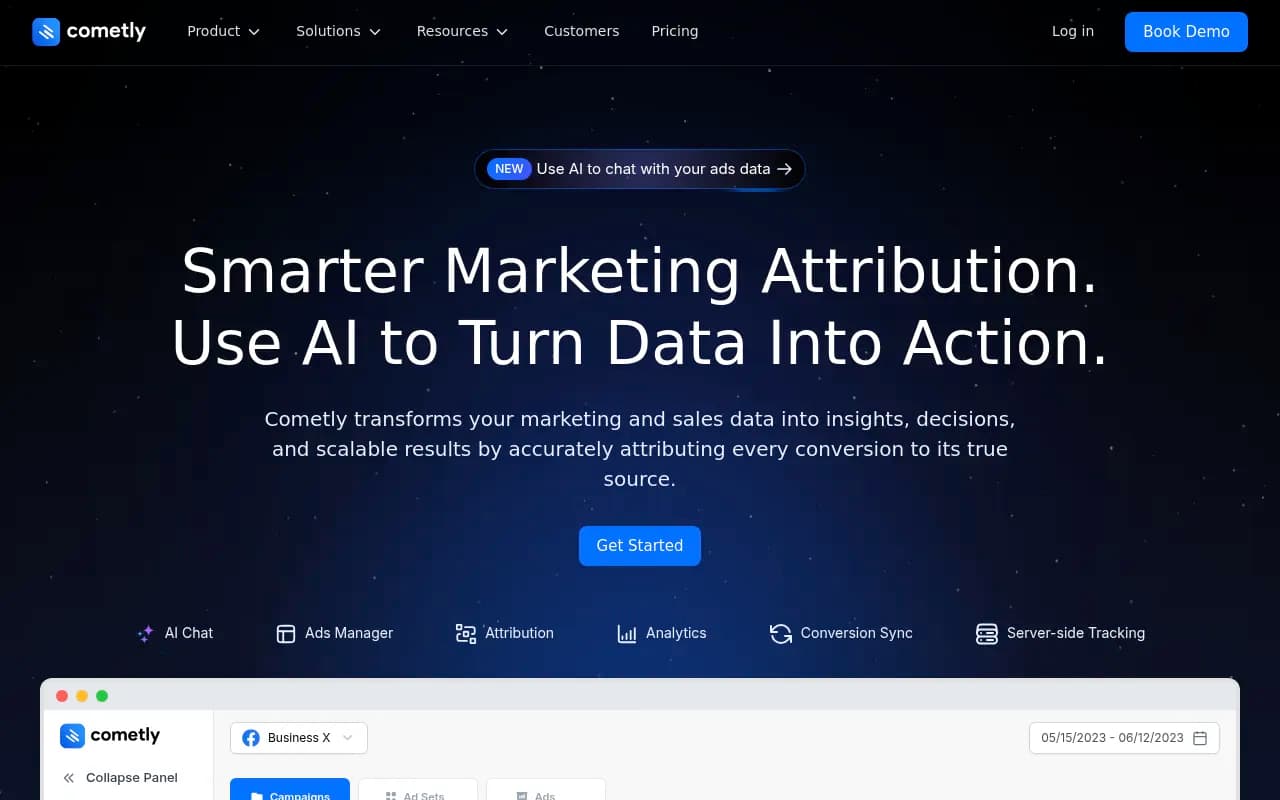
Cometly specifically tracks AI-referred traffic and connects it to revenue. It sees when someone arrives from Perplexity, tracks their behavior across sessions, and attributes conversions back to that initial AI referral even if they return via direct or Google later.
The ROI here is immediate. If you're spending $50k/year on GEO and content but can't prove it drives revenue, a $300/month attribution platform pays for itself in the first board meeting.
Method 4: Server log analysis (enterprise, most accurate)
AI models crawl your site before citing you. ChatGPT's crawler is "ChatGPT-User", Perplexity uses "PerplexityBot", Claude uses "Claude-Web". If you analyze server logs, you can see:
- Which pages AI crawlers read most often
- How crawl frequency correlates with citation increases
- Which content gets indexed by which models
Promptwatch offers real-time AI crawler logs as part of its platform -- you see exactly when ChatGPT, Perplexity, and other models hit your site, which pages they read, and any errors they encounter. This is the closest thing to "AI search console" that exists in 2026.
Crawler activity is a leading indicator. If Perplexity suddenly starts crawling your new comparison page 10x more often, expect citation increases in the next week.
Layer 3: Revenue connection
Traffic is nice. Revenue is what matters. This layer connects AI-driven visits to actual dollars.
What to measure:
- Conversion rate: AI referral visitors who complete a goal (demo request, trial signup, purchase)
- Average order value: revenue per conversion from AI traffic vs. other channels
- Customer lifetime value: do AI-sourced customers stick around longer?
- Revenue attribution: total revenue generated by visitors who first discovered you via AI citation
How to measure it:
In GA4, create a custom exploration:
- Dimension: First user source/medium
- Filter: source contains "chatgpt" OR "perplexity" OR "claude" (or your custom AI channel group)
- Metrics: Conversions, Revenue, Conversion rate
- Compare to "google / organic" and "(direct) / (none)"
You'll likely see lower volume but higher conversion rates. One brand reported 2.1% conversion rate from Google organic vs. 9.3% from Perplexity referrals. The AI traffic was pre-qualified -- the model had already vetted the source and educated the user before they clicked.
For B2B, connect your CRM:
- Tag leads with "AI referral" source in Salesforce/HubSpot
- Track deal close rates and contract values by source
- Calculate customer acquisition cost (CAC) for AI channel vs. paid search vs. organic
One SaaS company found their CAC from AI referrals was $340 vs. $1,200 from Google Ads. The AI channel wasn't huge (8% of leads) but it was the most efficient channel they had.
The five metrics that actually matter
Forget rankings. Here's what to put in your GEO dashboard:
| Metric | What it measures | How to track it | Target |
|---|---|---|---|
| Citation Frequency | How often you're mentioned across tracked prompts | Promptwatch, Otterly.AI, manual tracking | 25%+ citation rate |
| Brand Visibility Score | Weighted score based on position, sentiment, model | Profound, Promptwatch | 60+ out of 100 |
| AI Share of Voice | Your citations vs. competitor citations | Competitor tracking in GEO tools | 30%+ in your category |
| AI Referral Traffic | Visits from AI search engines | GA4 custom channel group or Cometly | 5-10% of total traffic |
| LLM Conversion Rate | Conversions from AI referrals / AI referral visits | GA4 exploration or attribution platform | 2-5x organic rate |
Citation Frequency is your top-of-funnel metric. If you're not being cited, nothing else matters. Track this across 50-200 prompts that represent your target buyer's research journey.
Brand Visibility Score adds nuance. Being cited in position 5 with neutral sentiment is different from being the top recommendation with glowing context. Tools like Profound and Promptwatch calculate weighted scores that account for position, sentiment, and which model cited you (ChatGPT mentions are worth more than a niche model).
AI Share of Voice is competitive intelligence. If you're cited 15% of the time but your main competitor is cited 45%, you know where you stand. Track this monthly and watch the gap close as you optimize.
AI Referral Traffic connects citations to actual visitors. This is where most brands see the "oh shit" moment -- they realize they're getting way more AI traffic than they thought, it was just hidden in direct/none.
LLM Conversion Rate is the money metric. If AI visitors convert at 3x the rate of organic search, you can justify massive GEO investment even if the volume is lower. Quality beats quantity.
ROI calculation: the actual math
Here's how to calculate GEO ROI in a way your CFO will accept:
Step 1: Calculate total GEO investment
- Content creation: $X/month (writers, editors, AI tools)
- Monitoring tools: $Y/month (Promptwatch, Otterly, etc.)
- Attribution platform: $Z/month (Cometly, HockeyStack)
- Team time: hours × hourly rate
Total monthly investment = $X + $Y + $Z + team time
Step 2: Measure AI-attributed revenue
In your attribution platform or GA4:
- Filter conversions by "first user source = AI referral"
- Sum total revenue from those conversions
- Include both direct conversions and assisted conversions (where AI was in the path but not last click)
Monthly AI-attributed revenue = $R
Step 3: Calculate ROI
ROI = (Revenue - Investment) / Investment × 100
Example:
- Investment: $8,000/month (content + tools + team)
- AI-attributed revenue: $32,000/month
- ROI = ($32,000 - $8,000) / $8,000 × 100 = 300%
Companies seeing positive GEO ROI report 300-500% returns. The key is accurate attribution -- if you're missing half your AI traffic because of tracking gaps, your ROI looks worse than it is.
Step 4: Compare to other channels
Put GEO ROI next to paid search ROI, organic SEO ROI, and paid social ROI. In most cases, GEO will have lower volume but higher efficiency. That's the story: "We're getting 8% of our leads from AI search but they convert at 4x the rate and have 30% lower CAC."
That's a budget conversation winner.
Common tracking mistakes (and how to fix them)
Mistake 1: Only tracking ChatGPT
ChatGPT is 60% of AI search volume but Perplexity, Claude, and Gemini matter too. Different models cite different sources. Track at least 3-4 models or you're missing half the picture.
Fix: Use a multi-model platform like Promptwatch or manually test prompts in ChatGPT, Perplexity, Claude, and Gemini.
Mistake 2: Ignoring mobile apps
Mobile app referrals almost never show up in GA4. If you're only looking at web referrals, you're missing 40-50% of AI traffic.
Fix: Use server-side attribution (Cometly) or analyze crawler logs to see total AI engagement with your content.
Mistake 3: Not tracking prompt variations
You test "best project management software" but users also search "project management tools for remote teams", "asana alternatives", "free project management apps". Each variation might cite different sources.
Fix: Build a prompt library with 50-200 variations covering different buyer intents, personas, and stages. Promptwatch's Prompt Intelligence shows query fan-outs -- how one prompt branches into sub-queries.
Mistake 4: Measuring citations without measuring traffic
You're cited in 30 prompts. Great. Did anyone click? Did they convert? Citation count is a vanity metric without traffic and revenue data.
Fix: Always connect Layer 1 (citations) to Layer 2 (traffic) to Layer 3 (revenue). The full funnel is what matters.
Mistake 5: Using last-click attribution
GA4's default attribution gives all credit to the last click before conversion. If someone discovers you via Perplexity, comes back via Google, and converts, Google gets 100% credit. Your GEO work looks like it did nothing.
Fix: Switch to data-driven attribution in GA4 or use a multi-touch attribution platform. Give credit to all touchpoints in the journey.
Tools comparison: what to use
Here's how the major platforms stack up for tracking AI visibility ROI:
| Tool | Citation tracking | Traffic attribution | Revenue tracking | Price | Best for |
|---|---|---|---|---|---|
| Promptwatch | ✓ Multi-model, crawler logs, Answer Gap | ✓ Via GSC integration + code snippet | ✓ Page-level tracking | $99-579/mo | End-to-end visibility + optimization |
| Cometly | ✗ | ✓ Best-in-class AI referral tracking | ✓ Full funnel attribution | $149+/mo | Revenue attribution |
| Otterly.AI | ✓ Multi-model monitoring | ✗ | ✗ | $29-989/mo | Citation monitoring only |
| Profound | ✓ Multi-model with sentiment | ✗ | ✗ | $499+/mo | Enterprise monitoring |
| Semrush | ✓ Fixed prompt set | ✓ Limited | ✗ | $99+/mo | If you already use Semrush |
| GA4 + manual | ✗ | ✓ Partial (misses mobile) | ✓ If you set it up right | Free | Tight budgets |
Promptwatch is the only platform that covers all three layers: it tracks citations across 10 models, shows crawler activity in real-time, and connects visibility to actual traffic via GSC integration and a tracking snippet. It also closes the loop with AI content generation -- when Answer Gap Analysis shows you're missing citations for specific prompts, the built-in writing agent creates articles engineered to get cited.
For pure revenue attribution, Cometly is unmatched. It captures AI referrals that GA4 misses and tracks the full customer journey. Pair it with Promptwatch for citation monitoring and you have a complete stack.
If budget is tight, start with GA4 custom channel groups and manual citation tracking. You'll miss some data but it's enough to prove the channel works before you invest in tools.
Setting up your tracking stack (step-by-step)
Here's the 30-day implementation plan:
Week 1: Citation baseline
- List 50 prompts your target buyers use (product searches, comparison queries, how-to questions)
- Run each prompt in ChatGPT, Perplexity, Claude, Gemini
- Record whether you're cited, position, and competitors mentioned
- Calculate baseline citation rate
- Sign up for Promptwatch or Otterly.AI to automate this going forward
Week 2: Traffic tracking
- Set up GA4 custom channel group for AI referrals (source contains chatgpt/perplexity/claude/gemini)
- Add UTM parameters to your most-cited content (utm_source=ai-search)
- Install Cometly or similar attribution platform if budget allows
- Set up weekly traffic report filtered to AI channel
Week 3: Revenue connection
- Create GA4 exploration: First user source = AI referral, metrics = conversions + revenue
- Tag CRM leads with AI source when identifiable
- Set up conversion goals if you haven't already (demo requests, trial signups, purchases)
- Calculate baseline conversion rate and AOV for AI traffic
Week 4: Dashboard + ROI
- Build a simple dashboard (Google Sheets or Looker Studio) with:
- Citation rate by model
- AI referral traffic (weekly)
- AI conversion rate vs. organic
- AI-attributed revenue
- ROI calculation
- Share with stakeholders
- Set quarterly goals for each metric
After 30 days you'll have a working tracking stack and baseline metrics. From there it's optimization: create content for prompts where you're not cited, improve pages that get cited but don't convert, and scale what works.
What good looks like: real numbers
Here's what success looks like across different company sizes:
Startup (Series A SaaS, $2M ARR):
- Citation rate: 18% → 34% over 6 months
- AI referral traffic: 3% of total → 9% of total
- AI conversion rate: 6.2% (vs. 2.1% organic)
- AI-attributed revenue: $180k/year
- GEO investment: $4k/month
- ROI: 275%
Mid-market (B2B software, $25M ARR):
- Citation rate: 12% → 41% over 9 months
- AI referral traffic: 5% of total → 14% of total
- AI conversion rate: 8.7% (vs. 3.2% organic)
- AI-attributed revenue: $3.2M/year
- GEO investment: $18k/month
- ROI: 382%
Enterprise (Fortune 500 brand):
- Citation rate: 8% → 29% over 12 months
- AI referral traffic: 2% of total → 11% of total
- Brand visibility score: 34 → 68
- Share of voice vs. competitors: 15% → 38%
- AI-attributed revenue: $47M/year (estimated, multi-touch attribution)
- GEO investment: $120k/month
- ROI: 427%
The pattern: citation rates double or triple within 6-12 months of focused GEO work. AI traffic grows from low single digits to 10-15% of total. Conversion rates are consistently 2-5x higher than organic search. ROI lands in the 300-500% range once you have accurate attribution.
The 2026 reality
AI search is not replacing Google. It's creating a parallel channel with different economics.
Google sends high volume, mixed intent, moderate conversion rates. AI search sends lower volume, ultra-high intent, exceptional conversion rates. Both matter. But if you're only optimizing for Google, you're leaving money on the table.
The brands winning in 2026 are the ones who can prove AI visibility drives revenue. They have the tracking stack, the attribution data, and the ROI numbers to justify investment. They're not guessing -- they know exactly which prompts drive citations, which citations drive traffic, and which traffic drives revenue.
Start with the basics: track citations, set up GA4 referral tracking, measure conversions. Then layer in attribution tools and crawler log analysis as you scale. The data is there. You just have to capture it.
And when your CFO asks "what's the ROI on this AI search stuff", you'll have a real answer.