Key takeaways
- Promptwatch is the only platform in this comparison that covers the full loop: gap analysis, content generation, and traffic attribution -- the others are primarily monitoring tools
- Otterly.AI and Peec AI are solid for tracking visibility across AI engines, but neither helps you act on what you find
- Searchable sits somewhere in the middle -- it has content tools, but the depth of its optimization features lags behind Promptwatch
- If you're a small team just starting out, Otterly.AI or Peec AI can get you oriented quickly at a lower price point
- For anyone serious about actually improving their AI search presence (not just measuring it), Promptwatch is the clearest choice in 2026
The AI search monitoring space has exploded. Two years ago, barely anyone was tracking how their brand appeared in ChatGPT or Perplexity. Now there are dozens of tools competing for your attention, and the differences between them matter a lot more than most comparison posts let on.
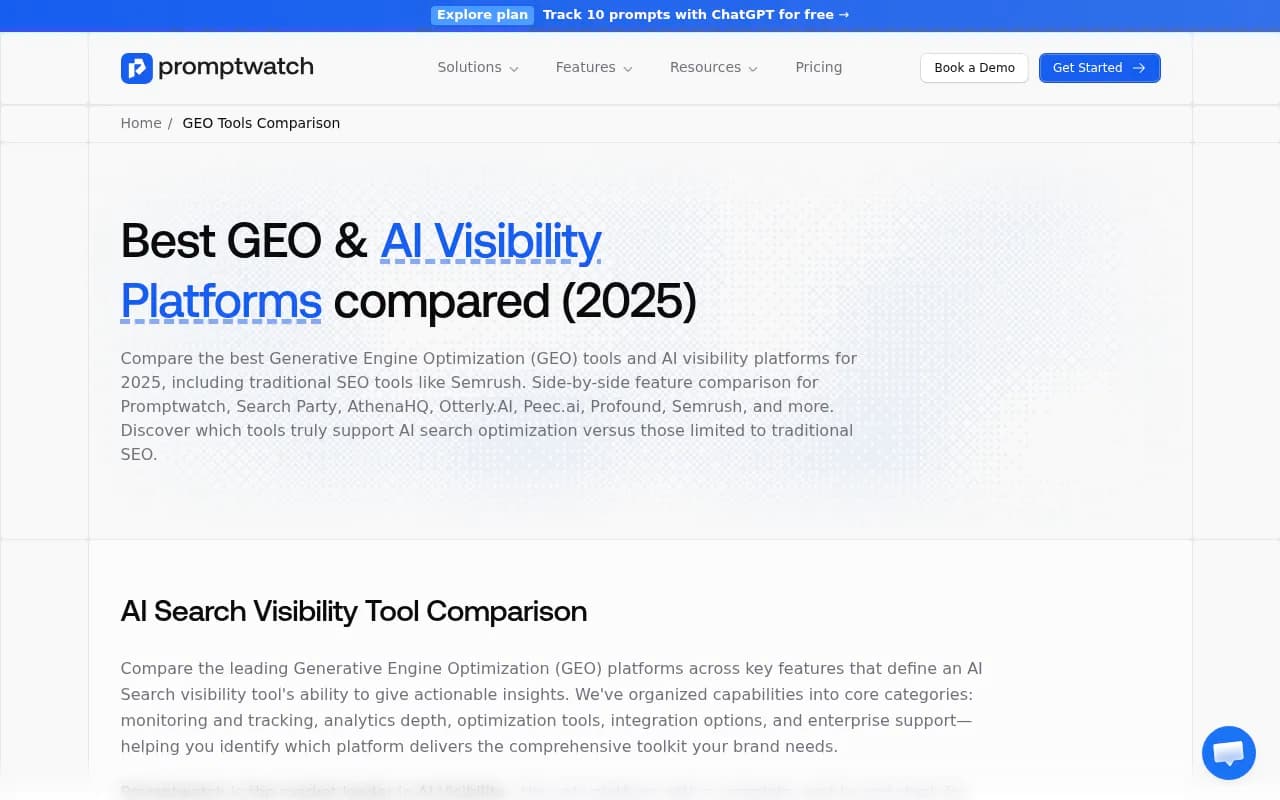
This guide focuses on four platforms that come up constantly in conversations about GEO and AI visibility: Searchable, Promptwatch, Peec AI, and Otterly.AI. They're not identical -- they serve different needs, have different philosophies, and charge very different prices. Let's get into it.
What we're actually comparing
Before the feature breakdown, it's worth being clear about what separates a monitoring tool from an optimization platform. Monitoring tells you where you stand. Optimization helps you change where you stand.
Most tools in this space are monitoring tools. They run your prompts, show you whether your brand appeared, maybe score your sentiment, and send you a weekly report. That's useful -- but it's the equivalent of a fitness tracker that tells you you're out of shape without suggesting what to do about it.
The more interesting question in 2026 is: which tools help you close the gap? Which ones take you from "we're not appearing in ChatGPT responses about our category" to "here's what to publish to fix that"?
That's the lens we're using here.
Otterly.AI: the accessible entry point
Otterly.AI has been around since the early days of AI search monitoring and has built a solid reputation as an approachable, well-designed tool for brands and agencies getting started with GEO.

What it does well
Otterly.AI covers the major AI engines -- ChatGPT, Perplexity, Google AI Overviews, Gemini, and Copilot -- and its interface is genuinely easy to use. You can set up prompt tracking quickly, see where your brand appears (or doesn't), and get a basic competitive picture.
Its GEO audit feature is one of the better ones at its price point. According to independent testing, it analyzes 25+ factors and gives specific recommendations. That's more actionable than a lot of competitors at similar price ranges.
Where it falls short
The core limitation is that Otterly.AI is fundamentally a monitoring dashboard. It shows you the data; it doesn't help you act on it. There's no built-in content generation, no crawler log analysis to understand how AI bots are actually reading your site, and no traffic attribution to connect visibility to revenue.
For a team that just wants to know "are we showing up in AI search?", that's fine. For a team that wants to improve their position, you'll quickly hit a ceiling.
Peec AI: multi-language monitoring with clean UX
Peec AI carved out a niche by focusing on multi-language and multi-region AI visibility -- a genuine gap that most competitors ignored for a long time.

What it does well
If you're a brand operating across multiple markets and languages, Peec AI's tracking capabilities are genuinely useful. It monitors visibility across several AI engines, provides share-of-voice metrics, and has a clean interface that makes it easy to understand your competitive position at a glance.
The setup is fast. You can be tracking prompts within minutes, which matters for teams that don't have time to configure complex platforms.
Where it falls short
Like Otterly.AI, Peec AI is monitoring-first. The platform tells you what's happening but doesn't give you the tools to change it. There's no content generation, no answer gap analysis that surfaces specific content you're missing, and no crawler logs.
A 2026 Reddit thread in r/seogrowth raised a fair question about whether these platforms are actually measuring model understanding or just prompt behavior -- and it's a valid concern. Peec AI, like most monitoring tools, is measuring outputs rather than helping you influence inputs.
Searchable: monitoring with some optimization features
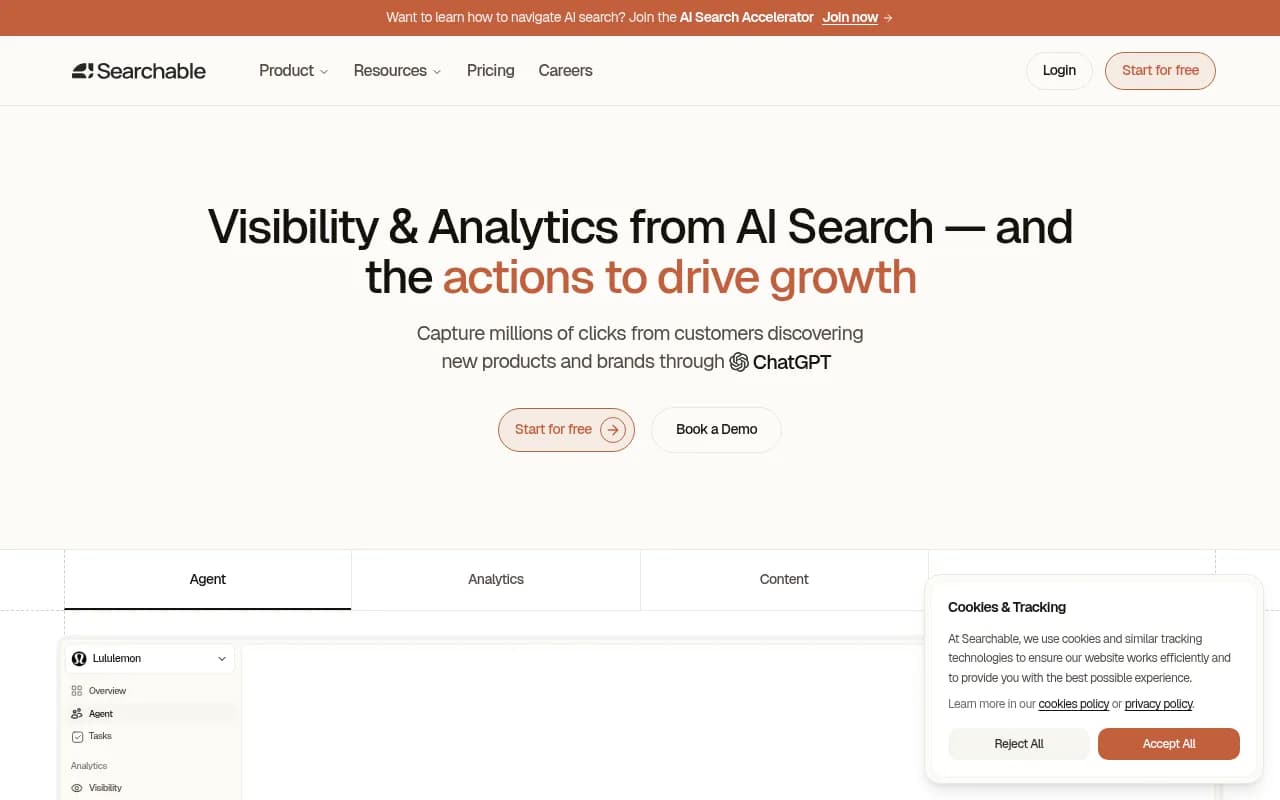
Searchable sits in an interesting middle ground. It's not purely a monitoring tool -- it has content-related features -- but it hasn't fully built out the optimization loop that would make it a genuine end-to-end platform.
What it does well
Searchable tracks brand visibility across AI engines and provides competitive benchmarking. Its interface is clean, and it's designed for marketing teams rather than technical SEO specialists, which lowers the barrier to adoption.
It has some content tools, which puts it ahead of pure monitoring plays like Peec AI and Otterly.AI. If you want a single tool that handles both tracking and some content guidance, it's worth evaluating.
Where it falls short
The depth of Searchable's optimization features is limited compared to what Promptwatch offers. It lacks crawler log analysis, prompt volume and difficulty scoring, Reddit and YouTube citation tracking, and the kind of granular answer gap analysis that tells you exactly which content to create.
For agencies or larger teams that need to show ROI from AI visibility work, Searchable's traffic attribution capabilities are also thinner than what's available elsewhere.
Promptwatch: the full optimization loop
Promptwatch is the platform that most directly addresses the "now what?" problem. It's built around a three-step cycle: find the gaps, create content that ranks in AI, and track the results.

What it does well
The answer gap analysis is genuinely useful. It shows you which prompts your competitors are visible for that you're not -- and more importantly, it surfaces the specific content your site is missing. That's not just a list of keywords; it's a map of what AI models are looking for and can't find on your site.
The built-in AI writing agent generates articles, listicles, and comparisons grounded in citation data from over 880 million citations analyzed. This isn't generic content -- it's engineered to get cited by ChatGPT, Claude, Perplexity, and other models.
The crawler log feature is something most competitors lack entirely. You can see in real time which AI crawlers (ChatGPT, Claude, Perplexity, etc.) are hitting your site, which pages they're reading, and what errors they're encountering. That's the kind of technical insight that lets you fix indexing issues before they become visibility problems.
Promptwatch also tracks Reddit threads and YouTube videos that influence AI recommendations -- a channel most platforms ignore. And for e-commerce brands, ChatGPT Shopping tracking monitors when your products appear in ChatGPT's shopping carousels.
Traffic attribution closes the loop. You can connect AI visibility to actual traffic and revenue through a code snippet, Google Search Console integration, or server log analysis.
Pricing
- Essential: $99/mo (1 site, 50 prompts, 5 articles)
- Professional: $249/mo (2 sites, 150 prompts, 15 articles, crawler logs, city/state tracking)
- Business: $579/mo (5 sites, 350 prompts, 30 articles)
- Agency/Enterprise: custom pricing
A free trial is available, and annual billing reduces costs further.
Side-by-side comparison
| Feature | Promptwatch | Searchable | Peec AI | Otterly.AI |
|---|---|---|---|---|
| AI engine coverage | 10 (ChatGPT, Claude, Gemini, Perplexity, Grok, DeepSeek, Copilot, Mistral, Meta AI, Google AI Overviews) | Multiple (exact count varies) | Multiple | 5+ |
| Answer gap analysis | Yes -- shows specific missing content | Limited | No | Limited |
| AI content generation | Yes -- built-in writing agent | Partial | No | No |
| Crawler log analysis | Yes | No | No | No |
| Traffic attribution | Yes (snippet, GSC, server logs) | Limited | No | No |
| Reddit/YouTube tracking | Yes | No | No | No |
| ChatGPT Shopping tracking | Yes | No | No | No |
| Prompt volume/difficulty scoring | Yes | No | No | No |
| Multi-language/region | Yes | Limited | Yes (strength) | Limited |
| Starting price | $99/mo | Varies | Varies | Varies |
| Free trial | Yes | Yes | Yes | Yes |
| Best for | Teams that want to improve AI visibility | Teams starting with monitoring + some content | Multi-language monitoring | Simple, accessible monitoring |
How to choose
The right tool depends on what you actually need.
If you're just starting out and want to understand whether your brand is appearing in AI search results, Otterly.AI or Peec AI will get you there quickly and without a steep learning curve. Otterly.AI is slightly better for English-language markets; Peec AI has an edge if you're tracking multiple languages.
If you want monitoring plus some content guidance and don't need the full optimization stack, Searchable is worth a look. It's a reasonable middle ground for teams that aren't ready to commit to a more comprehensive platform.
If you're serious about improving your AI search visibility -- not just measuring it -- Promptwatch is the clearest choice. The answer gap analysis, content generation, crawler logs, and traffic attribution together form a workflow that the other three platforms simply don't offer. It's more expensive than the monitoring-only tools, but you're paying for the ability to actually move the needle.
One honest caveat: Promptwatch's full value only shows up if you're willing to use the content generation features and act on the gap analysis. If your team will use it as a passive dashboard, you're paying for more than you need. But if you're committed to the optimization loop, nothing else in this comparison comes close.
The bigger picture
The AI search monitoring space is still maturing. Most platforms launched in 2023-2024 as monitoring tools because that was the easiest thing to build. The harder problem -- helping brands actually improve their AI visibility -- is what separates the next generation of platforms.
In 2026, the question isn't really "are you tracking AI search?" Most serious marketing teams are. The question is "are you doing anything about what you find?" That's where the gap between these four platforms becomes most visible.
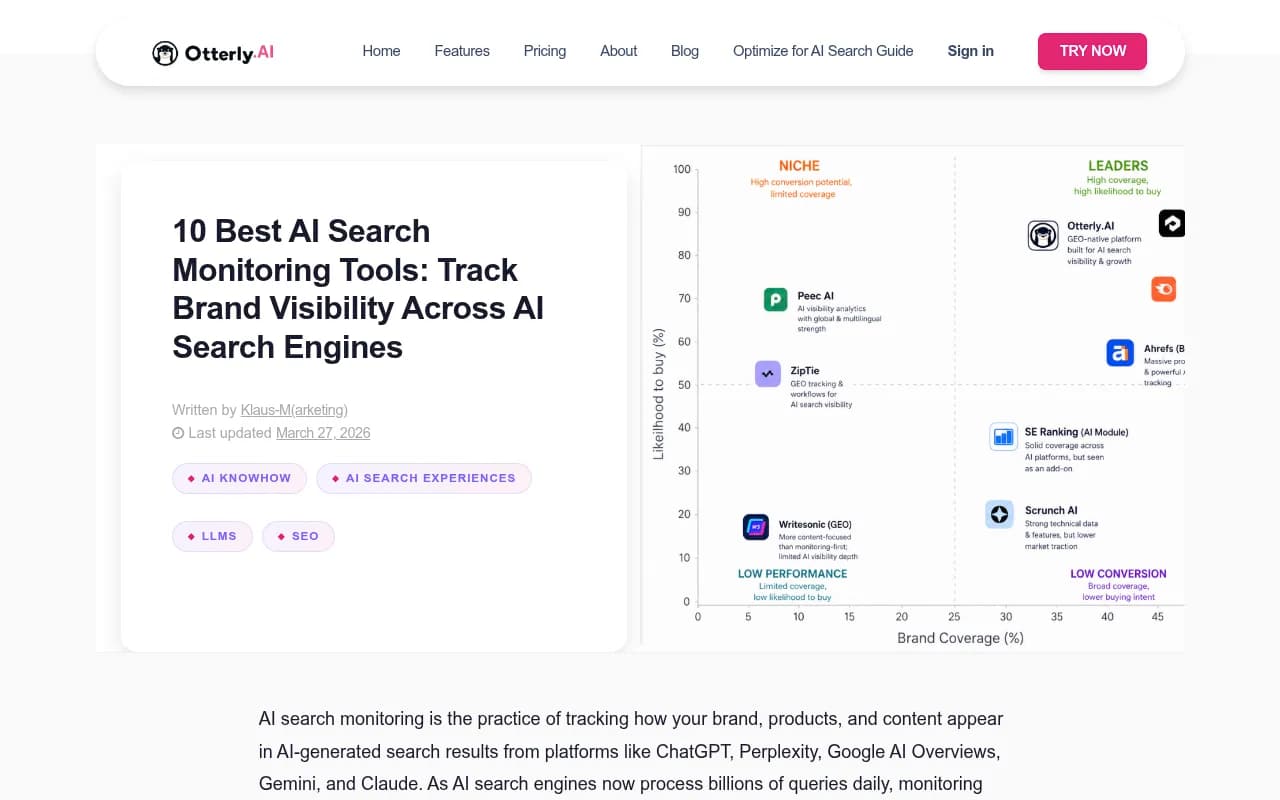
Monitoring is table stakes. The platforms that will matter most are the ones that help you close the loop between insight and action -- and right now, Promptwatch is the furthest along that path.