Key takeaways
- Otterly.AI is the most accessible entry point for AI visibility monitoring, starting at $29/month, but it's primarily a monitoring tool -- it won't help you fix what it finds.
- Evertune targets Fortune 500 brands with deep enterprise features and base model access, but pricing starts around $3,000/month, which puts it out of reach for most teams.
- Relixir brings an AI-native CMS and autonomous content capabilities into the GEO space, making it interesting for teams that want content generation baked in.
- Promptwatch is the only platform in this comparison that closes the full loop: find gaps, generate content, track results -- at a price point that works for mid-market and enterprise teams alike.
The AI visibility tools market has exploded. Between mid-2025 and early 2026, the category attracted over $300 million in funding, and now there are dozens of platforms claiming to solve the same problem: making sure your brand shows up when ChatGPT, Perplexity, Gemini, or Claude answers a question in your category.
But "showing up" is only part of the challenge. The harder question is: what do you do when you're not showing up? Most platforms stop at the diagnosis. A few actually help you fix it.
This comparison focuses on four platforms that enterprise marketing teams are actively evaluating in 2026: Otterly.AI, Promptwatch, Relixir, and Evertune. They're not all the same. They're not all priced the same. And they're definitely not all built for the same buyer.
Here's what you actually need to know.
What enterprise brands need from an AI visibility platform
Before getting into the tools, it's worth being clear about what "enterprise" actually requires here, because it changes the evaluation considerably.
A solo founder needs to know if they're getting mentioned. An enterprise brand needs to know:
- Which prompts competitors are winning that they're not
- Why AI models are citing competitors instead of them
- What content gaps exist across their site and how to close them
- How AI crawlers are interacting with their pages (and what errors they're hitting)
- Which external sources -- Reddit threads, listicles, YouTube videos -- are driving AI citations for their category
- How visibility translates to actual traffic and revenue
That last point is the one most platforms quietly skip. Monitoring dashboards are easy to build. Revenue attribution is hard. And for enterprise marketing teams that need to justify budget, "your visibility score went up 12 points" is not a complete answer.
With that in mind, let's look at each platform.
Otterly.AI
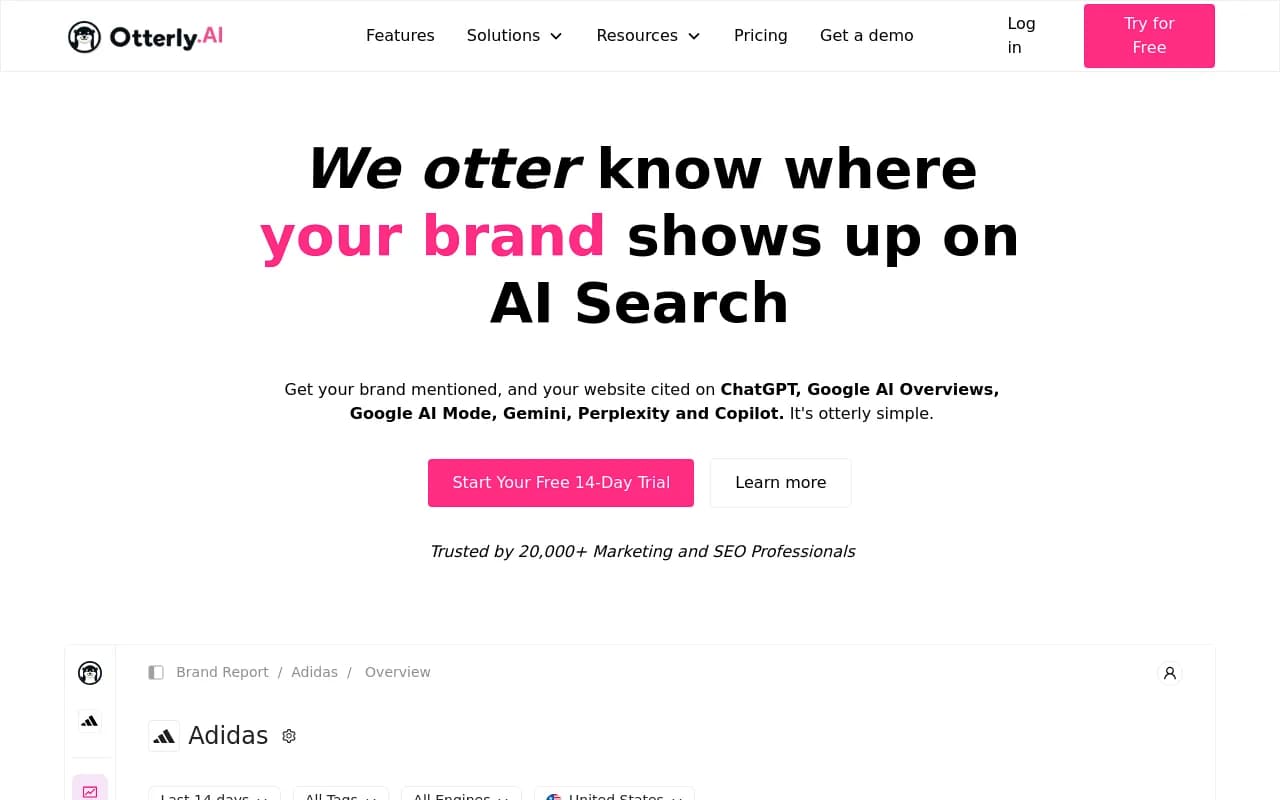
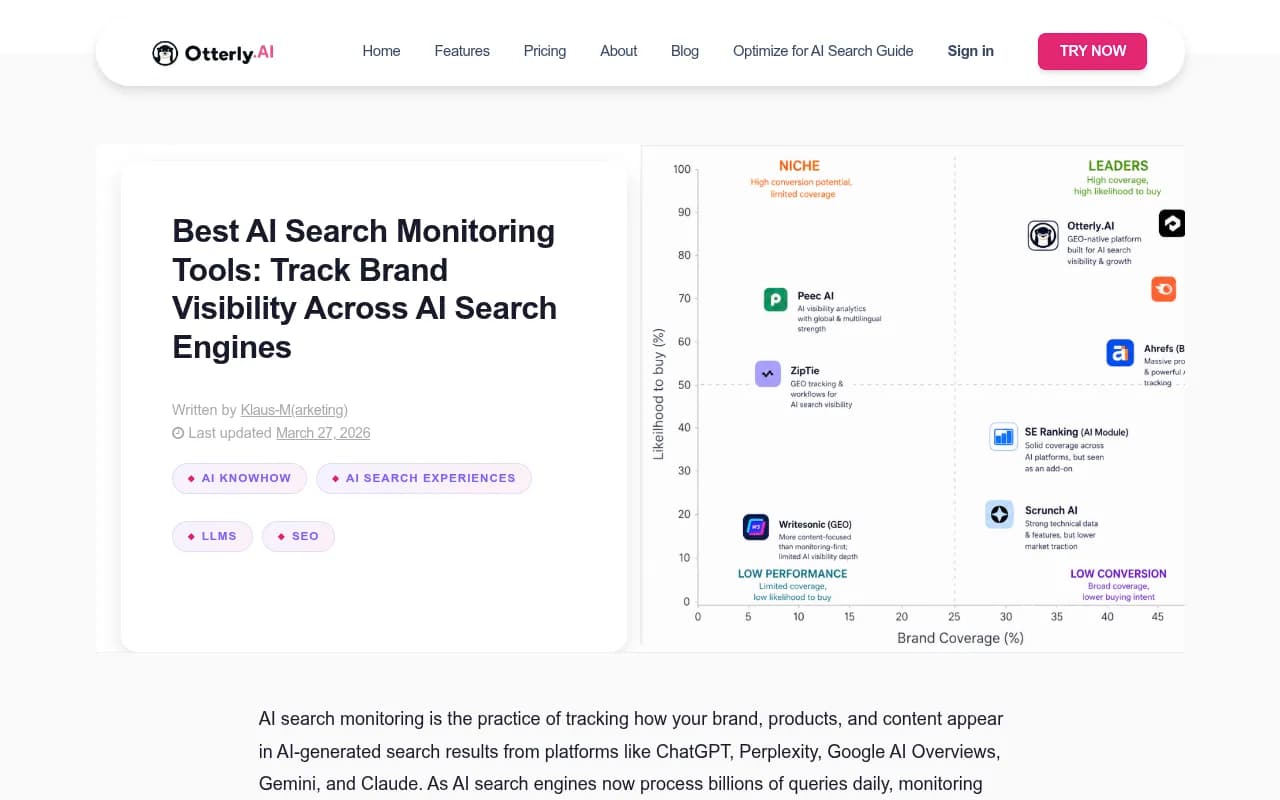
Otterly.AI was one of the first purpose-built AI visibility monitoring tools, and it's still the most accessible entry point in the category. Starting at $29/month, it covers the basics well: brand mention tracking across ChatGPT, Perplexity, Google AI Overviews, Gemini, and Claude, with citation tracking and some competitive benchmarking.
The platform is genuinely easy to use. Setup is fast, the interface is clean, and for a small team that just wants to know whether they're appearing in AI responses, it does the job.
Where it falls short for enterprise use is everything that comes after the monitoring. Otterly.AI doesn't have crawler logs, so you can't see how AI agents are actually interacting with your site. It doesn't generate content. It doesn't have prompt volume data or difficulty scoring to help you prioritize which gaps to close first. And it doesn't connect visibility to revenue.
For an SMB or a solo marketer dipping their toes into GEO, Otterly.AI is a reasonable starting point. For an enterprise brand managing multiple sites, dozens of competitors, and real budget accountability, it's going to feel thin pretty quickly.
Evertune
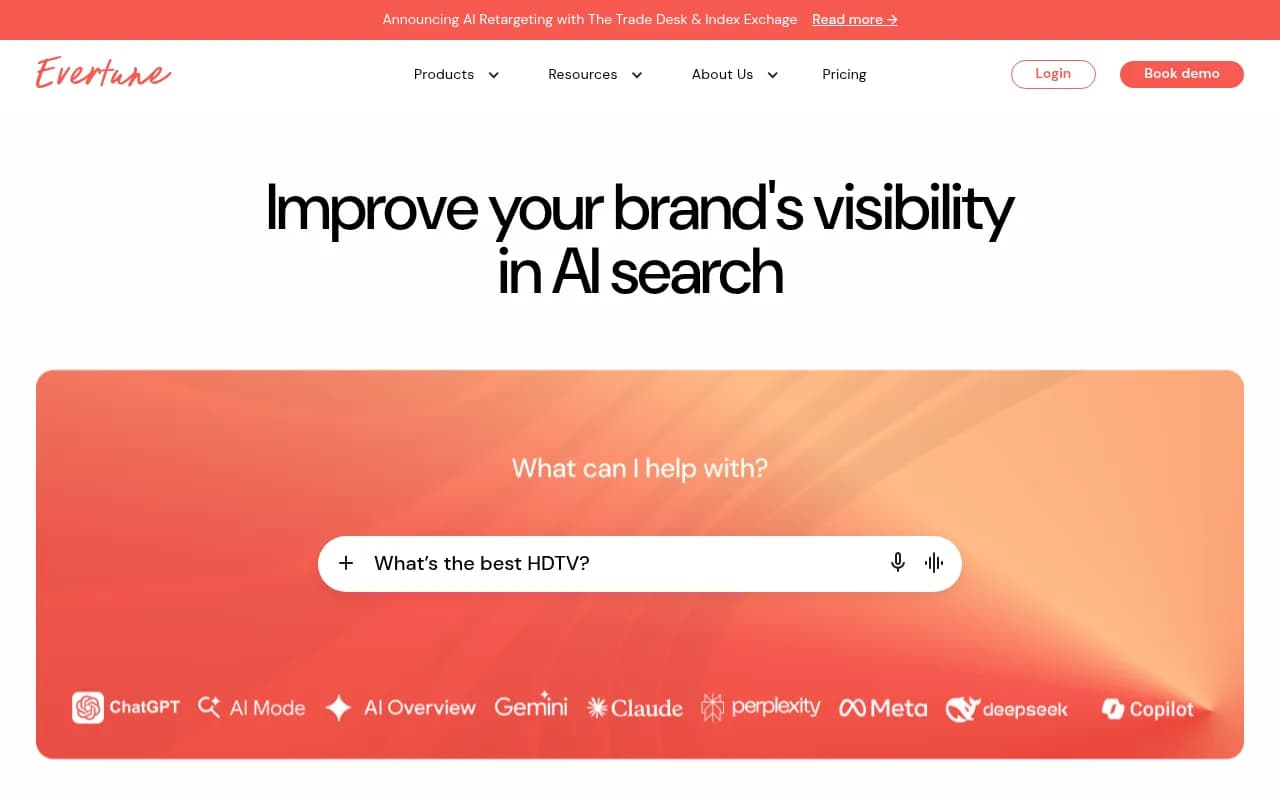
Evertune sits at the opposite end of the pricing spectrum. According to multiple sources, plans start around $3,000/month, with enterprise tiers going significantly higher. The platform targets Fortune 500 brands and positions itself as the most comprehensive AI visibility tool in the category -- including access to base model outputs, which most competitors don't offer.
The base model access is genuinely interesting. Most AI visibility tools query the user-facing versions of ChatGPT, Perplexity, and Gemini. Evertune claims to also monitor what the underlying models "know" about your brand, independent of the retrieval layer. That's a meaningful distinction for brands doing deep competitive intelligence.
Evertune also covers brand perception and sentiment analysis in AI responses, not just whether you're mentioned. For a Fortune 500 brand where how you're described matters as much as whether you appear, that's valuable.
The honest limitation: at $3,000+/month, Evertune is simply not a realistic option for most marketing teams, even at larger companies. And like several enterprise-focused platforms, the emphasis is on monitoring and intelligence rather than content generation and optimization. You'll get excellent data. You'll still need to figure out what to do with it yourself.
Relixir
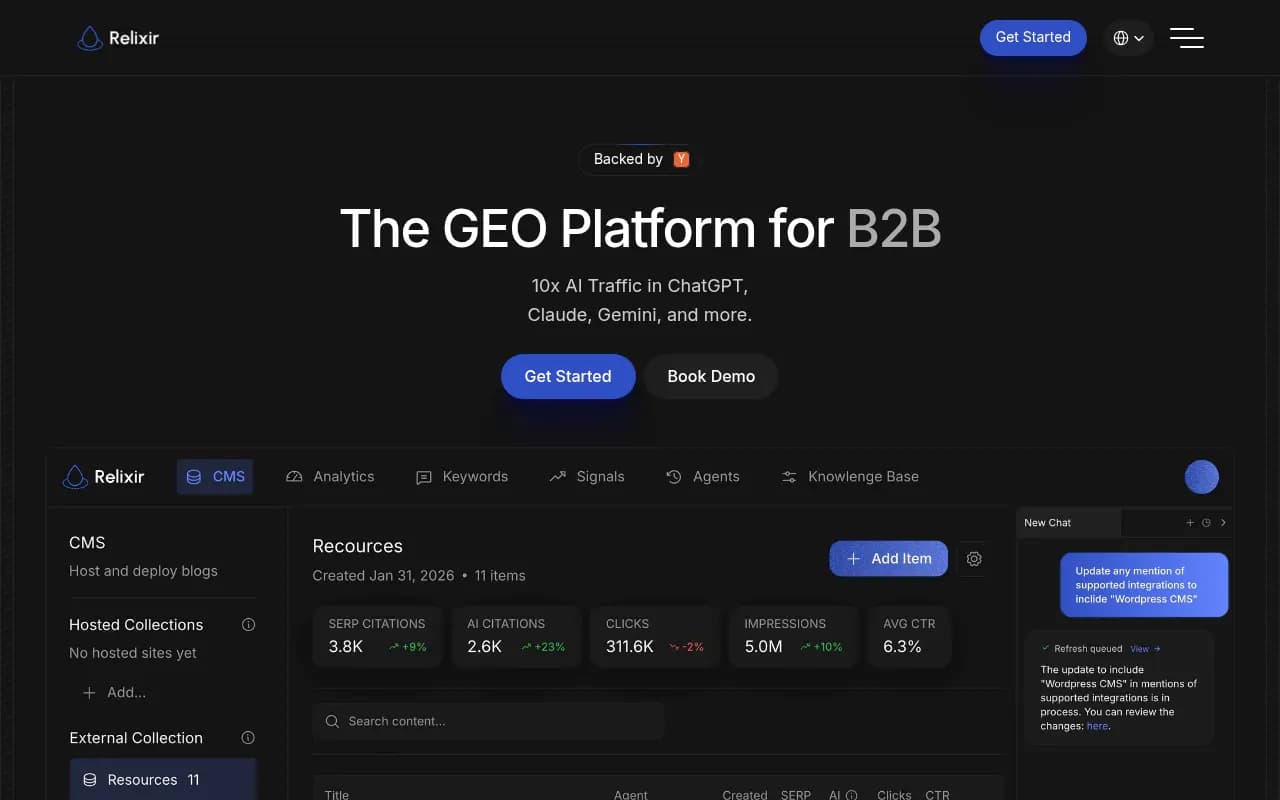
Relixir takes a different angle. Where most AI visibility platforms are built around monitoring dashboards, Relixir describes itself as an AI-native CMS with autonomous content capabilities -- meaning it's trying to solve the content creation side of GEO, not just the tracking side.
The platform includes gap analysis to identify where competitors are visible and you're not, plus tools to generate and publish content designed to close those gaps. The "autonomous" framing suggests some degree of automated content production, which is appealing for teams that want to move fast.
Relixir is a newer entrant compared to Otterly.AI and Evertune, and the platform is still maturing. Enterprise teams evaluating it should ask hard questions about monitoring depth (how many AI models, how frequently, what data freshness looks like), crawler log access, and how content performance is tracked after publication. The content generation angle is compelling, but the full loop -- from gap identification to content creation to citation tracking -- needs to be airtight for enterprise use.
It's worth a serious look, particularly for content-heavy teams. Just go in with specific questions about what the monitoring layer actually covers.
Promptwatch
Promptwatch is the platform that most directly addresses the full enterprise workflow. It's used by 1,480+ brands and agencies, including Booking.com and Center Parcs, and it's built around what it calls the "action loop": find gaps, create content, track results.

That framing isn't just marketing. It reflects a genuine architectural difference from monitoring-only tools. Here's what that looks like in practice:
The Answer Gap Analysis shows exactly which prompts competitors are appearing for that you're not -- not as a vague "you're missing coverage here" summary, but as specific prompts with volume estimates and difficulty scores. You can prioritize which gaps are worth closing based on actual prompt data.
The Content Agents then generate articles, listicles, comparisons, and briefs grounded in that prompt data, combined with citation analysis, competitor research, and brand guidance. This isn't generic content -- it's built around the specific questions AI models are already answering in your category.
And the tracking layer closes the loop. Page-level tracking shows which pages are being cited, by which models, and how often. AI Crawler Logs show when ChatGPT, Claude, Perplexity, and others are hitting your site, what errors they encounter, and how quickly pages move from crawl to citation. Traffic attribution connects visibility to actual revenue.
A few capabilities worth calling out specifically for enterprise teams:
- Real prompt data from actual user interfaces, not just API outputs (which can differ meaningfully from what users actually see)
- Offsite citation tracking -- Reddit threads, YouTube videos, third-party listicles -- that shows where AI models are pulling citations from outside your own site
- ChatGPT Shopping tracking for brands with e-commerce exposure
- Multi-language and multi-region monitoring with customizable personas
- Integrations with Cloudflare, Fastly, Vercel, Google Search Console, and server logs
- Looker Studio integration and API access for custom reporting
Pricing runs from $99/month (Essential, 1 site, 50 prompts) to $579/month (Business, 5 sites, 350 prompts, 30 articles), with agency and enterprise pricing available. That's a meaningful step up from Otterly.AI but a fraction of Evertune's cost -- and it covers substantially more of the workflow.
Feature comparison
| Feature | Otterly.AI | Evertune | Relixir | Promptwatch |
|---|---|---|---|---|
| AI model monitoring | 5+ models | 10+ (incl. base models) | Multiple | 10 models |
| Prompt volume & difficulty | No | Partial | Partial | Yes |
| Answer gap analysis | Basic | Yes | Yes | Yes |
| Content generation | No | No | Yes (autonomous CMS) | Yes (Content Agents) |
| AI crawler logs | No | Unknown | Unknown | Yes |
| Offsite citation tracking | No | Partial | No | Yes |
| Reddit & YouTube insights | No | No | No | Yes |
| ChatGPT Shopping tracking | No | No | No | Yes |
| Traffic & revenue attribution | No | No | No | Yes |
| Multi-language / multi-region | Limited | Yes | Limited | Yes |
| Starting price | $29/mo | ~$3,000/mo | Custom | $99/mo |
| Best for | SMBs, solo marketers | Fortune 500 | Content-heavy teams | Mid-market to enterprise |
How to choose
The honest answer is that the right tool depends on what stage you're at and what you're actually trying to accomplish.
If you've never measured AI visibility before and want to see what's happening without a big commitment, Otterly.AI is a reasonable first step. You'll outgrow it, but it'll get you oriented.
If you're a Fortune 500 brand with a dedicated research budget and you need the deepest possible intelligence layer -- including base model access and brand perception analysis -- Evertune is worth the conversation, even at $3,000+/month.
If content production is your primary bottleneck and you want a platform built around generating and publishing GEO-optimized content, Relixir is worth evaluating, though you should pressure-test the monitoring and tracking depth before committing.
If you need the full workflow -- gap identification, content generation, crawler logs, citation tracking, revenue attribution -- at a price point that doesn't require a Fortune 500 budget, Promptwatch is the clearest choice. It's the only platform in this comparison that's genuinely built around optimization rather than just observation.
The category is moving fast. A platform that was the right fit six months ago may not be the right fit today. Whatever you choose, make sure you're evaluating on the full loop, not just the monitoring layer. Data without action is just an expensive dashboard.
Other tools worth knowing about
The four platforms above aren't the only options. Depending on your specific needs, a few others are worth a look:

Profound is the category leader by funding ($155M raised, $1B valuation) and has strong Fortune 500 adoption. Enterprise pricing, strong analytics, but limited content generation capabilities.
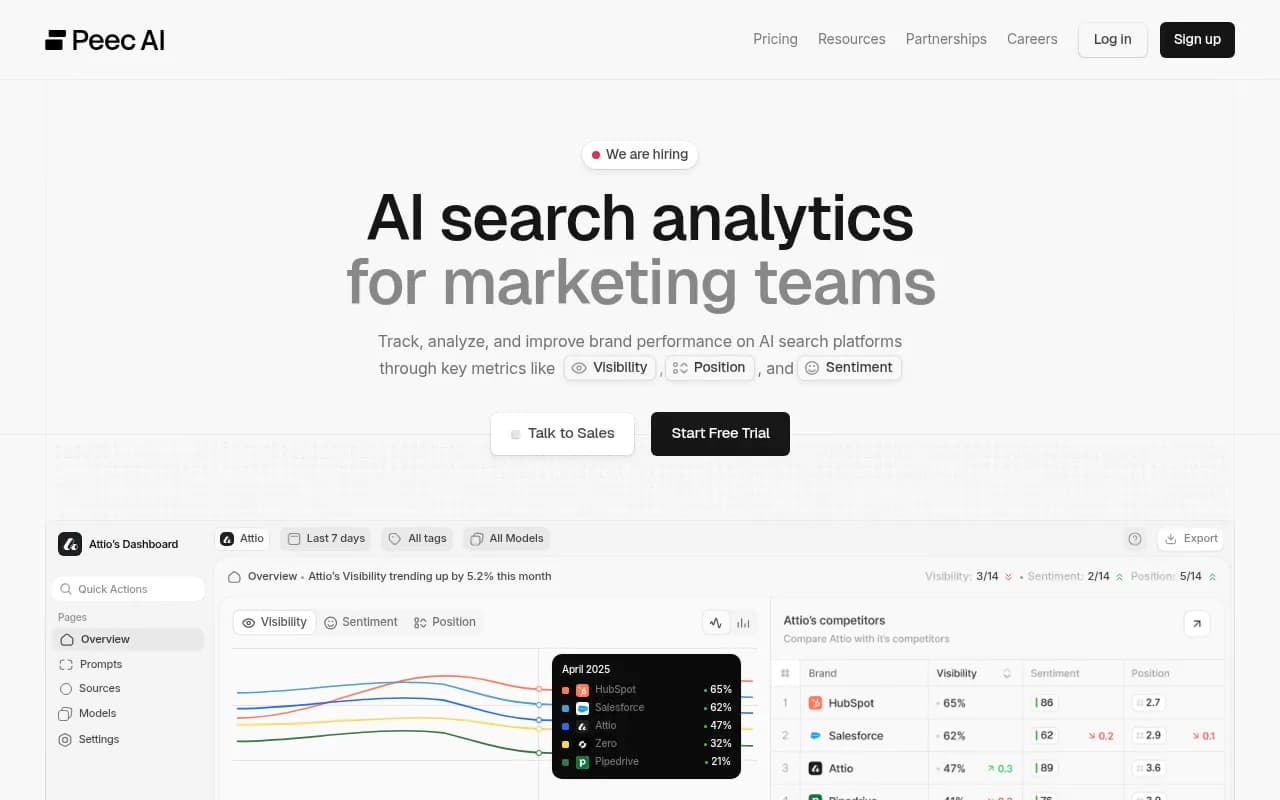
Peec AI is the fastest-growing mid-market option, with $29M raised and strong analytics. Good for teams that want solid monitoring without enterprise pricing.

AthenaHQ covers 8+ AI search engines with solid monitoring depth. Monitoring-focused, without the content optimization layer.
Scrunch AI is another monitoring-focused platform with a clean interface, worth considering for teams that don't need content generation.
The market has plenty of options. The question is whether you're buying a monitoring tool or an optimization platform -- and for enterprise brands with real visibility goals, that distinction matters more than any individual feature.