Key takeaways
- "Safer" means different things: lower vendor risk, lower lock-in, or lower risk of measuring the wrong thing. Suites and independents win on different ones.
- Suite add-ons (Semrush, Ahrefs Brand Radar, SE Ranking, Moz) are cheap and convenient, but they mostly stop at measurement. Independents tend to go further into content, crawler data and workflow.
- AI platforms change behavior without warning. Promptwatch Data found ChatGPT citations per response fell about 27% after the GPT-5.3 rollout on March 4, 2026, so whichever tool you pick needs continuous monitoring, not snapshots.
- The biggest stack risk is usually not the vendor. It is a GEO tool nobody owns, whose insights never reach the CMS or the team that ships work.
- A sensible default for many teams: keep the suite for what it already does, add an independent tool when you need to act on specific prompts, and keep your data exportable.
What "safer" actually means here
People asking this question usually mean one of four things, and mixing them up leads to bad purchases.
- Vendor risk. Will the company still exist, stay independent, and keep the product roadmap you bought?
- Lock-in risk. Can you leave, and take your prompt sets and history with you?
- Measurement risk. Is the data actually reflecting what users see in ChatGPT, AI Overviews and the rest?
- Execution risk. Does the tool lead to shipped work, or to another dashboard nobody checks?
A large suite is stronger on the first and often weaker on the last two. A young independent is the reverse. Neither is automatically the safe choice. Here, GEO means generative engine optimization, not geographic targeting.
What counts as suite-owned and what counts as independent
Suite-owned means the GEO feature lives inside a broader SEO or marketing platform you may already pay for. Examples from the current market:
- Semrush, including its AI Visibility Toolkit and the Semrush One bundle
- Ahrefs Brand Radar
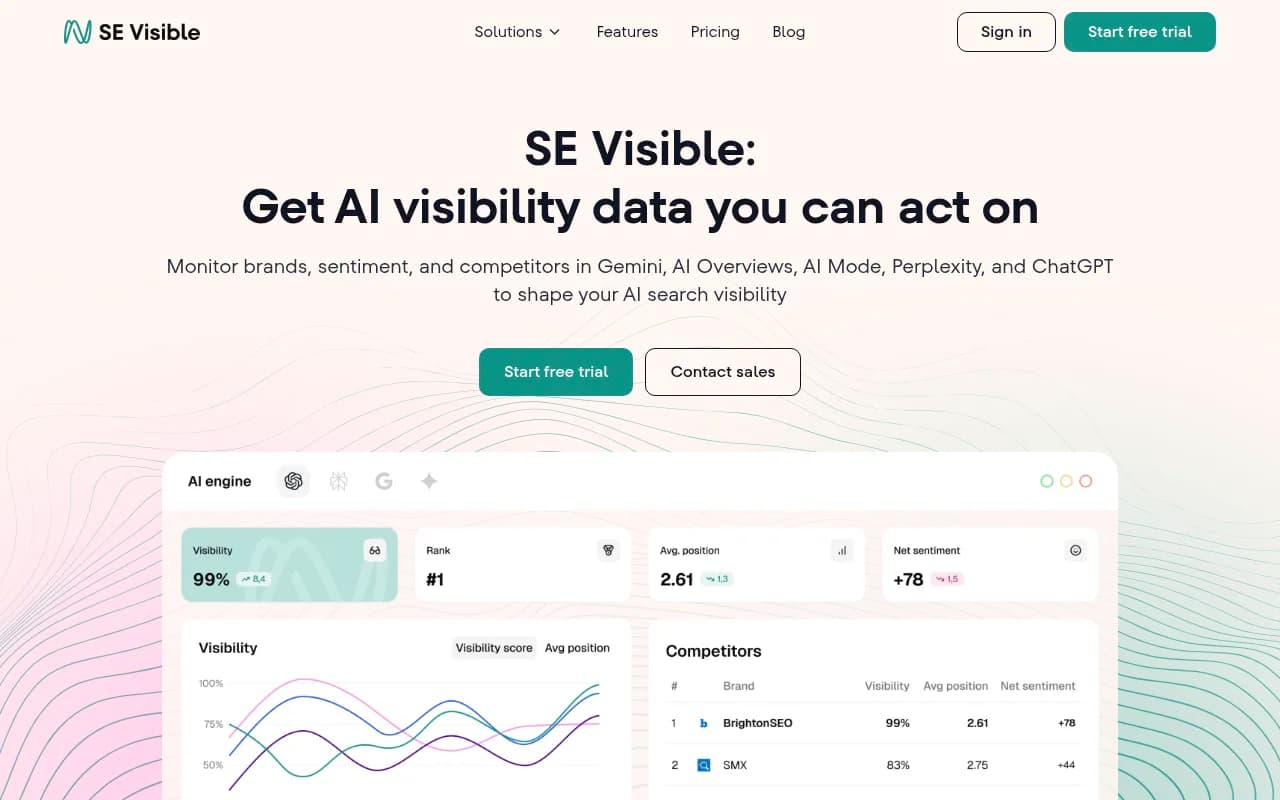
- SE Ranking, through SE Visible
- Enterprise suites like BrightEdge, seoClarity, Conductor and Adobe LLM Optimizer
- HubSpot's AEO Grader, which is a free one-off benchmark rather than a monitor
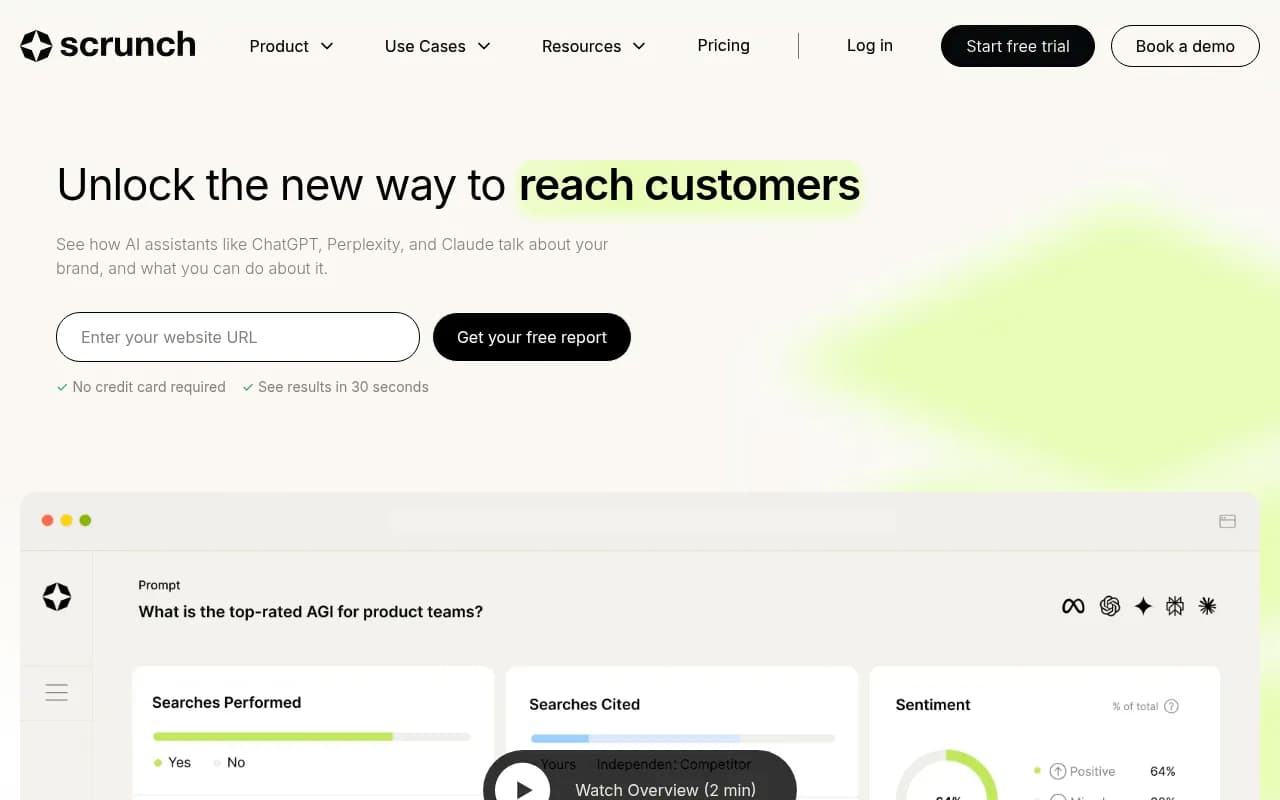
Independent means the vendor's whole product is AI visibility. That includes Peec AI, Profound, Otterly.AI, AthenaHQ, Scrunch, and Promptwatch, along with a long tail of smaller tools.

The case for suite-owned GEO tools
Suites have real advantages, and I would not dismiss them just because a dedicated tool has more features.
One contract, one login, one budget line
If procurement already approved Semrush or Ahrefs, adding an AI module is often a configuration change rather than a vendor review. For small teams, that matters more than feature depth. One published rule of thumb from the Prismic GEO guide: if AI visibility is one of several things you report on and you already pay for the suite, the built-in module gives you a trend line cheaply.
Search and AI data in one place
SEO teams like seeing keyword rankings and AI mentions side by side. Ahrefs Brand Radar, for instance, sits next to the backlink and rank data people already trust. That context is useful when you want to know whether a page that ranks in Google also shows up in AI answers.
Vendor stability
A public or well-funded suite is unlikely to vanish. Independent GEO startups are a crowded field of hundreds of tools, and some of them will be acquired or shut down. That is a real risk, and suite buyers sidestep it.
Where suites fall short
The common limitation across comparisons is that suite modules generally stop at measurement. The xSeek and Prismic comparisons both make this point about Ahrefs and Semrush: execution still sits with the marketing team, and the GEO workflow is one part of a broader SEO suite. Note that xSeek is a vendor with a stake in that framing, so treat it as a bias to check rather than a verdict. The pattern does show up independently in other buyer guides though.
Other suite weaknesses to check:
- Prompt sets are often capped or fixed, so you cannot track the exact buyer questions you care about.
- AI add-ons are priced separately from the base plan. Published entry points vary widely, and some of the figures circulating online (such as Semrush at $129 a month or Ahrefs at $99 a month) are base SEO plans, not GEO pricing. Confirm current AI add-on pricing directly with the vendor.
- AI crawler logs and AI-referred traffic attribution are usually absent.
The case for independent GEO tools
Built around the AI engines, not retrofitted
Independents tend to monitor the real interfaces of ChatGPT, Gemini, Perplexity and AI Overviews, rather than treating AI as another SERP feature. Peec AI, for example, scrapes consumer interfaces rather than calling APIs, which matters because user-facing answers can differ from API outputs.



They go past the dashboard
This is the biggest practical difference. Prompt trackers answer "was my brand mentioned?" A fuller platform tells you why, then helps fix it. Promptwatch is one example of the second type: it ties prompt tracking to IP-verified AI crawler logs, visitor analytics, content gap analysis, and a Content Agent that writes and publishes to WordPress, Webflow or Framer, then checks whether the published page gets crawled, cited and clicked.

Risks you accept
- Smaller vendors can be acquired, pivot, or disappear.
- One more tool means one more integration to maintain and one more owner to assign.
- Pricing models differ (credits, responses, prompts), so costs are harder to compare. A published example: Peec AI lists 50 prompts at $95 for a three-engine entry plan, while Promptwatch lists $95 for 50 prompts and 6,000 responses. Always confirm at the vendor's own pricing page.
Comparison: how the two models trade off
| Risk or need | Suite-owned GEO | Independent GEO |
|---|---|---|
| Vendor longevity | Strong | Varies, check funding and customer base |
| Procurement effort | Low if you already own the suite | Full vendor review |
| Prompt flexibility | Often capped or fixed sets | Usually custom prompts, personas, countries |
| Depth of AI data | Moderate, mostly measurement | Deeper: citations, fan-outs, crawler logs |
| Path from gap to shipped work | Mostly manual | Some offer content generation and publishing |
| AI traffic attribution | Limited | Offered by some, not all |
| Lock-in | High if AI data lives inside the SEO contract | Lower if exports, API and MCP are available |
| Cost to start | Low marginal cost | Higher entry, but more focused |
The risk most comparisons miss: platform volatility
The stability of your GEO vendor matters less than the stability of what they measure. AI platforms change behavior without notice, and your tool has to catch that.
Promptwatch's ChatGPT citation drop report found average citations per search-enabled ChatGPT response fell from about 6.4 to roughly 4.7 to 4.9 after the GPT-5.3 rollout on March 4, 2026. That is around 27% fewer, and it hit GPT-5.3, GPT-5.4 and GPT-5-Mini together. The report's conclusion is that citation behavior is a platform-controlled variable that can change overnight, so single-snapshot audits are unreliable and you should check dates against model releases before blaming your own content for a dip.
The crawler mix shifts too. In the AI crawler traffic report, OpenAI made up 79.8% of IP-verified AI crawler requests for Aug 31 to Sep 6, 2026, down from 94.8% in Jun 8 to 14, 2026. If one provider is large in that mix but near zero in your own logs, you are probably blocking it through robots.txt, CDN or WAF rules.
What this means for the suite-versus-independent question:
- A tool that checks monthly or on a fixed schedule will miss sudden changes.
- A tool without crawler logs cannot tell you whether a drop is an access problem or a content problem.
- Whatever you choose, make sure you can see dated trends and compare against model release dates.
Governance: the stack problem that matters more than the vendor
Busylike's marketing stack guide describes a pattern I see constantly. A GEO platform gets assigned to SEO. Nobody owns the full signal chain, so insights never reach the CMS, never inform CRM segmentation, and never touch nurture, creative testing or sales enablement.
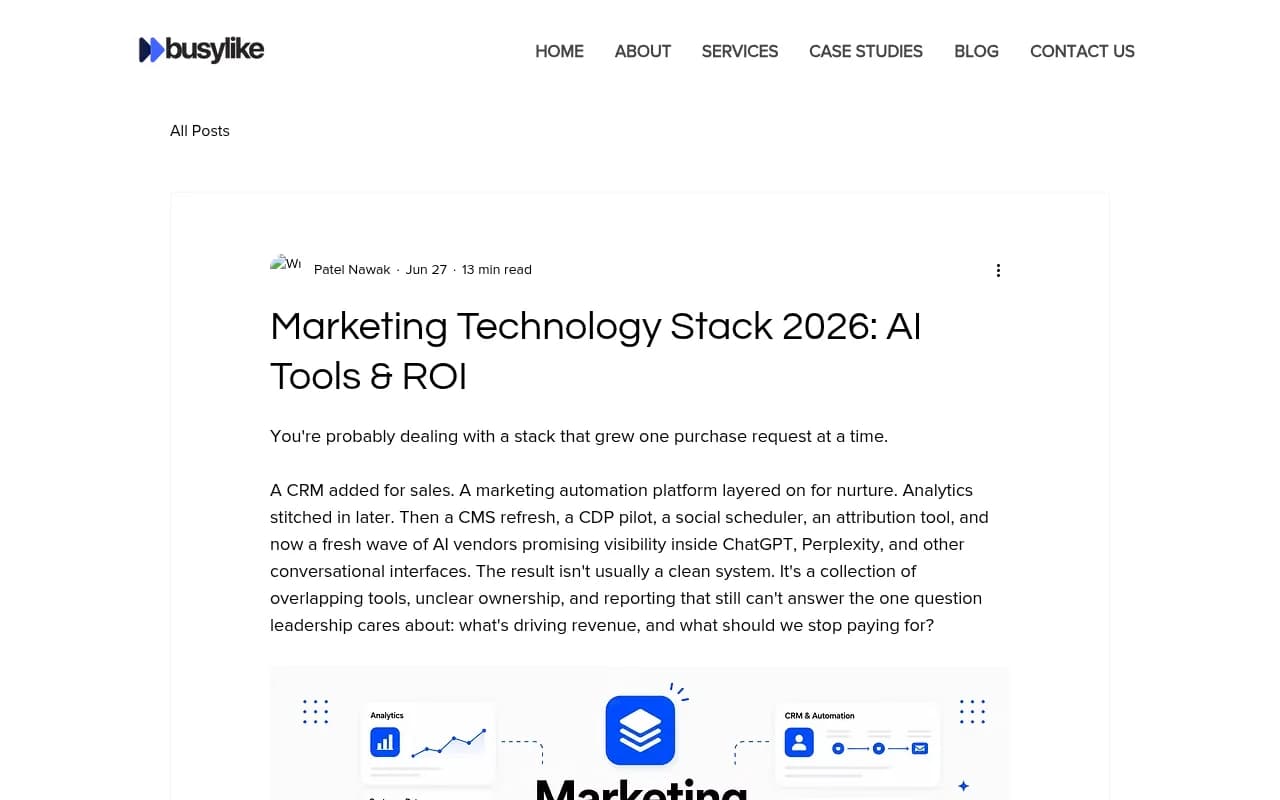
Its practical rule is a good filter: if a tool cannot be placed inside a clear architecture and tied to a business outcome, it is probably adding noise. Apply that to both options.
A suite add-on that nobody reports from is as unsafe as an independent tool that nobody acts on. The question to ask first is who owns the work that follows a visibility report.
A decision framework
| Your situation | Safer default |
|---|---|
| Small team, already on Semrush or Ahrefs, AI is one KPI among many | Use the suite module, set a review date |
| Need to act on specific buyer prompts across countries and personas | Dedicated independent tool |
| Enterprise with a security review and multi-brand needs | Independent enterprise platform or your existing enterprise suite, after a procurement check |
| Agency managing many clients | Independent with agency pricing, white-label or pitch features |
| Already publishing heavily and need to prove AI traffic impact | Tool with crawler logs and visitor analytics |
| Just proving the opportunity exists | Free graders such as HubSpot's AEO Grader, or a low-cost tracker |
Questions to ask any vendor, suite or not
- Does it monitor real consumer interfaces or only APIs?
- Can I track custom prompts, or only a preset list?
- What happens when a gap appears: a report, a recommendation, or a drafted and published page?
- Can I export prompts, responses and citations (CSV, API, MCP)?
- Does it show AI crawler activity on my site, so I can separate access problems from content problems?
- How are AI-referred visits and conversions attributed? Note that ChatGPT stopped sending a referrer on October 8, 2026, so ask how the tool handles untagged traffic.
- What is the ownership and funding story, and what is the exit path if the vendor changes?
- Is the pricing unit (prompts, responses, credits) clear enough to forecast costs?
A practical hybrid approach
For many teams the safest setup is neither extreme.
- Keep the suite for rank tracking, backlinks and technical SEO, where it is mature.
- Add an independent platform when you need prompt-level control, citation analysis, and action. Promptwatch fits here for teams that want monitoring, crawler logs and content execution in one loop; pricing starts at $95 per month on Essential, with a 7-day free trial, and you should confirm details at promptwatch.com/pricing.
- Put exports and API access in the contract so your prompt history is portable.
- Name a single owner who connects findings to the CMS, the content calendar and reporting.
- Review the choice after two quarters, using actual AI-referred traffic and citations rather than a visibility score.
If you want to compare more options, the GEO software directory lists tools by category, and Promptwatch's 2026 comparison shows a feature-by-feature view across suites and independents.
Other tools worth a look
| Tool | Type | Where it fits |
|---|---|---|
| Semrush One | Suite | Teams standardized on Semrush |
| SE Visible | Suite add-on | SE Ranking users wanting a simple module |
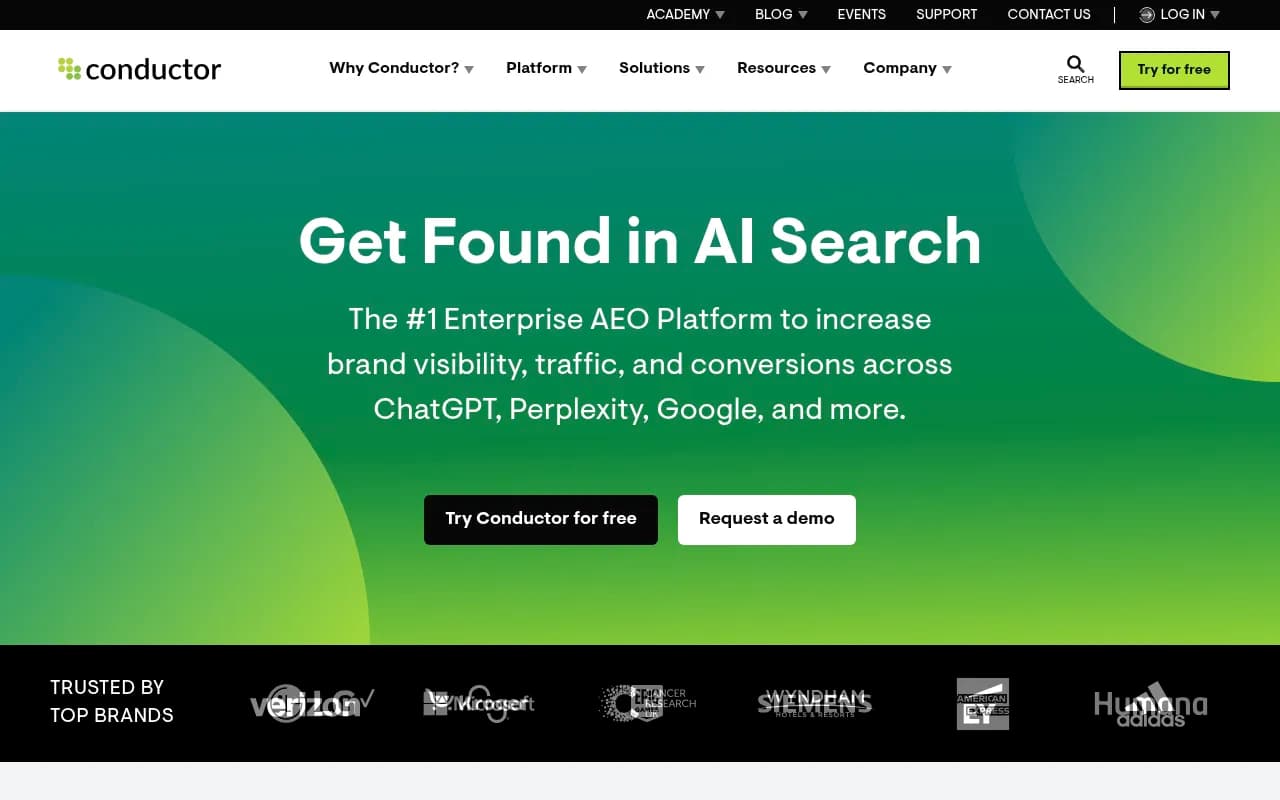
| Conductor | Enterprise suite | Teams already in Conductor workflows |
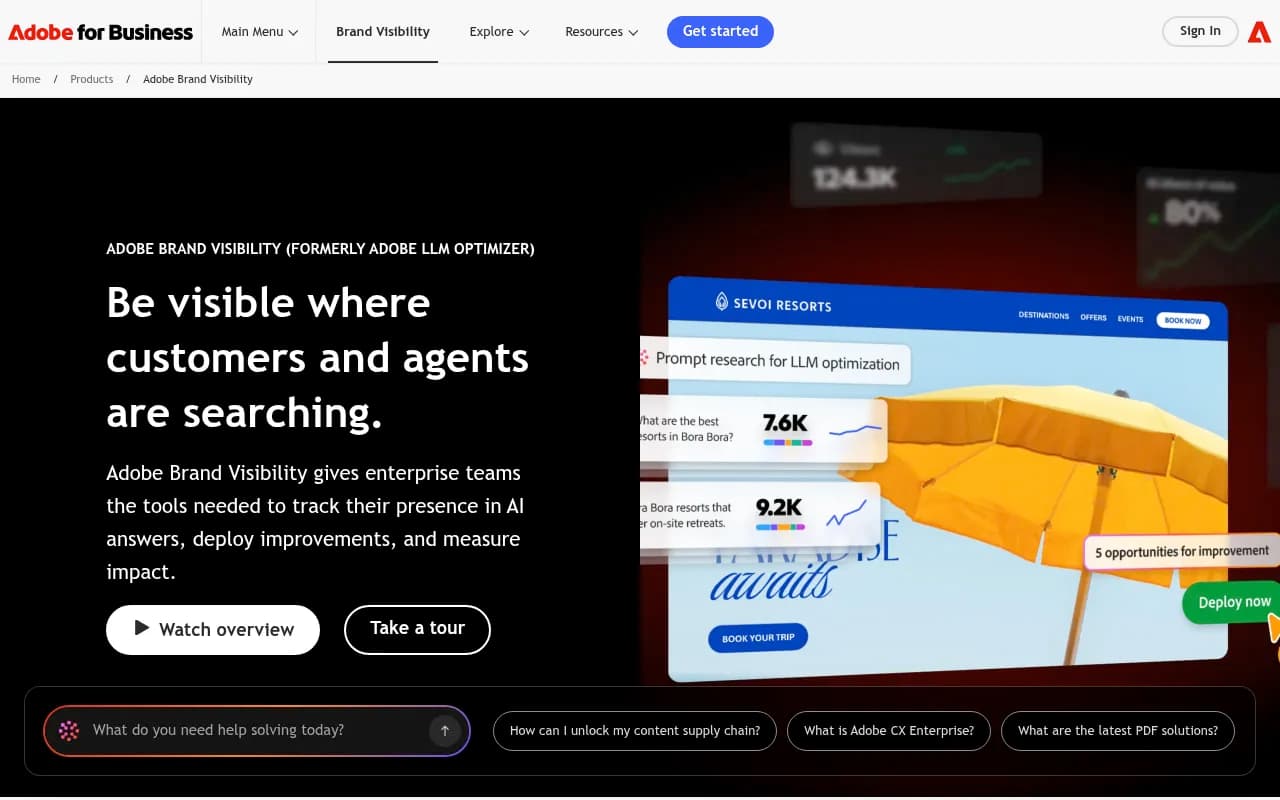
| Adobe LLM Optimizer | Enterprise suite | Adobe Experience Cloud organizations |
| Otterly.AI | Independent | Low-cost monitoring and proof of concept |
| Scrunch | Independent | Brand and agent visibility across engines |
| Peec AI | Independent | Prompt research, sources, multi-country reporting |

What I would do
If AI search is a side metric, use the module in the suite you already pay for and do not overthink it. If AI search is a channel someone is accountable for, the suite's measurement-only ceiling will frustrate you within a quarter, and an independent tool with crawler data and an execution path is the lower-risk choice. In both cases, keep your data exportable and assign an owner before you sign anything.
When the decision is about who runs the strategy rather than which tool you buy, an agency such as 1001 SEO Media can set up the measurement and handle the work that follows.