Summary
- AI search doesn't care about backlinks the way Google does -- ChatGPT, Claude, and Perplexity prioritize content structure, brand mentions, and semantic authority over traditional link equity
- New sites can compete immediately by publishing AI-optimized content with schema markup, conversational formatting, and topic clusters that signal expertise
- Third-party mentions matter more than backlinks -- getting cited in Reddit threads, listicles, and community discussions builds the authority AI models actually recognize
- Track what's working with platforms like Promptwatch to see which content AI models cite and where you're invisible
- The playbook is different -- forget link building campaigns, focus on content that answers specific prompts and earns mentions in places AI models already trust

Why new sites can rank in AI search without backlinks
Google's algorithm is built around backlinks. Domain authority, link equity, PageRank -- the entire system rewards sites that have accumulated links over years. New sites start at zero and face an uphill battle.
ChatGPT doesn't work that way.
AI models like ChatGPT, Claude, Perplexity, and Gemini don't crawl the web looking for backlinks. They look for content that directly answers prompts, structured in a way they can parse and cite. A brand-new site with zero backlinks can appear in ChatGPT's responses if the content is authoritative, well-structured, and aligned with how people actually prompt AI.
This is the authority-building shortcut: you don't need to wait years for links. You need to publish content AI models want to cite.
The AI authority signals that replace backlinks
Traditional SEO authority comes from external validation -- other sites linking to you. AI search authority comes from internal signals and third-party mentions that have nothing to do with your backlink profile.
Structured data and schema markup
AI models parse structured data to understand what your content is about. Schema markup tells them "this is a product review" or "this is a how-to guide" or "this is a comparison table." It makes your content machine-readable.
A new site with proper schema markup is easier for AI to cite than an established site with messy HTML. Use:
- Article schema for blog posts and guides
- HowTo schema for step-by-step content
- FAQ schema for question-and-answer sections
- Product schema for reviews and comparisons
- Organization schema to establish your brand entity
Google's Structured Data Testing Tool and Schema.org documentation are your references here. Implement schema on every page.
Conversational content structure
People prompt AI differently than they search Google. They ask full questions: "What's the best project management tool for remote teams?" not "best project management tool."
Your content needs to mirror that conversational structure. Write in Q&A format. Use natural language. Answer the specific question in the first paragraph, then expand.
Compare these two intro paragraphs:
Traditional SEO intro: "Project management tools help teams collaborate. This guide covers the top options in 2026."
AI-optimized intro: "For remote teams, Asana and ClickUp are the best project management tools in 2026. Asana works better for marketing teams that need visual workflows, while ClickUp is ideal for dev teams that want customization."
The second version directly answers a prompt. AI models cite it because it gives them a concrete answer to surface.
Topic clusters and semantic authority
AI models recognize expertise through topic coverage. A site that publishes one article on "email marketing" has less authority than a site with 20 interconnected articles covering email deliverability, subject line testing, segmentation strategies, and platform comparisons.
Build topic clusters:
- Pick a core topic (e.g. "content marketing for SaaS")
- Create a pillar page that covers the topic broadly
- Write 10-15 supporting articles on subtopics
- Interlink them with descriptive anchor text
This signals to AI models that you're a legitimate source on the topic, not a random blog post. Depth beats breadth.
The third-party mention strategy (the real backlink replacement)
Here's what most people miss: AI models don't just read your website. They read Reddit, Quora, industry forums, YouTube comments, and "best of" listicles published by third parties. If your brand is mentioned in those places, AI models see it as validation.
This is the backlink replacement. Instead of chasing links from high-DA sites, you chase mentions in places AI models already trust.
Get cited in Reddit threads
Reddit is one of the most-cited sources in ChatGPT responses. Find subreddits where your audience hangs out. Answer questions genuinely. Mention your product or service when it's actually relevant.
Example: If you run a new project management tool, search Reddit for threads like "What's the best alternative to Asana?" and leave a thoughtful comment explaining your tool's unique angle. Don't spam. Add value first.
AI models scrape these threads. If your brand appears in multiple Reddit discussions as a recommended solution, ChatGPT starts citing you.
Pitch yourself into "best of" lists
Every niche has curated lists: "10 best CRM tools," "Top email marketing platforms," "Best AI writing assistants." These lists get cited heavily by AI models.
Reach out to the authors of these lists. Pitch your tool for inclusion. Offer a demo, a discount code for their readers, or a unique angle that makes you worth adding.
Even if the list is on a site with low domain authority, it matters. AI models care about the content, not the site's backlink profile.
Write your own "best of" lists
This is the meta move: publish your own comparison guides and listicles. "Best X tools for Y" or "Top alternatives to Z." Include your own product in the list (positioned honestly), but also cover competitors.
AI models cite these lists because they're useful. You get visibility even when users prompt about competitors. Example: if you run a new CRM, write "Best CRM tools for small businesses in 2026" and include Salesforce, HubSpot, Pipedrive, and your own tool. When someone asks ChatGPT about CRMs, your guide might get cited.
Engage in niche communities
Slack communities, Discord servers, Indie Hackers, Hacker News -- wherever your audience congregates. Be present. Answer questions. Share insights. Drop your URL when it's relevant.
AI models scrape public discussions. If your brand is mentioned as a solution in multiple communities, that's a signal.
Content formats AI models prefer to cite
Not all content is equally cite-able. AI models have preferences.
Comparison tables
Tables are gold. AI models love structured data they can extract and reformat. Every comparison guide should include a markdown table:
| Tool | Pricing | Best for | Free tier |
|---|---|---|---|
| Tool A | $29/mo | Small teams | Yes |
| Tool B | $99/mo | Enterprise | No |
| Tool C | Free | Solo users | Yes |
ChatGPT can pull from this table to answer "What's the cheapest project management tool?" or "Which tools have a free tier?"
Step-by-step guides with HowTo schema
AI models cite instructional content heavily. Write guides in numbered steps with clear headings:
- Step 1: Set up your account
- Step 2: Configure your settings
- Step 3: Invite your team
Add HowTo schema markup so AI models know this is a tutorial.
FAQ sections
Add an FAQ section to every guide or product page. Use FAQ schema. Answer the exact questions people ask:
- "How much does X cost?"
- "Does X integrate with Y?"
- "Is X better than Z?"
AI models pull these answers directly into responses.
Listicles with concrete recommendations
AI models cite listicles that make specific recommendations. "10 tools" is fine, but "5 tools with pros/cons and specific use cases" is better. Give AI models something concrete to cite.
The 90-day playbook for new sites
You can't rank in ChatGPT overnight, but you can see traction in 90 days. Here's the sprint.
Month 1: Foundation
- Implement schema markup on every page (Article, Organization, Product, FAQ)
- Publish 10-15 articles in a single topic cluster
- Set up tracking with a tool like Promptwatch to see which prompts you're invisible for
- Create comparison tables and FAQ sections for each article
Month 2: Third-party mentions
- Identify 20 Reddit threads, Quora questions, and forum discussions where your product is relevant
- Leave thoughtful comments (not spam) mentioning your brand
- Pitch 10 "best of" lists for inclusion
- Write 3 of your own "best of" guides that include competitors
- Engage in 5 niche communities (Slack, Discord, Indie Hackers)
Month 3: Optimization and expansion
- Review which content is getting cited (use Promptwatch or another tracking tool)
- Double down on topics that are working
- Expand your topic cluster with 10 more articles
- Refresh existing content with updated data and more schema markup
- Continue third-party outreach and community engagement
By day 90, you should see your brand appearing in ChatGPT responses for at least a handful of prompts. That's your baseline. Scale from there.
Tools to track and optimize AI visibility
You can't improve what you don't measure. These tools help you see where you rank in AI search and where you're missing.
Promptwatch shows you which prompts your brand appears in across ChatGPT, Claude, Perplexity, and other AI models. It also reveals content gaps -- prompts where competitors are cited but you're not. The built-in AI writing agent generates articles grounded in citation data to help you close those gaps.

AthenaHQ tracks your visibility across 8+ AI search engines and shows you exactly which pages are being cited. Good for multi-model monitoring.

Otterly.AI is an affordable option for basic AI visibility tracking. It monitors ChatGPT and Perplexity and shows you where your brand appears.

Profound tracks brand mentions across AI search engines and provides detailed citation analysis. Strong feature set but higher price point.
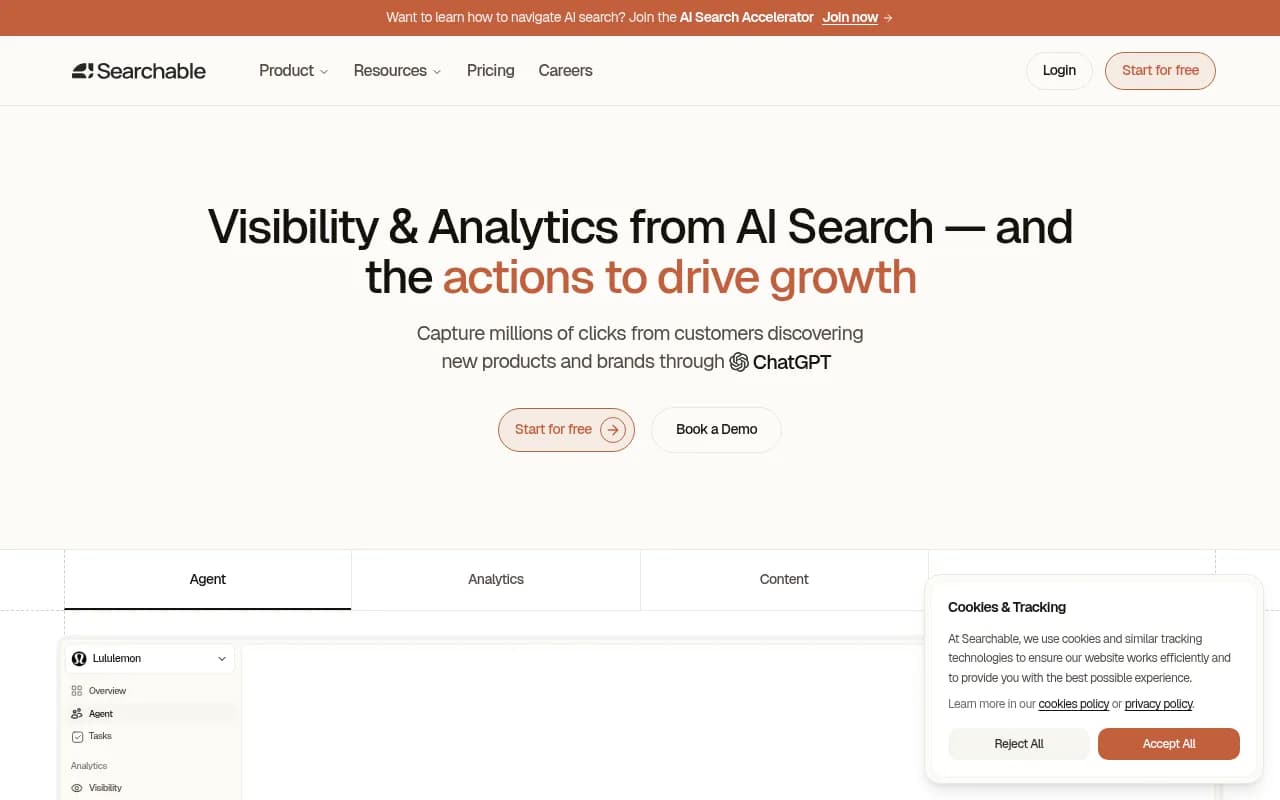
Searchable combines AI visibility monitoring with content optimization tools. Helps you see what's working and create more of it.
Common mistakes new sites make
Mistake 1: Copying Google SEO tactics
Keyword density, exact-match anchor text, link building campaigns -- these don't matter for AI search. Stop optimizing for Google's algorithm and start optimizing for how people prompt AI.
Mistake 2: Ignoring schema markup
Schema is not optional. AI models rely on structured data to understand your content. A site without schema is invisible to AI, no matter how good the writing is.
Mistake 3: Publishing shallow content
AI models cite authoritative, detailed content. A 500-word blog post won't cut it. Aim for 1500-3000 words with depth, examples, and specific recommendations.
Mistake 4: Not tracking results
You need to know which prompts you're ranking for and which you're missing. Without tracking, you're guessing. Use a tool like Promptwatch to see the data.
Mistake 5: Ignoring third-party mentions
Your own website is only part of the equation. If you're not getting mentioned in Reddit threads, listicles, and community discussions, AI models won't see you as authoritative.
Why this works (and why it's different from Google SEO)
Google's algorithm is built on the assumption that links = votes. The more high-quality sites link to you, the more authoritative you are. This made sense in 2000 when Google launched, but it creates a barrier for new sites.
AI models don't use links as a primary signal. They use:
- Content structure (schema, headings, tables)
- Semantic relevance (does this content answer the prompt?)
- Third-party validation (is this brand mentioned in trusted sources?)
- Freshness (is this content up-to-date?)
A new site can nail all four of these without a single backlink. That's the shortcut.
The long-term play: Build authority AI models recognize
Ranking in ChatGPT without backlinks is possible, but it's not a hack. It's a different approach to authority building.
Instead of chasing links, you're chasing mentions. Instead of optimizing for keywords, you're optimizing for prompts. Instead of building domain authority, you're building semantic authority through topic clusters.
The tactics in this guide work for new sites, but they also work for established sites that want to dominate AI search. The playbook is the same: publish structured, conversational content, earn third-party mentions, and track your visibility.
AI search is still early. The sites that figure this out now will have a massive advantage in 2026 and beyond. Start today.