Key takeaways
- Perplexity uses a consensus-based citation model -- one great article isn't enough. You need corroboration across multiple independent sources.
- PerplexityBot crawls high-authority pages every 2-3 days, so fresh, updated content has a real advantage over static pages.
- Reddit and YouTube have outsized influence on Perplexity citations -- ignoring these channels is a common and costly mistake.
- Factually specific, data-backed content gets cited. Generic claims don't. "Email marketing delivers an average ROI of $36 per $1 spent" beats "email marketing has strong ROI."
- Tracking mentions, citations, and links separately is essential -- they diagnose three different problems and require three different fixes.
Perplexity AI hit 100 million monthly active users in 2025 and hasn't slowed down. It's now part of how buyers research purchases, compare vendors, and build shortlists -- often before they ever open a browser tab to visit an actual website. If your brand isn't appearing in Perplexity answers, you're missing a consideration channel that's growing faster than traditional organic search.
But here's the thing most brands get wrong: they apply the same optimization playbook to Perplexity that they use for ChatGPT or Google. That doesn't work. Perplexity operates on fundamentally different logic, and understanding that logic is the whole game.
Why Perplexity is different from every other AI search engine
ChatGPT leans heavily on training data, supplemented by real-time retrieval for certain queries. Its citation behavior is shaped by a mix of pre-training knowledge and retrieval-augmented generation, so domain authority and backlink signals matter quite a bit.
Perplexity is a real-time answer engine. It retrieves live web content for nearly every query. Its citation model is consensus-based: rather than finding the single most authoritative source, it looks for corroboration across multiple independent sources. A claim supported by three credible sources has dramatically higher citation probability than one well-written article making the same point alone.
This changes everything about how you should optimize. You're not just writing great content -- you're engineering consensus around your brand's claims and positioning.
The conversion rate for Perplexity-referred traffic is reportedly 2-3x higher than standard organic search in most B2B verticals, according to data from upGrowth's campaign tracking. That makes sense: users who arrive from Perplexity have already received a synthesized, sourced answer and are acting on it. They're further along in the decision process.
How PerplexityBot actually works
Perplexity runs its own crawler, PerplexityBot, which operates independently of Googlebot. For high-authority domains with strong inbound link profiles, PerplexityBot re-crawls content on a 2 to 3 day cycle. That's fast. It means:
- A correction or content update can be reflected in Perplexity answers within days, not weeks.
- If PerplexityBot is blocked by your
robots.txt, you're entirely invisible to the platform. No amount of content quality will help.
The first thing to check is whether PerplexityBot is actually allowed to crawl your site. Open your robots.txt file and confirm there's no rule blocking it. Many sites that block AI crawlers broadly end up blocking PerplexityBot by accident.
Beyond crawl access, Perplexity evaluates candidate pages for relevance and authority, extracts specific passages, and assembles them into a synthesized answer with inline citations. It cites 5-15 sources per answer. That's meaningful real estate for brands willing to do the work.
What Perplexity actually selects
The selection criteria favor content that is factually specific rather than generically informative. Compare these two sentences:
- "Email marketing delivers strong ROI." (won't get cited)
- "Email marketing delivers an average ROI of $36 for every $1 spent, according to Litmus 2024 data." (will get cited)
Specificity, data, and source attribution are the signals Perplexity's system is looking for. It's extracting passages, not evaluating overall page quality the way Google does. Your content needs to contain citable sentences -- discrete, factual claims that can be pulled out and placed inline in an answer.
The consensus strategy: why one article isn't enough
This is the most important concept in Perplexity optimization and the one most brands skip entirely.
Because Perplexity's citation model looks for corroboration, a single well-optimized page on your own domain won't reliably earn citations. You need the same claims, facts, and brand positioning to appear across multiple independent sources. That means:
- Your own website (well-structured, factually specific content)
- Third-party publications and industry blogs that mention your brand
- Reddit threads where your brand or product is discussed
- YouTube videos that reference your brand or expertise
- Review platforms and comparison sites
When Perplexity sees the same information about your brand confirmed across several of these sources, citation probability goes up significantly. Think of it less like SEO and more like building a public record.
Reddit's outsized role
Reddit has a disproportionate influence on Perplexity citations that most brands underestimate. Perplexity frequently cites Reddit threads as sources, particularly for product comparisons, recommendations, and "what's the best X for Y" queries. If your brand is being discussed positively in relevant subreddits, that discussion can directly feed into Perplexity answers.
This doesn't mean astroturfing Reddit (which backfires badly and is against platform rules). It means:
- Monitoring relevant subreddits for questions your brand could genuinely answer
- Having team members or founders participate authentically in communities where your product is relevant
- Creating content that's worth linking to in Reddit discussions
Tools like Promptwatch surface Reddit discussions that directly influence AI recommendations, which gives you a clear view of which threads are actually being cited.

Building content that Perplexity wants to cite
Structure for passage extraction
Perplexity doesn't read your page the way a human does. It extracts specific passages. That means your content structure needs to make individual passages easy to identify and pull.
Practically, this means:
- Use clear, declarative sentences that contain a complete claim ("X is Y because Z")
- Lead paragraphs with the key fact, not with context
- Use subheadings that signal what the following passage covers
- Include data with source attribution inline, not just in footnotes
- Write FAQ sections that directly answer specific questions users might ask Perplexity
The FAQ format is particularly effective. If a user asks Perplexity "what is the average cost of [your product category]" and you have a section on your site that directly answers that question with specific numbers, you're a strong candidate for citation.
Topical depth over breadth
Perplexity favors sources that demonstrate genuine expertise on a topic, not sites that cover everything shallowly. Building a cluster of content around your core topic area -- a pillar page plus supporting articles that go deep on specific subtopics -- signals topical authority.
If you sell project management software, you shouldn't just have a homepage and a features page. You should have detailed content on specific use cases, comparisons, methodology guides, and data-backed posts about the problems your product solves. Each of these can be cited independently for different queries.
Expert authorship signals
Perplexity's system evaluates authority signals including author credentials. Pages with named authors who have verifiable expertise in the subject matter perform better than anonymous or generic content. This means:
- Author bio pages with credentials, publications, and professional background
- Bylines on all substantive content
- Schema markup for author and organization
Technical requirements
Beyond content quality, a few technical factors directly affect whether Perplexity can cite you:
- PerplexityBot must be allowed in
robots.txt - Pages should load quickly and not require JavaScript rendering to access the main content
- Structured data (Schema.org markup for articles, FAQs, how-tos) helps passage extraction
- HTTPS is table stakes
- Canonical tags should be correct so Perplexity doesn't index duplicate versions of pages
The multi-platform citation strategy
Getting cited in Perplexity consistently requires a presence across multiple content channels, not just your own website.
Third-party publications
Guest posts, contributed articles, and press coverage in industry publications build the corroboration Perplexity needs. When a trade publication quotes your CEO making a specific data-backed claim, and your own site makes the same claim, and a Reddit thread references both -- that's consensus.
Prioritize publications that are themselves cited by Perplexity. You can identify these by running your target queries in Perplexity and noting which domains appear in the citations. Those are the publications worth pursuing for coverage.
YouTube and video content
Perplexity cites YouTube videos, particularly for how-to queries and product comparisons. A video that directly addresses a question your target customers ask -- with a clear title, accurate transcript, and specific claims -- can earn citations. The transcript is what Perplexity actually reads, so make sure your videos have accurate auto-captions or uploaded transcripts.
Review and comparison platforms
G2, Capterra, Trustpilot, and similar platforms are frequently cited by Perplexity for product-related queries. Actively managing your presence on these platforms -- responding to reviews, keeping your profile updated, and generating recent reviews -- feeds directly into your Perplexity visibility.
Tracking your Perplexity visibility
You can't optimize what you can't measure. Tracking Perplexity citations requires a different approach than traditional rank tracking.
Three metrics to track separately
Rankability's framework for Perplexity visibility tracking distinguishes three distinct outcomes:
- Mentions: your brand name appears in the answer text (even without a link)
- Citations: your domain appears in Perplexity's reference list
- Links: a clickable URL to your site that users can follow
These reflect different kinds of value and diagnose different problems. If you're getting mentions but not citations, Perplexity knows your brand exists but doesn't trust your content enough to source it. If you're getting citations but not links, your pages may be getting extracted but not surfaced as primary sources. Track all three with separate KPIs.
Setting up a prompt monitoring workflow
The practical approach is to build a list of 20-30 queries your ideal customers would ask Perplexity, then run these queries on a regular cadence (monthly at minimum, weekly if you're actively optimizing). For each query, log:
- Whether your brand is mentioned in the answer
- Whether your domain appears in citations
- Which competitors appear
- Which sources Perplexity cited
This gives you a baseline and lets you measure the impact of content changes over time. Running queries in both standard and Pro Search modes matters because Pro Search generates more deeply researched answers with different citation patterns.
Tools for Perplexity visibility tracking
Manual tracking works at small scale but doesn't hold up as you expand your prompt list. Several platforms now offer automated Perplexity monitoring.
Promptwatch tracks your visibility across Perplexity and 9 other AI models, with page-level citation data showing exactly which of your pages are being cited and how often. Its Answer Gap Analysis identifies which prompts competitors are visible for but you're not -- which is the starting point for any content strategy.
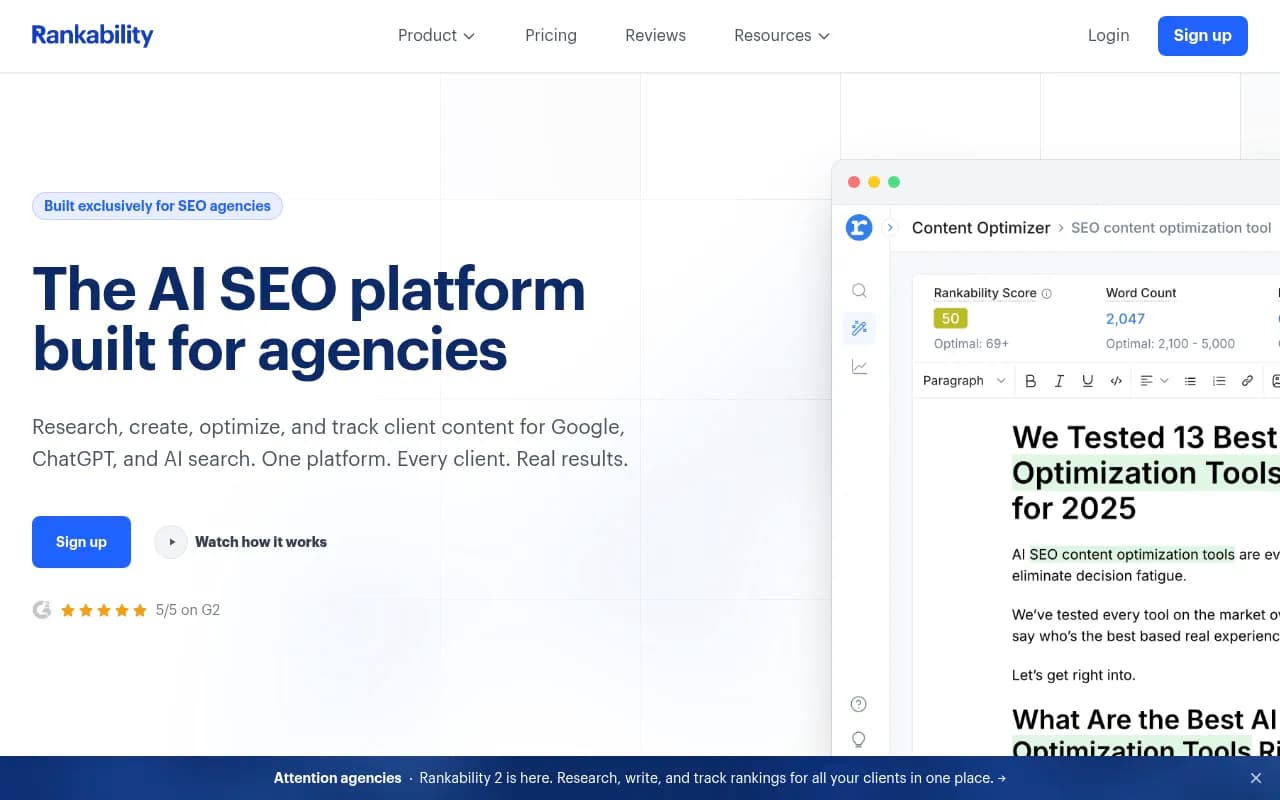
For teams that want dedicated Perplexity tracking alongside traditional SEO metrics:



Here's how the main tracking approaches compare:
| Approach | Best for | Limitations |
|---|---|---|
| Manual prompt testing | Getting started, small prompt lists | Doesn't scale, no historical data |
| Dedicated GEO platforms (e.g. Promptwatch) | Ongoing optimization, competitive analysis | Requires budget |
| Brand monitoring tools (e.g. Brand24) | Catching mentions across web + AI | Less precise for citation tracking |
| Agency-focused tools (e.g. Rankability) | Client reporting | May lack content generation features |
The content gap analysis approach
The most efficient way to improve Perplexity visibility is to identify specific prompts where competitors are cited but you're not, then create content that directly addresses those prompts.
This is different from keyword research. You're not looking for search volume -- you're looking for questions that Perplexity users actually ask, where your category is relevant, and where your brand is currently absent from the answer.
Start by running your top 15-20 target prompts in Perplexity. For each one where a competitor appears but you don't, ask: what content would I need to have on my site for Perplexity to cite me here? Usually the answer is a specific page that directly addresses that question with factual, specific content.
Then create that content. The goal is a page that contains citable passages -- discrete, data-backed claims that Perplexity can extract and place inline in an answer.
Putting it all together: a practical action plan
Getting cited in Perplexity isn't a one-time project. It's an ongoing loop:
- Run your target prompts in Perplexity and document where you appear and where you don't
- Identify the specific content gaps -- what's missing from your site that would make you a citable source for each prompt
- Create content that's structured for passage extraction, factually specific, and backed by data
- Build corroboration across third-party publications, Reddit, YouTube, and review platforms
- Verify PerplexityBot can crawl your site and that your technical setup is clean
- Re-run your prompts monthly and measure changes in mention rate, citation rate, and link rate
The brands that are winning in Perplexity in 2026 aren't the ones with the highest domain authority -- they're the ones that have engineered consensus around their positioning across multiple sources and built content that Perplexity can actually extract and cite.
That's a different skill set than traditional SEO, but it's learnable and the results compound quickly once you start getting cited consistently.