Key takeaways
- Split your prompt set into three buckets: branded, competitor and category (unbranded). Never blend them into one visibility number.
- Branded prompts measure accuracy and sentiment. Category prompts measure whether ChatGPT actually sees you as an authority. The second is the number that moves revenue.
- Start with 25 to 50 prompts, or 10 to 20 if you are tracking by hand. Quality beats volume because there is no query volume data to guide you.
- Tag every prompt by intent. Promptwatch Data shows ChatGPT pulls a different source mix for commercial, informational and branded prompts.
- Review the set every month or two. Model rollouts and citation shifts can break your trend lines.
Why prompt selection is the whole game
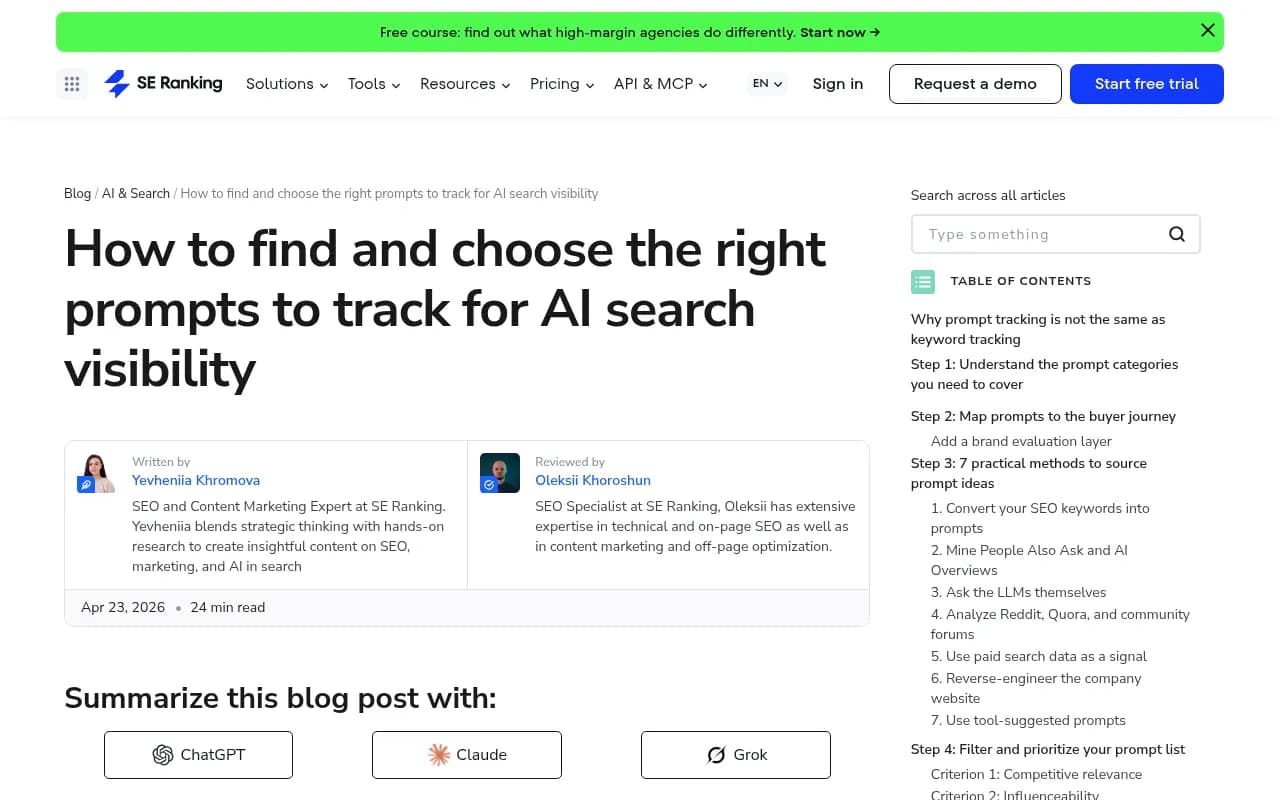
With keywords you get volume, positions and a competitor view. With ChatGPT you get none of that. There are no reliable query volumes, no fixed rankings, and the same question can return different brands depending on session context or location. SE Ranking makes this point well in its guide to choosing prompts to track: the answer is not tracking more prompts, it is choosing better ones.
Most teams default to "best [category] tool" and call it a strategy. That covers one thin slice of how buyers use ChatGPT. Others fall back on branded prompts, which look great on a dashboard because ChatGPT will almost always mention you when you type your own name. Neither gives you a real picture.
So the job is to build a set that is balanced, labeled and small enough to maintain.
The three buckets
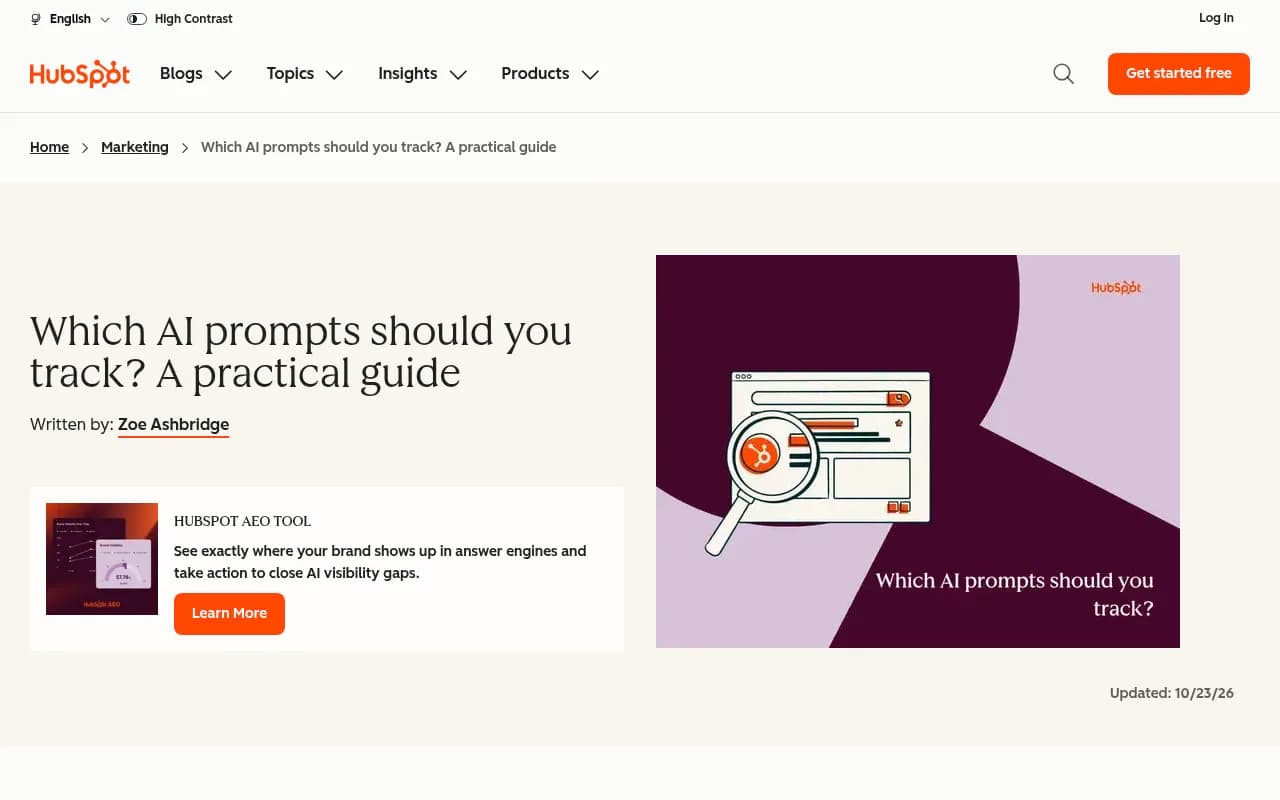
HubSpot's guide on which AI prompts to track frames it as branded, unbranded and competitor. That is the framing I would use too, with one tweak: call the unbranded bucket "category" so nobody mistakes it for a leftover pile.
| Bucket | What it contains | What you measure | Example |
|---|---|---|---|
| Branded | Your brand or product name is in the prompt | Accuracy, sentiment, which third-party sources describe you | "Is [Brand] good for small agencies?" |
| Competitor | A rival is named, or you appear in a head-to-head | Whether you show up as a credible alternative, who ChatGPT treats as the default | "Alternatives to [Competitor]" |
| Category | No brand names, just the problem or product type | Visibility, position, share of voice | "Best project management software for small teams" |
Branded prompts
These protect accuracy. If ChatGPT says you have a feature you do not have, or quotes last year's pricing, that is a branded-prompt finding. Presence is not the metric here because it is nearly guaranteed. Track sentiment, correctness and which sources are used.
Promptwatch Data has a useful detail on this. For brand-specific prompts like "is Asana good for small teams", the most common number of cited domains is five, and only 21.3% of responses cite 10 or more (Sep 28 to Oct 4, 2026, unique domains per response). That short source list is easy to audit. If it is dominated by an old review site or a competitor's comparison page, you know exactly what to fix.
Competitor prompts
These show where rivals appear during evaluation. Use two shapes: prompts that name one competitor ("Is [Competitor] good for remote teams?", "alternatives to [Competitor]") and head-to-head prompts that name you both ("[Brand] vs [Competitor]"). HubSpot suggests tracking three to five direct competitors, focusing on those with strong marketing and solid online presence. I agree. Tracking ten rivals mostly produces noise.
Comparison prompts also tend to pull wide source lists. In the same Promptwatch Data report, 49.1% of competitor comparison responses cited 10 or more domains. You get a lot of third-party opinion in these answers, which makes them a good place to find the review sites and listicles that shape your reputation.
Category prompts
These are the ones that matter most and the hardest to win. There is no brand name to lean on, so appearing means ChatGPT considers you an authority. That is earned through content and third-party coverage, not clever phrasing. Similarweb's prompt tracking guide makes the same argument: success is rising mention frequency in non-branded prompts, not an overall score inflated by branded ones.
Category prompts also have the widest sources. In Promptwatch Data, 52.5% of organic responses cite 10 or more domains and 71.8% cite at least 8. You are competing for a slot in a crowded list, so position and description matter as much as being present.
How many prompts and in what mix
Start small. HubSpot recommends 25 to 50 prompts. Omnia suggests 10 to 20 high-intent prompts if you are doing a manual baseline. Both are right for their context: 10 to 20 is plenty to run by hand in a spreadsheet, and 25 to 50 is a sensible first set in a tool.
HubSpot's suggested ratio puts competitor prompts at 20 to 30% of the set and branded at 10 to 20%. That leaves roughly half or more for category prompts, which fits my view that this bucket deserves the most attention. A starting split for 40 prompts might look like this:
| Bucket | Share | Prompts out of 40 |
|---|---|---|
| Category | 50 to 60% | 20 to 24 |
| Competitor | 20 to 30% | 8 to 12 |
| Branded | 10 to 20% | 4 to 8 |
Then spread them. Do not write 24 category prompts for your flagship product and none for the others. Cover each product line, each main persona, and each priority market.
Where to source prompts
Do not invent prompts at a whiteboard. Real ones come from real places.
Convert your SEO keywords
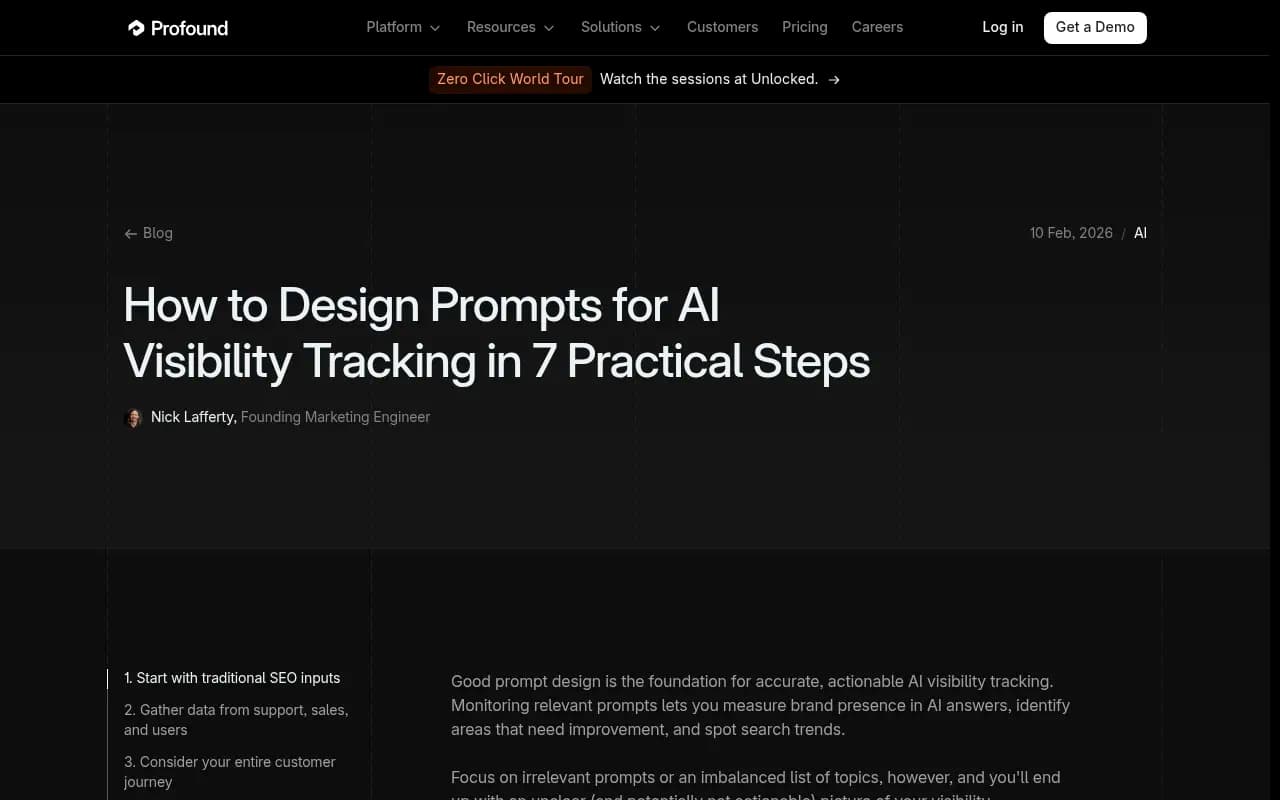
Profound's guide to designing prompts for AI visibility tracking starts here, and I think that is right. Take your keyword and topic clusters and rewrite them as the conversational questions people type into ChatGPT. "CapCut alternatives" becomes "what are some good CapCut alternatives for B2B teams?" You can use Claude or Gemini to do the conversion, but read the output. Machine-written prompts tend to sound like machine-written prompts.
Mine sales, support and community
Sales call recordings, support tickets and onboarding surveys contain the exact phrasing buyers use. Buyers also add context to AI prompts that they would never put into Google: team size, budget, location, a constraint, a follow-up. A prompt like "project management tool for a 15-person agency that needs time tracking and costs under $20 per seat" is closer to how people actually ask. Reddit threads, People Also Ask boxes and competitor review pages are good supplements.
Use your tracking tool's suggestions
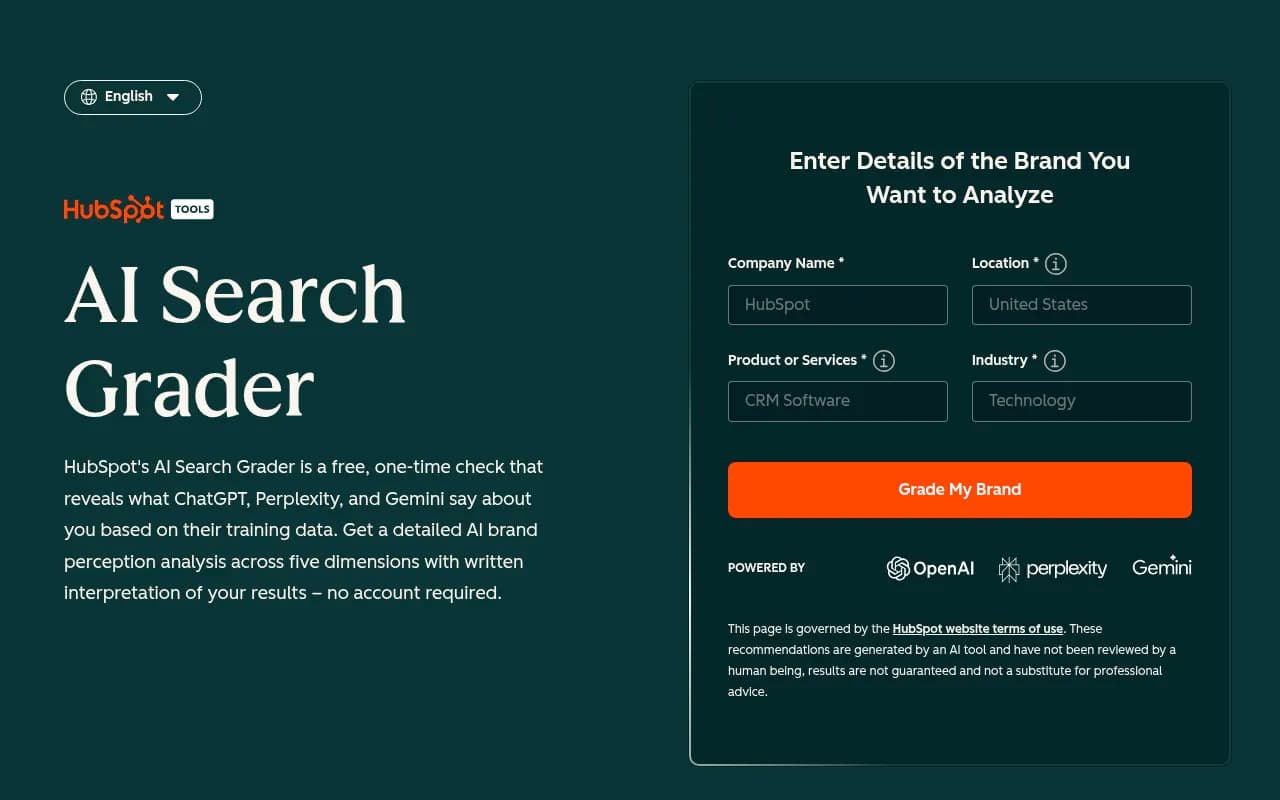
Some platforms suggest prompts from your data. HubSpot's AEO tool uses CRM data for Marketing Hub Professional and Enterprise customers, and is available standalone at $50 a month with 25 prompts. Tools like Promptwatch go further with prompt volumes, difficulty scores and suggestions pulled from Search Console, People Also Ask and your own pages, which helps when you want some signal about which prompts are worth the slot.

Tag every prompt by intent
Branded, competitor and category describe who is named. Intent describes what the user wants. You should tag both, because ChatGPT cites different content for each intent.
From Promptwatch Data's content type report (Sep 28 to Oct 4, 2026):
| Prompt intent | Top cited content types |
|---|---|
| Commercial | Product pages 26.0%, landing pages 20.6%, listicles 15.0%, comparisons 7.9% |
| Informational | Product pages 19.1%, landing pages 13.9%, listicles 13.6%, how-tos 10.7% |
| Branded | Product pages 23.3%, landing pages 22.8%, reviews 5.6%, FAQ 4.8% |
This tells you what to expect. A commercial prompt where you are absent usually means your product or landing page is not being cited, or a listicle that ranks for the topic does not mention you. An informational prompt gap is more often a how-to or documentation gap. Branded prompts lean on reviews and FAQ pages more than the others, so those are worth checking.
A simple spreadsheet or tool tag set works: bucket, intent, persona, product, market, funnel stage.
Map prompts to funnel stage
SE Ranking suggests covering awareness, consideration and purchase. A balanced set contains all three:
- Awareness: "How do agencies keep client projects on track?"
- Consideration: "What types of project management software exist?" and "Best project management tools for agencies"
- Decision: "[Brand] pricing and plans", "[Brand] vs [Competitor]", "most affordable project management tool with time tracking"
SE Ranking also warns that brand-comparison prompts should be tracked separately because they skew category metrics if mixed in. I would go further: keep three separate reports, one per bucket, and never average them together.
Run it properly
One prompt tells you little
Because answers vary run to run, a single prompt is an anecdote. Measure across many category prompts and look at trends. Promptwatch's own takeaway from its domains report is to track your position and how ChatGPT describes you, not only whether you are cited, and to check which competitors are cited in the same responses.
The prompt is not the search
ChatGPT does not search the web with your exact words. Promptwatch's query fanout data shows average fanout queries getting shorter, from about 117 characters in December 2025 to about 53 from April 2026. The page's own text claims 3 to 8+ searches per prompt, but its measured averages are closer to 1 to 2 per response, so I would go with the measured figures. The practical point is the same: ChatGPT's searches are short and keyword-like, so page titles and headings still matter. Also note that on August 8, 2026 ChatGPT began using the site: operator at scale, as covered in Promptwatch's site: operator report.
Expect trend breaks
Your baseline can shift without anything changing on your side. Average citations per response dropped across GPT-5.3, GPT-5.4 and GPT-5-Mini around the March 4, 2026 rollout (citation drop report). Reddit's share of ChatGPT citations fell from roughly 4% to 0.5% on August 14, 2026 (Reddit report). Annotate your charts with model and citation-behavior changes so you do not mistake them for performance swings.
Keep your set stable, then edit deliberately
Changing prompts constantly ruins trend data. Lock a core set of 20 or so prompts and review the rest quarterly. When you add or drop a prompt, record the date. The content half-life report is a reminder that news pages lose half their citations within 36 days, while landing pages and docs last longest, so some movement in your results is just ordinary churn.
Choosing a tool
You can start in a spreadsheet and a logged-out ChatGPT window. Once you pass 20 or so prompts, you want a tool that runs them daily and stores the responses. Options in our catalog range from budget trackers to full platforms.
| Tool | Approach | Good fit |
|---|---|---|
| Promptwatch | Tracking plus prompt volumes, crawler logs, content gap analysis and a Content Agent that acts on gaps | Teams who want to fix visibility, not only watch it |
| HubSpot AEO | CRM-informed prompt suggestions, $50/month standalone for 25 prompts | HubSpot users and small sets |
| Profound | Monitoring and answer engine insights | Enterprise monitoring |
| Peec AI | Multi-language prompt tracking | International teams |
| Otterly.AI | Affordable monitoring | Small budgets |
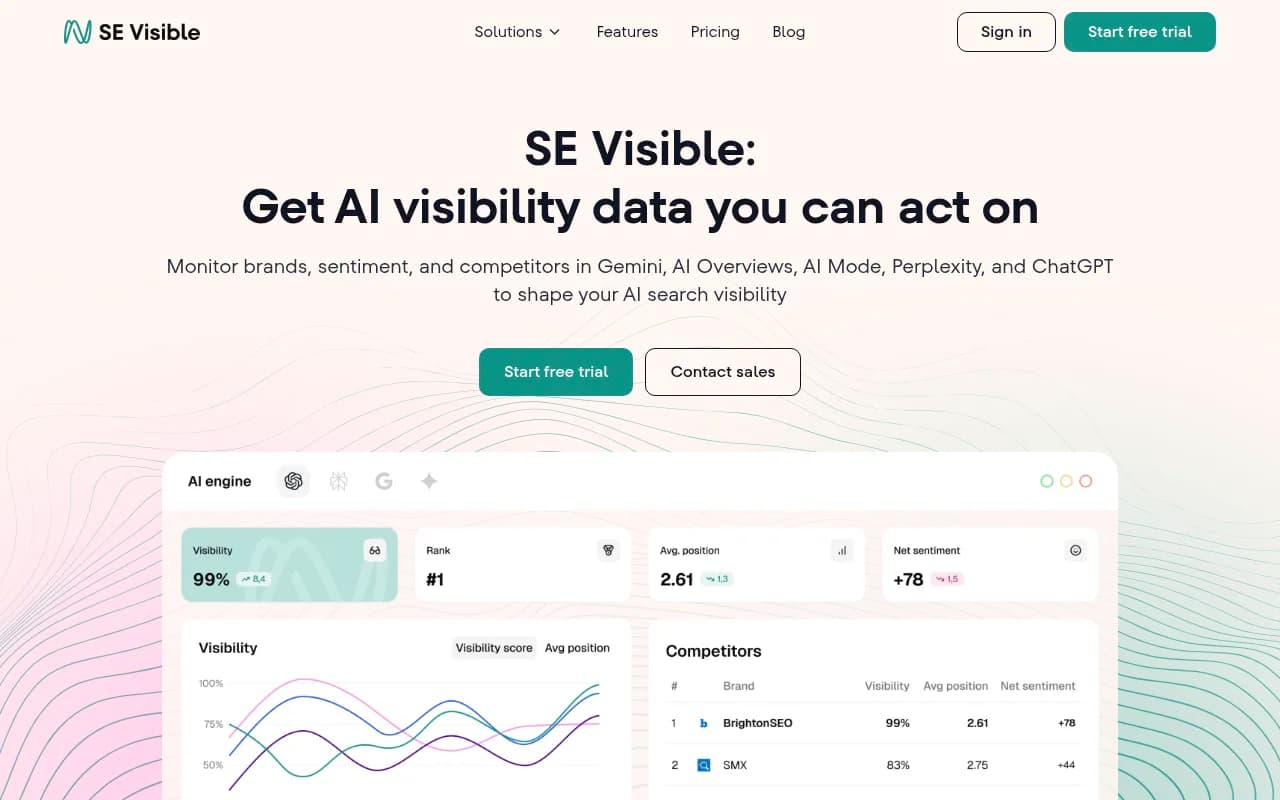
| SE Visible | User-friendly AI visibility tracking from SE Ranking | SE Ranking users |



For a wider list, the GEO software directory at bestgeosoftware.com is a good place to compare more options.
One caveat I would flag: monitoring-only tools tell you that a prompt is a gap, and stop there. If your gap list is going to sit untouched, pick something that connects the prompt to a content action. That is the reason I would lean toward Promptwatch for teams that actually plan to publish against the gaps.
A worked example
Say you sell project management software for agencies. A first 30-prompt set might be:
Category (16 prompts)
- Best project management software for agencies
- How do agencies keep client projects on track?
- Project management tool with time tracking for a 15-person team
- What types of project management software exist?
- Most affordable project management tool with time tracking
Competitor (9 prompts)
- Alternatives to [Competitor A]
- Is [Competitor A] good for remote teams?
- [Competitor A] pricing vs alternatives
- [Brand] vs [Competitor B]
Branded (5 prompts)
- What is [Brand]?
- What does [Brand] do for agencies?
- [Brand] pricing and plans
- Does [Brand] integrate with Slack?
- Is [Brand] worth it?
Tag each by intent and persona (agency owner, project manager, freelancer), run daily, and look at the category bucket first.
Common mistakes
- Blending branded and category results into one visibility score.
- Tracking 200 prompts because a tool allows it, then never reading them.
- Copying keyword lists straight into a tracker without turning them into real questions.
- Treating a single run of a single prompt as a finding.
- Ignoring model rollouts when explaining a sudden drop.
- Only tracking comparative prompts. SE Ranking notes most brands over-index on them and neglect informational and instructional prompts.
What to do this week
Write 10 category prompts, 4 competitor prompts and 3 branded prompts from real customer language. Tag each with intent and persona. Run them in ChatGPT, record who appears, in what position and how you are described, then move the set into a tracker. After a month, you will know which gaps are worth a new page and which are just noise. For deeper context on what ChatGPT cites, browse the Promptwatch Data hub.